Jan 23, 2024
War survivor builds a 400% growing AI startup
Interview with Naré Vardanyan, CEO of Ntropy
Founder Focused

0:00 / 0:00
💡
At a Glance
- Who: Naré Vardanyan is the CEO and co-founder of Ntropy, having grown up in Armenia during wartime before working at the UN and studying AI at UCL.
- What: Ntropy builds language models to understand messy, non-standardized financial transaction data at scale across banks regardless of source, format, language, or currency.
- Traction: Ntropy has raised over $14 million, been live for about three years, and now serves 100 customers.
In this interview, Naré Vardanyan traces her path from wartime Armenia to founding Ntropy, including an earlier startup, Mindbin, that pivoted repeatedly before privacy laws made its approach unworkable. She explains how Ntropy solved its cold-start data problem by putting an imperfect model directly in customers' hands and learned to narrow its horizontal platform into a defined niche before expanding. She closes by reflecting on balancing motherhood with leadership after getting pregnant right after raising her seed round, and the importance of staying optimistic rather than settling.
Watch the full interview now on EO's YouTube channel! Below is the complete transcription of the interview. Minor edits have been made for clarity and readability.
Key Takeaways
A Difficult Childhood Can Expand A Founder's Ambition
Growing up amid war and limited electricity, Naré learned early that her surroundings did not have to define what was possible. A first trip abroad widened that horizon, and the contrast helped turn dissatisfaction with her circumstances into motivation to pursue broader impact.
Early Startup Lessons Come From Pivots And Constraints
Naré's first company, Mindbin, tried to detect behavioral and mental health issues through phone interactions, then pivoted toward an employer healthcare platform. Privacy changes and Apple's restrictions limited the model, teaching her to treat constraints as part of the product journey.
Choose A Co-Founder With Complementary Strengths
Naré and Ilya came from different countries and technical paths, but shared enough background to connect and brought complementary skills to the partnership. Their friendship-first relationship also required an explicit conversation about preserving the friendship regardless of what happened to the company.
Put An Imperfect Model In Customers' Hands
Ntropy created its first training data by helping consumers understand their own bank transactions. The early model produced questionable results, but customer testing supplied more examples and steadily improved it, showing why early usage can be more valuable than waiting for a finished system.
Start Narrow Before Expanding A Horizontal Platform
Naré says a platform that serves every financial problem is difficult to explain and market. Ntropy eventually kept its broad technical capability while focusing its language, customer type, and problem areas, making a defined entry point a prerequisite for later horizontal expansion.
Optimism Helps Founders Keep Expanding Their Possibilities
After learning she was pregnant soon after raising a seed round, Naré confronted fears about balancing motherhood and leadership. Support helped, but her broader lesson is to protect hope, keep creating, and resist settling for a smaller life than the one she wants to build.
Introducing Naré Vardanyan, CEO of Ntropy
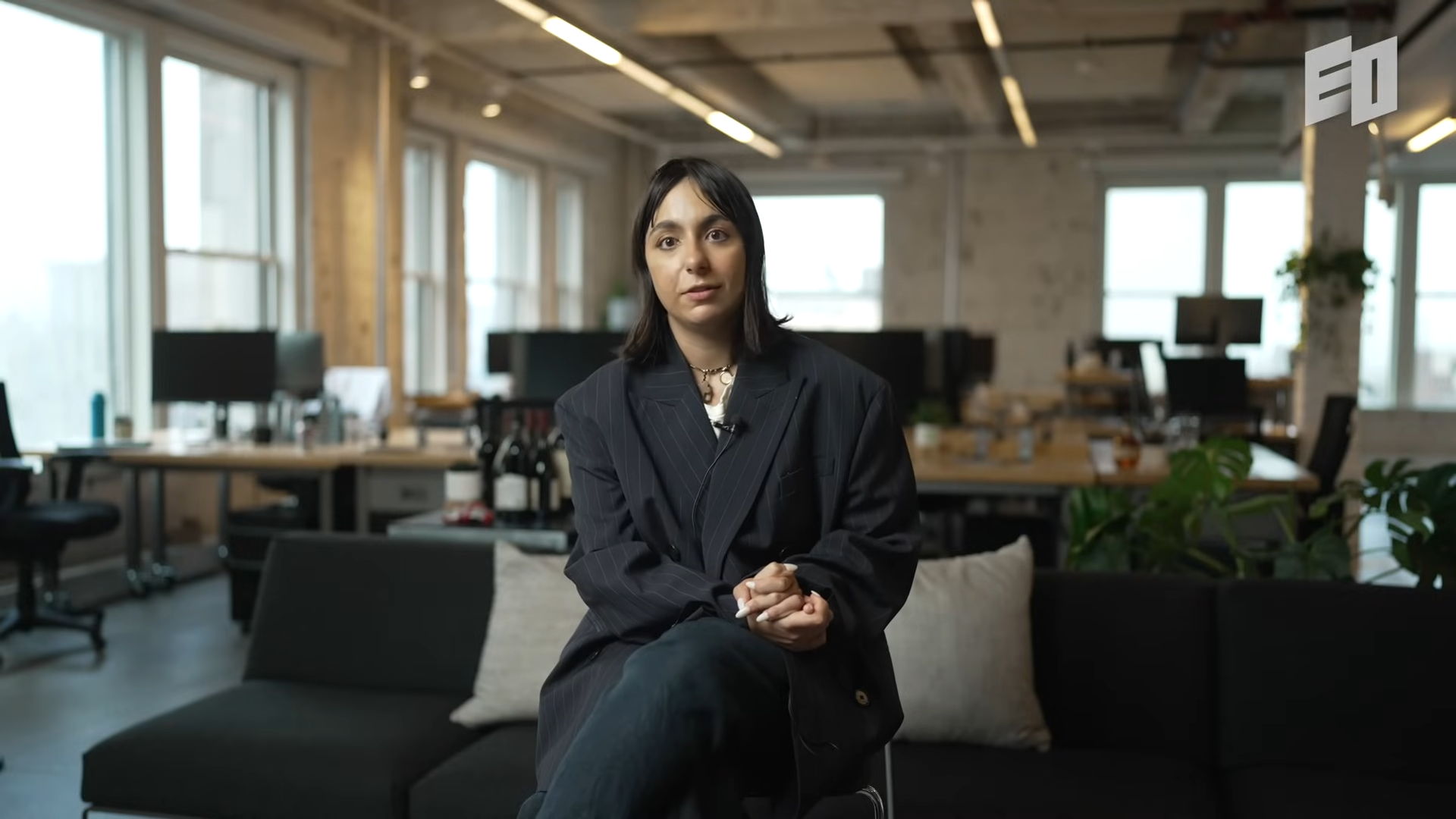
Hi, I'm Naré, I'm the CEO and co-founder at Ntropy. At Ntropy, we build language models to understand financial data at scale, regardless of source, format, language and currency. We have raised over 14 million USD. The company has been live for about three years now and we have 100 customers.
Chapter 1. An Armenian Girl in a War
I was born in Armenia. It's a small country in the southern Caucasus. When I was born, it was the year when the Soviet Union collapsed, and all the states that were part of the union became independent. A war broke out. So I was that generation that lived through the war. We didn't have electricity. We had it for a few years, like a couple of hours a day.
I remember as a kid, we used to get so excited because the lights were on and there were certain things you could do and hot water. That was definitely tough. There was always this idea and knowledge that our brothers and soldiers are fighting on the border, so we should make sacrifices so that they could be successful there. So people were brought up with that feeling and definitely want to get out of it.
And that's a huge motivator because you're not okay with where you are and what you're doing. And with the environment. That's definitely a motivator to try things and and yes, to want to to get out and do something bigger. I grew up there until I was 17. The very first time I actually left Armenia was being a part of a public speaking competition.
When I was a 14 or 15 and I came to the UK, it was part of a Edinburgh's program since then. When I got back, I thought, you know, the world is much bigger, there's so many different people, there's so much to do and I definitely want to be a part of it. And there was a program called Young Professionals at the United Nations, and you had to apply.
Before that, I was doing a lot of volunteering, working with United Nations associations who are a body of the UN, but not officially associated with them. And I applied, I knew a lot of people who were running sort of the eligibility everything else in Armenia I got in that was a great opportunity to, you know, leave and get started from scratch. I started my career at the United Nations.
I was working for the UNDp, focused on financial inclusion and going to the UN was this sort of childish dream of starting volunteering and actually then working for them, making a difference. So it has really shaped me in terms of wanting to leave a life where I would have that type of impact. Obviously, I was young and quite naive on what's possible and what's not, and UN is a very big, very bureaucratic organization.
So very quickly I decided that's not how I want to spend my time. Then I applied for a master's degree. That's how I ended up in London after the UN. University I was enrolled at University College London. That was the place where DeepMind, which was one of the top labs in artificial intelligence in the world, the biggest inspiration and I think it was very lucky.
If you look at what's happening in AI right now, you know, the biggest innovations, etc. a lot of that has also come from that lab and the people who were involved. That atmosphere, everybody talking about that, how transformative AI was, that was super fascinating. And I was close to that. So I knew that, yes, I don't have a background in it, but I definitely want to be a part of that world.
It was hard because obviously you have a lot of imposter syndrome, and I was doing, Andrew Ng's Stanford course, I was the first time I ever came across machine learning. I remember I had to Google even simple things. I had to start from zero and Google the terms and then try to figure out what it meant, and then translate that into some old mathematics knowledge that I had to be able to even get close to.
If you're growing up in a small place with a lot of political issues and conflict, the ceiling to what's possible is very low. No matter how much you try. And it seemed like here everything was possible. You just needed to find your way. I would never think that would be the first thing I would do out of uni. So I had two options.
I could go back or I could stay and start a company, and there was a really good sort of situation where you would get backing and get a visa to be an entrepreneur. I remember we, I registered the company and I was like, okay, I think I need to figure out what I'm going to build now.
And I was doing a lot of work with Unicef in the UK at the same time as I was studying, and one of the biggest insights there was that, young children and also as they grow into teens, had a lot of behavioral and mental health issues. And this was creating problems at schools, especially the vulnerable ones that we were working with, Unicef.
The initial idea with Mindbin was to to be able to detect behavioral and mental health issues in a passive way from how they were interacting with their phones because everybody was on their phone, because if you didn't understand those issues early, then they would end up not doing well at school, having problems, getting kicked out, not being able to go to college, and so on and so forth.
I had a co-founder who had an engineering background and was doing research specifically about bipolar disorder. And how could you detect that from how people type on their phones. So we decided to combine that research and commercialize it. It was quite a journey. We were very small, had no idea what we were doing like to begin with.
It was just very okay, let's try and learn and had a lot of pivots in terms of like what the product was supposed to be. In the end, it ended up being a solution that would be a part of an employer health care platform, because that was the way we thought we, we could monetize it. We were working with Mercer.
That was like the one big customer that we had Privacy laws in EU, but also like California privacy law came out. What Apple was doing with keyboards became a massive problem because now the technology almost couldn't work. You couldn't really get the data out of the phone. If a majority of people are using iPhones to be able to analyze it and do anything with it It was like a small sort of IP acquisition.
And then we had to move on and we we didn't make it big. I did two things after that happened. First, I had this like feeling that, okay, I wanted to be an entrepreneur. We kind of did something, but it wasn't quite exactly, you know, where I wanted to be in the end.
So I was just on the beginning of the journey and back to square one At the same time, when you're running a startup, you don't get to pay yourself a lot. It had been going for a while, so I had to get a proper job that would pay.
And thankfully I got involved with London Co-Investment fund and got an opportunity to do some investing and like work with entrepreneurs, which would also pay the bills, which was exciting. Then I started Ntropy a bit later with a friend of mine who I knew through the years, who had a different company.
I met him, he was he had a different company that was a part of Techstars, and I met him at the demo day. We had a short introduction, and in that context, he had grown up in Russia and then left for Norway and then worked in the US at Microsoft Research. He did a master's and then a PhD at ETH. So culturally, backgrounds wise, we had quite a few things in common.
We did speak Russian. That was a good sort of conversation starter, but we both wanted to do this and we got along and we had very complementary skill sets, so we decided to give it a go. We've definitely had our moments. It's not ideal and there's a lot of learning because you do change through time and your company changes and the needs of the company change.
We definitely were friends first before being co-founders, and I remember we had this conversation that no matter where the company goes, we should still stay friends. And, yeah, it was it was a tough decision to transition to that.
Chapter 2. Messy Financial Data
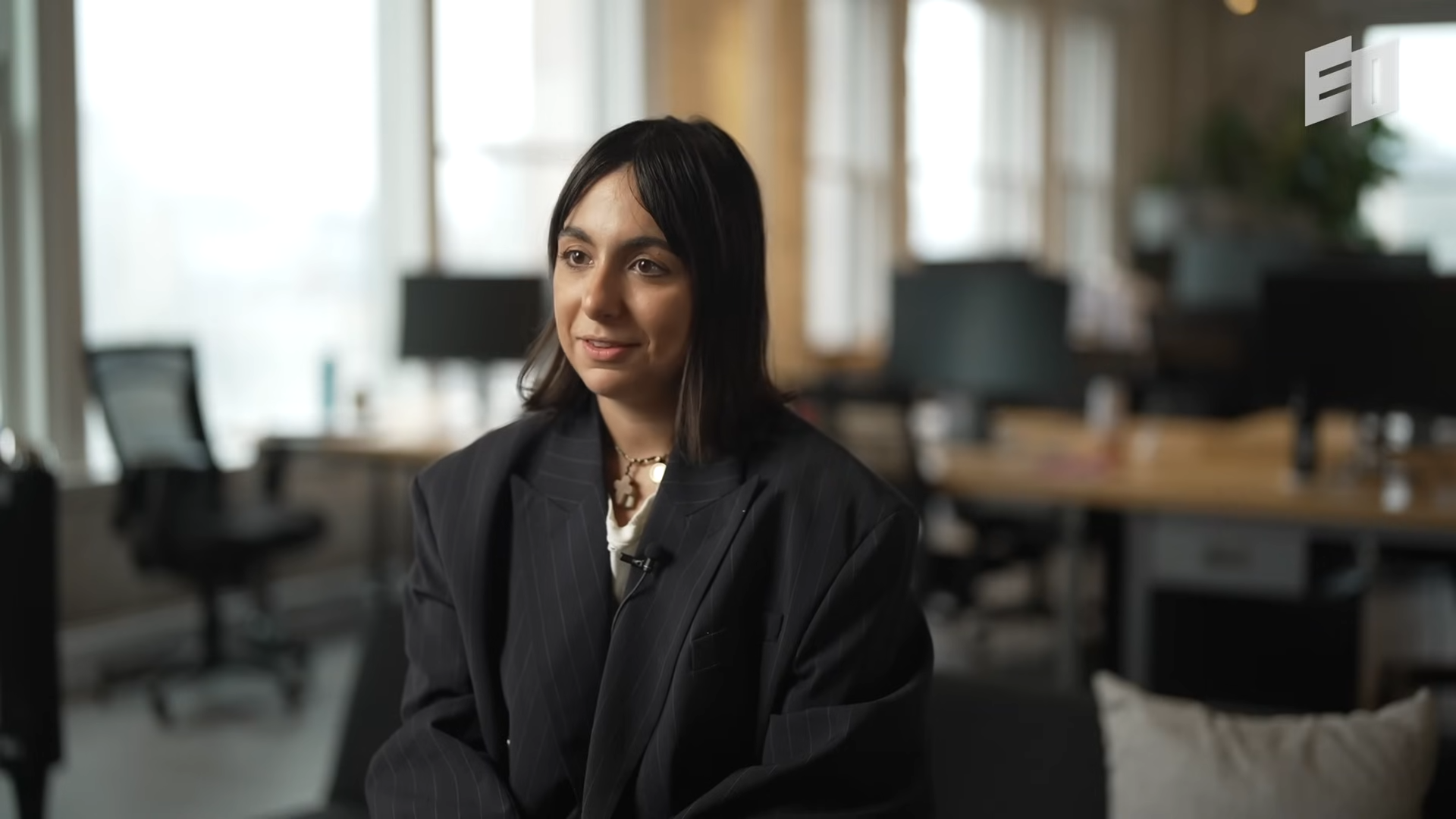
Every time we pay for something, whether it is online, when we purchase someting or at a point of sale, there's a trace of that created and that trace It's a string of text that lives in the computer of your bank, in the computer of the network that is making sure that transaction happens. Imagine every single person does probably like at least two transactions a day.
So then if a bank has millions of customers, that's quite a lot of transactions that humans have to go through one by one trying to understand what it was about. Who were you paying? A lot of the banks run on legacy systems that are over 30 years old. There's many of those systems. There's no single standard, which ends up creating a very messy string of information.
What we do as a company, we build language models to understand financial data at scale. So we use this technology to make that data understandable to anyone. And it's very good at generalizing compared to anything that was there before. Because as we've seen in the last couple of years, the larger the model, the better it is at generalizing.
So when we were talking with Ilya, who is my co-founder, we realized that it's going to bring a massive change to how people experience money and how they deal with money. And, you know, the way financial products are. However, when you're getting started, you don't have data, and it's very hard for a computer to do a good job if it hasn't seen good examples before. So you have this chicken and egg problem, okay.
You're trying to make bad data good, but you don't have good examples. So how are you going to do it. Our first data set we actually created, we had a consumer web page where we would help people understand their own bank transactions. So we would ask people to upload those transactions and we would help them understand what it was about. That was the first sort of data set that we trained on.
It was very, very small. Once we did that, then it was all driven. You know, the first customers that tested with us, they would provide data. We weren't very good at understanding it because the model hadn't seen much data. But I think the biggest thing that we got right was giving it into the hands of customers straight away, and they would use it, and the results were questionable.
However, it made our system better because the more data was coming and the more the customers were testing it, the better the system was getting. And that was quite a journey.
I think one thing that we realized a bit later than I would want us to is if you're building a very horizontal platform, like data for anything, anywhere to solve any financial services problems, it's very hard to market it, to make it easy to understand and to get it into the hands of the right people. It's almost always easier to start from a niche and then expand.
And we didn't want to compromise for a while because we knew that we need to have diverse data sources, we need to be able to do different things. So we didn't want to compromise. It took us a while to actually say, okay, we can do this horizontally, but now let's focus on the areas that we want to, you know, double down on.
Even though the product is applicable to everything, you need to have a very defined customer type that you're selling to very defined language on how you're selling to them and how you're solving their problem before you go fully horizontal.
Chapter 3. Stay Optimistic
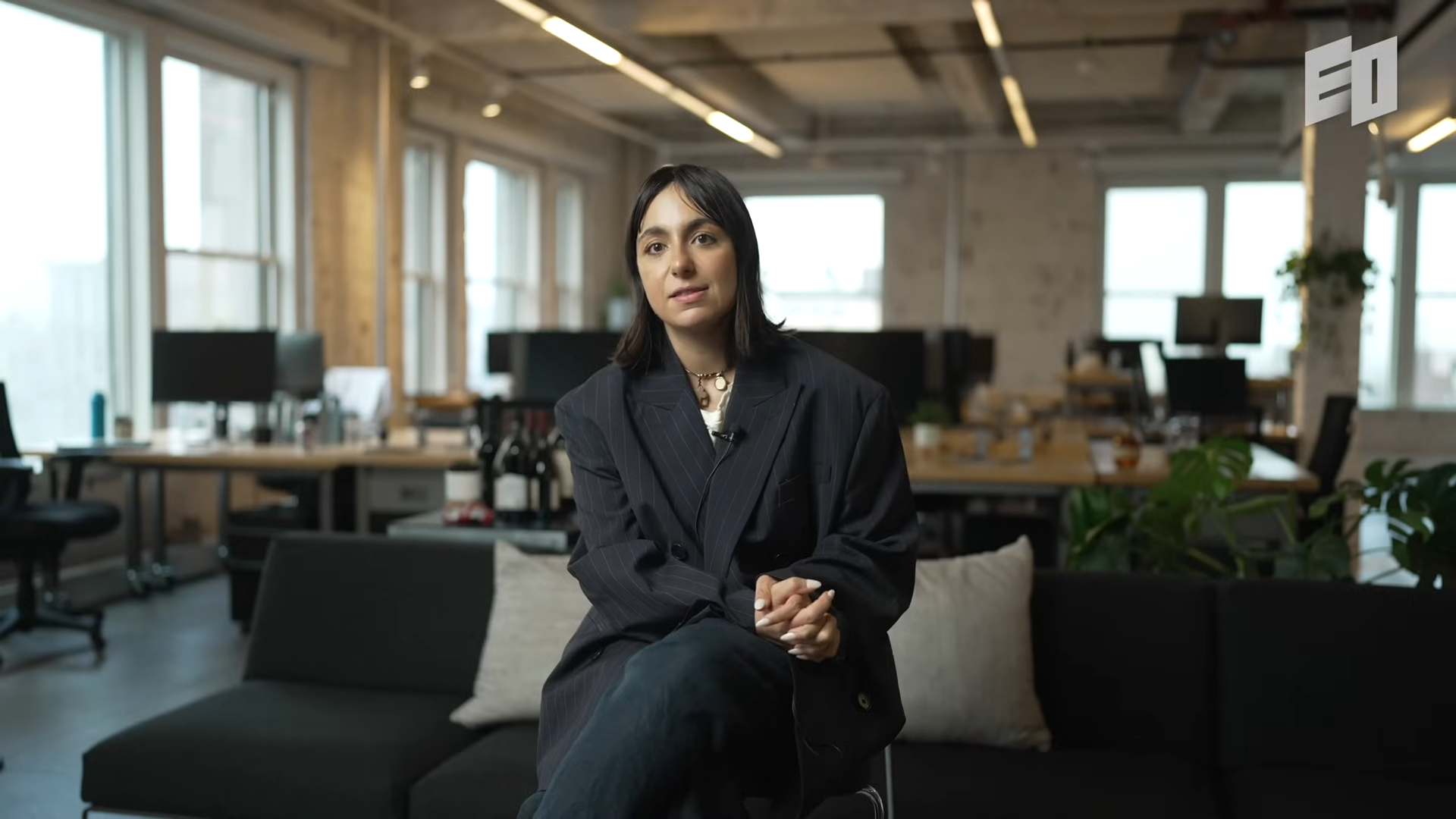
When I raised our seed round, two days after the money hit the bank account, I found out that I was pregnant. I hadn't specifically planned it. It was extremely challenging from like so many different perspectives. You know, you have different identities as a person. You have your identity as a CEO and founder. You have your identity as someone's mom, and then you're also a woman with who's going through this.
Honestly, I think it's an insane transformation in any possible way, and you have to match all those identities together. I was very scared, and one of the things that I was scared about is that I was not going to do a great job.
I wasn't going to do a great job as a mom as well as a consequence, because I thought I would have resentment if I did fail in one part of my life, and then that would sort of become resentment. And I was very scared about telling people I remember it was quite a journey, talking to our board and even talking to my co-founder.
I think my own reaction on how people would react and what I owed to other people, and the fact that I had to be like, you know, strong and not show that I feel bad physically or mentally, etc. you know, those were things that I was afraid of. But as soon as I talked to other people that were very, very supportive, I think fighting those demons internally definitely took some time.
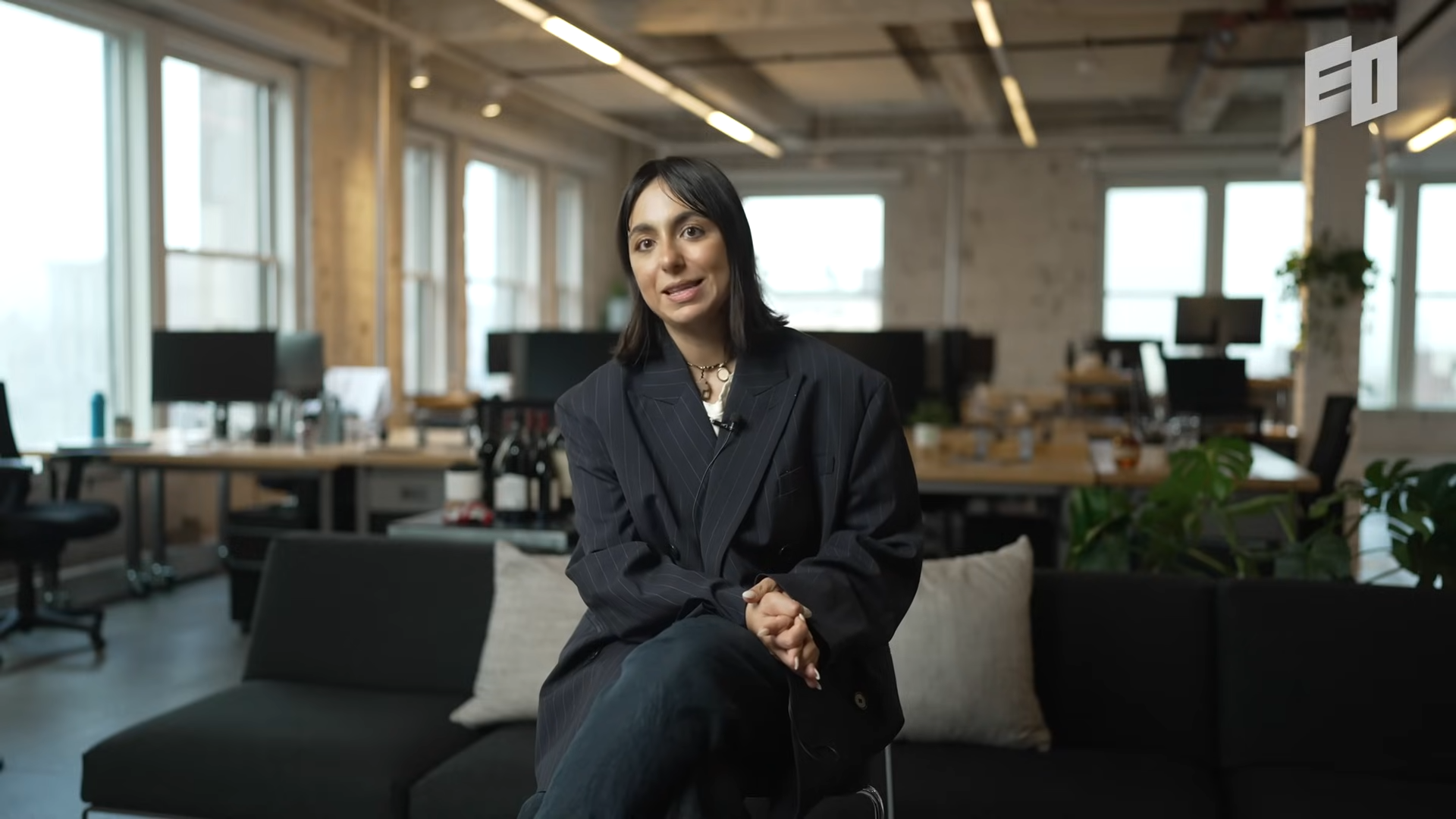
I'm always very scared of giving generic advice, but I would say hope is an important thing. Believing that there's a lot of good in the world and that the world is a beautiful place. Like that type of optimism is like the most important thing. And sometimes you can find that optimism in situations where people are very, very desperate and the conditions are terrible and that optimism leads them to better places.
So not losing that, I think is very important. If you think about, I mean, we're in New York City right now. We look out of the window. There's all of these buildings, cars, advertising everything that we're surrounded by in the human world was created by somebody. And entrepreneurship is the journey of making those things. It's sometimes can be complicated. It's resource intensive. It requires humans and collaboration.
But at the end of the day, it is making things. It doesn't have to be a product necessarily, or something physical or even software. It can also be an experience. But at the heart of it is still this creation. Something wasn't there before and you make it happen. I never want to settle if that can be framed as a goal.
The reason I said it was tough learning that I was going to be a mom while being an entrepreneur is there was this fear of settling, of having to stop who I was and what I was and thinking that, okay, now I cannot do the things I want to do. It's happened on a few other occasions in my life, and I've realized that no, you don't have to.
And that ability to continue, you know, not settling for what is, but trying different things and trying to get to more places is important. That's definitely my goal.