At a Glance
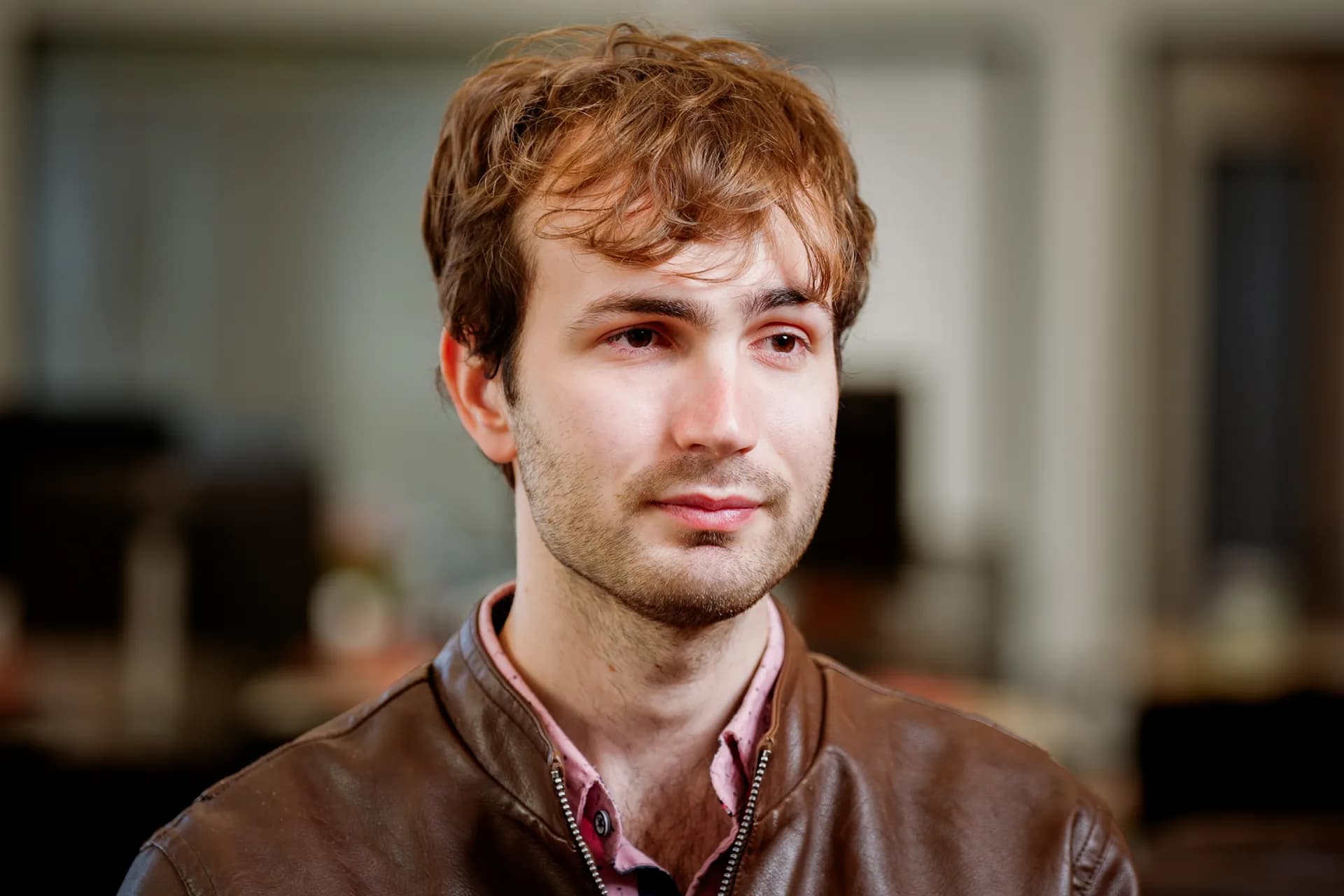
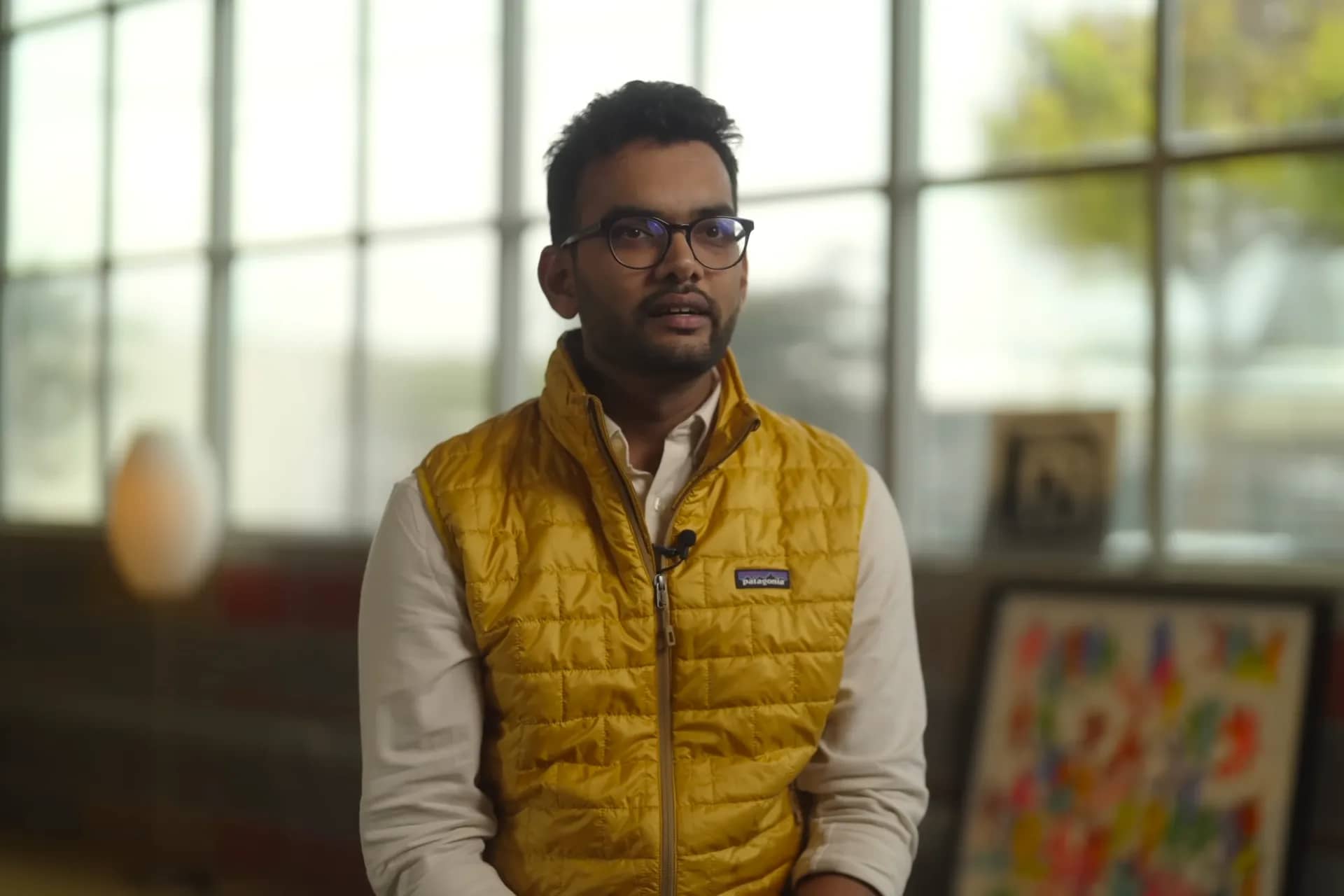
- Who: Akshay Kothari is co-founder and COO of Notion; he previously founded Pulse, a news reader that reached #1 on the App Store and was namechecked by Steve Jobs at WWDC 2010, before selling it to LinkedIn in 2013. Ivan Zhao is co-founder and CEO of Notion, and built the company around the belief that computing devices should be tools for creation, not just consumption.
- What: Notion is a modular productivity platform, built from reusable building blocks, that lets teams handle notes, knowledge bases, and project management in one workspace; it later launched Notion AI to generate and summarize content directly inside that workspace.
- Traction: Notion grew from 8 employees in 2018 to close to 500 today, growing the business over 100-fold in four years; its Korea community alone has 43,000 members, and it is built by just over 100 engineers.
In this interview, Akshay Kothari and Ivan Zhao trace Notion's near shutdown, when the founding team retreated to Kyoto to keep building on a shrinking budget, and the pivot that followed: trading an open-ended app-building platform for simple templates built around the jobs people actually show up to do.
Kothari also explains how selling his first company, Pulse, to LinkedIn shaped the way he now thinks about product and distribution at Notion, and why he believes founders too often fall in love with becoming an entrepreneur before they fall in love with a real problem. They close by describing why Notion deliberately lets its pace-setting and truth-seeking values pull against each other inside the company.
Key Takeaways
Release Early Enough To Learn From Real Users
Akshay Kothari credits a professor's push to release Pulse in beta before it felt finished. Public feedback improved the product, helped it reach the market, and turned a fast class project into a company, making action a practical learning strategy.
Build For A Real Problem, Then Plan Distribution
Pulse worked because it addressed the practical difficulty of reading news on a phone, not because its founders merely wanted to become entrepreneurs. Kothari adds that product quality is only half the challenge, since customers must also be able to discover it.
People Want To Work, Not Build Software
Notion's first platform asked people to create their own applications, but the team learned that most users wake up with a job to do instead. The failure reframed the product around useful outcomes while keeping the underlying building blocks available.
Templates Turn Notion's Platform Into Product-Market Fit
Notion found its tipping point by moving from asking users to build software toward offering templates for concrete work such as knowledge sharing. The capabilities remained underneath, but the message connected them to immediate jobs and helped the company scale.
Modular Products Let Communities Package Use Cases
Notion's engineers build reusable blocks instead of separate applications, while marketing and the community turn those blocks into templates for specific needs. This division keeps the product lean and lets users and advocates help package the platform for new audiences.
Let Values Resolve Speed And Rigor Tensions
Notion's values pair pace-setting with truth-seeking, allowing different decisions to demand different tempos. The company also emphasizes kindness and directness, using memorable principles to hire people, challenge decisions, and keep its long-term mission visible as it grows.
Watch the full interview now on EO's YouTube channel! Below is the complete transcription of the interview. Minor edits have been made for clarity and readability.
Introducing Akshay Kothari, co-founder of Notion
Akshay Korhari(Co-founder of Notion): I'm Akshay Kothari. I'm the co-founder and COO of Notion. Notion is a productivity software company. And what we're trying to do is essentially provide you one simple medium where you can essentially do all your work, everything from note taking to having a knowledge base for a company, managing your projects all in a single medium.
We've done this by giving people building blocks for what these apps are built from. Before this, I was at LinkedIn for many years when they acquired my previous startup Pulse. I'm excited to chat with you today.
Akshay's background
Akshay: I was really good at math and physics, and I studied electrical engineering when I came to the US. And I actually did a lot of engineering internships. It turns out that I didn't enjoy it that much. I found the engineering work to be a bit too sort of granular. I haven't really coded in a long time. I'm much more interested in product and business and the intersection of that.
I wanted to sort of take a step back and think about maybe more larger, higher level sort of product business things that I could be working on in between my bachelor's degree, in my master's degree, I spent a year in venture capital. That was actually a very important year for me because I got to meet a lot of entrepreneurs. After hearing pitches for about a year, I realized that I wanted to be on the other side and not just hear pitches as an investor, but actually start something of my own.
That took me to Stanford. So I went to Stanford for two years, every quarter, and tried to start a company. Many of them failed, but in my last quarter, I started Pulse, which was essentially a news application built for the iPad back in 2010. We built this as a class project at Stanford. We built this pretty fast. We had to; the whole class was 11 weeks, so we built this sort of hacked-up version of Pulse in about six weeks, and we sort of put it out in the App Store; not sure how it would do.
In a couple of weeks. It sort of went up to the top of the App Store. A few weeks later, Steve Jobs talked about it at WWDC in 2010.
"And again, let me just show you some of the latest apps that have been out, Pulse, which is a wonderful RSS reader, if you haven't seen it."Steve JobsCo-founder of Apple
And overnight it went from like a class project to being a company.
I think the big learning is that when you're building something, your natural inclination might be not to release it publicly. I wanted to make things better. I think if I had done that, I probably would never have released it. I think the professor in the class, I remember Michael Deering, pushed me to release even the beta version of the product we had.
And by putting it out there, we got so much feedback; we improved it, we got into the market, and we became a company. So I think there's a sort of bias towards action of actually shipping something quickly. It worked out really well for us.
I think the second thing that I learned was that many times, we are much more interested in becoming an entrepreneur or starting a company rather than actually solving a problem. And if I think about Pulse versus the previous things I had done, Pulse was actually solving a real problem that existed, which was that it was impossible to read news on your phone back in 2010. If you build something that people want, that people are struggling with, they will come and actually use the product.
And then probably the last thing I would say is that I think product is only half of the puzzle. I think you have to think about distribution and how you take the product to market. That's something that we use, and I think a lot about Notion. We could be building the best possible product in this office, but if we don't figure out a way to distribute our product, people will never know what we've built.
Notion's first failure
Ivan Zhao (CEO of Notion): In college, I studied cognitive science, how a human brain works, and a little bit of computing and a little bit of philosophy. But I really got into fine art as well, photography. At the end of my school years, most of my friends are artists. I'm the only person who knows how to code in my friends' circle, so I started building web pages for everyone. After making those three, four, or five websites, those people are creative. They can build their own websites if they know how.
Computing is a medium; they don't know how to speak that medium. With Spotify as a tool, everybody can play music. At that stage, I was thinking a lot about how I could help other people create their websites.
Akshay: Ivan was based in Canada and he decided to come to the Bay Area in San Francisco In 2011. He put out a simple post in Hacker News which basically said like, Hey, I'm a designer, I'm looking for a job. I want to work in San Francisco.
I essentially wanted to hire him as a designer. We actually gave him an offer to join Pulse back in 2011, but he ended up joining another company. But we kept in touch, and after I had sold Pulse to LinkedIn in 2013, he was about to start Notion. Notion ended up being my first investment. I had no intention of joining full time. I think that happened five years later.
I think even before he started Notion, I think he was thinking about this problem for many years. He deeply believes that everyone can be a creator and that computing devices are built for creation, not just consumption. To me, that felt like a really compelling mission because if you can actually make it happen, then you can unleash a lot of creativity in the world.
In many ways, when you're investing in early stage, I think you're sort of like betting on the person much more than the idea, because the idea can actually change. For that specific thing, it was very easy to bet on Ivan because you could see the passion and sort of deep thinking he had done before, even before he started Notion.
Ivan: At your environment. Those are the documents you have in motion. If we try to reorder stuff, you just drag it where you think it should be. The very first version of Notion is a web page builder. That's the prototype. And from there, it evolved into a web app builder. That's pretty much the first few years of Notion.
It took me several years to realize that people don't want to build apps. Very few people want to do that. It's kind of collaborative building apps. It's kind of like document editing. It's kind of like Xcode for the web. It's very confusing. On top of that, we're building on top of some technical foundation that wasn't stable, so it was very hard to tell whether it was our own bug or if it was a bug coming from the platform we're using.
So fundamentally, we have to rewrite the whole software. We're going to run out of time if we don't reset the company. I think the most important one is about yourself. It's about are you building something for yourself or are you building something that the world wants? The first person notion very much what you think the world wants, what you want.
Akshay: So Notion's first approach was essentially to create this platform where you can build software. So it gave you all the building blocks, and it basically said, "Okay, now you can take these building blocks and build whatever software you can dream about." The challenge is that people don't wake up wanting to build software. People just wake up to do their job.
Notion's PMF story
Ivan: At that time, the team is about four or five people. Sam, my co-founder, and I would probably run out of money, unfortunately, lay off everybody, and go somewhere small, interesting, and quiet, and we could just focus on coding. Look, out of Japan, because neither of us has been to Japan, and we always want to go.
And the reason for Kyoto is if you look at on Airbnb, Tokyo and Osaka or other major cities, the rooms are fairly small, the apartments are fairly small. But for Kyoto, probably because during World War II it wasn't bombed, a lot of older houses are still there. They're quite a bit bigger. And the pace of life in the city is slower as well. So for folks, I'm working on things, and it's a much cheaper city than San Francisco. So the Notion that everybody is working on today is built from that stage.
Akshay: So in 2018 summer, Ivan and I got together for breakfast just to catch up. I was on LinkedIn, and I was itching to get back into the garage and build again, and I thought I would probably leave LinkedIn and start my own company. But as you were having breakfast heat, I haven't talked a lot about the 2.0 release, which introduced the database.
The tipping point for us was when we moved away from asking you to build software to providing you with simple templates that allow you to do your job. We came in and said, Hey, here's a knowledge base so you can collaborate with all your friends. Now, underneath that product, all the capabilities still exist. You can still modify it; you can still build your own software, but my marketing to you is less about that and more about specific things that you need to do your job and how Notion fills that gap.
As we were talking, Ivan was looking for a COO who could really help scale the business. The company had about eight people then, and he offered me that role, which was really interesting. I think everything that I had done up until that point was more on the product side, and this role was basically a role that was trying to do everything inside the company except product.
I think his thinking was that if he could get a product counterpart to really help build our go-to-market and the foundational teams here, I think it would allow him to stay focused on product. And for me, this felt like a really interesting opportunity that I joined well before. I think most people knew about Notion, and I got to take something that had just hit product-market fit and take it to the masses.
After a lot of thinking, I decided to join in the fall of 2018, and it's been amazing to watch. I think we were eight people then, and we are close to 500 people now. Just in the four years business has grown over 100 fold in that time frame.
Haebom Lee (Notion Consultant): As the first Notion consultant in Korea, I believe the key to Notion’s global success is Notion’s user community worldwide. I discovered Notion on ProductHunt during the release of Notion 2.0. After using the product, I fell in love with Notion's database function.
I then took to social media posts to share my knowledge, knowhow, and templates and guides to contribute to growth of the Notion community in Korea. Today, the community has 43K members. It’s amazing to see similar Notion communities popping up all over the world.
Ivan: It's kind of like art combined with technology; it's very intuition-driven. So a lot of things that just feels right and other things we try to keep things very, we call it keep a extremely simple, the simplest. We use the word dumb, like so dumb that you need to pay too much attention to start picking up and start using it because it feels really natural. It should just feel like an extension of your body.
You know how to use your hands. You know how to use very simple tools like a pen or a cup because they're evolved so long with you. A fundamental is solving people's problems. If we do so, then people should love us. They will love us. There's a lot more room to grow.
Akshay: You can do so many different things with Notion, but it's built by just over 100 engineers. I think the reason that is possible is because architecturally we have built the sort of the Notion product in a way that is very modular and we sort of want to expose these building blocks to other people. For example, we are not building a CRM or we are not building a specific project management software, but we're giving you all the building blocks so that you can build it.
Similar to Lego, I think the engineers focus on building the building blocks and then we have the marketing team and the community that takes the building blocks and creates templates that market specific use cases, and that makes it a very efficient engine. Engineers don't have to think about building a very specific use case. They focus on just building capability and then marketing and other stakeholders build a packaging that we can go out and sell. I think that's probably one of the reasons why a Notion has been able to stay so lean as we've grown to scale so far.
Today we're introducing Notion AI, which brings the power of artificial intelligence directly into your Notion workspace. Let's say we're writing a blog post to introduce Notion AI. It's a simple as asking AI assist for help and clicking generate post. Next, just sit back and watch as artificial intelligence completes your first draft.Notion AI release video
Akshay: Notion AI allows people to essentially just tell it what you're trying to do, and it sort of automatically generates a lot of content or does a lot of things that you want it to. If you have a long doc, you can ask it to summarize things. If you are starting from scratch, it's like a blank page. If you want some help, you can ask it to write a few things so that you can get started with it.
I think AI itself is changing every week. I'm excited to see how it evolves. It's been quite a fun journey, but at the same time it still feels like it's pretty early. I think there's still a lot of work to be done, and we still feel like our best days are ahead of us. So I'm excited to see what the next couple of years hold for us.
Notion's culture and core values
Akshay: We have four values at Notion. We are mission driven owners of our mission. So essentially our mission is to sort of enable ubiquitous software tool making, and we very much are owners of that.
The second value is that we are pacesetters, obviously a startup, so we need to move fast. I think that's one way we can win in the market.
The third value is we are truth seekers, which is that we spend a lot of time rigorously thinking about a specific decision before we actually move forward.
the fourth one is we are kind and direct. We want to be kind to our coworkers, but at the same time we want to be able to be direct and be honest with each other so that we're pushing each other to do our best work.
I think these four values are very much authentically us. It's not aspirationally us, but it's like who we are. We like that the second and third value, which is pace setting and truth seeking fight with each other, because in many cases some projects you want to move fast and in some cases you want to be able to take time and really rigorously think. So we like that they fight with each other so that we find like, okay, which projects can we move fast with? Which projects to we spend more time thinking about?
The fourth value of being kind and direct is obviously nice because we're not just trying to be nice with each other, we're trying to really achieve our mission and that requires us to be direct with each other. These values have really helped us hire the right people. These values have really helped us make a good decision sort of rubric for us. Like when we're making important decisions, we think about, does this represent the values we have? And it's memorable.
I can say these four values in my sleep now, which I think is nice because I don't have to think about what the values are. There was a long term sort of mission of the company is to create ubiquitous software tool making, which is the simple idea that there's a billion knowledge workers out there. And our hope is that all of them feel the power to modify or create their own software.
In doing that, we hope that Notion becomes the third generation of productivity software. After Microsoft Office and Google Suite, we're much more powerful in that, people will be able to not just take notes and manage projects, but we'll be able to create things that sort of work the way their brain works. So very excited about that. It'll probably take us more than a decade to get there, but we're excited to work on it.