May 20, 2025
From Apple to Oculus-Now Taking On Consumer Hardware
Interview with Nirav Patel, Founder of Framework
Founder Focused


💡
At a Glance
- Who: Nirav Patel is the founder and CEO of Framework, a self-described hardware guy who left Apple to become one of Oculus's earliest hires, personally recruited by Palmer Luckey.
- What: Framework builds laptops designed for repair and upgrades rather than replacement, competing inside the $200 billion notebook market.
- Traction: Framework has more than doubled its revenue year-over-year for the past several years, an unusually fast pace for a consumer electronics startup.
The consumer hardware market is often said to be one of the toughest to survive. Yet, Framework has continued to grow steadily, with its DIY laptop as a flagship product.
Founder and CEO Nirav Patel has been a self-proclaimed "hardware guy" since childhood, always deeply passionate about hardware. He not only gained experience as a software engineer at Apple but was also personally recruited to Oculus by Palmer Luckey himself. So, what kind of consumer hardware is he building? And how did he manage to succeed in a market where most fail?
Discover his secrets in "4 Steps to Win in the Market No One Survives."
Key Takeaways:
Why More Money Made Oculus Slower, Not Faster
Oculus shipped its first VR dev kit in six months while starved for cash, then took three years to ship its next product once Facebook's acquisition gave it unlimited resources. Unlimited hiring and unlimited budget removed the constraint that had been forcing fast iteration.
The One Prototype That Got Nirav Patel Recruited to Oculus in a Week
Patel had sent Palmer Luckey a motion-tracking prototype months before Oculus existed, just to get his feedback. When Luckey's headset needed exactly that piece, Patel got a job offer and was told to leave Apple within the week.
How Framework Decides Which Audiences a New Product Can Win
Before launching a product, Framework maps two audiences: who it can win first, and who it could win at the outer edge of the design. Locking in that range early shapes every decision about form factor, price, and features that follows.
Winning Gamers Meant Building for Upgradability, Not Chasing Every Customer at Once
Framework identified graphics upgradability as the one feature gamers couldn't get from any other laptop and built a form factor around it. Winning one persona at a time, rather than designing for everyone, is how the company expands its total audience over time.
Can a Hardware Startup Survive Without a Two-Year Fundraising Runway?
Hardware products typically take two years to go from idea to first revenue, so Framework talks to investors continuously rather than only when it needs cash. Reaching what Patel calls escape velocity, the point where the company can fund its own growth, requires showing the right traction at exactly the right moments along that runway.
The Real Secret to Surviving a Startup Is Refusing to Quit
Patel calls resiliency the single most important trait for a founder, above any specific strategy or playbook. Startups require pulling rabbits out of hats over and over, and survival comes down to being willing to keep reaching into the hat.
Watch the full interview now on EO's YouTube channel! Below is the complete transcription of the interview. Minor edits have been made for clarity and readability.
Introducing Nirav Patel, Founder and CEO of Framework
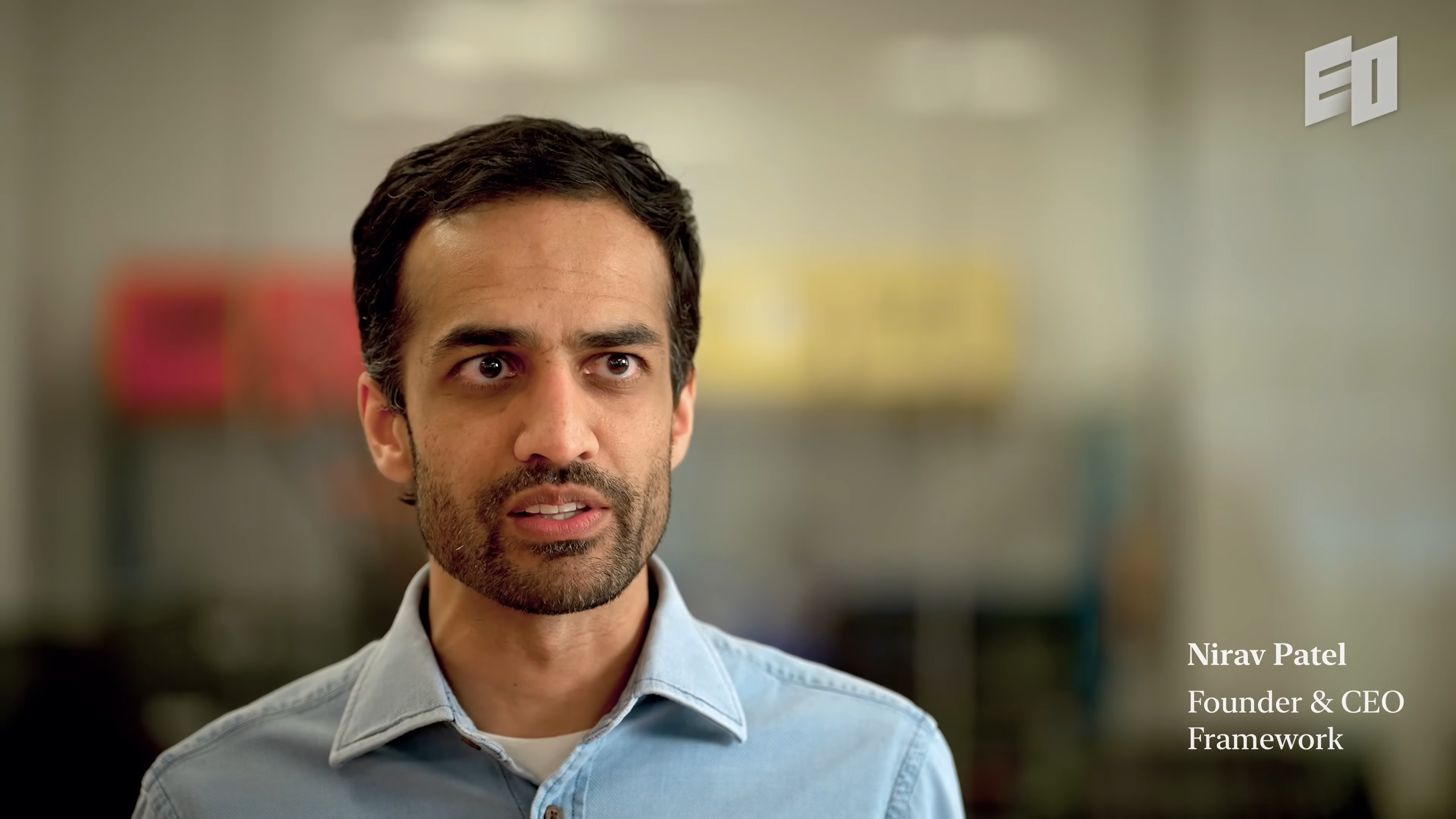
I'm Nirav Patel, founder and CEO of Framework.
So ultimately, fundamentally, I am a hardware person. There's screws flowing through my blood or something in there somewhere. My parents would occasionally complain when I would take stuff apart in the house, but usually I was able to successfully put it back together, so it ended up being okay. I want to build the best laptop. I want to build a laptop company. Framework is a company that builds longer-lasting consumer electronics products so that if anything ever happens to the product, something breaks or you need more out of it, more performance or more capability, you can open it up very easily using the screwdriver that we include in the box, swap out a part, and keep using it for longer.
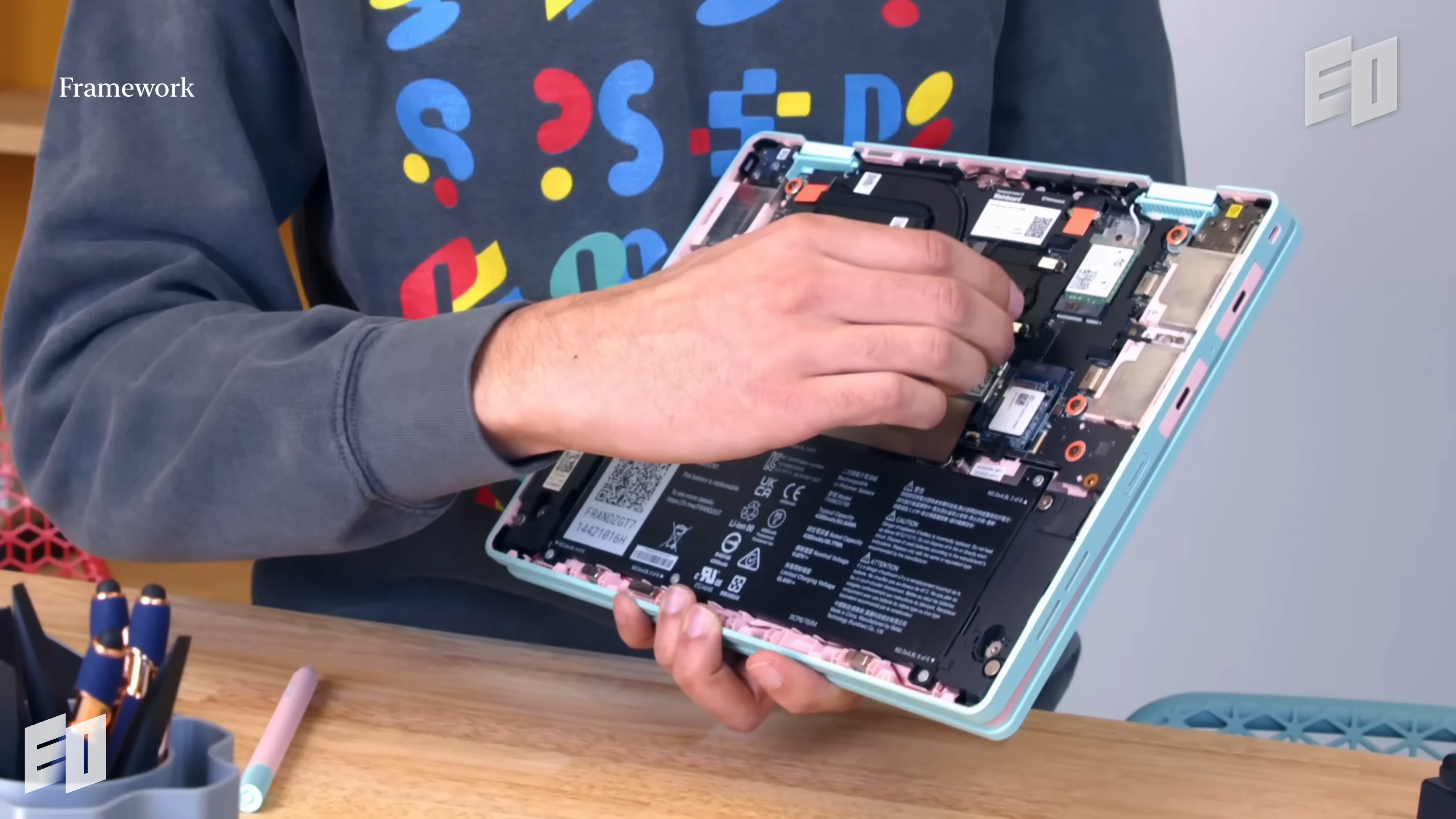
Growing more than double revenue year-over-year for the last couple of years, which is pretty unusual for a consumer electronics startup, especially in a pretty tough environment. Fundamentally, the mission is about empowering the end user of the product, making it clear that this is their product, not our product. One of the problems I thought was most important to solve was how hard it was for consumer electronics startups to be successful. But looking across consumer electronics, across the entire startup space, it was clear that there were a number of companies that had really interesting and really excellent products but failed. The thing I needed to do is prove that there's a better business model for consumer electronics.
What a Hardware Guy Learned at Apple
Actually, I graduated from university in 2009. That was a period of great economic uncertainty. It was the start of a pretty heavy recession, and there weren't a lot of jobs available. There was not a single hardware company hiring. But it turned out that Apple, in one of their software organizations, did have a role open that I was able to jump into right out of school.
I ended up at Apple for a little over three years, working on software, of all things. Apple had just released the iPhone 3GS. This was right at the dawn of smartphones becoming the default mode of interaction, and actually the default mode of computing. So I was working on FaceTime and GameKit and Game Center, which was this multiplayer games framework that Apple was developing from a software perspective. Mostly what that experience taught me was that I didn't really want to work in a company like Apple.
I ended up at Apple for a little over three years, working on software, of all things. Apple had just released the iPhone 3GS. This was right at the dawn of smartphones becoming the default mode of interaction, and actually the default mode of computing. So I was working on FaceTime and GameKit and Game Center, which was this multiplayer games framework that Apple was developing from a software perspective. Mostly what that experience taught me was that I didn't really want to work in a company like Apple.
“I Didn’t Want to Work at Apple”
One of the challenges at Apple is that it is a very, very siloed company. As an engineer there, it was actually quite frustrating that I would see all this cool hardware, or all this cool software, but have no real ability to either influence or even understand or speak to the people who were building it.
So I was working a relatively normal number of hours a week, say 40 to 50 hours a week, a normal number of hours. And I would spend another 40 to 50 hours a week actually tinkering on mostly VR stuff. And this was before VR was actually really a thing. Building these little gadgets and tools and toys to see what was even possible, and doing it within a community of other people who were like-minded. One of the other people in that community, probably the farthest along in that community, was someone named Palmer Luckey, who of course ended up founding Oculus. At the time he founded Oculus, back in 2012, there was just one piece of the headset that was missing, which was motion tracking.
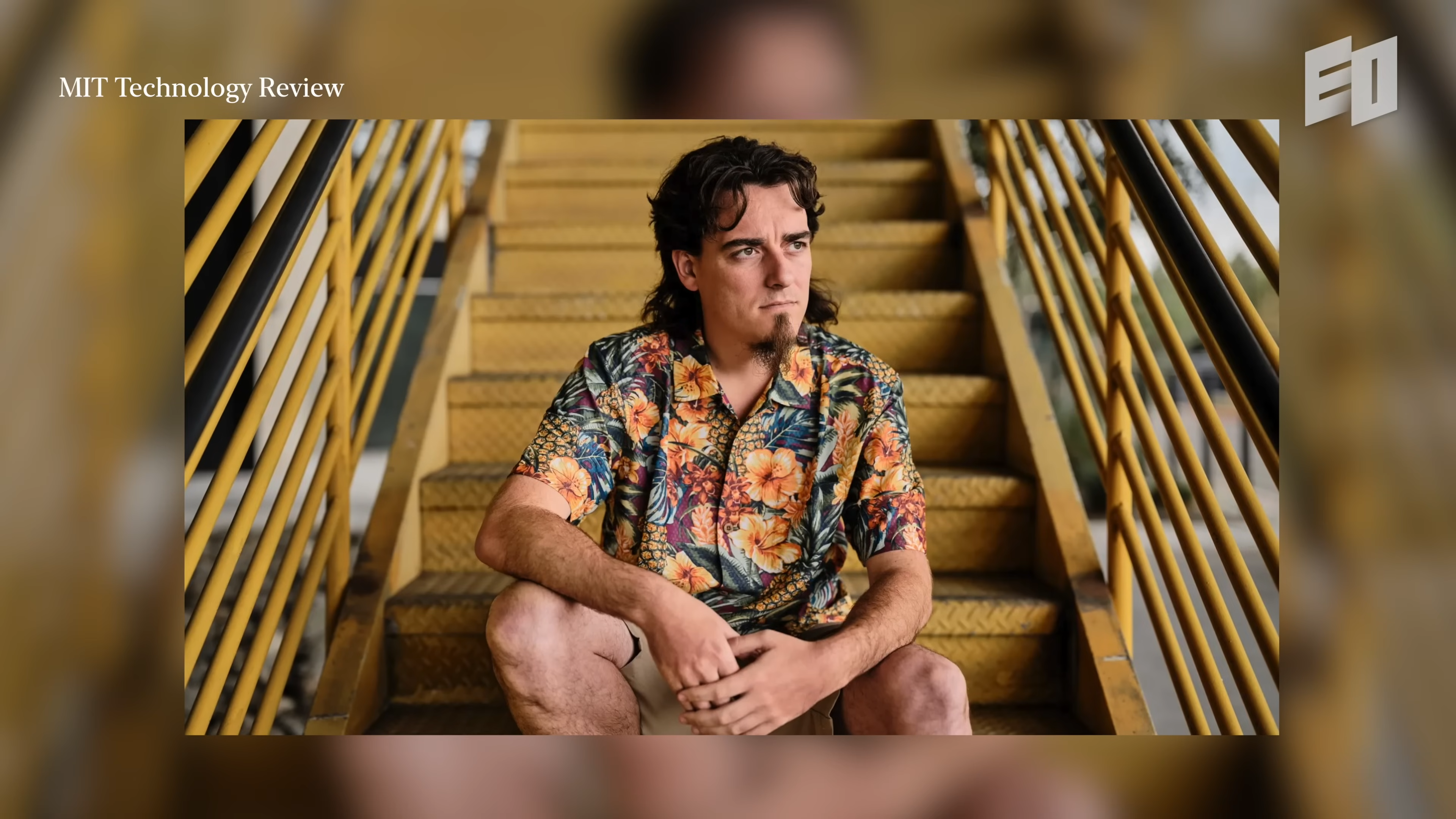
Motion tracking happened to be the one gadget that I was personally the furthest along on. I had sent one of two prototypes of the motion tracker I'd built to Palmer a few months earlier, just to get his thoughts on it and see if it would be useful to him. In mid-2012, Palmer reached out to me and asked if I wanted a demo of this VR headset he'd been building, and said, "Of course, of course I want a demo of it." I ended up meeting with him and the rest of the early team, the rest of the founding team there. And what I thought was going to be a demo turned into a job offer. They said, "You have to leave Apple and join us within a week, because we really need your motion tracker." And that was an obvious choice for me: I don't want to be at Apple, I want to be working on this cool stuff here. VR, let's do it.
But actually, the move from Apple to Oculus was a bit more of a jump, because at that point Apple was on its very rapid growth trajectory, and to leave that very rapidly growing company and join this scrappy startup of people trying to build VR seemed crazy on its surface. My parents at first were like, "Are you sure? This doesn't seem like a good idea." But I was convinced. I knew it was the right team of people. I knew it was the right technology space to explore at that time, and of course it ended up being a good bet to have taken.
Oculus's Biggest Mistake
The first two years of Oculus, from 2012 until we got acquired in 2014, literally every month was some new insane occurrence, insane change, insane learning. The pace of iteration we had across those two years, I look back on and think: how did we even do that? A normal hardware product, a consumer hardware product, takes somewhere between 12 to 24 months to go from the initial idea of "this is a product I want to build" to being able to do development cycles on it, ramp up production, and get it into a customer's hands. The Oculus Rift dev kit, the first dev kit, we went from the company forming to getting it into customers' hands in six months, which is not normal. That's not how you build hardware normally.
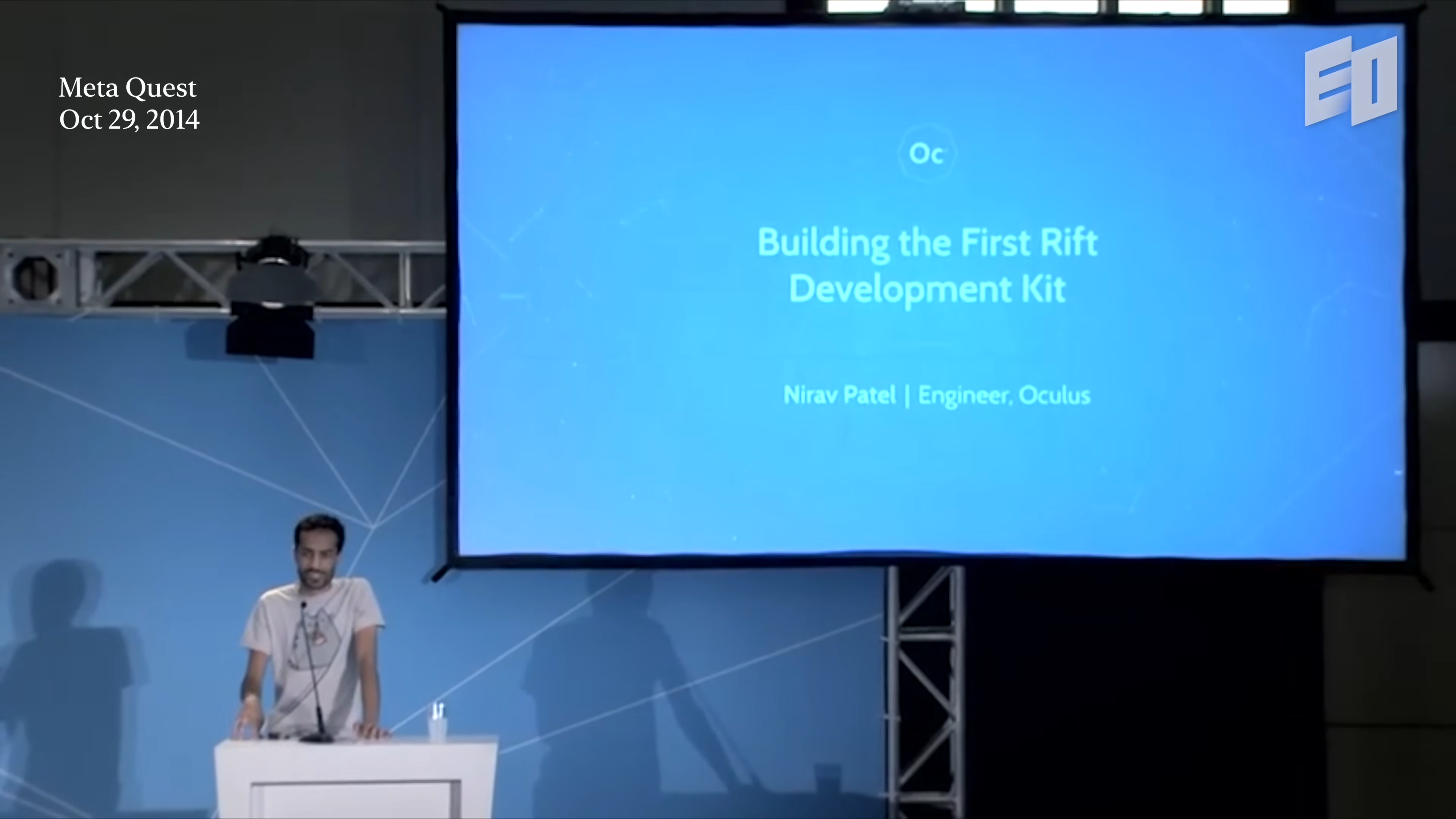
"Working with devs to get all this going, there are some really incredible and interesting stories around that, but that's not what this talk is about. This talk is only about the hardware side of the story. We decided to take a different optimization and optimize for getting the virtual reality ecosystem seeded as quickly as possible, for the sake of figuring out what VR is, what works and what doesn't work in VR. And for that we needed help from all of you, which required us to take the risk and build a product really quickly."Nirav PatelDuring his time being an Engineer at Oculus
One of the biggest mistakes we made is that, obviously, we were a startup. We were on a shoestring budget. We were being incredibly efficient. We were going as fast as we could because we knew we needed to make progress before running out of money, basically. And as soon as we got acquired by Facebook two years in, we had effectively unlimited money and unlimited resources, and we could hire literally as many people as we wanted to. There were actually no limits aside from how quickly we could physically onboard people, to how quickly we could hire. It actually slowed us down. It slowed us to a total halt, basically. We went from iterating on a new version of VR headsets essentially every few months, to not being able to ship another product for about three years. We lost the massive iteration velocity we had. And it meant that three-year bet, instead of the six-month bet, had to be so perfectly right, otherwise the opportunity cost of missing those three years would end up destroying us.
We kind of got it a little bit right, maybe not as right as we needed to, but looking back on it now, those early years at Facebook, what we really needed to be focused on was iteration speed, not trying to build a big team and build a big consumer polished product. And that's what brought me to then start up Framework, and then build an even more incredible team, but a very small, focused team where we have a clear mission, clear vision, clear roadmap that we're able to execute on.
4 Playbook for the Consumer Hardware Market
Step 1: Find the Market With Room to Grow
One of the things that works really well for us is that the market we're entering, the categories we're entering in each of our products, are just colossal. For us, we look at the $200 billion notebook market and we see massive, massive headroom to continue to grow and succeed in this business model that's focused on longevity. It actually means that the more we grow as a company, the more market share we capture, we're actually shrinking the size of the notebook industry, because we're going from a mode where consumers and businesses are defaulting to replacing a product, say every three to five years, to a mode where they're using the products for longer. And that's actually a win condition for us: we're converting an industry from one that is shorter-lived to one that's more efficient and longer-lived.
As a startup, we have an immense amount of headroom and a ceiling that's very far away that we can continue to grow within. But even as we capture more and more of that pie, that doesn't mean we would need to change our business model to go back into that transactional model that other companies are taking today. It means we've grown an install base that's large enough that this network-effects-based, re-engagement-based business is a massive business in itself. And of course, as a company, we're not only limiting ourselves to notebooks. We're taking the success we've had with notebooks and bringing that category by category across this huge consumer electronics industry. You're really thinking about the audiences you're going after.
Step 2: Make Teminal Audience
We actually have this concept that we call terminal audiences: the idea that we enter a new product category and lock in an industrial design and a form factor and set of features that define both the initial set of audiences we can win with most efficiently. But then also the terminal audience, basically the broadest, furthest-away audience we think we could still win with this product. And we make sure we know what those bounds are when we reach and build new products. For example, the Framework Laptop 12 gives us a moment of reset: this is a new category, we're entering a new segment. We have to figure out who our initial audiences are for this product, which actually start from the same core audiences as our other products. But then, who are the terminal audiences?
One thing we were deliberate about with this new product is we made it simpler. We made it much lower cost, and we made it more generally appealing to people who are not necessarily tech enthusiasts. So as we think about this product, the core tech enthusiast is still there as an initial audience, but our terminal audience is a lot bigger and a lot further away.
Step 3: Expand Audience from the Core
Audience expansion is definitely key to success in consumer startups in general. We have a set of core audiences that we layer outwards on top of, one by one, as we go. It's easy to come up with personas: define discrete personas like DIYer, Linux user, IT manager, environmentally conscious consumer. We have these very clear personas. But obviously in real life, people are more complex than that. Everyone is some combination of a million different things. So it's not that we necessarily have this clear set of layers where it's a discrete layer, discrete layer, discrete layer. It's that we're slowly growing the reach, awareness, and credibility of what we're doing as we go, and then pulling in the people whose personas match the things we're delivering value or interest around.
So we took that tech enthusiast gamer persona and the various sub-personas within it and thought: how do we win that audience? And we thought they want the latest and greatest graphics. Graphics upgradability is huge for that audience, and they just can't get it out of a laptop. So we thought, when we build our next laptop form factor, the thing we should prioritize is graphics upgradability, so we can go win that audience. This goes back to fulfilling our mission: we have this long-lasting, repairable, upgradeable product, but doing it in a way that also expands our audience reach by being not just a new version of our laptop in a different form factor, but enabling functionality that was actually the key thing holding back a specific set of consumers out there in the world.
Step 4: Draw a Fundraising Roadmap
One of the biggest things I've learned, and I've actually tried to share this with other people starting consumer hardware startups, is the critical fundraising roadmap. If you're building hardware, there's typically a two-year ramp from coming up with the product you want to build, to being able to ship the first version of it and collect revenue for the first time. If you can't fund your way to escape velocity, you're going to fail anyway. So what you need to do is think through: what is that path? What's the high-assurance path you have, as a company, with the product and business model you're building and the audiences you're going after, to reach escape velocity? Meaning the point in time where you're able to self-fund your own product roadmap and your own growth.
One of the most important things for consumer hardware, especially because those development timelines are so long, is to make sure you have funding in the loop: this idea that you're talking to investors very early and very regularly, so that at the right points in time, when you're going to need funding, you're able to show the right kinds of traction and the right kinds of metrics for those investors to see the signals they need to see, to be able to put funding into you.
Even though we have a product time horizon that's two years away, we have a vision time horizon that's 20 years away. We look out 20 years and see a world and a consumer electronics industry that's fundamentally different, that this business model we've adopted at scale is just so fundamentally more efficient than the traditional business model, and so much better as a model both for us as a company and for the customers buying the product, that we know it's a winning model. We see that as the north star for us that we continuously move ourselves toward as we go down this roadmap.
The Most Important Secret to Survive
The key lesson is: don't give up. That resiliency is the single most important trait, and you're going to have to pull rabbits out of hats over and over again in a startup. And as long as you are still willing to reach your hand into the hat and find another rabbit, you should keep going.