Interview with Nikita Shamgunov, CEO of Neon

At a Glance
- Who: Nikita Shamgunov is the CEO and founder of Neon. He previously worked on Microsoft SQL Server and at Facebook, then spent 10 years at SingleStore, which reached a peak valuation of $1.5 billion.
- What: Neon is a database company and developer platform built around serverless Postgres. Instead of managing servers, developers use a URL to connect to the database, and Neon is expanding from database as a service toward platform as a service and backend as a service.
- Traction: About 11 months into building Neon, its GitHub stars began rising sharply, which Shamgunov describes as the company's first product-market-fit signal. He says Neon now has product-market fit and that revenue grew more than sixfold this year.
In this interview, Nikita Shamgunov explains why he left SingleStore after 10 years to start Neon and how his experience at Microsoft, Facebook, and SingleStore shaped that decision. He describes how Neon looked for early product-market-fit signals through open source, GitHub stars, a public website, and an unexpected Hacker News discussion before launch.
He also explains why founders need to change their plans when the world changes, bring in people who understand the direction the market is moving, and keep going while the company is still growing.
Key Takeaways
Leave When You Still Want to Learn
Shamgunov spent 10 years at SingleStore and says that when he took over, the company was at roughly a $7 million run rate and later grew to more than $20 million. Eventually, the operational load fell and he felt the organization could probably perform just as well without him at the center. Combined with his desire to keep learning, that pushed him to leave and start another database company.
Validate Demand Before the Formal Launch
Shamgunov says great technology does not matter if people do not want the product. Neon built in the open, put its code on GitHub under a permissive license, and watched its stars begin to rise sharply about 11 months in. A leaked website then triggered a lively Hacker News discussion, giving the team another early signal of audience interest before launch.
Change the Plan When the World Changes
Shamgunov argues that founders should be honest when the original plan no longer fits reality. He recommends making the reasoning behind a plan explicit, even if it is only a simple one-two-three sequence rather than a long document. The point is to keep watching how technology and the market are changing and adjust when a new opportunity becomes more important.
Build the Team for Where the World Is Going
A team built for the old plan may not have the knowledge or capacity to move into a new direction. Shamgunov says founders should bring in people who are experts in the world the company is moving toward. Without the right people around the table, the company may struggle both to recognize the next opportunity and to execute against it.
Growth Changes How the Grind Feels
Shamgunov says startup life feels longest when growth slows or stops and the team has to keep forcing things to work. Neon feels different because the business is still growing, with revenue up more than sixfold this year and more customers coming onto the platform. As long as the company is in that state, he is willing to keep operating through the uncertainty.
Below is the complete transcription of the interview. Minor edits have been made for clarity and readability.
Introduction
My name is Nikita. I'm CEO and founder of Neon. This is my second company, so my previous company, SingleStore, at peak it was valued at $1.5 billion. Neon is a database company and a developer platform. Where do people get databases today? They either download them and install them themselves.
But Neon says we're serverless Postgres. We're saying, 'Don't worry about servers, here's just the URL, and the URL is all you need to know to build your application.' Neon is expanding its mission from being a database-as-a-service to platform-as-a-service, so backend-as-a-service.
Left $1.5B, Start Again
I'm building databases all my life. So at Microsoft, I joined the team called SQL Server. So when I joined Microsoft, first of all, it's an incredible team, but it's also a very, very old and stable product. I joined in 2005, and by the end of 2005 Microsoft released the product SQL Server 2005.
The previous release of that product was 2001. During that time, there were people that would come to Microsoft, work on the product, leave Microsoft, and never ship software at all. At the time, I had a phenomenal offer from Facebook, and then took a Facebook offer and moved down to Silicon Valley. At Facebook, the culture was very different from Microsoft, and the speed at which things were happening was absolutely insane.
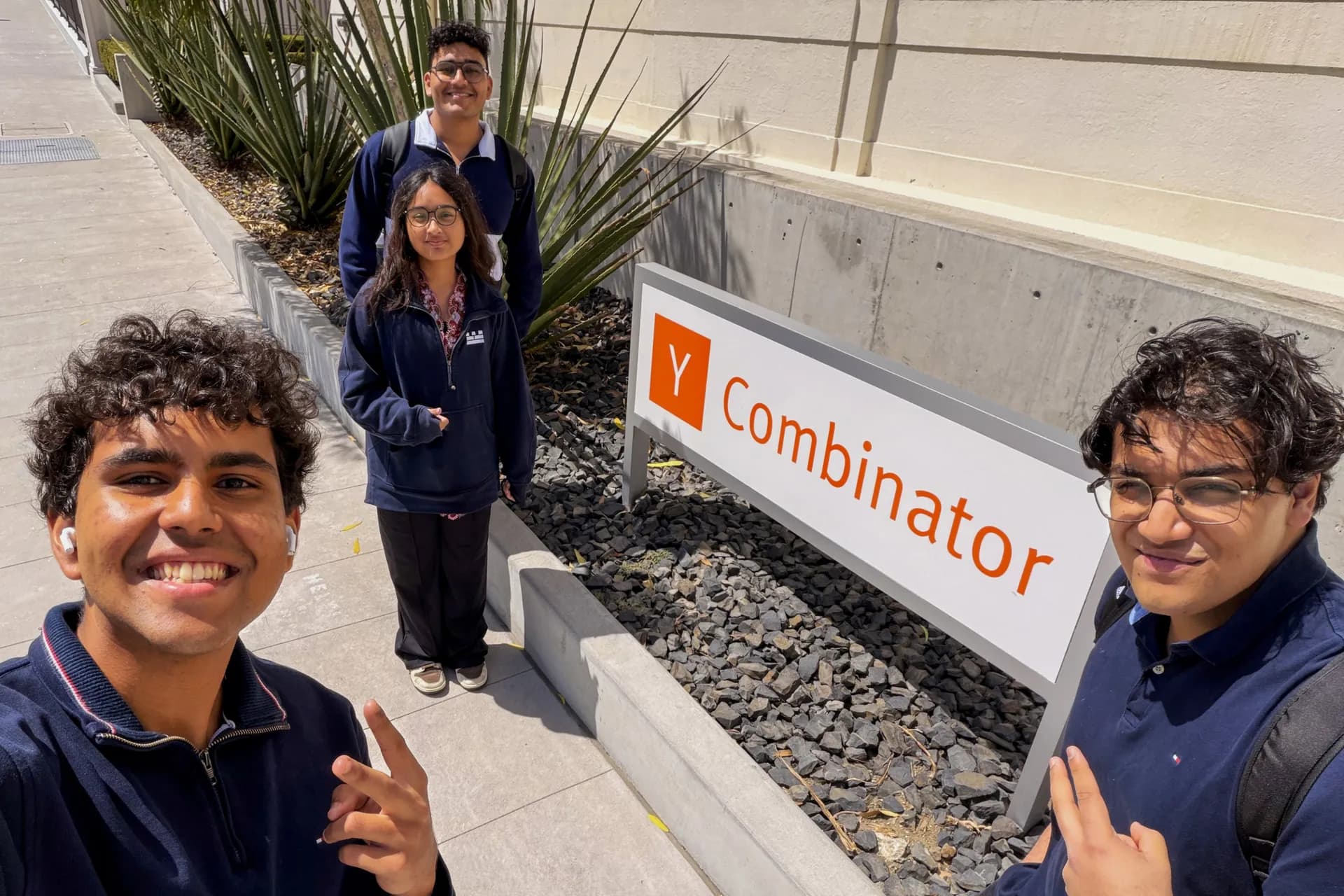
A lot of people just committed to the Facebook mission; that engagement was a lot higher. And once I experienced it, I realized that this engagement exists in startups and it does not exist in larger companies. Naturally, I was very susceptible to entrepreneurship, and then my co-founder, Eric, is like, "Well, shouldn't we apply to Y Combinator?" And we got accepted.
So my previous company, SingleStore, at peak was valued at $1.5 billion. I spent 10 years there. When I took over SingleStore, we were probably at a $7 million run rate; I took it to north of $20 million. And then, for the first time in my life, the amount of operational work reduced temporarily.
I'm not the most important layer, right? So you can just remove me from the organization and the organization will probably do just as good. And then I added this to the craving of learning breadth and made the plunge: started another database company, which is Neon. That's why I left SingleStore, and it panned out.
Don't Launch Yet, Show Them First
It doesn't matter how good your technology is if there's no product-market fit—do people want your stuff? The best feedback, of course, is people are willing to buy this product, right? But even before that, you kind of want to throw it out there and see that this product is needed by the world, and then you put all this energy into making that product and making it a high-quality product. You want to validate this hypothesis: how can you do that, and how can you do it as early in the startup cycle as possible?
We started to do those things. Open source is one. Then we put together a website, we were building in the open, all the code was available on GitHub, and moreover, all the code was available on GitHub with a very permissive license. And then about 11 months in, the number of GitHub stars on that product started to go vertical, meaning if you plot them on the line, all these people starring our repo, which means they're kind of interested in what we're doing, and that was our first product-market fit signal.
And then we put the website out. We didn't put a password on it, and we thought we were going to launch in about two months. But between that time and the launch, somebody leaked our website, neon.tech, on Hacker News. And there was a lively discussion—you can go and find that—people going and saying, "Well, this is a good idea," or, "This is a bad idea," and whatnot.
Think about a product and a company like you're creating your movie, and then your website is a trailer, right? And that's how you know if a movie is going to be well-accepted by the audience or not, because the trailer is out and you're starting to collect very early signal about the interest of an audience to that particular product or service. I think that .tech is one of the many—not that many good choices. And .tech, I think, is fairly new, and that's why a lot of them were available, and neon was available as well, so we bought that one.
As advice for future entrepreneurs: don't worry about it until your product hits product-market fit. Notion was .so for a long time, and now everybody uses Notion.
Kill Your Original Plan
Here's Silicon Valley: it's littered with technology that nobody wants or needs, and that's totally fine because when you start, you just don't know. And it's good to be honest with yourself when you're changing the plan. Communicate this to your investors, board, employees, and then to yourself when you look at yourself in the mirror, that the plan is now a new plan, and that's okay. The world is what the world is, and the world changed, and in technology, the world changes quite often.
Ignoring that change and saying, "We set out to do this, and therefore we're going to do that," just makes no sense. But being formal about the steps that you're taking and the whys behind those plans, that, I think, is a very useful and important thing to do. And I strongly recommend everybody who's doing that to be formal or semi-formal. And it doesn't mean that you need to write six-page documents.
It could be as simple as one, two, three, like Tesla, right: "I'm going to build a Roadster, and" I'm going to build a Tesla Model S, and then I'm going to build a mass-market Tesla Model 3. It could be as simple as this, but then the world changes and introduces for Tesla the opportunity to create full self-driving, and that becomes a huge emphasis for the whole company.
So not only do you need to be executing very, very fast, you need to look around the corners and understand how the world changes around you to take advantage of those opportunities. Now, how do you take advantage of those opportunities when you have your 1-2-3 plan? You architect your team against your 1-2-3 plan, and then the world changes and something in this world becomes more important or becomes an opportunity.
And then, because the team you build is the company you build, which is another thing that Vinod Khosla says, you might not even have the capacity to understand how to change the plan, and even if you do, you might not have the capacity to evolve the company into that direction. And therefore, I think you must bring people from that world that you're lacking. If the world is changing in a particular direction, try to get the people who are experts in the direction that the world is heading, because if you don't have the right people around you, you won't come up with a good plan.
The Only Way Out is Up
The hardest things are about people. The other hard things are when things are just not working. When things are not working, you spend an extraordinary amount of energy to make them work, and then they work for a period of time and then they stop. They stop because either you don't have product-market fit, or technology is not good, or competition is kicking your ass.
So you're burning a lot more money to make it work, and it takes a high-quality team to work through those moments. Ideally, you work through them without losing your cool. That's when the stuff is tested, and people lose patience, people quit, blame each other—we had it all. Living through this once hopefully has made me a better founder, and compared to SingleStore, Neon seems like smooth sailing.
There's the length, and then there's the growth. It only feels long if the growth slows down or stops, and then you start looking in the mirror and asking yourself, is that what you signed up to do? Is this grind ever going to stop? Or it's growing, and this year we grew over six times in revenue, and when you look at this, the scenery really is changing, and the stuff that we're doing now is not the stuff that we were doing in the beginning of the year.
As long as we're in that state, it's forever. The fog of war usually clears as the company goes along, and right now it's pretty thick with Neon. The company is clearly working, there is product-market fit, our customers love it, more and more of them coming every day onto the Neon platform. We reach into things that we almost didn't think we would even consider in the AI space and in the broader platform space and backend-as-a-service.
It's when the growth slows or the world moves on in a different direction or a competitor kicks your ass, that's when the music stops playing. As long as the music keeps playing, I think it's just a lot of fun to keep dancing to this music.