Dec 17, 2024
How We Shape the Future of Hardware
Interview with Chris Walti & Ahmad Baitalmal, Co-founders of Mytra
Founder Focused

💡
At a Glance
- Who: Chris Walti (CEO) and Ahmad Baitalmal (CTO), co-founders of Mytra, both former Tesla engineers who worked on manufacturing and robotics before launching their warehouse automation company.
- What: Mytra builds 700-pound warehouse robots that move 3,000-pound pallets in full 3D, making warehouses completely software addressable through a radically simpler approach to material movement.
- Traction: Mytra is a two-year-old, 74-person company based in South San Francisco.
In this interview, Mytra co-founders Chris Walti and Ahmad Baitalmal reveal how years at Tesla shaped their approach to building hardware, why their 700-pound robots can replace 9,000-pound forklifts for moving pallets, and why every employee at the company must work in the warehouse alongside customers.
Key Takeaways
Insight comes before innovation
Baitalmal argues that the best approach to creating value is getting firsthand insight into the problem. He and Walti met at Tesla's Model 3 production ramp, where they experienced the material flow problem directly, and that shared insight became the foundation for Mytra.
The next S-curve for industrial automation requires radical simplicity
Walti explains that existing automation systems fail not on capability but on simplicity, cost, and flexibility. Mytra's 700-pound robots move 3,000-pound pallets in full 3D, replacing forklifts that weigh up to 9,000 pounds, and make entire warehouses software addressable.
Founder mode is not a phase to outgrow at a hardware company
Even with 74 employees, Walti says both co-founders must stay deeply versed in every aspect of the technical stack. Sophisticated buyers expect founders who can answer detailed questions about actuators, reliability, and cost, and that level of knowledge drives sales confidence.
The humanoid robot timeline is uncertain, but warehouse automation is not
Walti spent a year leading Tesla's early humanoid robotics effort, hiring experts and getting a crash course in the field. He left because the humanoid's impact depends on solving research problems, while Mytra solves tangible problems with existing technology.
Hardware is the next frontier for software-driven disruption
Walti points out that 85% of GDP is driven by physical industries, yet 90% of tech value has come from software. Companies like Tesla and SpaceX have created a playbook showing that legacy industries can be disrupted through simpler, hardware-first architectures.
Below is the complete transcription of the interview. Minor edits have been made for clarity and readability.
Before Founding Mytra: Two Co-Founders' Tesla Lessons
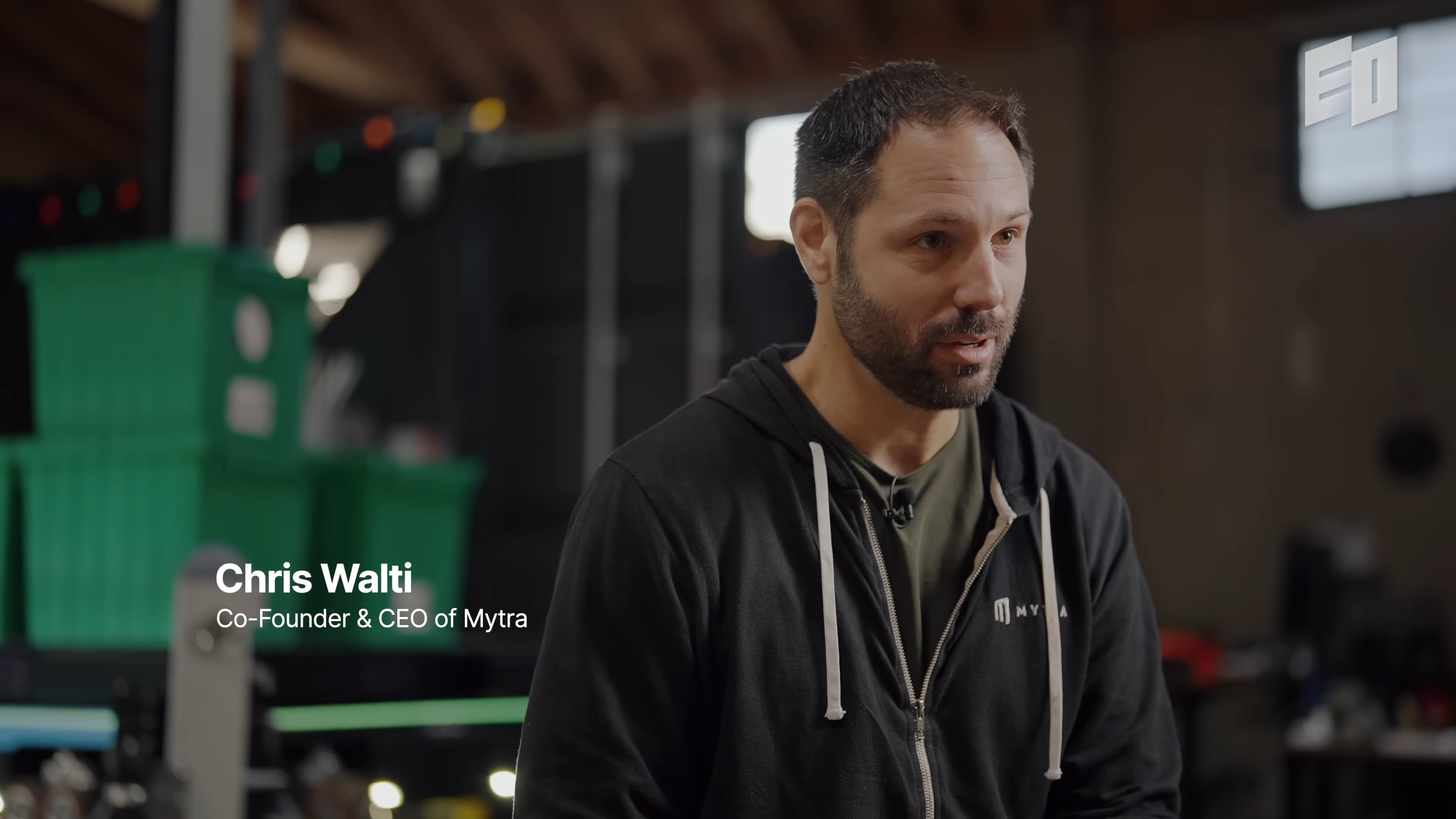
Chris Walti (co-founder and CEO of Mytra): My name is Chris Walti. I am the CEO and co-founder of Mytra. We're a two-year-old company based out of South San Francisco. A little bit about my background: before starting Mytra, I was at Tesla for seven and a half years. Before Tesla, I had various positions in renewable energy and consulting. I was an electrical engineer undergrad. At Tesla, I joined to lead product and hardware for the Supercharger team, and I launched various products like paid supercharging.
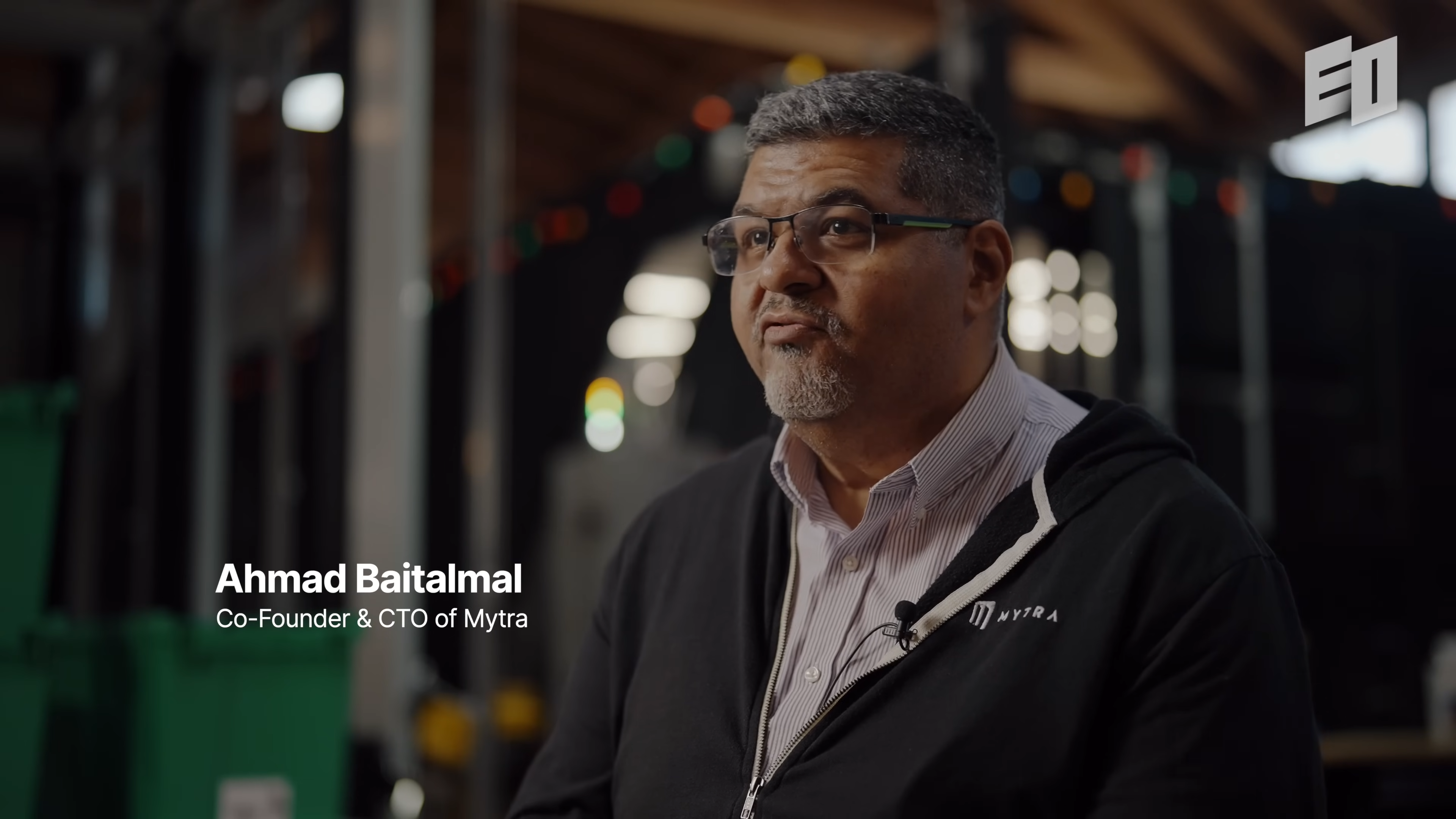
Ahmad Baitalmal (co-founder and CTO of Mytra): My name is Ahmad Baitalmal. I am the CTO and co-founder of Mytra. Mytra is building robots for warehouse material flow, trying to solve a fundamental problem with material flow in warehousing, logistics, and manufacturing as well.
Chris: I joined Tesla in 2014, after the dual-motor Model S was launched or announced. There was a lot of skepticism. Are electric vehicles going to be successful? Is it fully battery electric vehicle or plug-in hybrid? Tesla versus Fisker, a lot of uncertainty in the market then. But I joined Tesla to solve a very clear problem. I was working on more traditional wheeled automation and the fixed infrastructure projects that we had at Tesla beforehand.
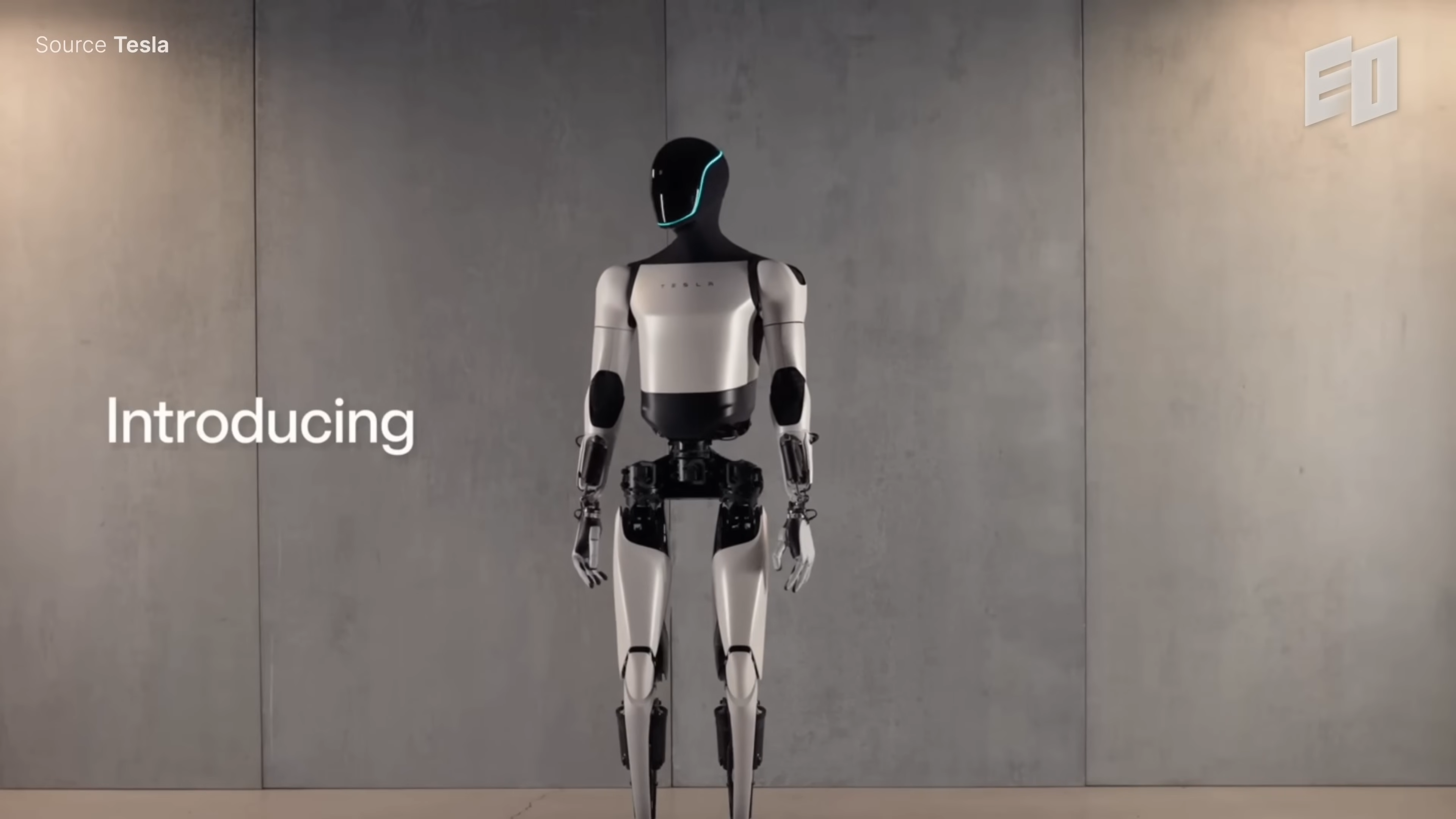
And then this challenge of building a humanoid robot was given to our team because we had an integrated robotics team. But the challenges of a humanoid are very different than building a wheeled robot on the floor. Legged locomotion, grasping, manipulation, the kinds of decisions that this robot has to process, and perception systems are wildly different.
First, Tesla had precisely zero expertise in humanoid robotics at the time. So I had to go and figure out who the experts were, meet with them, try to establish a recruiting pipeline, and try to find the internal experts within Tesla who were willing and able and also had the foundational skill sets to be able to solve this problem. I had to give myself a two-month crash course in humanoid robotics. So that was really an interesting time.
One of the things that Tesla teaches you is to be very resourceful. That wasn't the first time I'd been asked to solve a problem in which I had no deep or meaningful background. But you structure the problem, you go find the information you need, hop on a plane to meet with the experts as you need. You do what it takes to figure it out. Elon laid out a mandate that we needed to get some robot walking in three months. Between internal experts and talking with folks outside the company, to get accomplish that goal.
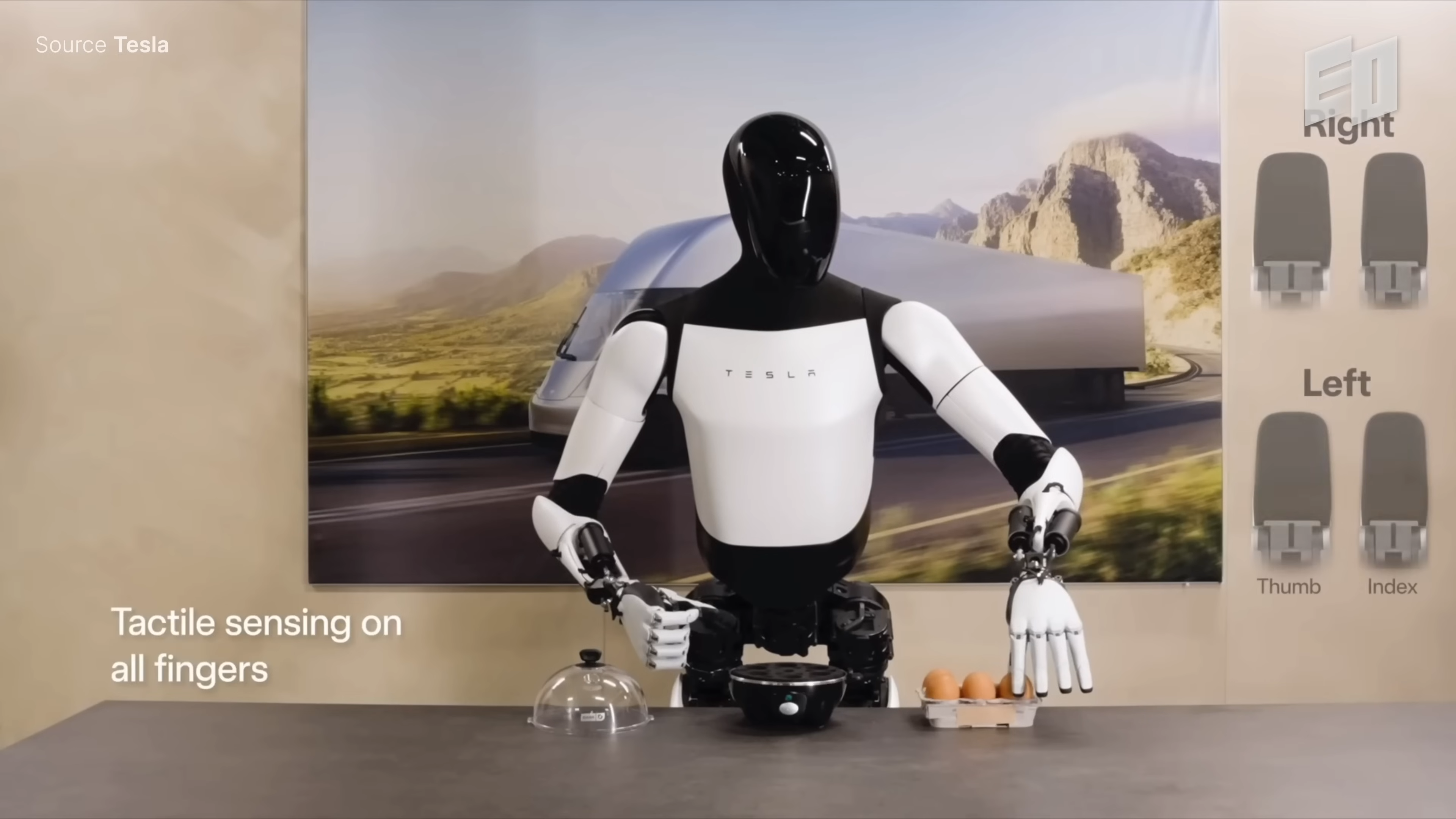
I think as a whole though, all robots are not created equal. All robot challenges are not equal. Anytime you're talking about legged locomotion or advanced grasping, the perception, the type of data and the consistency of data, the frequency of the refresh rates, I'm not just looking at a hand, I need to understand the forces. There are literally infinite ways I could grab something. The difficulty of repeating that and making that some sort of industrial process is many orders of magnitude more difficult than just driving a bot around the floor of a factory.
If we think about how difficult it has been to do full self-driving cars or autonomous vehicles, you could argue that problem is not a solved problem yet because we don't have ubiquitous cars driving highways and surface streets. You do have companies that are driving. You can walk outside of this building, you will see an unmanned car drive by this facility probably in 30 minutes. But it's not ubiquitous, it hasn't been adopted. Building a humanoid to operate at full scale in a factory or a home at the comparable productivity of a human is a very, very challenging problem to solve.
I'm confident it will be solved. I think the timing is everything. Is this a one-year problem? Is this a five-year, a ten-year, a thirty-year problem? Unclear. After spending a year there, it was a fascinating problem. I was able to work with some of the best and brightest at Tesla and beyond. Tesla was fortunate to be able to hire some wonderful people to work on these huge challenges. But ultimately I joined Tesla to ship millions of products to the public, to make real impact. I felt that most of the impact for the humanoid is dependent on solving some research problems effectively.
With what we're doing at Mytra, this is not in the research domain. We're solving tangible problems with technology that doesn't require moonshot levels of innovation to have a meaningful impact on the economy.
Ahmad: After Tesla, I tried to focus a little bit away from manufacturing. Let me think a little bit, you know, do something else, like derivatives trading, and try to learn more about AI and financial systems. But the bug of manufacturing, working on hardware, gotten me again. The things I did at Tesla were very applicable to Rivian. I thought I really wanted to help one more US auto manufacturer get off the ground. I was really excited about Rivian, trying to help them out. So I went and spent time at Rivian helping them scale their manufacturing systems as well.
That's the journey. After that, I was at a beach in Kauai. I still have the video. I'm recording the beach and I was going, "Wonderful, this is great, I'm done. I don't want to do anything else. I've solved every problem I want to solve." As I'm recording that video, I get a call from Walti and he's asking me, "Do you remember the problems we ran into at Tesla during manufacturing? Let's really solve it."
At the beginning I was like, I don't want to do this. I don't want to do manufacturing again. I want to stay at the beach. But the more we talked about how we would solve it, go back to the fundamentals, let's not just build another automation company, let's do something completely different. The more we talked about it, the more I got excited because it wasn't just another implementation, it's a complete rethink. That was very exciting. So I said, "Let's start this company. Let's find the best people that we can find from our network and tackle this problem."
Why We Left Tesla to Found Mytra
Chris: Mytra was founded because Ahmad and I, having seen a lot of these different types of challenges at Tesla and Rivian, wanted to find a problem that we could solve. We were uniquely positioned, knowledgeable to tackle, but it also was just simply not being solved. You think of the lowest-hanging fruit in your tree. Material flow is most of the work across industry, just moving things around, yet it's clearly unsolved.
I can go out and buy an industrial automation system to do almost anything I need. The problem is, is it cost effective? Is it simple? Is it extensible? Is it flexible? We said, if we can design something that's just far simpler. iPhone's a great example. Tesla, there are lots of great examples in history where you follow a new S-curve of adoption. A new technology starts off slowly, then there's some acceleration, then it kind of tapers off. But to truly continue linear adoption and improvement of technologies, it's comprised of a whole bunch of small S-curves.
We needed to create that new S-curve for industrial automation. There needed to be a new paradigm. And to do that, when you look across history, it's usually the simpler thing that wins. How do we find the absolute simplest way to do this work? What we realized was that there was no system that was designed that was physically or kinematically unconstrained. Meaning I want to move things in 3D. How do I move it up, down, left, right, from any cell to any cell in full 3D? That was just an unsolved problem at any payload weight. So we simulated and said this is a solvable problem. If we can do this, we've created a system that is of immense value to the industry. That's why we decided to tackle this problem.
Ahmad: Fundamentally, the material movement for warehouses and manufacturing happens on pallets. Pallets, in my view, are the red blood cell of the global GDP. Everything that you see around you has been on a pallet. The cameras, clothes, pieces of furniture, all of that has been on a pallet. Yet the pallet movement technology has been the same for the past 100 years. It's a pallet, generally the same size. It's made out of wood, and it's moved with forklifts operated by humans. There hasn't been any optimization of that for quite some time.
In our experience, when I worked with Walti, we saw that the biggest problem hindering the manufacturing process was just trying to move material from one part of the factory to the other. We were thinking, let's improve that. How can we build something that is super simple? If you look at the basic need of moving a pallet, we're looking at 3,000 pounds. You're trying to move it from one location to the other.
For you to do that today, you have to get a forklift. A forklift has to be at least 3,000 pounds just to balance out, because it's carrying something in front of it. It has to be at least another 3,000 pounds. So you're moving 3,000 to 9,000 pounds, the forklift itself, and then 3,000 pounds that you want to move. It just makes no sense. We're moving 9,000 pounds to move another 3,000.
We thought about it and said, this is such an unoptimized system, nobody is touching it. People that go into warehousing and logistics and manufacturing, they look at it and go, "This is our lot in life. This is how things are." We saw that and said, no, something has to improve. So we're looking at designing a new primitive, something completely new. Let's rethink the problem. Our bots are 700 pounds. They can move 3,000, but they're 700 pounds. That's it. And it doesn't take a larger footprint than the pallet itself.
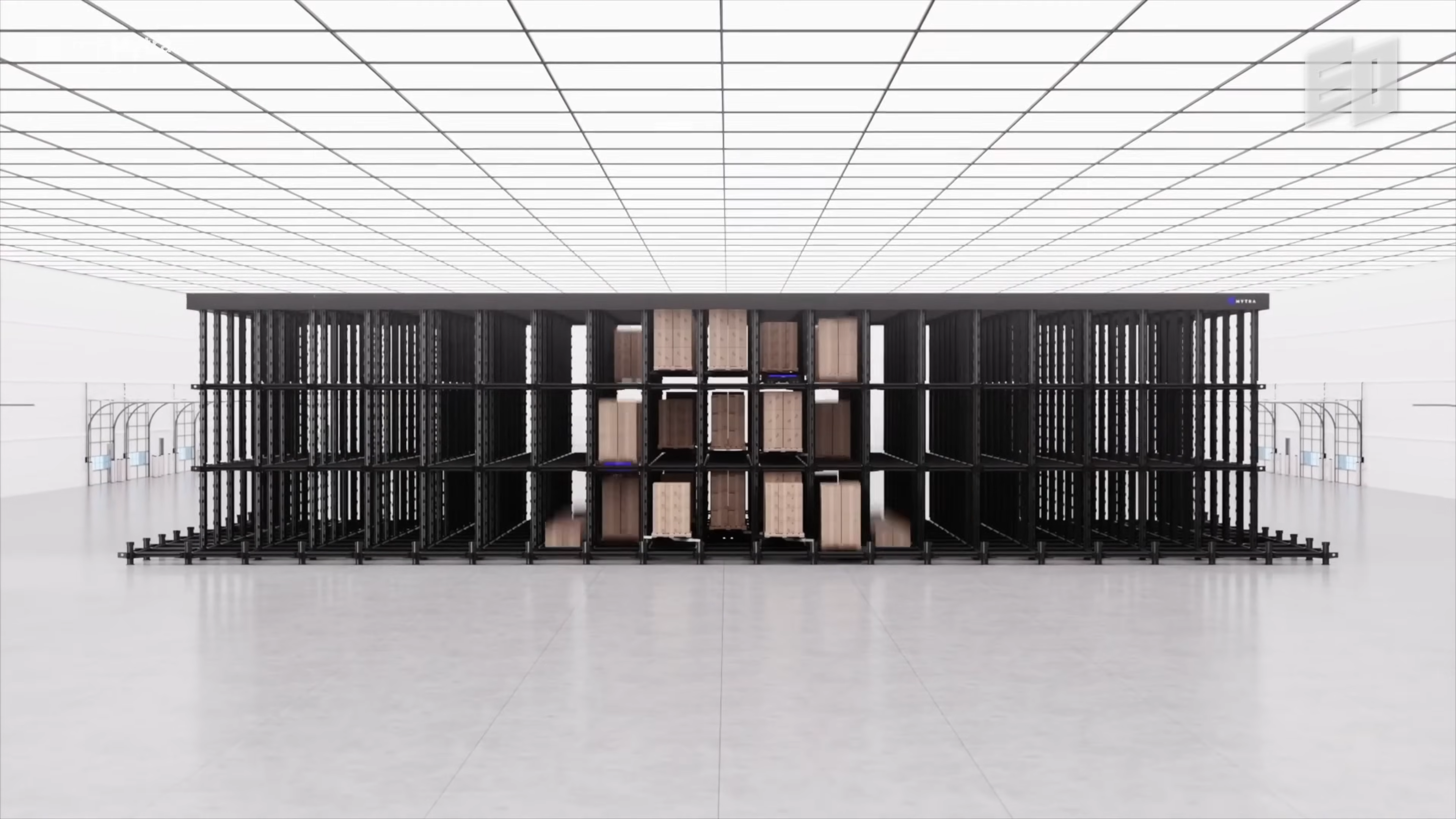
When you start from there, I can move 3,000 pounds forward, backward, left and right, up and down in full 3D with a 700-pound robot. That is a different math completely. And that's the approach that we're taking with Mytra. If you limit the variability of movement to the three dimensions, I can start to solve things with software. The bots can only do the three movements, and they can access any part of the warehouse within a structure. Now I can start to do things with software. If I want to build a conveyor, I don't have to build a physical conveyor. I can tell the bots to move in the direction of a conveyor or lift.
It makes your warehouse completely software-addressable, which is a completely new approach to doing any of this. It applies to warehousing, logistics, manufacturing, anything that moves your standard pallet. That's why we wanted to focus on the pallet, because that's 90% of material movement around the world.
Advice for Future Founders
Chris: My take on founder mode is, as companies get larger, the gist is: do you still maintain your level of awareness and involvement in the details of your company? Very large company mode or manager mode, it's like I fully rely on my team to do almost everything and I have this little function. Maybe I'm just attending dinners and selling to customers at a very high level.
At a company like Mytra, even though we're 74 people, Ahmad and I have no choice but to be in founder mode. There's just too much going on, too many aspects of the system. Every time a customer walks in, we have one this afternoon, and between the two of us, we need to be fully versed in the technical stack. We need to be able to answer questions like, why did you make this decision for this actuator or this design? What are the reliability issues? How do you plan to lower the cost?
If you can't talk intelligently about that, you're not going to drive confidence in these very sophisticated potential buyers and partners. For us, there's no choice but to be in founder mode. As I think about what I love about this job, I love being in design reviews. I love the product and the engineering aspects, and I know Ahmad does too. As you get older, as the company gets more mature and larger, there's natural pressure to say you need to decouple from that; you need to let your team do that. I think there's a balance that can be achieved where founders are still in the details, not making all the decisions, but in the details enough to be aware.
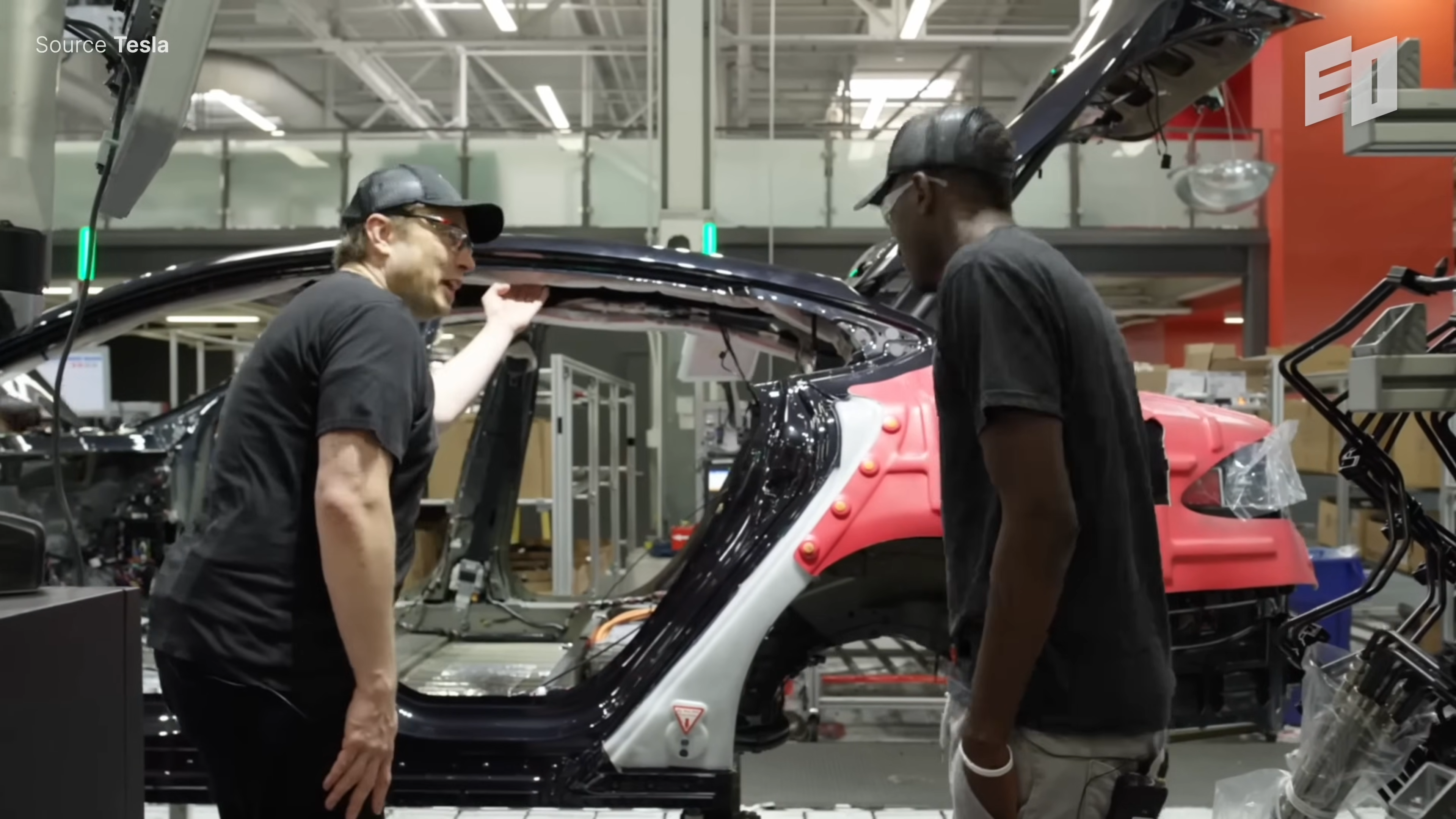
Tesla's, I don't know if it's a good example, it's an example of where Elon, when he met with teams for his one or two days a week, it was like 12 meetings in a day. Every hour some different technical team would come in and walk through what's going on, the challenges. He would be making calls on power electronics sourcing, then making calls on wind tunnel design optimization, making calls on a whole bunch of different aspects of the business.
Not suggesting that's what every company should do, and that is not what we're going to be doing. But it does show you that it's not one or the other. You can exist as a large company in founder mode. You can exist in manager mode.
For us, we're much more towards founder mode and probably will stay that way for as long as we need to really understand the technical details, which, as far as I'm concerned, doesn't end.
Ahmad: The advice I would give to people trying to create their own company: really work in the field. Work in the field you think you have an idea for, some new service or product, work in that field and get insight. That's something I got out of my Stanford experience. Maybe you have an idea of what's really valuable and useful as a product. But the best approach to creating value is first that you get insight into what the problem is.
The reason Walti and I started working together is we met at the Model 3 production ramp and we were customers of the systems that were there, manufacturing and logistics and material flow systems that were in production. We met there and we experienced insight. We saw what the problem really is. People go, "Add more automation, add more technology here." Fine. But the insight that we got, that the fundamental problem that needed to be solved is moving the material, without experiencing it firsthand, you miss it.
You think, "I'm going to work on warehouse robotics. I'm going to build this nice articulated arm. It's going to look nice and neat and great." Are you really solving it? No. The reason you're not solving it is because you lack the insight into what the fundamental problem is. For us, the thing that would unlock manufacturing is to move the material efficiently without stopping, in a very reliable, safe way. You move it in that way, figure out a way to do it, and it will unlock value for you in manufacturing. Without that insight, you would be on the wrong path.
My advice would be: get immersed in the problem firsthand and then try to come up with a solution. I'll give you another practical example today. Everybody in the company, everyone, almost no exception, has to work in the warehouse using our system, interacting with the warehouse operators at our customer site. Everyone, even web developers, marketing, everybody has to do it. The reason we did that is from my experience at Tesla, building the software for the GA4 tent.
The way I built the software is I went to the line and I started working on the cars. I started putting bolts in and torquing fasteners and the hood on the Model 3. I experienced what the operator was experiencing, what kind of software was needed, what did I need to finish my job properly. And then I built that software, and that software spread everywhere.
That is the insight that you need to get before you can say, "I'm going to build a new manufacturing software." First work as a user of that supposed system or product that you're trying to create. Get deep insight so you fundamentally understand what is the thing that you're trying to create, what is the value that you're trying to create. Then go, "I have enough insight. I know so much about this. I understand it at a basic fundamental level." Now you can come up with the new value creation.
I think that's the best advice I could give before somebody says, "I want to go and build hardware." There are many tiny startups that have YouTube videos or videos with amazing wonderful devices. And you go, "But what is it solving? Is it practical? Are you solving a problem?" It's because they did the shortcut. They said, "I'm building something that looks cool, great, go build it." But you're not really solving the thing.
You need to go and immerse yourself, get insight. That's why we have everybody here at the company work at the warehouse with our customers. When they come and build a solution, they build it as a warehouse operator. They go, "I'm a warehouse operator who happens to know how to build applications, how to build robotics. Here's how I would build it for me." That's the best way to build products.
Hardware is Eating the World
Chris: If you look across the tech spectrum, most companies, and Andreessen's famous quote, that software will basically eat the world, is very true. When you look at the economy, you realize that 85% of the economy or GDP is driven by physical industries, physical problems. 90% of the value in the tech economy has been created by mostly software. There's a huge discrepancy. When we look at the problems yet to be solved that haven't been touched by software, they all involve some sort of actuation or manipulation of the physical world.
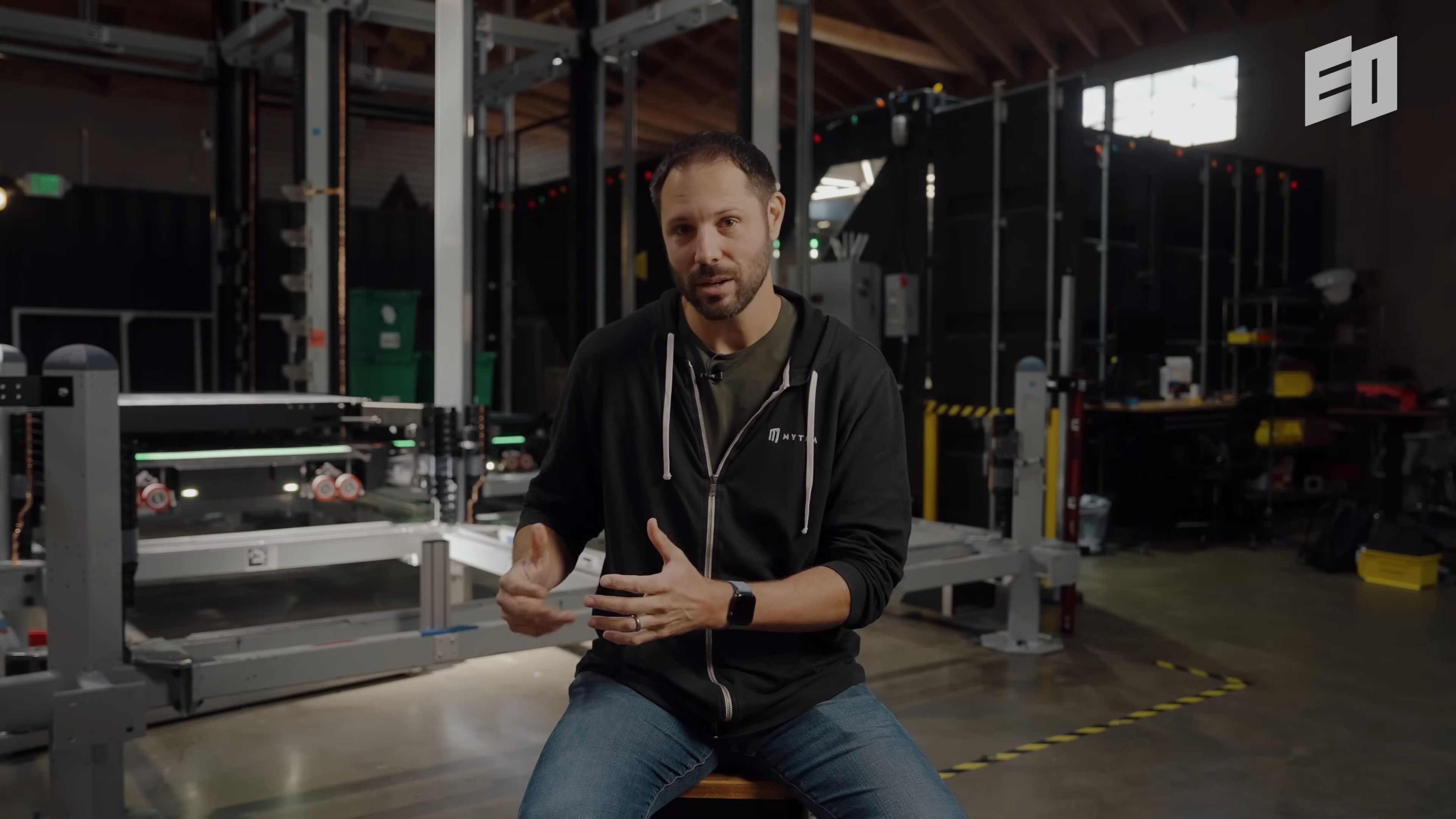
IoT, the Internet of Things, has been around for a few decades, and that starts to solve some of the problems around hardware. It gives you a signal back from the physical environment into some sort of brain or software. But ultimately, the actuation of that requires people or something else. When you think of robotics as applied to the physical world, that closes the loop. I can build an actuator, a thing to move a physical item up, down, left, right, that's hardware. The combination of that actuation closing the loop, along with the software capabilities that can be applied to it, there's a ton of potential there. This is the next frontier, the next several decades.
You look around you and you see all the inefficiencies in the world. You look at how the trash is picked up, you look at how houses and buildings are constructed, you look at how telephone cable is laid, you look at how physical goods must be manufactured. There's a lot of opportunity for software applied to the physical world. That's why all of us here at Mytra, we're super passionate about software applied to the physical world. And that comes in the form of robotics, and that is a hardware company.
The second reason why hardware is perhaps more exciting today than it might have been a few decades ago: when you think of hardware, you think of silicon, making silicon chips. That was most of the hardware opportunity. But companies like Tesla and SpaceX have come along and said, "These are legacy industries." The script has been written for how to build automotive vehicles and what margins for decades. Tesla's coming in and saying, "We're going to do it differently." Everyone told Elon and company they're crazy for doing this. Very low probability for success. Lots of ways that this could go poorly for them.
But they built an architecture that's significantly simpler, 10x simpler or more than the existing products. Far fewer parts. And they've shown that you can disrupt some of these industries. It's hard, hardware is hard. But if done successfully and done correctly, there's huge opportunity to make meaningful advances. Building electric vehicles is, for some people, it's much more rewarding than optimizing some page on a website or increasing ad spend by 5%. So there's been a bit of a blueprint and a playbook that says you can disrupt very large industries through hardware, through some of the more modern successes like Tesla, Lucid, Rivian, SpaceX, and Anduril.