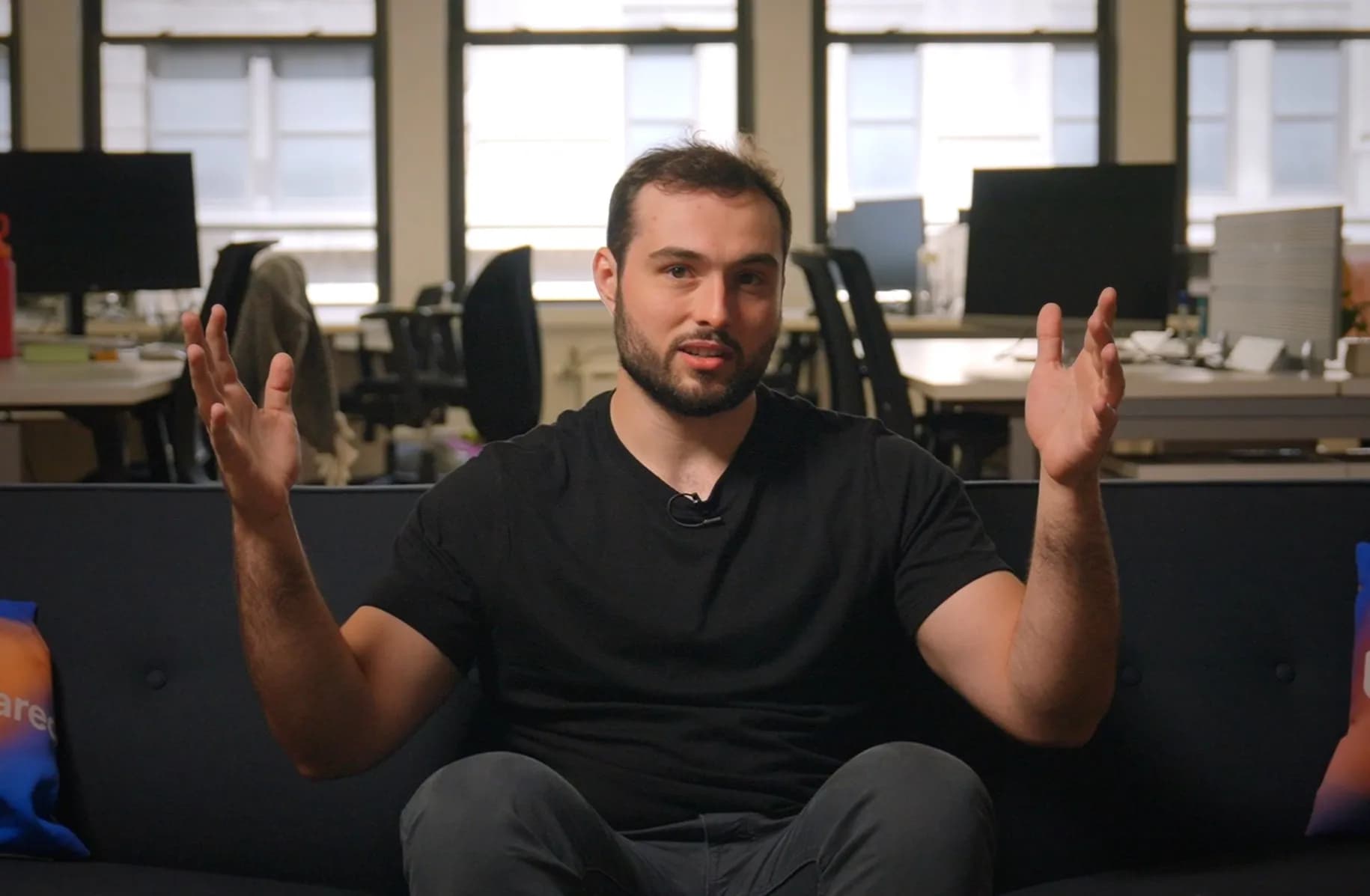
Apr 08, 2025
A College Dropout Builds $1B Startup at 22
Interview with Eric Chen, Co-founder of Injective
Founder Focused

💡
At a Glance
- Who: Eric Chen is the co-founder and CEO of Injective Labs, who studied computer science and finance in college before building Injective.
- What: Injective Labs built Injective, a blockchain built specifically for finance, designed to democratize financial access for everyone.
- Traction: Injective is a multi-billion dollar network delivering more than $50 billion in exchange volume, with more than 1.4 million addresses and users and over 1 billion transactions.
In this interview, Eric Chen explains how Injective survived the crypto winter while crammed into a New York apartment with three roommates, why he thinks the most critical users become a startup's most valuable allies, and why he believes finance is truly a game for the rich, and it really shouldn't be.
Key Takeaways
Surviving the Crypto Winter Meant Living on Almost Nothing
Chen says he and his co-founder were crammed into a 70 or 80 square foot New York apartment with three roommates while Bitcoin fell below $6,000 and VC interest dried up. That scarcity taught the team to earn every dollar and user, a discipline he says still shapes how conservatively Injective plans for the future.
Your Harshest Critics Become Your Most Valuable Allies
Chen personally recruited Injective's first 100 users by messaging vocal, often hostile members of crypto group chats directly. He says pushing through the initial embarrassment of that negativity was worth it, because highly critical users tend to give the most valuable feedback and become a product's strongest advocates once won over.
Plan for the Future, Ignore the Present
Chen says Injective's team deliberately stays conservative during bull markets and optimistic during downturns, a mindset formed by going through the crypto winter with almost no capital. He says that discipline lets Injective maintain more than five years of runway regardless of market conditions.
Democratizing Finance Means Letting a $1 Investor Access What a $5 Million Investor Gets
Chen argues that today's financial system requires hundreds of dollars just to buy a single fractional share of a stock like Apple, locking out smaller investors from high-growth opportunities. He says Injective's goal is to tokenize real world assets so that someone with $1 can access the same opportunities as someone with $5 million.
Below is the complete transcription of the interview. Minor edits have been made for clarity and readability.
Introducing Eric, a Co-Founder of Injective Lab
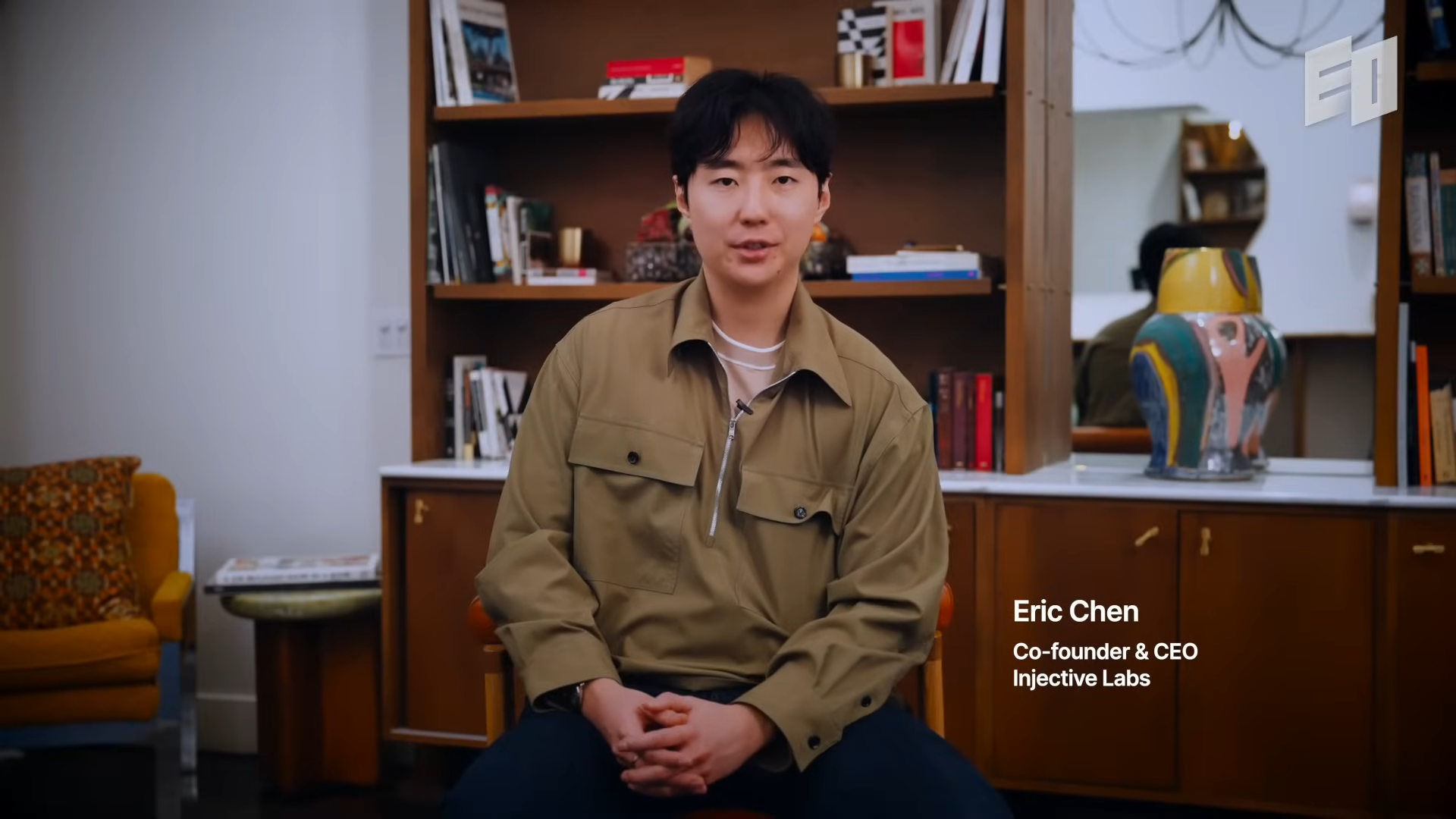
Hi, I'm Eric Chen, co-founder and CEO of Injective Labs. We built Injective, which is a blockchain built for finance, meant to democratize financial access for all. Injective is a multi-billion dollar network that's currently delivering more than $50 billion of exchange volume, with more than 1.4 million addresses and users, as well as 1 billion transactions.
Turn Your 100 Critics into Allies

I studied computer science and finance in college. I was in a bit of a soul searching process where I didn't really know what I was truly good at. I couldn't really find something that really piqued my interest. Everyone doing finance wanted to go into banking, hedge funds, private equity, whatever, and everyone doing computer science wanted to go into Google. For me, it was just very, very torn.
I think one of the most interesting parts of my college life was certainly learning more about crypto and understanding that there's a lot of very interesting research subjects. But the first thing I did, of course, was trying to mine with the free electricity from the dorm room.
What truly made me excited at the time was when I was doing research on a particular issue that was plaguing the industry, which was front running, exchange collision, sandwich attacks, and stuff like that, which basically the simplest way to understand it is that it makes general users or traders lose part of their money, because some guy can find a better price elsewhere and then arbitrage their orders on chain. For us, it was basically a very simple understanding: it's a problem, and we can come up with probably a pretty elegant solution to solve it using some cryptographic trick.
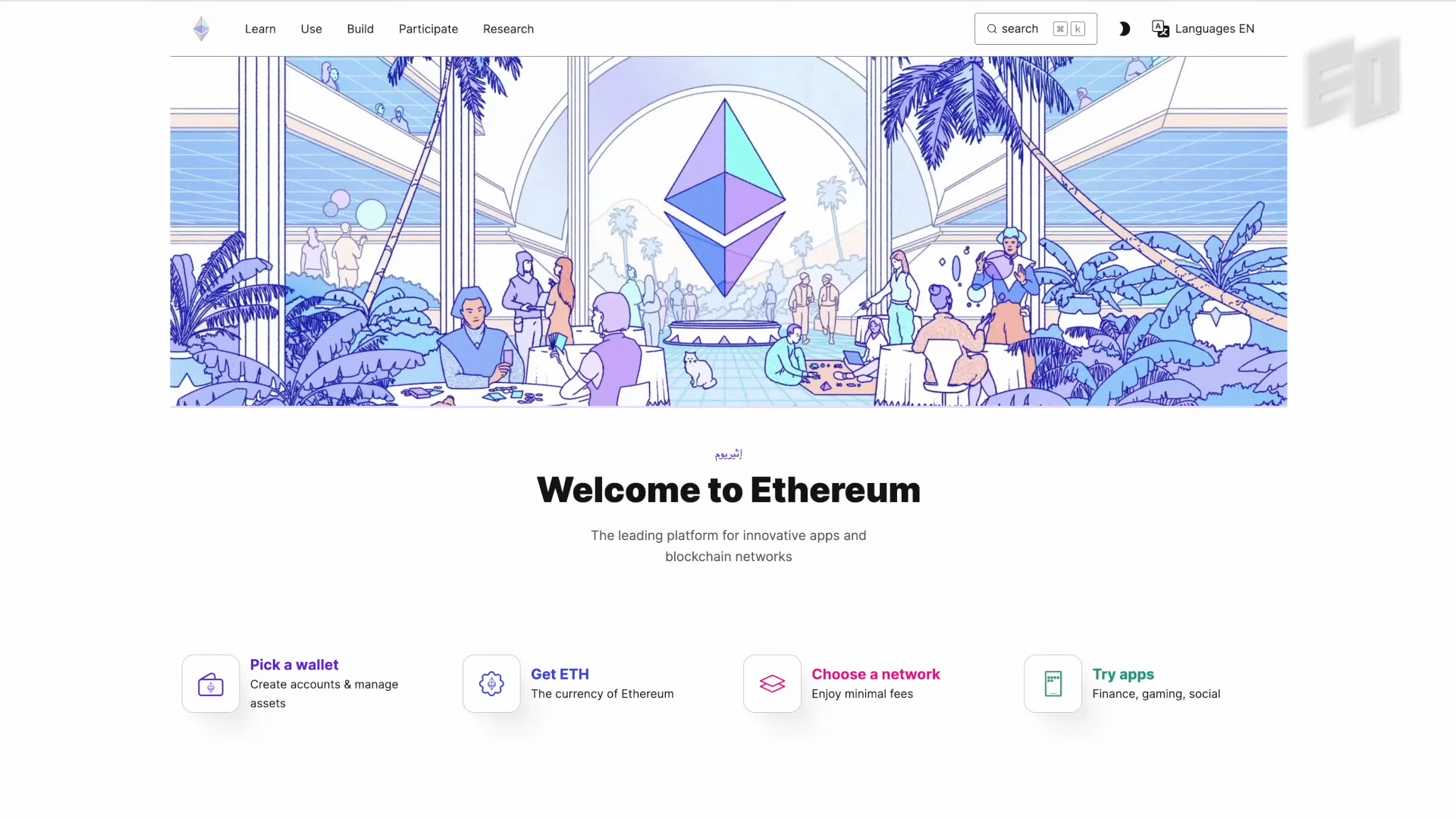
I think the most interesting part about Injective is that it's very much a blockchain built for finance. Let's say we were talking about a smart contract platform like Ethereum, Solana, etc, the way these blockchains operate is that it tries to be a web through computer that, no matter what you toss at it, it will figure out a way to make it work. The way Injective works is that instead of always having to figure out ways to optimize for application trends or use cases, Injective decides to be anchored for financial applications.
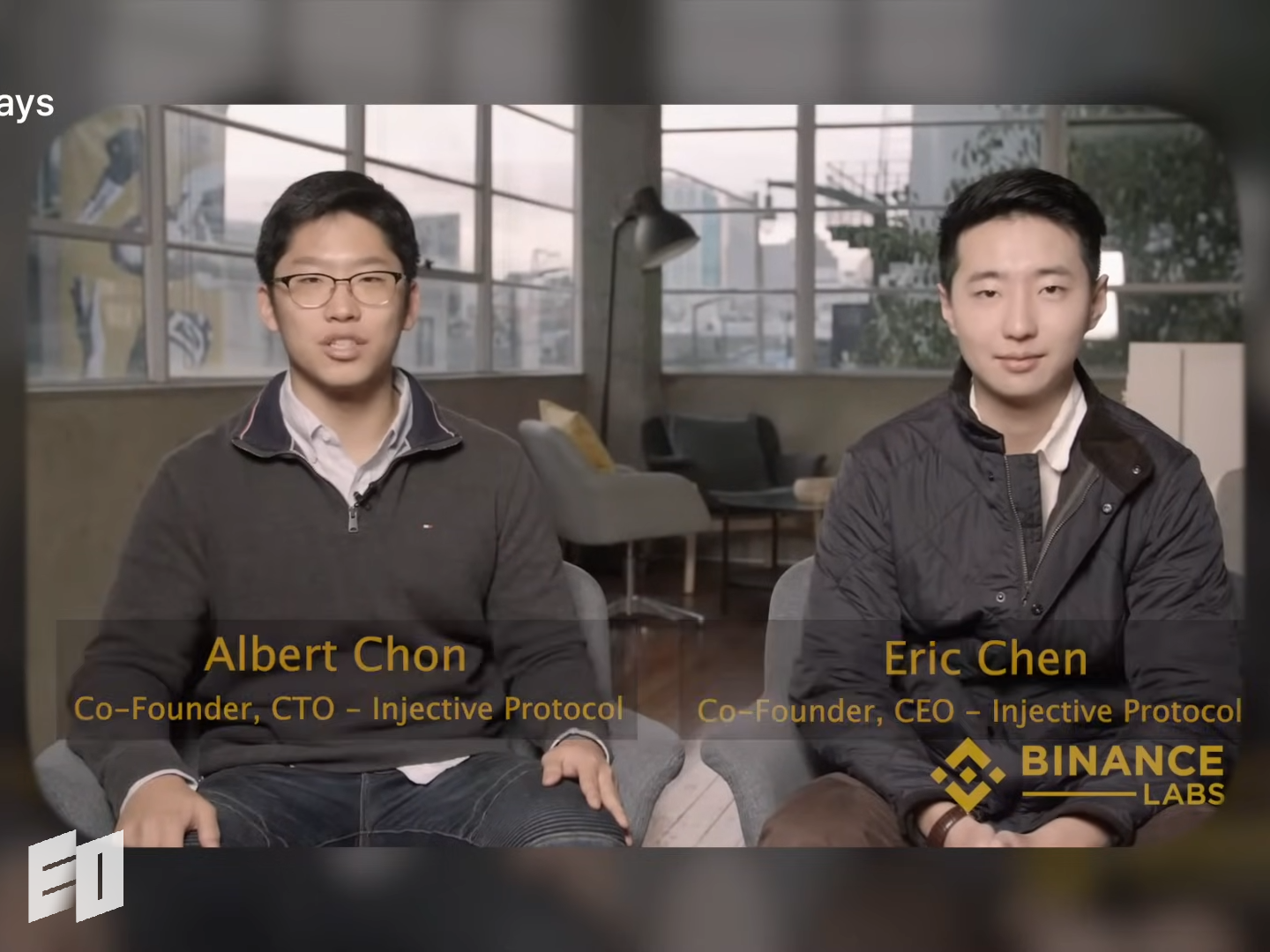
Hi, I'm Albert.Albert ChonCo-Founder and CTO of Injective Protocol
Hi, I'm Eric.Eric ChenCo-Founder and CEO of Injective Protocol
We are Injective Protocol, the best and most secure experience for the centralized exchange.Albert ChonCo-Founder and CTO of Injective Protocol
During the early days, the way the first 100 users were acquired was actually very simple. I basically went into every single group chat that had anything to do with crypto to reach out to a lot of the participants or the vocal members and try to tell them, hey, use this interactive exchange, try it, and let us know what you think, whether it makes sense, whether it's a horrible idea, and then we should stop doing it.
I just kept doing it, the first 50, the first 100, the first god knows how many hundreds or thousands, and I think the most interesting part is that there's a lot of very vocal and negative people in a lot of these public group chats or public forums. Hey, why do you have this? It doesn't make sense. Why do you have this feature? No one needs it.

It's always very, very stressful for you to talk to them or for you to even reach out to them. But if you fight through that initial embarrassment interfacing or dealing with their negativity, they end up being a lot more valuable of an ally than you can possibly imagine. A lot of these highly critical people are equally critical to everyone, and therefore it means that first of all they care, and second of all they give you extremely valuable feedback, and third of all they're a lot nicer than what they perceive to be.
Facing that negativity with a very positive light, and more importantly listening and giving everyone, no matter how negative they are or how positive they are, time of the day to listen to their feedback and implement upon it. And it's about presenting to them with a positive, can-do attitude, addressing every single concern or problem that they might have, listening to every single one of their feedback, and building the product around people that voice their concerns and opinions and really iterate that way, because you don't know the right answer, especially as a builder, to what's going to happen in the future with 100% or a thousand percent precision and accuracy. What you really need is have users inform the direction that you're building, and listening to them, because a happy user will become the most valuable ally, no matter what industry you're in, no matter what product that you're building.
Ignore Present, Focus on Future
We certainly had a decent early success working with different types of investors. A lot of them were promising and also a big deal at the time. And after that, then came the crypto winter.
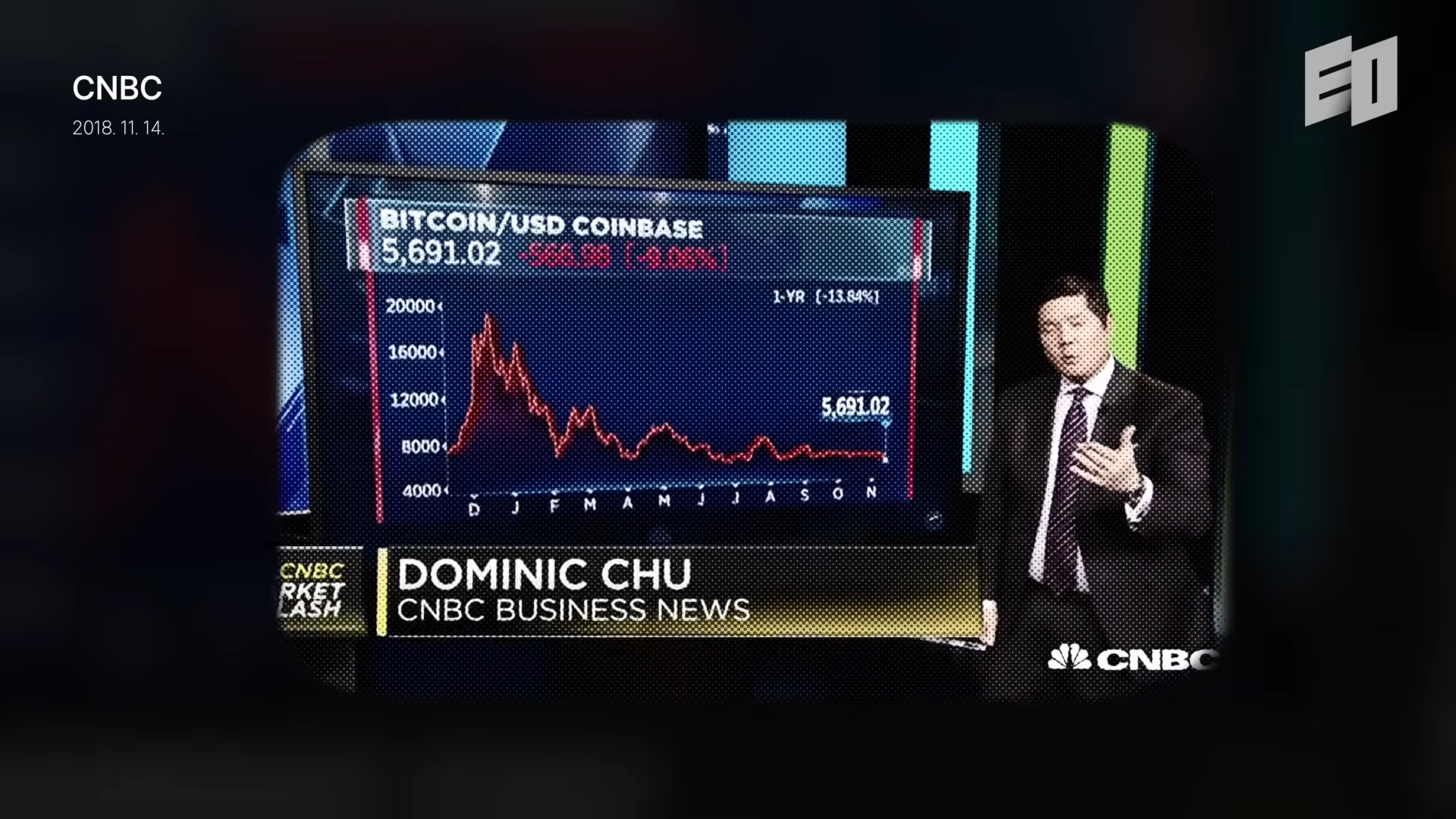
We were watching Bitcoin falling below $6,000 overnight, and all of those alternative coins were down by much more. There were just a loss of VC interest, there were loss of institutional interest. We had to really, really learn how to be extremely efficient and scrappy with the incubation capital that we were given.
Being crammed in a 70 or 80 square foot apartment within New York with three other roommates, moving around in a world trying to source talent in a cost-effective way, and trying to work with as many globalized developers and users, and trying to figure out ways to make everything work.
I think we had a lot of privilege by initially going through the period where we had the experience and understanding that capital might be very, very hard to come by for an extended duration of time, that basically made us to be conservative during optimistic times, and at the same time being extremely optimistic during very fearful times. It allows us to basically, no matter what condition it is, always ensure that we have a certain amount of runway, and we always can survive for more than 5 years.
The way we did it was focusing on the long term, plan for the future, ignore the present conditions. Being around enough cycles helps a lot, because during extremely bullish times, during extremely optimistic times, we slowly become more and more jaded, more and more fearful. We have an innate sense, it's almost like a primal instinct, that something is about to go wrong, and I think this helped a lot, because it's basically like an instinct that was developed over time after being in so many cycles, even before Injective.
On another hand, it's just like an existential question: have you earned it? A lot of times the success is asymmetrical to the output and to the fundamentals, and oftentimes we at all times question ourselves whether we have earned the success that we have. We are often very, very critical, so we always doubt that we did earn it, and I think that's still a very strong relative benchmark to see how long-term you are.
Finance for All, Not Just the Rich
I think the most exciting thing about Injective, especially at the current stage, is about decentralizing access to finance to everyone. Finance is truly a game for the rich, and it really shouldn't be. Whether you have just $1 or $5, you get to have access to the same type of opportunity as those with $5 million or $10 million. And this is completely not the current financial world.
Basically, if you want opportunity, especially high growth, it's just layers and layers of investment advisors, brokers, and stuff like that. To purchase one share of Apple, you have to have hundreds and hundreds of dollars, there's not even a fractionalized concept within the stock market. For us right now, the most exciting thing is about being able to bring in real world assets, being able to tokenize so many exciting opportunities happening in the cross-section of traditional financial world and also the crypto world.

This has just always been a dream of ours, even during the early days of Injective, which is being able to access a lot of these traditional products like Tesla or GameStop, creating a platform that also has access to different types of crypto primitives, while at the same time being able to access it from all over the world, from Argentina to Europe to Asia and everywhere, in the same easy to access, easy to use platform. Basically making financial products and assets more accessible than ever.
I don't think there's going to be a lot of material change for people in the world, their day doesn't just suddenly become completely different at full 180. But I think it's really about the subtlety of things: maybe you just have more savings in your bank, maybe you can connect with your friends 20,000 miles across the world a lot easier. Everyone is just a little bit better off because of the opportunities that are now accessible to you.
I remember I came up with Injective at a stolen co-working space from my friend. It wasn't something too flashy, it was just, hey, this could be a solution to something. At that time, it was a very, very rare feeling to have the space, especially at a time when it was just ostentatious, way too much grandiose visions and stuff like that, so oftentimes it felt like it was losing touch with reality. So that was a very rare feeling for me, even though these days I get more and more of these feelings at this point in time. It was very, very rare at the time.
So if I have a time machine and go back and tell myself at that time, it would be, cherish that moment, because you're not going to have a lot of those. And it's probably the most powerful feeling in the world.