Sep 15, 2023
How we Gained 3 Million Users in Just 3 Months
Interview with Grant Lee and Jon Noronha, Co-founders of Gamma
Founder Focused

💡
At a Glance
- Who: Grant Lee (CEO) and Jon Noronha (Head of Product) co-founded Gamma alongside a third co-founder after meeting at Optimizely, where they worked together for over five years. Lee began his career in consulting and investment banking before serving as Optimizely's first finance hire, while Noronha started as a Microsoft product manager before joining Optimizely to lead product teams.
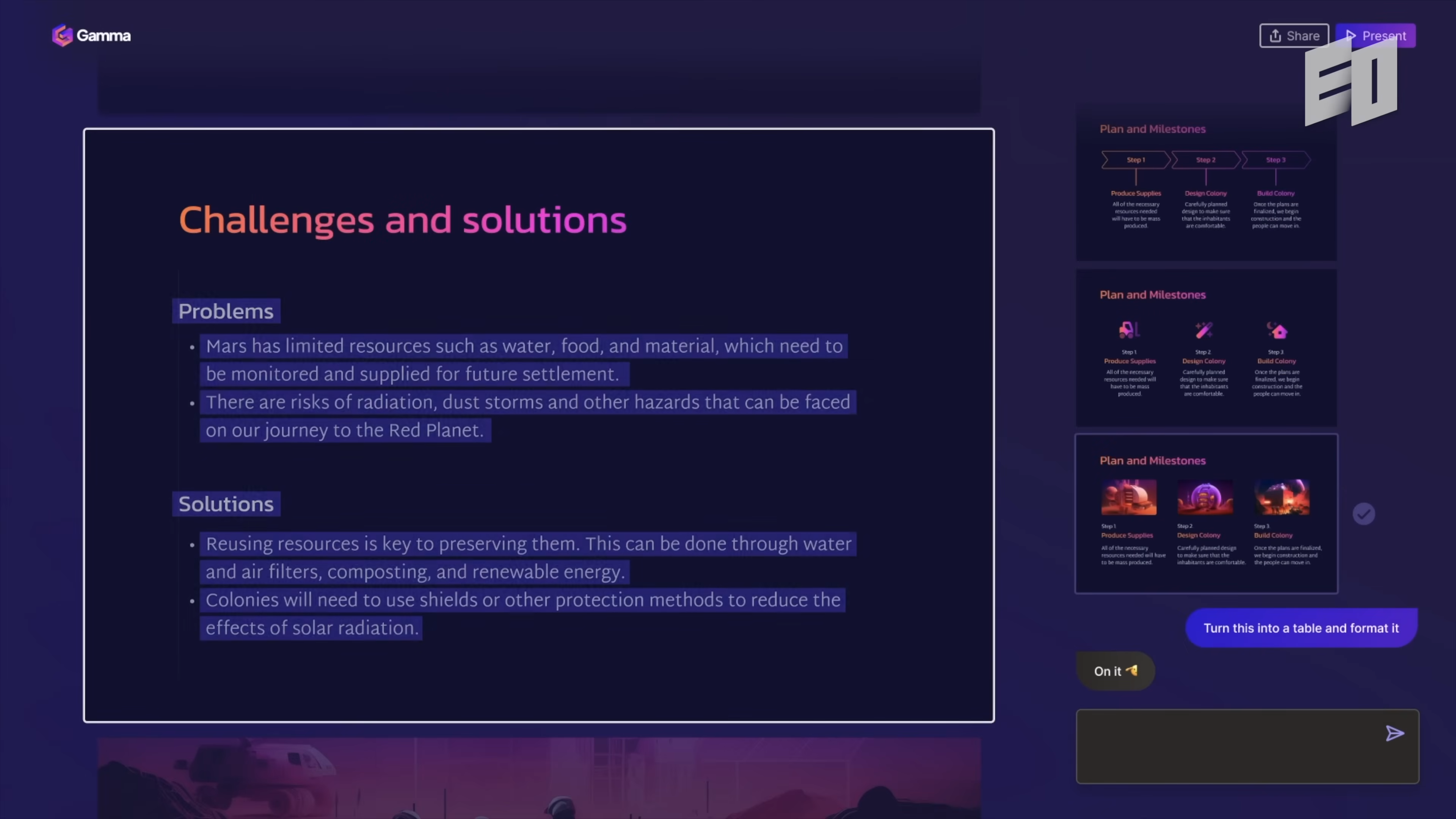
- What: Gamma is an AI-powered presentation platform that reimagines how people communicate ideas by replacing rigid slide decks with flexible, card-based building blocks. The platform integrates AI at the core of the creation flow, eliminating the blank-page hurdle and enabling users to generate complete presentations in seconds.
- Traction: Gamma scaled past millions of global users, experiencing rapid international expansion with over 50,000 signups on peak days like the 4th of July. After introducing a credit-based monetization model via Stripe payment links, the company quickly crossed its first 1,000 paying customers.
Grant Lee and Jon Noronha spent years sitting through hours of tedious PowerPoint presentations at Optimizely before deciding to re-architect how ideas are formatted and shared. By grounding Gamma in flexible card building blocks and embedding AI to eliminate blank-page friction, they transformed presentation creation from a manual chore into a one-minute generative process. Today, Gamma serves millions of creators worldwide, growing by over 50,000 signups per day. In this interview, Lee and Noronha explain why founders must start with durable problems rather than tech hypes, how living inside their own primitive MVP drove weekly iteration, and how AI turns creators into curators.
Key Takeaways
Start With a Problem Before Applying New Technology
Grant Lee argues that founders should begin with a problem they can stay passionate about for years, then decide whether AI is the best tool for solving it. The discipline protects teams from chasing technology without understanding the customer need beneath it.
Make Every Launch the Beginning of Learning
Gamma treated its early product as a starting point for observation rather than a finished answer. Lee says experimentation means listening to users, watching how they actually use a feature, and repeatedly improving what ships instead of treating release day as the conclusion.
Use Your Own MVP to Force Weekly Improvement
Gamma used its rudimentary editor internally for notes, meetings, and presentations even when outsiders would not retain it. That daily exposure made flaws impossible to ignore and produced steady improvements, with the team estimating that the product became 10% better every week.
Let Usage Patterns Challenge Friendly Customer Feedback
When friends and former colleagues softened their criticism, Gamma looked for behavioral evidence instead. Return visits, drop-off points, and the features retained users actually touched gave the founders a more reliable view of progress than polite reactions from people who wanted to help.
Use AI to Solve the Blank Page Activation Problem
Gamma found that its benefits were difficult to understand until someone invested an hour creating something good. AI reduced that activation barrier by showing the first hour of value in about a minute, transforming onboarding from an explanation of possibilities into an immediate experience.
Let AI Move People From Creating Toward Curating
Lee sees AI as a patient design partner that expands what people can express, rather than as a replacement for human creativity. Gamma's larger opportunity is helping non-designers move from struggling to produce every element themselves toward shaping and selecting work they are proud to share.
Watch the full interview now on EO's YouTube channel! Below is the complete transcription of the interview. Minor edits have been made for clarity and readability.
The Key to Continuous Improvement
Grant Lee: My name is Grant Lee. I am the CEO and co-founder of Gamma. We reimagine the way people share and present their ideas. Traditionally, people use tools like PowerPoint and slides to encapsulate their thinking and communicate it to others. At Gamma, we are building a new set of building blocks that help you achieve the same goals in a way that feels new and easier, and that lets you generate output that is not possible with current tools.
We have millions of users worldwide, and Korea and Japan are among our fastest-growing countries. Users there really embrace the idea that new building blocks give them the potential to create new things. They are eager to build, eager to embrace new technology, and willing to be early adopters of things that free up their creativity in ways they could not before.
I have always known I wanted to start my own business. One of my uncles started a chain of bakeries, and my parents ran their own restaurant, so very early on I saw the energy they put into building their own thing, and I have always had that spirit. I went into a pretty different career, consulting and investment banking, where I got to see what it takes to build and grow a business at scale, and what separates a successful business from one that stalls.
Seeing that world exposed me to many types of businesses, and eventually I wanted to apply what I learned to a much earlier stage venture. So I joined a startup called Optimizely as its first finance hire. The decision was driven by a mentor's advice. When you see a rocket ship, you strap yourself on and go for the ride, and Optimizely at the time was in a phase of hypergrowth.
The biggest lesson from Optimizely is that every business can embrace a spirit of experimentation very early on, and experimentation looks different at every stage. When you are very small, it is about learning from your users, a lot of qualitative feedback, talking to them, understanding their pain points, showing them initial concepts or prototypes, and being willing to go back and iterate.
Companies that embrace experimentation understand that when you ship a product or a feature, that is not the end. That is the beginning. It is the beginning of learning from users and understanding how they actually use the product, so you can go back and improve, over and over again. I met my two co-founders at Optimizely. We all joined early and worked together for more than five years. Jon is incredibly gifted at listening to all of our customer support tickets.
Jon Noronha: My name is Jon Noronha, and I am one of the co-founders and head of product at Gamma. In college I studied computer science, but I was not sure I wanted to be a software engineer. Sitting in front of a screen seemed antisocial, and I am an extrovert. I like talking to people and working with people. I found an internship at Microsoft as a product manager, which involved working with people to figure out what you are going to build and why, and I was really drawn to that, so I went back to Microsoft full time as a product manager.
When you build a search engine, everything is quantifiable and has metrics, and I learned a lot from that. A couple of years in, I realized I wanted to be closer to the startup scene, so I joined a company that had just raised its Series A, Optimizely. My job there involved giving or receiving presentations for six to eight hours a day, nonstop in meetings. That is where the company started.
It was our experience of sitting through that and thinking there has to be a better way to communicate ideas at work. The strengths I have tried to develop as a product manager come from constant curiosity about how people are actually using a product and what their challenges are. At large companies that meant digging into data, so quantitative analysis is one of the strengths I have worked on most. At smaller companies it has been much more qualitative, a lot of hands-on user research to understand what people are really doing with your products.
From Feedback to Growth
Grant Lee: Any time there is a technology shift like AI, there is a temptation for founders to take the technology and go searching for a problem. It is always easier to start by acknowledging what problems already exist. Find a problem or a space you are personally passionate about, because AI aside, if you start a business to solve a problem, you will be invested in it for many years. You need to be willing to spend two, three, four, five years in that space to know whether you can build something special. Before you rush into applying new technology, start with a problem, and then figure out whether there are ways to take advantage of everything out there, not least AI, to solve it for your end users.
When we first told people what we were working on, the problem was pretty universal. Very few people say they love making slides. People understood the problem and it resonated. We spent a lot of time in the beginning just observing people create PowerPoint presentations. They did the same things over and over, spent so much time formatting and designing, and often moved back into a document and then back into PowerPoint to keep designing. It was a very disjointed process.
We believed we could come up with a new way of creating, and a new way of creating requires different building blocks. If it did not take so much effort to format and design, the whole experience could be dramatically simpler, faster and, hopefully, more delightful. The first versions of the product were very rudimentary. You are trying to get at the essence of what your product could be one day.
Jon Noronha: We built a very basic text editor without a lot of features, broken up into sections. In each section you could type words and add pictures. There was a present button that let you step through the sections one by one, animated like a presentation. Most people who used it did not really stick with it.
Grant Lee: They would try it and give us feedback, but it was not a replacement for anyone's work. When your first users are your friends and former colleagues, you almost cannot listen to the feedback they give you, because they do not want to hurt your feelings. So what you really do is trust the numbers. Are they coming back without you nudging them? You look at patterns in the usage. Where do people drop off? What are the users who stick around actually using? That tells you where you are making progress.
Jon Noronha: The way we got through that early period without much validation was relying heavily on using our own product. Even though it was not good enough for anyone outside to use, we forced ourselves to use it from very early on for everything inside the company. All our notes, all our meetings. We even made up reasons to give presentations. Living inside our MVP and seeing everything that was wrong and broken led to constant improvements.
Every single week our product got 10% better, and that added up over at least a year, probably a year and a half, before we had something I would call actually good. That was when we first launched. Our very first version was a private beta. All we had was a landing page that said a little about the product with a sign-up button, and through that we got our first thousand or two thousand signups.
Grant Lee: Our first 1,000 users came from a gradual snowball. We started with friends and former colleagues who spent a lot of time building presentations, and many of them shared it with coworkers and others who had the same pain point.
Jon Noronha: Even that was not really a product launch. It was just a landing page. We did not publicly launch until August of last year, on Product Hunt, and we put a lot of work into it. We had tested the product in private beta for several months, so we knew which parts worked well, and we relied on a lot of video to show them off. We redid our landing page and tried to nail our messaging and onboarding. The launch went better than I expected. We ended up as the number one product on Product Hunt, and we saw a clear spike of thousands of signups in a single day.
But after that first upswing it plateaued and leveled off at a lower rate, maybe hundreds of signups a day. That was not enough for us to feel confident we had nailed the value proposition. So we spent about six months iterating with the base of users we were getting. I emailed every single person who signed up and asked, how did you hear about us, and do you have any feedback?
I emailed the ones who used the product and the ones who took one look and left. We went through all of that feedback and looked at the most common problems. Sometimes it was missing features, sometimes it was bad expectation setting. We iterated on that gradually until we could do a much bigger launch this past March.
Grant Lee: At the time of our public beta we had none of our current AI capabilities. After that launch we spent a lot of time redesigning the entire creation flow with AI at the core. At some point we released it to some early users to see what the feedback was, and it was tremendously positive. People who already understood the value of Gamma worked even faster once they had AI, and it unlocked a level of creativity they did not have before. They embraced the tool even more.

Jon Noronha: The hard problem before AI was that we could work really hard on a better alternative to slides, but it was very hard for someone to see it and grasp what it was. There was a huge blank page problem. We could tell you five benefits of Gamma, but you had to invest an hour of your time making something cool before you could see them, and most people never got over that threshold. The activation energy was too high. AI completely changed that. AI lets you see that first hour of magic in the space of one minute. That totally transformed our onboarding and activation.
Grant Lee: So we prepared a much larger launch around our AI capabilities, and that is when usage and engagement went through the roof. That is also when we started thinking about how to price and package the product.
Jon Noronha: The big difference with AI compared to traditional software is that AI has a high marginal cost. You have to pay to run the models. We realized we could not give everyone unlimited AI for free, so at the very last minute, maybe a week before launch, we quickly built a system of credits to limit how much AI you could use at the start. We launched with 400 credits per user. People used it a ton and very quickly went from 400 credits to zero, and then asked, how do I get more? I want to keep using your product. Why won't you take my money? That became a very strong sign of willingness to pay. Monetization went from a low priority to the top priority, not because we wanted the money for ourselves, but because we needed a way to unblock these users.
We built a very hacky prototype of monetization to begin with. There was no buy button in the product. It was purely a link we sent over support. We use Stripe, so we would manually create a payment link, send it to someone and add credits to their account. That validated very quickly that people were willing to pay. Within an hour of sending the first payment link, the first person paid. About a month and a half ago that let us launch self-serve pricing in the product, which has taken us past our first 1,000 paying customers.
What has amazed us most is the sustained sign-up growth. We are now in the millions of users, and we recently crossed 50,000 people signing up in one day. That day was the Fourth of July, one of the biggest holidays in the US, so nobody was even at work. It showed us the international growth, people outside the US discovering the product and using it in ways we could not have imagined. We have been really happy with how quickly we have been able to monetize many of those new signups.
AI as a Partner in Creativity
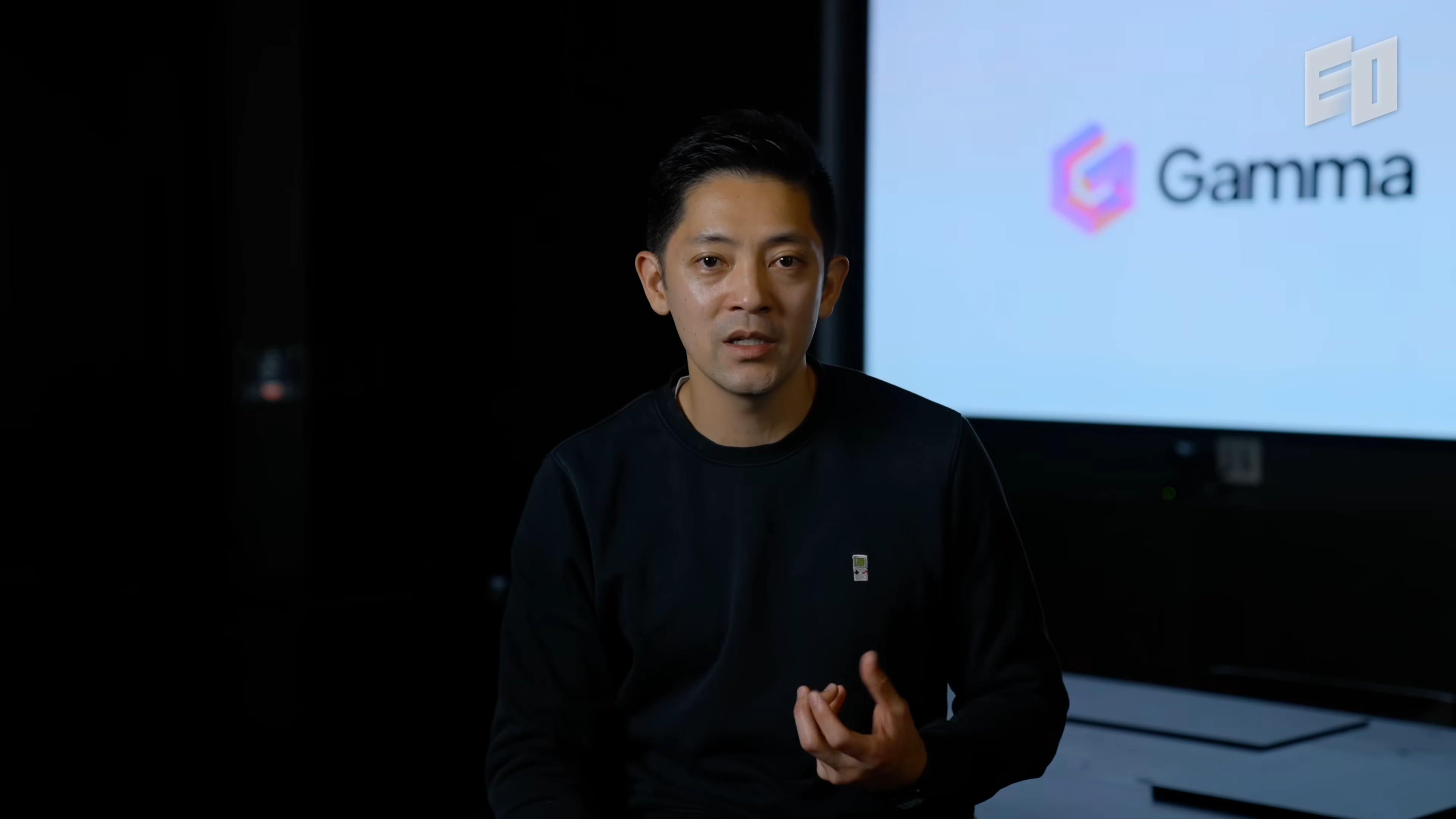
Grant Lee: I see AI as the ultimate partner for unlocking human creativity. In a tool like Gamma, it is like having a design partner with unlimited creativity and unlimited patience. It can sit with you. It never gets bored of the questions you ask or the struggles you have. AI as your partner takes your work to levels you could not reach on your own, and certainly not within the timeline of your projects.
Jon Noronha: The core competency we are aiming for is helping people express ideas easily. If you break that down by job function, for our designers it is about empowering other people's creativity. It is putting yourself in the mind of someone who is not a designer but needs to express ideas, having deep empathy for them and finding ways to make their job easier. For engineering, it is about creating a frictionless user experience, which includes performance, reliability and overall smoothness, all of which contribute to that feeling of easy, frictionless authoring.
Investor: It is a really exciting time to be an investor or operator in AI. The speed at which these markets are moving is both intimidating and awe-inspiring. That said, there is clearly a lot of hype, and we see a number of teams approach building in AI with the mentality of, how do I leverage AI to build a product? I think that is backwards. I am much more interested in customer-obsessed teams that say, here is a customer problem or point of friction I have identified, and out of all the tools I could use to address it, is AI the best one? I am personally excited about applications where companies are leveraging AI to move humans from more of a creator role to a curator role, and Gamma is one of my favorite examples of this.
Grant Lee: We believe Gamma can be the tool that anybody can pick up, learn and embrace, and whatever ideas they want to share or communicate, they can use Gamma to create dramatically beautiful content they are proud to share with others.