Oct 04, 2026
The Founder Mistake I Saw From Google to Dropbox
An interview with Dennis Woodside, CEO of Freshworks
Founder Focused


0:00 / 0:00
💡
At a Glance
- Who: Dennis Woodside has been CEO of Freshworks for a little over two years, after practicing law, consulting at McKinsey, joining Google in late 2003, running Google's sales in North and South America, and serving as CEO of Motorola Mobility.
- What: Freshworks, started by Girish Mathrubootham in Chennai, India, began with Freshdesk, still its customer support product, and now builds AI into its products and into how it writes code.
- Traction: Woodside says Freshworks has 75,000 customers, from industrial businesses to thousands of universities and baseball teams, and describes it as the first global public software company out of India after its 2021 IPO.
In this interview, Dennis Woodside recalls how Larry pushed back when Google's strategy team proposed investing in 20 countries, explains what running Google's Americas sales taught him about himself, shares when founder loyalty becomes a mistake, and reveals the one question every CEO should keep asking.
Key Takeaways
Choose where to work by the people, not the product
When Woodside joined Google in late 2003, it had about a thousand people and literally no product other than search. What drew him was the vision of Larry and Sergey and the commitment of leaders like Eric Schmidt and Shona Brown, and he says decisions made because of people tend to be the right ones.
Knowing you are an executor, not a visionary, is a strength
Google taught Woodside to think exponentially instead of linearly, as he had been trained to as a lawyer. It also taught him that he might not be the one to come up with the vision, but that once he had a strong one to chase, he was quite good at executing against it.
A CEO should work only on problems nobody else can take on
Woodside lists where to compete, which products deserve attention, pricing, business model, and whether the company has the right people and organization. Acquisitions are one recent example at Freshworks, and he says the constant test is whether he is focused on problems only he can handle.
Can anyone know as much about AI as the experts?
Yes, because the world's AI experts have only been around for a handful of years and some Freshworks competitors did not exist two years ago. Freshworks now writes code in an AI-centric way and ships much faster than it did 12 to 24 months ago.
Founder loyalty can hold a scaling company back
A common mistake is staying loyal to early people who may not be the right leaders for the next generation of the company. He looks for hires who have seen growth, such as doubling a business in a couple of years, and who have seen great at companies like Salesforce, ServiceNow, Google, or Amazon.
Great leaders keep a long list of people to hire later
Woodside worked with Kady Srinivasan at Dropbox, stayed in touch as she became CMO of Klaviyo and another company, and brought her into Freshworks about nine months ago. He calls finding such people and making them successful the leader's obligation.
Below is the complete transcription of the interview. Minor edits have been made for clarity and readability.
Introducing Dennis, the CEO of Freshworks
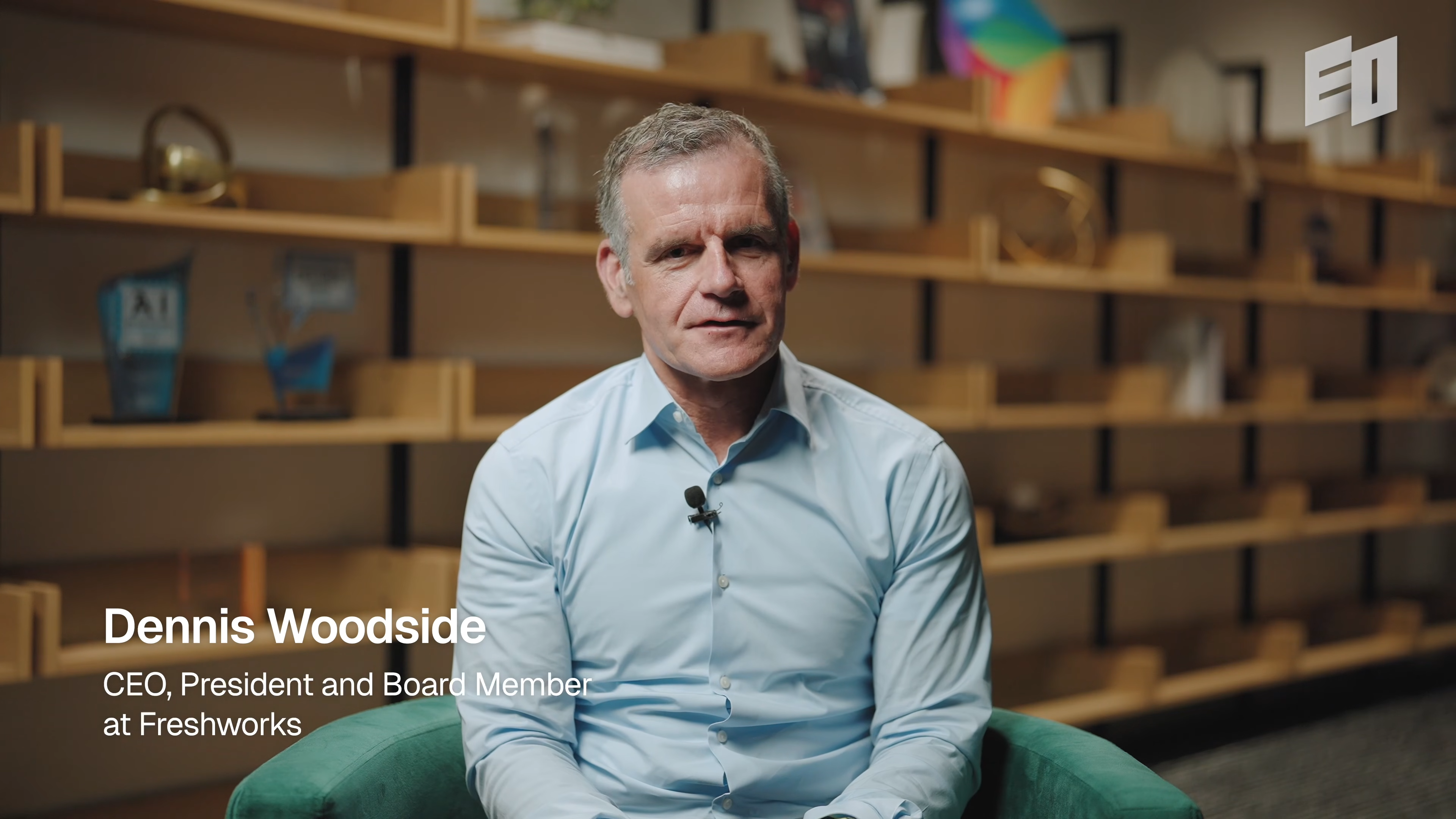
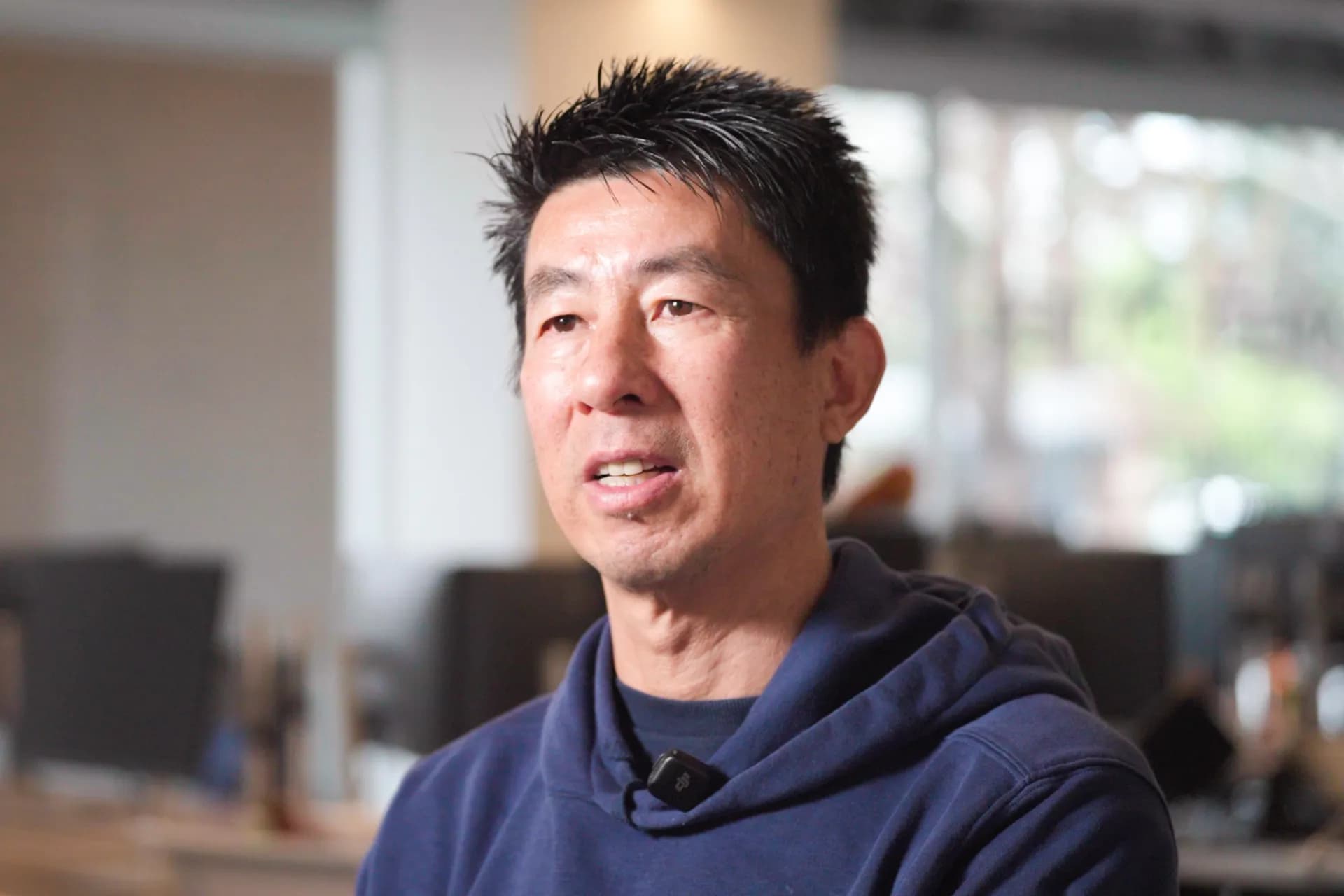
I'm Dennis Woodside. I'm the CEO of Freshworks. I have been the CEO for a little over two years. We're a multi-billion dollar leader in the spaces that we compete in, and we are driving huge value for our customers through AI.
We have 75,000 customers. So we have industrial businesses. We've got thousands of universities. We've got baseball teams. Their adoption rate is going to be different. So our job in that situation is to help them come up that curve and get the best value out of what we provide and out of what the industry is providing for AI. And AI is going to enhance the experience in some way.
From Lawyer to Google's Americas Sales
I've spent 25 years in Silicon Valley in various roles. I actually grew up in Pennsylvania, on the East Coast. I went to Cornell University for undergrad. When I was 22, I was a rower in college. I was trying to row and get on the national team. So that was my biggest dream, but that didn't work. Maybe I should have stuck with it longer; maybe it could have worked. But that was the first dream, I would say.
I don't think I was the kind of person who had these huge dreams to start. It took a while for me to open up my horizons and start understanding that actually it's possible to do that. Not everybody's born that way. Not everybody is taught that that's possible. You grow up and have maybe more limited horizons when you're younger, and then at some point you start realizing, "Wow, the world's a much bigger place. There's a lot more I can do."
I remember one of my friends worked at Yahoo, and her job was to actually help organize the index. It was manually created at that time. But that was my first exposure to technology and to where the world was going. I practiced as a lawyer for a while. I came back into tech a couple of years later at McKinsey, where a lot of my clients were in the tech industry or in media.
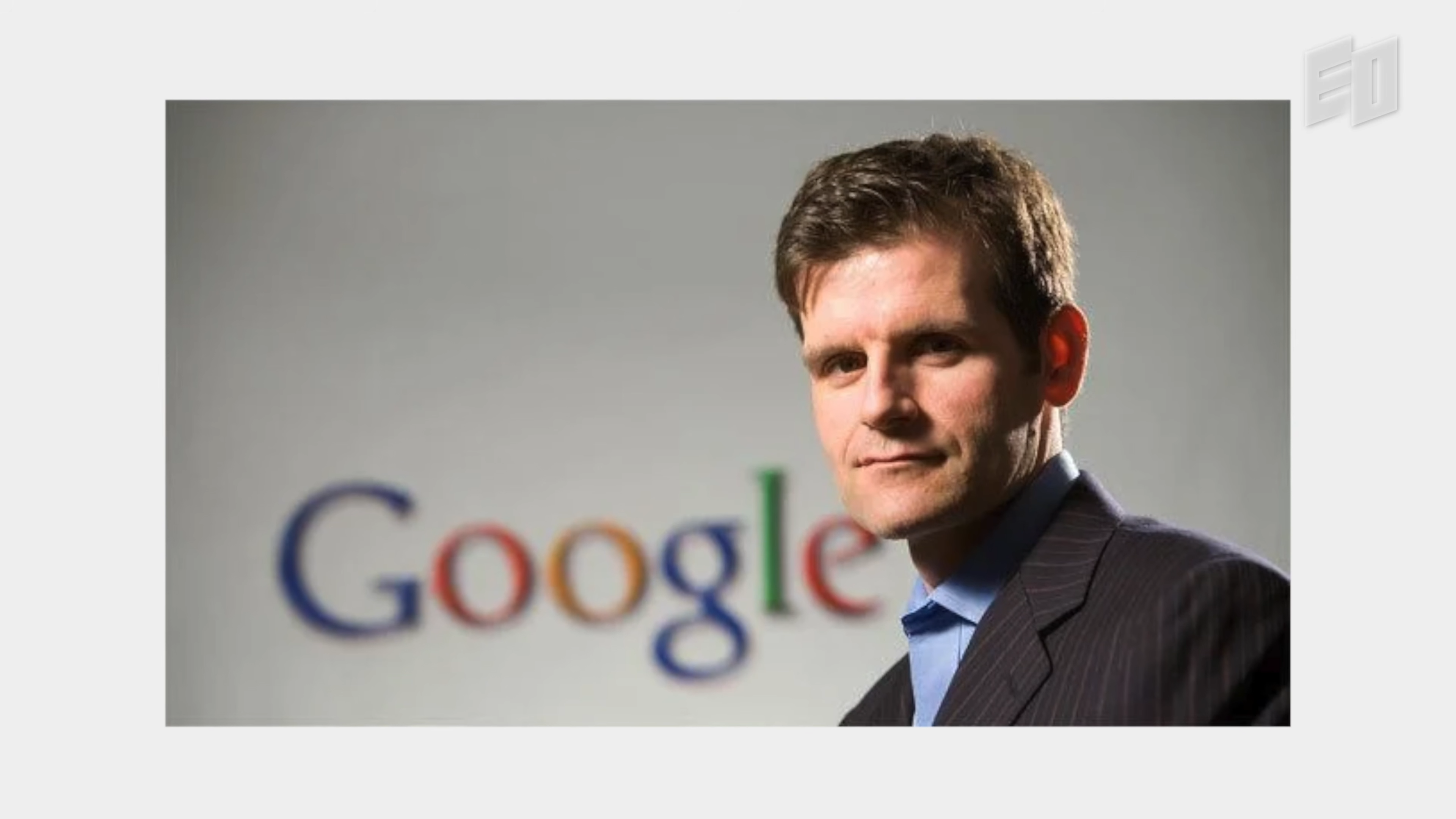
One day, one of my colleagues left to join a startup which I had used, but I didn't know much about them as a company. The name of the company was Google. She was recruiting for a strategy team within Google, and she asked me to join the company. I flew up to interview. I met Sergey Brin, Eric Schmidt, David Drummond, and a bunch of the leaders who now are obviously pretty well known.
When I joined Google, there were, I'm going to guess, about a thousand people. This was in late 2003, so that was a while ago. Google was not public. There wasn't a lot of information outside of the company about what it was doing or its scale. It was really a search box. That's how most people experienced it. And the question was, could it ever be more than a search box? There was literally no other product other than search at the time.
But mostly what I was attracted to was the people. Larry and Sergey just had this very big vision for how eventually everybody's going to be connected to the internet, and everybody's going to need to find information and learn. And what an amazing opportunity to create a set of products that help people do that. When I met the people who were also surrounding them, people like Eric Schmidt or Shona Brown, I was just very impressed by what they were doing and the commitment that they had to that vision.
So I think that was a big factor in making that decision. And I think when you make decisions because of people, you tend to make the right decisions. We all work every day with people, and you want to be surrounded by people who make you better and motivate you and excite you. And that was the case when I was just meeting people for the first time at Google. That's why I chose it.
I remember we did a project for Larry and Eric where we said, "Hey, there's like 20 countries where we really should have people on the ground, and we can invest. We can actually make money now." And Larry's response was, "That's the wrong way of thinking of it. We have searches everywhere in the world. We should have at least one person in every country in the world where we're legally allowed to do business, because we're going to learn from those people and they're going to teach us how the market's evolving."
So I wound up building out some of those teams. I went to Europe, and my territory was from Russia to South Africa. That's how I wound up getting into sales, because there was a big sales component and a business development component to that job. And then I wound up running sales in North and South America for Google, which was, I don't even know how big that was, multiple billions in revenue.
This was right at the time of the first financial crisis, back in 2009. The world was melting down, and even Google had seen its revenue growth go from 20 or 30% to zero. So we had to really kick-start our business all over again and move from a world where the customers were coming to us to one where we really needed to learn how to drive the business. I did that for a while. Google wound up acquiring a company called Motorola Mobility, and I became the CEO of that company.
Before Google, you're trained in school to think somewhat linearly. I was trained as a lawyer, and a lot of that's case law. You're learning what came before and you're trying to apply it to a new situation. But you don't really think exponentially. You don't think, "Well, if this technology turns out to work the way it could, this could change the lives of millions, if not billions, of people."
At Google, that's how the founders thought. They built an entire company on the premise that the world was going to eventually be connected and that search and information was going to be super important, both for people and for society as a whole. And so for me, following that vision was really important. But what I learned about myself is that I might not be the one to come up with that vision, but I can help execute against it.
I am good at organizing teams and leading teams and having plans that actually get to a goal. So I think that was the big lesson for me at Google: I needed that strong vision to go after, but once I had that, I was quite good at actually executing against it.
Decisions Only a CEO Can Make
Girish Mathrubootham started Freshworks in Chennai, India. Certainly at the time, there was not a history of technology companies being started in Chennai. Most technology companies in India are based in Bangalore, started in Bangalore. And there certainly had not been a breakout company that built a global business out of Chennai, and very few out of India.
So for him, it was having that vision, having that idea. His first product was Freshdesk, which is our customer support product to this day. It found a market very quickly because he was early in the SaaS boom. There weren't a lot of tools, for smaller businesses in particular, that they could just buy online and try and get to work with, and that worked well for them.
That boom lasted for quite some time, and he went public with the company in 2021. When I met Girish, he was thinking, "Well, I've got the company pretty far. If we want to be a multi-billion dollar business, there's a lot that is going to need to change over the next couple years."
And he was starting to think about what was his next chapter. He's very passionate about investing in entrepreneurs, investing in the next Indian generation of entrepreneurs in particular. He had already started a fund that does that, so he wanted to spend more time there. And he was open to bringing someone in to eventually become the CEO. They had been on this journey of creating the first public software company out of India that was global, and they had accomplished that.
So for me and for him, we had to think, well, what is the next mission for us? Where are we going next? How do we truly take this to the next level?
Not the Founder's Call. The CEO's.
I think the role of the CEO is to focus on the problems that nobody else can take on. Those can be strategy problems, like where do we compete? What products deserve our attention? What products do not deserve our attention anymore, because it's not really our future? You have to make those hard decisions. Do we have the right business model? Do we have the right pricing model? Those are hard decisions to make.
Do we have the right people? The right organization? Those are decisions nobody else can make. So I think it's really important to focus as a CEO. Don't do someone else's job, but focus on the things that truly affect the whole company, and constantly be thinking about, well, what's next? What's the next decision that I need to be thinking about that's going to transform the business?
And it was important for me to establish that trust over time with him about how I thought about the company, making sure it was aligned with how he thought about it. So I think the role of the operator in that situation is to establish that kind of trust, to deliver results, and to show that you are a good steward for the company going forward. And that's what I tried to do.
For me recently, we've made some acquisitions. That can be an example of an area where it's super important. You're not going to be able to build everything yourself. You're going to need to go out and find talent or find products that are nascent and that potentially could benefit your customer base. That's a decision only the CEO can make. So I think you always have to think, am I focused on problems that only I can handle?
Third Shift, Same Playbook
I can remember some of the early mobile experiences, watching YouTube in Manhattan on my phone and being blown away. How is this possible, and where is this going to go? This is going to change the way a lot of people live their lives. So I think it's the same with AI. Our industry, and specifically the hyperscalers, are going to spend over 700 billion in infrastructure to support the AI build-out just this year, and the estimates are a trillion next year.
That's an extraordinarily high amount. We can just say 700 billion, but that is a huge amount of money going into servers and chips and data centers all around the world. The expectation is that that investment's going to pay off, and that that investment's going to yield massive productivity improvement for all of us. In a technological revolution, the competitive dynamics are going to change. I think it's really interesting to be still pretty early in that evolution.
I think the best mindset is to say, "Look, I can know as much about this as the world's experts, because the world's experts have only been around for a handful of years." There are companies that we compete against today that didn't exist two years ago. So for the last several years, we've all been on a journey in embracing AI in everything we do. The way we write code now is inherently AI-centric.
We're shipping at a much faster pace than we did 12 or 24 months ago, which really matters in a world where we're competing against giants, and we're moving upmarket, and we're winning bigger and bigger customers every single quarter. And I think that momentum's just going to continue. So if you embrace it now and understand how to use AI to make you better at your job, you are going to be better than others. And the world's a competitive place. So I always encourage people to embrace the change.
Most founders I know are excited by the pace of change and taking advantage of the speed of innovation that's happening in the industry. And when you have that kind of moment in an industry, what also happens is your customers, who had gotten in the habit of doing things one way, are open to doing it a different way. And that's when a startup can be successful.
Founders tend to be very loyal to the people that they started with, and sometimes that loyalty is really a good idea. You see people scaling: they were there when the team had 100 people, and they're there when the team had 60,000 people. But sometimes that doesn't work. And so I think a mistake is staying attached to people, really focused on people, loyal to people, when they might not be the right leader for the next generation of the company. You have to watch for that, for sure.
And you have to be open to the fact that people who maybe were with you at the beginning might not be the right people for you in the future. You have to find the right roles for those people, because they're super important to the company. But be willing to find other talent that can supplement your team. I look for people who have seen growth, because we're in a growth industry, we're in a growth business. You need to have experienced what it's like to double the size of a business in a couple of years.
But I also want people who have seen great, because there are companies in the Valley that are world-class in how they train people, how they develop people, how they go to market, how they build products. So if I'm talking about someone in go-to-market, I like to see that they've worked at a Salesforce or a ServiceNow or Google, because I know that the go-to-market organizations in those companies are very well regarded, and they got good training to get to where they are.
If we're looking at engineering people, it might be people from a Google or people from Amazon, because again, I know that those organizations have really rigorous engineering teams that know how to scale and that know how to build great products. So seeing growth and seeing great are super important.
Surround Yourself with Great People
I think the most important thing you can do as a leader is to surround yourself with good people. Going back to why did I join Google in the first place? Why did I join Freshworks? It's because I was inspired by Girish here and the people around him. And so it's really about focusing on constantly being connected and looking for people whom you might be able to work with down the road, who can help you.
An example for us: we brought in Kady Srinivasan, who worked with me at Dropbox. At Dropbox, she was a marketing manager, and she was doing quite well. Time went on, and she was the CMO of Klaviyo and another company. We stayed in touch, brought her into the company about nine months ago, and she's done an amazing job.
So I always like to stay in touch with people who have a lot of potential, because you never know how things are going to develop down the road. And I think that's the leader's obligation: to find those people, bring them into the organization, and make them successful.