Dec 07, 2023
Behind What Seems Like an Overnight Success
Interview with Siqi Chen, Co-founder and CEO of Runway
Founder Focused

💡
At a Glance
- Who: Siqi Chen is a co-founder and CEO of Runway. A former NASA JPL engineer with a math background, he built one of Facebook's largest early social games, served as VP of Product and Growth at Postmates, and created financial models at Sandbox VR before founding Runway.
- What: Runway is a modern financial modeling and planning platform designed to make business metrics accessible across an organization by directly linking business context, roadmaps, and plans to financial numbers.
- Traction: After spending over two years refining its core product, Runway launched a redesigned website that went viral on Twitter, driving exponential customer growth and tripling revenue month-over-month.
Siqi Chen started his career engineering spacecraft systems at NASA JPL before entering Silicon Valley, where he built early viral social games and led product growth at Postmates. His turning point came at Sandbox VR, where creating a financial model revealed the company had only three months of cash remaining right as the pandemic hit, resulting in massive layoffs. That experience inspired him to co-found Runway to strip the complexity away from financial planning and connect operational context directly to company spreadsheets. Today, Runway is growing rapidly by turning financial modeling into a collaborative tool where engineers, designers, and executives work together to make better business decisions.
Key Takeaways
Use Engineering To Multiply Your Personal Impact
The founder began by building games alone, then reframed impact as leverage, since software can keep creating value after its maker stops typing, while organizations let people build what no individual could. The broader lesson is to move from personal output toward coordinated systems.
Every Builder Needs To Understand The Business
After hearing the term contribution margin at Postmates, the founder realized business fluency affects engineers, operators, and CEOs alike. A financial model later showed Sandbox VR could run out of money in three months, making numbers a shared responsibility rather than an executive specialty.
Connect Business Context To The Numbers
Runway links plans such as fundraising, marketing, and product work to the metrics they are meant to change. That connection turns a spreadsheet from an overwhelming wall of numbers into a shared operating picture, where teams can see timing, ownership, and expected impact.
Let Customer Pain Disprove Your Product Hypothesis
Runway spent months building an expense view before learning that customers valued decisions about deploying millions of dollars more than static spend visibility. The team restarted around planning and forecasting, using direct customer contact to discover the harder problem worth solving.
Expect The Startup To Take Longer Than Expected
The founder warns that a startup is defined by not yet having product-market fit, and Runway's first two and a half years were difficult. Figma's eventual success still left many early employees doubtful, so founders need conviction strong enough to sustain a multi-year bet.
Watch the full interview now on EO's YouTube channel! Below is the complete transcription of the interview. Minor edits have been made for clarity and readability.
Introducing Siqi Chen, Co-founder and CEO of Runway
Hi, I'm Siqi. I'm one of the co-founders of Runway and also the CEO. The mission of Runway as a company is to make business accessible and understandable to everyone. If we can build tools to help people understand why they're working on a thing, what the impact is on the business, and how it works, we think people can make better decisions, you'll have more fun at work, you'll have more autonomy, and ultimately you'll end up with better running companies.
The Journey of a Builder-Kid Turned Startup CEO

I studied math in college and got my start working at NASA JPL. I was an engineer there and I had a good time. In 2007 I moved to the city and joined a startup called Powerset. It's a search engine company, but right around that time the Facebook platform came out. This was the very first version, in 2007, and on the side I started building games for it, and one of those games blew up. It ended up being the second largest app on the entire platform. I was just a kid, and I was making a couple thousand dollars a day in ad money while working at this startup.
Then investors started reaching out. One in particular, Jeremy from Lightspeed, said he was really impressed by what I built, that he thought this new category of software was called social gaming, and that he wanted to invest in a company. I said, well, I never thought of this as a gaming company. I thought we were building a social network here on Facebook. And he said, I'll give you $5 million if you build games. And I said, for $5 million I'll build whatever you want.
It's funny, because actually my entire high school and middle school, I really wanted to start a company and I really wanted to build things. I didn't have enough money to pay anyone else to build it, so a large part of the reason I learned how to be an engineer is so I could build things myself.
I wanted to build more and more things, and I discovered that to build things of impact you can't build them alone. You have to build with other people.
When I think about impact, I have this mental model of how you increase impact and how you add leverage. If I were to dig a hole in the ground with a shovel, the impact I can make is based on my time. If I stop digging, there's no more hole. If you can build a robot that digs a hole for you, you create a lot of new value that will generate value even if you're not there. That's what software is. When you write a piece of code, it can run 10 million times a second, much faster than a human, and that's valuable. So that's another level of impact, where you increase your leverage. But then to create even more impact, to build more valuable and complex things, you need to be able to build things that you can't build on your own. So then it's about finding problems and coordinating people to build it together, and that's a higher level of impact.
I actually think about running a business and entrepreneurship very much through the lens of engineering. Building an organization is almost like higher level programming. On an individual level you're programming through a keyboard, but if you're trying to create new products, you're programming through an organization, the people in it, the norms, the culture that you create, the problems that you're trying to solve, and the mission. I just find building things super rewarding.
My New Startup Idea After Letting Go as CEO
My second company was acquired by a company called Postmates, this delivery company, and I was VP of product and growth there. I was at a meeting one time and someone said the word contribution margin, and I said, what's that? And someone said, that is one of the metrics your team is responsible for. I said, oh, all right. So I went and Googled it.
That sense of insecurity I had about not understanding business, about not being a business person, stuck with me for a really long time. My background is in math and in engineering. I never thought of myself as a business person.
When I joined Sandbox VR a few years ago, we didn't have a financial model at the time, so I created a model. What we quickly discovered is that, oh my God, we're going to run out of money in 3 months, because it's a very high capex, low margin business, and I had moved my family to join this company 3 months earlier, to a different country.
Ultimately the reason I started Runway is that COVID hit and we had this retail business with many stores. All of our revenue came from people going out and having fun with their friends. We had to project out how long COVID was going to last. Is it going to last 3 months, or is it going to be 2 years? We were doing it on these spreadsheets, and that had huge implications for what we had to do. We ended up laying off about 90% of the company, including myself.
Understanding business affects everyone, whether you're a CEO or an engineer. Ultimately businesses exist to make a profit and to make revenue, so that we can have a good time and build great things, and understanding it is incredibly important.
Think about a spreadsheet. I don't know if you've ever received a spreadsheet, but the first time you get one, the emotion that everyone feels is universal. You feel overwhelmed. You think, oh my God, this is a wall of numbers, I don't understand it. That's how everyone feels.
Then when you think about how an engineer, or a CEO, or a business operator actually thinks about their business, they think about doing things at a certain time in the future to move the business forward. I'm going to raise money. I'm going to start a marketing campaign. I'm going to make the product better. That context lives outside of the spreadsheet. It lives in roadmap documents, in Notion or Google, and it's completely disconnected from your numbers.
So one of the first things that we help people do is connect your business context with your numbers for the first time. Now, instead of looking at a number going up or down, you can say, I have a plan to raise money, I have a plan to improve the product, here's when it's going to happen, here's who's going to do it, and here's the impact of what I'm going to do and how it affects the key metrics of the business.
Crafting a Product Customers Crave
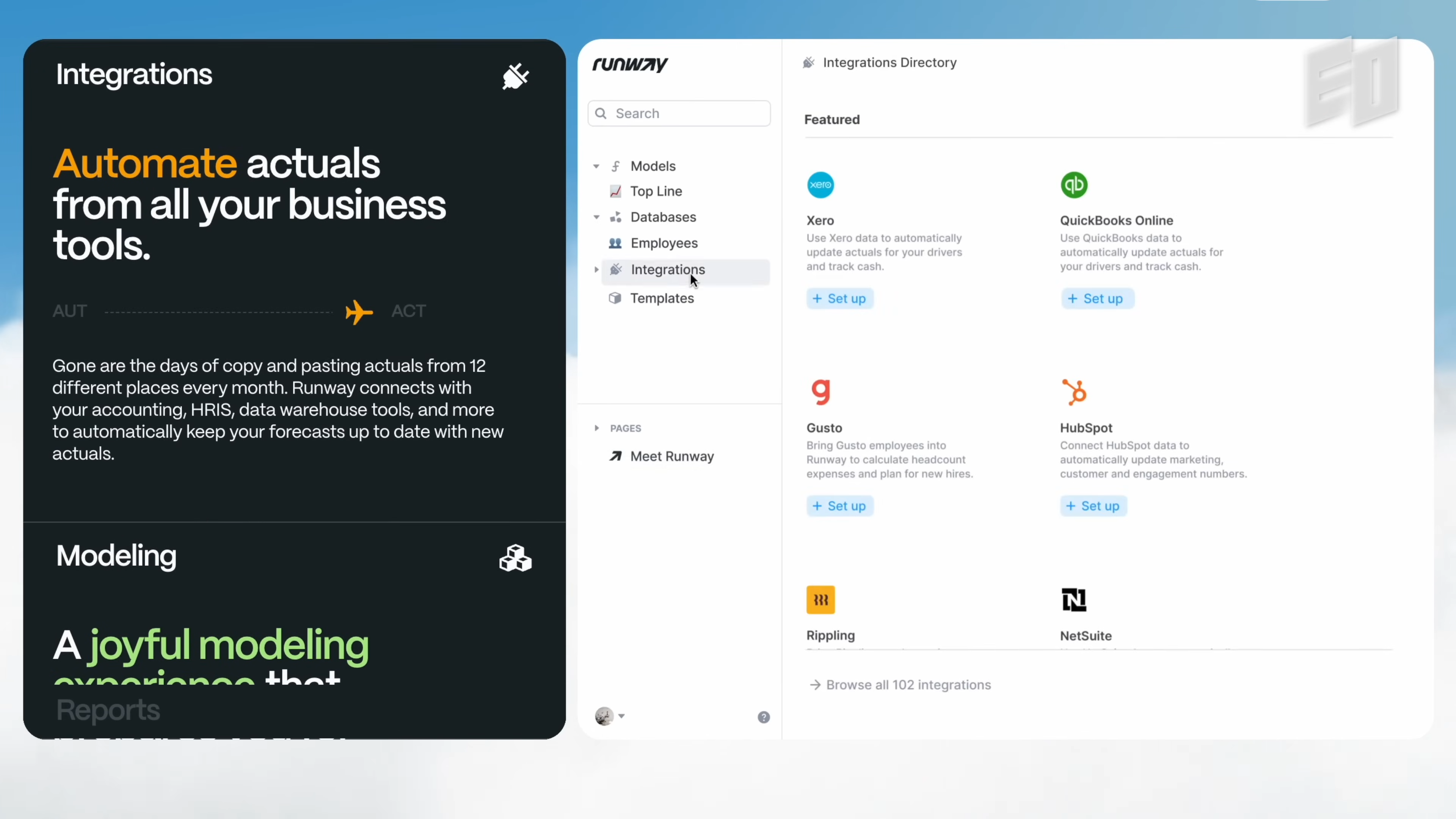
We spent a couple of months building this really cool view. It lets you transform and pivot all of your expenses and revenue however you want. The hypothesis was that this is a foundation for other problems that we could solve. We actually disproved the hypothesis.
What we quickly learned is that it did do what it promised. It solved the problem of helping people understand their spend, because when people started using it, the product was good at what it did. It told people, hey, you're a startup, most of your spend is in people. And you say, oh, okay, great, got it. Next month, most of your spend is still in people. It doesn't change from month to month. So the amount of money you're willing to pay for that is basically zero.
But as we talked to more customers, the pain that is valuable is this. I have more people in the company and I need to figure out major decisions around how we deploy millions of dollars. Do we hire more people? Do we run marketing campaigns? That's an incredibly valuable problem, but it's much more difficult to solve. You need to be able to model and forecast a business. So that first initial hypothesis was disproven after about a year, and we restarted to focus on planning and forecasting in a team environment for slightly larger companies. Some of the problems you think you have, and the details of how to solve those problems, are things you only learn that way.
Part of Runway's culture that has been really special is that everybody is so incredibly close to the customer. Our product team is actually a team that makes very few, if any, product decisions at all, which is really odd, because they're the product team. What's worked for us is that the product team is tasked with being close to the customer, understanding the customer, delivering that customer context, and creating a culture of customer centricity throughout the entire rest of the organization. They're the ones making sure that designers and engineers are connecting with customers and talking to them directly.
Our designers and engineers are in every single customer Slack channel. When they design things and when they ship things, they will show the customers directly. I saw that you had this problem on this call with Tanner. I built a thing, I designed a thing, it works like this, what do you think, does it solve your problem? Then they'll build it and we'll have the customer try it, and they're the ones talking directly to customers. So it's not just doing customer support. They're actually trying to get more information from customers and partnering with them to build new capabilities in the product, to make sure it solves the problem and make sure it's easy to use. They are quite literally doing the job that a traditional product manager would do, and our product team is a team responsible for creating that culture and making sure it happens.
How a New Website Made 10x Growth
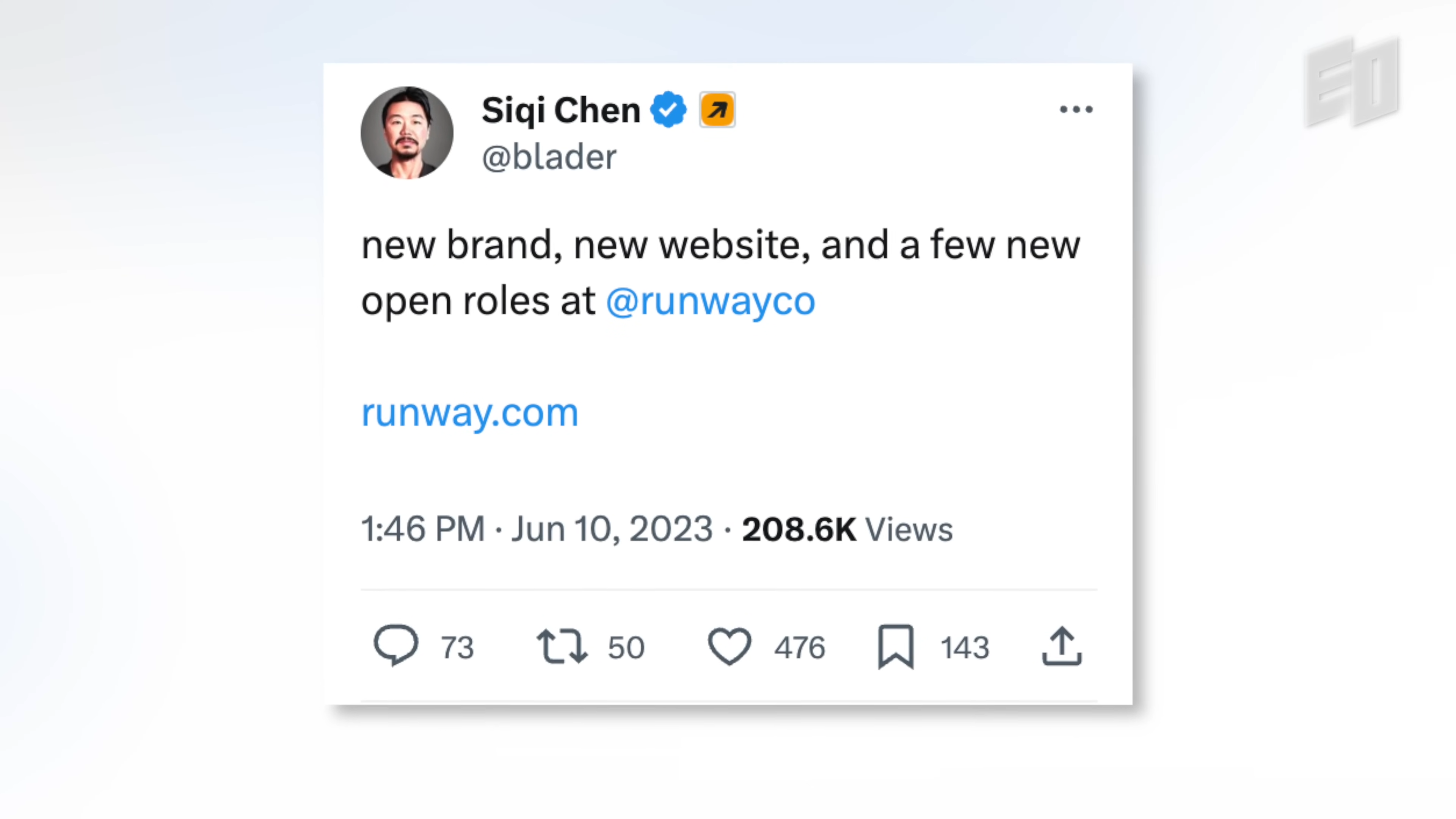
When we launched our website in June, I literally tweeted, hey, new brand, new website, some jobs, no big deal, and then that went viral all over Twitter. We were literally getting leads a few every second. We tripled our revenue last month, in July, and we also tripled our revenue every month from June. Twelve hours into September, we had about a third of all the revenue we ever made in August, so it's growing quite fast.
I think we had launched this website and the message really resonated with people, this idea that finance is important and confusing, and it really shouldn't be.
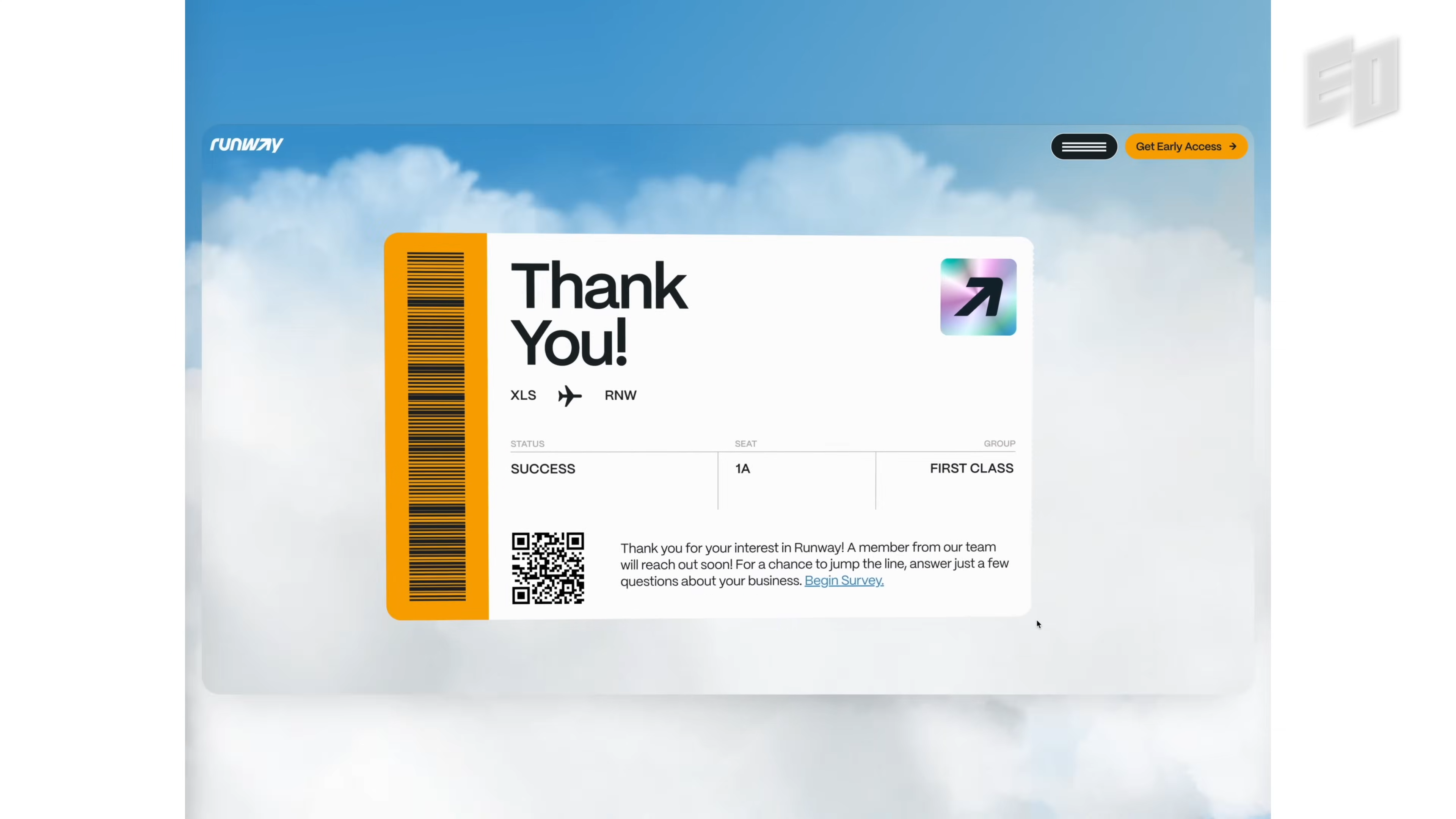
The inspiration behind the website is a few things. One is that we thought it was really important to showcase the product. Traditionally, enterprise products tend to not be very fun or nice to look at or good to use, and they tend to hide the product. You go to a fancy business website and it's stock photos of business people shaking hands. Because the differentiator for Runway is to make it as accessible as possible, we really found it important to put the product front and center, so the minute you scroll, you have the product flying in the sky.
The second part is the feel of the website, which obviously feels very different from a traditional business website. If you want to be memorable, and you want people to talk about it and things to go viral, you have to do something new and different and surprising. For us, the surprising thing was that we don't want to copy. We don't want anyone to say, oh, this is inspired by X. If you think about the products, and also the marketing sites, that people remember, they push the art of design forward. Stripe's landing page, or Linear's landing page. Once they're out, everyone copies them. You can't remember any of the other products that copied those things, but you remember the ones that did it first.
How do you create something new? I don't know, and we frankly spend a lot of time on it. You just have to keep on trying until you feel good about it. You have to apply your taste. You just don't know. The frequency with which a company really tries to do something new and puts so much effort into a thing is rare, but when it happens, people do talk about it, and that was our bet.
Essential Insights Before Lauching a Startup
A startup is a company that doesn't have product-market fit. That's what it is, and that's what you're signing up for. It's unknown. Depending on what you're working on, it may take a few months. It may take 3 years, 5 years, or an infinite amount of time. You may never get there.
For Runway in particular, the entire first two and a half years, up until basically this year, was really hard. When you join a startup as an employee, you probably aren't expecting nothing to happen for 3 years.
When we look at Figma today, or Airtable, or any of these companies, we think, oh my God, they made it. Dylan from Figma is one of our investors. I invited him over for a lunch and learn, and at the end I asked him one last question. What was most surprising about taking Figma from where it was at the beginning to where it is today? He had an answer that was really interesting. He said what was most surprising is how few people made it all the way.
I thought, okay, that's interesting. The more I thought about it, the more I thought that is an incredibly surprising answer. In the early days of Figma, it's an amazing team. Half the people working on that team looked left and looked right and said, we're not going to make it, we're not growing, it's not working. Meanwhile, what they were working on turned out to be one of the biggest private outcomes of all time. Even in that situation, in that team, half the people didn't think they were going to make it.
You just don't know until it starts working, so you have to have the right expectations about how long this is going to take, how much it's going to suck, and the likelihood of it working out or not. At the same time, if you want to build something great and valuable, it takes a long time. Of course, when you start winning, it's great, but it took 3 years to start winning at any level at all.
You have to somehow irrationally believe and care about this so much that you're legitimately willing to work on it for 3.5 to 5 years, not knowing whether it's ever going to work, and then, if it does work, whether the payoff is going to be worth it. If you're going to take such a long bet, it has to be really valuable. For many years it wasn't working, and the thing I thought about is that if it does work, this could be one of the most impactful things anyone could ever work on. When you believe that, it gives meaning to your own work, and you're able to inspire and communicate with a team to keep going for another day, another week, another month. That's what you have to do.