Dec 30, 2024
From Zero to $1.5B Unicorn in 2 Years
Interview with Jesse Zhang, Founder of Decagon
Founder Focused


💡
At a Glance
- Who: Jesse Zhang is the co-founder and CEO of Decagon, an AI agent company, and a second-time founder still in his 20s.
- What: Decagon builds AI agents that handle customer support and customer experience for large companies, automating the questions, data lookups, and tickets that used to require large human teams.
- Traction: Decagon hit seven figures in ARR in about six months and has been growing quickly since.
Meet Jesse Zhang, co-founder and CEO of Decagon, a groundbreaking AI agent company and a second-time founder still in his 20s. In this episode, Jesse shares the incredible journey of scaling Decagon and his first B2C startup, LowKey. Whether you're a first-time founder or navigating the fast-evolving world of AI startups, Jesse's insights on growth, resilience, and lessons learned will inspire and empower you.
Key Takeaways:
The Only Real Validation Metric: What Customers Will Actually Pay
Decagon's early customer calls followed a strict structure: listen to the problem, walk through a hypothetical solution, then ask how much the customer would pay for it. Interest without a number attached means nothing, since willingness to pay is the only signal separating a nice-to-have from something worth building.
A Crowded Market Isn't a Red Flag When Customers Keep Asking For It
Advisors warned Jesse that customer support was too obvious an idea and would get crowded fast. He treated the warning as validation instead of a threat, since customers volunteering the same complaint meant the demand and the willingness to pay were already there.
Why Sitting on Top of Foundation Models Doesn't Make You Replaceable
Foundation model companies build infrastructure, not customer-facing products, so an application layer that owns the relationship with end customers has real staying power. Depth and complexity are what protect that position, since a product has to be substantial enough that no infrastructure player would bother rebuilding it.
How Second-Time Founders Skip the Ideation Trap
Wasting months as a first-time solo founder without knowing how to judge a good idea taught Jesse to skip prolonged ideation entirely the second time around. With Decagon, he and his co-founder went straight to customer calls instead of debating the idea in a vacuum.
Intensity, Not Brilliance, Is What Separates Founders Who Scale
Jesse points to intensity, always pushing and always going, as the trait every successful founder and investor he's met actually shares. Smarts and hard work matter less than a no-excuses attitude that refuses to stop at the first obstacle.
Being Young Means Not Knowing How Anything Works. It Also Means You Can Outwork Everyone Who Does.
Younger founders lack the instinct for how revenue or company-building actually works, which Jesse calls the biggest disadvantage of starting early. What makes up for it is raw hours and energy, plus enough naivety to not fully grasp how hard the odds really are.
Watch the full interview now on EO's YouTube channel! Below is the complete transcription of the interview. Minor edits have been made for clarity and readability.
Introducing Jesse Zhang, Co-Founder of Decagon
My name is Jesse. I'm one of the co-founders here at Decagon. Decagon builds AI agents primarily for large corporations on the customer support and customer experience side. As a team, we hit seven figures ARR in about six months and have been growing quickly since then. We're always looking for more customers, more folks to work with, and we're growing the team as well.
I was born and raised in Boulder, Colorado. I grew up doing a lot of things like math contests and science research, and I ended up studying computer science at Harvard. I was very focused on trying to build something, so most of the time I spent outside of classes was toward learning how to build things and talking to my friends about building things. I finished college fast for a bunch of different reasons. I thought I had already gained what I needed from college, and I was excited to start building things. At Harvard, there was a program that let you graduate a year early pretty easily. After Harvard, I started my first company. It was a very different startup. We eventually got acquired by Niantic, then decided to start this company.
Beginning of Decagon
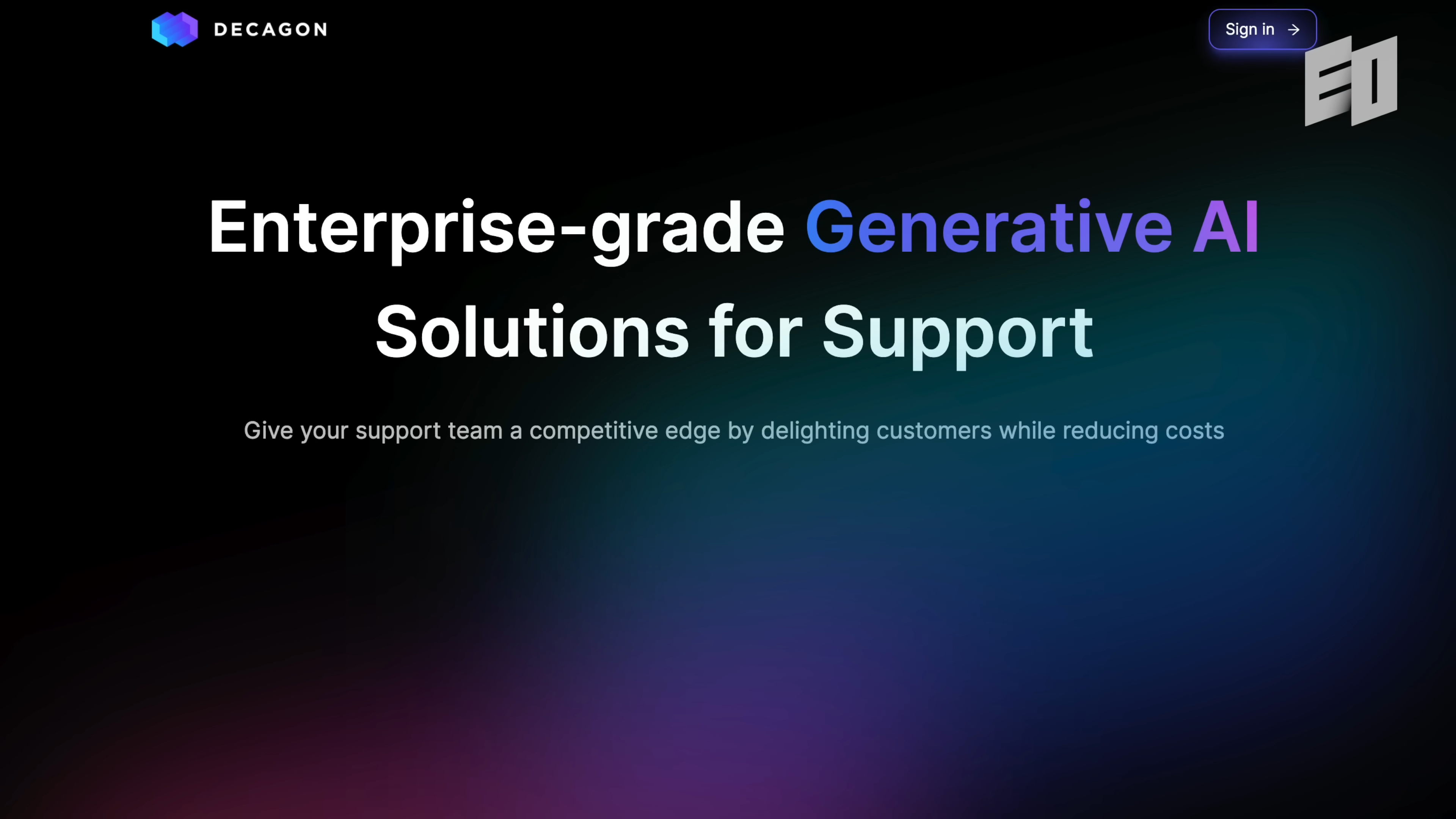
So specifically, the problem we're solving is that a lot of these companies have very large, not very efficient operations in terms of answering customer questions, looking up data, and dealing with tickets, and many of them outsource to large BPOs and things like that to have a lot of human agents answering it. If you're able to use some of the new generative AI technology, you're able to automate and improve the customer experience by answering a lot of these questions automatically, looking up data automatically, and doing all of the things a human agent would do.
Every startup's biggest advantage is that you're able to move quicker. You can cater to customers a lot more and make sure you really capture their needs. A VC might ask you, okay, what do you do when Google starts doing this? Honestly, a lot of our advisors and investors were telling us that support was going to be too crowded, that it's such an obvious idea. But that's also a good thing, because it allows you to get to adoption very quickly. Our customers see the value when they start using it, and they immediately get ROI. That's what our customers are telling us: that there's a need here, and that they're willing to pay for a solution if it works. That's what led us there.
That's also what's made us successful competing against the older generation of chatbots, because if our customers were happy with those, they wouldn't have even mentioned that, hey, we're willing to try you out. We were able to capture a lot of the newer needs, and a lot of what wasn't possible before, by building from the ground up using generative models. A lot of older players already have a huge product built, and they probably have hundreds of customers, so when they're shipping new features, they have to build things that satisfy the average customer. They're slower to adapt because they have to carry along all the product they've already built.
When you're a startup like us, you have to execute well, and we moved really fast. There's been a new technology introduced: large language models. If you think about the more traditional chatbots, there's some intelligence built in, but it's not AI, it's not generative. If you're able to adapt faster, you have a big advantage when you're competing against them. I think we've built a better product.
How Decagon talked to early customers
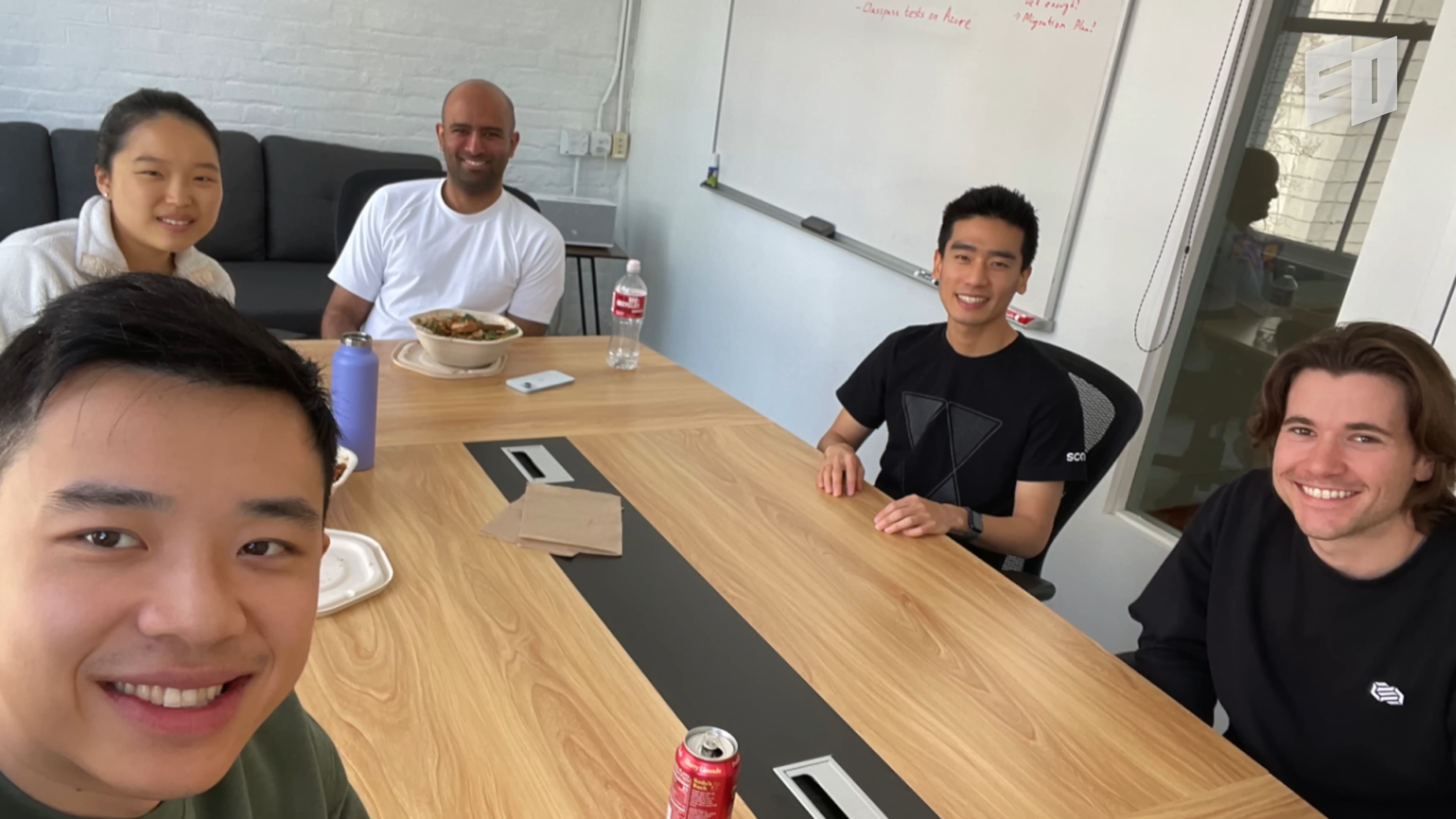
When we first started, we were very open-minded. We weren't super opinionated about exactly what we needed to build. We let our customers tell us what the need was. When you're early, it's hard to have a very coherent strategy. You're trying to get as many customers as possible. In the early days, it was just us trying everything we could to get new customers and new introductions. With each customer, we had the same process of going in and really trying to understand what they needed and wanted, instead of trying to push our product vision on them.
For a lot of our early customers, Vanta is a great example. Vanta was one of our first customers. We came in with the mindset of, hey, you may have some issues you're dealing with, and we want to see if we can solve them in a good way. If that's your mindset, it makes it easier, because you're putting the customer first and really being customer driven. Fortunately, at the time, they had a very concrete situation, which was around having automation to answer customer problems. It's a complicated product, so when people come in, they have a lot of questions, and if you're able to answer them well, customers are happy. That's how we got started. We shipped an initial version very quickly, they liked it, then we tested it on real customers and they liked it as well. So we went from there.
For the first six months, we didn't build anything that wasn't a direct request from one of our customers. Now we're slightly farther along, so we have our own views on what makes a good product, but we're still extremely customer first. We really love talking to our customers. They give us a lot of direction, and that's how we approach product building.
Common mistakes first founders make

My first company, LowKey, was very different from what we're building now. First of all, it was a consumer company, so we didn't have paying customers off the bat. We were much more concerned with getting users, and getting a lot of them, very quickly. We were building software for people who played video games, to capture their clips, edit them, share them, and explore clips in general. By far, the hardest part was being a new grad and not knowing much. I was a solo founder for most of it. I didn't really know what things were important to work on and what things weren't. I didn't really know how to evaluate whether an idea was good or not. Every day you're working hard, but maybe you're not working on the right thing, and after a few months go by, it feels like a lot of that time was wasted. I think that's very natural for first-time founders, especially younger ones, because you don't really have that perspective yet.
What kept me going was being young and having a lot of energy. Being a little naive is helpful too, because you don't have that much perspective on how hard things can be. That was by far the hardest part for me. I think being a consumer company exaggerated that a bit, because there aren't really customers paying a lot of money that you can talk to and say, all right, what do you need, I'll build it. So that was by far the hardest.
Once you start scaling, of course you know what you're building. But there's still that element of: you're at 10,000 users, how do you get to 100,000? Once you're at 100,000, how do you get to a million? The answer might not be the same, and you have to keep figuring out new things to try. Then, for that company, you eventually have to figure out how to make money. That's a whole other phase. For me, the first part is definitely the hardest.

You can always overthink things as a founder, and you can always rationalize different things, but at the end of the day it doesn't really matter. You have to get to a point where you have customers who really appreciate and value what you're doing, and that speaks for itself in the growth of the business. This time around, in the very early stages of building Decagon, my co-founder Ashwin had a very similar background: he'd also successfully sold a company before. So we decided, let's not overthink it. We wanted to go out and see what people actually wanted and what they were willing to spend money on, and that made the initial ideation phase much easier. We really didn't want to spend too many cycles going back and forth in that stage.
Number one, you need to line up a lot of customer calls. You can get those by asking your friends to introduce you, asking investors to introduce you, or reaching out cold. Once you have them set up, you want to make sure the calls are very structured, and after you leave the call, you should feel like you learned something concrete. Part of that is having an exploratory phase, where you're listening to their problems and seeing what could possibly be solved. And the next phase of the call is generally about hypothetical solutions. The last part of the call is really important, to get a sense of how much people would pay for it, because many times someone will tell you this would be super useful, but at the end there's no budget, or they'd only be willing to pay a small amount. How much someone is willing to pay is the only real metric for how useful it is to them. If you're able to have a call like that, afterward you can say, okay, we talked about these things, and I feel like this would be really useful to them, or it'll only be somewhat useful to them. Once you've had enough of those calls, that's the real signal.

As I mentioned before, people were telling us at the time that customer support and customer experience is super crowded, that it's too obvious of an idea. But when we had a lot of these calls, that's what people were saying. So it means that there's a need, and that people feel there's ROI for them to adopt something.
When you're young, the biggest disadvantage is that you don't really know how things work. You might feel like you're very smart, or that you can work really hard, but you don't really know how you make revenue, or how companies work in general. The biggest thing is staying patient with that and trying to talk to as many people as possible to get that intuition. The biggest advantage you have when you're younger is that you can put in a lot of hours and work really hard. I would describe the difference between a lot of successful entrepreneurs and the not-so-successful ones as mainly intensity. A lot of our friends who have built huge companies, and a lot of our advisors and investors, all have intensity. I think it's impossible to build a big company without intensity, and intensity just means you're always going, always pushing. You have a no-excuses attitude where you get things done. That's what we admire about a lot of the folks who help us, and that's what we want to have in our DNA as well.
I don't know if we have the best perspective to give advice on a global, AI-space level. For us, the core fundamental players are the ones building new language models and new infrastructure. We sit on top of them, of course. We're an application. We interface with our end customers. If you're building in a space that's deep enough and complex enough to have a bunch of features and a bunch of product decisions, a pretty big and deep product, no one is really going to be able to replace your application, because the big players are building models. They're not in the business of building customer support agents. So that's one piece: what you're building has to be deep enough and complex enough to be its own product and its own company. There's a big advantage when you're the one interfacing with end customers, because you're the one who actually understands their needs. This goes back to what I've said many times: you have to have a good, deep relationship with your customers, really understand what they need, and everything they say and do gets baked into your product. You're the only one who has that, because all the big players, the Googles of the world, the cloud providers, they're building on top of them too, but they're never going to have that access to the exact customers. If you're building an application, that's important, if you're trying to make sure a big player doesn't come around and replicate your product.