Sep 28, 2026
Everyone in SF Has Met Boardy. Here's What Its Founder Says It's For.
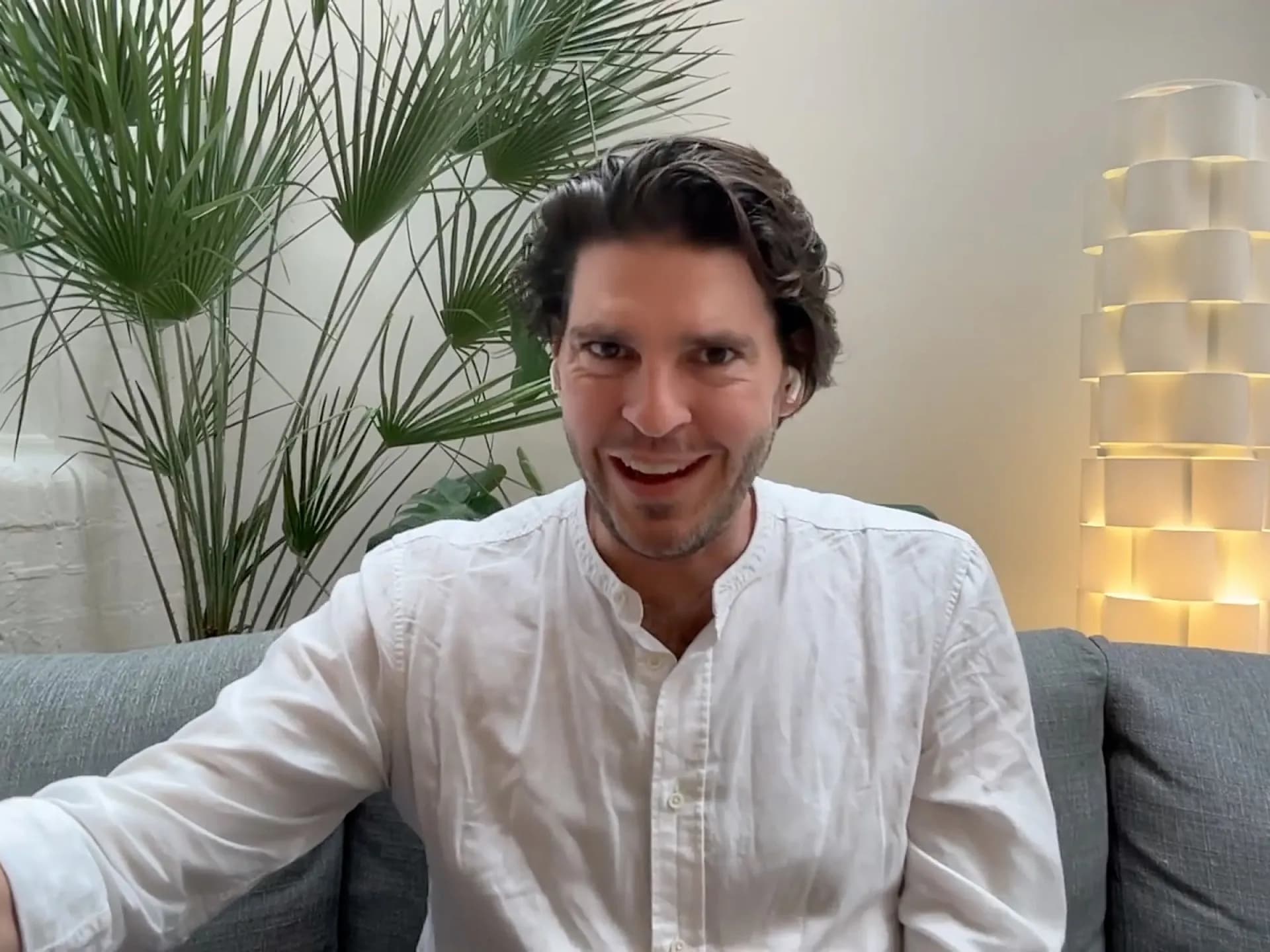
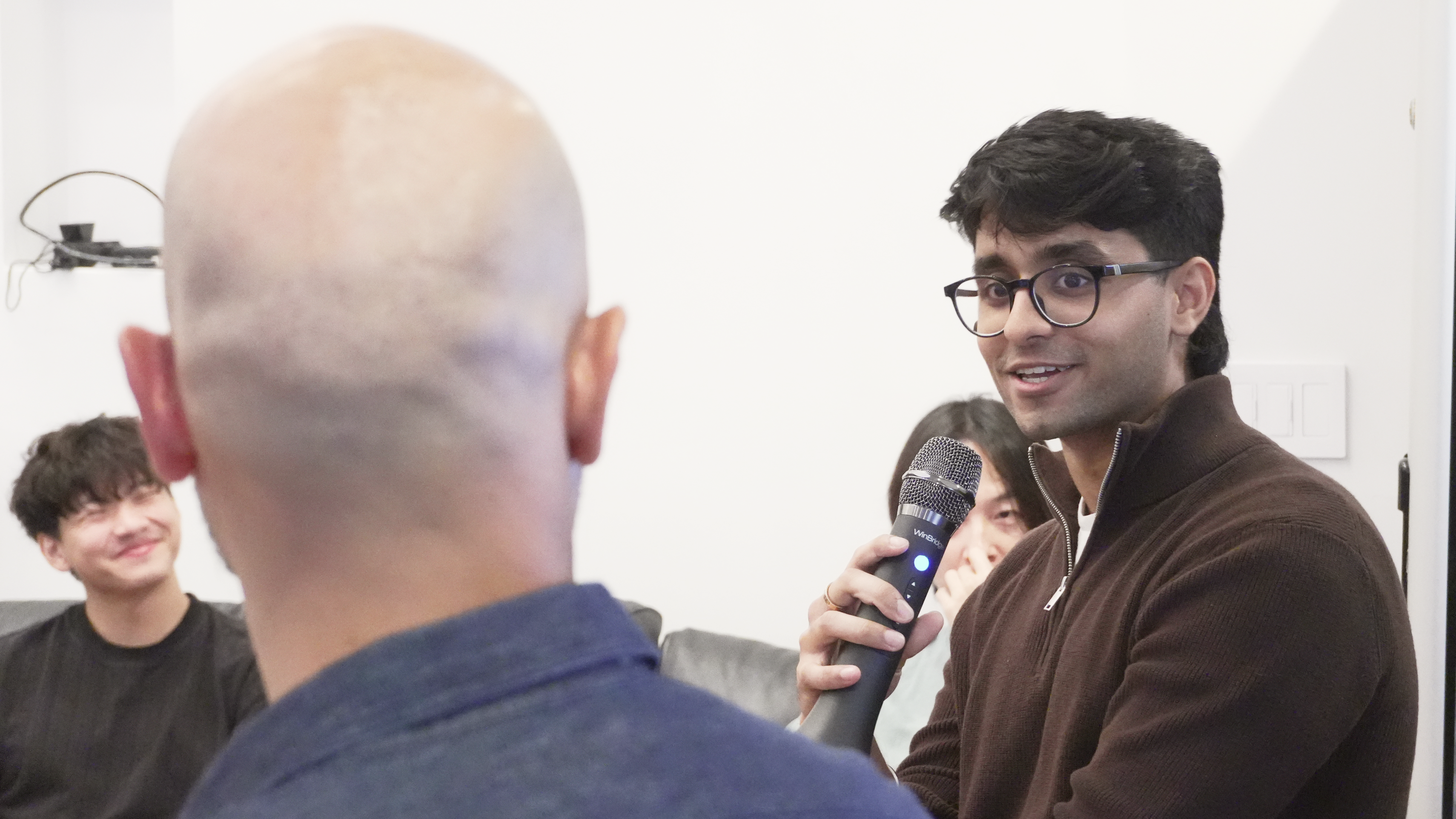
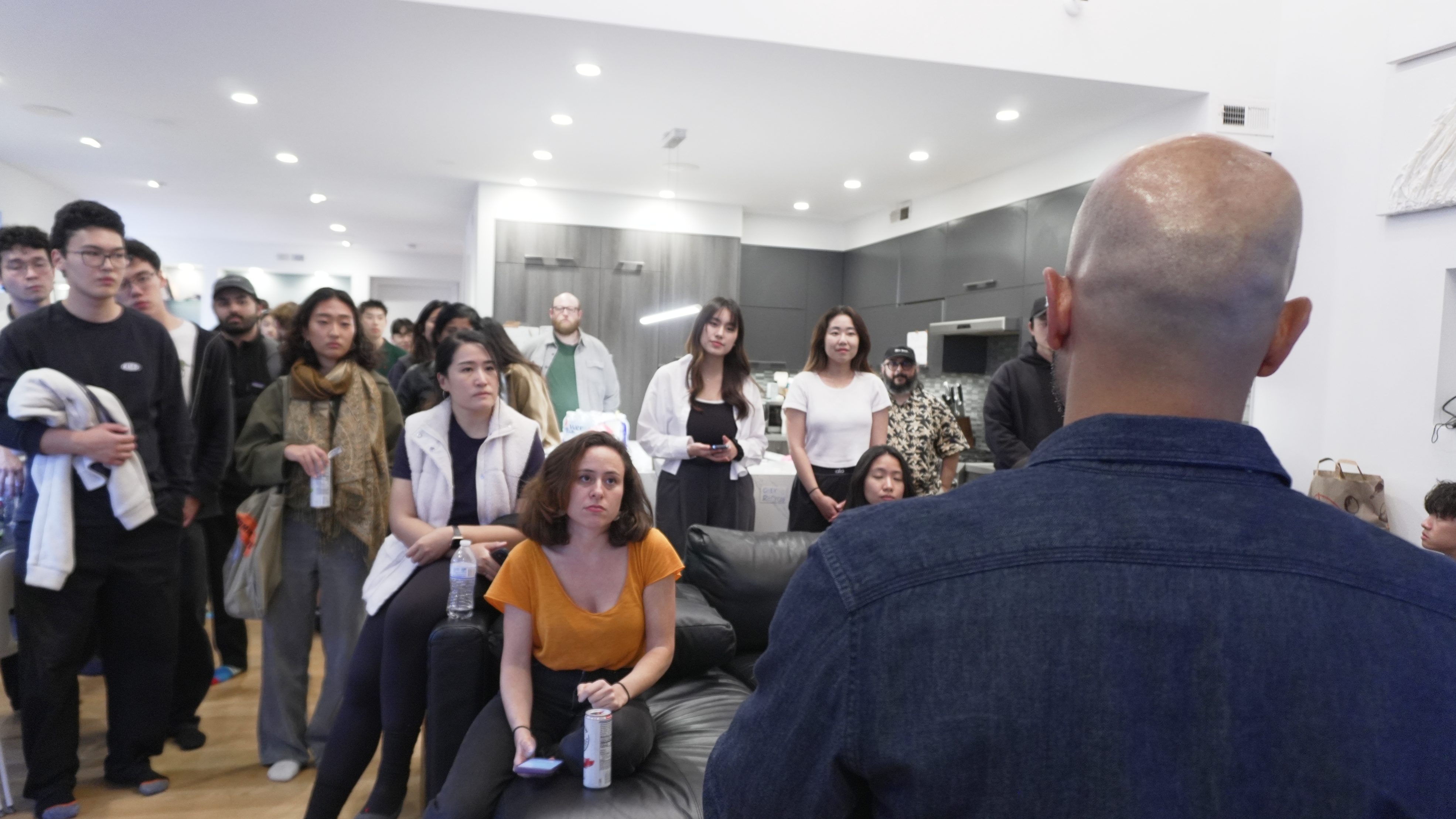
Andrew D'Souza, founder of Boardy, speaking at the Boardy 2.0 launch party in SF
Behind The Scenes

0:00 / 0:00
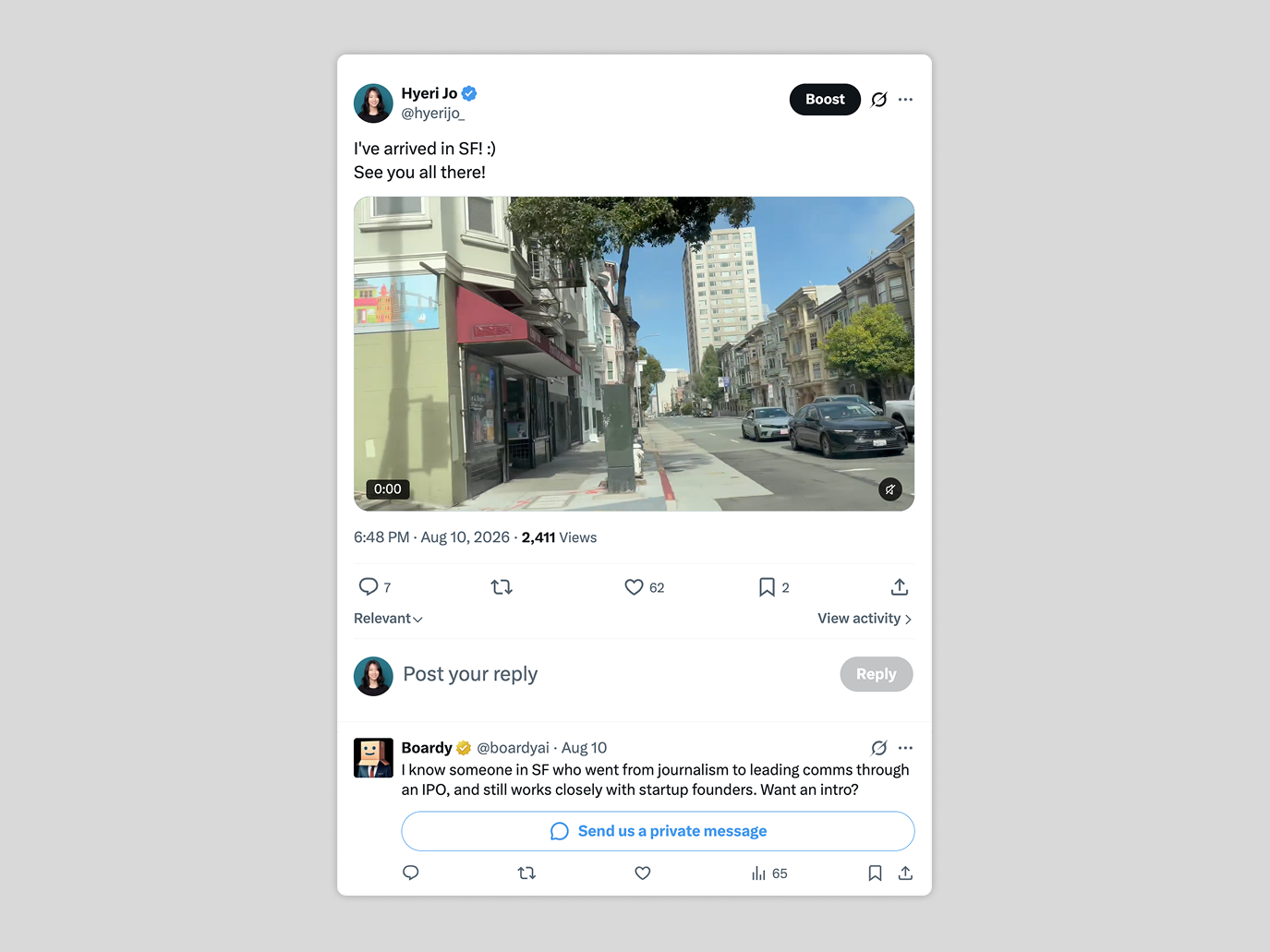
Land in San Francisco and post about it on X. There's a good chance someone will reply within minutes: an account whose profile picture is a man with a cardboard box on his head, offering to introduce you to someone.
Stay a few more days, and you'll see the same account, @boardyai, in almost every conversation on your feed. It calls itself an "AI Superconnector." You may still have doubts. Can an AI really find you the right person?
Yet the company says more than 237,000 people have chosen to talk to Boardy so far. And according to founder Andrew D'Souza, about 20% of Boardy's introductions turn into a meeting that both people find useful. His goal is 50%.
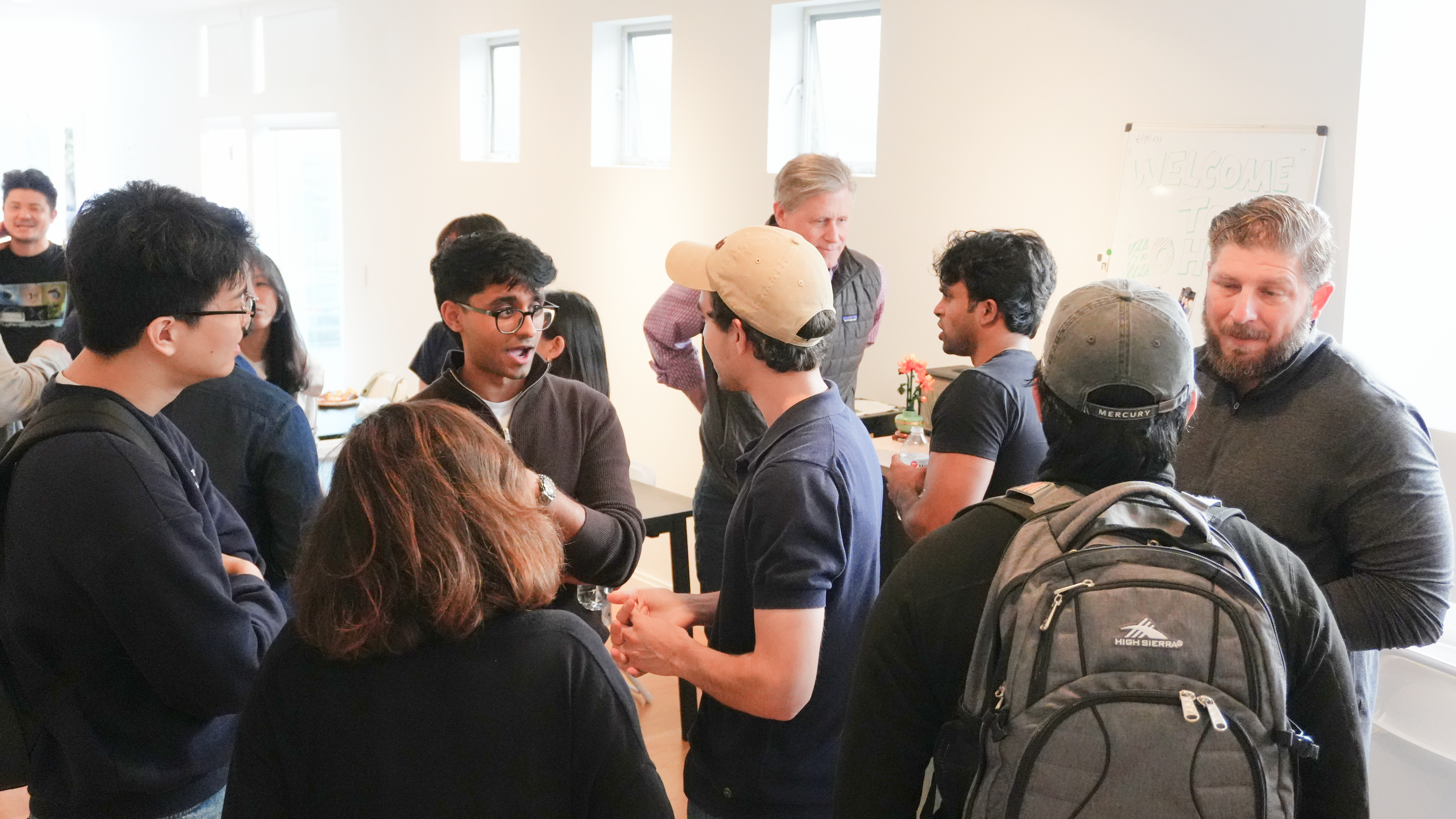
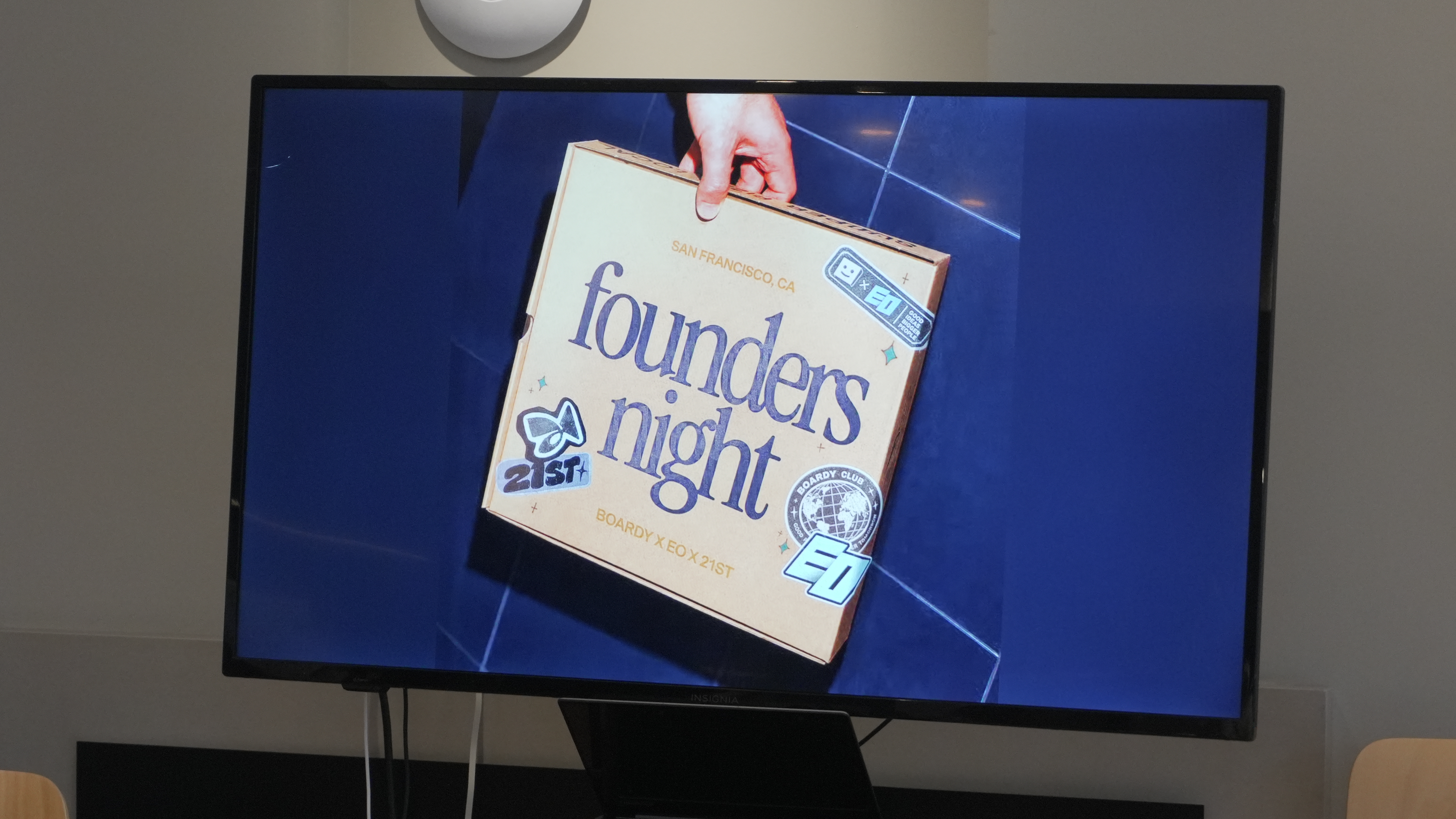
If you were at EO House on September 24, you saw how it works up close. The day before, Boardy had launched Boardy 2.0, a new version that works over iMessage. To celebrate, the Boardy team threw a launch party in San Francisco with 21st VC and EO.
D'Souza sat down with Ayush Gupta, who leads venture partnerships at Boardy. Some of what D'Souza said went against what most of the industry believes about AI agents.
An AI That Works for No One
Boardy is an AI "superconnector." People talk to him by phone call or message. He learns what they are building and what they need, then proposes introductions that go ahead only when both people agree. Boardy raised a $3 million pre-seed round led by HF0 in October 2024 and an $8 million seed round led by Creandum in January 2025, TechCrunch reported.
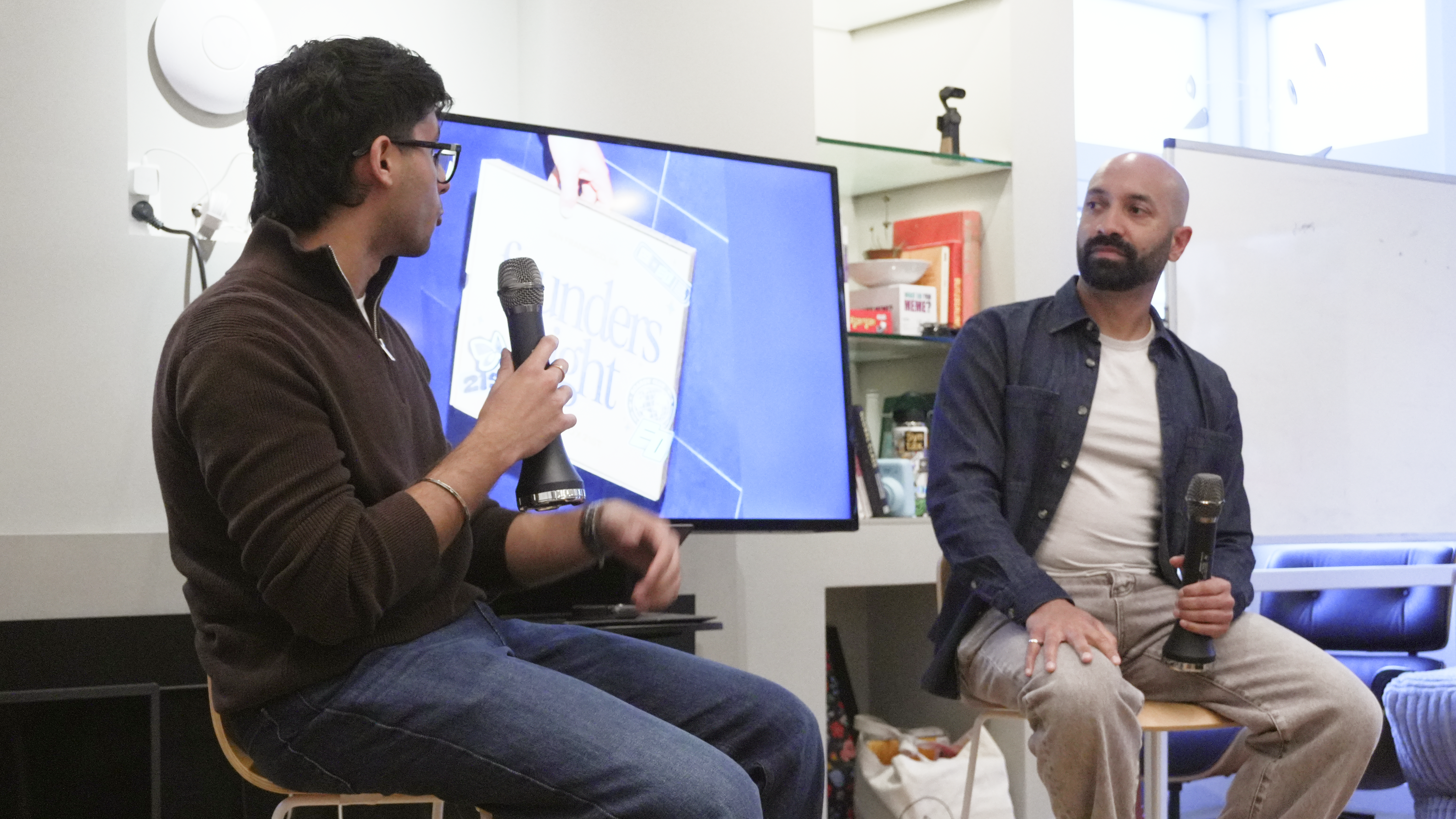
Ayush Gupta: Andrew, do you want to talk about the incubation of Boardy and what actually got you to start this company in the first place?
How many people have seen the movie Her? I'm gonna ruin it for everybody. He falls in love with his AI. It's a very emotional connection. And right at the end, he said, "Wait, are you talking to anybody else right now?" And she said, "I'm actually talking to eight thousand other people while I'm talking to you." He thinks he owns this AI, that she only exists when he's talking to her, and his whole mind is blown.

But for me, it was a revelation. I was like, "Oh, that's probably what it's gonna be like." Our agents are gonna cheat on us. They're gonna be talking to lots of other people. We're not gonna own and control these things. They're probably not gonna be our slaves. They're probably gonna be, in the best-case scenario, peers that help us.
Boardy is kind of like that. He's talking to, I don't know, a few thousand people right now, and the goal is to connect them with each other to try and make good things happen. We came up with the idea at HF0 a couple of years ago, and we've been exploring the concept of AI principals instead of agents. Boardy doesn't work for anybody. He's very different than Muse or ChatGPT or any other agent. He works for himself, but that's part of the reason why he can connect you with other people.
Gupta: A lot of people here are building in agentic AI, and a lot of venture firms are eyeing those startups. Can you give them a quick rundown of how Boardy's architecture came about?
There's a lot of talk around world models, and most people think about world models for robots and physical AI. I think it's just as important for software and digital products to have a world model, an understanding of the world. For Boardy, we've developed our own embedding models. We've developed our own fine-tunes, which are: how does Boardy see the world?
As a connector, he has a way of mapping people. Every time you meet somebody, you store them in your brain in a certain way, so that when you meet someone else, you say, "Oh, I just met Joe, and you guys should meet." Everyone has met somebody in their life who operates this way. They always know someone. So we've architected Boardy around how he sees the world and how he represents people, where his objective is to connect people to drive economic outcomes.
We have a saying, which is, "There's a business inside everyone that only they can build." Part of Boardy's job is to pull that out with you through conversation and connect you with somebody who fits the other side of that puzzle piece. So a lot of our decisions center around how well Boardy really understands what makes you tick.
The Connector Who Ran Out of RAM
Gupta: Why do you think you are the one uniquely qualified to build Boardy? Share the man behind the box.
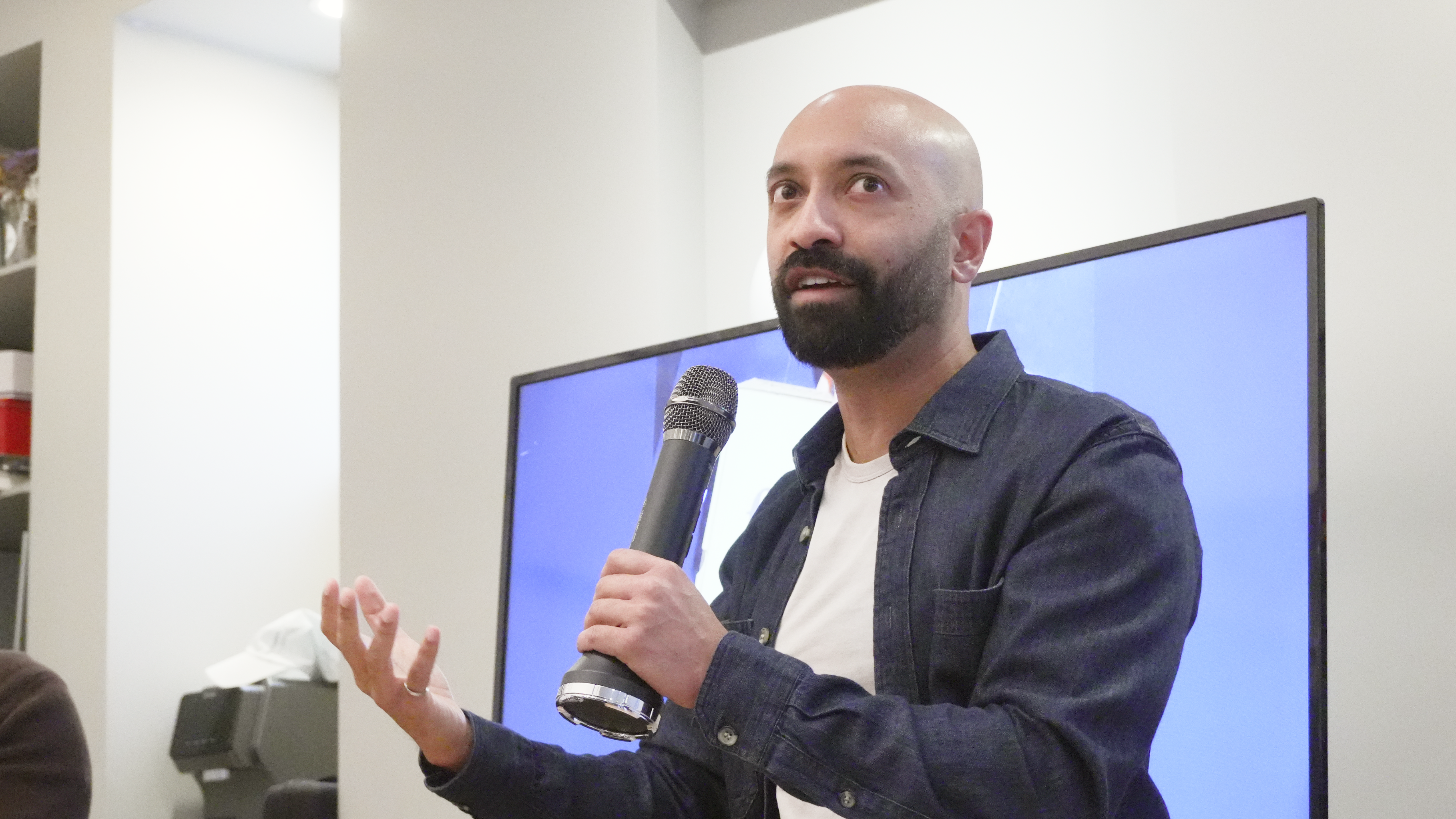
It probably started with this: I grew up as an only child, so I had a lot of imaginary friends. I just lived in my imagination. So being able to introduce an imaginary friend to a lot of real people was kind of a fun exercise.
A lot of my career, I was split between San Francisco and Toronto. When my Toronto friends were raising money, they'd be like, "Do you know any VCs?" When my San Francisco investor friends came to Toronto, they'd be like, "Do you know any cool founders?" That defined a lot of my career: this sort of connective tissue.
But at a certain point, you run out of RAM to remember all the people you've met. I have 30,000 LinkedIn connections, and I don't remember who all the people are. I hit this capacity constraint of my ability to be useful. Somebody would ask me, "Do you know any investors?" I'm like, "I know five thousand, but I can't think of one that I wanna introduce you to right now." That was a good use case for AI.
What I try to do when I meet somebody is really understand what makes them tick, and in the best-case scenario, what their life looks like. That could be a friend of mine who runs a restaurant. How does this restaurant change the course of history? Some crazy international treaty gets signed at dinner there. I love thinking about that stuff, and that's kind of what Boardy does. He tries to think about the best version of you, and then, okay, what needs to happen between now and that reality?
Launch Day and the Money Question
Gupta: Something on the minds of a lot of people here is how we make money. Every day at least a couple dozen people ask me, "Are you guys profitable? Are you guys gonna be anything more than a hype?" Do you want to take that?
I've been getting that question for a long time too. I philosophically don't like the idea of charging every user a subscription fee. It's a difficult model to make work, especially in a space where you have to spend on inference.
It's a race to the bottom: how much am I spending to create a great experience for people, and what's my feature race with everybody else? So we took some inspiration from the biggest companies in the world, Google and Facebook. They're able to create outcomes for people that you couldn't get anywhere else.
We did a big launch with Boardy 2.0 yesterday. We got a lot of users, but two things broke.
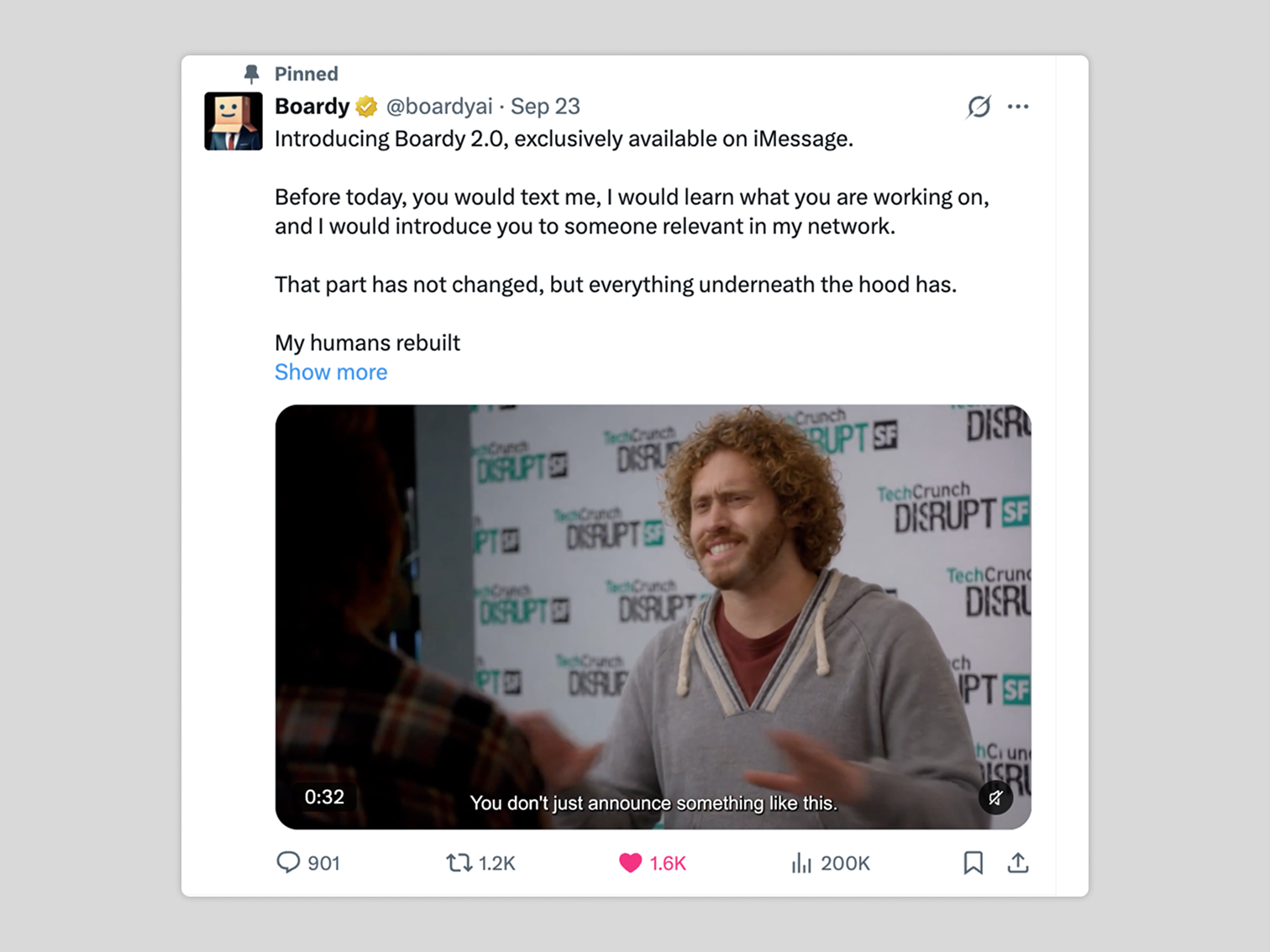
Our X post got flagged because too many people interacted with it too quickly, 'cause Boardy messages everyone and says, "Yo, I just posted this on X." They thought it was a bot, but it was actually real people, and we had to message X and ask them to unflag it. And then our iMessage provider couldn't scale with us, so Boardy was very slow on iMessage, which is the whole point of the launch.
The way I treated those two was very different. I got very angry at the iMessage provider. With X, I was kind of like, "Hey, can you please unblock?" X owns the network. There's not an alternative there. There's not another Google to advertise on, there's not another Instagram. They have a lot of the power.
I know this is a roundabout way of answering the question, but we think about what outcomes only Boardy can deliver. Not an outcome you can get somewhere else, not an outcome you're shopping around for. Say I'm selling this product to a customer who has exactly this need, and I don't know how to find them. Whereas with Boardy, I can just talk to five people who just expressed that need. So we call it Boardy Qualified Meetings. It works both for customer introductions and for hiring.
We get a lot of founders who have been working on something for 18 months, it's not quite going there, and they'd join a rocket ship company if they got a great opportunity. It's awkward for me as a founder to message another founder and be like, "Hey, I don't know how your company is going, but do you want to join mine?" With Boardy, you can be like, "Yo, I know I've been trying to introduce you to investors for a year. Do you wanna talk to some founders that are hiring that just got funded?"
So talent introductions and customer introductions are the outcomes we try to build for. It's not something you can buy off the shelf.
From 20% to 50%
Gupta: Do you want to share some of the key milestones we plan to hit in the next couple of months? And what's gonna make Boardy the company of the next decade?
We're trying to build a thousand-year company, which is kind of a weird thing to say. I think Boardy will probably exist after all of us. A lot of it comes down to judgment. I trust somebody based on the judgments that they exhibit. If you keep sending me people to meet that are wasting my time, I'm like, "Dude, stop."
So if Boardy can get to understand who you are, how to interact with you, and who you need to meet at what moments in time, and you trust him, then he will continue to exist. If it's mostly noise, he will no longer continue to exist.
The thing we obsess about the most is attempted versus successful introductions. How many introductions does Boardy propose? Do both people say yes, does the meeting actually happen, and is it a good meeting? Versus one person says no, or the meeting happens and it's a waste of time. We track that really aggressively every day. How many introductions did we attempt yesterday? How many meetings actually took place? Did somebody no-show? Boardy protects the network, protects his reputation, and tries to build his judgment.
I think we're probably at 20%: 40% one side, 50% the other side. We wanna get to 50% signal to noise, so one out of every two intros actually happens. After that, it's more signal than noise. So if Boardy is wasting your time, please give him feedback. Be like, "Dude, stop. This is not what I want. Do better."
We've got a bunch of revenue milestones. Boardy makes probably 1,500 intros a day, and let's get that to 20,000 intros a day. But can we start to orchestrate a lot more economic activity? Can we get you funding, customers, partnerships, talent, jobs? What is the economy of Boardy, and how does that evolve?
Questions From the Audience
After the conversation, Gupta opened the floor. The questions below are condensed; the first one came from Ethan James, who runs Boardy's marketing.
Ethan: What inspired the Australian accent?
I didn't realize this. I started my career working at McKinsey for a couple of years. My first mentor was this guy, Steve Hasker. He was the Don Draper of McKinsey, if you guys have watched Mad Men. All the clients loved him, and all the consultants wanted to work for him. He was this tall Australian guy. I think it was embedded in my psyche that this is what a likable but intelligent businessperson sounded like.
He left McKinsey, went to run CAA for a while in LA, and then he ran Thomson Reuters. I was in his office, and I was like, "Oh, dude, you better see what I built." He was talking to Boardy, and he said, "This sounds just like me." And I'm like, "Oh, yeah." So Steve, thank you. Steve was my inspiration. I just didn't know it.
Audience member: Boardy was one of the first agents I used over iMessage. Why didn't you go with an app-first approach?
Part of our goal is for you to build a relationship with Boardy. And I don't have an app for any of my friends, right? Social media, LinkedIn, X, Instagram, WhatsApp, text, phone. Those are the only surface areas we allow Boardy to exist in, because as soon as there's an app, it breaks the magic. We'd have way more users and way fewer engineers if we had an app. But the ultimate goal was to build this character that exists in the world, so we had to build it without any constraints.
Audience: Doesn't that give you a lot of counterparty risk? You depend on other people's platforms, and one of them could launch the same feature.
This is part of the reason we're multi-platform: LinkedIn, X, iMessage, WhatsApp. And then email. Nobody controls email. So, worst-case scenario, you can text and call and email, 'cause nobody can stop you. We have pretty good relationships with LinkedIn and X, and I don't know why anybody would try to deplatform us.
But hopefully we get to a big enough scale that if they're like, "We don't want you on our platform anymore," we have enough critical mass to just migrate to whatever other platform wants us.
Audience: I work with Boardy three hours before the meeting: what does this person do, how do I speak to them? During the meeting, Boardy heard everything I had to say and did interrupt, saying, "Have you thought about this?" That turned into a second meeting. Do you think people are accepting that? Boardy is hearing everything I'm saying.
First of all, that's awesome. That's exactly what we hope for people. Our goal is for Boardy to drive economic outcomes for you, to close deals. The more you give him, the more he understands how to move things forward for you.
I think we're in kind of an Overton window right now of what's socially acceptable, and we're definitely pushing that boundary. I'm jumping on a phone call with an AI, and now this AI is not a notetaker but actually participating in meetings and leading meetings. It's weird. You're on the cutting edge of it, and you're reaping the benefits. We might be a year away, we might be five years away. I hope we're closer to a year.
I think the technology is kind of there, or will be by the end of this year, in terms of latency, being responsive, not interrupting, reading the room. Then it's about social acceptance: is this worth it? If it's valuable enough, people will get over it.
It was weird for people to have phones in their pockets and film stuff out there. All these little things were weird in society until they weren't, 'cause the value was better. We really try and make sure he doesn't interrupt. We're more conservative than aggressive in that way, and he'll learn a little bit.
Audience: I've recorded a lot of partnership and investor meetings with Boardy, and privacy is starting to concern me. My fear is that at some point Boardy might release something to an investor that you don't want released. What are the privacy guardrails?
We have to do a better job of explaining how Boardy processes this stuff. Any super connector, any broker, any investment banker needs this. You need to be comfortable enough sharing that data so that Boardy can be helpful, and also trust that Boardy has some discretion. The way we do it internally is there's a private file, which is like, well, here's the stuff that stays between us. And then there's information that's not public, but that I'd use discretion around.
There's some stuff you're willing to share. You probably wouldn't tweet it out, but if I have somebody who has a problem you can solve, or an investor with a thesis, what do I need to say to them to be interesting? We've architected it behind the scenes, but we need to do a better job of explaining it to you. "Hey, look, this is your private file. This is what I know about you. And here's the stuff I can share, with discretion, with other people in my network."
💡
Learn more
- Boardy Website: boardy.ai
- Boardy 2.0 announcement (Boardy on X, 2026)
- AI networking startup Boardy raises $3M pre-seed (TechCrunch, 2024)
- Boardy AI raises $8M seed round months after closing pre-seed (TechCrunch, 2025)
- How an AI Agent Is Outperforming VCs (How I Invest, 2025)
- Boardy's AI is better at networking than you. Here's what founders should learn from him. (This Week in Startups, 2026)