Jul 06, 2026
Everyone Said "It's unsexy". Now We're Serving 30M Patients
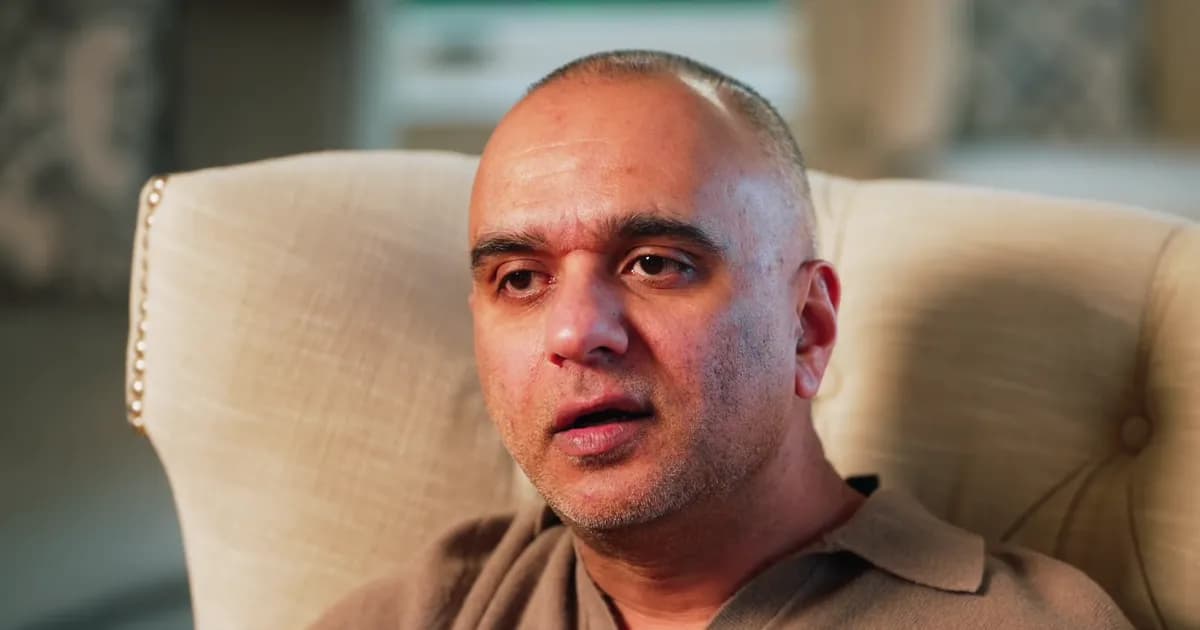
Interview with Purya Sarmadi, Co-Founder of MedMe Health
Founder Focused


0:00 / 0:00
💡
At a Glance
- Who: Purya Sarmadi is the co-founder and CEO of MedMe Health. He burned through four pivots, from a prescription-scanning app to a physical hardware device, before landing on the one that worked.
- What: MedMe Health is a platform that turns pharmacies from drug dispensaries into clinical care hubs. It gives them the tools to run vaccinations, monitoring, and consultations.
- Traction: Now powers over 4,500 pharmacies across North America. It scaled from roughly 100 to nearly 1,200 pharmacies in about ten weeks during COVID, one of the fastest pharmacy network expansions of the pandemic.
In this conversation, Purya breaks down the distinction most first-time founders miss: being on the wrong wedge is not the same as being in the wrong market. He walks through the four pivots that got MedMe to its wedge, the one-line test he used to know he'd found it, and how COVID took the company from roughly 100 pharmacies to nearly 1,200 in about ten weeks. He also gets honest about the co-founder relationship, the message that nearly broke his, and the principle he now uses to keep both founders in the fight.
6 key takeaways:
Why a Heart Surgeon's Save Became His Life's Mission
When his mother's heart valve failure required an operation few surgeons would risk, one doctor's confidence didn't just save her life. It rippled outward to protect her husband, her children, and her five younger siblings. That single moment convinced Purya that healthcare's impact compounds past the patient, which is why he stayed fixated on an "unsexy" vertical instead of chasing something flashier.
95% of North Americans Live Near a Pharmacy. Almost None of Them Use It for Care
Ninety-five percent of North Americans live within five miles of a pharmacy, yet for most of pharmacy history that proximity translated into nothing more than dispensing drugs. Purya's core insight was that this reach was already built. Nobody had given pharmacies the tools or mandate to use it for actual clinical care.
Two Failed Pivots Taught Him What Not to Build, Not Just What to Build
MedMe's first idea, automatically scanning prescriptions into digital records, was blocked by 2018 technology that couldn't yet do the job. A physical drug-adherence device came next, and hardware's capital costs killed that one too. Neither pivot was wasted. Each one taught Purya more about pharmacies, pharmacists, and patients, feeding the same growing dataset that eventually pointed him to the right wedge.
Being on the Wrong Wedge Is Not the Same as Being in the Wrong Market
Most founders who fail across multiple pivots don't have a market problem. They have a wedge problem, and the two get diagnosed as the same failure far too often. Purya's four pivots never abandoned the market he had conviction in. They only changed which specific entry point into that market he was betting on, and conviction had to be both personal and functional before it counted.
Pharmacies That Survive Are Betting on What Technology Can't Replace
Online pharmacies squeezed drug margins and pulled volume away from brick-and-mortar stores just as chronic illness and primary-care shortages were both rising. Purya's bet is that the pharmacies still standing won't win on dispensing. They'll win by investing in clinical services, flu shots, A1C checks, chronic condition monitoring, because a trusted practitioner who knows a patient's history and family is a relationship no algorithm can replicate.
Never Tell Your Co-Founder You Don't Believe in Them
Purya once told his co-founder Nick, in frustration, that he wasn't capable of doing something under his purview, and he still regrets it. Defaulting to blame doesn't just damage the other person. It costs you your single most important ally, since nobody else in the company understands what a founder is going through the way a co-founder does.
Below is the complete transcription of the interview. Minor edits have been made for clarity and readability.
You Can Be Right But Still Fail - Don't Give Up
My name is Purya Sarmadi. I'm the CEO and co-founder of MedMe Health. MedMe is serving over 4,500 pharmacies across North America today. We power the operations, integrations, and automations to transform drug dispensaries into community healthcare hubs.
I was born in Cologne, Germany. My family and I moved from Germany to Canada when I was around six or seven years old. Not so long after we moved to Canada, my mom, she had a heart valve failure.
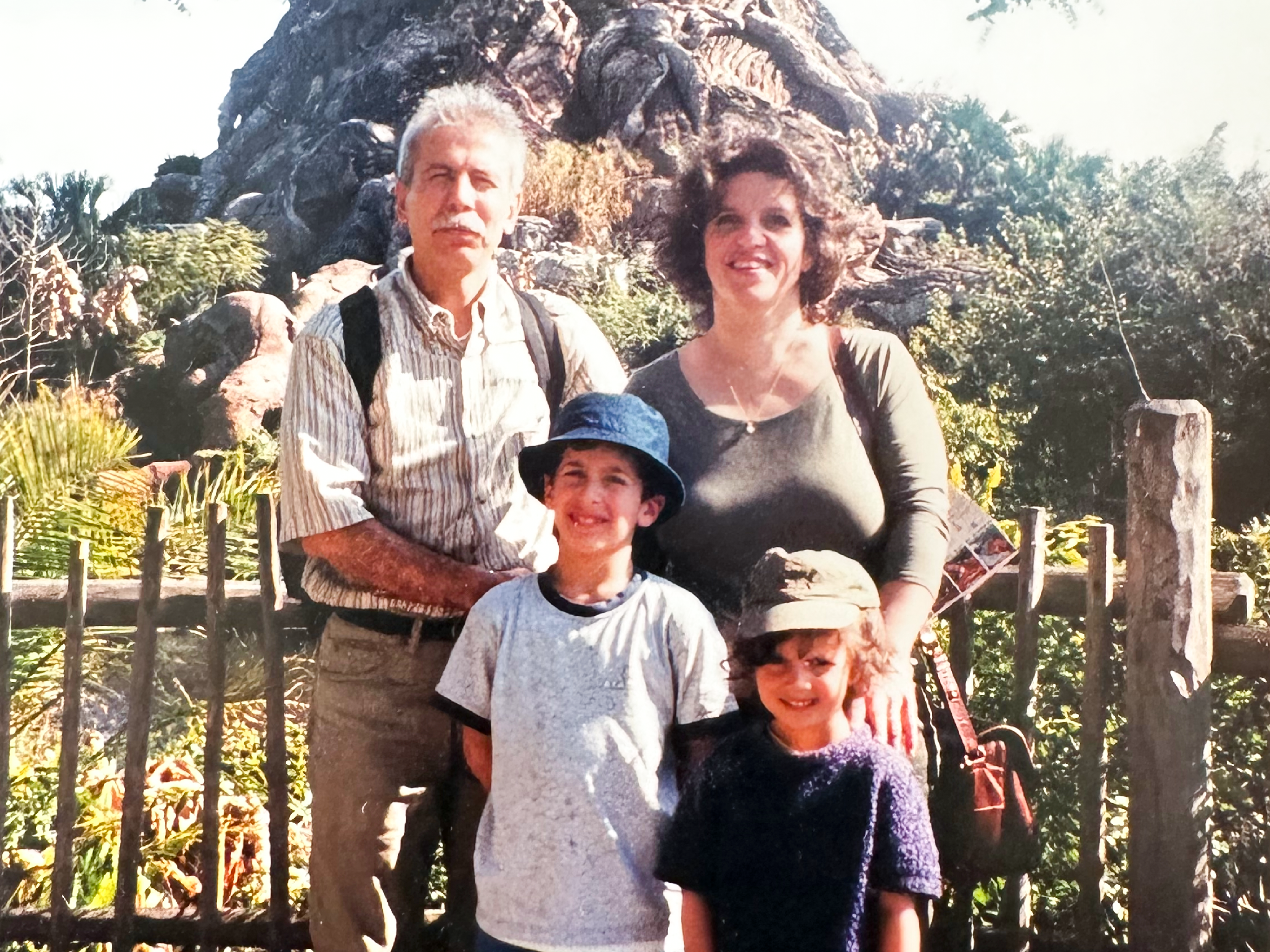
That was a very complicated period, both for her and, by extension, our family. At the time, many surgeons were hesitant to operate on her. It was very risky. They always present things in an optimistic light, but in a realistic light as well. And one thing that really does stick with me is that at that time there was fear, fear in my dad's eyes, fear that he might have to raise two kids on his own if things didn't go well. And there was a lot of uncertainty there. And I just remember observing that interaction between my parents and the surgeon as a child. I think when you're around that age, like eight, you know enough to feel things, but you can't do enough to change things.
You can't really enact change, and there's a feeling of helplessness. But one surgeon was very confident, amongst others, in his ability to try his very best to help my mom, and his name was Dr. Tirone David. He's a legendary surgeon. Afterwards, I had the opportunity to meet Dr. David, and I remember shaking his hand as a young kid and having this really vivid memory of this feeling I had in that moment: the realization that he, with this impact, not only saved my mom's life directly but had this rippling effect on the folks that relied on my mom, whether it be myself, my dad, my sister, and all of my mom's even younger siblings, 'cause she's the oldest of five.
And that feeling was something that really stuck with me: this feeling that through healthcare you can have this large impact on people. Growing up, I wanted to be a cardiovascular surgeon because of that. Fast forward later, I realized I have a not-the-steadiest hand and also some trouble with sleep. The combination of those two things didn't really make for a great surgeon. But one thing I was always passionate about was technology.
And so the way to make a really scalable impact, maybe, is to double down on my passion for technology and data science, and try to see how I could really make that impact through another channel at a larger scale. Combining that with my passion for healthcare was really what drove me through my career and eventually to starting MedMe.
Why Couldn't a Pharmacy Do This?
When my mom had the heart valve surgery, she had a mechanical valve put in, and folks who live with mechanical valves have to check their INR. Broadly, it's a measure of their blood viscosity, and they have to do that through diagnostic testing. So they have to check their blood every week or every other week.
Growing up after the surgery, one thing that was a very big memory for me throughout my life is my mom always saying to me: she would always see new specialists, but she would always say it was the pharmacist that knew the most about her holistic treatment.
What didn't make sense to me was, why couldn't she just get that diagnostic service at the pharmacy? I had this very strong conviction that pharmacies were underutilized, and there was an underserved need for what pharmacies could do for the public, because at that point they were just drug dispensaries. And I really believed that they could be far more than just drug dispensaries, because 95% of North Americans live within 5 miles of a pharmacy.
The Pivots
The very first iteration of MedMe, the idea was, hey, you have a lot of prescriptions coming in, wouldn't it be nice if you could just scan the prescriptions and the data entry happens automatically? Now, mind you, this was in 2018, so this was pre-LLMs. The business problem we were solving was a real one, but the technology wasn't there to make this viable. That actually sent us to a pivot where it was actually a physical product: a product related to drug adherence. But hardware is hard. There's a lot of starting capital cost to hardware.
That's partially why we pivoted away from that kind of iteration. As we were talking to pharmacists and pharmacies, we realized there is a need for clinical care for the community and the panels of patients that pharmacies have, but they just don't have the time to do this clinical care.
Wrong Wedge vs. Wrong Market
That actually led us to the pivot which is closest to what MedMe is today: to give software to pharmacies to allow them the capacity and the tools to be able to provide consultative care to their patients. What I was looking for was the one problem that could be served with one solution for one customer. If you were to say, "Hey, we won't exist tomorrow," and they would say, "Well, if you don't exist tomorrow, my life will be worse," then you knew that you had the right wedge. We were in Ontario, and we were introduced to someone in Alberta. There was literally a day I remember very vividly where he said, "Hey guys, I've cancelled all my subscriptions. These four different subscriptions I was using before, I've cancelled them. I'm just using MedMe."
That's when we knew, okay, we've solved this underserved problem with our solution for this one ICP. I think one lesson I can share from that period is that with every single one of those pivots, I started to get more and more information about pharmacies, about pharmacists, about their patients, and that was all part of the same data set. What was changing was the wedge, and in fact that also helped narrow down which wedge was the most important wedge.
Don't mistake being in the wrong wedge as being in the wrong market. So you might be in the right market, you might just be on the wrong wedge. And then, fast forward a few months later, COVID happened. That really proved out our thesis.
From 100 to Nearly 1,200 Pharmacies in Ten Weeks
All of a sudden, this broad network of pharmacies across the continent had to become these sites for physical clinical services, whether that be vaccines, whether that be point-of-care testing, to respond to the pandemic. Literally in a two-and-a-half-month period, we went from near 100 pharmacies to almost 1,200 pharmacies. What was really important was building that conviction, both personally but also functionally, in pivoting through which wedge made the most sense.
As long as you find the right wedge, then you have an avenue to build on that wedge and capture a much larger market opportunity over time. Really spend the time to figure out you're building the right thing. That same kind of rippling impact that I felt, and that I alluded to, revered from Dr. David and meeting him. That's a really core part of what drives me, and it's kind of a core tenet of our mission, which is to systemically change healthcare access for over 100 million people.
Build on What Tech Can't Replace
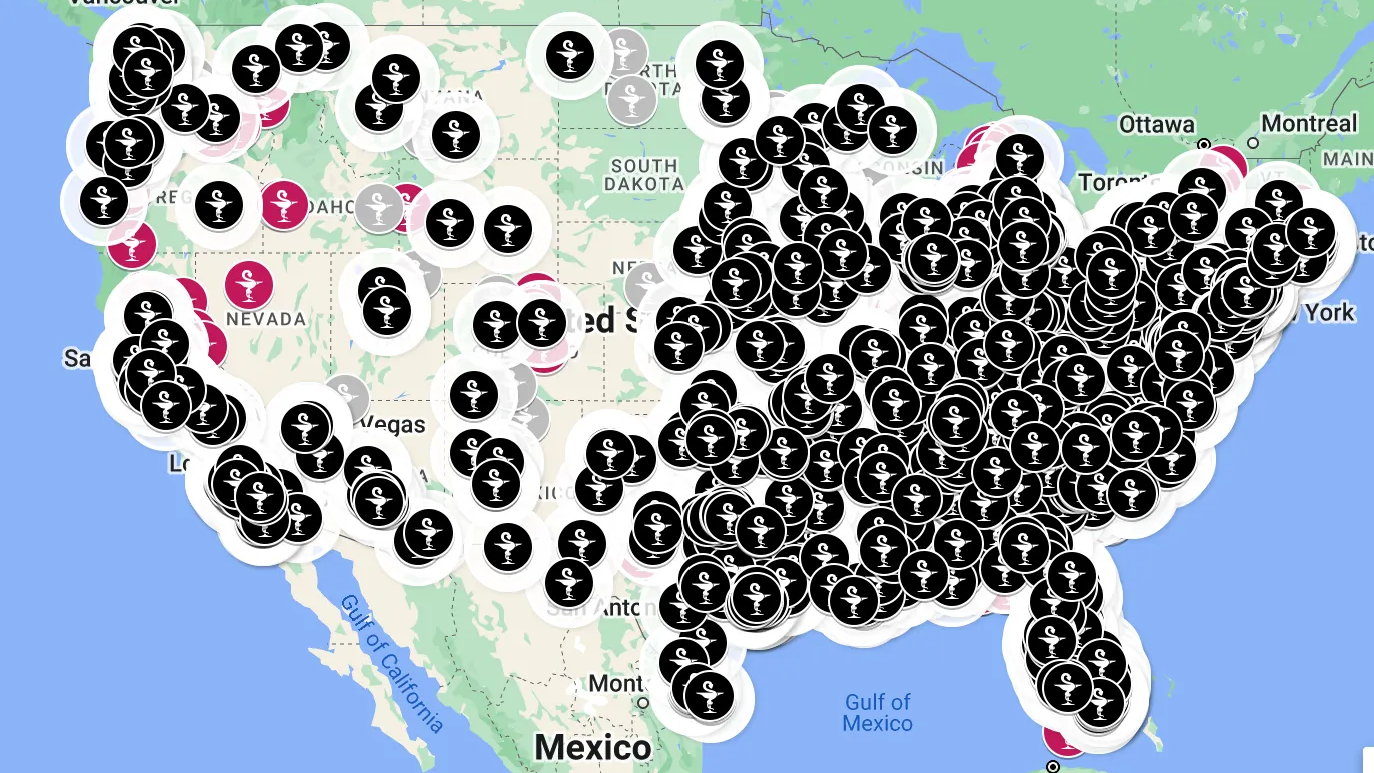
Every dot you see here represents a pharmacy that closed just last year. I wouldn't say it's collapsing. I would say it's being disrupted and it's transforming. One big motivator around the timing of when MedMe started was that you were seeing a lot of online pharmacies pop up.
These online pharmacies were direct to consumer. They had big marketing budgets, and they really had better unit economics and logistics. And so, with drug margins shrinking and the increase and acceleration of online pharmacies, simultaneously there's a shortage of primary care and an increase of chronic illness.
Now more than ever, patients were looking for proactive, personalized, and consumer-driven healthcare products and services. Where I think you're going to see a resurgence is the pharmacies that are investing in the clinical side: patients coming back to them not only to pick up their drugs, but to get their flu shot, get their A1C levels checked, get consulted on a blood monitoring device, or a glucose monitor, or a blood pressure monitor.
Those types of pharmacies are the ones that are going to thrive, because they have this enduring lifetime value and patient relationship. One thing that will never be replaced is that human element of patient care: that trusted healthcare practitioner who's there to take care of you, who knows your longitudinal care history, knows your likes and dislikes, knows your family. That is something that's very hard to replace. That is what makes pharmacies indispensable.
And in Nova Scotia, patients like my mom, who are on blood thinners, are able to go to the pharmacy for INR monitoring, and they're doing that today, as we speak, using MedMe. So patients like my mom, in growing jurisdictions all across North America, are now able to rely on a pharmacy rather than going to an emergency room, an outpatient diagnostic center, or an urgent care center for the care they're relying on to stay healthy.
And I think that's really exciting, to see that come full circle and in practice in North America.
What AI Changes for Founders, and What It Doesn't
In the AI era, a lot of very optimistic early-stage founders: they see big market opportunities. AI is changing the playbook. The old playbooks for different industries might not be relevant today. But for your customer, AI is not changing their jobs to be done. Their jobs to be done are still the same. AI is just giving us the right to be able to solve a different class of problems, or a broader class of problems.
Comfort Quietly Kills Your Best Partnership
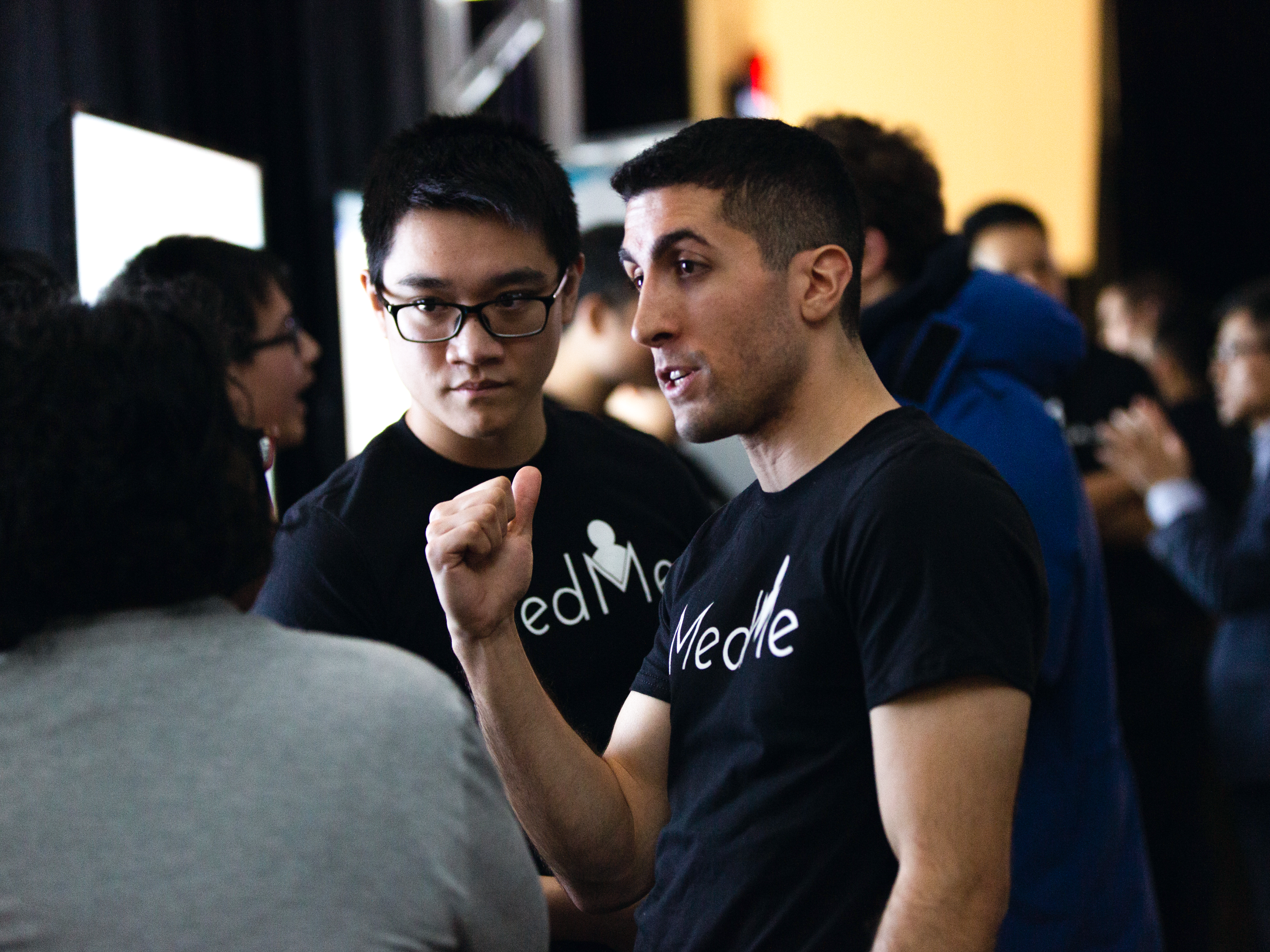
Most companies, they end because of co-founder breakups, and those happen in a couple of years. I did meet Nick via something called The Next 36. The Next 36 is a startup accelerator in Canada.
From the moment we met, I really felt we had a complementary skill set. We had mutual respect but also a mutual interest in this problem space. And in the first week of the program, when we started full-time in the summer of 2019, I presented to him all the data I had collected through the pivots. I basically convinced him we should work on this together rather than what he was working on. And he agreed with me.
The Message That Nearly Broke His Co-Founder
Nick and I have been together for seven years and counting. But there was a moment where I became overly critical of how something had gone under his purview. My frustration led me to almost frame it as, "You're not capable of doing this. You've shown that you're not capable of doing this. I don't believe that you're capable of doing this."
That kind of messaging to your co-founder is really damaging. I think it's defeating, and you never want to defeat your co-founder. I really learned that the hard way. That sort of messaging can be very demotivating. I've seen others not be able to overcome this. There's a very big risk that you default to blaming the other person, and that blame can be so counterintuitive: it can actually work so much against you. It works against the organization. It also works against you, because you are losing your number one ally.
The Candle Principle
As a good co-founder, one of your main responsibilities is to make sure both yours and your co-founder's candle stays alight. The ups and downs of a startup will sometimes make that candle burn more fiercely, the flame will be stronger. And when you go through the down parts of being a startup founder, that's when the candle dwindles.
And you have to do anything you can to keep those flames alight, because if you don't, it's very hard to reignite the flame once it goes out. Sometimes when you go through the trials and tribulations, there aren't many people who understand you. It's hard. You have your family, you have your friends, but they're not going to fully be able to empathize with what you're going through as part of the C-suite of a company, or as a founder.
The person you can lean on the most through those ups and downs is your co-founder. So that's one of the things I think is a strength: having a co-founder, having someone to lean on in that way, makes a huge difference. I literally said this in my wedding speech at Nick's wedding a couple months ago, when COVID happened. We had built this early-stage web app with independent pharmacies.
They were using it, and we actually had an enterprise come to us and say, "Oh, we need a solution for this. We need it at an enterprise scale." Nick and I, but a lot of it was Nick, at the time, he built a prototype. He pulled two all-nighters with me. Seventy-two hours of non-stop work, two all-nighters, just to be able to build a prototype.
We demoed it, we presented it to the leadership team, and they were like, "That's amazing. When can we go live?" And then we had to go back to our team and say, "All right, guys, we have like six to eight weeks to make this real." That was our first enterprise customer.
And since then, that first enterprise customer was what built us the trust and credibility to win subsequent enterprise customers. Having the pleasure to work with him side by side during that 72-hour period: that's how I really knew he was who I needed as a business partner.
No matter what the constraints were, we would be able to take them on head-on and not only survive, but thrive. Don't contribute to your co-founder's candle dwindling, because you're just working against yourself and your startup.