Sep 03, 2024
What Makes a Seed & Series A Startup Worth Investing In?
Interview with Andrew Beebe, Managing Director of Obvious Ventures
Founder Focused

💡
At a Glance
- Who: Andrew Beebe is a Managing Director at Obvious Ventures, who began as an early internet entrepreneur co-founding Bigstep in 1998, then spent years building and scaling solar energy companies before transitioning to venture investing.
- What: Obvious Ventures is an early-stage venture firm investing across three pillars: planetary health, human health, and economic health, under a strategy it calls World Positive venture capital.
- Traction: Over 10 years and more than $1 billion under management, Beebe says the firm has made 125+ investments, resulting in what he describes as 6 IPOs and close to 20 acquisitions as of September 2024.
Andrew Beebe explains how building Bigstep in 1998 taught him that culture drives a company more than management does, why Obvious Ventures draws a hard line between seed investments and Series A, and why long-term master plans with financially independent phases attract better capital. Plus, why consumer adoption of clean energy may have nothing to do with environmental conviction, and everything to do with whether the product is simply better.
Key Takeaways
Seed is team and a dream; Series A demands proof of traction
The two stages are clearly distinct: at the seed level, product direction and market fit may still be undefined, and pivots are expected. By Series A, Obvious Ventures wants to see real customers buying, recommending the product, and a market large enough to scale. The team and the shared vision must be in place from the very start.
Building diverse teams early is a strategic advantage, not a formality
Diverse teams in the first two years allow for broader thinking, stronger internal debate, and better decision-making. But diversity without shared values collapses quickly. Repeated hiring mistakes left uncorrected, he says, are one of the primary reasons companies never lift off.
Founders who show a multiphase vision attract the best capital
Beebe points to the master-plan model as an example worth following: each phase of the business is financially viable on its own, not just a stepping stone to the next. Founders who can articulate where they are starting and where they intend to go, with financial logic at every step, give Obvious Ventures the confidence to commit for the long term.
Consumer behavior follows the better product, not the better cause
Clean energy adoption will accelerate not through persuasion but through superior products. He points to electric vehicles as the inflection point: once a rider notices that the Uber pulling up is a Tesla and decides it just feels better, adoption follows naturally. The immediate gift of a better outcome is what changes behavior at scale.
World Positive investing expands the market, not just the mission
Obvious Ventures calls its approach World Positive venture capital. Beebe argues that companies solving global challenges end up with larger addressable markets, higher market caps, and lasting societal impact. Thinking globally from the start is not idealism, he says, but a strategic choice that expands the opportunity.
Culture is built by choosing the right people, not by managing them
Beebe's early internet company Bigstep, employees showed up for salary, stayed late for equity, but worked weekends and built something lasting because of the culture. That culture came from deliberate choices about who to hire, their integrity, and their shared passion. The fabric of a company, he says, is created by those choices, not by the boss.
Below is the complete transcription of the interview. Minor edits have been made for clarity and readability.
Introducing Andrew, The Managing Director of Obvious Ventures
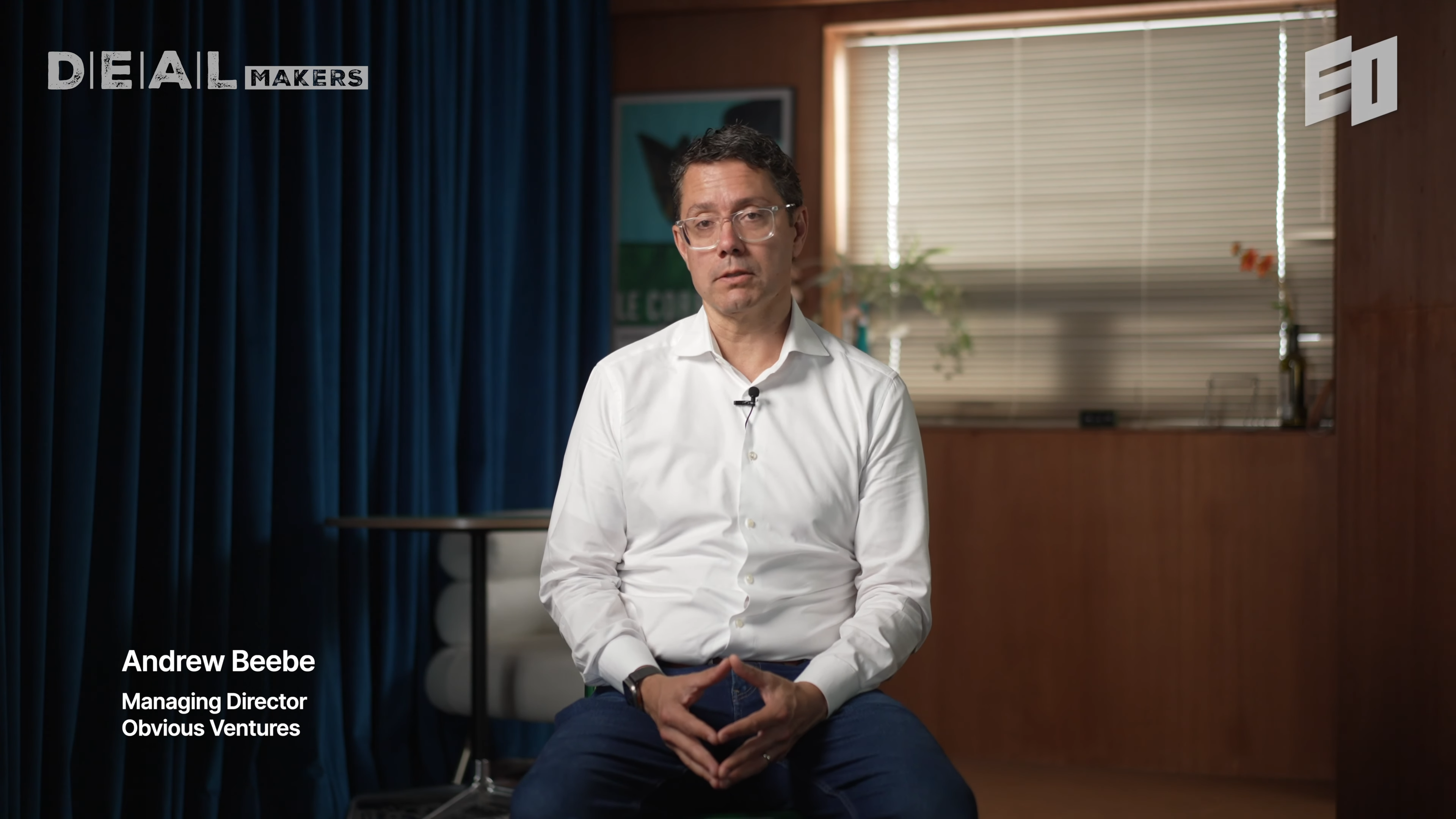
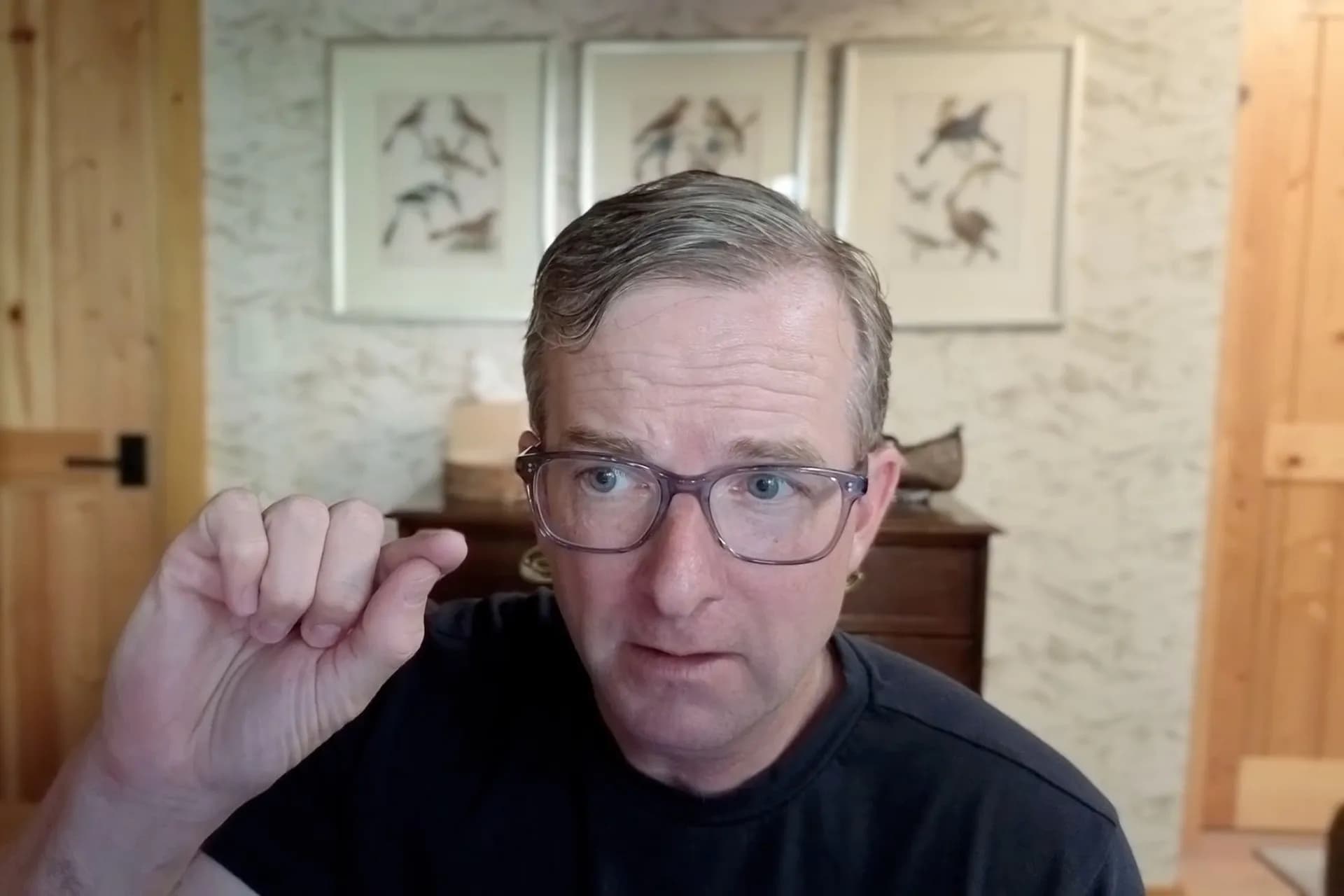
I'm Andrew Beebe with Obvious Ventures. I'm one of the managing directors of the firm. Obvious Ventures is an early-stage venture firm. We're 10 years old, and we invest across human health, planetary health, and economic health. Over the last 10 years we've turned it into a little over $1 billion under management. We've been investing in the seed and early stage, and we've made over 125 investments.
That's resulted so far in six IPOs and close to 20 companies being acquired, and many people building extraordinary long-lasting businesses.
Cool Internet Founder to Investor
I definitely didn't think about being a venture capitalist back then in my youth. I created some businesses very early on as a kid. I remember one of them: I was buying candy bars in bulk and then selling them retail at school. I realized a couple of things: whoever is closest to the customer always wins, you have a lot of margin opportunity, and you also have real control over what's happening.
At the same time, I realized that it's just much more exciting and rewarding, and I think more impactful for the world, to actually build things. In college, I had a lot of friends going down very traditional paths in banking and consulting. I knew I was going to do something different. I actually thought I was going to work in politics in Washington because I was always looking for ways to affect substantial positive change for humanity.
I went to Washington, and even though I was working in the White House and doing very interesting things at the center of power, I saw something changing with the internet. I had always been a bit of a computer nerd, really into technology as an agent of change. I just didn't know how to implement it. When the internet was really becoming emergent, and the web in particular, I realized this would be a more powerful tool for change, and most definitely outside the hands of government, than anything I could do politically at my age.
I left Washington and went to California. I was helping a couple of friends build an internet development company, making websites for people. Then I joined forces with four other close friends, and we built a company called Bigstep in 1998, which was a very early version of Shopify, at a time when very few small businesses were using the internet. It was hard to find customers, but it was the same concept: it would allow other people to become part of this very exciting new world. That too was a very fun time where everyone was a little crazy, willing to just work 20 hours a day and build something really special.
20 years later as an investor, a lot of what I learned during that period sticks with me all the time. The human side of entrepreneurship matters more than anything. The teams that you build and the people that you partner with: it's one of the greatest gifts founders have. If you go work at a big company you might get handed a team, or stuffed into a team, and suddenly you're surrounded by people you may or may not want to be surrounded with for years. When you're building your own company, you get to choose.
You get to choose who you're working with, who you partner with, who works for you. We took that very seriously and spent a lot of time thinking hard about the people we wanted to assemble. Their talents for sure, but also their integrity and their passion. Those things came together to create culture, and the culture really drove the business. People would show up to work for a salary. They would stay late for equity. But they would work weekends and build relationships and have barbecues, all because of the culture, because of the people around them, not because of me or their boss, but because of the fabric that we created.
In 2002 we had gone through the internet ups and downs. At that point I was young, had very long hair, down to my shoulders, with a big bushy ponytail, and I rode a motorcycle. I was a cool internet founder. Harvard Business School had me come speak, and the first-year students were so frustrated that they weren't in San Francisco, because guys with ponytails and motorcycles were running companies. They basically asked me, in different ways: how can we be like you? I thought this was very funny because I would have never gotten into Harvard Business School myself.
I said to them: resign from school and come to San Francisco, the world is waiting for you. This drove them insane because they didn't want to leave Harvard Business School. Then a year later the world had changed. My company was not doing well at all, we had to do layoffs.
Harvard Business School, being very smart, had me come back. Now these were second-year students, a little nervous because the bubble had burst. They kept asking a different question that second year: how can we avoid being like you? I said, it's really easy, you should all stay in school as long as possible, go back to another graduate school or whatever. Of course that was funny too, because they couldn't do that either.
In 2002 we made it through, we survived, and then we sold the business. I took a year to think about what had just happened. One of my reflections was that all of the things that had changed about the world in a very short period of time created a thirst for what was the next version of that. I ultimately chose solar as the most likely to be near-term impacted by radical cost reduction. I eventually found people who shared that belief and we ended up partnering together to build a solar technology company.
The markets weren't as ready as we hoped. A lot of the costs were still extremely expensive, so we were very heavily dependent on subsidies. The corporate mindset around climate was non-existent. No one was thinking about it at all. All of those conditions conspired to make it pretty tough. In 2008 we sold the company and became part of a multinational company based in China, Suntech, which allowed us to continue our work radically expanding the availability of solar and radically reducing the cost of every solar panel made. That was an extremely exciting time.
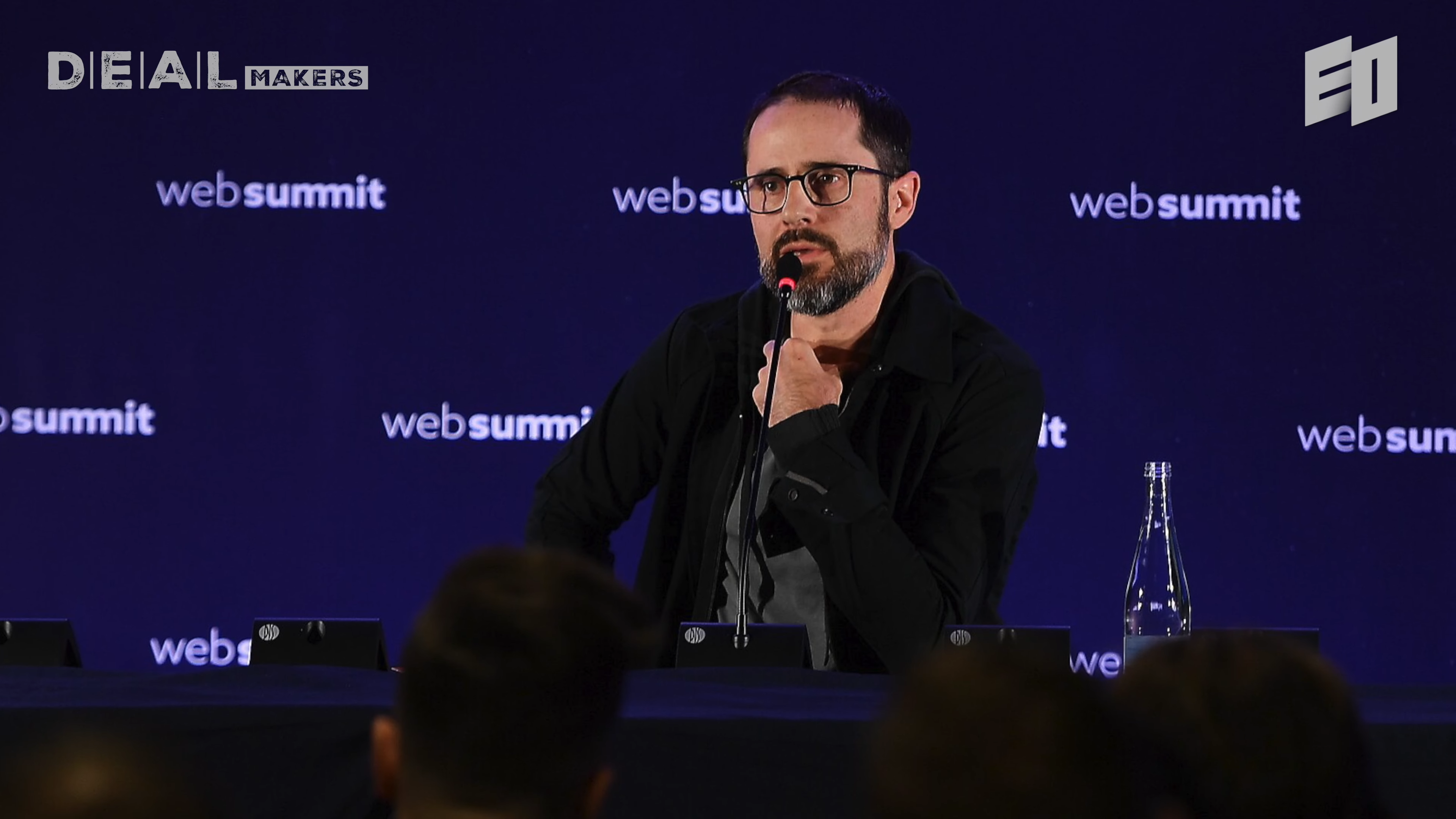
After doing that for a while, the Obvious team came to me and said: let's do this, and you can be a key part of it. The team that came together to form Obvious was Ev Williams, who was the founder of Twitter. When they shared that idea with me, looking at these three big pillars of planetary health, human health, and economic health, there were so many opportunities to do huge things. I just knew that these were the kinds of big-idea founders that we wanted to go find. I think that was a little different from the standard way to think about venture at the time.
Perspective on Seed & Series A Startups
Our definition of seed versus Series A: at a seed, we're generally not sure exactly what the product will be, what the unique customer profile is, or what the product-market fit really looks like. We also acknowledge that they might pivot along the way. We built this artificial intelligence engine that was very general purpose, but then power developers just love it, so we're changing it to just suit them at first, and that's our go-to-market. That's the beginning.
At Series A, we're typically looking for true product-market fit, meaning there are customers who are buying the product, who like it, and who want to recommend it to others. That customer, if we expand to the addressable market, looks very, very big, or it's a smaller part of a bigger market that we could imagine expanding. So the difference for us is: seed is team and a dream, a really strong beginning of a team and ideas that we share a vision for with the founders. Then at Series A we're looking for clear evidence of customer traction.
We're always looking for determination and grit in the founders at the seed stage. If it's there, I believe that building really diverse teams in the early stage is extremely important, so that you can take a broad view of the world, have different mindsets around the table, and encourage really strong debate. At the same time, diversity comes in many forms. You can have diverse opinions, but you ultimately do need some shared values. We're really trying to look for those shared values that they are then going to use to filter and find the talent that's going to help them build.
If you're in the first two years of your business and you make one or two big hiring mistakes, it's okay, you can fix that. You have to correct it, but the third one, the fourth one, or the lack of correction in the beginning can really prevent a company from lifting off. That's something we spend a lot of time on: team development, the strategy of what they want to do, and then at Series A ensuring that is continuing to scale.
But also just getting them to really deeply understand the minds of their customers. Even if you're using artificial intelligence to find geothermal resources underground, one of our companies, Zanskar, does this. I still think it's important for them to get that technology right, but also understand what Google really needs from a power consumption standpoint, or what Pacific Gas and Electric, a utility in California, really needs. All of that work is really important to us.
We have a great founder, Sami Inkinen, who started a company in the healthcare space reversing type 2 diabetes without the use of insulin, which is a very hard thing to do. We thought it was maybe impossible. But when he was starting it, incubating it in our office, he very clearly said: I want to reverse type 2 diabetes in 300 million people. That was a big, hairy, audacious goal. It was also very specific.
Famously Elon and others have done this in their companies: they have a very clear master plan, a long-term plan, with multiple phases along the way. Those phases could each be a huge business and be financially independent. So it's not just I'll start here but it's going to be a money-losing business and then I have to move on to the more profitable thing.
It's I'll start here, this could be a really powerful business, it's not nearly as big as this next thing, so let's go on this journey together. I think that kind of clarity of vision, even if it turns out it twists a little bit over time, is very attractive to investors.
Better Products Change Human Behavior
When Obvious was created, we were looking for things that would stand the test of time, things that would offer big opportunities in perpetuity. We do that across three big pillars: planetary health, human health, and economic health. Climate is a very big domain. There are areas like industrialized decarbonization, like steel and concrete and others. So we have to be venture capitalists. We don't have to be like religious zealots saying if it says climate we must invest.
People are very much focused on finding the winners where a climate investment model makes sense. To those who just want to burn everything and not worry about the consequences: the number of people who really think like that is actually shrinking, a lot, because of innovation, because of technology. We are able to offer a superior future, not just a different one but a superior one, that I think is going to prove itself to be more resilient, lower cost, and more available globally than anything before.
20 years ago, if you told me the cost of solar was going to go down two orders of magnitude, you'd never believe me. And yet now we are cranking out 100 gigawatts. The world is changing. Businesses are changing. Governments are adapting. I think it's possible that human behavior might be one of the last to change.
The fact that people will be in an Uber and the Uber is a Tesla or a Hyundai and they're all electric, and they start to realize this is just a better product, that's where consumers will really kick in. If composting, recycling, and throwing out trash in your home somehow resulted in a better product that you could see every day, I think we'd see more adoption. But I think consumer behavior really comes when it's an immediate gift of a better outcome.
We call our type of venture capital World Positive venture capital, and that's because while we're mainly investing in the United States, we believe that companies there, and companies everywhere, have an opportunity more than ever: not just to do something locally, but to do something globally. If you do something globally, your market is bigger, your market cap should be bigger, your company should be bigger, but you also have more of an opportunity to leave a lasting impact on society.
So I hope that entrepreneurs think about the ways that what you're doing might scale globally, because there are a whole lot of challenges out there in the world, and the more we can collectively work on them, the more we're going to have a healthy and happy society for generations to come.