Jan 09, 2025
Playing the Infinite Game In Venture Capital
Interview with Tae Yoon, Partner of Altos Ventures
Founder Focused


💡
At a Glance
- Who: Tae Yoon is a Partner at Altos Ventures. He previously invested at CapitalG, Google's growth equity fund, before taking Stanford GSB's famous investment course taught by legendary professor Jack McDonald.
- What: Altos Ventures is a Silicon Valley venture firm founded in 1996 that acts as a lifecycle investor, leading Series A rounds and holding software assets over multi-decade horizons.
- Lesson: This interview reveals how losing a portfolio to the dot-com crash reshaped a venture capital strategy, teaching investors to value compounding over fast markups and seek hedgehog founders who play the infinite game.
During the dot-com crash, Altos watched its entire startup portfolio collapse to zero, proving that fast valuations and brought-in CEOs create false value. Guided by Stanford professor Jack McDonald's value-investing thesis, the firm reinvented itself to back capital-efficient software companies over multi-decade compounding horizons. In this interview, Tae Yoon reveals why venture capital is like running a preschool, how to distinguish hedgehog founders from foxes, and why rushing a term sheet destroys long-term alignment.
Key Takeaways
Invest For Decades, Not Just Early Milestones
Tae Yoon describes Altos Ventures as a lifecycle investor that thinks in decades rather than years. The firm may begin with a small Series A investment, then continue supporting a company through later stages when the founders share a commitment to building a durable business.
Durable Value Matters More Than Bubble-Era Markups
Altos learned during the dot-com crash that marking companies up and preparing them for public markets created no lasting value when the businesses went to zero. The collapse forced the firm back to fundamentals, including who to back, why to invest, and how real value compounds.
Power Laws And Compounding Reward Venture Patience
Tae explains that a small number of companies drive most venture returns, while compounding makes patient ownership increasingly valuable in later years. Altos’s Roblox example reflects that logic, because an early investment became a much larger, long-term partnership as the company continued building.
Hedgehog Founders Focus With Flexible Opinions
Altos favors hedgehog founders who concentrate intensely on one problem and endure its ups and downs. The strongest founders also hold their opinions loosely, staying connected to a clear vision while remaining willing to learn, admit mistakes, and course-correct when evidence changes.
Choose Investors As Carefully As Long-Term Partners
Tae compares an investor relationship to marriage, making rushed alignment especially dangerous for companies meant to last ten years or more. Founders should spend time understanding a potential partner before accepting a term sheet, because mismatched expectations surface quickly in board meetings.
A Venture Capitalist Should Steward, Not Command
Tae compares venture capitalists to preschool teachers who understand patterns across many children but can never know one child better than a parent. Investors should bring context, guidance, and support while respecting that founders possess the deepest knowledge of their companies.
Watch the full interview now on EO's YouTube channel! Below is the complete transcription of the interview. Minor edits have been made for clarity and readability.
Introducing Tae Yoon, partner of Altos Ventures
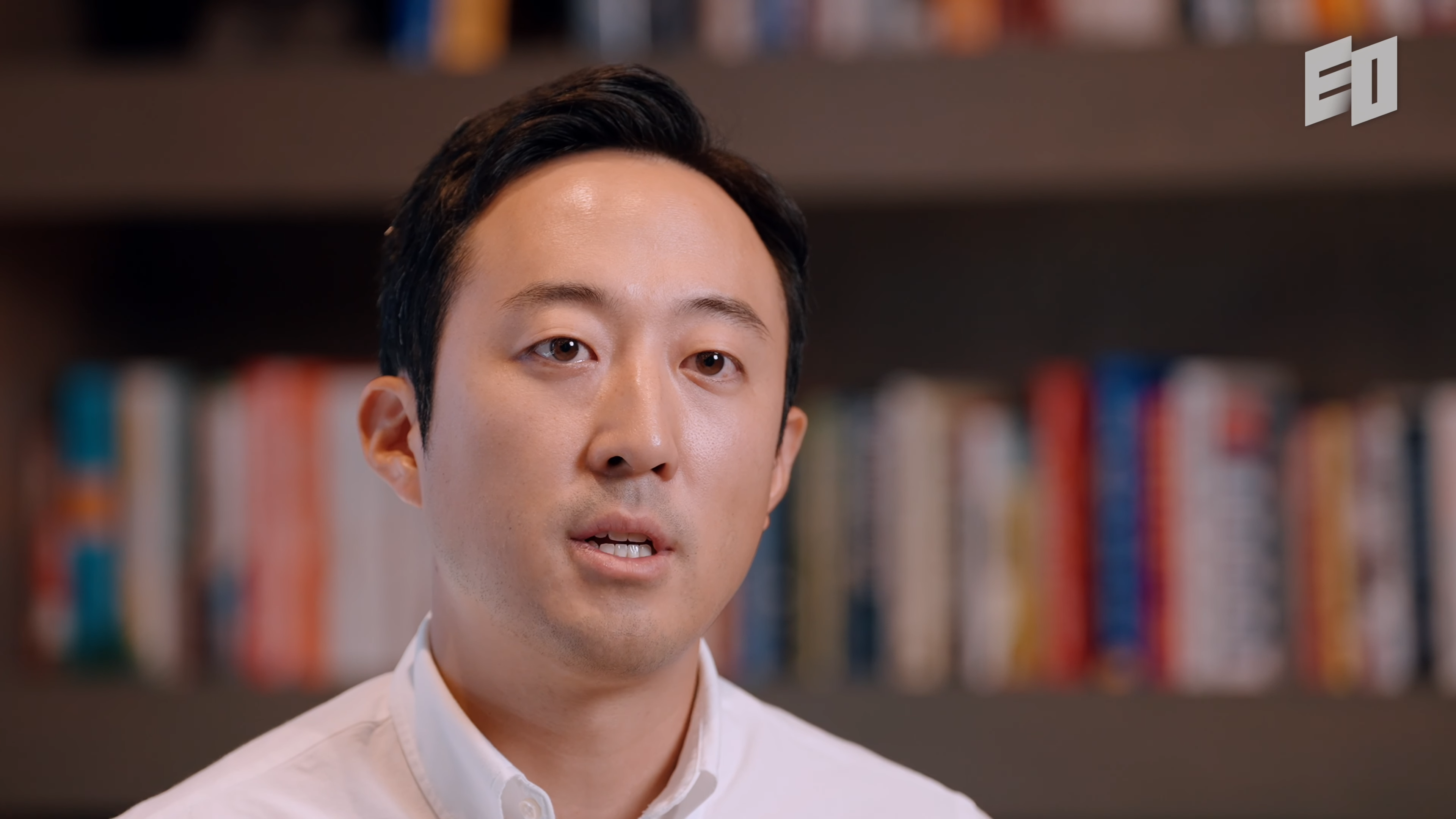
My name is Tae Yoon. I'm a partner at Altos Ventures. Altos is a venture capital firm that was started here in Silicon Valley in 1996. As a firm, we are global generalist tech investors, so it's a very wide and flexible mandate. We focus more on orientation and alignment with the founders we work with. I actually think we are more like lifecycle investors.
You can think of us as early-stage investors, typically leading Series A's. After that initial investment, we take a very long-term approach to company building and investing, literally thinking in decades rather than years. We love partnering with founders who share that mindset of building durable businesses over a long period of time, and we have a lot of flexibility and capacity to support those businesses through additional investments as time goes on. There are many cases in our history where we started very small and early with a company and ended up investing hundreds of millions of dollars beyond the initial check, along the entire journey of the company.
I spend a lot of time meeting and investing in software companies. Software happens to be a business model that is very capital efficient. It is also a very durable business, because the world continues to get digitized and software plays a very large part in that digitization. It meets our general criteria of long-term company building, capital efficiency, and pragmatic company building. Software companies exhibit a lot of those characteristics, which makes them a really good fit with what we are doing at the broader level.
Lessons from the Dot-Com Crash
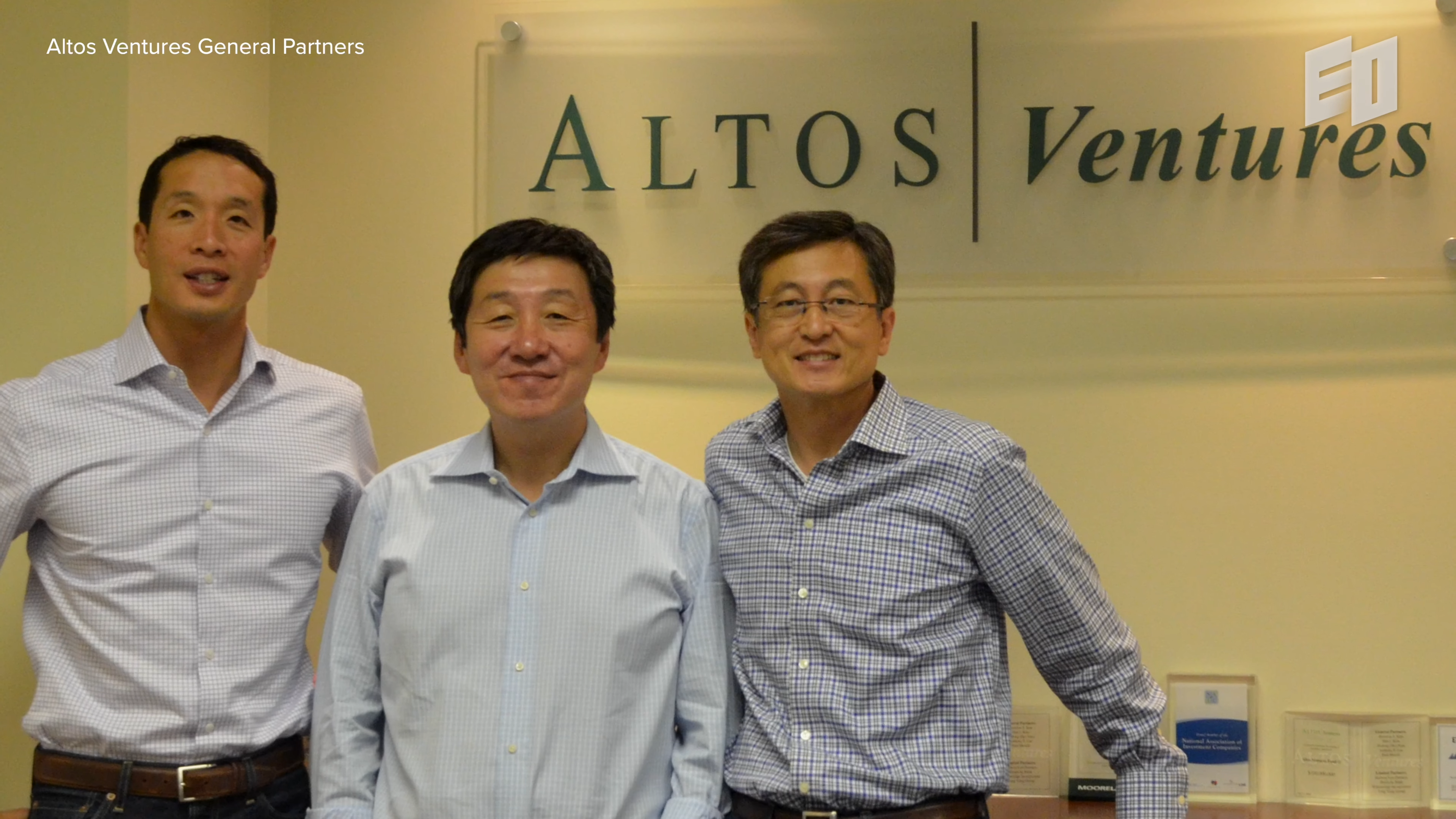
In 1996, when the firm was started, we had one singular LP. The idea was to invest in seed-stage, very early-stage startups, then feed them to the very well-known Silicon Valley VCs, who would come in, mark them up, and lead the Series A. Ho Nam and Han Kim were classmates from Stanford GSB and they started Altos back in 1996.
That worked until it didn't, in 1999 and 2000. Many of these companies went public at crazy high valuations. Everyone looked really smart. Then literally all of our companies went to zero. I think that gave the team and the founders the insight that the way we were doing it was just wrong. There is no real value creation. Who cares about markups when the eventual number is zero?
So they went back to the drawing board and tried to get back to the fundamentals and ask, why do we invest, who should we invest behind, and how do you ultimately create value and build these durable businesses? That's when the Warren Buffett and Charlie Munger thesis came into play, with the help of Professor Jack McDonald.
Key Principles of Altos

I actually met Ho and Han back in 2015, when I was at Capital G, Google's growth equity fund. One of the partners I worked closely with, Gene Frantz, had been classmates with Ho and Han at Stanford GSB. Through that relationship we looked at a few of Altos' companies, including Toss and Roblox. Ultimately we couldn't get there on either of them, which was a big mistake. But I always felt they were really good people, so we stayed in touch.
When I went to Stanford for my own business school experience, I took a class called the Investments Class. It was taught for 50 years by a famous professor, Jack McDonald, who was regarded as the West Coast Warren Buffett. I was sitting in the classroom and Ho and Anthony just walked in. I was like, what are they doing here? It turned out that Jack had been a very important figure and an advisor to Altos when Altos got started.
There are three core principles that are really important elements of what Jack taught. The first is the power law. In any asset class, only a small number of companies or assets drive all of the returns. If you look at the public markets, companies like Apple, Google, Meta, and so forth have driven almost all of the returns of the S&P 500 over the last several years. This is even more amplified, even more true, in the world of venture capital, where only a small number of companies in every vintage drive all of the returns.
The second is compounding. There's a really simple, classic example. Should you take $1 million of cash up front, or should you take a penny that doubles every single day until the end of the month? Of course, the answer is you should take the penny. It turns out that even in February, with 28 days, that penny ends up becoming more than $1 million by the end of the month. If you're lucky enough to be in a leap year, with 29 days in February, it becomes $2.5 million plus. And if you're super lucky and in a month like January, with 31 days, it's over $10 million. We believe that a lot of the value created for a startup happens in those latter years, when the base gets much bigger and the value keeps accruing in a durable way.
That's why we try to be extremely patient. Roblox is probably the most well-known example. We first partnered with Dave and the team 16 years ago, when we led a round with a $1.5 million investment, and up to the pre-IPO round we invested another several hundred million dollars into the company. We were, of course, the largest shareholder when the company went public. In some sense we still view it as an early-stage company. There is so much the company is building and a lot of potential to grow the business from here. We believe in this notion of the infinite game, and that's the game we want to play. It has no time bound, because the compounding of value in these special assets happens in years 10, 15, and 20, not in years 1, 2, and 3. Selfishly, we want to generate wonderful returns, and we should be super patient.
The Hedgehog Founder

The last idea is the notion of a hedgehog. There's a Jim Collins analogy from the book Good to Great about hedgehog founders versus fox founders, and we have a blog post on our website about it as well. Hedgehog founders are people who are maniacally focused on trying to solve one problem, and on doing that really, really, really well. Foxes are extremely smart, very cunning, but they often have a lot of things going on. They have a lot of projects and they are quite distracted.
We gravitate towards the hedgehog founders, people who feel like this is their life's work, something they want to endure through the ups and downs. We've experienced that those types of founders are the ones who can endure the difficulties of a startup journey. No startup journey is linear and up to the right all the time. There are a lot of challenges that come, and we feel that being a hedgehog founder is an important ingredient to building something great over a long period of time.
Even within our team, we have slightly different views on what a hedgehog founder means and how you identify someone as a hedgehog versus a fox. In some sense it's a spectrum. It's very difficult to say whether you're a fox and you're a hedgehog, it's a spectrum of how hedgehog are you versus how foxy are you.
I find some of the best founders, and oftentimes they are these hedgehogs, have very strong opinions, loosely held. The strong opinions come from either an inherent connection to the industry or the problem they're trying to solve, which was the genesis of why they started the company, which was to solve their own problems. That's one bucket of founders. But there are other founders who become extremely entrenched in an industry or a problem through a lot of studying and a lot of conversations, a more top-down approach to figuring out how to solve the problem they want to solve. In either case, the best founders seem to have at least a strong point of view on what the world should look like. I think that's very important, because you have to be a visionary to change the world or bring to market a service that did not exist before.
At the same time, what's really interesting about a lot of these founders is that these opinions are loosely held. They're strong, but they're willing to change their views if they see something new or learn something new. That part is also really important in our view, because you have to have the mental plasticity to figure out whether you're right or wrong about something, and the humbleness to admit when you're wrong and course correct. This is where the continuous learning mindset comes into play. The best founders and the best learners tend to have that characteristic.
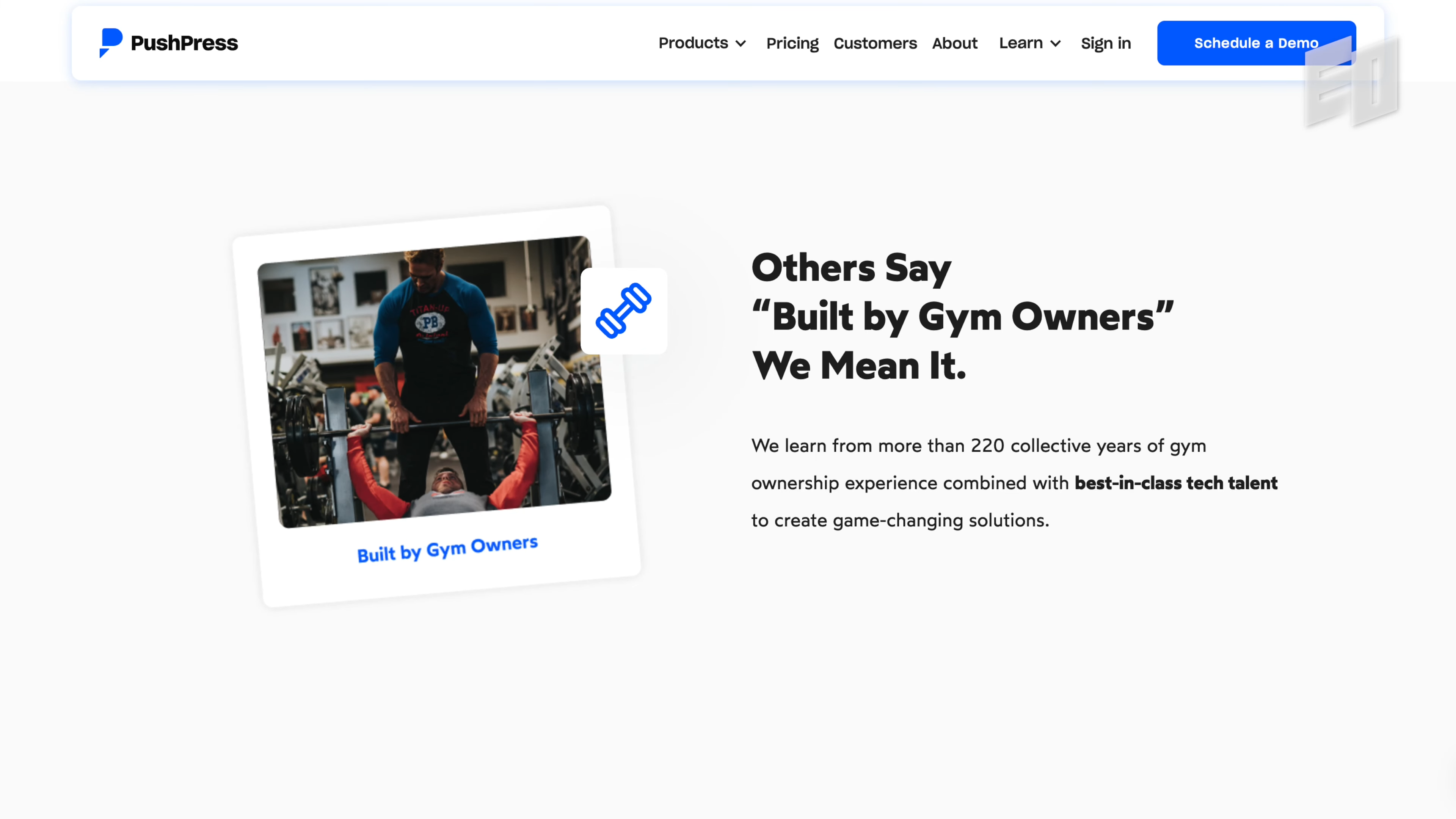
I've been working with and partnering with a number of vertical market software companies. One is called PushPress, a gym management software company. We first led the Series A two and a half years ago. What they're trying to do is provide the best software to independent gym owners across the US and across the world. The founders were former CrossFit gym owners. They had a pain point, which was finding a software tool that worked for their own gym. So the founder, who had a technical background, just built a software tool for his own gym, and that ended up becoming PushPress. Now they have about 100 people at the company, the majority of them former gym owners or former fitness professionals. They live and breathe the category, the industry they serve, and it shows in the way they approach customer support and the way they talk to their customers. That's been a really fun journey so far.
A lot of founders come and say, "We are looking for the next ten-year type of partner, we're very serious about finding the right partner, it's not about valuation. Oh, and by the way, we need a term sheet by tomorrow." That's very hard for us, because how do you get married after the first date? We view the partnership as a marriage, so we really appreciate having the time to get to know founders and to get to know each other. I think that is actually really important to building a very long-term and fruitful relationship. Let's say you enter a relationship without having that alignment. Well, in the first board meeting, that second date, it's going to be very apparent that this is not a good fit. And what's the point of that, if the goal was to build a generational company for ten-plus years.
The Role of VC
I have one definition, one analogy, that I personally really like. I was at my son's preschool, at a teacher-parent conference, and the head of the school was giving a speech to the parents. She made this analogy. You parents know your child the best, and we teachers know children and if we partner well together, it can be an extremely fruitful partnership and a symbiotic relationship.
I was listening to that and thought, that's kind of like my job as an investor. There is no way that we, as investors and venture capitalists, would know a singular company better than the founder or the team that's working hard at it. But we do see a lot of companies, and we end up working with a lot of companies over the years. That pattern recognition, the sheer amount of data you can aggregate from seeing the good ones, the okay ones, the bad ones, the full gamut of company building, allows us to hopefully provide guidance when it's needed, so these businesses can avoid mistakes or accelerate their path to greatness.
So in some sense, I was thinking to myself, a venture capitalist is like a preschool teacher. You're trying to be a helpful steward, but you should also be humble enough to know that there is so much more to that singular child, or company, than what you probably see. You have to respect that and work with the parent, or the founder, to understand it as much as you can. Then, with that context and that partnership, you can provide the insights and the support to hopefully accelerate that path.
What we are trying to do, of course, is to not be average and to hopefully add value. Maybe the way to add value to a company's trajectory is by increasing its odds of success. Again, whether you can succeed or not as a company, as a founder, or even as investors is still unclear. There are a lot of inputs that go into that eventual outcome, which hopefully is great, but there's luck, and there are a lot of other circumstances that have to go your way for that to happen. So then what is it that we can do? Well, we can definitely control the inputs to getting there. Hopefully the partnership with a venture capitalist or an investor is a strong one, one that allows the thinking to keep expanding and lets the VC help steward and guide the company in a direction that increases the odds of success. I really like that framing of the role.