Aug 14, 2025
This Humanoid Robot Just Got Human-Level Hands. Here's the Man Behind It
An interview with Bernt Børnich, Founder of 1X
Founder Focused


0:00 / 0:00
💡
At a Glance
- Who: Bernt Børnich is the founder and CEO of 1X, who decided at age 11 that he wanted to build humanoid robots and founded the company in 2014 in Norway (originally as Halodi Robotics) before relocating its headquarters to Palo Alto in 2025.
- What: 1X builds humanoid robots for the home. Its flagship robot NEO is priced at $20,000 or $499 per month, with US deliveries starting in 2026.
- Traction: 1X has raised over $125 million from investors including OpenAI, Tiger Global, EQT Ventures, and Samsung NEXT, and is reportedly seeking up to $1 billion at a valuation of $10 billion or more.
In this interview, Børnich reveals why Honda's Asimo failed and how that shaped 1X's entire design philosophy, why every chore a robot does in your home is actually a social act, how a robot face-planting on stage taught him to build a culture that celebrates failure, and why humanoids have to win over consumers before they ever reach the enterprise.
Key Takeaways
The ChatGPT Playbook: Consumer First, Then Force Enterprise Adoption
Innovative products almost never scale in enterprise first, because IT departments and risk-averse CEOs slow everything down. Like ChatGPT, humanoid robots have to win consumer early adopters who create bottom-up pressure, and enterprises will follow.
In Deep Tech, Solve the Problem and the Market Will Be There
If you cure cancer, you don't wonder whether people will buy it, and the same holds for turning energy into labor. The real risk is technical, not commercial, which is why Børnich frames 1X's two failure modes simply: losing velocity or running out of money.
Can You Still Celebrate Failure When You're Under Pressure?
In 2018, Børnich said the word "safe" on stage at the exact moment his prototype accelerated backward, hit a wall, and face-planted into a pile of balloons. A culture where failure is acceptable sounds easy until you have to maintain it under deadlines and funding pressure, and teams that manage it are the ones that actually innovate.
Why Did Asimo Fail? Because Classical Robotics Can't Survive the Real World
Asimo followed the classical robotics playbook of factories, which requires making assumptions about the environment, and homes offer no such luxury. Børnich's answer is physics: industrial robots carry too much kinetic energy to stop mid-collision safely, so a home robot has to be low-energy, soft, and compliant by design.
Any Labor You Do Among People Is Social Labor
From 1X's earliest home deployments, one insight kept surfacing: even grabbing something from the fridge means communicating intent to whoever is standing in the kitchen. You cannot separate the labor problem from the social problem, which is why Børnich insists robots have to live and learn among us.
Below is the complete transcription of the interview. Minor edits have been made for clarity and readability.
When a Humanoid Robot Becomes Your Roommate
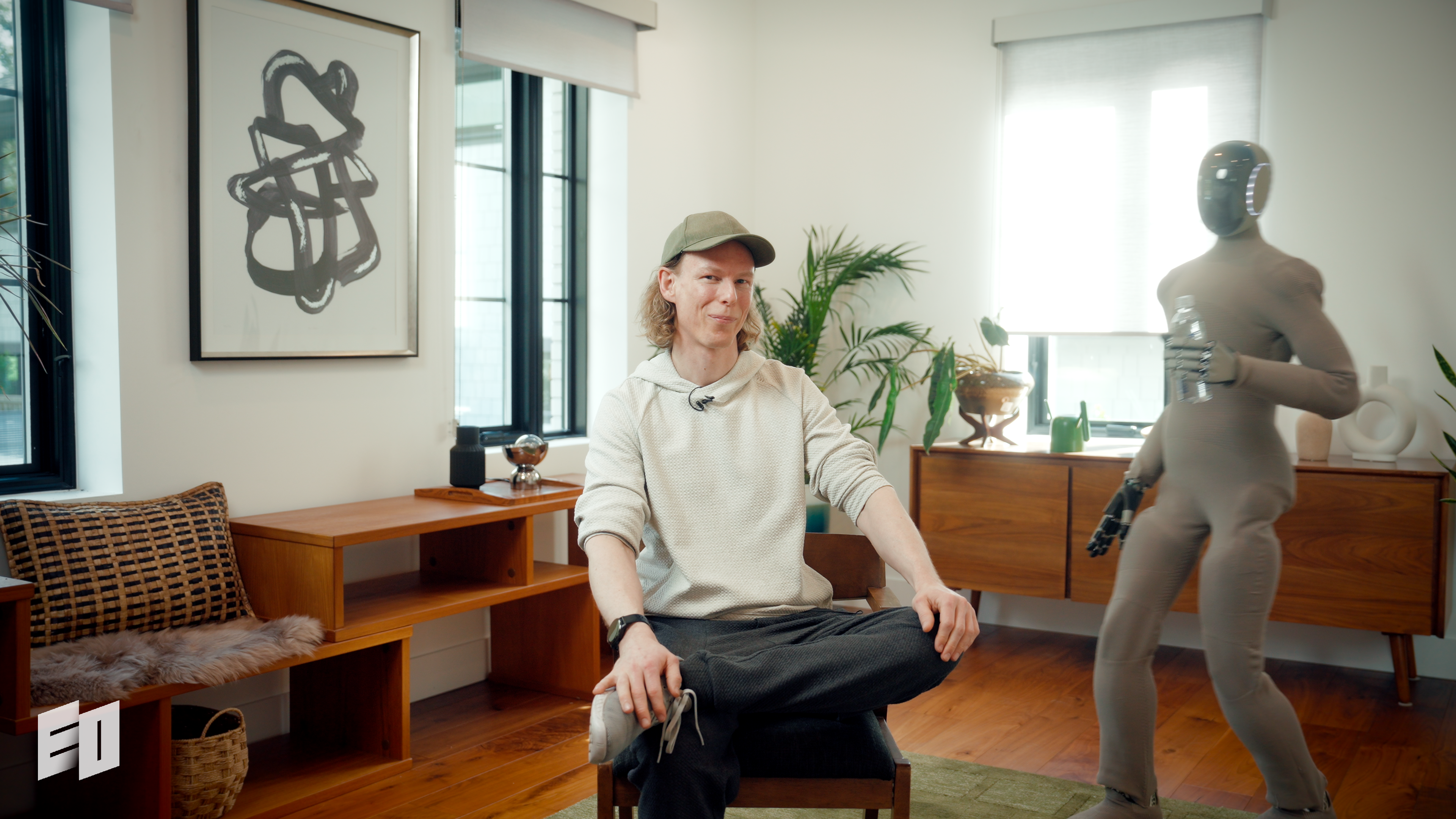
My name's Bernt Børnich. I'm the founder of 1X, and we make humanoid robots for the home. We thought about it for a long time; we just got really annoyed that everyone was posting robotic videos online with like 4X, 5X, 6X speed, because the robots generally don't move naturally, don't move at human speeds. We just thought it was really funny, like, let's make sure like in every frame there's a 1X, and our mission is to create an abundance of labor through these intelligent machines.
How life will be when you actually have a humanoid in your home, and you can really focus on enjoying the time we spend together, and the things that make us human.
When I was a small kid, I got hold of my first computer, kind of like clicked, right? And that was really magical to me. You can write some code, and you can have something else move in the physical world. You can combine these two. So I kind of started looking at everything around me and how things that move very efficiently get things done and how much the physical world matters. I decided I want to make humanoid robots.
I got really inspired by Honda Asimo back in the day. The most magical thing about Asimo was the interactions with people. It wasn't an industrial automation system. This was actually kind of straight out of Star Wars. It's this humanoid robot that can walk around, run around, hand you a bottle of water, and make sure that all these chores we don't want to do every day, we don't need to do them. We can have robots for this. That's really what also motivated me when I started 1X.
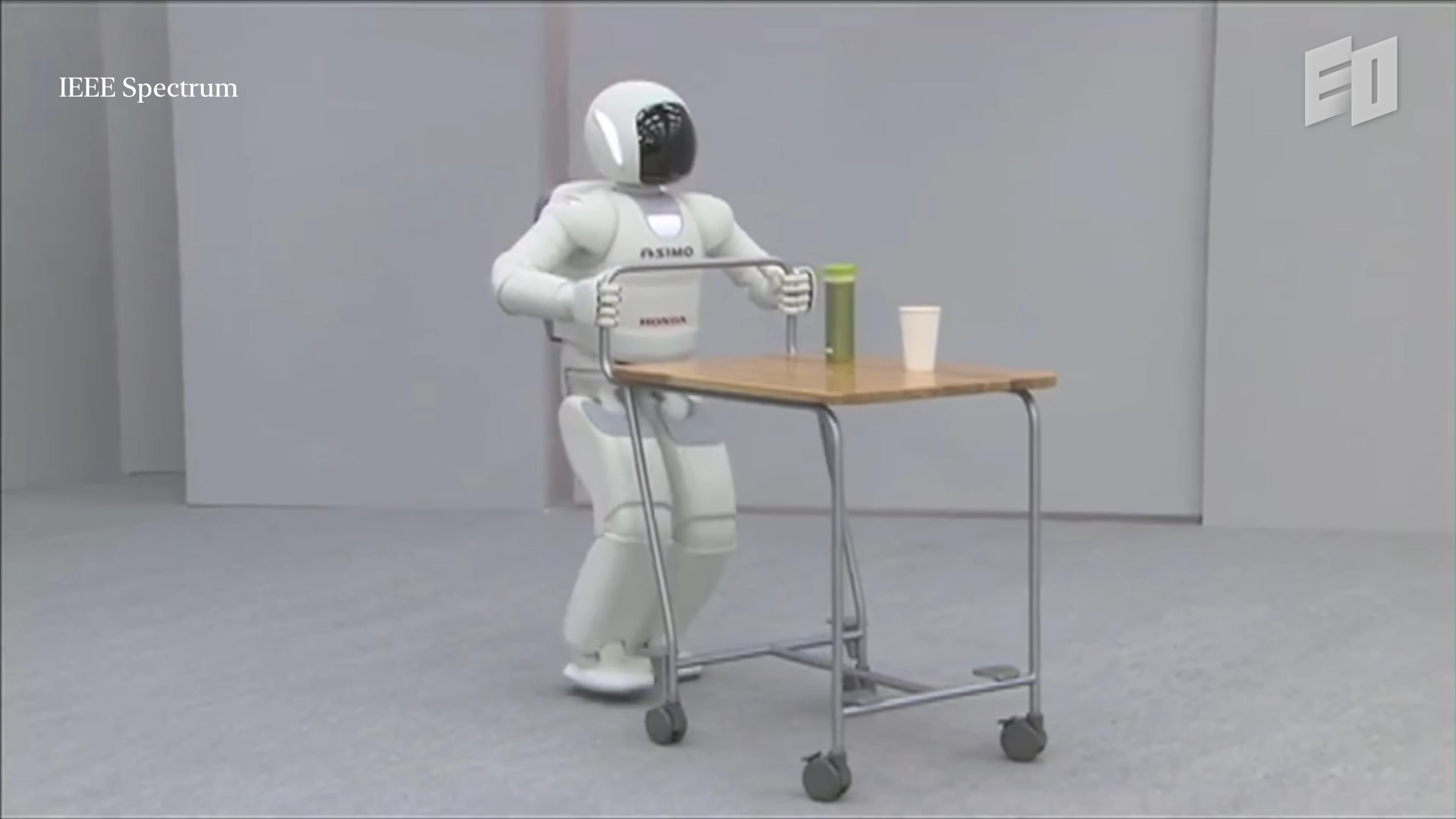
Just look at why Asimo actually failed. So if you look at Asimo, they followed what I would call the classical robotics regime, the same as we see mostly in factories and work cells, of how you build this, and it's not really inspired by nature and how we humans are built and how we humans move. This made it very hard for them to actually be able to do useful things outside of the lab, because the system they built really had to make a lot of assumptions about the environment, which doesn't work in the real world.
Because in this creative chaos around us in everyday life, that is where so much of our intelligence comes from and our lessons learned, you cannot really make that many assumptions. Things change all the time. We have to make it safe. We have to make it affordable, but it can't be a toy. It actually has to do the work; it has to be very useful.
If we want these machines to be truly intelligent, also, if we want these machines to behave in a manner where they're aligned with us, they have to live and learn among us.
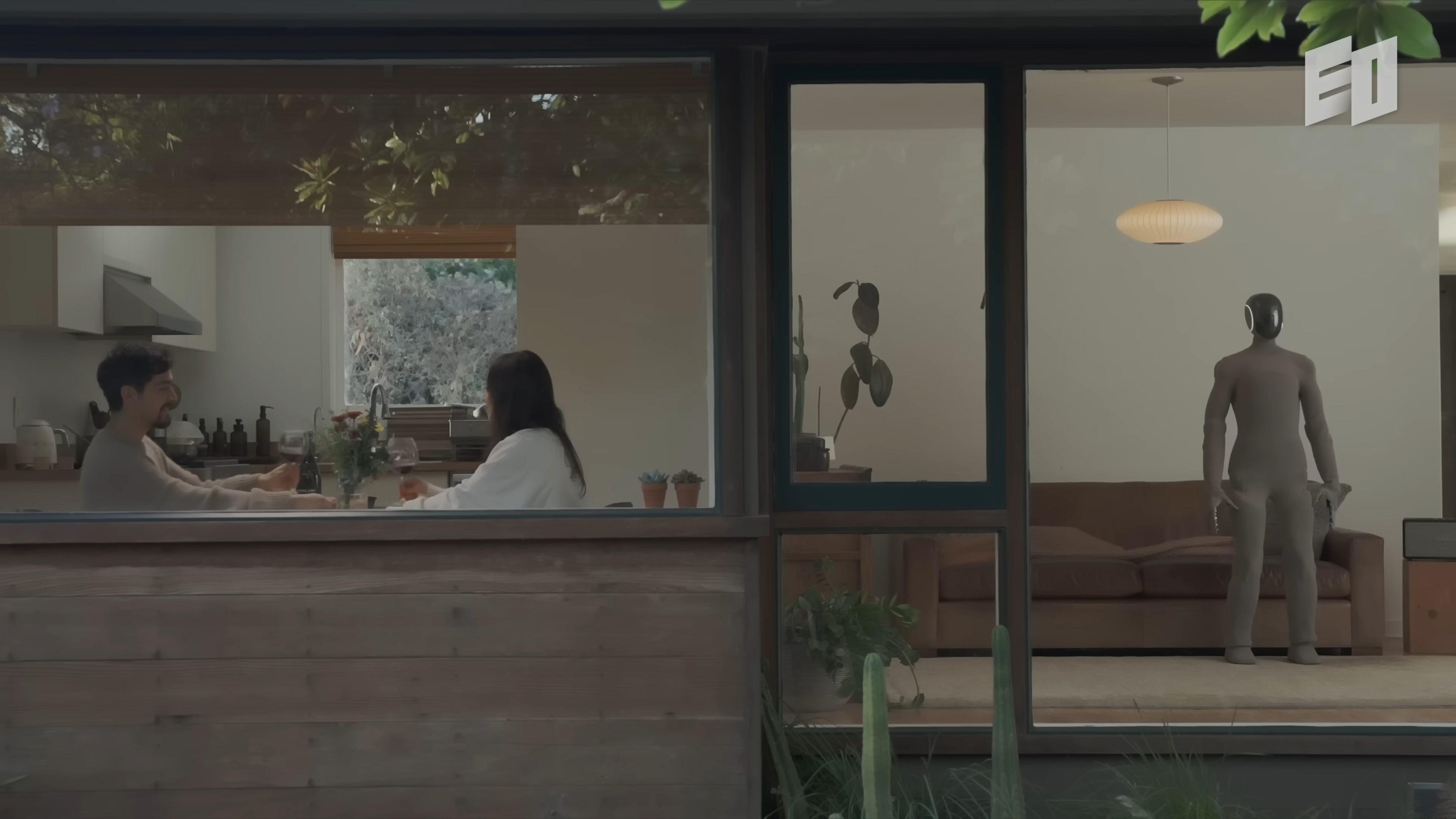
So, 1X started about 10 years ago now. Really it started out from the perspective of how can we make humanoid robots that can actually have a real impact on the world. Norway was very good in the beginning. We had very little attention. We were all by ourselves; it was just a group of people coming together, spending every waking hour, figuring out how to solve the problem.
We moved a lot of talent over to Norway. The field at that point was very small, thinking about who were really the best people in humanoid robotics back in 2015, 2016. It wasn't that many people. I still remember when at the humanoid robotics conference, we could fit everyone in one room.
This created this kind of very exciting ecosystem where everyone was basically almost living together and just living and breathing this problem, and we really became this great group of friends that just went on this adventure together.
We were very early in this space. There weren't that many believers. It's always challenging to raise money in spaces that people don't really believe in yet. Around 2017, I would say, is when we struggled the most. We actually had fundraising locked in. We were one signature away from borrowing money, and then COVID hit, and that's probably the most painful thing I've done as a founder.
So we went down to half the number of people to get through COVID because, of course, in the beginning of COVID, there was no raising money. Everyone was just sitting on the fence, figuring out what was happening now. And of course, these were people who had moved to Norway to be part of this, giving up everything they had and they want to be part of this dream, and they were all in. And having to let go of these people was of course extremely, extremely painful.
There are two ways we lose, right? Either we lose velocity or we run out of money. And those are the two things we need to make sure never happen.
The first year was really about proving that this can be done, really laying the foundations for a new paradigm in how we design robots. We decided to go in a new direction, a different paradigm in robotics. It's not that no one has ever done tendon-drive systems before or cable drives, but no one has really worked deeply enough and long enough on the problem to make it work.
It's not easy to catch up because you need to sink a lot of work into this to make it work. It's also pretty exciting because it gives you a real moat.
Why Building Humanoids Is a Whole New Level

If there's a lot of energy when I move, then when I step on the ground, there will be a huge impact, and this will disturb me; it will disturb the ground. It's not a good idea. So you want to make sure there's as little energy in this as possible. It actually just comes back to kinetic energy. We have a very good intuition for this. We learned this in school. If a car moves twice as fast, it's not twice as dangerous. It's four times as dangerous because it falls to square, and this is also true for robotics.
So if you think about the traditional industrial robots, they typically have gears that are about 100 to 1 gear ratio. So if your arm is moving like this, something inside here is spinning 100 times faster, and there's just an enormous amount of energy in that rotation. So you can think about it, something here is spinning at 20,000 RPM, and then when your arm hits something, this needs to immediately stop. There's no way it can immediately stop. It's going at a blazing speed, right? It can't immediately stop.
And everything we do when we interact with the world is a collision. Whether we're taking a step or whether I'm just touching my watch or whether I'm picking something up, it's all collisions, and the way this is typically solved in factories is that you know exactly where things are. So you will see the robot move, and it will stop just before it touches the world, because it needs to touch the world very slowly, and this works amazingly in factories and has been the groundwork for robotics working well over the last 60 years.
But if you're in a home or in a garden or whatever, you don't have a calibrated factory, so you don't know exactly when to stop, and that's why we need these very low-energy systems that can be safe both with respect to people and with respect to themselves and the world.
You don't want your robot to damage your furniture, and of course, you don't want the robot to hurt you, but if robots are going to be able to live and learn among us, they need to be able to explore the world. They need to be able to learn through trial and error. And that means you need to be very low energy, you need to be soft, you need to be compliant, and humans are just an amazing example of this.
Any Labor Among People Is Social Labor
When we did the early first deployments years ago, and we tried this out in homes, the thing that really struck us very early was how almost everything you do is social. So even just getting something in the fridge is a social act, because likely there's someone in the kitchen, and now you need to clearly communicate your intent.
I'm going to go to the fridge and open it. Make sure you're not in the way, make sure you do this in a safe manner, and you can't really separate these two problems. Any kind of labor that you do among people is social labor. Real intelligence comes from diversity. That was a great insight that we had pretty early on.
When you flip the light switch in the morning, there's light, and if not, you're pretty annoyed because humanity has mastered energy. For practical purposes in everyday life, it's just abundant, and this same thing is going to now happen to physical labor. And this is really needed because there are not enough people being born. We don't have enough people to take care of our elderly, and we see prices of goods and services increasing. Everything is inherently limited by our ability to effectively serve labor. The question then becomes, how do we get there as quickly as possible?

So, most of the humanoid robotics companies you see today are more component integrators, buying off the shelf and integrating into a system, and this in itself is pretty hard, but the journey we set out on here with the tendon drives and our unique motors and everything else means that we have to do everything ourselves because these components don't exist.
So we spent the last 10 years building not only the foundational technology but also actually the machines that can build these components and automation equipment and everything needed to build the factory.
It's going to be extremely challenging because manufacturing always is, but we've done a very good job in simplifying the product. Make sure you don't have anything that requires special alloys, make sure your product is very light, so you don't need that much material, just simplify, simplify, simplify, minimize part count. Through this, reduce this from something that has the complexity of a car to something that gets closer to having the complexity of some kind of electrical appliance in your house, and the way we do that is just building it all ourselves, having our engineers sit in the factory, make sure design, manufacturing, automation, everyone is in one room, really create a very, very efficient process.
In this Industry, Failure Comes First
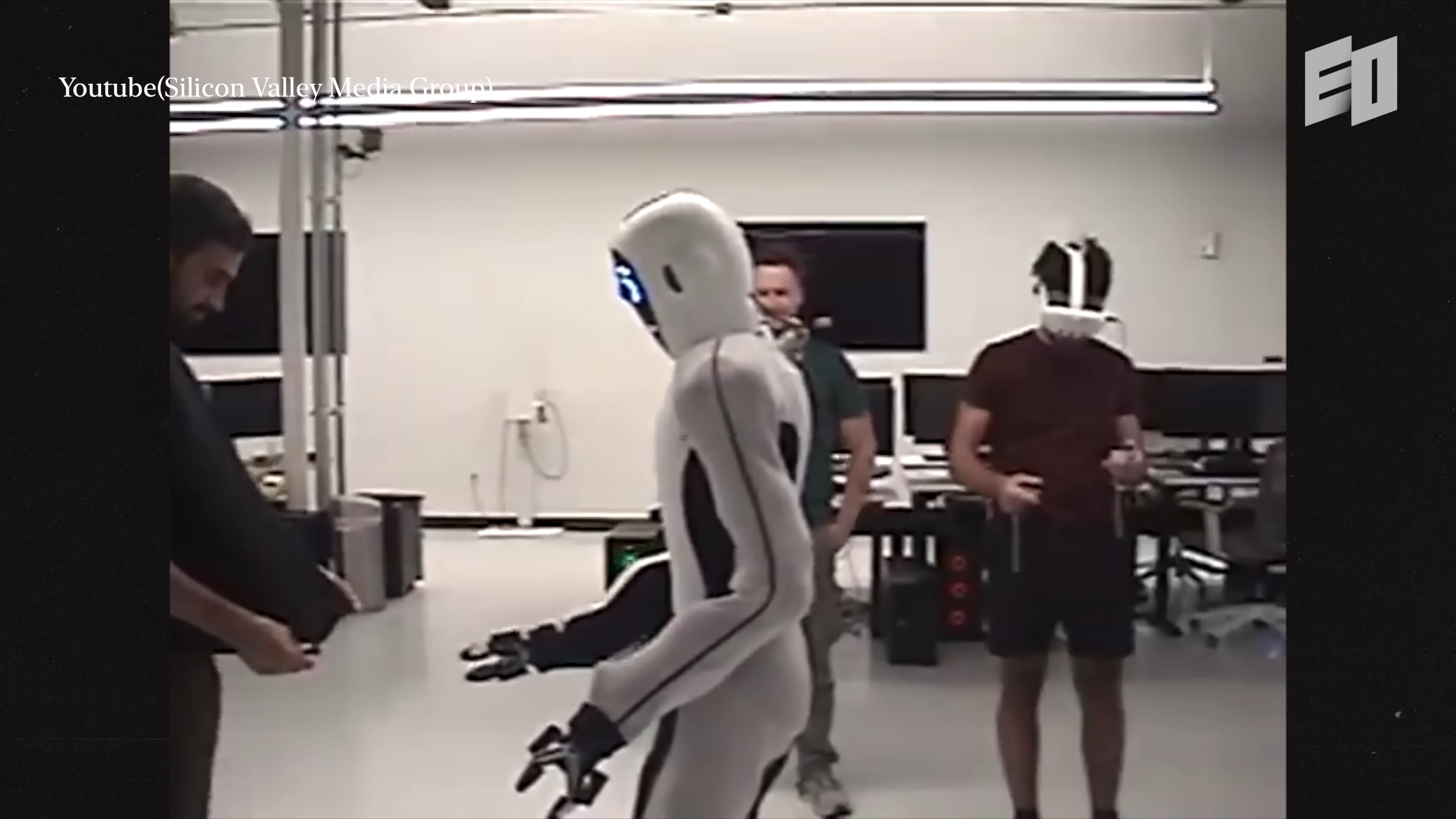
This is back in 2018. I was at a stage, and this was the old robot. It was one of the first prototypes we had and we were opening this health conference where we're talking about robots in healthcare in the long-term, and I'm standing on the stage together with my robot and exactly well timed, as I say "safe," the robot decides to accelerate backwards, hit the wall, and then face plant next to me, bringing with it all the balloons in the back.
And just, it just looked like it had a really rough night, sleeping in the balloons. I spent a lot of these things up through the years. Things don't always go the way you planned.
So I think accepting failure and having that as part of a culture is incredibly important because if not, you're not innovating. Most of the things you do that have never been done before will just be playing out wrong. In hindsight, it might not just be plain wrong; it might be borderline stupid or like, how did we ever think this was gonna work, as you get more knowledge. But that's just the nature of the game. That's how innovation works.
So I think, first of all, foster a culture where failure is OK. I think the only thing that's not acceptable from a cultural point of view is that you didn't really try, you didn't give it everything you had, or you didn't actually reflect on why it failed, so you can learn. If you give it everything you have and you learn from your failures, then you should embrace and celebrate failure. It is how we make progress.
This is hard to do, actually. It sounds like a cliché, but it sounds like something that should be pretty straightforward, but of course, we're under a lot of pressure to make this happen, and we need to deliver. We have timelines, we have schedules, we need to hit our manufacturing milestones, and that's really where the importance of this comes in. Can you do this under pressure? Can you keep this culture where failure is OK, even when there's pressure? And if you manage to do that, then you get great innovation.
How Robots Learn
Let me go through how the robot learns in general. How does it actually work? It begs the question, how do you get to a system that's intelligent enough that when you ask it to go and get a Coke in the fridge, it at least manages to do it sometimes, and we need to bootstrap.
So you start with internet data, of course, because we have a lot of it, then you have some synthetic simulated data, and then you need some robot data. And to get that robot data, we typically use teleoperation. So that means we have a human that actually embodies the robot, and you see through the eyes of a robot, and the robot moves as you move.
And it's a pretty magical experience. It's kind of like, hey, my hands are somewhere else, and I can do something anywhere in the world. And it's a very nice way of transferring knowledge from a human into a machine. And once you have a bit of this, you're now able to do these tasks autonomously, and from there you can iterate on it and learn from the real world.
In the end, it's about having enough of these robots out in the real world, learning from just trying things. You have to be able to experiment. You have some hypothesis about how to do something, you try, you see how it went, you try again. That's how we learn.
Build Before the Market Exists
Traditionally, scale does not happen first in an enterprise. And this might be slightly surprising, but if you look at the history of highly innovative products, they almost never happen in enterprise first. They happen in consumers. And this is just because enterprise is risk averse and there are just too much red tape and barriers, from IT departments to labor unions to risk averse CEOs. It just takes a lot of time. If you have a good product market fit, nothing scales the way consumer adoption does. This is true for a lot of products.
A very good example of this is ChatGPT and the rollout of digital AI. OpenAI really tried enterprise for a long time, and they couldn't really get it working. And then they released ChatGPT to see what people would do with it. People figured out the incredibly diverse set of tasks they can do with this tool, and they bring it to work.
And now you would think that then finally you succeeded, but you don't. Now enterprise actually says, no, no, you can't use this here, this is new and dangerous, we can't do this. After a while, people actually get so annoyed that they say, oh, if I can't use it here, I'll go work somewhere else where I can use it. Because this tool makes me so productive. And now you've created so much bottom-up pressure that you're forcing adoption, and now you can start top-down and do great in enterprise. But you have to create that forced adoption through bottom-up pressure.
Humanoid robotics is no different. If you want to do this in the next few years, not in the next few decades, you have to go through consumers. You have to find your early adopters and your true believers that can really help you push this forward and be part of this journey, then of course it will be used in enterprise, because it's gonna greatly improve your productivity, but it has to happen in consumer first.
Lessons for Deep Tech Founders
If you run a deep tech company, you're not really sitting that close to your customers in the beginning. You're trying to solve this fundamental problem that, if you solve it, your market is there. It's like if you cure cancer, you're not wondering whether or not people will actually buy your product. And if you figure out a way to take energy and turn it into any kind of labor, any kind of product and service, clearly your market will be there. It's more a question of whether you actually solve the problem.
And of course, you get into product-market fit questions once you start to deploy this and how you make it gradually useful, because the problem you're working on is such a big problem that you can't really just say I'm going to sit here in my lab and work on this for 10 years and then I'm going to go out and launch this product. First of all, you, of course, want it to be aligned with humans and how we want our robots to behave around us. But also, of course, you need to show it's useful, you need to create revenue, you need to build a business because this is a really long journey.
But fundamentally, it is a deep-tech type journey where it's more about solving the problem than really ensuring you sit close to your customers. And once you solve the problem, then you can start caring about how all those small details that take this from being just a solution technically to something that's packaged as a great product.
We are just starting already this year. Hopefully, we're gonna have something that is very useful. But in the next few years, this will change the way we live.
Build Something That Excites People
Focus on the things that make you happy because it's gonna be a long journey and if you're not having fun, you're not gonna make it. I think that's undervalued because there's this notion of being a founder is like grind, grind, grind. And it is, and it's gonna be a lot of grind, and it's gonna be a lot of dark days, so we just need to pull it together and just get it done. But there has to be also a lot of fun to make it worth it.
And that just means work on the interesting problems. The best cheat code I have is to pick a problem that really excites people. If you want to find the best people in the world to come work on something, do something that excites people. We do humanoid robots, it's really freaking cool. And most people come in and they say hi to a robot and they're like, oh man, I wanna be part of this. I wanna do this.
So whatever it should be, do something that matters. As long as I get to do this, I think I'll be pretty happy.