Apr 12, 2024
How Kristy Kim Built 4 Million Users Without Paid Marketing
An interview with Kristy Kim, Founder of TomoCredit
Founder Focused

💡
At A Glance.
- Founder & CEO: Kristy Kim
- Company: TomoCredit
- Mission: Credit access for immigrants and international students with no U.S. credit history
- Day-one signups: 10,000 with zero paid marketing
- Users by year five: Nearly 4 million across the U.S.
In this interview, Kristy reveals how her team cracked the code on credit scoring without traditional credit history, why banks refused to be first movers, and the brutal personal rejections that fueled her mission to build what she calls "a painkiller for people who really need it."
Watch the full interview now on EO's YouTube channel! Below is the complete transcription of the interview. Minor edits have been made for clarity and readability.
Key Highlights:
"Not having a credit score, it's a real pain. So building TomoCredit feels like I'm building a painkiller for people who really need it."
"Goldman rescinded the job offer and they were saying that they decide not to offer visa for the incoming class at that time. So for me, it's like, oh, that's totally not fair."
"Banks will never be the first mover—they will never do it unless somebody has tried it and then proved that it's working. So somebody had to try."
"Ignorance was a blessing. I didn't know how difficult it would be to start a credit card company."
"Goldman rescinded the job offer and they were saying that they decide not to offer visa for the incoming class at that time. So for me, it's like, oh, that's totally not fair."
"Banks will never be the first mover—they will never do it unless somebody has tried it and then proved that it's working. So somebody had to try."
"Ignorance was a blessing. I didn't know how difficult it would be to start a credit card company."
Chapter 1: From an Immigrant to a Founder
Can you tell us about TomoCredit and what drove you to start this company?
Kristy Kim: Hi, my name is Kristy Kim, founder and CEO of TomoCredit. So TomoCredit is FinTech AI startup based in San Francisco. So we started a company because as immigrants we all have the same problems. We couldn't get a credit card, we couldn't get an auto loan, we couldn't get a mortgage, so me and my friends, we decided to start a company that helps other immigrants and international students.
We got investment from Barclays UK Bank the following year, the second year, we were growing very fast. We grew like 400% during the COVID and then last year we grew like 200% and this year we are aiming for another 200%.
Not having a credit score, it's a real pain. So building TomoCredit feels like I'm building a painkiller for people who really need it when immigrants international, we come here, we come here for our own ambitious goals, right? Whether it is to start your own company or to study, get a job or be somebody here.
We got investment from Barclays UK Bank the following year, the second year, we were growing very fast. We grew like 400% during the COVID and then last year we grew like 200% and this year we are aiming for another 200%.
Not having a credit score, it's a real pain. So building TomoCredit feels like I'm building a painkiller for people who really need it when immigrants international, we come here, we come here for our own ambitious goals, right? Whether it is to start your own company or to study, get a job or be somebody here.
What was your personal experience that led to this realization?
Kristy Kim: In my twenties I kept getting rejected. It was more about not knowing the system. And I think I felt difficulty more as an adult than a teenager, because when you are like a teenager and when you are in the school, when you're at university, you are kind of protected because you are in a bubble, because your identity as a student.
For me, the main struggle I felt like oh it sucks when I was applying for jobs for the real world. Why am I getting rejected because I got rejected for apartment application and also I got an offer from Goldman and in San Francisco and Goldman rescinded the offer and they were saying that they decide not to offer visa for the incoming class at that time.
So for me, it's like, oh, that's totally not fair. I studied hard and worked hard and I am about to enter this like workforce and then getting rejected for not having a visa or not being a US citizen and not having a credit score. So that's where I just felt like, "oh shit." Like I thought "I fit in." And then, "oh maybe I don't fit in". So that was the time that I just felt like rejected and that feeling became some sort of a driver to start Tomo because founding team members are all foreigners. We all had that experience that, oh wait, am I not accepted here or why am I getting rejected and trying to figure out why and how to change that.
For me, the main struggle I felt like oh it sucks when I was applying for jobs for the real world. Why am I getting rejected because I got rejected for apartment application and also I got an offer from Goldman and in San Francisco and Goldman rescinded the offer and they were saying that they decide not to offer visa for the incoming class at that time.
So for me, it's like, oh, that's totally not fair. I studied hard and worked hard and I am about to enter this like workforce and then getting rejected for not having a visa or not being a US citizen and not having a credit score. So that's where I just felt like, "oh shit." Like I thought "I fit in." And then, "oh maybe I don't fit in". So that was the time that I just felt like rejected and that feeling became some sort of a driver to start Tomo because founding team members are all foreigners. We all had that experience that, oh wait, am I not accepted here or why am I getting rejected and trying to figure out why and how to change that.
Cracking the Credit Score Code
How did you start building the solution when you had no background in banking?
Kristy Kim: First execution was talking to people because I had no background in credit card or banking. I did investment banking which is totally different from consumer banking, so I started meeting people who are working at personal loan or business loan department at Wells Fargo. And then I talked to people at American Express. I talked to people at Barclays, and finally Barclays invested in Tomo and after that it got easier to meet more and more bank people because now I have some track record, but in the very beginning it was really just like having coffee meetings with people who were in the industry.
Can you explain how the traditional credit score system works and why it disadvantages immigrants?
Kristy Kim: Credit score, also known as FICO, it has five main factors that determine the score. So think of it this way. Let's say your score is 750 and there is a formula that spits out the score. It can be like A x B Y + X X X X equals the score, and there are 5 main factors you can think of as A, B, C, D, E.
And one major factor is age of your credit. So if you were born and raised in the US and opened your first credit card when you were like 19, then by the time you're 29, you have 10 years of history. But immigrants like me, my parents didn't help me open a credit card, so I didn't open a credit card for a really long time. And when I'm 29 trying to apply for anything, my age of credit is 0.
That's why as an immigrant it's so hard—you're just behind simply because you didn't know that you had to open your credit when you're young. So in that formula that determines your credit score, you are starting at a huge disadvantage because one factor that determines the biggest weight determining your score in the formula, you have 0, you have no age. So at Tomo that's something we are trying to solve that a lot of people in that situation, we tell them that "hey it's ok, no credit score, no problem, come to us and we will guide you to the right direction."
And one major factor is age of your credit. So if you were born and raised in the US and opened your first credit card when you were like 19, then by the time you're 29, you have 10 years of history. But immigrants like me, my parents didn't help me open a credit card, so I didn't open a credit card for a really long time. And when I'm 29 trying to apply for anything, my age of credit is 0.
That's why as an immigrant it's so hard—you're just behind simply because you didn't know that you had to open your credit when you're young. So in that formula that determines your credit score, you are starting at a huge disadvantage because one factor that determines the biggest weight determining your score in the formula, you have 0, you have no age. So at Tomo that's something we are trying to solve that a lot of people in that situation, we tell them that "hey it's ok, no credit score, no problem, come to us and we will guide you to the right direction."
Chapter 2: Challenges We've Gone Through
What did you learn when you approached banks with your idea?
Kristy Kim: Ignorance was a blessing. I didn't know how difficult it would be to start a credit card company. I just had no idea. All I cared about is, "hey, can we approve people without credit score? Can we make it really no credit score, no problem." The mission I cared about was very clear, but when it comes to exactly how, like I didn't know the answer.
So initially when I was meeting with people in the banking industry, I asked them, "hey can you do this? Can you approve people without credit score? I'm the living example that without credit score but good quality customer. Can you go talk to your team and then try to approve people like me who don't have credit score, international students and immigrants, and it will be good for your business." It's not a charity it's not a like mission driven activities it's good for your business because you can acquire more customers who are high quality.
And then during that process I realized and learned one very clear answer. Is that banks will never be the first mover—they will never do it unless somebody has tried it and then proved that it's working so somebody had to try. That's why I was like, "ok, then I have to do lending by myself."
So initially when I was meeting with people in the banking industry, I asked them, "hey can you do this? Can you approve people without credit score? I'm the living example that without credit score but good quality customer. Can you go talk to your team and then try to approve people like me who don't have credit score, international students and immigrants, and it will be good for your business." It's not a charity it's not a like mission driven activities it's good for your business because you can acquire more customers who are high quality.
And then during that process I realized and learned one very clear answer. Is that banks will never be the first mover—they will never do it unless somebody has tried it and then proved that it's working so somebody had to try. That's why I was like, "ok, then I have to do lending by myself."
How did you transition from idea to actual product?
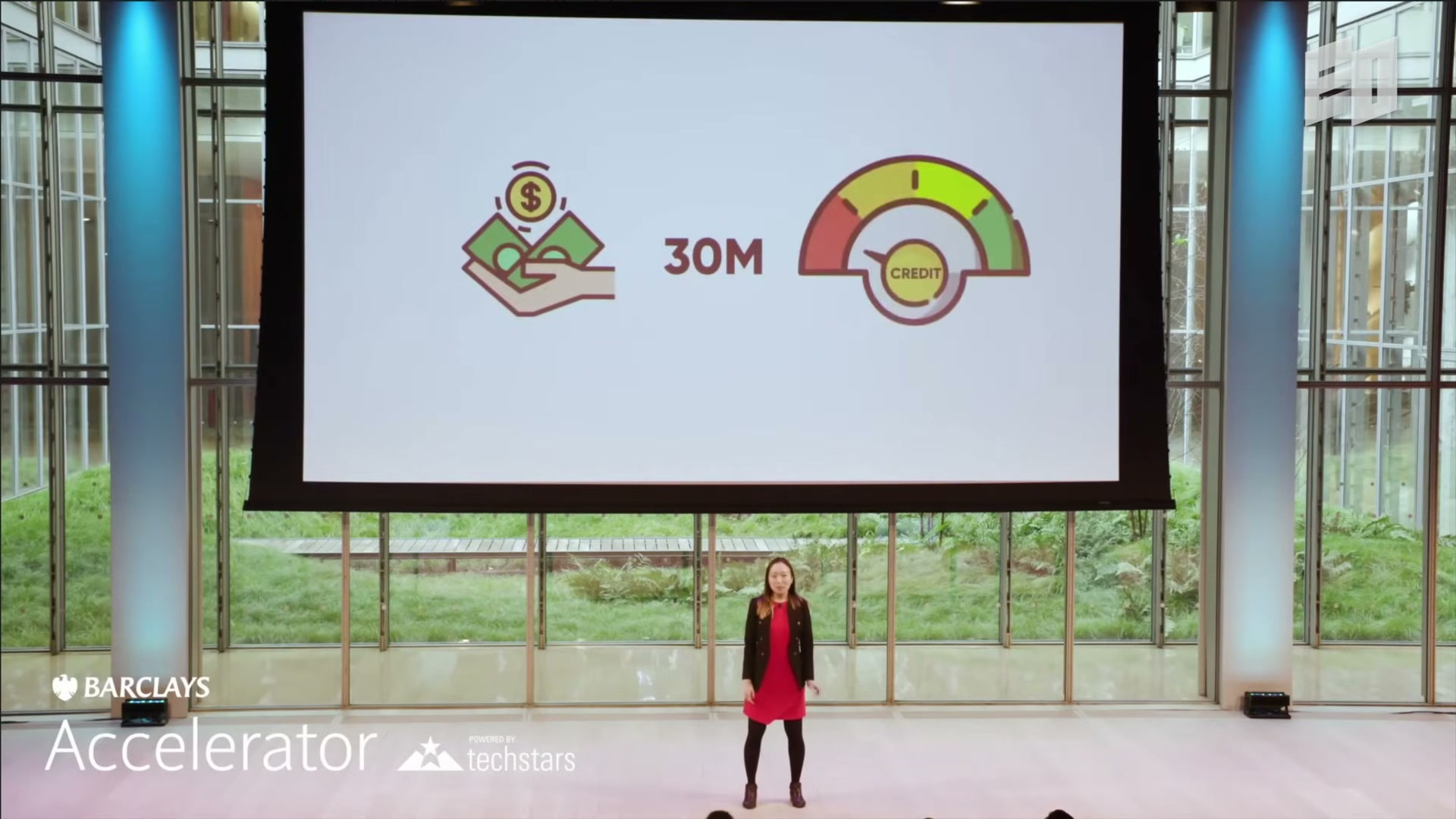
Kristy Kim: So after talking to people in the industry about my idea of building Tomo, the very next thing I did was building a website and I hired two engineers at that time. We just got to work right into it and I think we are very lucky because the very first idea that we chose together back in 2019 and still our idea is basically the same.
And I think it's very lucky as a startup that your initial idea and your initial product market fit that you hope for is there and then you are able to double down on it and triple down on it. I think that's a big blessing that we have had.
And I think it's very lucky as a startup that your initial idea and your initial product market fit that you hope for is there and then you are able to double down on it and triple down on it. I think that's a big blessing that we have had.
The Tomo Score Revolution
How does Tomo's system actually work in practice?
Kristy Kim: So the relationship between Tomo and banks and Tomo's customers are like this—so our customers, they all have their own bank accounts so we do not target illegal immigrants. For people without credit score we target like legal immigrants and legal international students and even Americans who were born and raised here but happen to have no credit score yet.
So we target these people and majority of them already have US bank account or foreign bank account and Tomo what we do is that we tell these customers that no credit score, no problem, show me your bank account then our customers. Like potential customers can connect their bank account and they can connect as many as bank account they want.
So let's say you have three bank accounts, one at BOA, one at Wells Fargo, and one at Citi. You can add all of it and let's say you have stock brokerage account like Robinhood or Charles Schwab or even your 401k account, your savings account. You can add all of it and it's free. You can just add it and on top. What we do is that our back end, our algorithm would categorize your data and analyze data and see, check your income and your spending power and your disposable income, and etc. and then decide a score and we call it Tomo score.
It's using Tomo's own proprietary formula that is using your own bank account information and if you have high TOMO score we are able to approve you regardless of your credit score or FICO score.
So we target these people and majority of them already have US bank account or foreign bank account and Tomo what we do is that we tell these customers that no credit score, no problem, show me your bank account then our customers. Like potential customers can connect their bank account and they can connect as many as bank account they want.
So let's say you have three bank accounts, one at BOA, one at Wells Fargo, and one at Citi. You can add all of it and let's say you have stock brokerage account like Robinhood or Charles Schwab or even your 401k account, your savings account. You can add all of it and it's free. You can just add it and on top. What we do is that our back end, our algorithm would categorize your data and analyze data and see, check your income and your spending power and your disposable income, and etc. and then decide a score and we call it Tomo score.
It's using Tomo's own proprietary formula that is using your own bank account information and if you have high TOMO score we are able to approve you regardless of your credit score or FICO score.
Why did you have to risk your own money initially?
Kristy Kim: We risked our own money in the very beginning to try it out because banks were not willing to do it and no one was willing to do it. I just wanted to be a tech company with API only. I wanted to provide the API to banks so banks can do the lending.
But banks didn't wanna do it, so I had to not only build the like a software like API software and underwriting, and also had to do lending, so I had to do all of it, but I'm glad that we did because now in 2024 I look around nobody has done it except Tomo and then now everybody is interested in doing it, so they are coming to Tomo.
And ask us about what was our performance and maybe we can potentially partner together so Tomo can license our underwriting and Tomo score and here's a really important part—we do not share any private or privacy related data of our customers to lenders at all so our partners would never know that this data came from you. But our partners would know that income data or your number of transactions or your income and transaction ratio would have this much impact on your probability to pay lenders back.
But banks didn't wanna do it, so I had to not only build the like a software like API software and underwriting, and also had to do lending, so I had to do all of it, but I'm glad that we did because now in 2024 I look around nobody has done it except Tomo and then now everybody is interested in doing it, so they are coming to Tomo.
And ask us about what was our performance and maybe we can potentially partner together so Tomo can license our underwriting and Tomo score and here's a really important part—we do not share any private or privacy related data of our customers to lenders at all so our partners would never know that this data came from you. But our partners would know that income data or your number of transactions or your income and transaction ratio would have this much impact on your probability to pay lenders back.
Chapter 3: Beyond the Balance Sheet
What have you learned about creditworthiness from analyzing all this data?
Kristy Kim: What I learned from the data is that basically we were right. Our high level assumptions were correct. It is not about having high cash balance. So when I tell people that TOMO score is from bank data, transaction data, people think that just means that a lot of money now, that's good enough. I'm like, no, because what we are looking for is a couple of things like number one, like affordability.
So are you able to afford this loan? Yes, that maybe it has some correlation with the balance, but it also has to be sustainable. So sustainability, making sure that it's not one time you have a lot of money. We wanna make sure that in the past 1 year plus past 2 years you have stable income or stable spending pattern to give us a comfort that you have sustainability in your cash flow.
And then the third part is your willingness to pay. This is the most difficult part because someone with stable income and sustainable cash flow and who are able to afford a loan might not want to pay you back. Willingness is a tricky part, right? So that's why some people with great cash flow sometimes default because they are unwilling to pay. So that's why training the data is very meaningful and also takes time.
So are you able to afford this loan? Yes, that maybe it has some correlation with the balance, but it also has to be sustainable. So sustainability, making sure that it's not one time you have a lot of money. We wanna make sure that in the past 1 year plus past 2 years you have stable income or stable spending pattern to give us a comfort that you have sustainability in your cash flow.
And then the third part is your willingness to pay. This is the most difficult part because someone with stable income and sustainable cash flow and who are able to afford a loan might not want to pay you back. Willingness is a tricky part, right? So that's why some people with great cash flow sometimes default because they are unwilling to pay. So that's why training the data is very meaningful and also takes time.
How do you balance innovation with risk management in FinTech?
Kristy Kim: The difficult part of FinTech is that you have to always find balance between being innovative and being the first mover. And also, don't be too crazy and relying on risk management, that's already proven. So for us, it's ok we wanna be the first mover by welcoming no credit score customers like immigrants and international students, but when it comes to building our own score Tomo score, our own score has to be good enough to make sure that we are not losing money, to make sure that we don't accidentally approve bad quality customers or bad actors because there can be frauds.
So I made sure that we bring in experts from the industry so we brought in people from American Express, Citibank, Wells Fargo, people who have done this for 20 years. Underwriting works now because the market is good, but you never know what's gonna happen 4 years, 5 years, or next cycle in the market. We have to make sure that we bring in people who have seen the market cycles.
So I made sure that we bring in experts from the industry so we brought in people from American Express, Citibank, Wells Fargo, people who have done this for 20 years. Underwriting works now because the market is good, but you never know what's gonna happen 4 years, 5 years, or next cycle in the market. We have to make sure that we bring in people who have seen the market cycles.
Chapter 4: Turn Your Weakness Into Your Superpower
What advice would you give to your younger entrepreneurial self?
Kristy Kim: The advice I wanna give to younger version of myself and other soon-to-be entrepreneurs is that turn your weakness into your superpower. So, in my earlier career, I thought a lot about what I was lacking. For example, I'm not a CS major, or I'm not this, I'm not that.
And now, looking back I do feel like I had my own superpowers and I wish I focused on that more earlier because now I think I'm at really at ease and know what I'm good at and then being able to really like shine that and triple down on it instead of focusing on things that I'm not good at and actually that made me a really efficient entrepreneur.
Because I don't beat myself over the things I'm not good at. It's more like, if I'm not good at this, how do I find someone, hire someone who's really good at it so everyone can focus on their own superpower. Then our entire company's performance goes up instead of me trying to like struggle and like try to do things that I'm not good at and not being able to really spend time on things I'm good at.
And now, looking back I do feel like I had my own superpowers and I wish I focused on that more earlier because now I think I'm at really at ease and know what I'm good at and then being able to really like shine that and triple down on it instead of focusing on things that I'm not good at and actually that made me a really efficient entrepreneur.
Because I don't beat myself over the things I'm not good at. It's more like, if I'm not good at this, how do I find someone, hire someone who's really good at it so everyone can focus on their own superpower. Then our entire company's performance goes up instead of me trying to like struggle and like try to do things that I'm not good at and not being able to really spend time on things I'm good at.
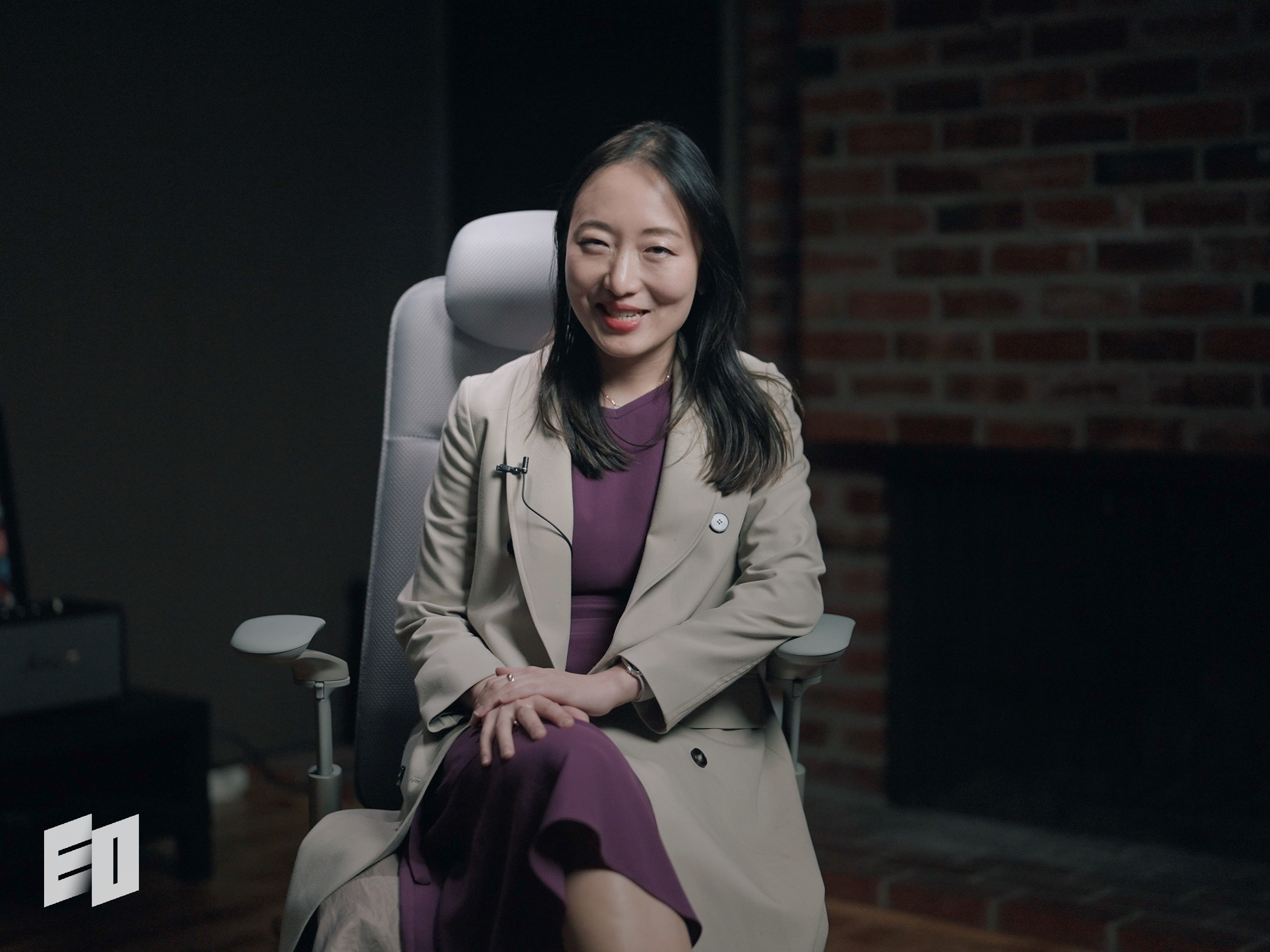
What's your vision for Tomo's future and impact on the immigrant community?
Kristy Kim: I really want to see Tomo become a big company. A big brand that can be empowering for immigrants because in the US, right, we have so many immigrants coming in to study or work and I think it's great to have a brand that represent them, make them feel empowered, and make them feel like this brand has their back.
So whether it's getting an apartment or getting an auto loan or everything, that immigrants for you to succeed, I want Tomo to be the go to brand. So in that way there are so many more we can do down the road because when immigrants international, we come here, we come here for our own like ambitious goals.
Nobody comes here to get a credit card or to get an auto loan. I think that's just tools to make your life convenient and I don't want the future generations of international students to get stuck and struggle because of these tools because I suffered with it and with Tomo I hope no international students in the future have to get rejected anymore so that's my hope for the future.
So whether it's getting an apartment or getting an auto loan or everything, that immigrants for you to succeed, I want Tomo to be the go to brand. So in that way there are so many more we can do down the road because when immigrants international, we come here, we come here for our own like ambitious goals.
Nobody comes here to get a credit card or to get an auto loan. I think that's just tools to make your life convenient and I don't want the future generations of international students to get stuck and struggle because of these tools because I suffered with it and with Tomo I hope no international students in the future have to get rejected anymore so that's my hope for the future.