Jan 30, 2024
5 Key Advice on Starting an AI Business
Interview with Joseph Lee, Co-founder of Syncly
Founder Focused

0:00 / 0:00
💡
At a Glance
- Who: Joseph Lee is the co-founder and CEO of Syncly, and previously built and sold his first startup, SUALab, for $200 million.
- What: Syncly is an AI platform that helps companies understand customer feedback at scale, so every team can act on it to build a better product or run a smarter marketing campaign.
- Traction: Syncly is a recent Y Combinator-backed startup, launched after Joseph's earlier exit when SUALab sold for $200 million in 2019.
In this interview, we have Joseph Lee, the founder of Syncly, a Y Combinator-backed startup that is revolutionizing the analysis of customer feedback at scale through AI. Prior to Syncly, Joseph achieved a $200 million exit with his first startup, SUALab, an artificial intelligence-based provider of deep learning machine vision solutions, enabling inspection in the manufacturing industry. Joseph provides valuable advice for early-stage startup founders, drawing from his extensive experience in the tech industry.
7 Key Takeaways:
Customers Don't Care About Your Technology, They Care About Their Job Getting Done
The biggest lesson from selling SUALab for $200 million came from a customer who told Joseph he didn't care if the product used AI or not. He carries that same mindset into Syncly: technology is only ever a medium for delivering value, never the point.
How Do You Land Your First Customers With No Product and No Connections?
With zero fashion industry connections, Joseph cold-called around 500 prospects armed with nothing but a laptop and a one-page pitch. He offered a three-month free trial, telling companies to pay only if they saw real value, and three out of four ended up paying.
How Do You Find a "Hair on Fire" Problem Worth Building For?
Joseph's team starts by asking prospects what their goals and definition of success look like, then narrows a shortlist of five potential problems through repeated customer conversations. By the time they've talked to 1,500 customers, one common problem always surfaces as the real hair-on-fire issue.
Why New Markets Require Trust Before They'll Reveal Their Real Problem
Entering a new market means customers have no incentive to share their actual pain points upfront. Syncly builds trust first through meetups and training sessions that provide value before ever pitching a product.
Sell Yourself Before You Sell the Product
A four-week-old startup can't outbid mature players on product, but it can throw its entire team behind solving one customer's problem by hand. Joseph believes founders should sell themselves and their commitment first, and only start building product once customers have already seen the value.
Finding a Co-Founder Is Like Finding a Marriage Partner
Joseph started Syncly with his former CTO from SUALab because they already knew how the other worked after a decade together. He looks for alignment on whether a co-founder prioritizes technology or the customer first, and for complementary skill sets rather than overlapping strengths.
Why Now Is the Moment to Solve Customer Feedback at Scale
Understanding what customers actually want has been an unsolved problem for years, but Joseph says it stayed unsolved only because the underlying technology wasn't mature enough. With large language models improving rapidly, he sees this as the right moment to finally build that solution.
Watch the full interview now on EO's YouTube channel! Below is the complete transcription of the interview. Minor edits have been made for clarity and readability.
Introducing Joseph Lee, Co-Founder and CEO of Syncly
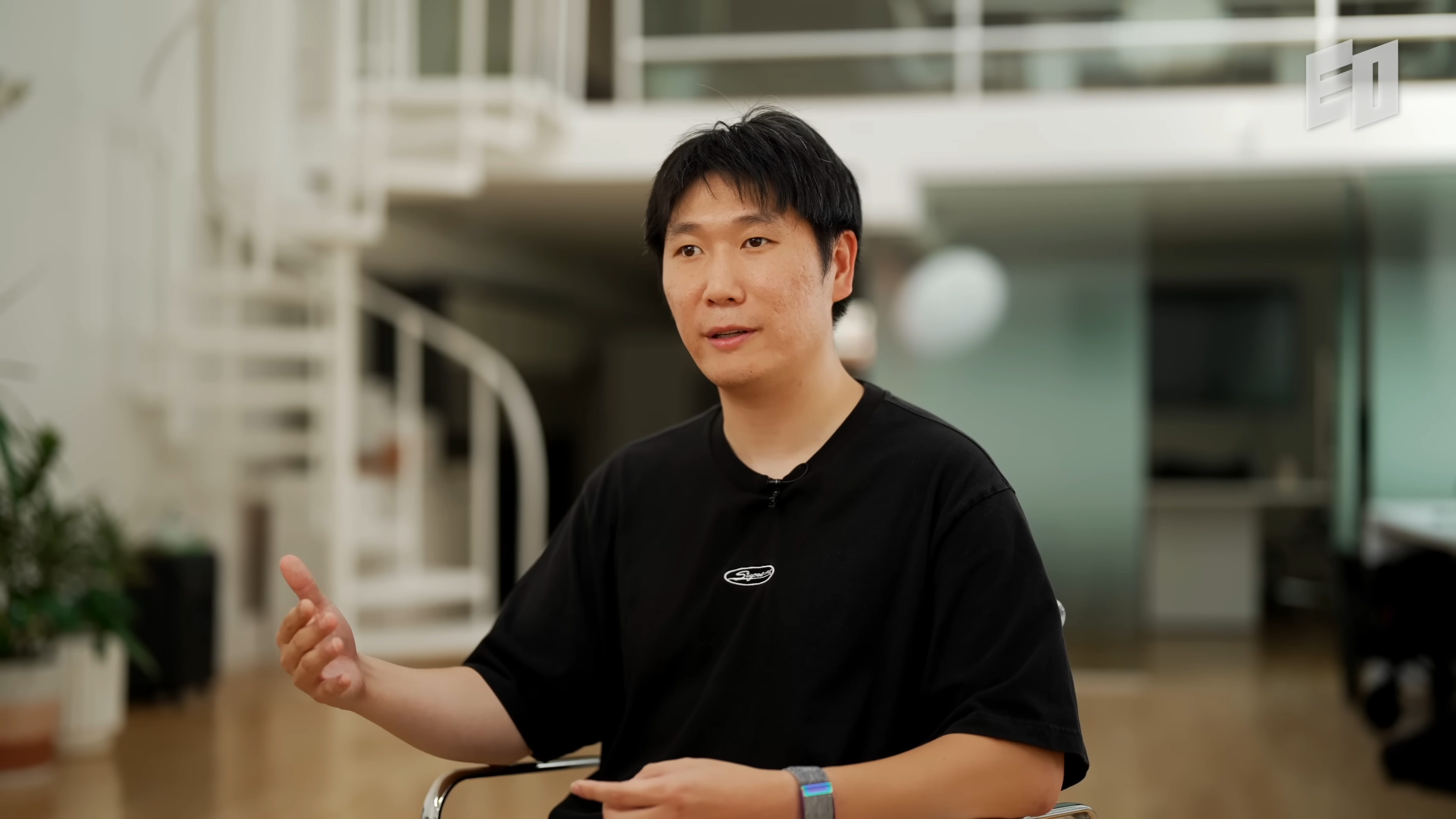
Hi, I'm Joseph, co-founder and CEO at Syncly. Syncly is an AI platform that helps understand customer feedback at scale, so everyone in the company can benefit from customer feedback to build a better product or run a better marketing campaign. We're a recent YC company. I started a company called SUALab back in 2015.
It ran for four years, and we ended up selling the company back in 2019 for $200 million. I started my current company last year. We've been in the AI world for the last decade, and I've watched how AI has evolved over that time. This is a really exciting time for all AI startups, and I'm excited to be part of this journey.

Exiting My First AI Startup for $200M
Back in 2015, when AlphaGo came out, built by DeepMind, it shocked the entire world by showing that AI could outwit human beings in a space nobody expected. Not many people understood where the real impact would be. To be honest, I had no idea back then. That's why I thought I should jump into AI and build the business myself to actually make the change.

Manufacturing has been operated the same way for the last 50 years. What we saw was that AI is really good at understanding patterns, and one pattern manufacturers wanted was analyzing and identifying defective products, work that was entirely done by humans. We thought that's something we could do really, really well.
We ended up selling our company for $200 million. The growth was crazy. Every year we grew five times, but it took some time to find the first ten customers, and it took us almost three years to generate revenue. In those first three years, we tested different verticals to see which ones we could make the most impact in.

The first vertical we went after was the fashion industry, but we had no connection there. I'm not from the fashion industry at all. So what we did was just pick up the phone and dial numbers, trying to talk to whoever could actually make a decision at each company. In total, we called around 500 prospects in fashion, which was almost every company in Korea at the time.
After that, we went straight to the factory floor with our laptops, a one-pager, and nothing else. It was just me as CEO and my co-founder as CTO. We didn't have a product. We just had a technology and an algorithm. We tried to show them the end goal and start from there: if things worked, here's the business impact you'd get. Give us three months to prove the value from scratch. If not, you don't need to pay, but if you think there's value, pay whatever you think is fair. Three out of four ended up paying.
Key Tips for Starting a New AI Startup
For customers, they don't actually care what technology we're using. One day, one of my customers told me, "I don't care if you use AI or not. What I want is to get my job done using your solution." That was actually a big turning point for me, in how I should think about AI or any emerging technology.
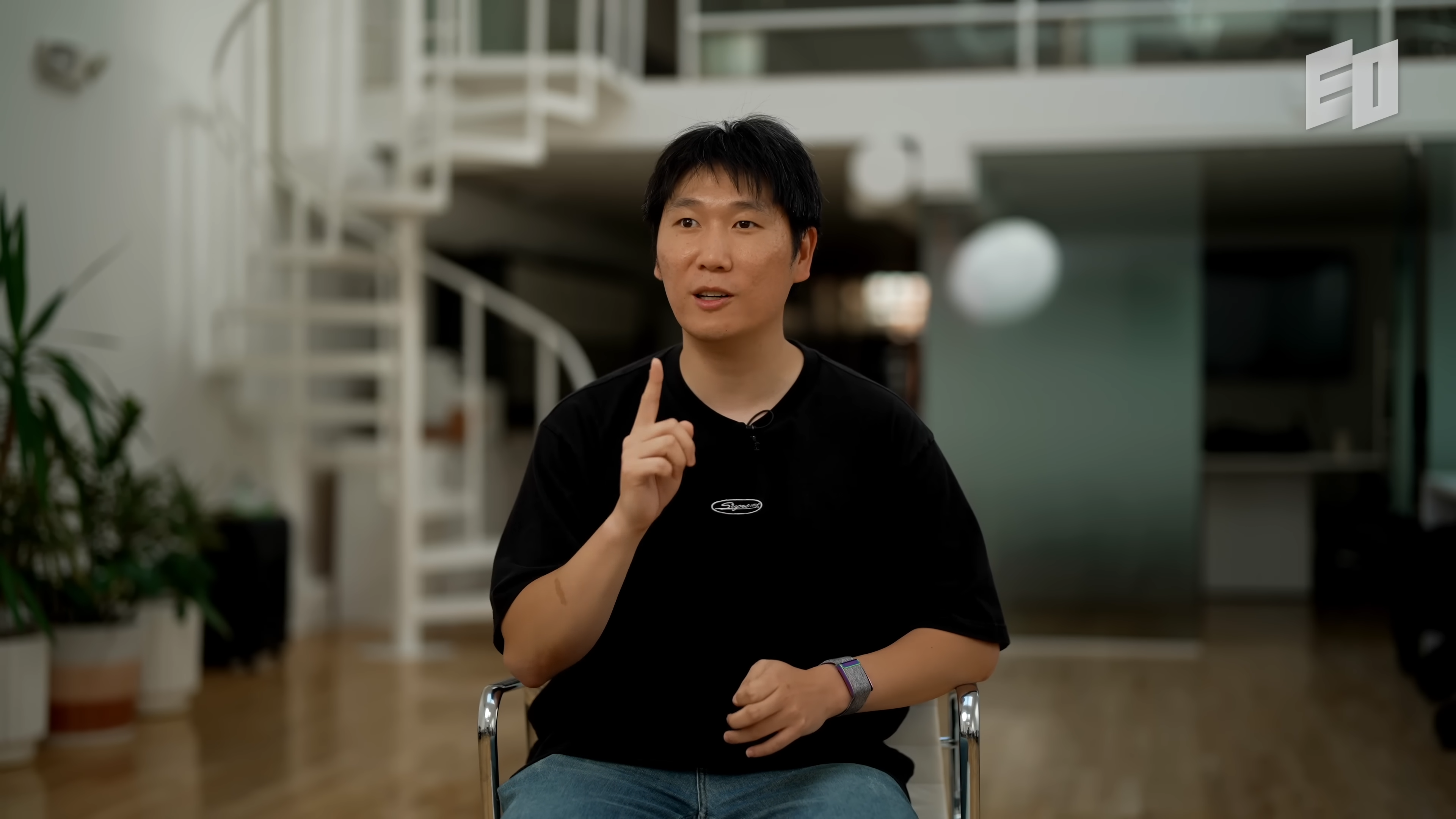
Generative AI is definitely getting a lot of highlights nowadays, but if you look at history, the trend is always changing. AI or any other technology is just a medium to provide value to the customer. Focusing on the value you're trying to deliver by leveraging technology makes sense. But just framing or building something using AI that provides zero value to the customer doesn't make sense. And even if you raise money by leveraging the trend, it doesn't last long. It might buy you two years of runway, and you'll be in real danger once you can't figure out the value proposition you're trying to bring to the world.
Establishing Trust in New Markets
The reason we started a new company is that we wanted to go into a new, different market, a new domain. My last company's customer base was mostly focused on the Asian market, and now we're trying to build a more global product. It's a whole new market, a whole new customer base.
When you talk to customers in the beginning, they don't actually tell you what their real problem is. They have no incentive to do that. You've got to know them really deeply, understanding their workflow and their day-to-day life as much as possible. But to do that, they need to trust you enough to tell you what the root cause is, what the real pain is.
Right now, we open up a lot of meetups and training sessions for our prospects, to provide value first and help them engage with people in the same community. We try to provide our solution after that. So building your social proof as much as possible, whether that's leveraging your services, your school, or your personal network, you've got to do whatever it takes to get to the point where people have at least heard of you.
How to Find Hair on Fire Problem
The way we try to find the hair-on-fire problem is we double down on their workflow and what their pains are. We start with: what's your goal? What does success look like this year? There are some bullet points that come out of that. We take those bullet points and meet new people, sharing them to see what resonates. If something resonates with them too, you can narrow the bullet points down.
I'd say in the beginning you have maybe five bullet points that could be a potential hair-on-fire problem. Once you talk to ten customers, it narrows down to three. Once you talk to 1,500 customers, you'll hear the one common bullet point that is the hair-on-fire problem. That's how we narrow down the scope in the beginning.
If you look at the market, there are so many great products that have been around for ten years, 20 years, so you can't outbid them from a product perspective. When you're a four-week-old startup, unlike bigger companies, you can use your entire capability, your entire team of co-founders, to actually solve that issue, no matter whether they use your product or not. At least you can do something for them.
I think you, as a founder with a strong vision, should sell yourself, not the product, to solve the customer's pain points in the beginning. Once customers see the value, then you can start building your product.
🖼️
No image
Especially nowadays, because people are using so many different SaaS tools, they're super busy doing their day-to-day job. Nobody wants a new tech stack on top of their existing tech stack. So what we try to do is hear the problem, know what solution could work, but deliver that not by handing them a new, four-week, buggy product. We use the tool they're already using. It could be Google Looker, or it could be their existing customer support platform. If they see the value from that, that's when we start building our own product, our own dashboard, to provide a more granular level of detail.
How to find a Co-Founder
🖼️
No image
The reason I ended up starting a new company with my previous CTO is that we were such a great fit to create something new together. We've been working together for the last decade. We know how we work, who we are.
Finding a co-founder is almost like a marriage. You need a great fit with each other across many different aspects. For instance: do you care about technology first, or customer first? There are deep tech companies that focus purely on building great technology, and there's nothing wrong with that, but if you and your co-founder have different mindsets about which one to prioritize, it's really hard to go along together for the long run.
The second thing is that it's always better when co-founders have complementary skill sets. If you're good at A and your co-founder is good at B, it's much easier to work together long term, because you need each other to build the best company. So my CTO and I talked about what we could do with AI. One of the pains we'd experienced, and noticed other companies experiencing too, is understanding what customers actually want, for consumer apps and for e-commerce. This problem has existed for many years, but there was no better way to solve it because the technology wasn't mature. Now that large language models are getting much better, this is a great time to provide this kind of value.
We know AI can change the world much more than before. We've been in the AI world for the last ten years, and we've watched the change happen over that time. Creating new value using AI is something I really enjoy doing. The process of running this company, the journey I'm on right now, genuinely makes me excited.