Jul 27, 2024
How I Built $825M Email Revolution Called Superhuman
Interview with Rahul Vohra, Founder of Superhuman
Founder Focused

💡
At a Glance
- Who: Rahul Vohra is the founder and CEO of Superhuman. Before Superhuman, he founded Rapportive, the first Gmail extension to scale to millions of users, which he later sold to LinkedIn.
- What: Superhuman is a revolutionary AI email client reimagined for teams. Users can get to inbox zero twice as fast as before, reply one to two days sooner, and save more than four hours every single week.
- Traction: Superhuman counts Netflix, Compass, Brex, Deel, Notion, and Spotify among its customers, and is backed by First Round Capital, A16z, and IVP. More than 30% of new users still come from invitations and referrals.
In this interview, Vohra explains why it took 18 months to get Superhuman's first paying customer, and how a rainy-day conversation with a Heroku co-founder changed his entire approach to building. He reveals the precise algorithm he used to take Superhuman's product-market fit score from 20% to 60% in just three quarters, and why founders often build for entirely the wrong users. He shares a three-pronged approach to creating awareness, including one article that drove tens of thousands of signups before the product was even available. And he breaks down the two-sentence principle from Paul Graham that every early-stage founder needs to internalize.
Key Takeaways
Set a higher bar than your users demand.
Vohra argues the real secret to a product users love and share is holding yourself to a standard above what customers ask for. It is not enough to stop when complaints stop. You must keep pushing until the product clears an internal bar you've set higher than user demand, because only then does the product become so compelling that people can't help but tell each other about it.
Pick one thing to optimize for and commit.
Heroku co-founder James Lindenbaum told Vohra to be explicit about whether he was optimizing for user growth or revenue growth. Vohra ignored that advice and spent months vacillating between both, doing each mediocrely instead of one excellently. He now passes the same lesson on: decide what your next funding round requires, then pursue only that.
Against incumbents, build a minimally valuable product, not a minimally viable one.
When competing with Gmail and Outlook, which together command north of a billion users, a bare MVP is not enough. Vohra learned that the bar to win users away from dominant incumbents is fundamentally different: the product must do something so distinctively valuable, in Superhuman's case blazingly fast email, that switching feels like the only rational choice.
Slow, deliberate onboarding is the flywheel for explosive growth.
Superhuman onboarded only four to five new customers per week in its early days, giving the team bandwidth to fix every bug before scaling. Vohra personally conducted the first several hundred concierge onboardings, often traveling to customers' offices. That measured pace turned early users into fanatics who spread the product virally and made net detractors nearly impossible.
The 40% rule is the best leading indicator of product-market fit.
Sean Ellis, who ran early growth at Dropbox, LogMeIn, and Eventbrite, found that companies whose users would be very disappointed without the product at a rate above 40% grow most easily. Vohra used this benchmark to build the Superhuman PMF engine, taking his score from 20% to 60% in three quarters by systematically segmenting users and building for the right subset.
Change your market before you change your product.
When Superhuman's PMF score was stuck at 20%, Vohra's first move was to redefine the target market by identifying which user segments loved the product and discarding those who didn't match. That single segmentation exercise, completed in minutes, lifted the score from 20% to 32% before a single line of product code was changed.
Below is the complete transcription of the interview. Minor edits have been made for clarity and readability.
Introducing Rahul, the Founder of Superhuman
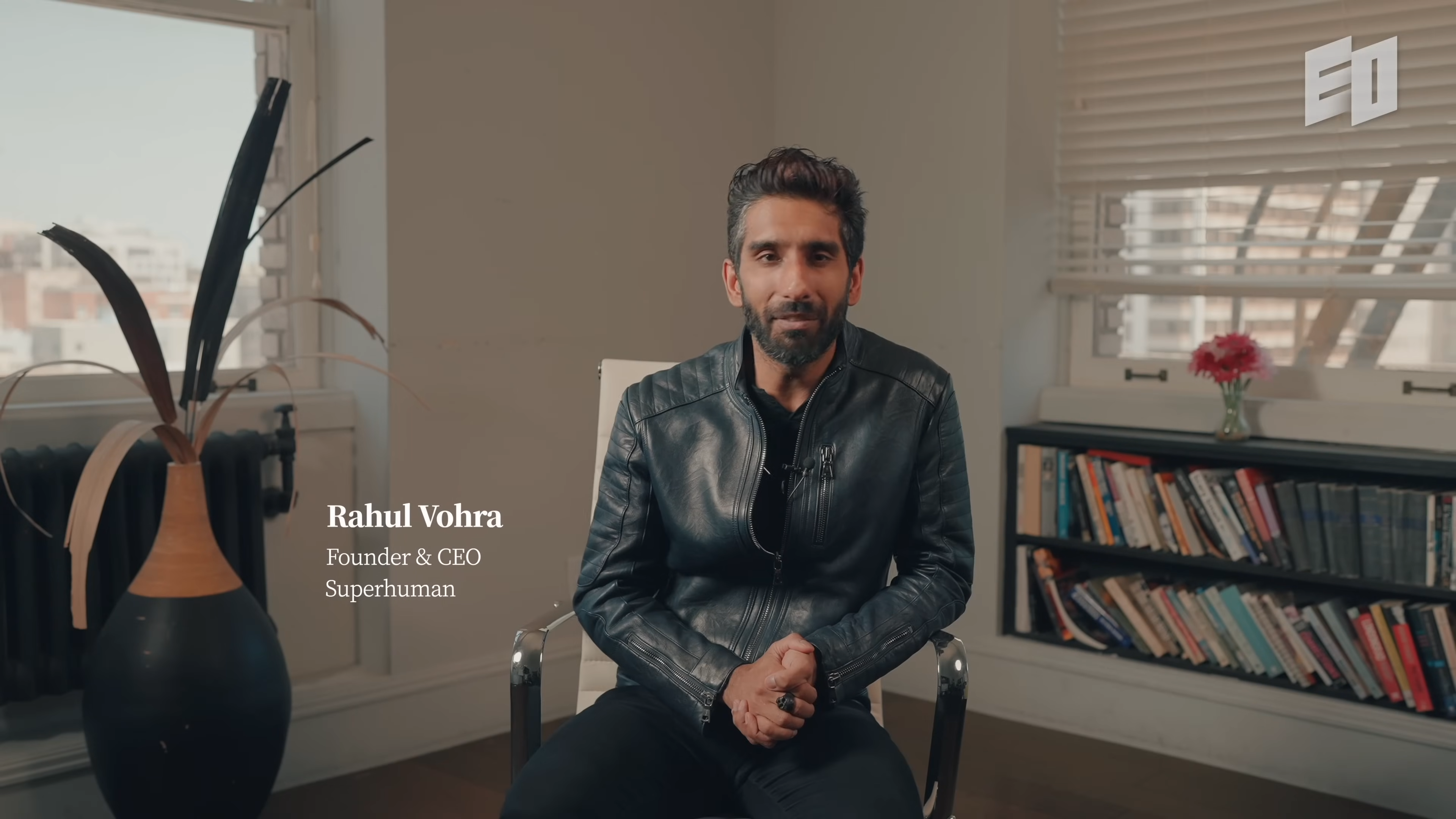
My name is Rahul and I'm the founder and CEO of Superhuman, which is a revolutionary AI email reimagined for teams. You can get to your inbox twice as fast as before, reply one to two days sooner, and save more than four hours every single week. Our customers include the likes of Netflix, Compass, Brex, Deel, Notion, and Spotify, and we're backed by the likes of First Round Capital, A16z, and IVP.
Advice For First-Time Founders

Well, I was born in England, where I grew up. Fortunately, I was able to start programming at the young age of eight years old. I then went to university in Cambridge, where I studied computer science, and then I started a PhD. I then dropped out of that PhD, which I suppose is cliché, and then I started my last company, Rapportive.
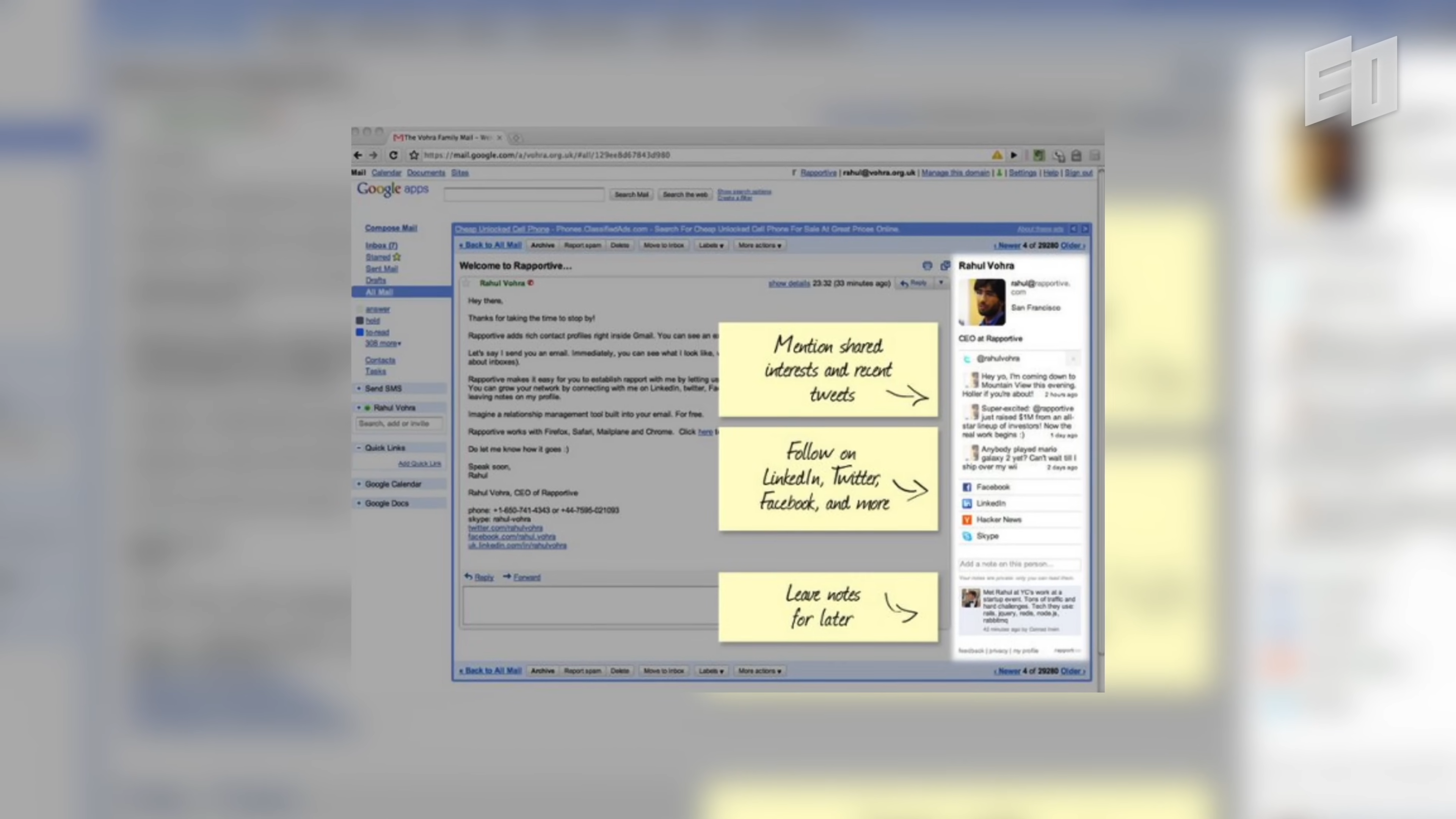
Rapportive was the first Gmail extension to scale to millions of users. A few years later, I sold that company to LinkedIn. A few years after that, I founded Superhuman, and here we are today.
Like I mentioned, I dropped out of my PhD and I networked my way into the part of the University of Cambridge that helps staff and students create companies.
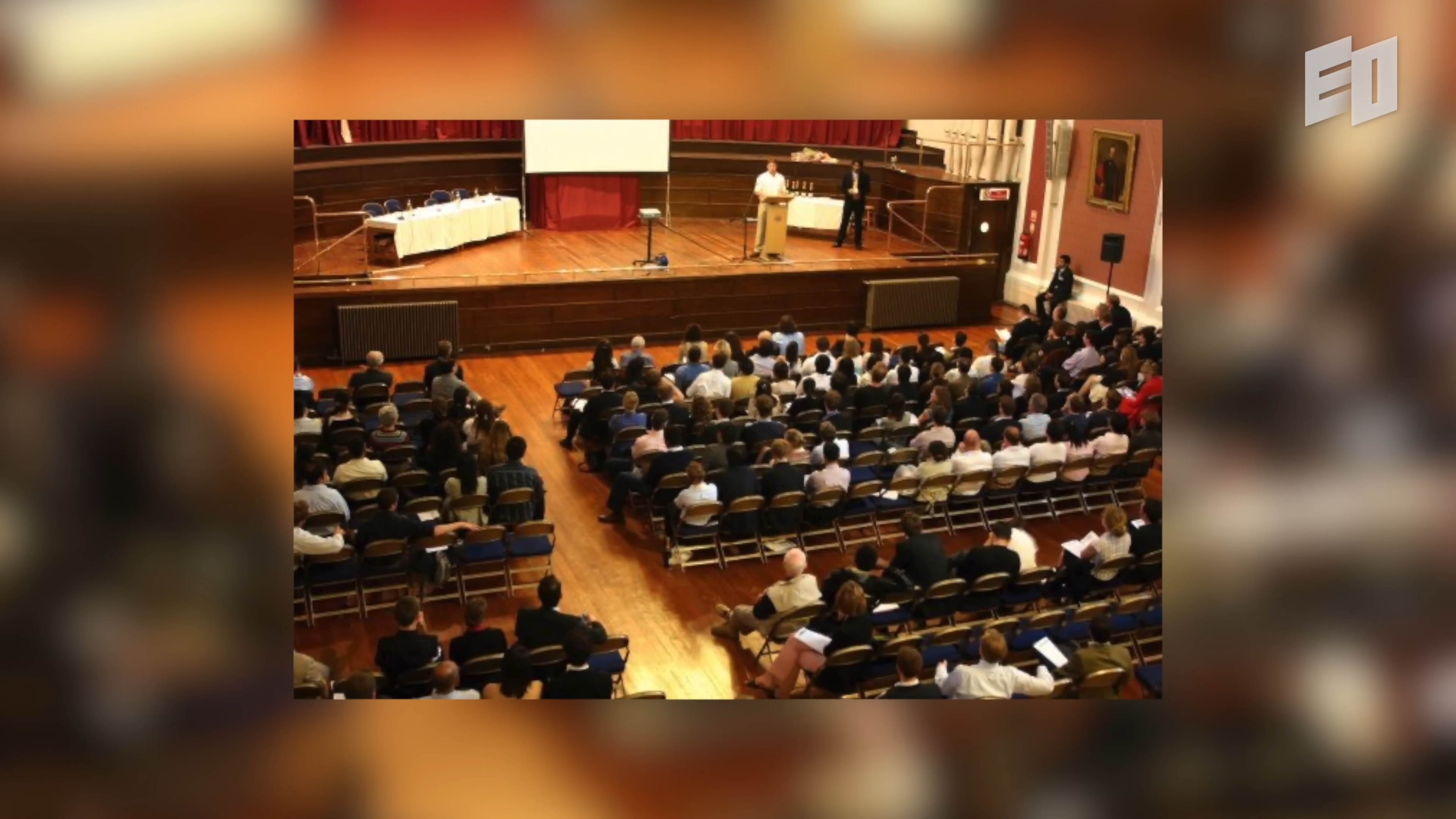
We would go to angels, venture capital funds, and large technology companies, and raise money from them so we could grant it to startups so they could actually get going. And I was in my early 20s. It was the first real job I ever had. No one told me how to do it. I needed every edge I could get.

So I imagined in my email something that would help me sell: something that would tell me everything about my contacts right there, where they work, what they looked like, what they did, their recent tweets, and links to their social profiles. Something that would help you be personal, astute, effective, and ultimately brilliant with people. And with that vision, we built Rapportive.
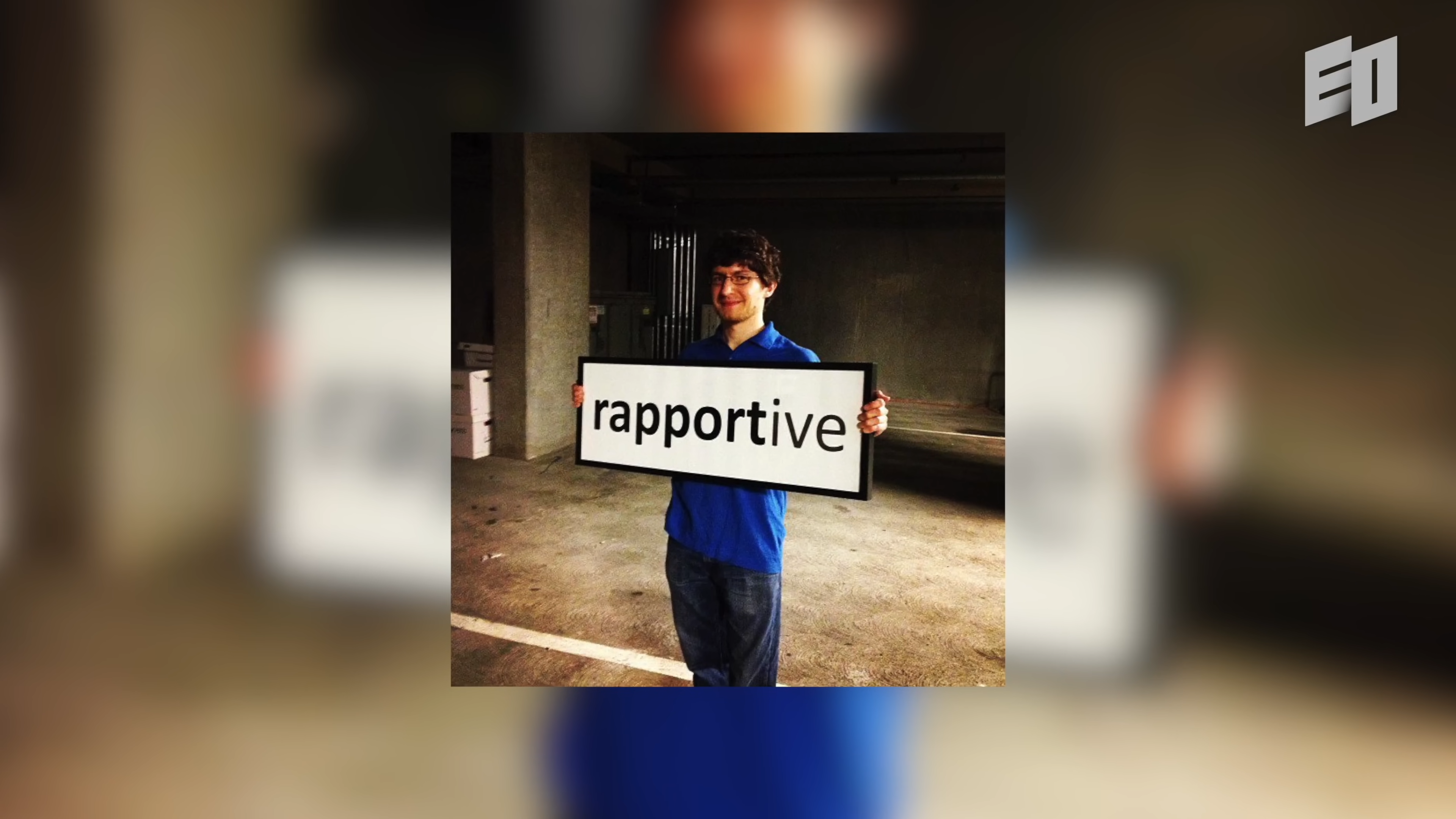
This was the summer of 2010. We had just gotten into Y Combinator, and I was here with my co-founder Martin. At the time, Rapportive was one of the largest customers of Heroku, which, if folks remember, was how we used to host Ruby on Rails applications. And I remember trudging through San Francisco in the pouring rain, going to meet James Lindenbaum, who was one of the co-founders and the CEO of Heroku.
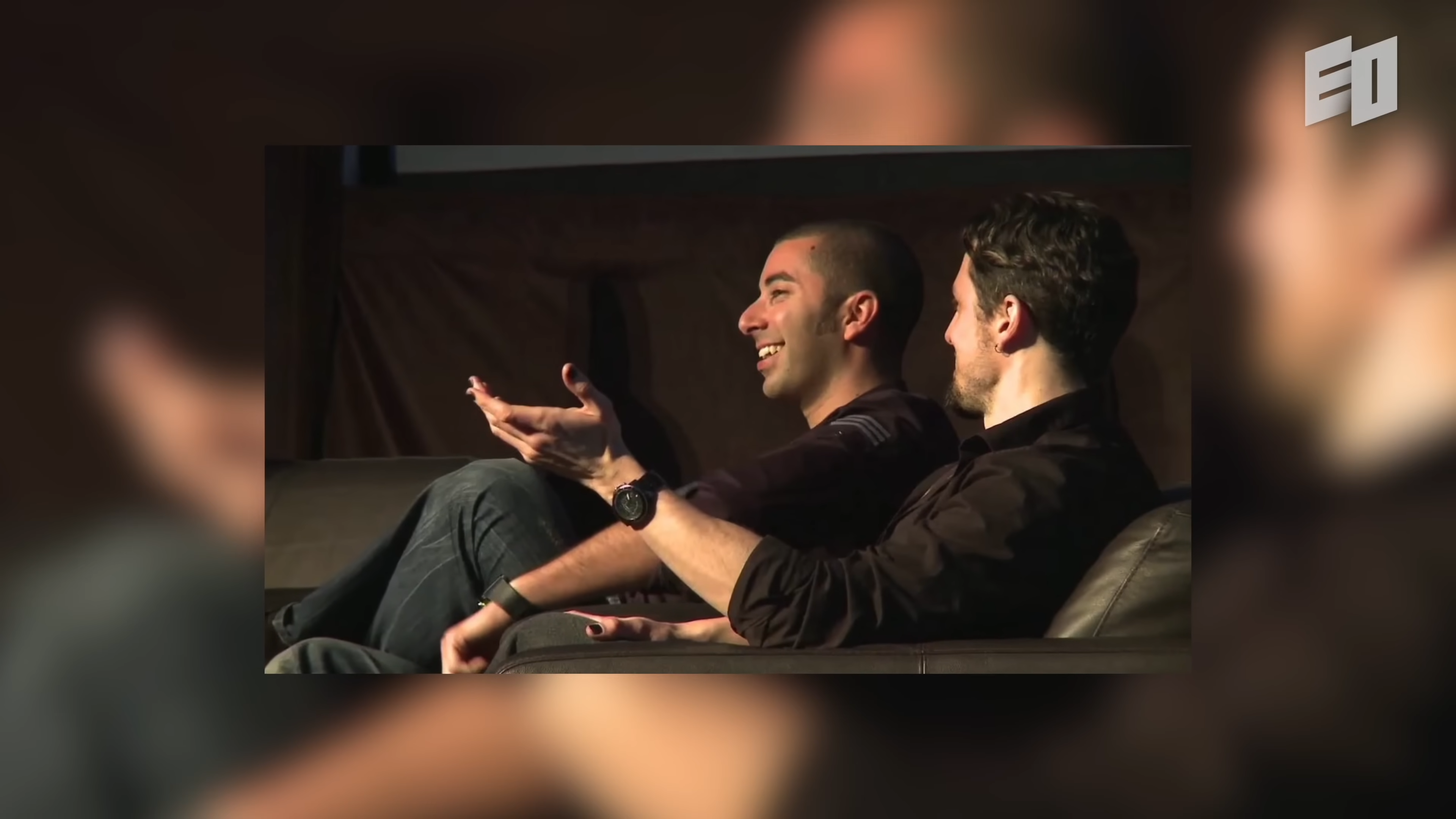
We were going to ask him for advice, and this was before Uber, and we didn't have the money to pay for a taxi. So we were literally walking through the rain. After half an hour of trudging through the nonstop water, we finally arrived, sat down with James, and we asked him for his advice. He asked us what our roadmap was, and I described the various things we were doing to grow users, the ways we were planning to monetize, and the features that we would sell.
And he paused and he said: "Listen, be very clear what you're optimizing for."
Be clear whether it's user growth or whether it's revenue growth, and what you actually need to show in order to raise your next round of funding, your Series A. I'm sharing this story because at the time I thought: well, that's obvious advice. Of course I'm going to be super intentional and very deliberate about what we do.
But it turns out I wasn't. I would vacillate and flip every few months from optimizing for revenue and flop back to optimizing for user growth. But of course, the danger with that is that you do both of the things mediocrely instead of one of the things excellently, and it's almost always better to do the latter than the former. It came really close to the wire, and in retrospect, I really wish that I had listened to James's advice.
So thank you, James, for passing on that advice. And today I'm going to pass that on to everyone who's watching this.
Key Insights Behind Superhuman's Growth To $825M
When coming up with the idea for Superhuman, I wanted to find the biggest possible problem. Email is a way bigger problem than most people realize. It took about 18 months to build our MVP product, about 18 months to get to that first paying customer. The MVP was, let's say, a blazingly fast version of Gmail. Now, of course, it didn't have all of the features and functionality of Gmail, but what it did have was blazingly fast.
I think a lot of founders go for minimally viable products, when in fact they should go for minimally valuable products. One of the things that sets Superhuman apart, and this is somewhat rare when building a startup, but it's actually my preferred strategy: most people aren't using a product by a competing startup.
The email client industry is actually pretty interesting. Unlike many industries, it's mostly dominated by incumbents. So the vast majority of people don't use a third-party email client. Of course, they use either Gmail, which has north of a billion users, or Outlook. So you can't just come out with an email client that kind of works. And on top of that, it also has to do something really very special.
And in the early days for us, that was speed. It was blazingly, shockingly fast. And the way that I would explain this to investors: imagine your Tesla. Imagine what it feels like to smash that pedal to the metal, and to feel this car accelerate to 60 miles an hour in three seconds or less. Are you ever going to go back to having a regular car? And of course they would say, absolutely not. And I said, well, that's how it feels using Superhuman for the first time.
Why You Should View MVP Differently Depending on Your Market
If you're in an industry where the other products are genuinely startups, perhaps a minimally viable product is fine. But if you're in a startup where you're going up against incumbents, and this is a strategy that actually has all kinds of hidden advantages, then you need a minimally valuable product.
How to Secure Your First 100 Customers: Superhuman's Approach
We acquired almost all of our first 100 paying customers through word of mouth and through the network of our investors, and many of them, in fact almost all of them, are still with us today. Our first onboarding was with Austin Pease Smith. He's the founder of a calendar company called Howie, and two minutes into the onboarding, he had this big grin on his face.
I remember thinking: gosh, I wonder what he's feeling. So I asked him, and he said to me, Rahul, this is really fucking fast. And at that point I knew we had something. I also knew what it was people were going to care about. We updated our product as quickly as possible to reflect the needs of our customers.
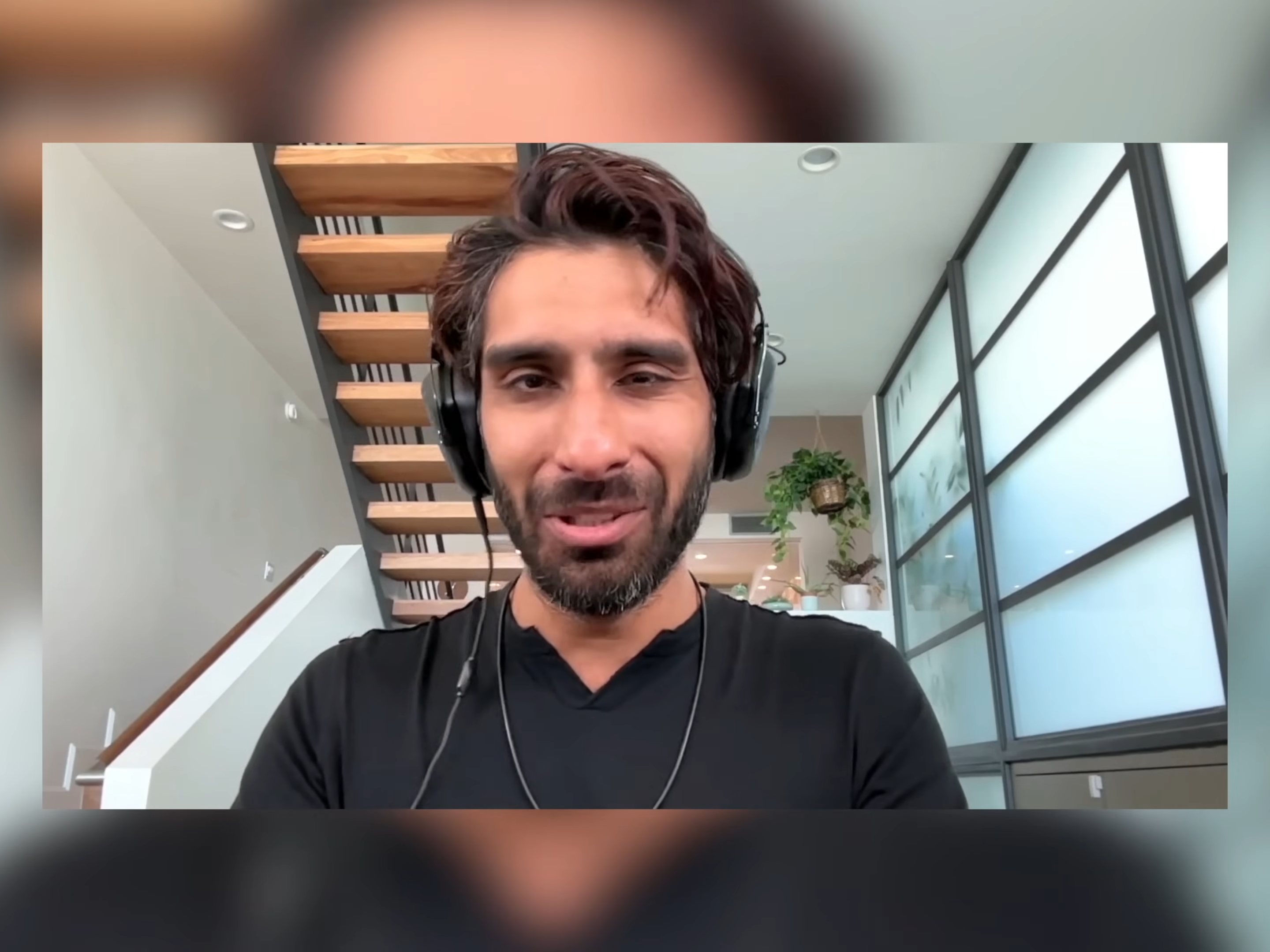
We deliberately onboarded only four to five new customers every week, so that we had the bandwidth to fix the issues that they found. And I think that most companies get this wrong. Imagine you've created a new email app or a new calendar app, and then you launch. Well, you'll quickly and somewhat easily get tens of thousands of customers because the demand for these new applications is so high.
But guess what? These tens of thousands of customers will quickly report thousands of bugs, and your company will soon be overwhelmed. And if you don't fix those things quickly, which frankly, no startup can, those customers will quickly become disappointed and they'll churn out of the product and they'll tell other people about their experience.
That is the very definition of a net detractor, and that is the worst possible outcome. I saw this happen to so many other companies, and in my experience, it's much, much better to do what we did: systematically and deliberately onboard people on a measured pace every week, focus on fixing whatever problems they find, and on making them exceptionally happy. That's the way to building a robust product that creates joy over time.
And that joy is ultimately the flywheel for virality and explosive growth. The secrets to making a great product that users love and share with their friends is to have a higher bar than even your users.
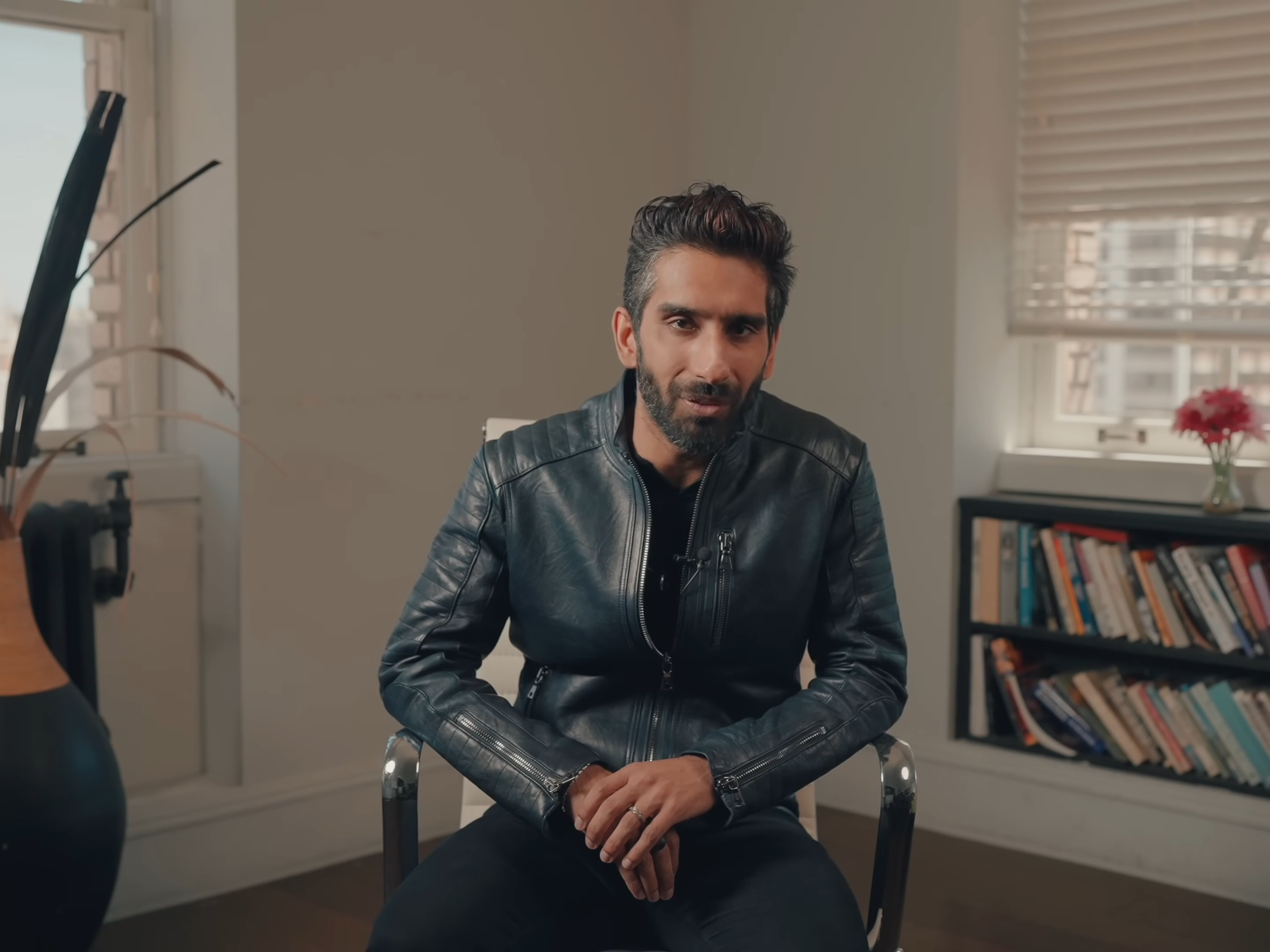
In the early days of Superhuman, we were famous for doing one-to-one concierge VIP onboardings for all of our new customers. In fact, I did the first many hundreds of those myself. I would travel to people's offices, bring a gift, sit down with folks often for an hour or two at a time to watch them use our product, to see how they did their email in Gmail, and to teach them how to do their email twice as fast inside of Superhuman. Now, we did that for many reasons.
First of all was to learn how people were doing their email today. Second of all was to find what bugs they encounter so we could fix them on time and avoid the trouble that I articulated earlier in this conversation. And third of all was so that we could focus our engineering, product, and design dollars.
PMF Secret Behind Superhuman's Explosive Growth
Our journey to product-market fit was long, but it ended up with something rather special. We started in the summer of 2015 like any other software company, by writing code. In the summer of 2016, we were still writing code, and in the summer of 2017, we were still writing code. Now I felt this intense, incredible pressure to launch. After all, my last company, Rapportive, had launched, scaled, and been acquired in less time.
And yet here we still were, two years in, and we hadn't launched. But no matter how deeply and how intensely I felt this pressure, I couldn't just say that to the team. I couldn't say that I did not believe that we had product-market fit, that a launch would go very badly. I needed a plan.
So I searched high and low. I spoke with everybody I could find. I read everything until I found Sean Ellis. Now, Sean ran early growth at Dropbox, LogMeIn, and Eventbrite. He coined the term growth hacker, and Sean found a leading indicator of product-market fit, one that is benchmarked and predictive.
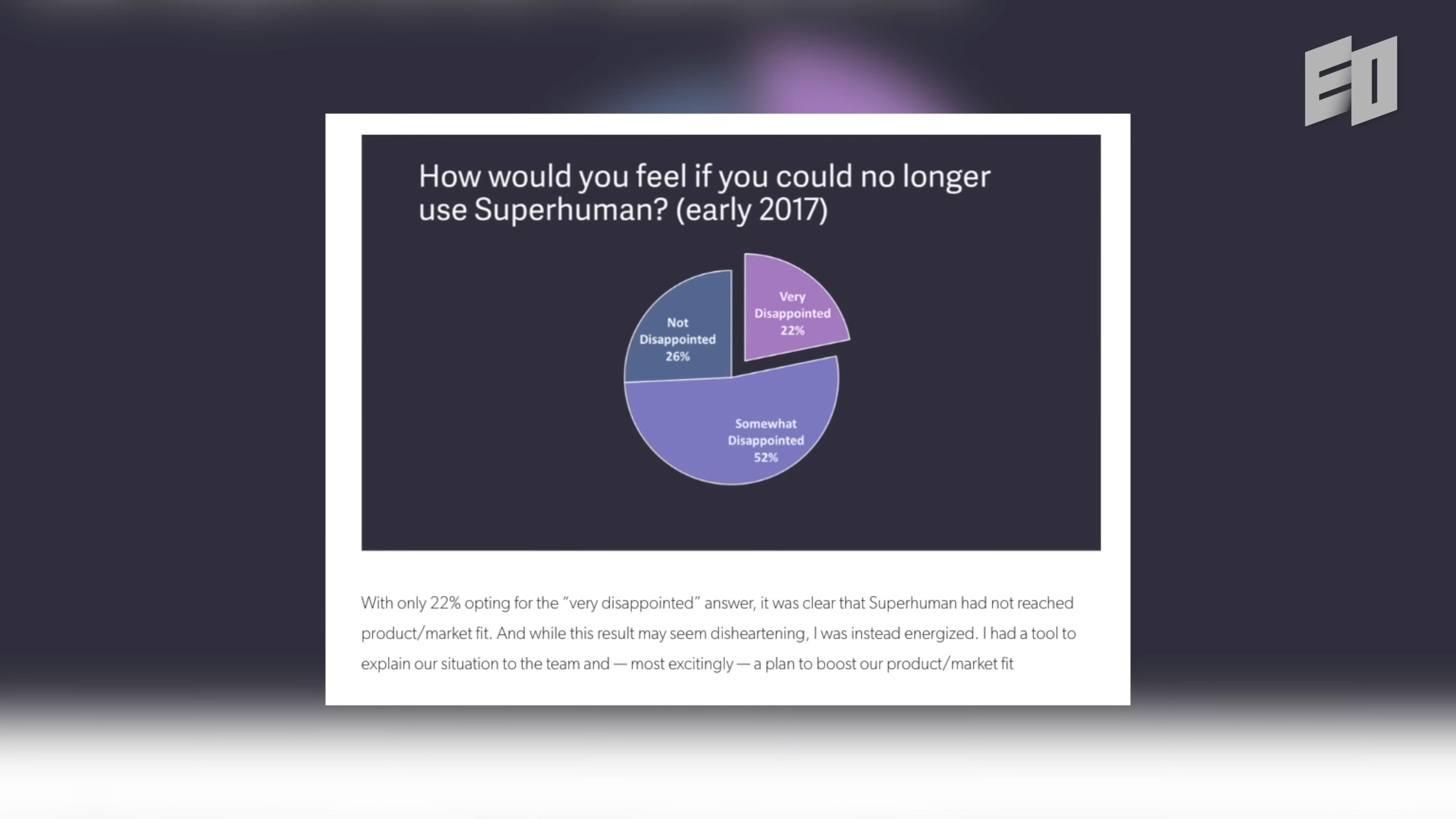
Simply ask your users: how would you feel if you could no longer use the product? Measure the percent that answer "very disappointed." You're going to give them three options: very disappointed, somewhat disappointed, and not disappointed. Measure the percent that pick very disappointed.
Sean found that the companies that struggled to grow almost always got less than 40% very disappointed. Whereas the companies that grew most easily, well, they almost always got more than 40% very disappointed. In other words, if more than 40% of your users would be very disappointed without your product, you have early product-market fit.
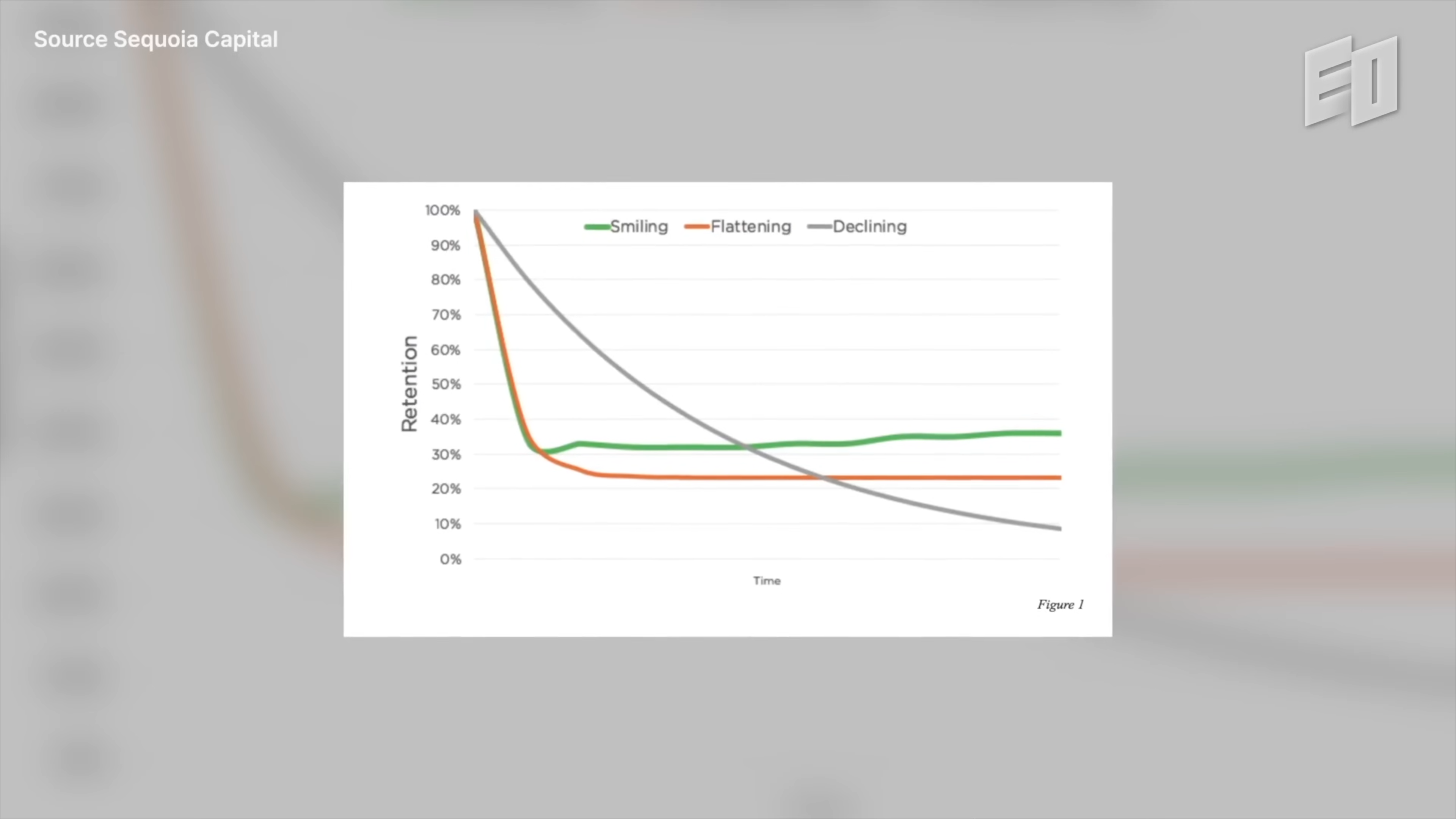
This metric is much more objective than a feeling. It predicts success better than Net Promoter Score. It is not only the best metric to measure product-market fit, but the best way to define product-market fit. It lets you create your very own product-market fit engine, and with that engine, you can generate a roadmap that will carry you from not having product-market fit to having product-market fit. And that's how we did it at Superhuman.
And the best part is that we've written this up as the Superhuman product-market fit engine. Anyone can use this. I've worked with hundreds of companies that have successfully used this to get from a product-market fit score of 20, which can be scary, you can be thinking what are we going to do, to a product-market fit score that is well past 40% and stays well past 40%.
The product-market fit score metric is most useful for two things. Number one, letting you know how far or close you are to product-market fit and whether you're making progress. And number two, helping you actually get there. But the magic of it is in the second, when you really use it to get yourself to product-market fit. Essentially, you want to increase the percentage of your users who would be very disappointed without your product.
Now, the first thing to do is remember that you can actually change your markets before you change your product, and that is significantly easier. In fact, you can do it in minutes. When we first did this for Superhuman, our product-market fit score was 20%.
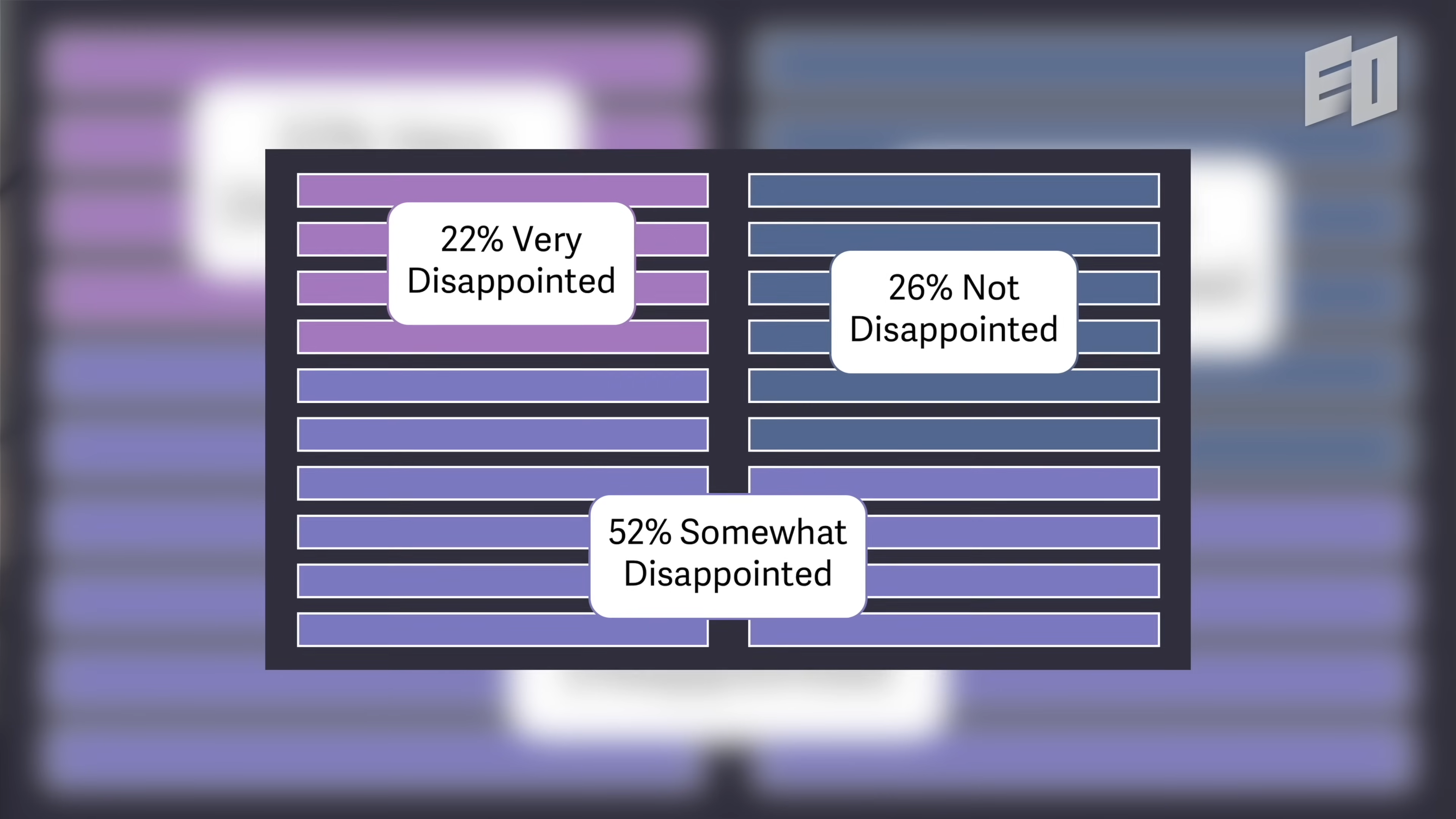
But I had a plan. Step one is segmenting. You take all the users who've answered this survey, and there are a few other questions in the survey. You see who are the kind of people who love the product. To do that, you go to the survey results and you look at the job titles or the roles or the companies or the industries of everyone who said they'd be very disappointed without your product. You then analyze that for the somewhat disappointed users and also for the not disappointed users.
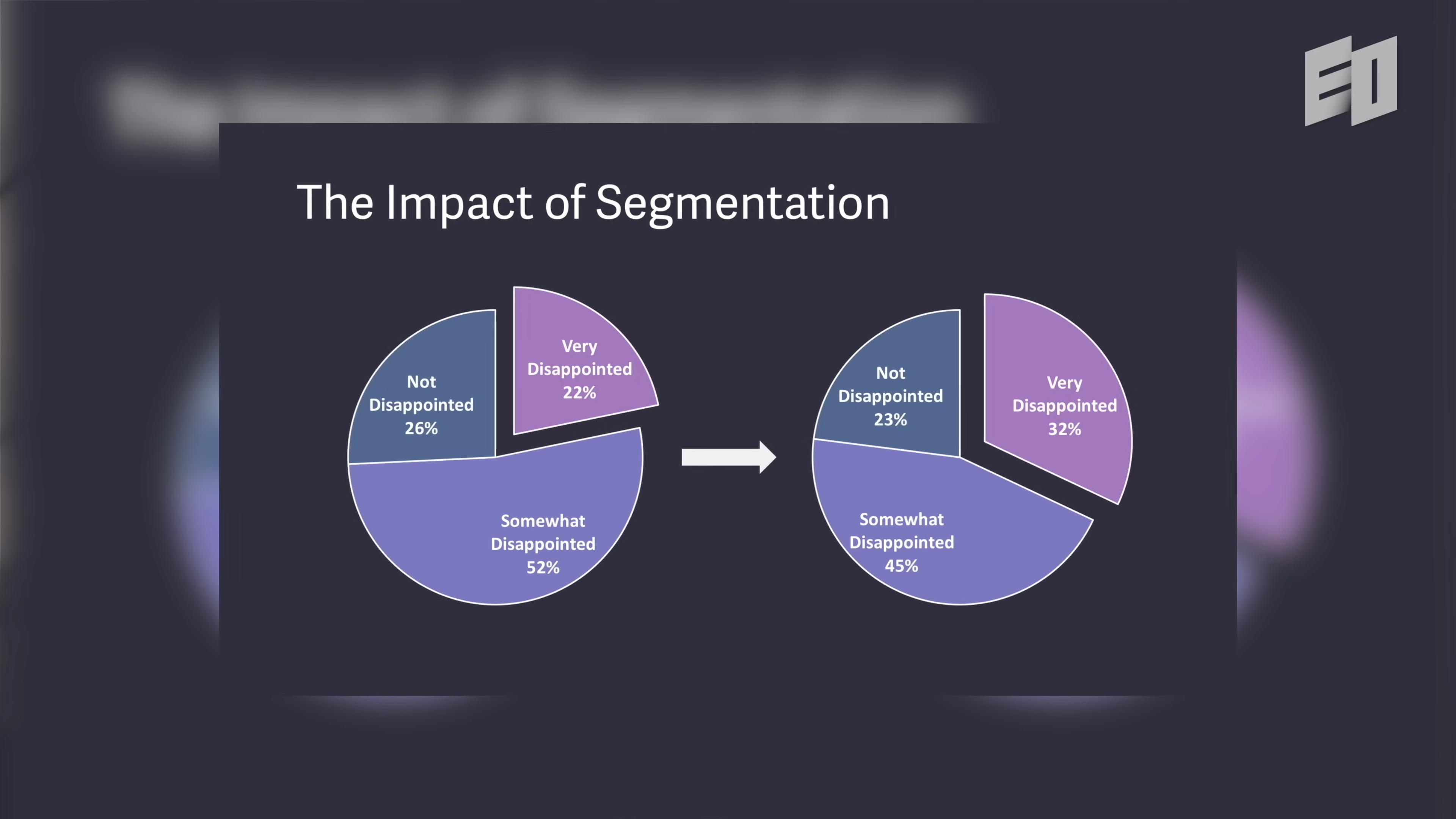
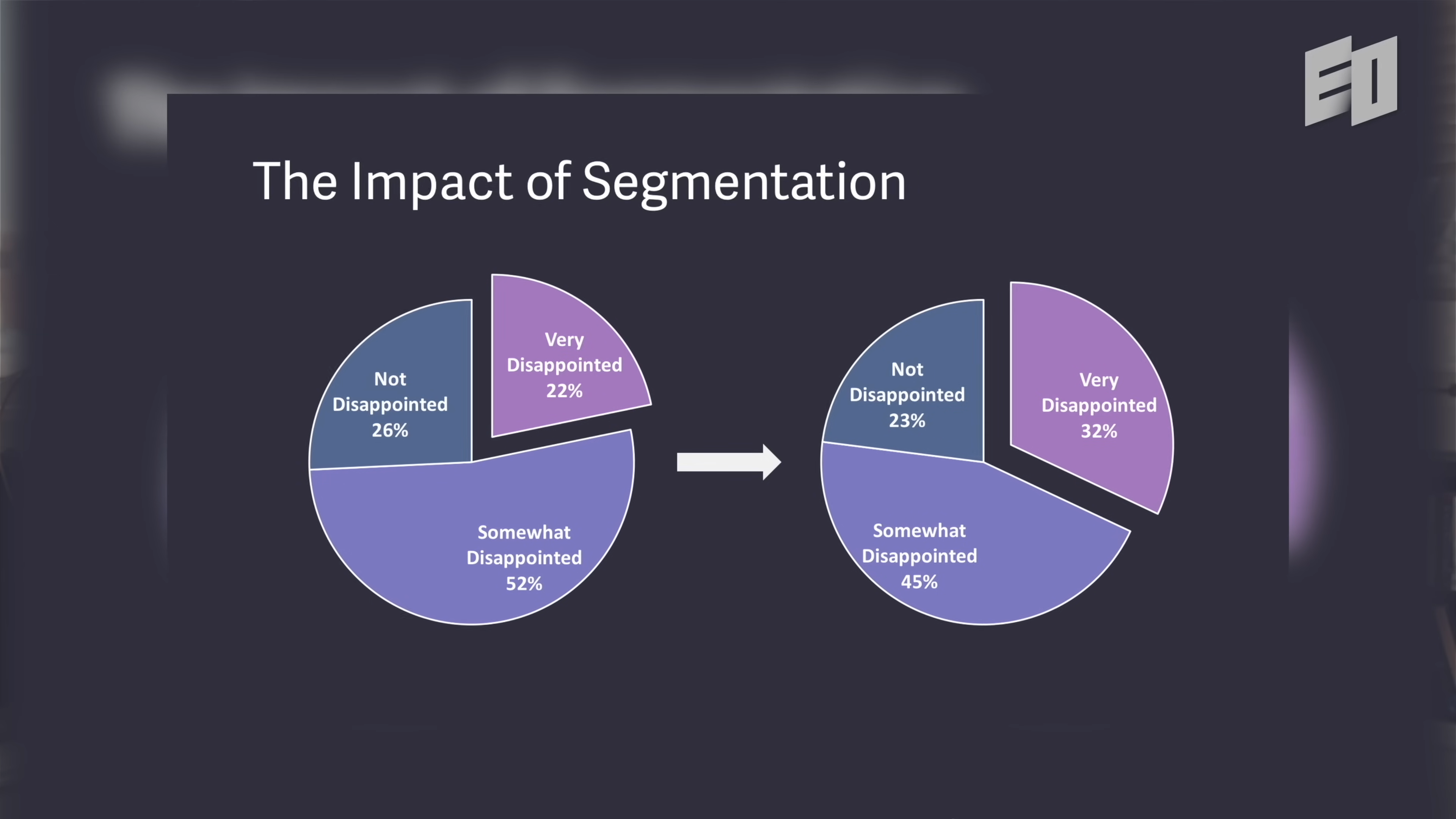
And then you focus only on people who have the job titles or the industries of the very disappointed users. And that means you end up discarding a lot, but not all, of the somewhat disappointed users and the not disappointed users. And in the case of Superhuman, that led our very disappointed score to go from 20% to 32%. That's simply by changing the definition of who we said our market is, a jump of 12%.
Well, now the question becomes: we've evolved the market, but how do we evolve our product to get to 40% and beyond? We can boil this question down to: how do we increase the segment of users who would be very disappointed without our product? And you can turn that question into: who do we listen to and what do we build? It can be very tempting to focus on the feedback from the not disappointed users. But this is a grave mistake.
Because even if you build everything that they're asking for, they are so far away from falling in love with your product that even if you built those things, they would still not be very disappointed without your product. So it would be a mistake to orient around their feedback. And this can be pretty counterintuitive. It is also a mistake to overly rotate around what the very disappointed users are saying. They already love your product. If you build more of the things they're asking for, they're not going to fall in love with your product more.
And the people who are somewhat disappointed are unlikely to start loving your product, because it's probably something else holding those somewhat disappointed users back. So what you do is take the survey results of the people who love your product, those who would be very disappointed without it, and analyze their answers to the question: what is the main benefit of this product for you?
In the early days of Superhuman, that would be speed, keyboard shortcuts, the design, the aesthetics, how much time it was saving them. And then you use that to segment the somewhat disappointed users. Now here's where it gets really interesting, and this is one of the core insights we had in developing this algorithm. If you just blindly act on the feedback from the somewhat disappointed users, you'll end up with a muddied product that lacks coherence and lacks vision.
This is because the feedback from your somewhat disappointed users will be pulling you in all kinds of different directions. They all have different ideas of what your product could or should be, which may or may not line up with your vision, and they certainly don't line up with each other.
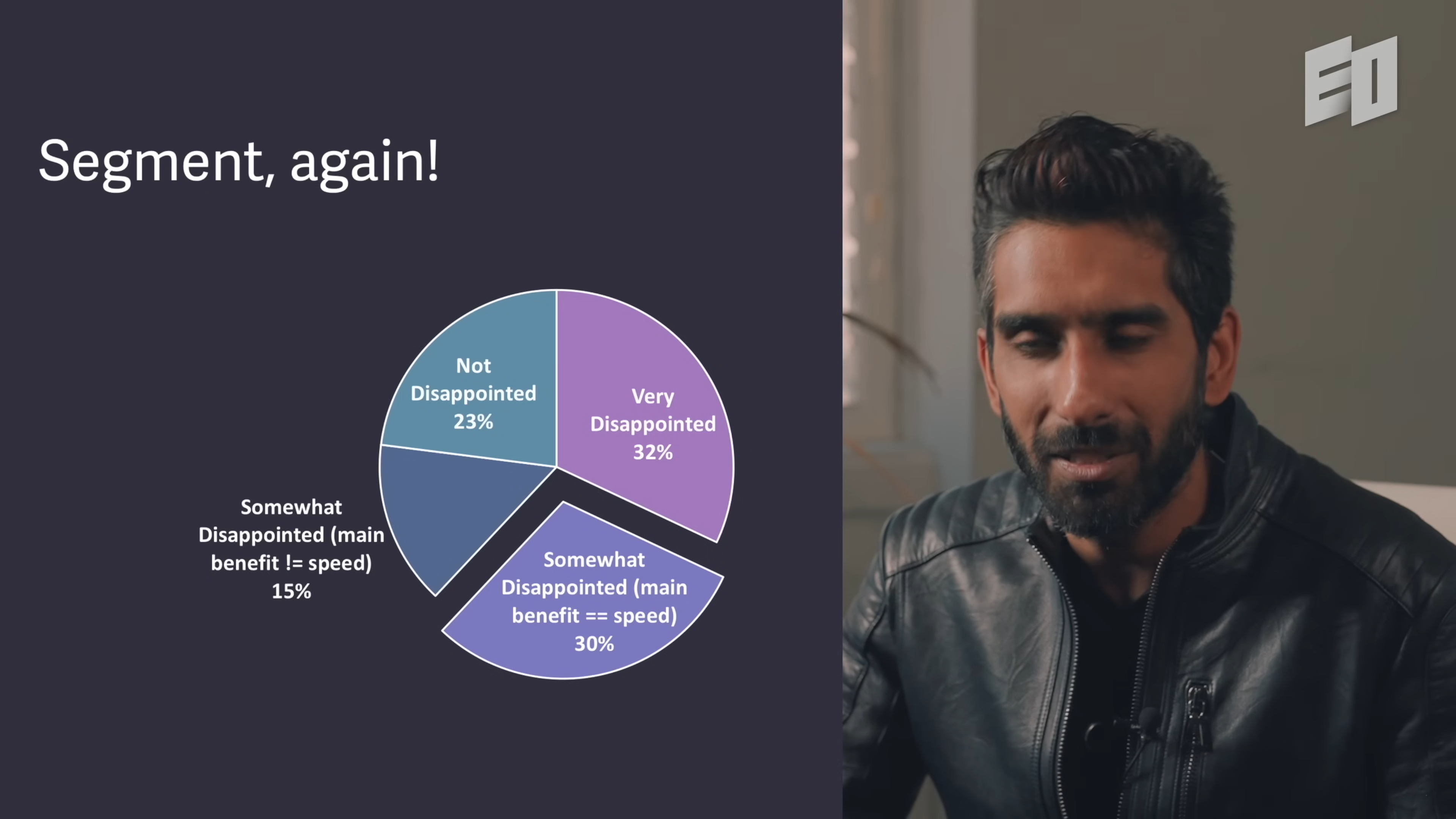
How do we figure this out? We use the main benefit of your product, the one that really resonates with the users who love your product, to segment the somewhat disappointed users into two groups. Group number one will be the group for whom the main benefit does not resonate. And again, I cannot stress this enough: politely ignore their feedback. Because the main benefit doesn't resonate, so even if you built everything that they asked for, they still wouldn't fall in love with your product. It wouldn't increase the number of people who'd be very disappointed without your product.
Well, that leaves Group Two. And this is the somewhat disappointed users for whom the main benefit is the same as the very disappointed users. For these folks, they're fully aligned. But there is something, and I would wager something very small, that is holding them back from falling in love with your product.
Go all in on these people. Build everything that they're asking for. Fall in love with those people, because when you do, they'll fall in love with your product. And the results at Superhuman speak for themselves. By changing the market, we got from a product-market fit score of 20% to 32%. And then by following this algorithm, we rapidly increased the product-market fit score thereafter.
Now, at this point, there are two types of teams and two very easy mistakes to fall into. Do not overly rotate around what your very disappointed users want because, although it's very important, if you only build the things they're asking for, you won't increase the set of people, the percentage of people who love your product, and a competitor may overtake you. I found that vision-driven teams tend to make that mistake.
But equally, don't overly rotate around what the somewhat disappointed users want, even if it's the subset for whom the main benefit resonates. Because if you only do that, you're not going to maintain your lead in what makes the product special. Someone else might leapfrog you by doing your special thing even better than you do it.
And so it's really important to go into any planning cycle planning to spend half your time on what the very disappointed users love: the main benefit. In our case, more speed, more shortcuts, more productivity, more time-saving, more focus, more design, more aesthetics. And the other half of your time focused on what's holding that special subset of somewhat disappointed users back.
When we initially did that product-market fit survey, it was things like: we didn't have a mobile app, we didn't have good enough search, we didn't properly handle attachments, we didn't have integrations with CRMs, read receipts, and so on into the long tail. Of course, now we've built all of those things.
And in doing so, not only have we maintained our lead at what makes Superhuman special, but we've systematically been able to increase the set of people who would be very disappointed without Superhuman by converting those people who only somewhat loved the product into fanatics who love the product and spread it virally, and the numbers speak for themselves.
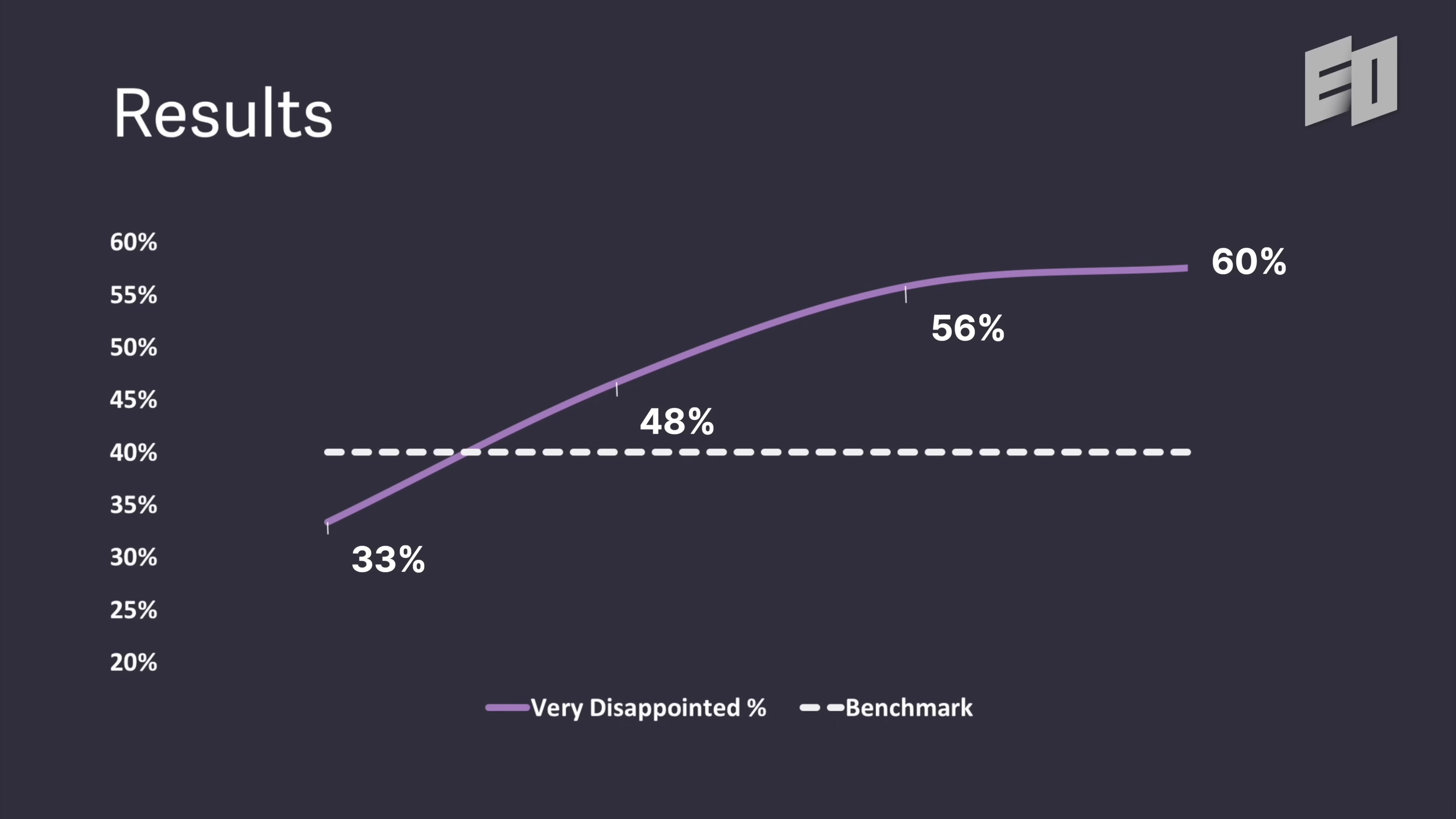
After we got from 20% to 32% by changing the market, a quarter later we got to 48%. A quarter after that, we got to 56%. A quarter after that, we got to 60%. Within three quarters of running the Superhuman product-market fit engine, we got our product-market fit score from 20% to 60%. Sixty percent of Superhuman users would be very disappointed without the product. Now, I'm not saying this is a silver bullet, but the framework does work.
Two Essential Pieces of Advice for Early-Stage Founders
I have so many tips for founders who want to be successful, and there are many frameworks out there, but I also like to keep it really simple. So if I were to summarize it with just two: if you can do those two things, you'll succeed.
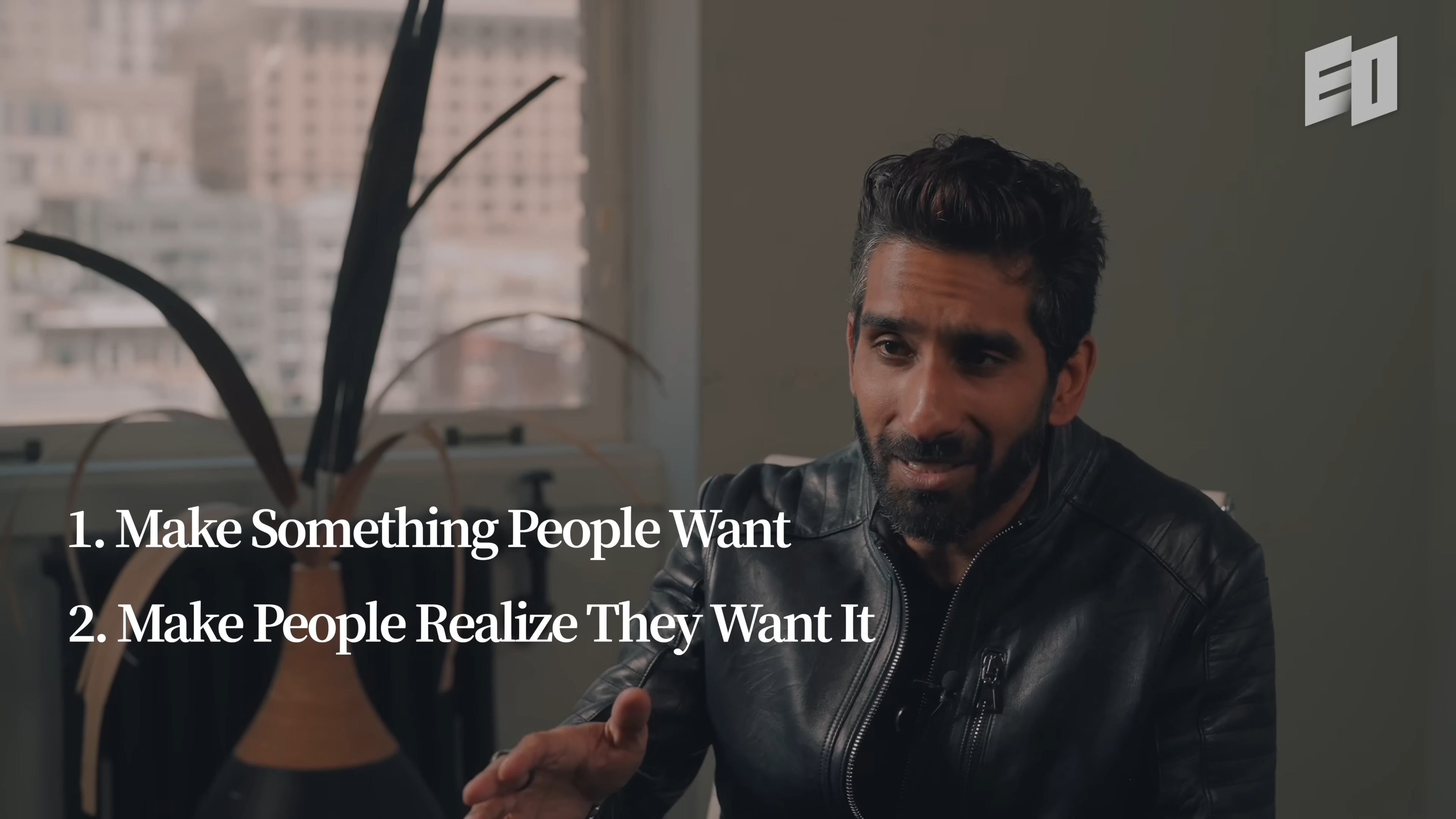
Number one, and I'm going to quote Paul Graham here: make something people want. And number two: make people realize they want it. Making people realize what they want is a pithy way of saying: you have to make people aware of your product. You have to make people aware of their problem. That was something we had to face. You then have to make people realize that the problem that they have is severe enough that they ought to pay for it.
Taking email and Superhuman as an example, like I said, there are a billion professionals and we spend three hours a day reading and writing email. That's 3,000,000,000 hours every single day. Is that a problem? Well, if you sit down and you think about it for more than just a few minutes, absolutely. But so many of us took it for granted that that's what work is. What if it didn't have to be? What if you could either be twice as fast in those three hours, or use those hours to do something else, whatever makes the most sense for you?
So that's what we call problem agitation. It can be difficult to make people aware of a new problem. Now this depends on what your company is, but for us we took a three-pronged approach to this. The first was injecting ourselves into the news cycle, so PR. The second was thought leadership, and the third was virality. So let's take each of those in turn.
Injecting ourselves into the press cycle: this is one of my top tips for a founder who's looking to create awareness for their company. Before perhaps you can afford a PR agency, or before you can buy any advertising, your industry will have something interesting going on, at least one or two things a year, and your job is to figure out how you can attach yourself to that story.
An example for us, early in the history of the company, was in 2016 when Dropbox acquired Mailbox. Unfortunately, they didn't last long at Dropbox and they were shuttered less than six months later, even though Dropbox had paid $100 million to acquire them. That was going to be a newsworthy event. And I realized that as a founder who had created an email company that had sold it to LinkedIn, I had a very authoritative stance and opinion on this topic. I know firsthand what it's like to sell your company.
And like I mentioned, Rapportive survives to this day, 14 years later. So I also figured out how to make a startup acquisition durable. So I wrote all of that down. I had something like 12 tips on how not just to survive an acquisition, but to love it and make it successful. Now, when I heard the news that Mailbox was going to be shut down, I stopped everything else I was doing and just sat down.
For two days I wrote my piece on how to avoid an acquisition failing and how to make it very successful. I wrote this article and then got it syndicated into a top-ten Medium publication. QZ.com and a few other places as well. And that article alone drove tens of thousands of signups on our website, and the product wasn't available. It was just a waitlist. But that's how you can start to get awareness going.
The second piece is thought leadership. We've talked a bunch about product-market fit. That piece on First Round Review is now the most widely shared and read entrepreneurship article, I think, of all time. It's become default reading for a founder and the default way to measure and grow product-market fit.
And then the third piece was virality. It is still the case today: more than 30% of our site traffic still comes from the "sent via Superhuman" viral signature, and more than 30% of our new users still comes from our invitations and referrals. That's how you make people realize they want it.