Mar 09, 2025
How I Raised $17M in 14 Days
Interview with Marty Kausas, Co-founder of Pylon
Founder Focused


💡
At a Glance
- Who: Marty Kausas is the Co-founder and CEO of Pylon. After studying computer science at Purdue and interning at Qualcomm, Yelp, and Airbnb, he left big tech to spend a year navigating startup failures and pivot hell before founding Pylon.
- What: Pylon is an all-in-one post-sales and customer support platform built for B2B companies. Rather than relying on traditional email ticketing systems, the software consolidates customer success, support engineering, and product marketing workflows across shared communication channels like Slack, Microsoft Teams, and WhatsApp.
- Traction: Pylon was funded by Y Combinator, General Catalyst, and Andreessen Horowitz, Pylon raised $20 million in funding, reached $120,000 in annual recurring revenue within three months of launching, and secured its first paying customer in 14 days.
Marty Kausas left software engineering at Airbnb after realizing that big-company routines were holding back his ambitions to build a startup. Following a failed health tech app and months spent cycling through ideas in pivot hell, he noticed that B2B teams were moving customer conversations away from email and into shared Slack and Microsoft Teams channels. Kausas co-founded Pylon to consolidate fragmented post-sales tools into a single platform, hitting $120,000 in annual recurring revenue within three months and closing a $17 million Series A in 14 days. In this interview, Kausas explains how he generated competitive tension among venture investors, survived months of uncertainty, and targeted massive horizontal software markets.
Key Takeaways
Leaving Comfort Requires Testing Your Commitment
Marty Kausas found large-company experience less useful for startup building than expected because slow processes taught him what not to repeat. Leaving Airbnb, abandoning a weak health-tech idea, and changing co-founders forced him to discover whether he genuinely wanted the uncertainty of entrepreneurship.
Pivot Hell Requires A Market Big Enough To Matter
Marty describes repeated idea changes as “pivot hell,” a period where outside doubt and internal uncertainty make continuing difficult. Pylon’s team kept going by defining the kind of company they wanted, then choosing a large horizontal market that could support ambitious growth.
Emerging Communication Channels Create New Software Opportunities
Pylon noticed B2B conversations moving from email into shared Slack, Teams, and WhatsApp channels. Marty connected that shift to new customer-facing roles and workflows, reasoning that freshly emerging jobs can create openings for software built around how work is actually changing.
Social Proof Can Accelerate A Competitive Fundraise
Pylon compressed its fundraising by scheduling investor conversations in one week and asking trusted founders, including customers, to make introductions. Marty says those endorsements moved investors directly into serious meetings, demonstrating how social proof can create urgency when a young company has limited operating history.
Fast Fundraises Still Depend On Strong Fundamentals
Marty rejects the idea that speed comes from a secret fundraising trick. Investors moved quickly because Pylon combined a strong team, large market, loved product, and growth potential. Competitive process can improve terms, but only after the company has done the underlying work.
Founders Should Learn Before Repeating Years Of Pain
Marty says he would have sought advice from experienced entrepreneurs instead of discovering every lesson alone. Startup communities, mentors, and conversations with people a few years ahead can shorten the path through avoidable mistakes, giving founders useful perspective before hardship becomes their only teacher.
Watch the full interview now on EO's YouTube channel! Below is the complete transcription of the interview. Minor edits have been made for clarity and readability.
Introducing Marty Kausas, Co-founder of Pylon
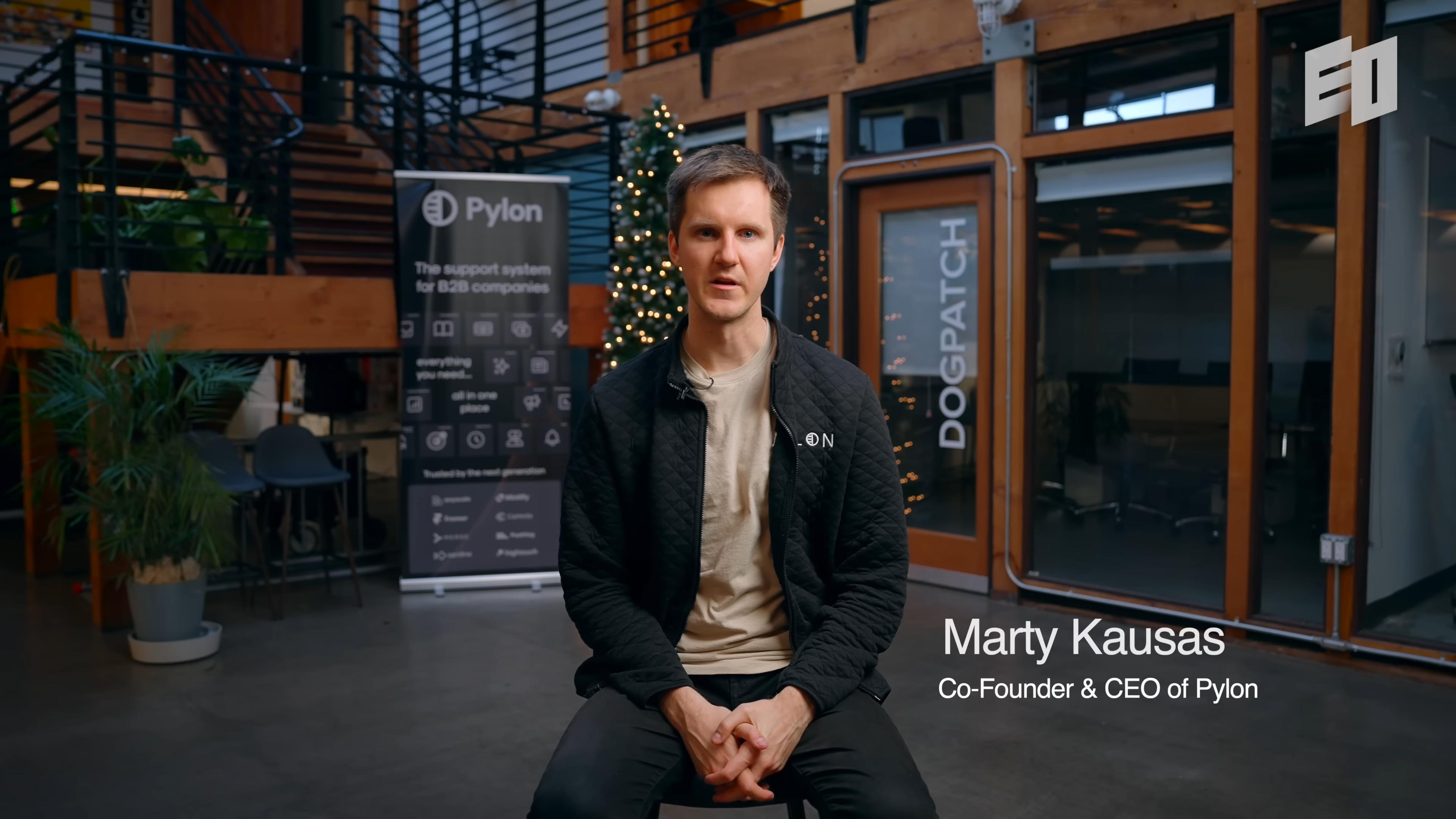
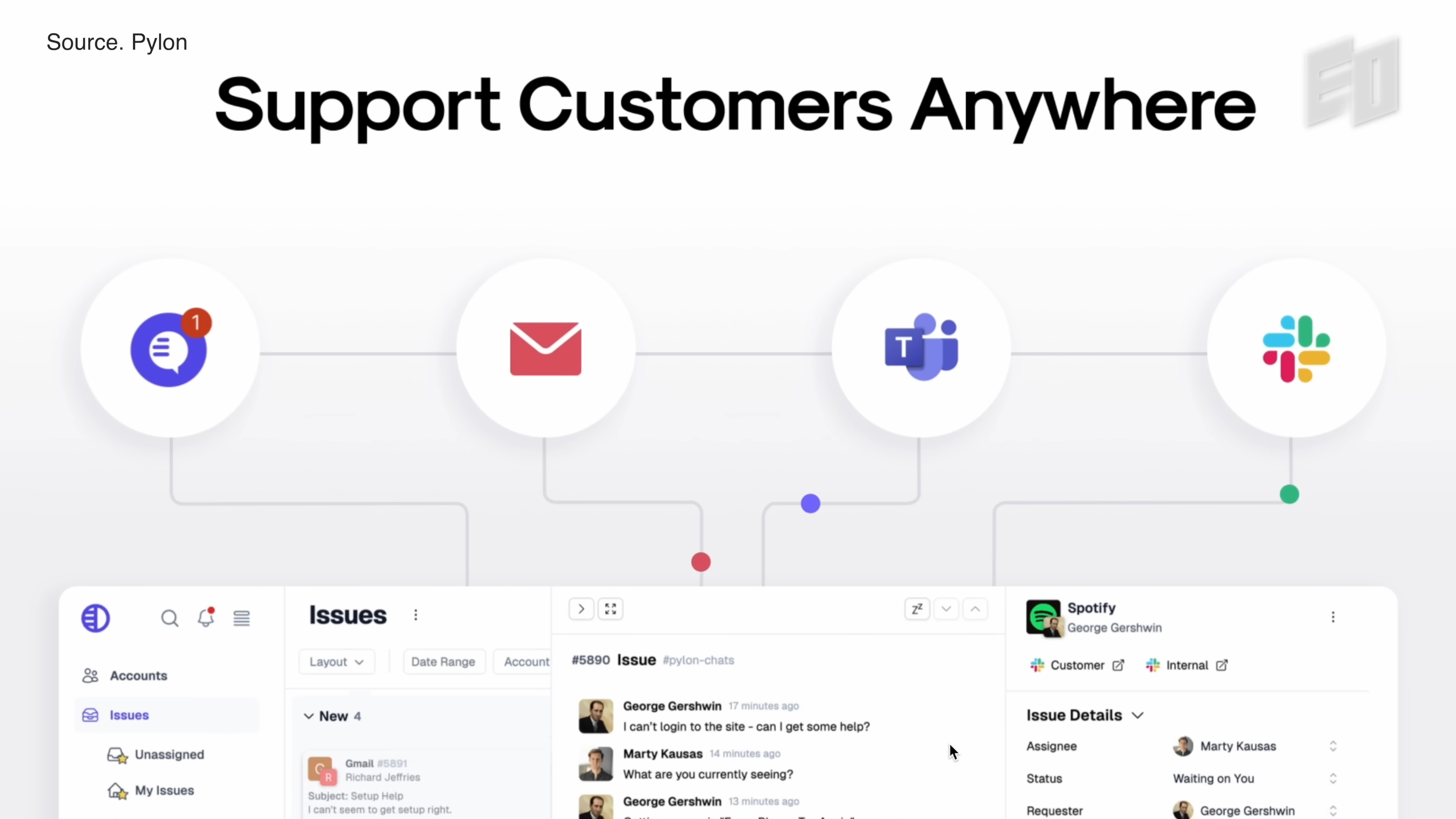
My name is Marty Kausas. I'm the co-founder and CEO of Pylon. We're building the first customer support platform built for B2B companies. We are going to consolidate all the products that you would get from a customer support platform, a customer success platform, product marketing, and tooling for solutions and professional services teams, and combine them all into one. Our initial insight was that a lot of people are talking to their customers, not over email anymore, but by starting to open up shared Slack channels, Microsoft Teams channels and WhatsApp.
We got to $120,000 in ARR within three months of having the idea, and we got our first customer in 14 days. We have raised $20 million from investors like Andreessen Horowitz, General Catalyst and Y Combinator. Frankly, the vision is shaping up so fast because of what's evolving with AI.
Success Starts at the End of Your Comfort Zone
It might sound stupid, but I was definitely inspired by movies like The Social Network or Pirates of Silicon Valley, learning about how those companies got started. I could relate a little bit to the characters in the movies. I'm kind of nerdy too. I like computers, I like programming, and maybe this could be a path I could go on.
YouTube videos were an early teacher for me, and then I started making games in high school and building websites. It was only around sophomore year of high school, when I joined our robotics team, that I got really excited about it.
After leaving high school, I went to Purdue to study computer science. I immediately fell in love with hacker culture. There was this club, Purdue Hackers, where every weekend they would spend time just writing code and trying to build games or applications.
While I was in college, I started to do internships, so I worked at places like Qualcomm in San Diego, and at Yelp as an intern, and then at Airbnb. I joined the payments team there, so I was working on back-end infrastructure, helping money move around the world. To be honest, I don't feel like it prepared me that much for startups. I actually think it was not helpful. It was anti-helpful. I learned all the things not to do, because big companies operate so differently and so slowly compared to startups.
While I was at Airbnb, I really was not enjoying the work I was doing. I was looking at all these other founders who were starting companies on the side, even the ones who were failing, and I was more excited about what they were doing and the path they were on than about what I was doing at Airbnb.
When I left Airbnb, I started working on one idea, which was a health tech idea. We were trying to build an app for people with Parkinson's disease to better understand their condition. It was a terrible idea for a lot of reasons, and we spent a whole year on it. At the end, I decided to pivot away not only from the idea and from the health tech industry in general, but also from the co-founder I was working with.
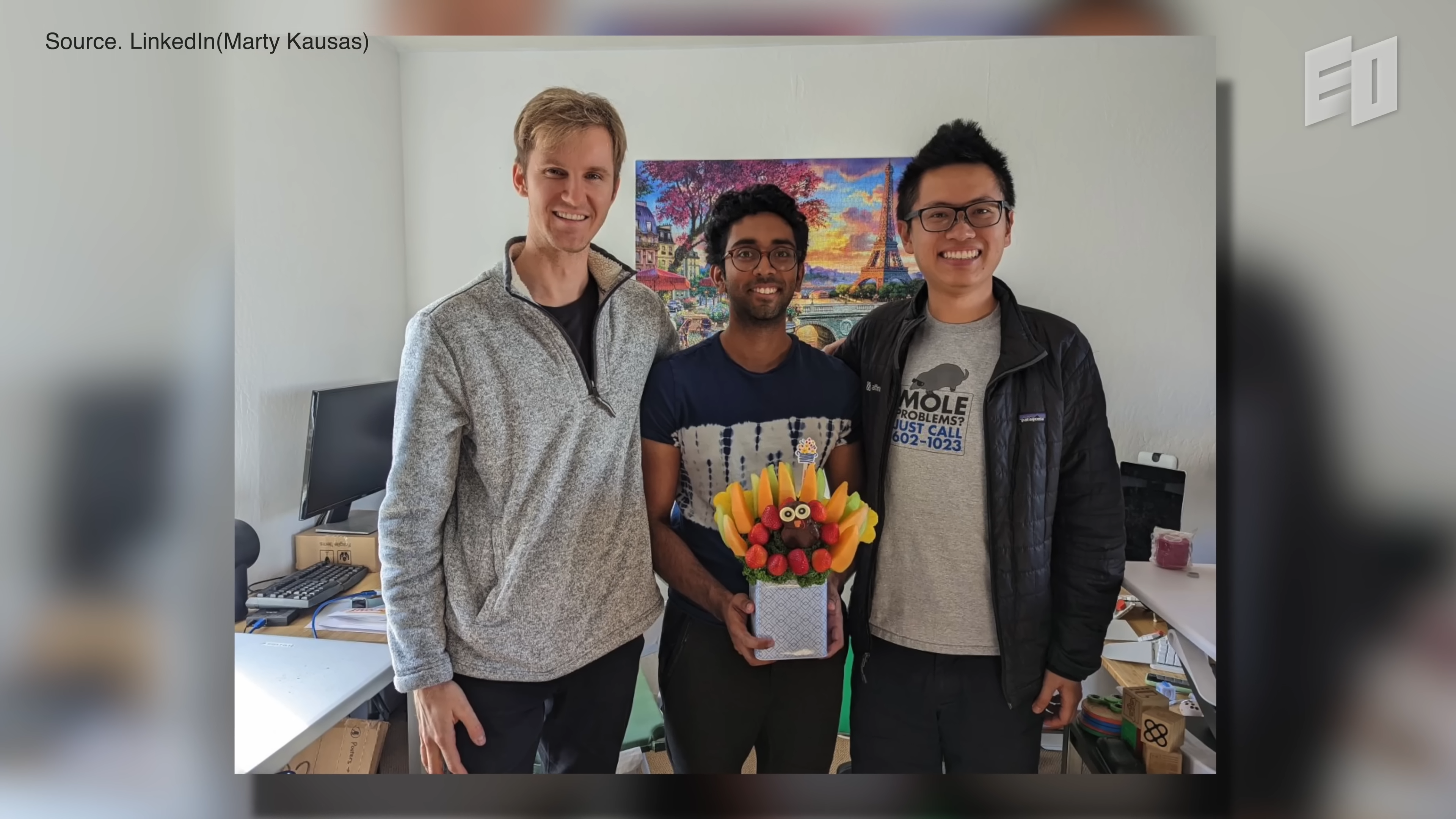
Even when I started working with my now co-founders, Advith and Robert, we spent months pivoting together until we finally came up with Pylon. What we were interested in doing was building a really big, fast growing company.
Follow Your Gut Feeling
I have considered giving up many times. In the back of your head you're always questioning whether you should keep going, but there was just something nagging inside of me that wouldn't let me stop. This is what you need to be doing, you need to keep trying, and all you need is one thing to work out, and then that will blow away all the failures in the past.
Pivoting is really, really hard. You are going to pivot a lot. You're going to pivot so much that my co-founders and I call it pivot hell. Once you actually get into pivot hell and you start working with people, and every week you might be switching ideas, it becomes really, really hard to keep going. Your parents are going to ask you what you're doing with your life. Your girlfriend or boyfriend is going to ask whether you should maybe start looking for a real job, and you're also going to have this creeping doubt that maybe you're not actually good at this, and should you keep going.
My suggestion is that if you feel like you should stop going, you should probably stop going, and if you can't not continue, then you should continue. That was the case for me. I basically didn't feel like I had a choice. I had to keep going, because that's just how my brain is wired.
One of the learnings for us was that you just have to start in a really, really big market. That is the type of idea you want to be working on to make something really big that can grow really fast.
What we did was observe the biggest software companies in the world, and it turns out there aren't that many public SaaS companies. When you look at them, there are probably 76 public software companies worth a billion dollars or more that are B2B, and almost all of them are horizontal SaaS products, meaning they're selling products that can be sold into almost any industry. Think of payroll, IT, sales, marketing, customer support and so on.
We decided that to make sure we don't get stuck in a market, we should go after something really big. So we chose post-sales customer work as a category to go explore. What we did was go on LinkedIn and message 40 people a day, which is what LinkedIn would let you do. Let's say 7% of those people respond. That created a cycle of us cold interviewing people in customer support roles that we wanted to learn from.
I think you need to be very clear with yourself about what type of company you want to build. We wanted to build something explicitly very big, and for us that meant a $10 billion market cap public company making, let's say, a billion dollars in revenue. Fast growing usually meant that there's some sort of emerging trend happening in the world that you can capture and grow with. That's where we saw this emerging trend of B2B communication moving away from email to new channels.
If I were going through and trying to find ideas now, the strategy we used can be effective for other people. We basically decided to explore the customer support and success space as a horizontal category, and then within it we said we're going to cold interview people. At the same time, AI was popping up, and it turns out all of the data flowing through Pylon is conversational, so for the first time ever there is an opportunity to structure it. The people we talked to have newer types of roles, job titles that didn't exist 10 years ago. A lot of customer success managers, support engineers and solutions engineers didn't exist 5 years ago, and now they did. So we thought that new roles might mean new workflows, which means new software, and maybe there's opportunity there.
The 'Right Time' to Say Yes to Investors
The best time to raise a Series A is when you're going to get the best terms. If investors are pounding on your door, even if you haven't hit a certain revenue milestone, it might be the right time to just go and take that.
We raised our $3.2 million seed round from General Catalyst in six days. That's a catchy headline, and it did really feel like we were living in an episode of Silicon Valley. The story is that we were 2 months into our YC batch and 3 months old as a company overall. We were probably at around $60,000 in annual revenue at the time. Two months into YC is when people start to think about fundraising and bringing on investors before the end of the batch.
What we did was schedule as many calls with VCs as we could in the course of one week, to try to create some sort of time pressure between the investors themselves rather than spreading it out. We went in with the mentality, and signaled to every investor, that we were fundraising really hard this week and there might not be time for conversations next week, so we needed to knock everything out right now, all at once.
Every time we got in touch with an investor, how they heard about us was important. So instead of cold emailing investors directly and saying, hey, we're Pylon, you should invest in us, we instead got founders that they respected and knew, some of whom were even our customers already, to message them and say, hey, I know this founder, the founder of Pylon, they're going to YC right now, are you talking to them yet? You should, because they're a hot company, and I think what they're working on is really good. We got a bunch of really great introductions through that, and that just meant that the investors were coming directly to us, basically ready to have serious conversations, and we would skip straight to partner meetings.
The social proof was already there, and at the seed round, social proof is everything. Your business is still so nascent that it's hard to understand where you're going to go. So having founders vouch for you who the investors trust is really, really important.
Fourteen Days to a $17M Series A
To give you a sense of the timeline, we started our initial conversations with investors on a Monday. Wednesday is when we had our first discussion with General Catalyst, who eventually led our seed round. Friday we had an in-person partner meeting with General Catalyst investors, and then Saturday I went to the apartment of one of the investors, went up to the roof and had a social conversation, and by nighttime that same day they gave us a verbal offer that they wanted to invest.
The general advice that we got was to find people who are good partners for the long term and who have a reputable brand. That brand then helps you bring on employees, because you have that social proof, and it will also help you close customers. They can help you get ready for the next round. So General Catalyst was basically the top of our list, and those were the kinds of funds we were going after for the seed round.
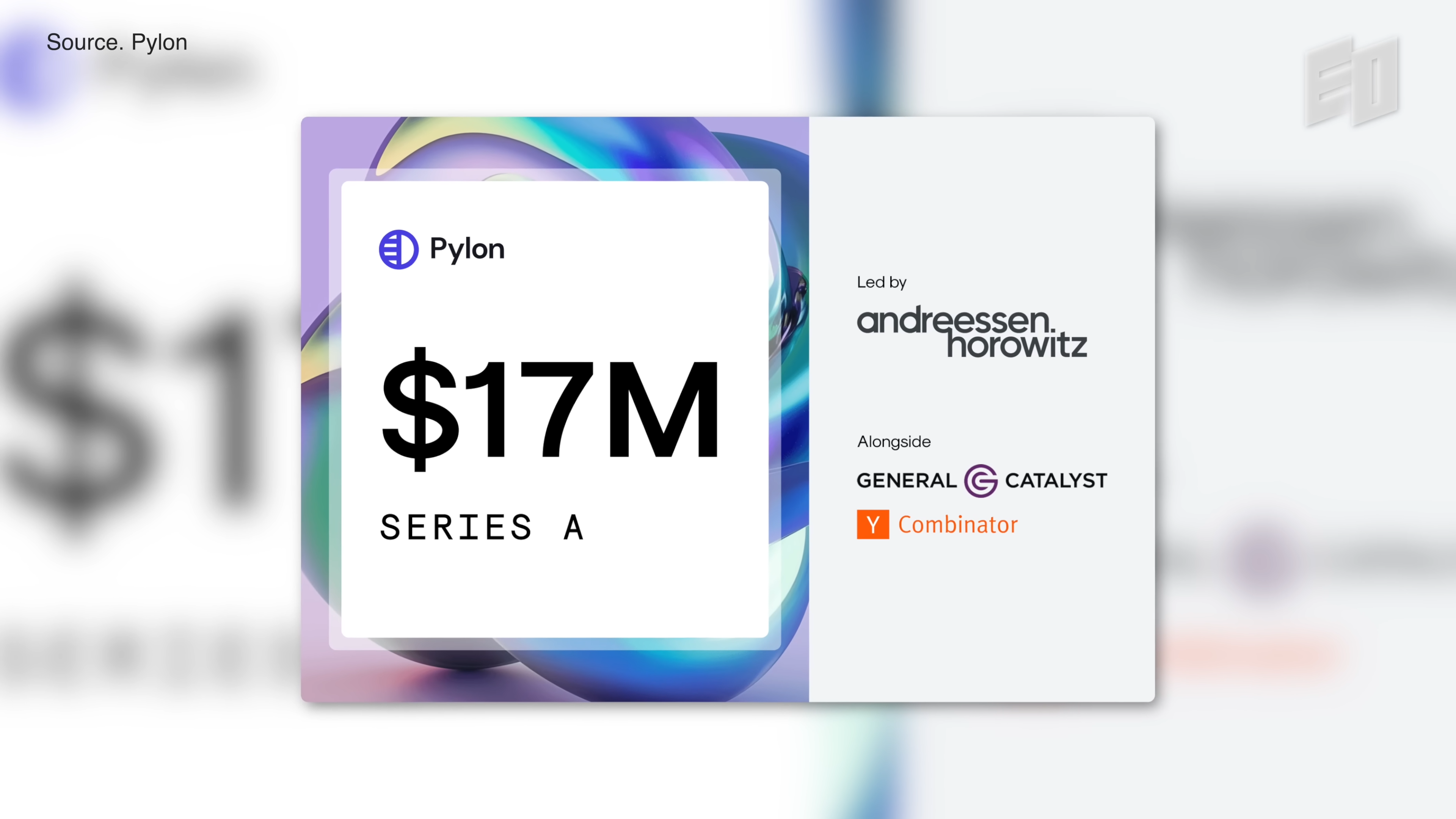
The whole process took around 14 days. At the end of 14 days, we ended up closing with Andreessen, who led a $17 million Series A round.
The process of talking to all those investors was not easy. They actually try to fill your calendar as much as possible to make sure that you don't talk to other people once they express interest, because there's only downside for them to wait. If they express interest, then they know that other investors will suddenly get interested just because of that social dynamic.
Low dilution was the thing that was really important for us. We just didn't want to sell 25% of the company. The only way to get low dilution is to have a competitive round. If you want Andreessen to give you better terms, then you have to go to someone else they respect. You have to go to a Benchmark or a Sequoia, and Andreessen has to feel like they're going to lose you if they do not lower the dilution amount. It's this social game where they need to make the terms better for you and the company.
When one investor was trying to figure out how to have a good fundraise, he basically asked how you fundraise fast like the Twitter guys, which was the example he gave. So he asked investors why the Twitter guys had such a fast fundraise. There are actually no secrets. You have to have a really good team building in a really big market with a really good product that people love, and high potential for growth. If you have all those things, you've already done all the work. Here are the numbers, here's the growth rate, here's what customers are saying, and they're just going to be convinced based on that. So really, the fundamentals are what's actually important.
Advice For Early Stage Founders

When you're competing against an incumbent, you're not actually competing with all the employees there. Most of them are not working on R&D. Most of them actually do not care, because they're just getting a paycheck. We were at the time, especially, living in the office and working 14 hour days. The number of people grinding at Zendesk trying to accomplish the same thing is very few.
At this stage, what has worked for us in terms of what founders should be doing, and what leaders should look like, is just doing the work yourself. Leadership at Pylon is very much doing the work yourself and having other people follow by example.
About 6 months ago we were actually living at the office. Robert had a bed in the living room, and everyone just had desks around him. Our salesperson had a desk that he would take sales calls at that was literally 5 feet away from Advith's bed. I was sleeping in a meeting room. For us, leadership just meant doing the work, and then people seeing that and being motivated and excited by it.
Being a founder is very, very stressful. At the end of every month, that's when we do our reporting on how much revenue we have and how quickly we've grown. We keep doing it, and a part of me feels like this is magical, it just keeps happening, but it's very stressful. I think the only way through the stress is by addressing the problems and grinding really, really hard, so you can more consistently maintain growth, a hiring pipeline and great product.
Both myself and my co-founders feel very similarly. We just want to win, we want to build a company, and so we just didn't let ourselves give up.
Learn to Build, and Learn From Others
The really important thing is to be able to build and solve problems yourself. Don't say you're just going to go find a technical co-founder who will build the product for you. I think you should stop being lazy and learn how to build yourself. There are lots of resources on how to do it. You could go watch YouTube like I did, go to a boot camp, or take any of the free courses that exist around the world at this point. Just learn how to build for yourself, especially with AI. It's becoming so easy, and then the world is your oyster. You can have an idea, make it, try it and see what happens.
First off, if you're not purely set on starting a company immediately, I do actually recommend just trying to get a job at a startup. You can create a network and be immersed in the startup community. For example, if you work at Pylon, we have events here all the time for founders and other startups that are coming through, so you have an opportunity to mingle with a bunch of people.
If you are set on starting a company immediately, I would probably go live in a hacker house of some sort. I would attend a lot of meetups. YC has meetups now, and events. I would go to as many of those as I could, find the best people, and then try to get into their networks.
I would probably tell myself to learn from others more. I'm one of those people who often likes to just go figure things out on my own, which I think is really helpful, but there's also a lot of advice out there. For example, I could have gone to successful entrepreneurs and asked what they thought of my idea, whether it was good, and what they thought the risks were, and I probably would have gotten to the same point in months rather than two years later, had I just listened to their advice and taken it instead of trying to discover everything on my own.
The point of interviews like this is that I'm someone who has already gone through it, and maybe you can learn from some of my mistakes instead of going through the same 2 years of pain that I did. So that would be one piece of advice. Go learn from other people who have done it before and are a couple of years ahead of you.