
At a Glance
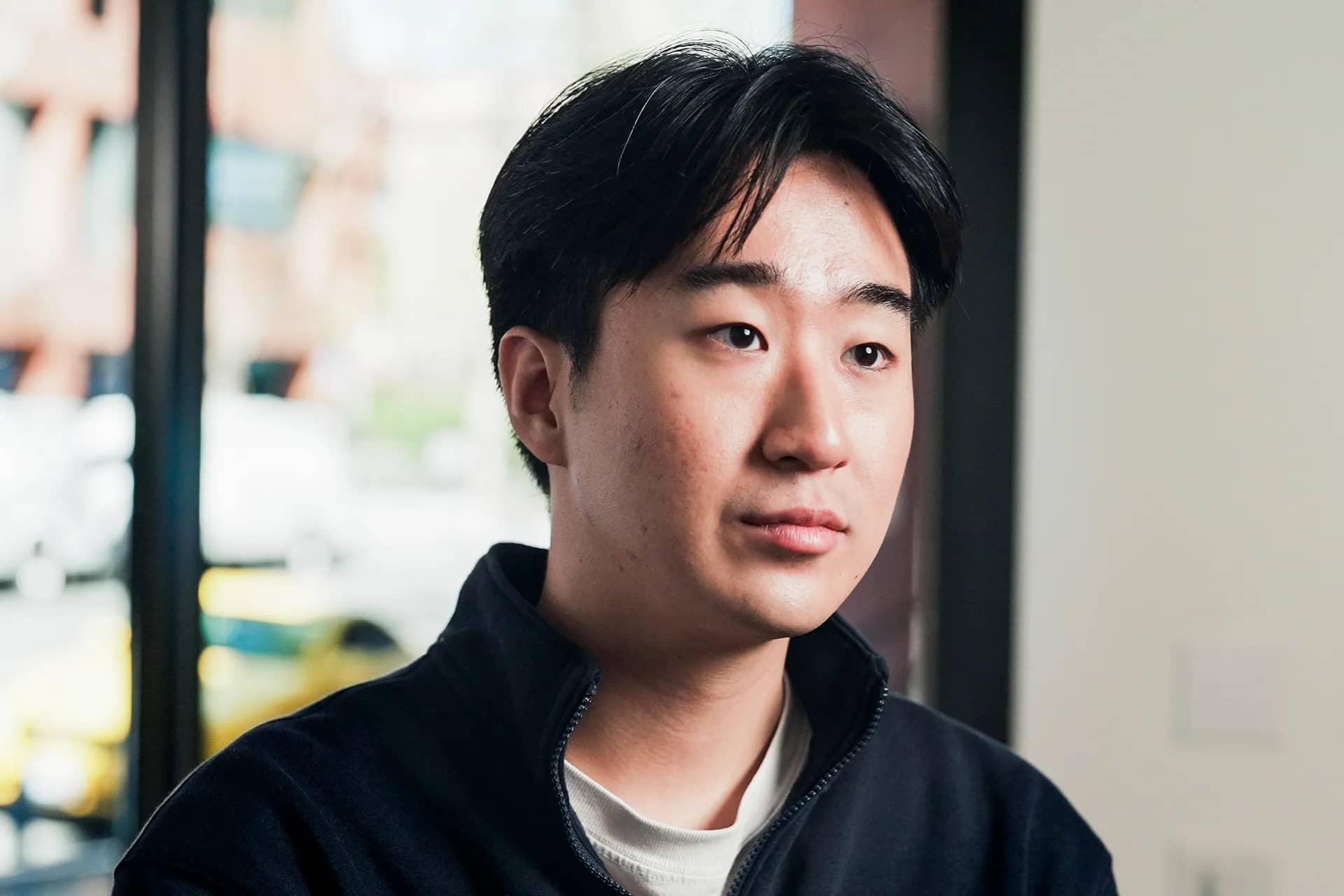
- Who: Saeju Jeong, co-founder and CEO of Noom, who grew up in a small fishing town in South Korea and arrived in the US at 23 with nothing.
- What: Noom, the consumer-led health and behavior-change company he built from a New York sublet with no network and no English.
- Traction: Under his leadership, Noom grew into a $10 billion company.
In this interview, Saeju, the CEO of Noom, was born and raised in a small South Korean fish town called Yeosu and he dropped out of his university in Korea. He came to US when he was 23 without anything and built $10 Billion consumer-led healthcare startup Noom.
Key Takeaways
Only Start a Company If You Can Answer Why It Has to Be You
Saeju says the real screening question isn't whether to start a company, but whether you can answer why it has to be you, and why it has to be this company. If you can't answer clearly, don't start, and if you're already running on a mission you don't fully believe, quit now rather than later.
The Reframe: Difficulty Is Building Time, Not Hard Time
When people tell Saeju he's having a hard time, he tells them he isn't, what looks like risk to everyone else reads as opportunity to him. That inversion only holds, he says, if the mission driving the company is genuinely his own.
Discipline Beats Charisma in Every Billionaire He's Met
Across Korea, Japan, the US, and Europe, Saeju says the one trait every successful executive shares is discipline. They manage their resources for the long term instead of chasing quick returns.
Immigrants Have to Relearn Everything. That's What Makes Them See What Others Miss.
Coming into a new society means relearning what counts as normal, which Saeju admits is exhausting. But that same distance lets immigrant founders spot problems the majority of people are too used to seeing to notice.
Stalling in Your Thirties Compounds for Decades
Hitting a management ceiling in your thirties and settling there is a trap, Saeju warns, because whatever you stop learning then tends to just repeat through your forties and fifties. His fix is deliberately disrupting yourself into unfamiliar territory instead of coasting on a title.
Watch the full interview now on EO's YouTube channel! Below is the complete transcription of the interview. Minor edits have been made for clarity and readability.
Introducing Saeju Jeong, CEO of Noom
Hi, good to see you. I'm Saeju Jeong, co-founder and CEO of Noom.
I still believe the United States is a quite strong country because it's a land of opportunity. Look at me. I'm one good example.
I was raised in a small fish town in South Korea. I studied electrical engineering, but electrical engineering was not my passion. After I lost my father, I was thinking about my life. I learned that people die, and since then I was looking for how I could live my life fully. School was not the high priority at the moment.
That's why I dropped out of college and told my mother. She was the ultimate sponsor. She supported my decision, which I'm very, very thankful for. It's difficult to do that as a parent. And that led me to set myself free, and I came to the United States.
I arrived January 22nd, 2005. There was a snow blizzard, so JFK Airport was completely filled with snow. It took an hour to get a cab, and I went to the cheapest motel I could find and settled in that night. The next day, I looked for a place to stay. I found a sublet, with no background, knowing no one, and not even speaking English properly.
Now Noom has become quite a sizable, trustworthy brand and company. I get all the support from investors. I was able to invite great talent from all different backgrounds, from all over the world, because they wanted to come to the United States, to New York City.
Advice for Future Entrepreneurs
If you want to become an entrepreneur and start your own business, I humbly recommend that you think really hard about why it has to be you, and why it has to be that company you want to found. Because when things are difficult, no one will give you a clear answer except you. No one told you to start a company. You need to know why you are starting the company, why it has to be you. If you face yourself and cannot answer clearly, then I humbly recommend you do not start the company. I guarantee it's going to be a very difficult journey, a very bumpy road, and when things are difficult you will feel very lonely and you will seek help. But unfortunately, you have to answer.
That's why I always recommend being mission driven. It has to be you. You have to be the one who can answer why you founded the company, and it will take some time. If the mission is driven by you, you can deal with difficult times.
From everyone else's perspective, it's a difficult time. But from your perspective, it's a building time. People will say you're having a hard time, and you'll tell them, I'm not having a hard time. What you think is risk, for me is opportunity. So you need to have that mindset. But that's only possible if you are fully, truthfully mission driven. Otherwise, do not start a company.
Figuring out product-market fit takes a long time, unfortunately. If you're in love with some product a startup has built, you may think it's easy. But finding the right product-market fit is extremely hard. It's a long marathon.
That's why we built a culture at Noom where we test ideas. There are so many ideas, and unfortunately many of them do not deliver a great outcome. That's why we built a culture that always tests and learns, and stays very humble. We don't create a culture at Noom where one genius person can come in and fix the problem or prove it's working. We don't expect that. We always test. That is the best way we can find a better product-market fit. And when the time is right, we call that luck. Then the company enters the right product-market fit and can scale to the next level. That's what we've experienced over and over.
You want to spend your time with positive-minded, successful people, because that way you can observe and learn good behavior. If you're around people who behave badly, you'll become like one of them. That's why networking is important.
If you're in a group of successful, positive-minded people, you'll get a lot of influence and inspiration from them. You'll also want to help them build a very healthy ecosystem. Networking means looking for how to share your lessons, and also trying to solve your own problems by asking mentors who have experienced them. I think that's very important, and especially in the startup culture in the United States, active networking is part of the job. That way you can continuously learn by sharing lessons with other fellow entrepreneurs.
I've seen the same thing again and again, in Korea, in Japan, in the United States, and in Europe. One common trait I've seen from meeting billionaires and super successful executives is that they are all disciplined. They know how to manage their resources well for the long term. They do not allocate their resources for a quick return. Being disciplined and thinking long term is very important. That's the one common character I've discovered from meeting a lot of people.
For my case, I have a ritual in the morning. I wake up early, exercise, and meditate every day, and I try to find breaks between meetings. I try to keep that healthy habit and see the positive side, even when a meeting is difficult.
I don't drink when I don't feel good. Some people seek out a drink to manage their stress. I think that's very bad, unfortunately. So I don't do that. I only drink when I feel good, with my company or my wife, to celebrate a partnership or celebrate family. Basically, you provide a healthy space for yourself. That way you can become the best version of yourself.
If you're an athlete in the game, what kind of version do you want to be? You want to be the best version of yourself. That requires a lot of investment, a very disciplined lifestyle: taking care of your rest, stress, diet, exercise, relationship management, a healthy mind and a healthy body. Isn't that a good philosophy and principle? I live my life the way Noom preaches, because it's a healthy, sustainable lifestyle, and I like it. I'm basically sharing what has worked for me and what's been proven by science, and we're using technology to make it scalable as a service.
Advice for the 10's
For teens, what you're exposed to today, especially in the media and social media, can affect a lot of how you think and how you behave. But I really want to recommend that you don't try hard to prove who you are. Try hard to think about the core value of your life. Seek advice from your family, or senior members of your community, about what talent you may have. You may wonder what that is. It's a wonderful thing that as a student you can ask, because students are automatically forgiven for making mistakes. It's the perfect time to ask for help and to try.
But unfortunately, social media is filled with a glamorous lifestyle and success, and I want you to know that's not the reality. That's not real. Don't seek the lifestyle you've seen on digital media. My personal opinion is that you should spend enough time thinking about your own life, rather than browsing someone else's lifestyle on social media.
How much of an artificial aspect of life have we been exposed to? How much time do you spend thinking about your own problems, the ones you want to solve but don't know the answer to? You keep asking, but you also have to spend time on it. It's uncomfortable, but it's your life.
I recommend you have your own time to meditate and think thoroughly for yourself. It's painful, especially if you haven't trained for it. It's harder, but you need to stop browsing social media and think about the important matters of your life by yourself. Be alone and deal with it.
Find the right balance. Spend time thinking about what your talent is, and explore it. You'll find some clue. That's for teens.
Advice for the 20's
For your twenties, it's a time when you're debuting as a professional worker, while at the same time you're still a student. I highly recommend you don't think that once you finish school, you're done with learning. Actually, you've only just finished learning how to study. Keep your curiosity, and seek help by asking your mentors. If you get a job, find a way to actually learn how to build a career.
It's also very difficult to figure out what career path to choose. I understand there's a lot of ambiguity and uncertainty, and that leaves you some anxiety. I understand that's very painful, but I've also seen a lot of cases where people change so quickly that they never fully understand what a path is really like. Please spend at least six months to a year in one area. That way you can fully understand at least a taste of that career path, and then you can make a decision. That's for twenties.
Advice for the 30's
For your thirties: it's the time when you're becoming half a professional, and also becoming a director. Becoming a director is good, but there's often a ceiling of growth. I've seen that so many times, and it's very sad. Think about it. You might live to be a hundred years old or more. If you stop learning how to become better in your thirties, that's quite bad.
Think hard about how you can always disrupt yourself, so you can learn and explore new territory you haven't touched. That way you can actually learn more. That way you can become the next-level version of a greater person. And I'm not just talking about your professional career. Keep your curiosity all the time, and keep seeking how you can invest in yourself. Becoming better is a must. Otherwise, you'll become just okay in your thirties, and what you learn will repeat over your forties and fifties. That's the path where you won't be able to learn, and because of that, you'll wonder why you don't receive good opportunities.
Being an immigrant is actually quite fortunate, and also difficult. You need to relearn everything you think is normal, because it's probably not normal. The society is different. Relearning isn't easy, I understand.
But it also gives you the opportunity to observe and identify problems that the majority of people don't see. That's the benefit. There are pros and cons. But I believe being an immigrant actually helps you be more open minded, and helps you look for where a service hasn't been good enough. That way you can improve it.
Don't doubt yourself. If you have a strong mission and vision, people will pay attention to your story. You'll be able to invite people to build around your ideas, and you will get there. I guarantee you'll face a lot of difficult times, and the only way you can step up and overcome them is if you truly believe in your own mission.
That's why, if you can't truthfully live with your mission, you should not start a company. Or you should quit what you're doing right now. It's a difficult life if you don't fully believe, but you still have to do the work. That's why mission is very important. It's your moral compass.
Time flew by really quickly. I don't want to believe I turned forty, but it is what it is. Time flew. But the journey with Noom was very fruitful, and I wouldn't trade it for any other. It's been a great experience.