Jul 06, 2025
How We 5X Our Revenue While Others Chase AI Updates
Interview with Flo Crivello, CEO of Lindy
Founder Focused


💡
At a Glance
- Who: Flo Crivello is the CEO of Lindy. A former Uber software engineer, he previously founded virtual office startup Teamflow during the pandemic before making a hard pivot in 2023 to build AI agents.
- What: Lindy is a no-code platform that uses modular building blocks to construct AI agents capable of handling customer support tickets, medical charting, and complex administrative tasks.
- Traction: Quintupled annual revenue over six months, doubled team size, and achieved HIPAA compliance to expand across healthcare systems.
Flo Crivello made the decision to wind down his funded virtual office startup when remote work demand normalized post-pandemic. Recognizing early capabilities in large language models to trigger API actions, Crivello launched Lindy to give non-technical users a modular way to build autonomous AI agents. Today, Lindy automates workflows across customer support and medical charting, quintupling its revenue in six months. His leadership thesis illustrates why founders must build for upcoming model generations, embrace micromanagement to enforce standards, and abandon failing markets quickly.
Key Takeaways
Focus On User Needs That Never Change
Lindy discovered healthcare demand when users repeatedly asked for HIPAA compliance and began recording patient visits to produce structured notes. Flo’s broader lesson is that preferences such as simplicity, effectiveness, affordability, and speed remain stable even as the underlying AI technology changes quickly.
Build For Models That Barely Work Today
Flo advises founders to build for future generations of models, even when today’s systems barely support the vision. Lindy began as a prompt that often failed, but the team continued because improving models could make an AI employee capable of increasingly complex computer tasks.
Destroy The Mine Before Hiring Too Early
Flo distinguishes prospecting for a market from building a mine through hiring and fundraising. After Team Flow stalled, he fired two-thirds of the team and redirected the company toward AI, accepting painful internal disruption rather than protecting a structure built before finding gold.
Micromanage Inputs To Create A Standard Of Excellence
Flo sees recruiting, direction, and precise operating standards as the inputs a CEO must shape. He spent seven hours writing an eighteen-page guide for a new employee, arguing that authority carries an obligation to exercise judgment and place clear guardrails around execution.
Definite Optimism Turns Vision Into A Plan
Flo prefers definite optimism to vague confidence, because founders should hold a crisp opinion about what the future should look like and work backward from it. That perspective turns ambition into a directional commitment instead of a hope that everything will somehow work out.
AI Agents Will Turn Everyone Into Managers
Flo expects AI agents to shift people from individual contributor work toward managing software agents that perform it. He sees that change as a broad leveling force, giving people more leverage regardless of network, capital, or geography, with vision and execution becoming the differentiators.
Watch the full interview now on EO's YouTube channel! Below is the complete transcription of the interview. Minor edits have been made for clarity and readability.
Introducing Flo Crivello, CEO of Lindy
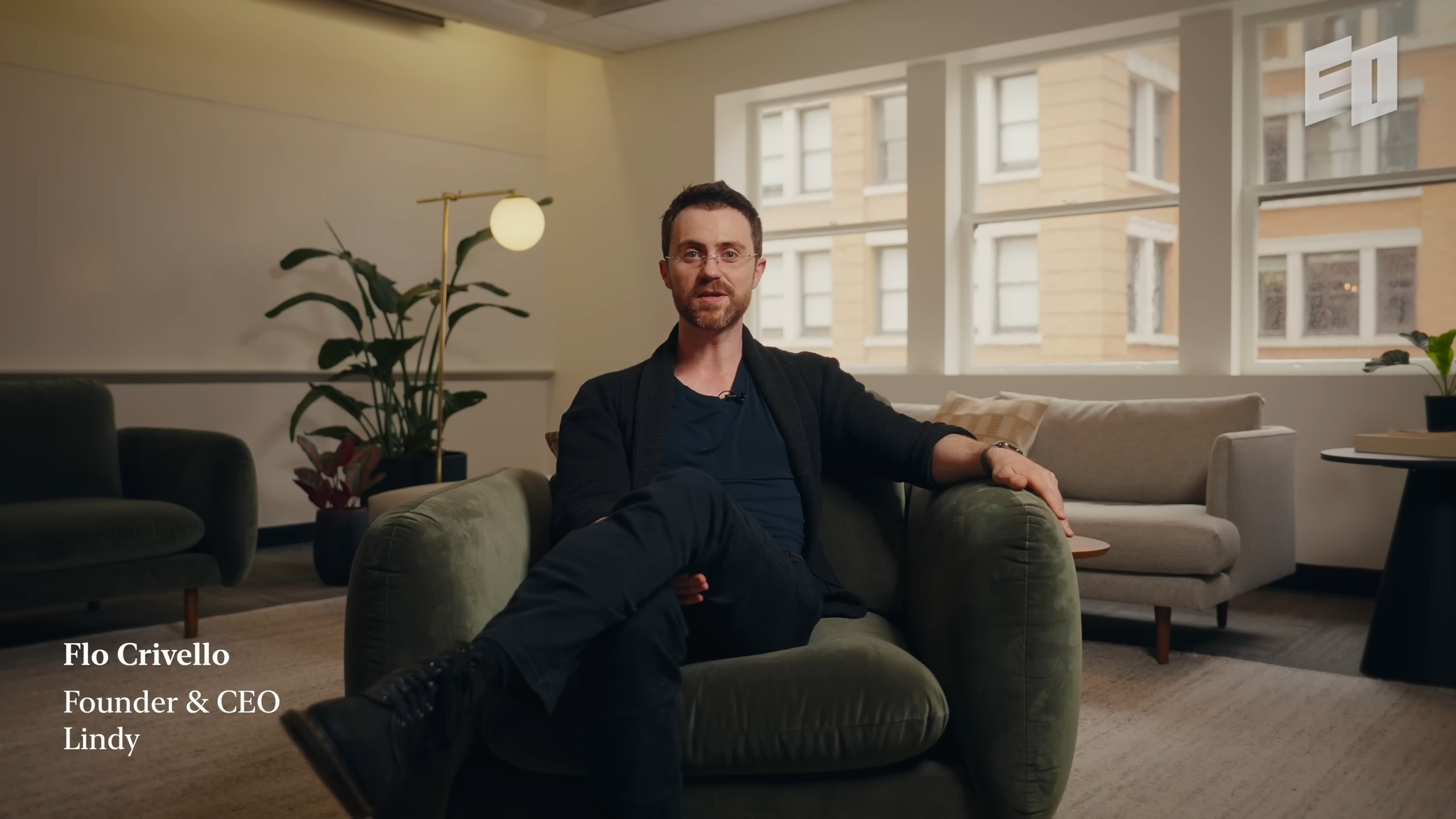
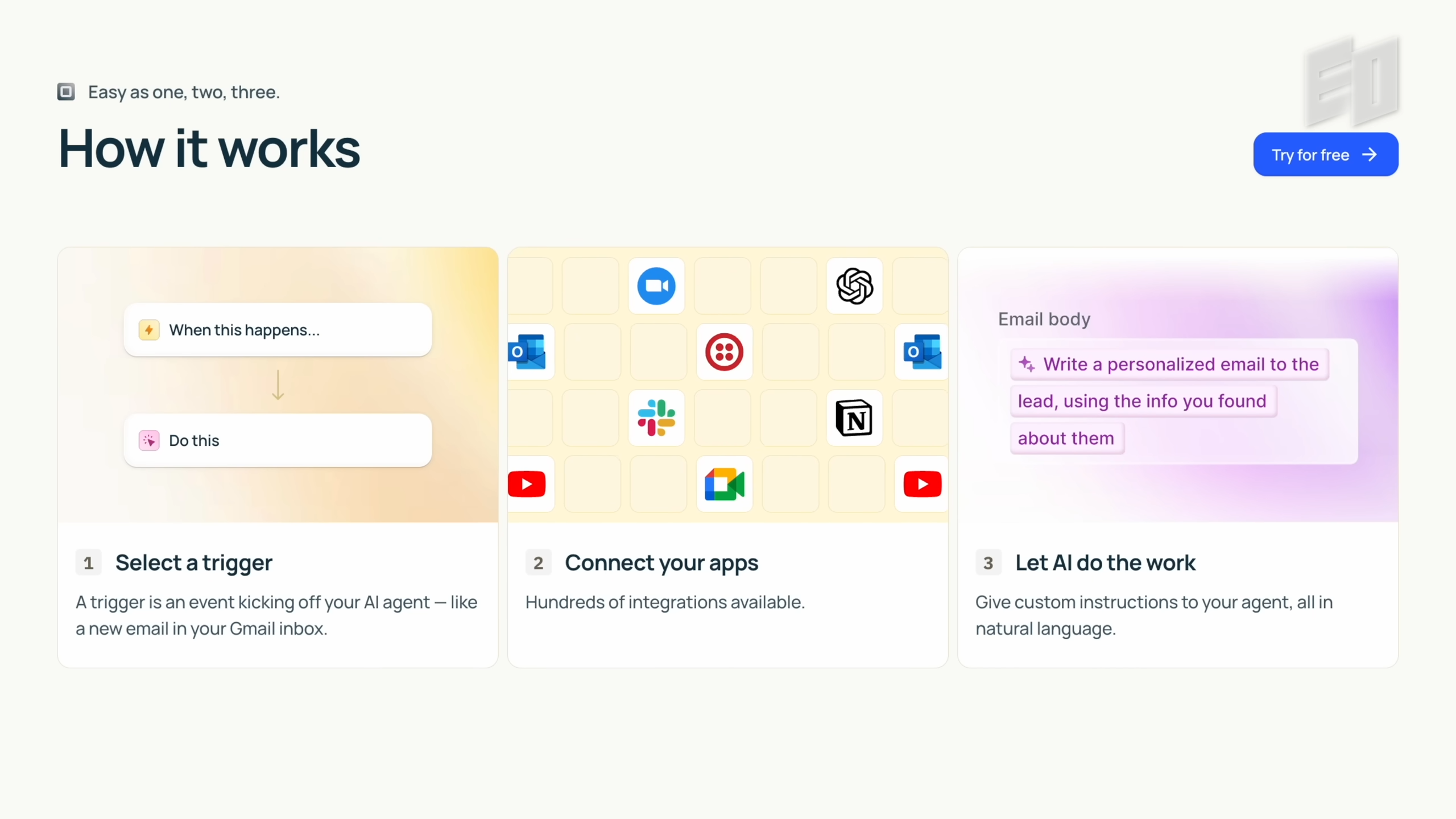
I'm Flo Crivello, and I'm the CEO of Lindy, which is the world's easiest way to build AI agents with no code. Lindy is a set of building blocks that you can put together to build your own AI agents and get them to do anything.
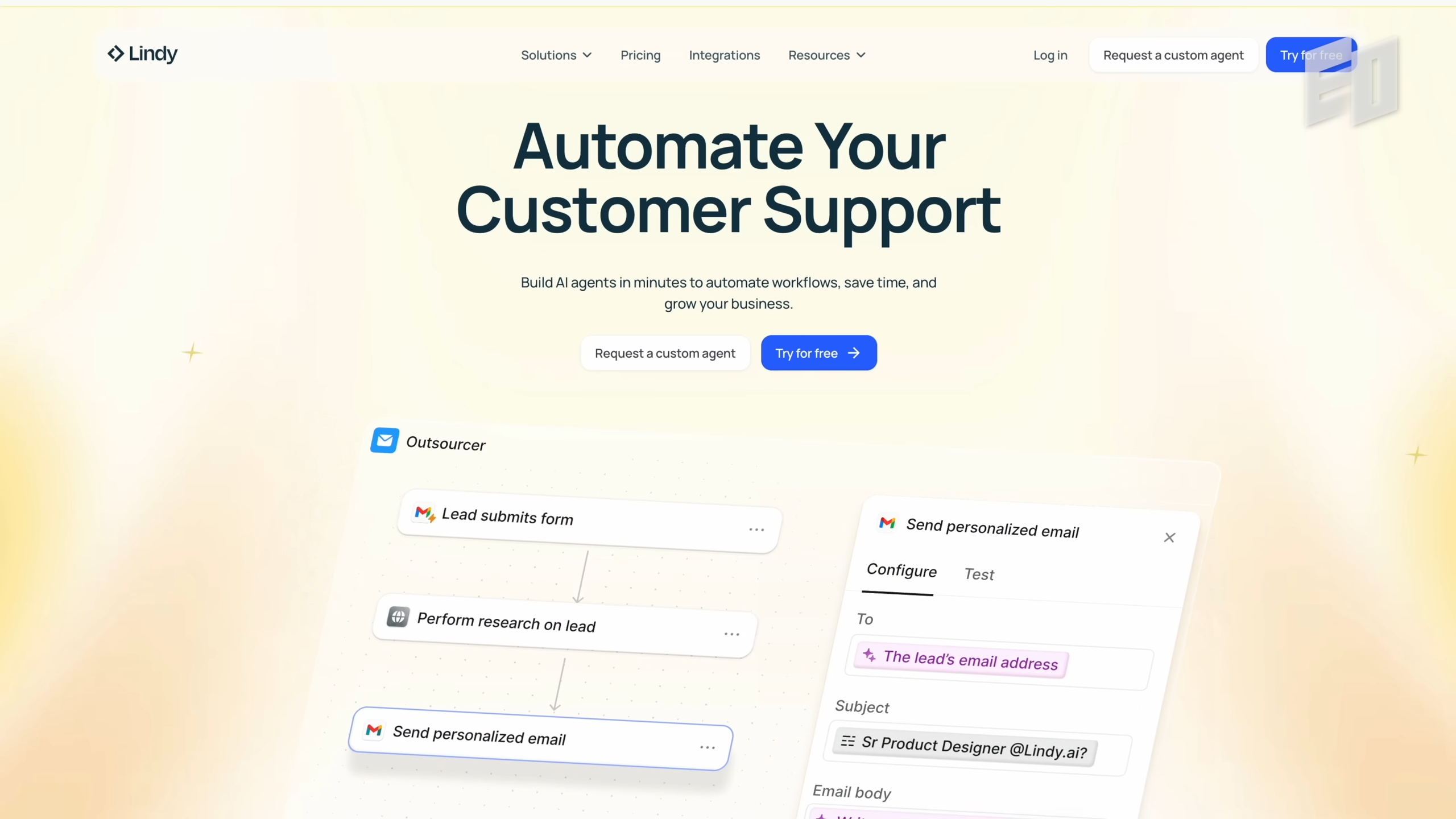
One big use case that we have is customer support. Step one, a support ticket arrives by email. Step two, you add a condition building block that branches the agent, so it asks whether this is a customer asking a question or a customer asking for a refund. Step three, if they are asking a question, you can use our knowledge base building block, which draws on your FAQ, your website, your PDFs, your Notion, whatever you want. Then in step four you ask Lindy to answer the support ticket based on the knowledge it has extracted from that knowledge base.
We have quintupled our revenue over the last six months and roughly doubled the size of the team since then.
Focus on What Never Changes
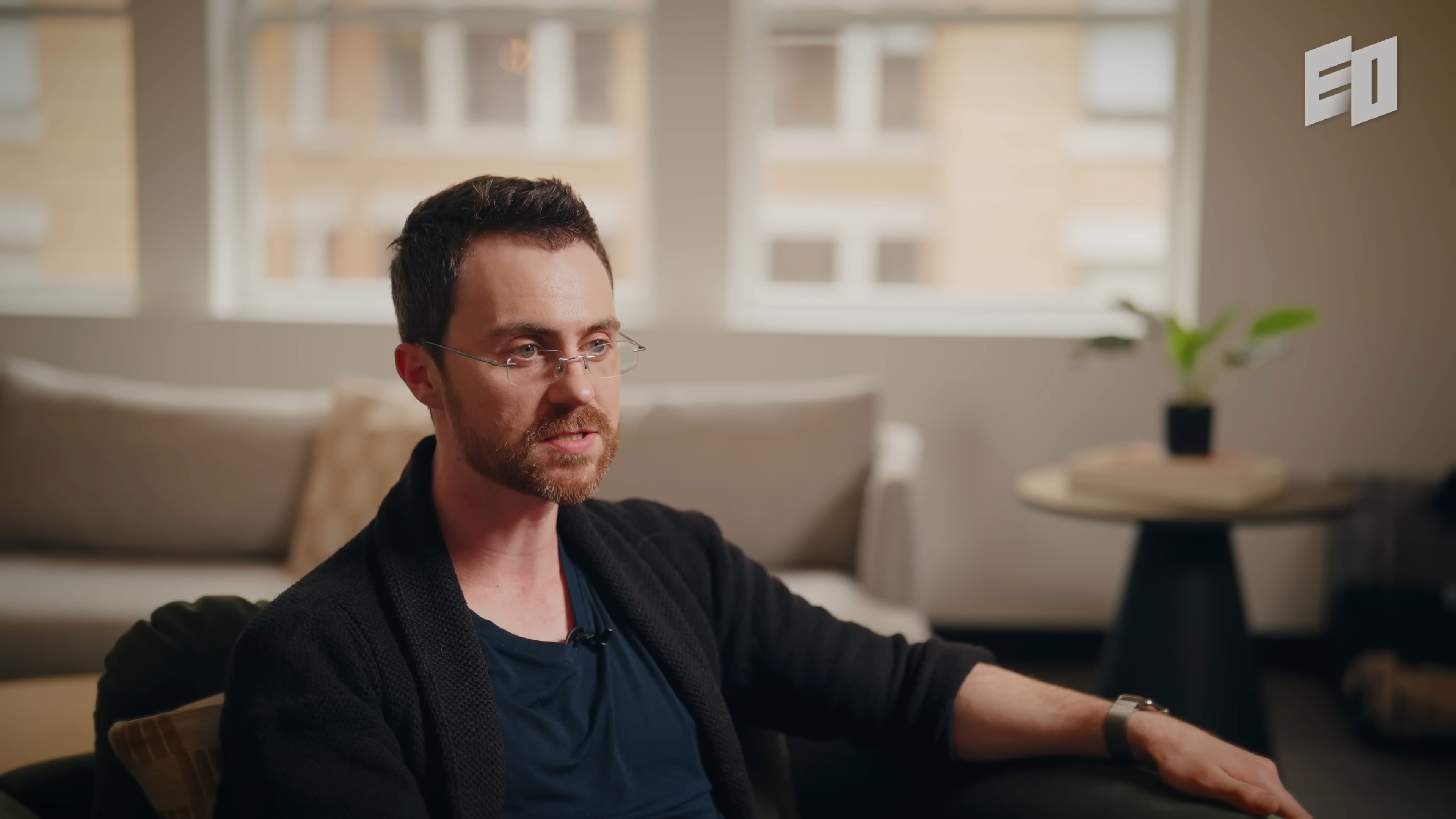
I think it was Jeff Bezos who said something like this. People always comment about how fast everything is changing, and he likes to focus instead on what doesn't change. In a world where everything is always changing, he finds these pillars of stability to hang onto.
And what doesn't change is the user, and a lot of the preferences of the user are simply immutable.
That really surprised us. We released the platform and we started to have quite a few users ask us for HIPAA compliance, which is the regulatory standard in the US that allows you to work with sensitive health information. People started asking whether we could be HIPAA compliant, because they wanted to use Lindy for healthcare use cases. We asked them why, and what exactly they wanted us to be HIPAA compliant for. That is when we understood the use case, which turns out to be huge. There are really big companies dedicated solely to this one use case, where doctors spend a lot of time taking notes during patient visits. They call it charting, because these are notes in a very specific standard called soap notes.
Some of them started building Lindys to help them produce their soap notes. They use Lindy on a mobile phone and record the conversation with the record feature that we have, and then they prompt Lindy to give them the notes in the right format.
In the case of AI agents, the user wants something that is easy to use, something that is effective, something that works, something that is simple, something that is affordable, and something that is fast. These things are always going to be the case, and the problem that the user is trying to solve is fairly constant as well.
Build AI That Barely Works
LinkedIn's founder Reid Hoffman said this famous thing, that if you're not embarrassed by your first version, you shipped too late. In AI, I would go even further and say that if your first version works, you're not thinking big enough. You should build for the future generations of the model, and the models are improving so rapidly that the current generation should barely support your vision, just barely.
That was very much the case at Lindy. For a long time, the product simply did not work, because the models were not good enough.
The very first version of the product was just a prompt. Instead of building AI agents out of the building blocks I mentioned, it was literally just writing text. Because it is only a prompt, you are trusting the AI model to follow your instructions, and it may not follow them. You are praying to the LLM gods. Fast forward two or three years and I use the very most frontier models right now, Claude Opus 4 and OpenAI's o3, and even they very often struggle.
We are building for the next generation of models. The current product doesn't work, and yet we keep building, because we expect that the next generation of models will make it work. The way I characterize it today is that it is sort of an AI intern. It can perform simple enough tasks, and anything you can describe in a step by step fashion is something it can definitely do.
Over the long term, the vision is to build a full-blown AI employee, an AI agent that can do anything that a human employee can do on the computer.
So that's my piece of advice. Skate where the puck is going to be, in Steve Jobs' words, and skate for where the next generation of models is going to be, and build with that in mind.
Don't Hesitate to Pivot Hard
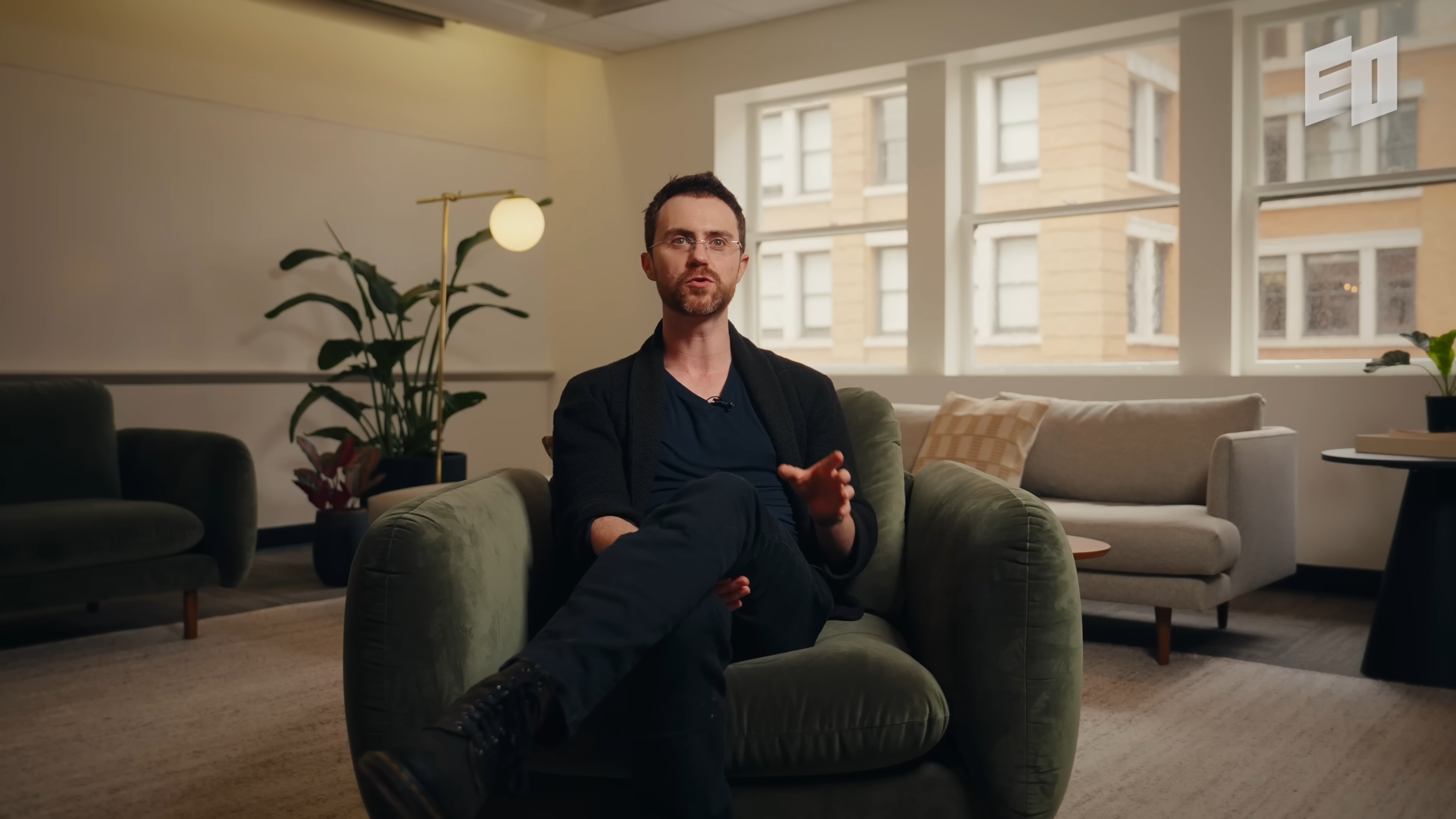
Don't build a mine until you've found gold.
I have really identified two distinct phases in a startup's life cycle. First you prospect, and you look for the right mining site where you can find gold. Once you've struck gold, but only then, you build a mine, and building a mine is basically hiring a team and raising money and all of that stuff. It is really hard to move a mine, so if you build too large a mine and you haven't found gold, what you need to do is destroy your mine and fire your team.
I started at Uber as a software engineer, and I took a six month break after Uber. COVID broke out and everybody was stuck at home, so I was just on my computer at home, and I read a blog post by John Palmer called Spatial Interfaces, which extolled the virtues of spatial design. There was almost a call to action in that blog post, where he wondered what a spatial Zoom would look like. I thought that was a good question, so I started hacking it together.
In the span of a couple of hours I had a prototype of a spatial Zoom. You see your video in a bubble, you can move the bubble around on a two dimensional canvas, and you can only hear and be heard by the people around you. Again, this coincided perfectly with COVID, so I started hosting virtual happy hours in there with my friends, telling them to join me in the space I had built.
I got sucked in little by little. I kept adding features and I realized it could be a collaboration space, so I added a whiteboard and so forth. Then I realized that everybody was working remotely right now, and this could be a virtual office, and there was a market here. I released it, it got traction, a bunch of users started signing up, we raised some money, and then the company was off to the races.
When COVID subsided and people returned to the office, Teamflow started not going so well and the growth stalled completely.
What finally convinced me that there was simply no market anymore was looking around and seeing all of our competitors, of which we had many. They were good teams with really good people, they had raised a lot of money, and none of them were taking off. That's when I just realized there was no market.
That's what I did, and it was extremely painful, but we fired two-thirds of the team. It coincided with the release of the GPT-3 API, so this was around mid 2022. We had built a meeting recorder in Teamflow, and we were very interested in the GPT-3 API, so we asked what we could do with it. We did what a lot of applications now do, which is meeting summarization. Then the sales team came to me and asked, Flo, can this thing also update Salesforce after sales calls? We said sure, we don't see why not. So we kept building and kept fleshing out that Salesforce integration and then a HubSpot integration, and that's when it clicked for us. We realized we could get an LLM to not just generate text for us but generate API calls, actual actions. That's when we thought this could be an entire AI employee.
We got sucked into that. Again, it coincided with Teamflow stalling out. We got excited about this AI thing, ChatGPT came out in the middle of it and exploded, and we thought AI is real, it's happening. So in 2023 we decided to completely fold Teamflow and just focus on the AI opportunity.
I did that very deliberately, and it is painful as a founder. You need to deliberately mismanage your team. You need to leave them alone and they are going to hate you. They wonder where their CEO is and what he is doing all day. I'm looking for gold. The mine doesn't matter. The mine is very badly mismanaged right now and you are all lost at sea, and I decide not to care, because I'm going to spend my time digging for gold.
That's what I learned. Don't build a mine before you've found the gold.
Stop Avoiding Micromanagement
My leadership philosophy is that the job of a CEO is to win, and that is my guiding light. Epistemologically, that is how I define what is right or wrong.
Perhaps I would compare it to gardening. It starts with selecting the seeds, and I really do believe that half the job is just recruiting and getting the right people in the door. Again, I think it was an investor who said that the people you hire are the company you build, and I'm reminded every day of how true that is. It is half the job. If you don't have the right seeds, the plant won't be good.
And then you give direction to the team and to the seed. That is the sun. You grow in this direction. That is the second big part of the job, which is just setting the vision and guiding the plant as it grows.
But you can't grow for the plant. The plant won't grow the way you want it to, so you've got to fire people.
There's this amazing book by Bill Walsh called The Score Takes Care of Itself. The philosophy of Bill Walsh is that success consists of just two things. One, identifying the right inputs that lead to success, and two, nailing each and every one of those inputs perfectly. If you do these two things, you will win. If you don't win, it means you either don't understand what it takes to win or you're not doing what it takes to win. It is just one of those two things.
It's actually funny. We onboarded a new employee this morning, and he is the first one in his function, so I spent the day yesterday, a Sunday, writing an 18-page document for more than seven hours. This is precisely and exactly what we call the standard of excellence. Step by step by step, this is the job.
Again, that is the plan. If you see them doing something wrong, you guard it and you say no, this is not what you do. You keep putting up these guardrails and you refer back to the document that you wrote.
Absolutely you should micromanage. The reason you are in a position of authority is that someone with capital most likely trusted you and your taste. You are entitled, and you are in fact obligated, to micromanage. That is why you are in your seat. You exercise your taste, you exercise your judgment, you exercise your knowledge about your business, your industry, your user and your product, and you guide the plant. That's my philosophy.
Be a Definite Optimist
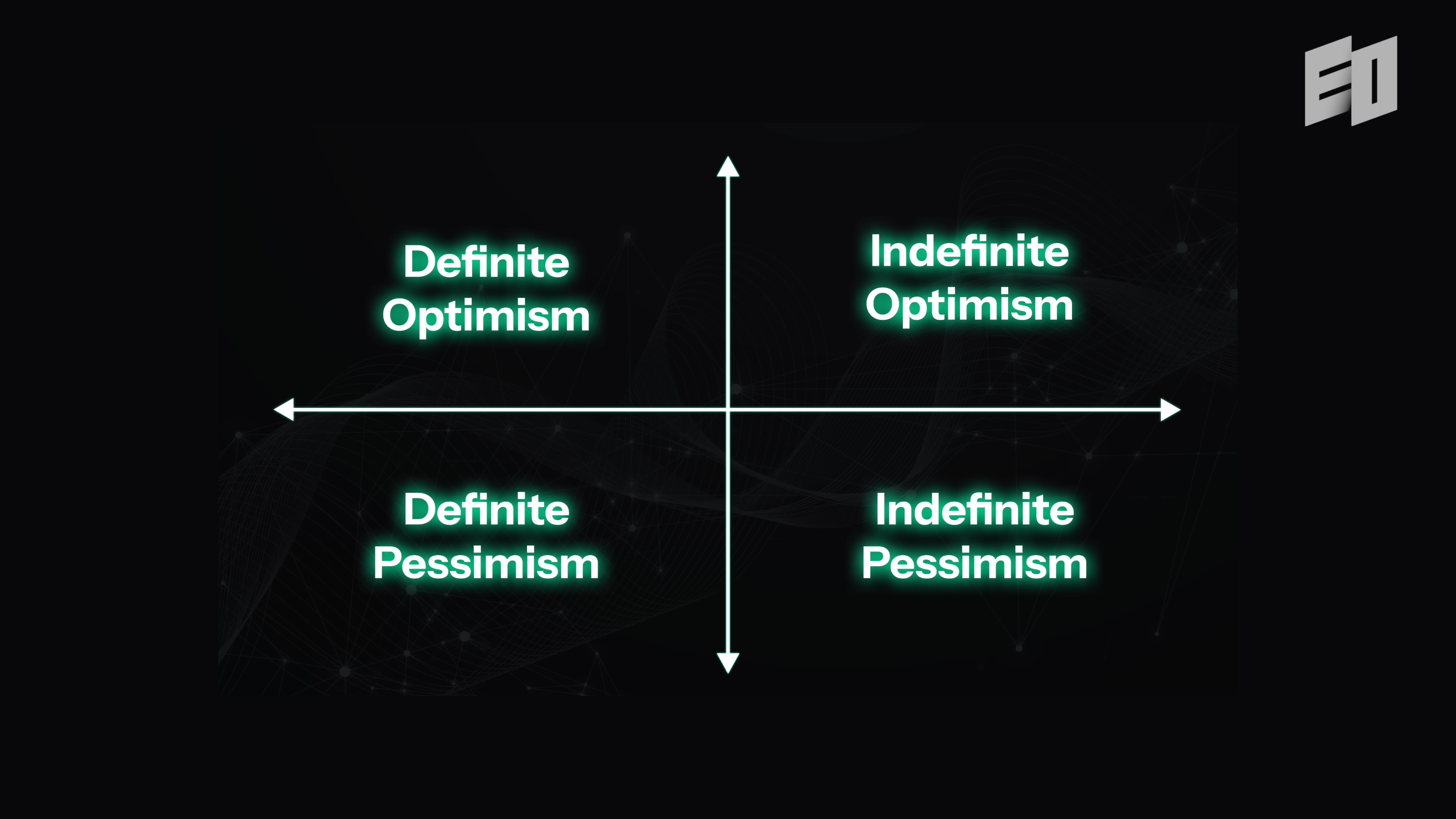
I view building a company as a way to bring an ambitious, bold vision to reality. I don't think the lean startup model leads you there.
I'm a huge fan of Peter Thiel's thinking on this. He calls it definite optimism. It's like a two by two. You have definite and indefinite on one axis, and optimism and pessimism on the other. Definite or indefinite is about whether you know or you do not know. There is a lot of indefinite optimism in tech, and I view crypto as the eternal indefinite optimist industry. We don't know what's going to happen, we don't know why things are going to go well, but we're all going to make it, everything is going to go so well, and we can't exactly tell you how.
Instead, Peter Thiel pushes for this vision of a definite optimism. You must have a crisp, well defined opinion of what the world will look like in the future and what it should look like, and then bring that vision to life.
What percent of your time did you spend in 2022 speaking to an AI? Zero percent. Today in 2025 it's a lot more than that, and I think the trend is going to continue and continue and continue.
AI agents are basically going to turn us all into managers in the short term. Instead of doing individual contributor work, you're going to manage a swarm of AI agents doing your work.
I sometimes describe it like this. Imagine if any random 25-year-old could have the same impact in the world as Google. I think that AI agents are going to do to the world of business at large what the internet has done to media. It's going to be a very powerful leveling of the playing field. It's going to unlock opportunity for everyone regardless of their network or their capital or their access or their geography. It's just really going to come down to their vision, the ideas they have, and their ability to leverage AI agents.