Jun 08, 2024
3 Lessons on Building $1B Business
Interview with John Kim, Founder of Sendbird
Founder Focused

💡
At a Glance
- Who: John Kim is the founder of Sendbird, a company he built from a Korean startup, through Y Combinator in 2016, into a Silicon Valley unicorn.
- What: Sendbird builds bidirectional conversation infrastructure for mobile applications, serving mid-market and enterprise customers.
- Traction: Kim raised a seed round at YC Demo Day in 2016, broke $1 million in ARR by early 2017, tripled revenue to $3.6 million before the Series A, and grew Sendbird into a billion-dollar company.
John Kim built Sendbird from a $300-a-month co-working desk in the Bay Area to a billion-dollar company. He talks about failing a Series A with 29 rejections out of 30, the day he realized going global was the only way to survive, and the 2PM Framework he uses to build companies that win the global market.
Key Takeaways
Revenue Is the Only Universal Fundraising Language in Silicon Valley
Kim failed his Series A in early 2017, getting rejected by 29 out of 30 investors. He went back to existing seed investors, extended the round, and spent the summer growing revenue. When he returned to raise his Series A with $3.6 million in ARR, the same investors who said no all said yes. In Silicon Valley, Kim concluded, revenue eliminates bias.
Korean Tech Companies Must Compete Globally or Risk Being Displaced
The Korean market, once shielded by language and regulation, offers no real protection in the digital era. Cyworld was overtaken by Facebook; local video platforms were displaced by YouTube. Kim concluded that if Sendbird could not survive on its own in the most competitive market, the US, it was only a matter of time before a better-funded Silicon Valley competitor came for them.
The 2PM Framework Builds Startups That Last
Kim's 2PM Framework covers four variables: people, product, market, and money. He stresses founder-product-market alignment above all else, pointing to his own experience building a moms' app as a male-only team in Korea, reaching a quarter million users before failing to scale. Misalignment becomes fatal when the hype cycle ends and the original passion was never there.
Pricing Is the Most Underrated Growth Lever at the Early Stage
Most early-stage founders copy a competitor's pricing and discount it by 20%. Kim argues this is a serious mistake: pricing has the highest correlation to growth rate, gross margin, and company valuation. Founders who obsess only over growth while ignoring pricing and retention are building on a weak foundation that limits long-term upside.
Crossing Cultural Communication Gaps Is Non-Negotiable for Global Teams
High context cultures, common in Korea, Japan, and China, place responsibility on the listener to infer what is wanted without being told. Low context cultures like the US require explicit communication from the speaker. Kim had to unlearn this dynamic personally and professionally, including forcing himself to attend networking events in communities where he knew no one.
Going Global Is a Survival Requirement, Not a Strategic Choice
Kim's insight came from watching Korean tech winners get displaced the moment global competitors arrived with more funding and better products. Digital markets default to winner-takes-all. Without competing at the global level, any local moat is temporary. Kim's call to action: be so great that nobody can ignore you, then prove it can be done.
Below is the complete transcription of the interview. Minor edits have been made for clarity and readability.
Fundraising as a Foreigner in Silicon Valley
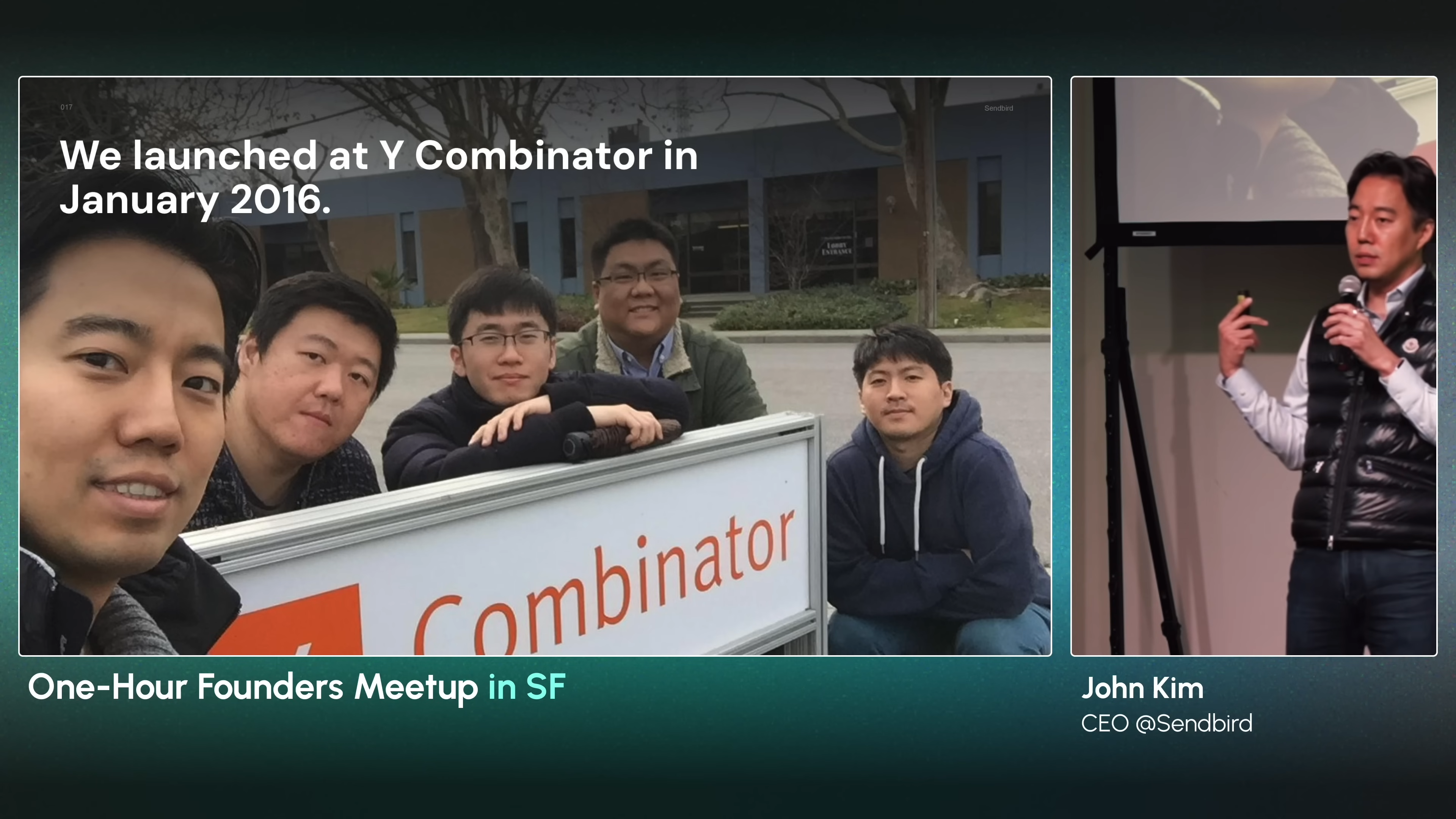
Just a little bit about me, John Kim. We went through Y Combinator back in 2016, but we focused on the bidirectional conversation that happens inside your mobile application. Most of our business is mid-market to enterprise. In 2015, I came to the US by myself. We found the cheapest co-working space in the entire Bay Area. This place gave us a spot for $300 a month, a dedicated desk with a swappable desk.
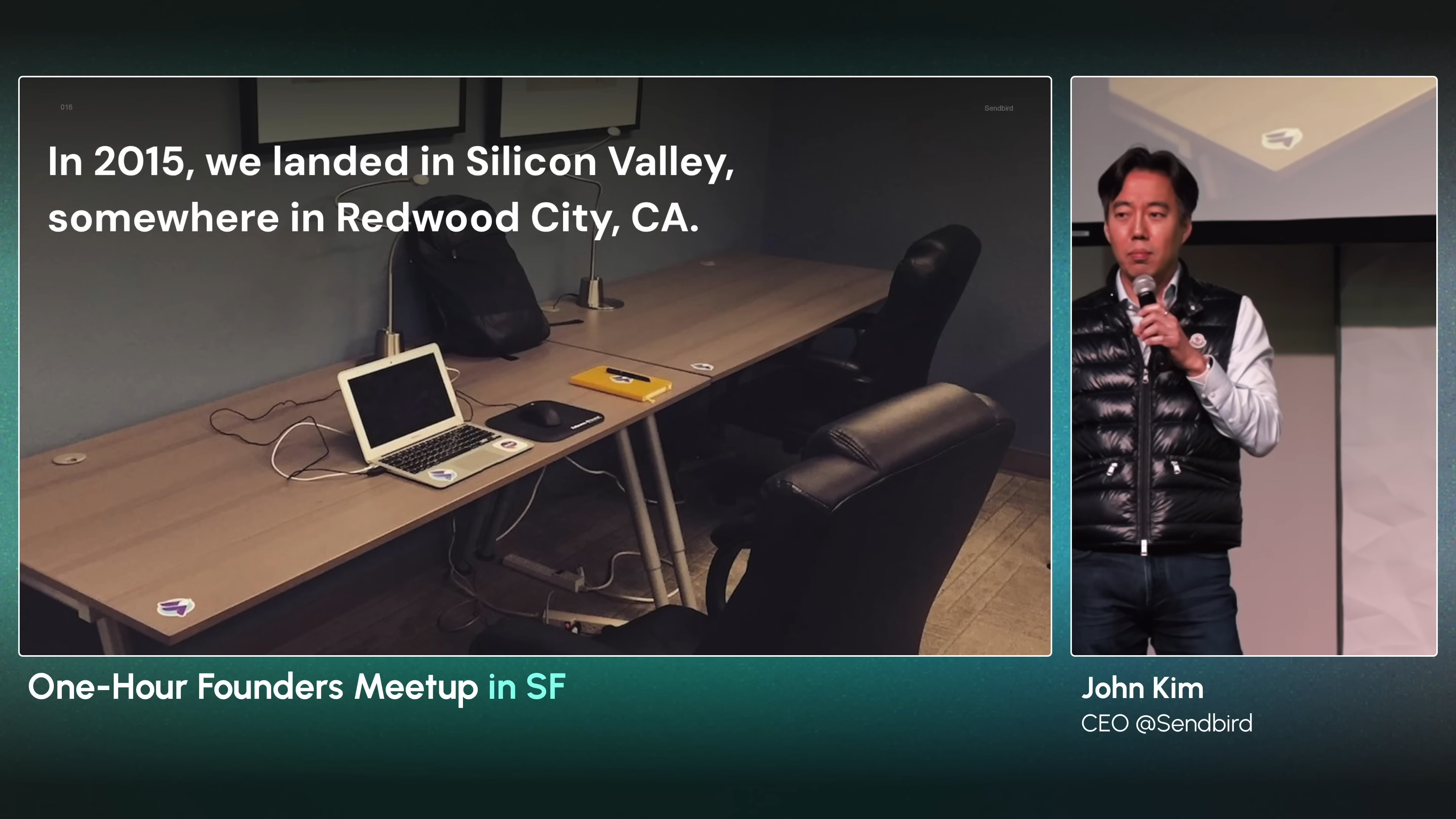
I think back then the co-working space had about 45 to 50 people. This was actually a law firm, so we worked out of there. Ultimately the partner saw us working until 10 p.m., 2 a.m. all the time. So he ended up giving us a private suite at the same price, which was fantastic.
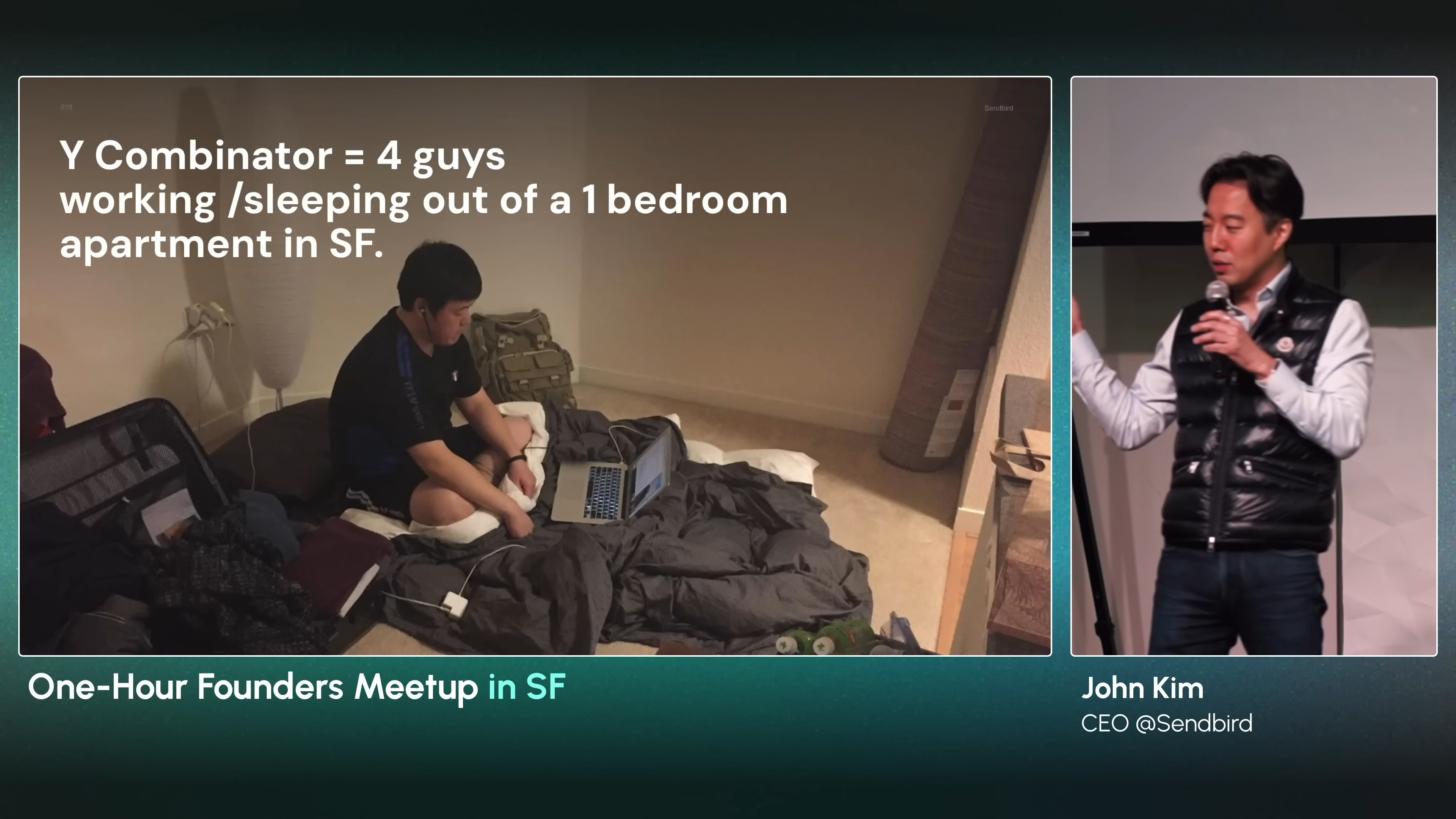
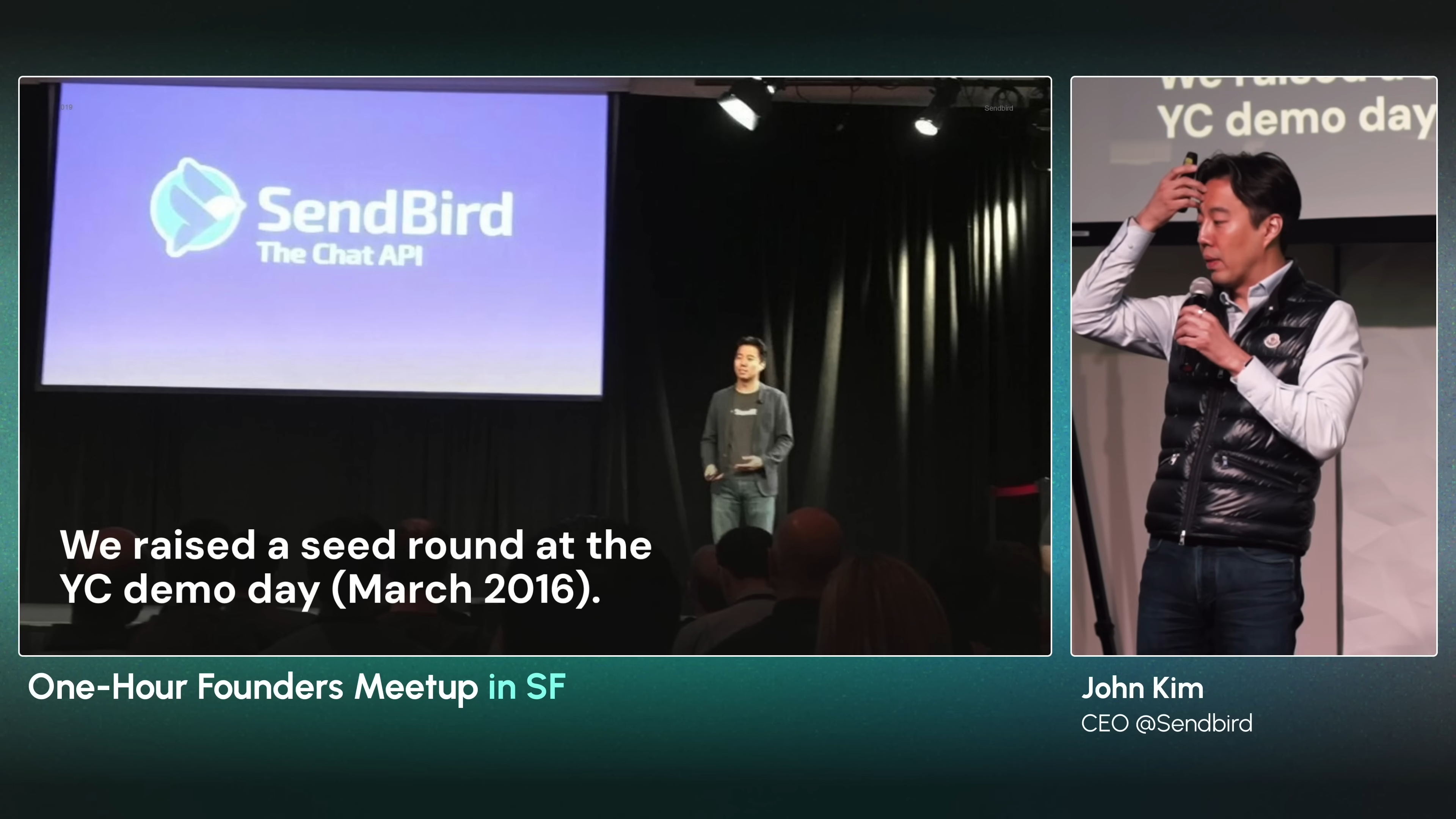
So we joined Y Combinator in 2016. We're the second Korean company to go through YC. We didn't get recommendations. There wasn't any magic. I think we just got lucky. Our group partners were Justin Kan and Michael Seibel, who were co-founders of Twitch, so they knew something about chat. Sort of like, oh yes, you guys should exist. I'm like, thank you. So we got in, working and sleeping out of a one-bedroom apartment, and we also raised a small seed round at YC Demo Day.
And this again: we started in 2013, just three years later we're doing a seed round. I actually wrote a pretty long essay within the YC community called Bookface. It is okay to be not liked on Demo Day, because we're certainly not the hot startup. We didn't get a lot of investor interest. We literally had to collect $50K and $100K checks to put together $1.5 million. It was a really, really painful process.
But we were still able to raise the money, with some kind of language barrier, because English is not my first language. My teachers are Netflix stand-up comedy. So there's a lot of unconscious bias I think I was going through. We failed a Series A fundraising at the beginning of 2017 when we just broke $1 million in ARR. I met 30 investors, all local. 29 said no. One gave us a really bad term sheet.
And that summer, all the investors went off to the Bahamas and Hawaii. So we basically went back to our existing seed investors. Thankfully, I was sending investor updates. If you're not sending investor updates, please send them on a monthly basis at a minimum. And then we basically beg them for an extra million dollars extension, which thankfully we did. And by October I was literally afraid to go out and fundraise again because I didn't go to Harvard or Stanford. Like, I didn't know anyone here locally.
So I was telling myself, they're only going to back Stanford and MIT and Harvard grads. There was a stat that 80% of fundraising done in the Bay Area back then went to those three schools. But I remember this quote: be so great that nobody can ignore you. So thankfully, our revenue tripled during the summer. By the time we went out to raise Series A, we were already past $3 million, getting towards about $3.6 million.
And immediately all the people who said no started saying yes. We could pick the investor we wanted to work with. So I'm like, okay, Silicon Valley is kind of fair. I mean, there are a lot of biases; don't get me wrong. But as long as you have revenue, they will give you money. How great is that?
4 Things I learned from Going Global
I just want to share a couple of lessons we learned along the way. Hopefully you'll find them useful. The first thing I learned is unlearning a lot of the things I thought were key to success in Korea. I just had to wipe it off. Basically, I had to forget how to build startups the Korean way. I was born and raised in Korea, spent most of my life in Korea. So a lot of that collectivistic culture, agreeableness, not being assertive: that was me.

In engineering and science there's a concept called local optima and global optimum. Basically, when you're entering the market, there are a lot of hills you can climb. If your only fitness function or key metric for success is growth, you're very likely to get stuck in one of the smaller hills. Obviously, there's a bigger hill to climb, but when you're starting as a Korean company selling to the Korean market, you're very likely to get stuck in one of the local optima.
And that was okay. The Korean market was growing, was big enough to feed the families and the businesses, and the local market was protected by language barriers and regulations. But with digital now, what happens when the barriers to entry disappear? The doors flood open. So I think there are a couple of examples.
Why you should compete in the US market
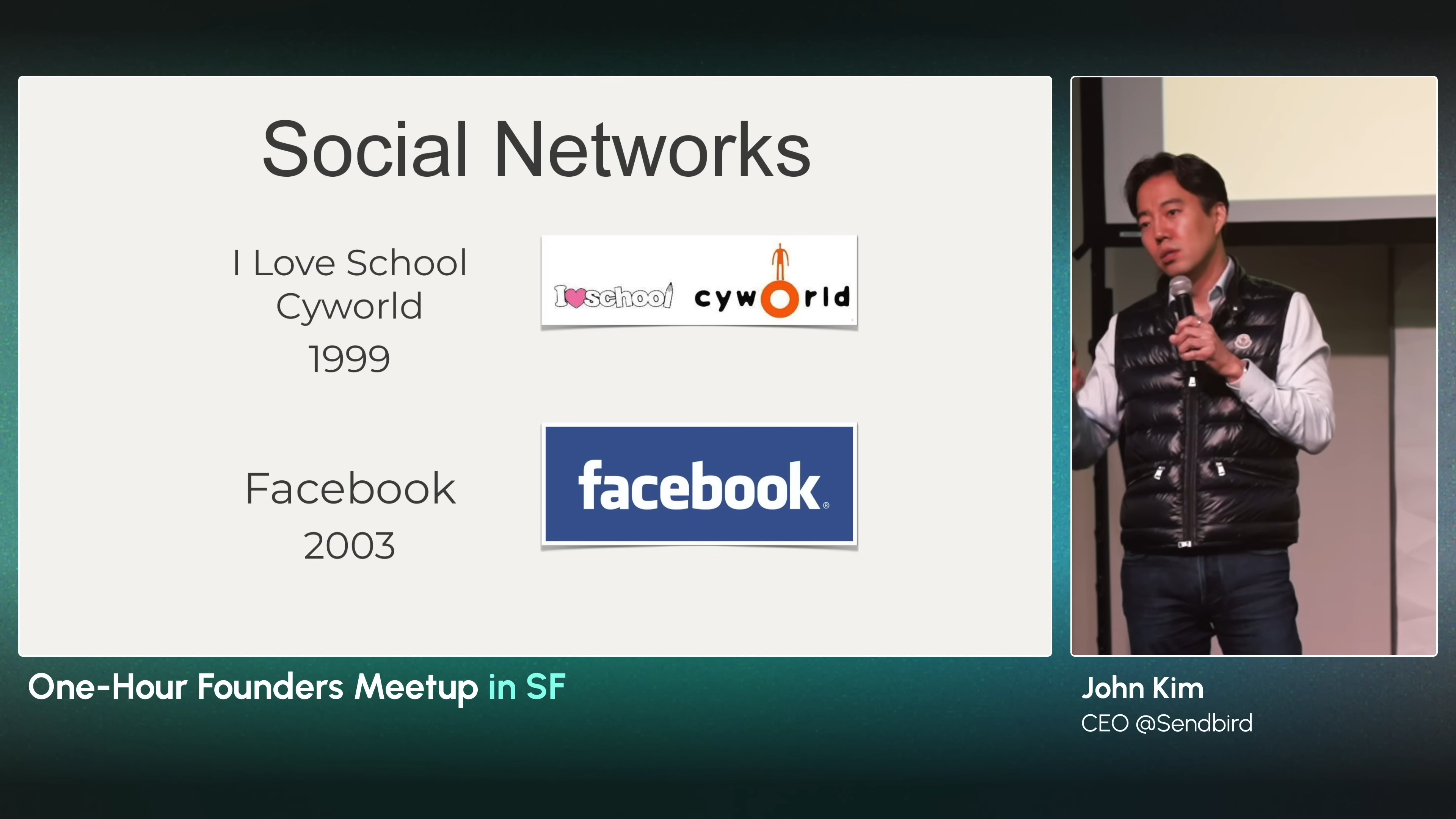
There was a social network I loved called Cyworld. It started in 1999. Massive success. All the Koreans used it. Ultimately it was sold for some dollar amount. Facebook became the most dominant social network in Korea.
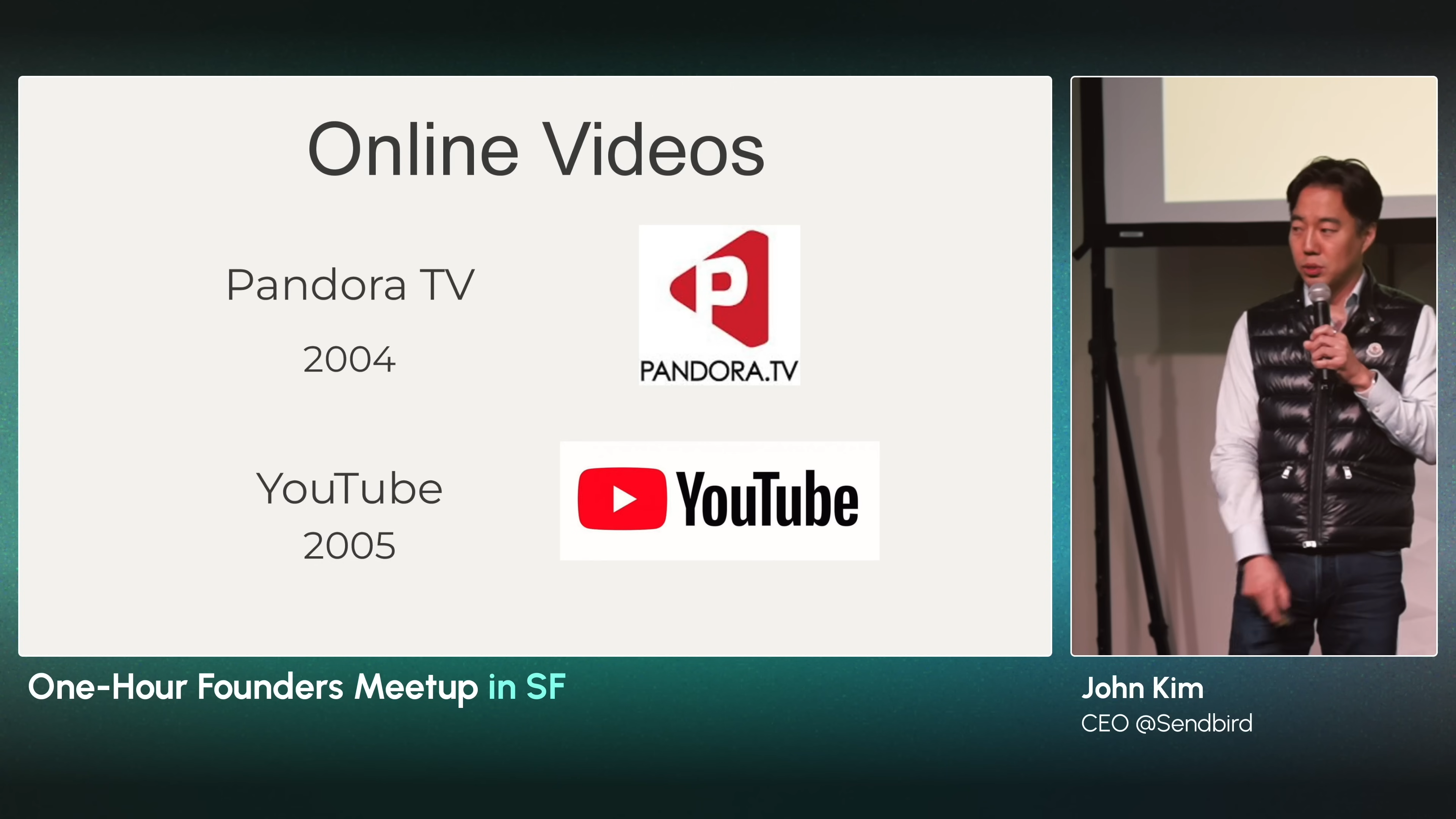
Online videos also started earlier than YouTube there. YouTube is now the most widely used product in Korea, versus Pandora TV. I don't know what happened to Pandora TV. So what's the story here? In technology, when there isn't a real local moat like regulations or language, in the digital world and globalization, it becomes a winner-takes-all market.
Because when the global optimum, meaning the product with the most funding and the best user experience, comes in, there's no defense against them. So the markets get wiped out, as you've seen from all the examples. Local winners ultimately get beaten by better-funded companies, usually from Silicon Valley. When I saw that, I thought: Sendbird, we started in Korea. We're a Korean company in B2B SaaS. If some other chat company is better funded, Silicon Valley will come to Korea and we'll get beaten. The only reason we can survive is if they think the Korean market isn't big enough.
But they're still going to go after India or China or other countries. So if we cannot survive on our own in the most competitive market, the US, it's just a matter of time till we die. So the only way for any company to survive is to go global. Unless you're a barbershop, we have no choice but to reach for the global optimum.
A little bit of history. Korea as a nation was dirt poor because we went through the Korean War. Our GDP per capita was below $100. It took us about 60 years to get to about $47,000. A lot of that key to success was based on two strategies. One is what we call geographic arbitrage. Basically, when you go abroad and see something nice, bring it to Korea and nationalize it, manufacture locally, source locally. That's how Samsung grew. LG Group.
The second is a fast follower strategy: we saw that it works in the US or some other country, so let's copy it, copy the price and copy the website. The sad story is these two strategies, fast follower and geographic arbitrage, do not work when you're trying to go to the country you copied from. You have to go there and win with differentiation rather than just being better, faster, cheaper.
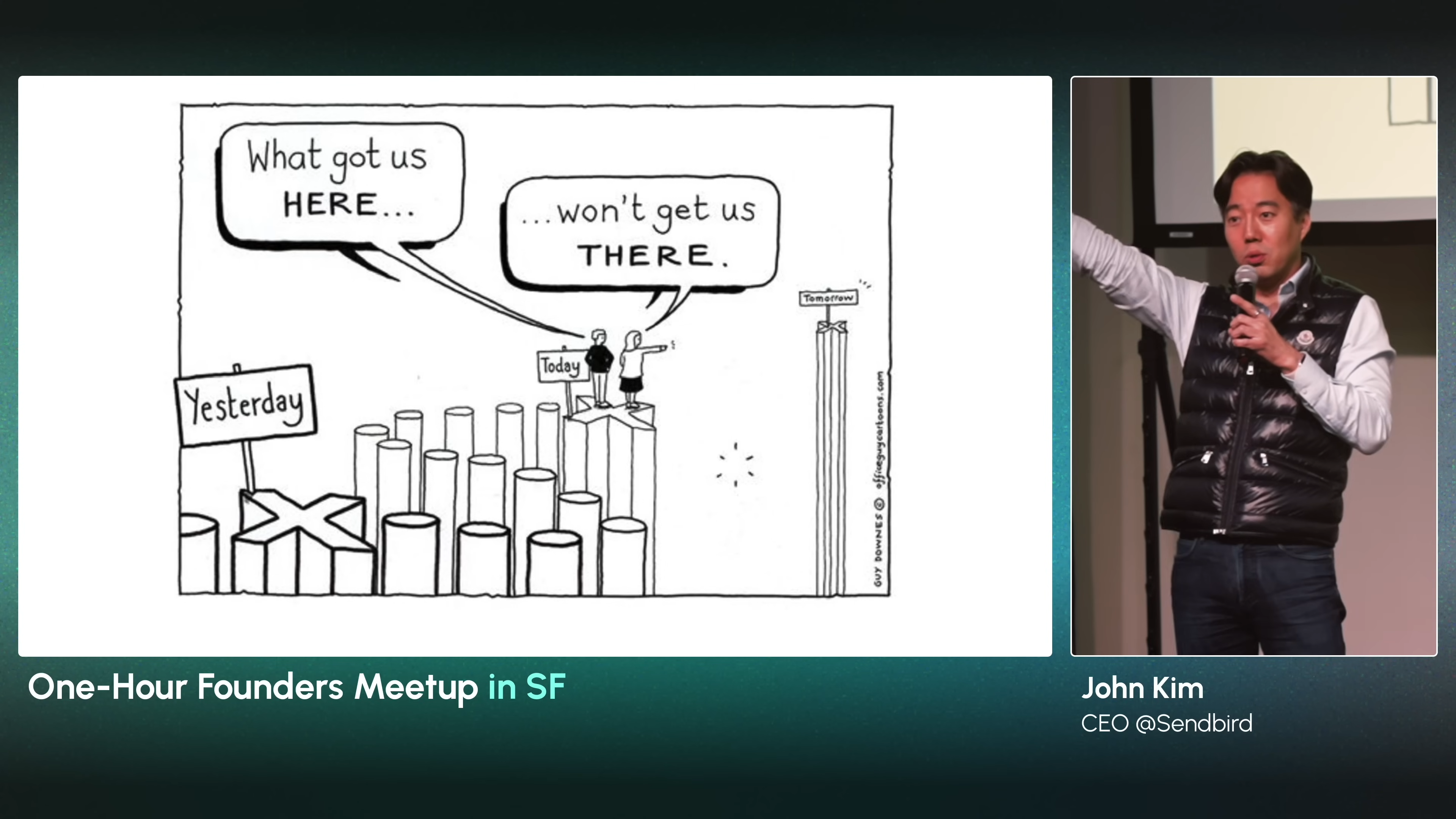
Three things. What we used to do was: oh, there's a company in the US, Facebook, let's copy that. There's a YouTube, let's copy that. You can't do that anymore. Start with the customer's problem. Really focus on the customer's problem. One of the two things they teach at YC is: don't do anything else, especially in the early stage, except build product and talk to customers. Don't go to networking events. Focus on the customer's problem. Talk to them.
If you're not talking to your target customers two to three times a day in the early stage, you need to do a lot more. I was talking to literally three customers every single day. I still do maybe one call a day. I still do that. I do direct selling. Second, don't focus on what's proven and try to make it cheaper or localized. Try to focus on what you can differentiate in the most competitive and largest market possible.
So when the market expands and grows, or when competitors try to come to your country, you still have a differentiated value proposition that can defend against them. A lot of people make what we call consensus-driven decisions: we have a committee discussion, oh, this seems right, let's do it. This is where everyone else is. So there's no moat; there's no edge you have. If everyone thinks it's the wrong thing to do, nobody is going to do it. So obviously nobody is doing it because there's no value.
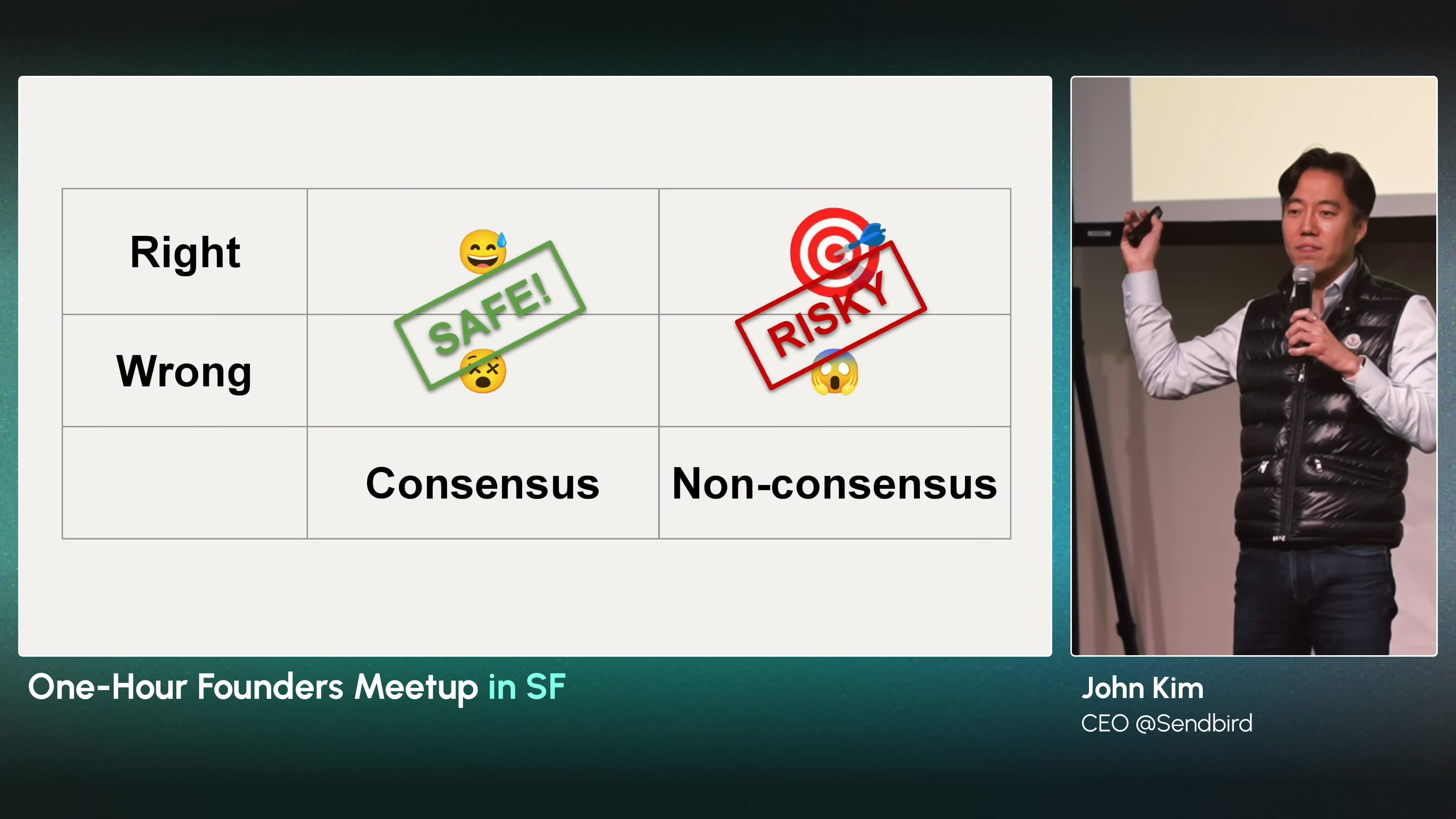
The only edge you have as a startup founder is focusing on the top right: when everyone else thinks it's the wrong thing to do, you are the only one who thinks there's an opportunity, and you have to be right. But more often than not, you will be wrong. But really focusing on this, really looking for the insight, and the only way to get an insight is by talking to customers.
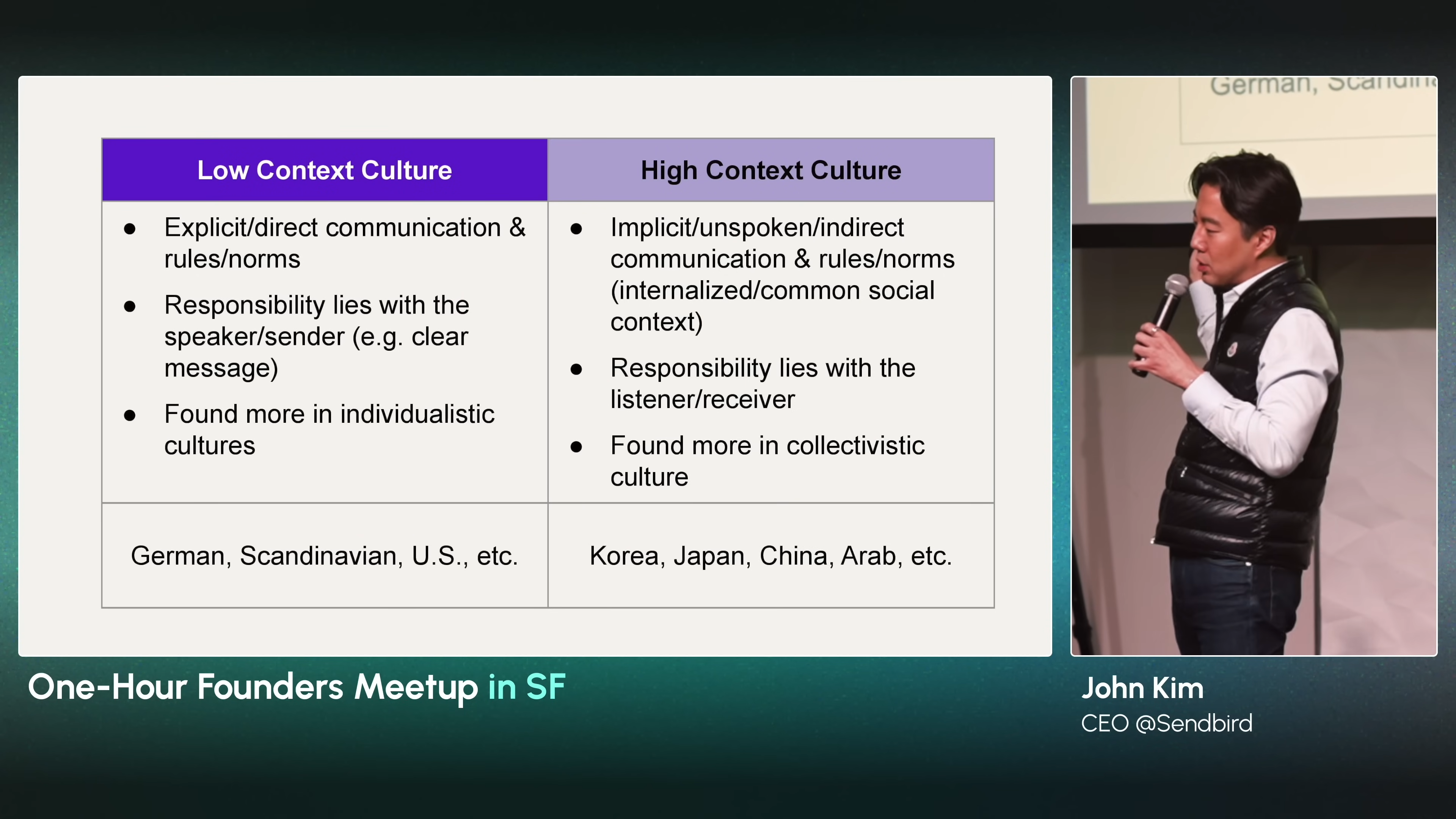
Third, hopefully you resonate with this, especially around collectivistic culture psychology: there's what they call low context culture versus high context culture. Low context, think of America, maybe a little bit of Germany or Scandinavian countries, very explicit and direct communication, to a point where it feels offensive. So the responsibility is on the speaker. As a manager, you have to set expectations clearly. The job of the leader is to communicate clearly. The responsibility of communication lies with the speaker.
High context culture is the opposite. It's very implicit and indirect. You kind of should know what your manager wants. They're not going to tell you directly. So you have to understand: okay, this person is generally like this, so I should do this. The responsibility lies with the listener. And this is the biggest difference, found more in collectivistic countries like Korea, Japan, China, and Arab countries.
So what happens is you end up having situations like this when you're going to a client meeting: the boss will not tell you. You have to book three different restaurants because you don't know which one they're going to go to. And the moment the person chooses a restaurant, you have to call the others and cancel, because the responsibility is on the listener and the junior to figure out what your boss wants without the boss telling you. Which is very annoying and inefficient.
And lastly, getting out of your personal cultural comfort zone. I face this a lot. When I first came to the US, I read this article written by some Israeli guy about how to soft-land in Silicon Valley. The core of the lesson was: don't settle where other people of your race live. So I specifically chose a city where there was the least amount of Koreans, because I felt like if I go to where there are a bunch of Koreans, I'm just going to hang out and drink all the time.
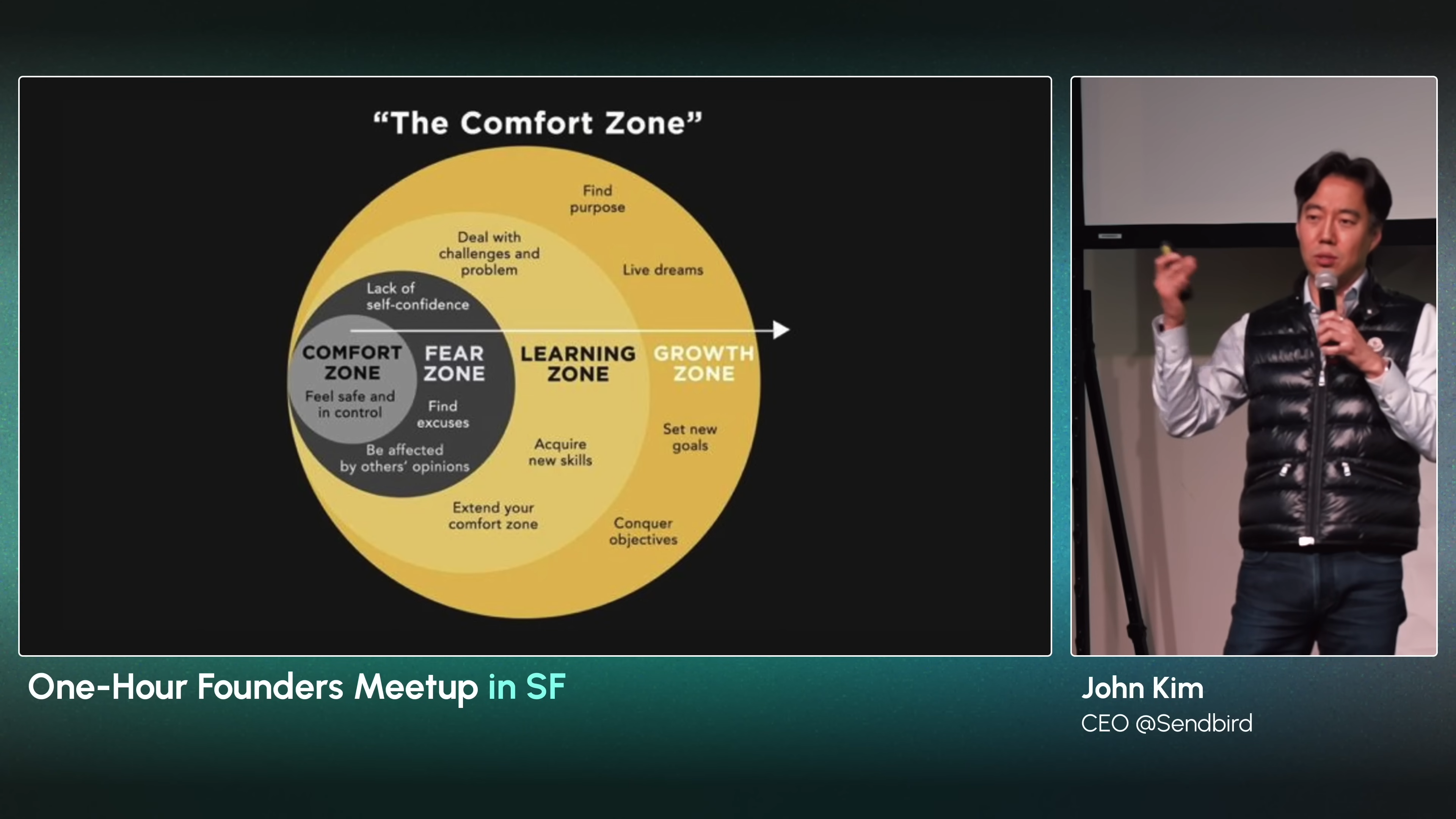
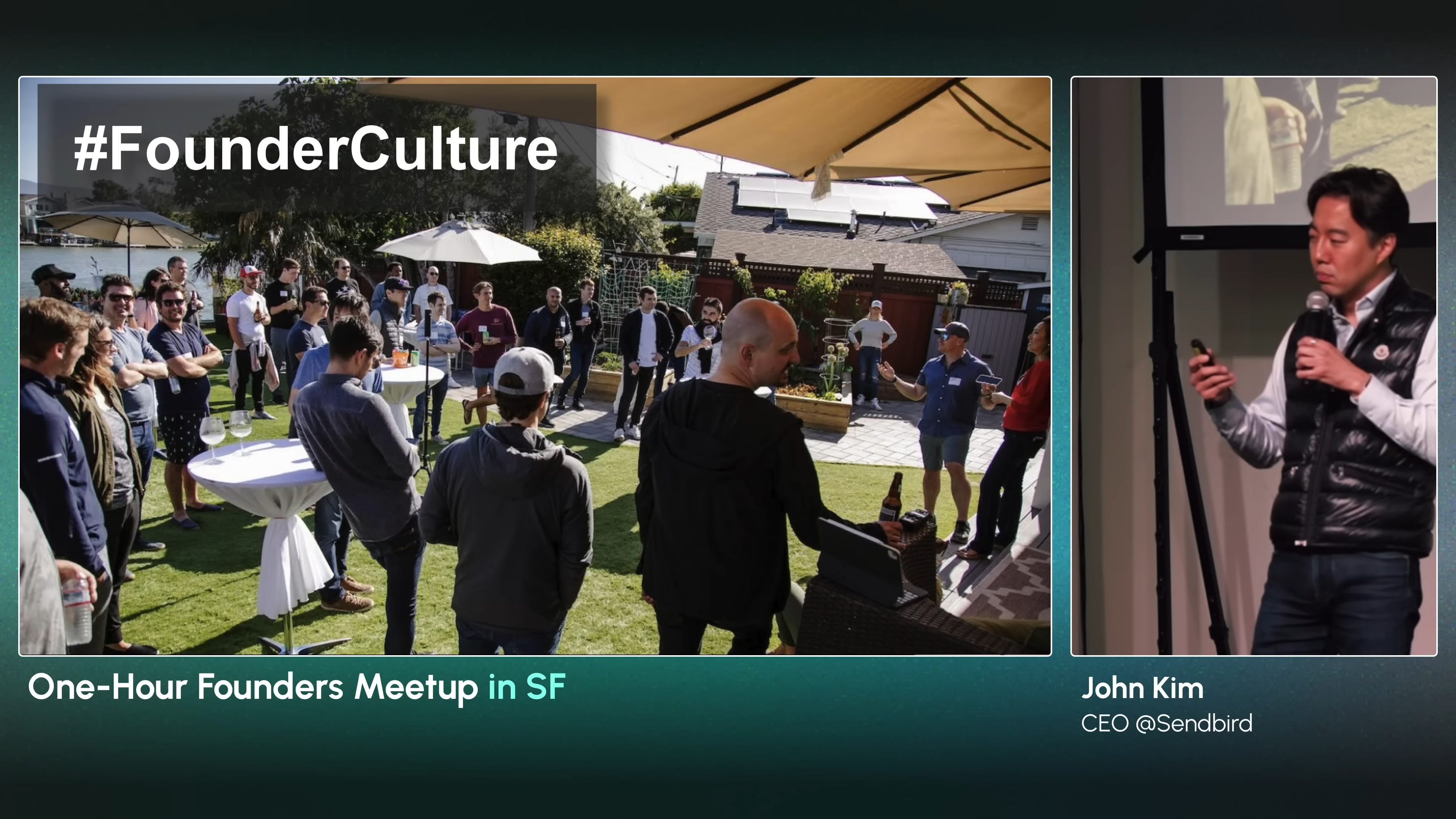
I had to really get out of my comfort zone. So I started attending these networking events to sell. But as you can see, almost everyone there is non-Asian. I had to force myself to go, holding on to a bottle of beer for two hours. I forced myself to go and learn how to sell to non-Korean people. Get out of your comfort zone.
Building the Global Playbook
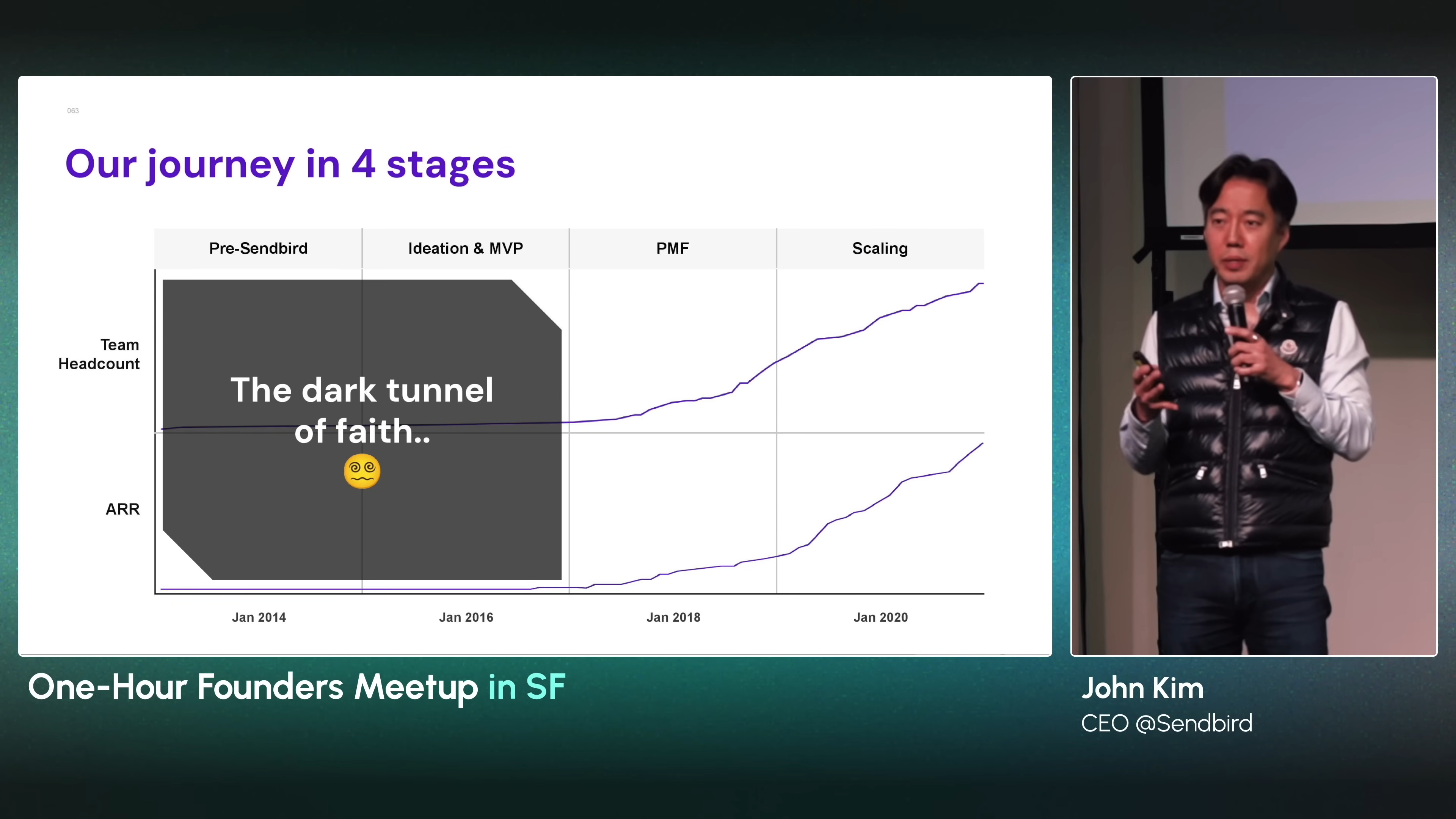
So I'll leave you with this: building a global playbook. I kind of skimmed through Sendbird's journey. There's almost four years of nothingness, two and a half years just finding product-market fit. Finding product-market fit takes a long time, and that's normal. On average, I think YC companies take about three years to find their first product-market fit. So it's a really long, dark tunnel of faith. The pivots, more pivots, just have faith. Keep going.
2PM Framework
Don't give up. I like to call it the 2PM Framework: how to help build your startup's global initiative. It's really about a cycle of people, product, market, and money. First, do you have the right team? You have to really be honest with yourself as founders. Do you have the right team to tackle the market and the customer? Really find the missionaries, not the mercenaries. Don't partner with somebody who's going to jump ship when they get a better offer.
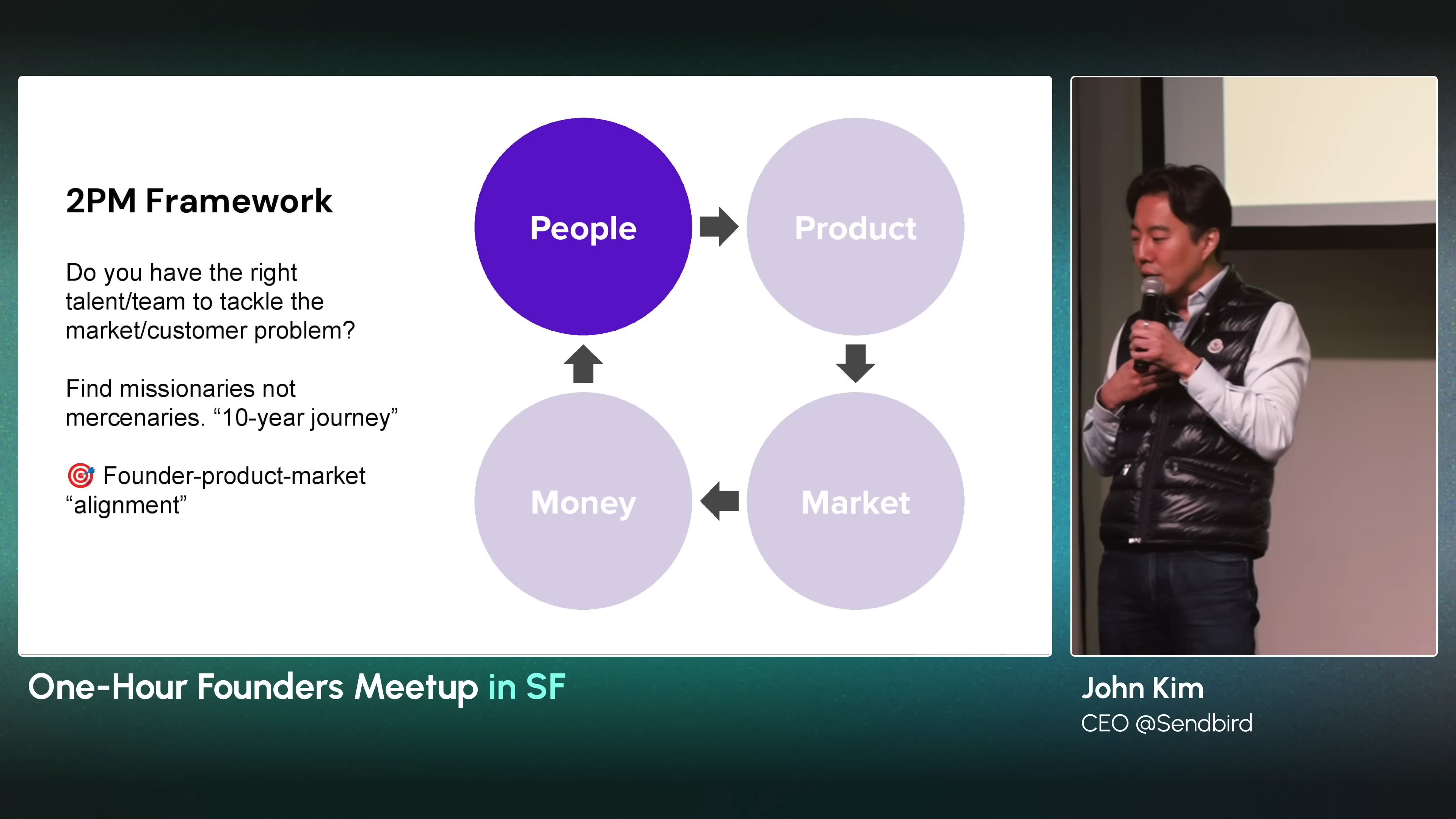
You have to really find the people who are passionate, who share those core values with you. So that founder-product-market alignment is super important. If I go back to the story briefly: we built a mom's app called Smile Mom, built by four guys in Korea. For us to build a moms' app, it was clearly the dumbest idea ever. We actually got a quarter million users, but we couldn't grow it. The founder-product-market alignment wasn't there.
This happens a lot with smart founders. They think there's a cool AI trend, so I'm just going to do AI. I actually don't care about AI, but there's a lot of money there. Or: I'm just going to do a crypto startup because that's where the money is. Everyone's flocking to it. I care nothing about digital currency or blockchain, but I'm just going to do it because that's where the money is.
Classic founder-market-product misalignment. Because after two to three years, that hype will die down and you're just going to give up. It's no longer interesting to you. So don't follow the trend. Follow what's really meaningful to you. You might be able to hold on to it longer.
Second, building the MVP. Finding product-market fit takes a lot of iterations. Assume whatever you do, you're going to throw away 70% of your work. Tell this to your engineers. Tell this to your designers.Hey, 70%, more like 80%, of your work may never get used by your customers. So just be ready for that iteration.
Third, really obsess over your customer problems. In most cases, your vision should come from the market and the customer, not your technology, not your shiny new thing. Unless you're Sam Altman and you have AI, then you get the right to find your vision from technology. Almost all of you should never do that. Focus and find your vision from the market.
You're trying to go after the customer's problem. That should be the vision, because your product and solutions can change but that problem still exists. I love this framework: the customer development process. There are two phases: search and build, where there's a lot of iteration, and then once you find initial product-market fit, that's when you actually go hire, build, and scale. But this first part should be done by a very small, nimble team, like four or five people.
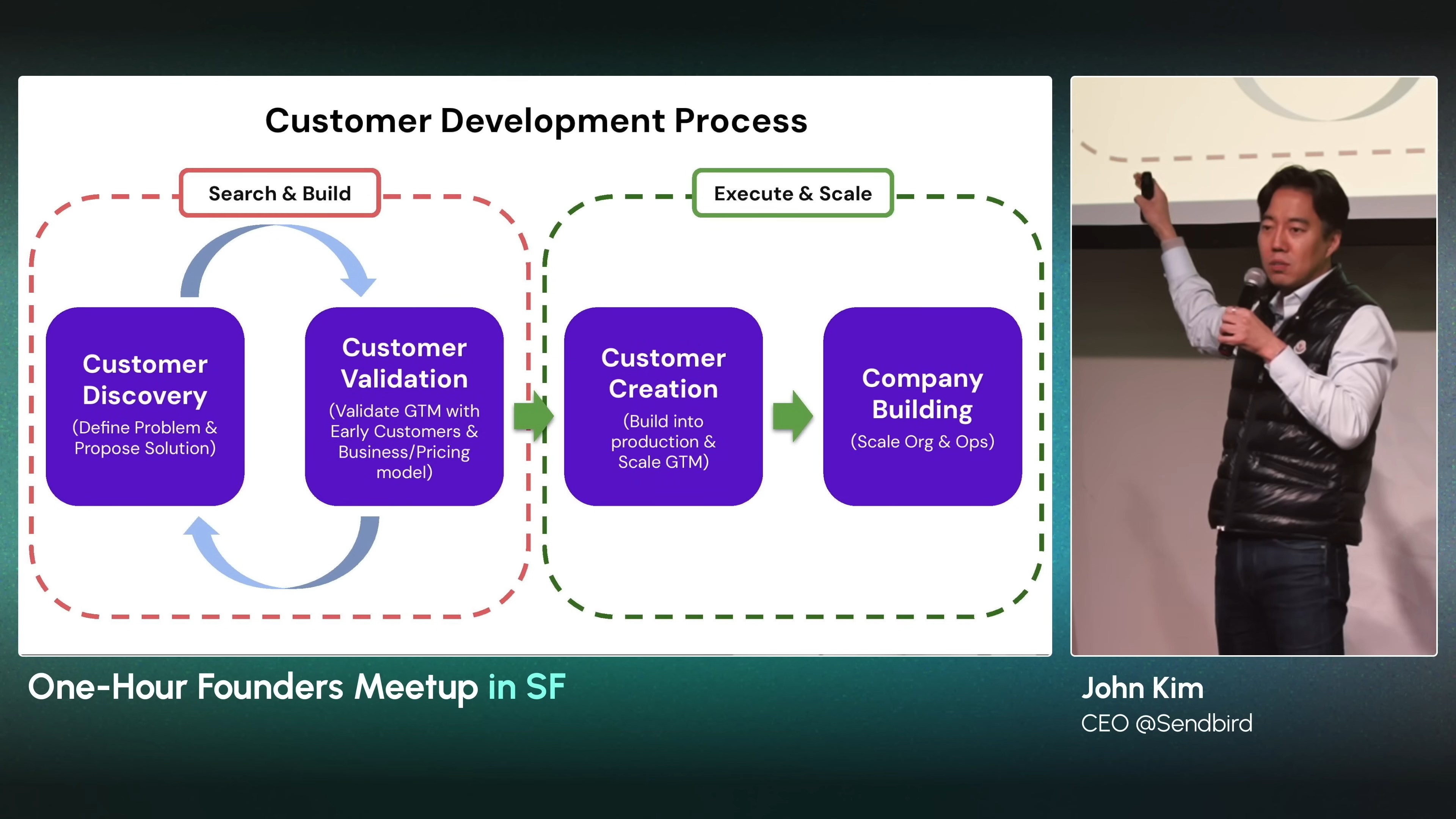
Just go iterate, talk to customers all the time. You're throwing away 80% of your work here. Once you feel like you've got something that repeats, you have a couple of paying customers who are willing to give you more money than you deserve, willing to buy from you when you don't even have a product yet: that's a good sign. When you have that, be ready to scale.
Lastly, money. You have the budget and funding. Make sure you got all those things right. Pricing model is something that people don't think about a lot. They just copy a competitor's website and discount it by 20%. That's okay. But really think about pricing a lot, because pricing has the highest correlation to your growth rate, your gross margin, and ultimately your company's valuation. A lot of early stage founders only think about growth rate. They don't think about retention, pricing, or gross margin.
Prove that it can be done
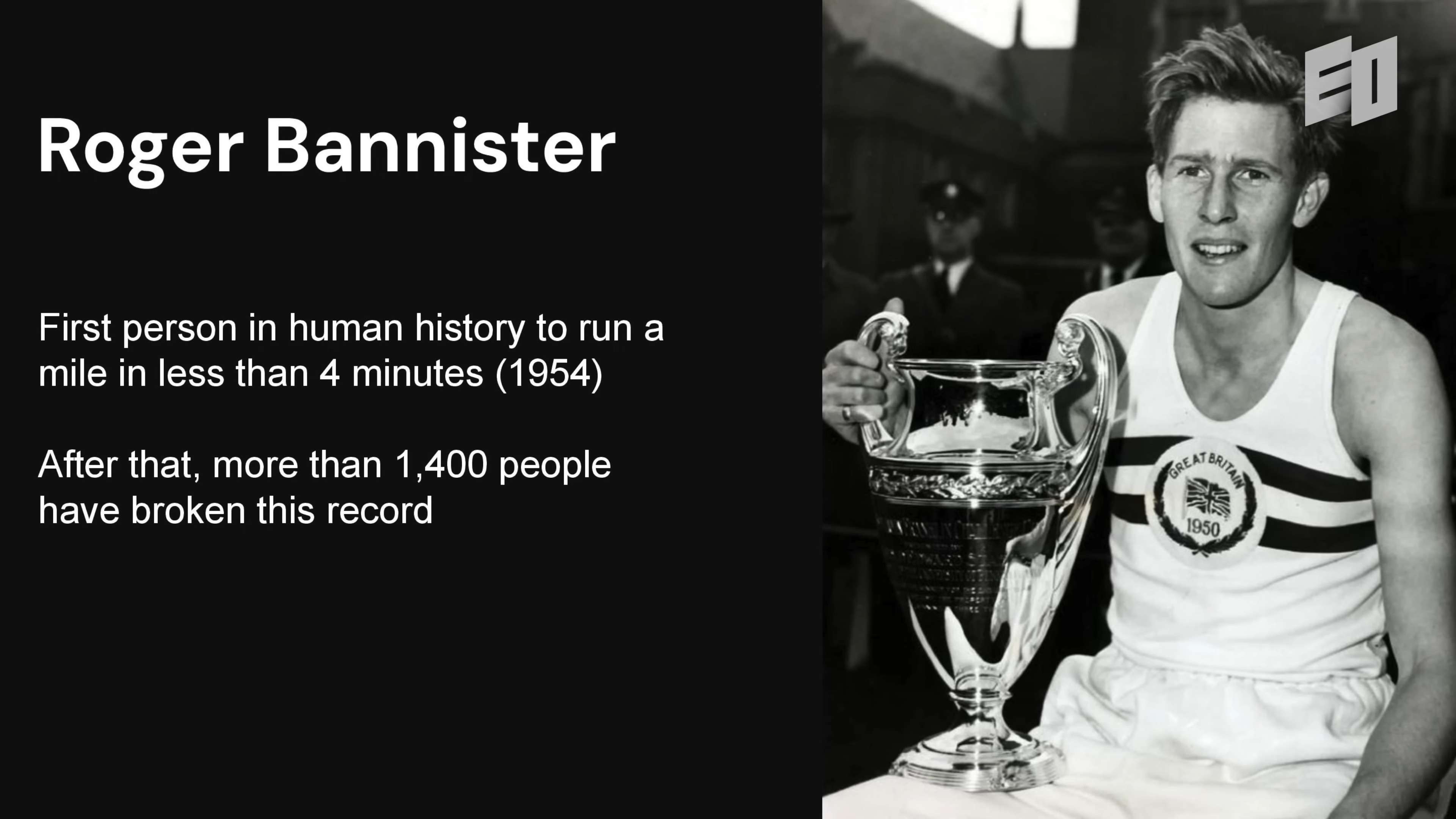
This is a serious mistake. In history, people thought it was impossible to run a mile in under four minutes. Humans cannot do it. Then this guy showed up: Roger Bannister, the first person in human history to run a mile in less than four minutes. Immediately after, over a thousand people broke this record.
So our job here is to show the rest that it can be done. People make businesses here. We have nothing short. We are different, but we too can build massive companies here. And yes, going global was not a choice for us. It was the only way to survive. We too can achieve global optimum by doing this together. Thank you for listening. That's it.