Oct 28, 2025
How an Indian Immigrant with No Background Raised $25M
Interview with Aman Gour, Co-founder of FurtherAI
Founder Focused


💡
At a Glance
- Who: Aman Gour is the co-founder and CEO of FurtherAI. An IIT Bombay graduate and former Microsoft engineer who built Microsoft Community Training from scratch, he previously co-founded HR tech startup Turbohire before moving to the US.
- What: FurtherAI builds an AI workspace for the insurance industry, leveraging LLMs to extract unstructured data from emails and auto-fill carrier portals to eliminate repetitive underwriting and brokerage busywork.
- Traction: Announced a $25M Series A, one of the largest Series A rounds in insurance AI, and crossed millions of dollars in revenue after graduating from Y Combinator.
Aman Gour was a top IIT Bombay student and Microsoft engineer who co-founded HR tech startup Turbohire in India before moving to the US to build a major public company. While in Y Combinator, Gour broke YC norms by abandoning an AI testing "tarpit idea" and driving around the Bay Area with boxes of doughnuts to interview local insurance agents about their worst operational headaches. Today, FurtherAI is transforming the unsexy insurance sector by using LLMs to ingest raw email submissions and automatically populate carrier portals, eliminating hours of manual broker busywork. In this interview, Gour reveals how he raised a $25M Series A without an insurance background, why the dinner table is the ultimate enterprise sales tool, and how his "Half Monk, Half Machine" philosophy fuels a high-agency team.
Key Takeaways
Choose A Vertical Where AI Meets Business Pressure
Aman Gour and his co-founder selected insurance after looking for unstructured data, labor shortages, and shrinking margins. Those criteria connected an AI opportunity with urgent business pressure, helping FurtherAI focus on a vertical where automation could be adopted for operational reasons, not novelty alone.
Do Hard Things Early To Expand Your Capacity
Aman describes moving countries, entering insurance without a background, and starting another company as deliberate discomfort. His philosophy is that difficult choices create learning and resilience early, raising the standard he sets for himself each time he reaches a previous bar.
Pivot When Your Team Lacks Unique Advantage
FurtherAI initially pursued AI agents for software testing, but Aman recognized that the team was not uniquely capable of building the idea. During Y Combinator, they pivoted toward a vertical strategy that combined their AI and company-building experience with a specific industry.
Question Industry Workflows From First Principles
Insurance visits showed Aman that brokers disliked filling web portals, even though teams kept building them. FurtherAI questioned the inherited workflow and proposed accepting email submissions while AI filled internal systems, demonstrating how outsider perspective can challenge assumptions embedded in an industry.
Build Trust Through Personalized Enterprise Conversations
Aman calls the dinner table a powerful sales tool because enterprise buyers assess the person as well as the product. FurtherAI also wrote highly personalized outbound emails and offered a two-month opt-out, reducing the commitment required before a buyer could experience the software.
Pair High Agency With Patient Long-Term Leadership
Aman wants FurtherAI to be a launchpad for customers and employees, while deliberately building a team with high agency and low drama. His own evolution is toward patience and people-first leadership, balancing a machine-like work ethic with the calmer perspective he calls half monk, half machine.
Watch the full interview now on EO's YouTube channel! Below is the complete transcription of the interview. Minor edits have been made for clarity and readability.
Introducing Aman Gour, co-founder of FurtherAI
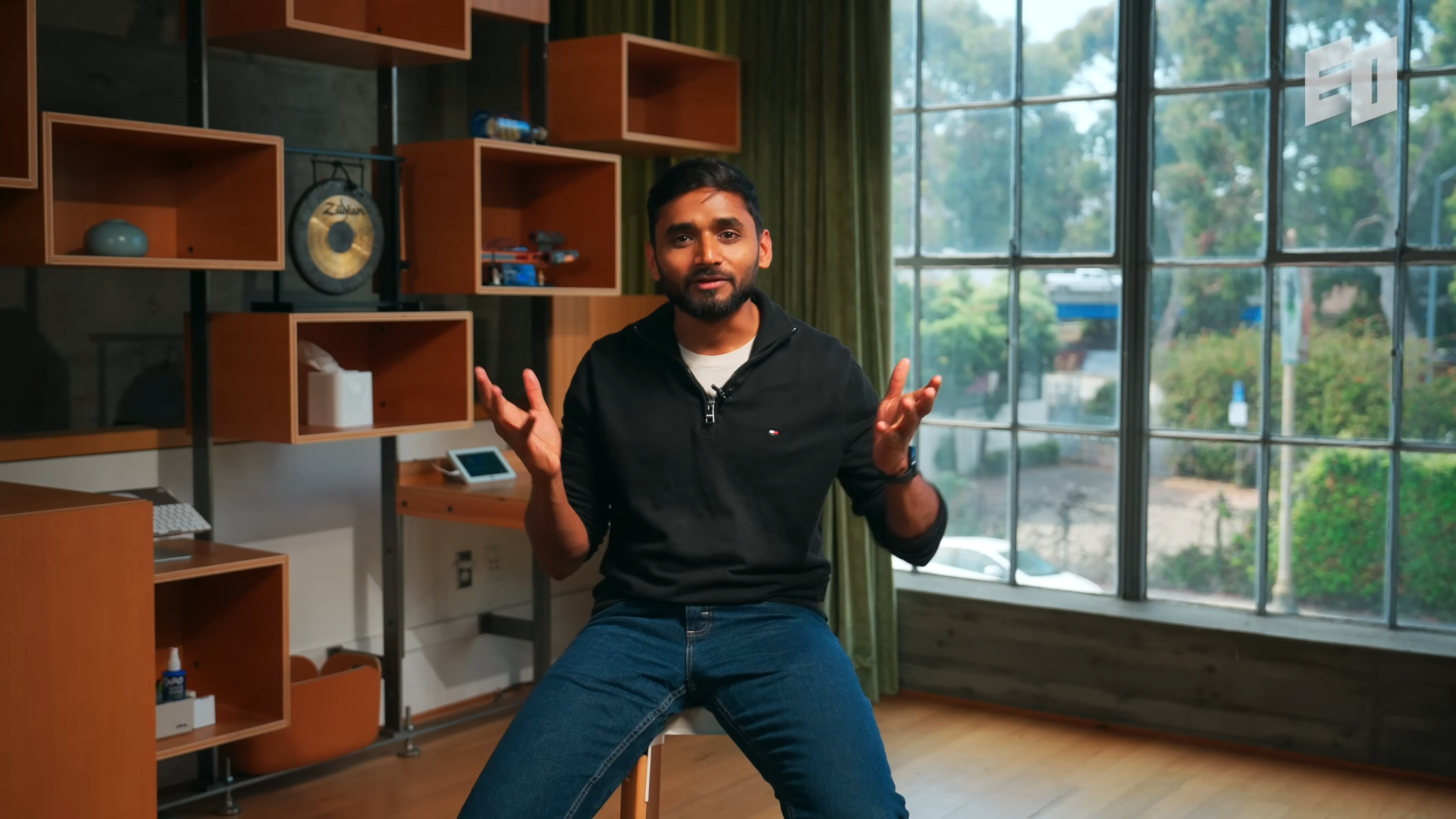
Hi, my name is Aman Gour. I'm co-founder and CEO of FurtherAI. At FurtherAI we're building the AI workspace for insurance to take away the busy work involved in various workflows. We are now announcing our new Series A with a16z, one of the largest Series A rounds in insurance AI. We have crossed millions of dollars in revenue. We focused on insurance despite not having any background in it.
Go vertical, and focus on an industry rather than building horizontal software.
Go vertical, and focus on an industry rather than building horizontal software.
Do the Hard Things First
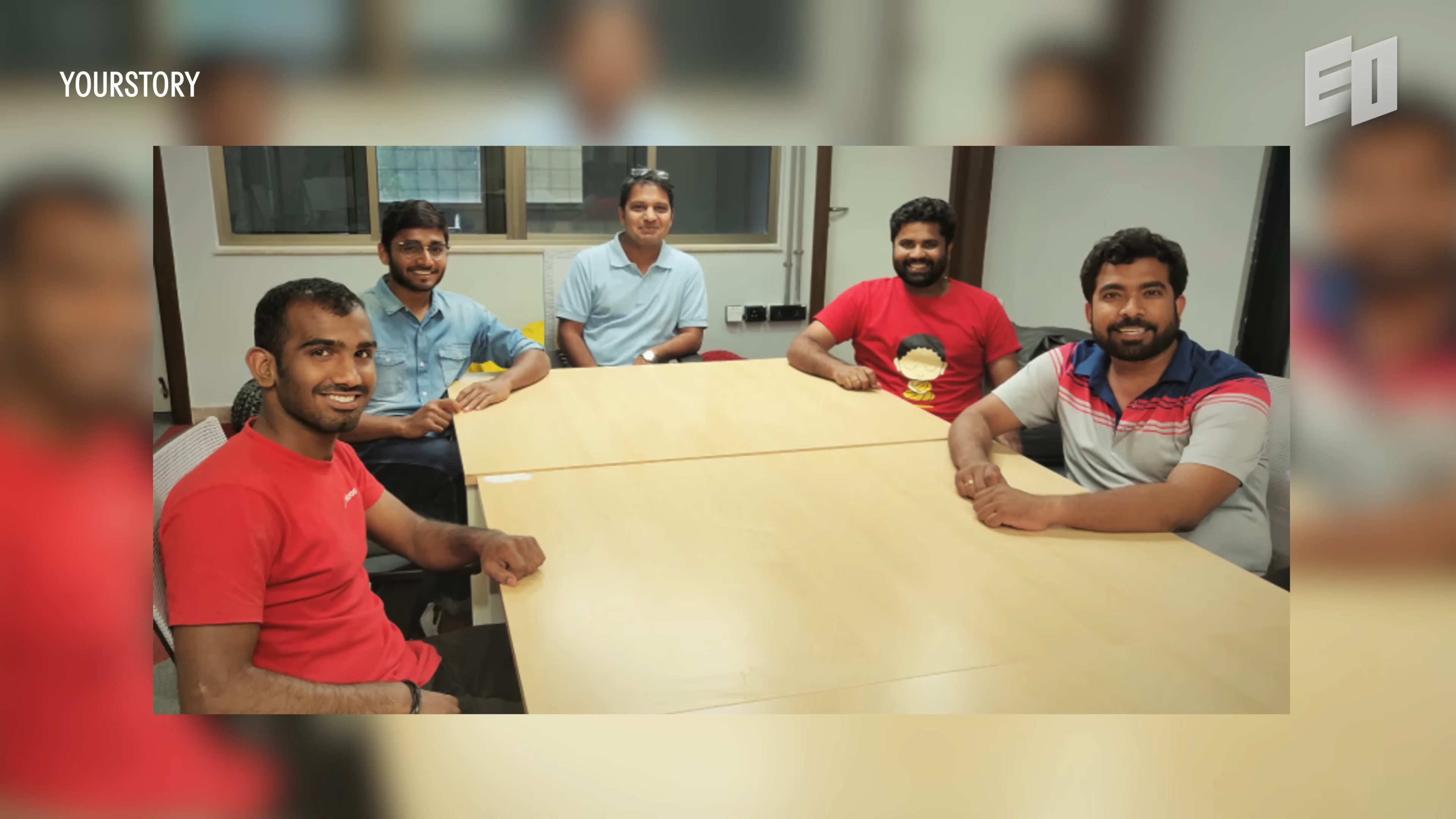
As a kid, I was at the top of the class, the guy who sat on the front bench. My father kept raising the bar for me. If I was doing well at one school, he would move me to a school with more competition and smarter people, so I would have to compete. Getting into the IITs is really hard. It's a very competitive exam. I had this initial pressure of competing with the best brains, the top 50 or 100. I quickly realized that my strength has always been that I'm the hardest worker in any room. That really helped me in the first two years at IIT Bombay. I got perfect grades. But then I realized it was time to explore other things, and I got more active in sports, in cultural activities, and in student politics. That was fun, and it helped me learn about myself and about how the world functions.
During college, I did an internship at Microsoft. One thing I'm really proud of building there was a small project, a team that started Microsoft Community Training, which was about training and employing blue-collar workers. I got to build that project from the ground up with my mentor and my manager, and to travel to South Africa and other parts of the world to launch it.
I was young, so I felt that maybe this could be the idea that changes the world. It was funny at that point in time, every software engineer who wanted to change the world started an HR tech company, so I started an HR tech company. When I left Microsoft and started TurboHire, I was fascinated by building something that enabled search on top of large resume databases. It was my first journey as an entrepreneur, building something from scratch with my co-founders and taking it to a million dollars in ARR.
Then I had to decide between running a company back in India or being with the person I loved. That was the primary reason I moved to the US. I asked my wife, what should I do next? Join big tech, or join an early-stage company? She said, you like to build. You have a chip on your shoulder and you want to build a big public company. Why don't you give it a try? Those were the initial months of FurtherAI, when I wasn't sure whether I would build a second company, knowing what I knew about how hard that journey could be.
One thing about me, which I think is true of a lot of founders, is that I seek discomfort, because if you do hard things early on, life becomes easier. It's consistent with me, moving to the Bay Area, starting in insurance industry. Now my father is no longer raising the bar for me, but I'm raising it for myself. Every time I feel I've met the bar, I raise it to the next big thing, yet another hill to climb. The philosophy is simple. Keep doing hard things, and good things will happen. You'll learn more, and when you look back, you'll feel you've come a long way.
Go Vertical, Especially in an “Unsexy” Industry

In the early days of FurtherAI, we started with a problem that was very comfortable to build. We were building AI agents for software testing, a problem I had faced at my first company. We applied to YC with that and got in. But early in YC, Sashan was having a conversation with Michael Seibel, and we realized this might be a tarpit idea, an idea we were not uniquely capable as a team to build. We pivoted during YC. We had no idea what to do. That's when Tom Blomfield, our YC partner, said that "You have a unique combination of company-building and AI. Sashan, my co-founder, has AI experience and I had built a company before. So why don't you go vertical, pick an industry, and partner with it?" It was a hard choice, because we didn't come from any industry.
We created three rules. We wanted industries with a lot of unstructured data, which LLMs can process faster, industries with labor shortages, and industries with shrinking margins. The first gives you the why-now in technology, and the other two give you the why-now in business, so whatever we built would get adopted faster.
We shortlisted three industries. They were mortgage, legal, and insurance. I remember we drove around the Bay Area with a box of doughnuts, going from one insurance agent to the next, learning about their workflows and the problems they faced. It was a scary experience, to say the least, but we learned a lot, and we got over our initial fear of the unknown. It gave us our first insights into the workflows that exist in insurance.
Looking back, coming in from outside was a blessing in disguise. We looked at every workflow and every problem from a first-principles point of view, without assuming that's how things should be. I remember one workflow where underwriting teams at carriers asked brokers to fill in forms on their website. Everybody was building these web portals, and I felt that was not the best way, because brokers don't like filling in data on portals. Nobody likes filling in data on portals. What everybody wanted was to be able to say, can I just send you this email? Meanwhile, teams were spending money, time, and energy building portals. So we questioned it. Why not accept a submission as an email, and let AI fill the data into your internal portals rather than making people do work they don't like? That way you increase the submission-to-quote ratio and the quote-to-bind ratio. It's good for business and good for the customer experience. Thinking from first principles let us build something I might not have built if I had come from the industry, because I would have felt this is how things have always been.
Build Trust at the Dinner Table
Insurance is usually labeled slow to adopt technology, but on the ground, people really wanted to automate the workflows that were manual and repetitive. One thing I've learned is that the best sales tool today is a dinner table. You should meet people in person, have a conversation, understand the problem. It isn't only about buying the product, they're also buying you.
Other things we learned about sales was outbound works, but one trick that worked in the early days is called "show me that you know me." We wrote a lot of emails that were extremely personalized. That really helps in getting a response, because the other person knows you wrote that email just for them rather than mass-mailing it. It takes a lot of effort to write emails like that, but it really works.
Putting myself in the buyer's shoes. If I'm buying software for $1,000, I don't want to get locked into a year-long contract before I give it a spin. So we added things like a two-month opt-out. All of these are fairly standard practices now, and YC recommends them, but it was interesting to learn them the first time around, building this enterprise sales motion.
What’s Next?

I have two goals with FurtherAI. The first is to build a public company. The second, which is also very core to me, is to build a launch pad of success for the people who come into contact with FurtherAI, whether that's our customers or our team members. When we hire, it's been a lot about high agency and low drama. That's the kind of person I work really well with. There's a saying that you attract your tribe, and I'm someone who likes to solve hard problems and run through walls if I have to. Interestingly, the team that joined FurtherAI has the same DNA, people who like hard problems and don't mind grinding 12 hours a day if that's what it takes to get something done.
AI is changing fast. The good thing is that we are all learning as the ecosystem evolves. We want to be at the forefront of it from the insurance perspective, and to be the trusted partner that brings our customers the latest efficiencies AI offers. So we've positioned ourselves at the intersection of AI and insurance, working backwards from the principle that the goal is to drive business metrics, not to build technology for its own sake.
A lot has changed from college to Microsoft to the first company to now the second. The funny thing about being a second-time founder is that the lows are low, but the highs are not that high, because there is more to build. Having said that, as a person I've become more patient and more people-first, and my narrative has shifted from "me, me, me" to "we, we, we," and that is more satisfying as a human being. We're building towards being the best company in insurance and AI.
I was discussing with somebody the title of my biography, "Half Monk, Half Machine." I think it describes me well. When I'm wired in, I'm like a machine that runs like clockwork. On the personal side, I'm more like a monk, very patient, looking for the positive in people, a glass-half-full guy who tries to meditate a lot. One thing I say very often, and people who know me will roll their eyes, is that everything is good in moderation, even moderation. That's the monk side of me. So yes, hopefully someday the book title will be "Half Monk, Half Machine."