Nov 16, 2024
How High Will Bitcoin Go? Here's the Better Question
Interview with Hugo Philion, Co-founder of Flare
Founder Focused


0:00 / 0:00
💡
At a Glance
- Who: Hugo Philion is the co-founder and CEO of Flare, a blockchain built to bring external data securely on-chain. Before Flare, he studied risk and financial engineering, spent seven years at London hedge funds, then left to study machine learning at UCL, where he met his two co-founders.
- What: The interview covers why Philion calls Flare a third-generation blockchain, one that adds verifiable external data on top of Bitcoin's simple transactions and Ethereum's programmable logic. He explains the oracle security problem DeFi still hasn't solved, how Flare's data protocols grew out of an early Bitcoin-bridging problem into something far broader, and where he thinks blockchain-secured data and off-chain compute could go next, from uncensorable media to specialized machine learning.
- Traction: Flare has just crossed about a million wallets, with 100,000 to 150,000 daily active users pulling in data from other blockchain ecosystems. Philion's goal for the next five years isn't just growing Flare's own chain, but having a meaningful share of all blockchain data, wherever it's ultimately used, originate from Flare.
In this interview, Hugo Philion, co-founder and CEO of Flare, explains why he calls Flare a third-generation blockchain built to bring external data securely on-chain, and why he thinks DeFi's reliance on trust-based oracles is a problem worth solving at the protocol level. He traces Flare's origin from a narrow Bitcoin-bridging tool into a broader data and off-chain compute platform, with potential uses in uncensorable media, gaming, and specialized machine learning. He closes with his view on Bitcoin's value debate and what success looks like for Flare five years out.
Key Takeaways
Flare Brings External Data Into Blockchain Logic
Hugo Philion describes Flare as a third-generation blockchain that adds data to transactions, after Bitcoin's simple transfers and Ethereum's programmable logic. Its core proposition is bringing information from other blockchains into applications securely, without relying on a conventional custodian or trusted intermediary.
Secure Oracles Are Central To Valid DeFi
Philion argues that decentralized finance cannot be genuinely secure if its data depends on an oracle provider operating outside the protections of a blockchain. Flare's approach is to place oracle security inside the chain, making data provision open, verifiable, and harder to censor.
Decentralized Data Could Expand Blockchain Applications
The underlying protocols can bring data from any open system into decentralized applications. That broader capability could support uncensorable media, richer games, and machine-learning systems that use blockchain security without placing all computation on-chain.
Blockchain's Value Extends Beyond Bitcoin's Monetary Debate
Let's separates arguments about Bitcoin's price from the technology's ability to distribute computation and reach consensus. Even if people disagree about Bitcoin as a monetary asset, he sees durable value in coordinating data across different systems without allowing one group to control the entire transmission mechanism.
Flare Aims To Make Data More Useful Everywhere
Philion's forward-looking measure of success is not simply Flare's own chain growing. He wants a meaningful share of blockchain data used across the ecosystem to originate from Flare, while off-chain computation enables applications that become valuable in everyday life rather than remaining primarily speculative.
Watch the full interview now on EO's YouTube channel! Below is the complete transcription of the interview. Minor edits have been made for clarity and readability.
Chapter 1: Why Blockchain, For What?
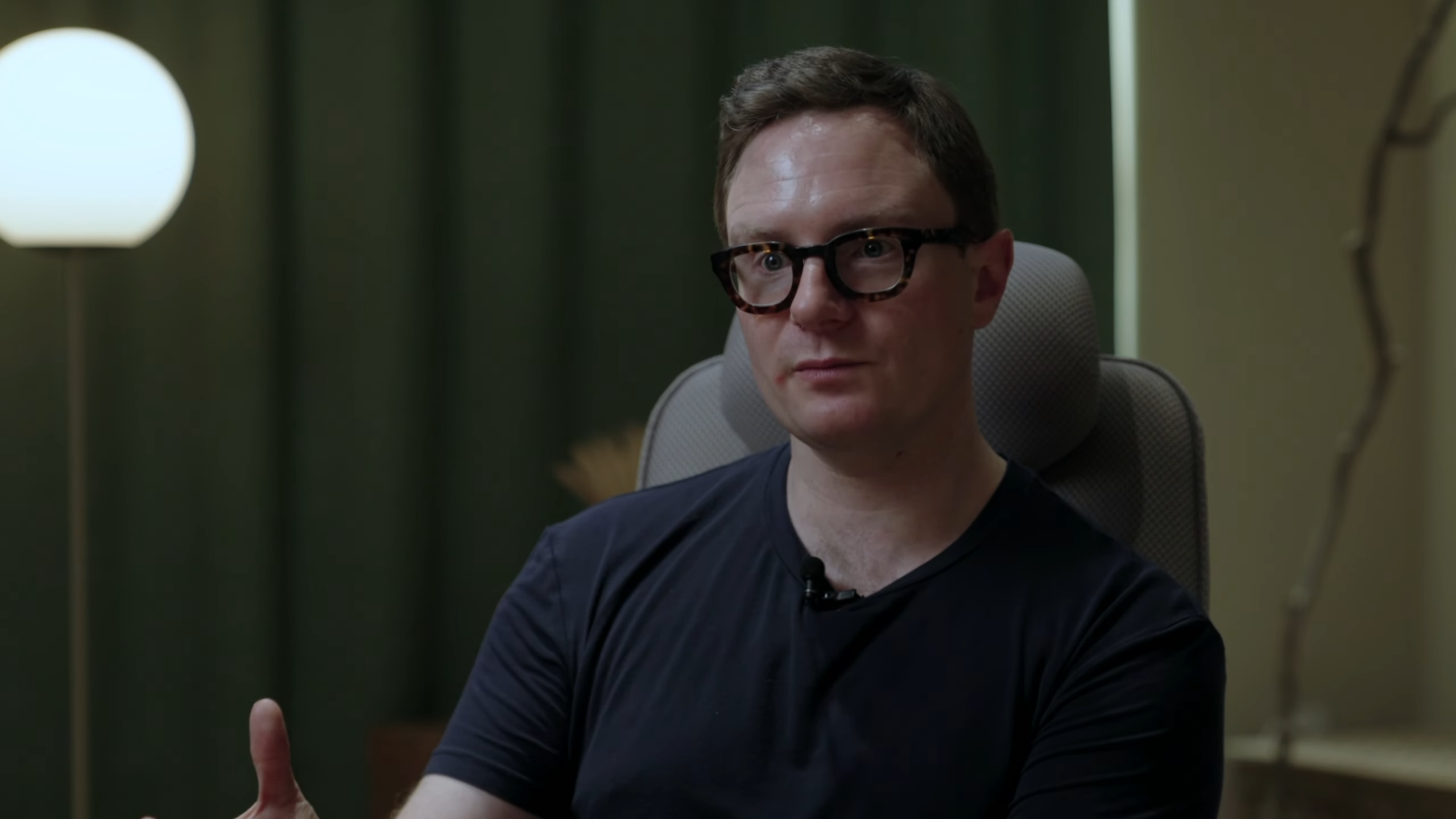
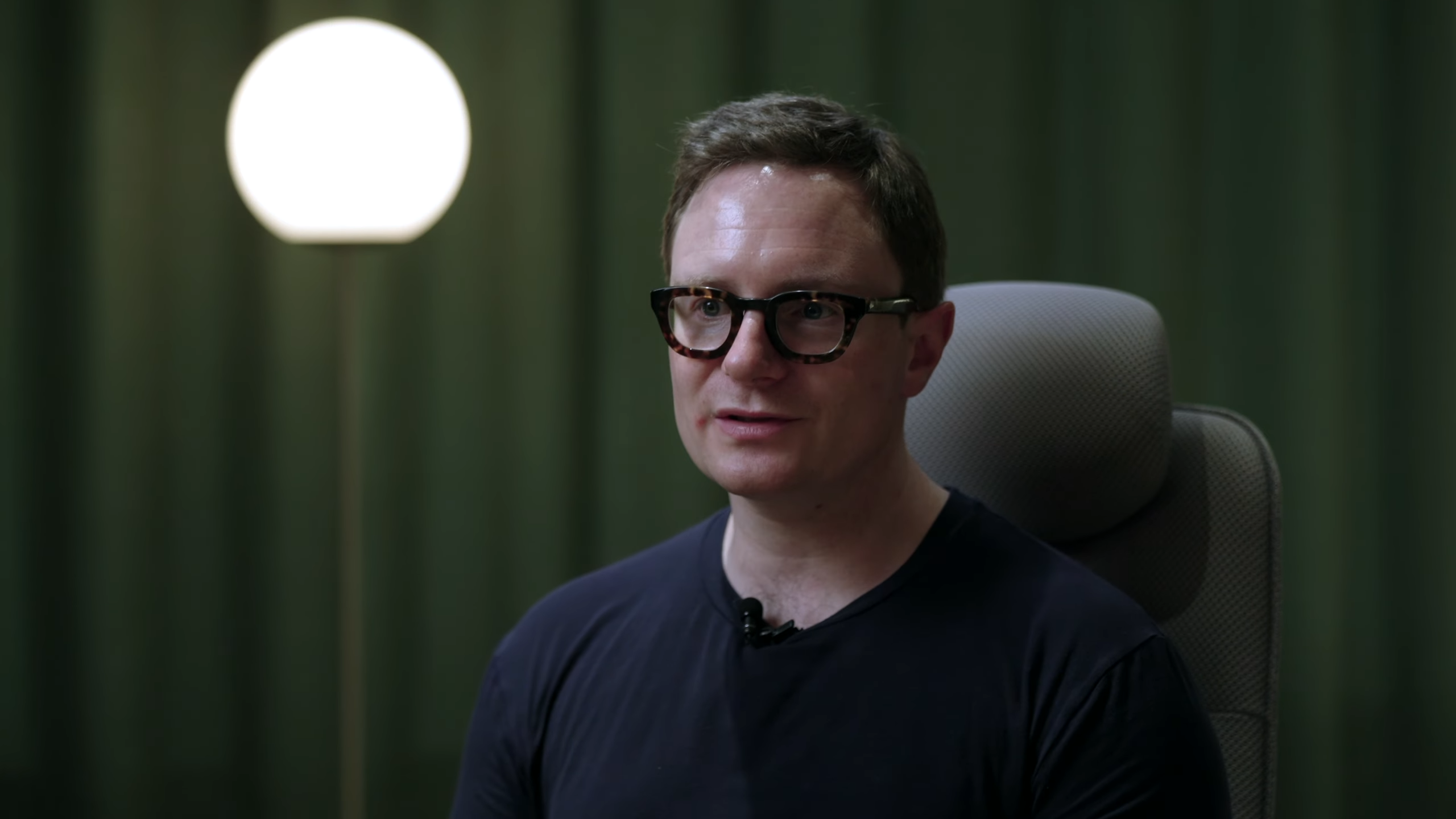
Hi, my name is Hugo Philion, and I'm a co-founder and CEO of Flare. Flare really is the only blockchain which we describe as third generation. It enshrines data directly into the chain. First generation being Bitcoin, simple transactions. Second generation being Ethereum, adding logic to those transactions. Third generation, Flare, adding data to the logic. It has just hit about a million wallets, 100,000 to 150,000 daily active users. So they're bringing value from other blockchain ecosystems to Flare, to be used on Flare, with the data provision services that are provided by Flare. Within the blockchain environment, you shouldn't be doing anything based on trust because you don't know the counterparty and you don't have any legal recourse. Essentially, what DeFi is doing today is it's using a trust-based model which is very similar to TradFi, except that TradFi is bound by laws, whereas an oracle provider has no laws. In order for DeFi or any other application that relies on data to be valid, you need to have a way to secure those oracles that is clear, open, and provides a similar sort of safety as the blockchain itself.
We started Flare in 2018, and we had a very small office in the basement, someone's photography studio, but as we were a team of three, I think one and a half desks at the time. They didn't enjoy the benefit on Ethereum of smart contract. Essentially, the largest source of Bitcoin was known as wrapped Bitcoin, which is managed through a custodian, essentially antithetical to the concept of Bitcoin, meaning you're relying on a middleman in order to use your Bitcoin on a smart contract platform. We started looking at, okay, well, how can we get the data around Bitcoin? We devised the protocols to be able to get that data from Bitcoin, to build a bridge that is overcollateralized, meaning it has more value securing it than the amount of Bitcoin that has been bridged using that bridge.
I grew up in London, which is pretty much the world's financial center at the time when I was growing up. Very small startup community, very little technology community. The financial markets were the only choice, and obviously a place where one could potentially make large amounts of money, which is very interesting to think about when you're 17. I suppose the macroeconomic, and that's always been a thing I like to think about. So I studied risk and financial engineering, worked at a number of hedge funds in London. After about 7 years, I decided that I was just trying to eke out financial returns in order to make essentially myself richer. So I left finance, went studying machine learning at UCL in London, and that's where I met my two co-founders, and I knew I probably wanted to be a founder. And when looking at machine learning, it's heavily dominated by very large companies and therefore gives you no opportunity really.
Chapter 2: This Is True Potential Of Decentralized Data
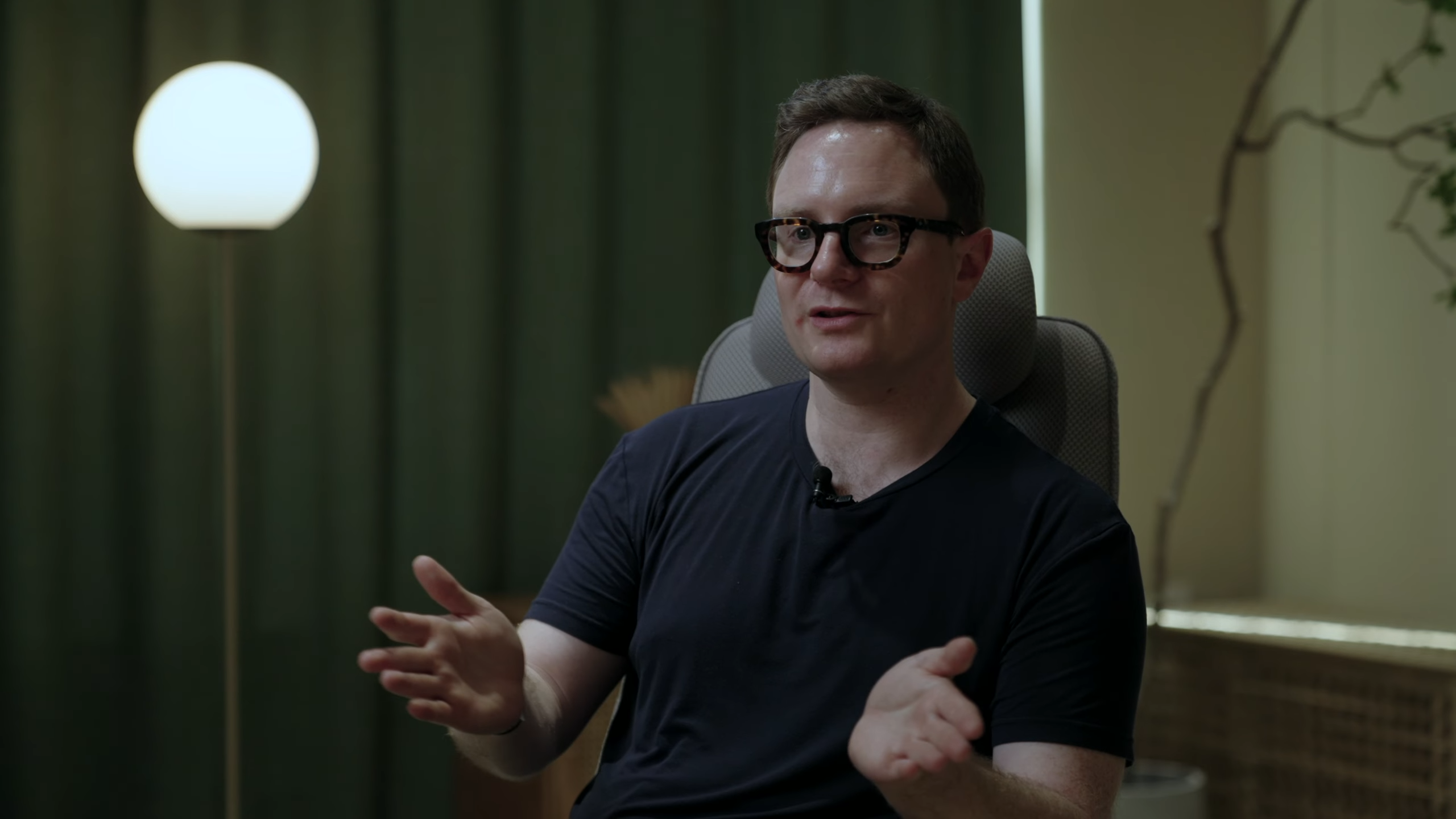
So originally we designed the data protocol just to be able to build this bridge for Bitcoin. Ultimately, we very quickly realized that those data protocols are much more interesting, that we could bring in data from any open system, pretty much any system, in a decentralized way. That's the key point. It's decentralized and it has security. So this allows you to do everything you can do in DeFi today, but with Flare. That's just the first step. What really interests me is then, okay, what can we build with that? This means that people can build the rules of an application they're building. Second aspect is then, for us, off-chain compute: far more data from other sources than can be used by the chain. So where are you going to use that? You can prove very, very large amounts of data, but you need to be able to use that off-chain in order to build applications. So I think the blockchain today is at the limit, more or less, of what can be built until you add in further compute, and that's when we can start building applications that people actually want to use. So for me, the first and most interesting thing to do is genuinely decentralize and make uncensorable social media or news platforms or video platforms.
We see an increasing set of issues in the world where there is very high censorship, where people are struggling to express their opinion. Another set of applications is around gaming. Ultimately, the experience that blockchain has offered to gaming has been so inferior to the Web 2 or existing gaming product, it really hasn't taken off. But there are interesting things you can do when you essentially financialize components around gaming. If I can truly understand what has happened in each computational step of a game, then I can give people skins, I can give people assets based on exactly what they've done, and those assets can be real and tradable as opposed to simply in-game. I do have a third thing there. I suppose the last area that really interests us as a team is probably machine learning, or as most people call it, artificial intelligence. There are some very interesting things you can do with distribution of users. Again, there's not too much you want to do actually on the blockchain, there's not too much you can do on the blockchain.
I suppose the decentralized and economically secure substrate of a blockchain provides a very interesting place for machine learning to be expanded and to be made safer through having multiple participants.
Chapter 3: A New Data Ecosystem, With Blockchain 3.0, Within Flare
Some people may believe that Bitcoin shouldn't have value, and I understand that mentality. You have to differentiate between the technology and the value. It has some logic to it. Bitcoin is only backed by hashing power, it's not by the ability to levy taxes, nor is it backed by the ability to force other people to use your medium of exchange. Bitcoin doesn't have either of those two things, but perhaps it has one other thing: rather than forcing people to use your medium of exchange, it gets them to voluntarily use it, and that's interesting, but you'll never convince people that don't want to be convinced, especially as an awful lot of people have a reason, a financial reason, not to be convinced about that thing. If you take away the it's a monetary asset side of the equation, it's fairly nascent technology. I think being able to distribute computation and consensus will become more and more useful over time.
Essentially, there is value in being able to come to consensus across some item of data across various different verticals. You know, our biggest space, the space we're most interested in researching, thinking about, is around the outputs of machine learning models. That probably provides the answer to what is blockchain useful for. My exposure to finance was really post the large financial crisis. The ideas around what something is worth fall apart when currency is printed. People were making trades based on an expectation of government action rather than based on any fundamental strength in the economy. The sort of large excess of capital that was put into the markets post the GFC really led to a position where valuations were massively out of whack. And so when you spend your days thinking about the idea of taking the fundamental thing that values assets, it's a very interesting thing, because it removes that ability of a group of people to pervert essentially the entire transmission mechanisms of all financial markets, and that's what has happened.
The idea that there could be a technology that removes that from the equation is very, very appealing. People started using Bitcoin in places like Venezuela to hedge out insane inflation that was collapsing their currency. Crypto broadly has solved the question of how can I move dollars across the world really quickly and easily without having to enter an IBAN. The DeFi that is built fundamentally around essentially a dollar-based stablecoin system and native tokens, because that's essentially what DeFi is, and I think that could expand as people use crypto tokens more, whether it be stablecoins or the native. So if we're lucky, Flare will be one of the key components in how people use data on blockchains. That's what we're building. That's essentially where we're going. We're not a smart contract project focused on Ripple.
We have a much, much larger ambition, and that ambition revolves around data and off-chain compute. So in 5 years' time, I'd like to see a non-trivial percentage of the data that is used in blockchain being sourced from Flare, regardless of whether it's being used on Flare as a chain or whether it's being used on Ethereum or any other new chain that comes up. Success to me would be that the data came from Flare, moved from Flare. In 5 years, it's feasible that our off-chain compute strategy could result in applications that go way beyond DeFi, way beyond having value for speculative reasons, and much more involved in people's day-to-day lives because it's a valuable application in and of itself.