Aug 07, 2025
How to Find $10M+ Ideas in Markets We’d Never Worked In
Interview with Jordan Katz, Co-founder of Comulate
Founder Focused


💡
At a Glance
- Who: Jordan Katz (CEO) and Michael Mattheakis (CTO) co-founded Comulate. Katz learned formal product management at Asana, while Mattheakis experienced scaling Brex from 10 to over 900 employees.
- What: Comulate is an AI automation platform built specifically for back-office insurance accounting workflows. The software re-engineers complex spreadsheet ledgers and legacy flowcharts, streamlining 30-step manual processes down to three or four automated digital steps.
- Traction: Comulate scaled to over $10M in ARR within three years, converting the exact enterprise client that originally claimed "we don't need your services" into one of its largest paying accounts.
Jordan Katz and Michael Mattheakis left product and engineering roles at Asana and Brex after recognizing that Silicon Valley's focus on tech-centric problems had left traditional industries completely untouched. Diving into insurance accounting without prior domain experience, they discovered an industry burdened by paper ledgers, manual spreadsheet entry, and multi-step flowcharts. By prioritizing deep, product-driven customer discovery over aggressive sales pitches, Katz and Mattheakis built Comulate into an AI platform that re-engineers complex accounting workflows down to a few seamless steps. Today, Comulate operates at an eight-figure ($10M+) ARR run rate, turning early industry skeptics into major clients and demonstrating why looking where others refuse to look yields massive software opportunities.
Key Takeaways
The Best Co-Founders Balance Vision With Immediate Execution
Michael learned at Brex that strong founders can hold a 10,000-foot business view while making this week’s product decisions. Michael sees that combination as rare and central to early success, because startups need long-range ambition and immediate execution operating together.
Unfamiliar Industries Can Hide Underserved Workflow Problems
Jordan and Michael abandoned ideas that looked attractive from a distance after customer conversations showed the problems were not large enough. Insurance looked different: paper, spreadsheets, legacy software, and repeated copying revealed a neglected accounting workflow worth rebuilding from the ground up.
Deep Workflow Questions Build Trust Faster Than Promises
Jordan says Comulate earned early trust by approaching prospects as product builders rather than salespeople. Deep questions about workflows, edge cases, and historical reasons helped customers feel understood, giving the team domain knowledge and credibility before it made promises about automation.
Customer Rejection Can Become Evidence For Persistence
An early company dismissed Comulate’s service, making Michael question the market. More conversations showed that the rejection reflected one company’s limited exposure, not universal demand. That same company later became a major customer, rewarding persistence grounded in accumulating better information.
AI Wins By Simplifying Workflows, Not Copying Complexity
Comulate maps customers’ tangled, 30-box processes and looks for a three- or four-step version that software and AI can support. Jordan’s distinction is strategic: the opportunity is not to digitize every existing complication, but to reimagine the function itself.
Look Where Others Ignore The Biggest Opportunities
Jordan believes founders should investigate the spaces others dismiss, especially industries still filled with manual work. Comulate’s experience taught him that conventional skepticism can obscure large opportunities, but only direct discovery and a personal search for truth can separate signal from noise.
Watch the full interview now on EO's YouTube channel! Below is the complete transcription of the interview. Minor edits have been made for clarity and readability.
How to Know Someone's the Right Co-founder
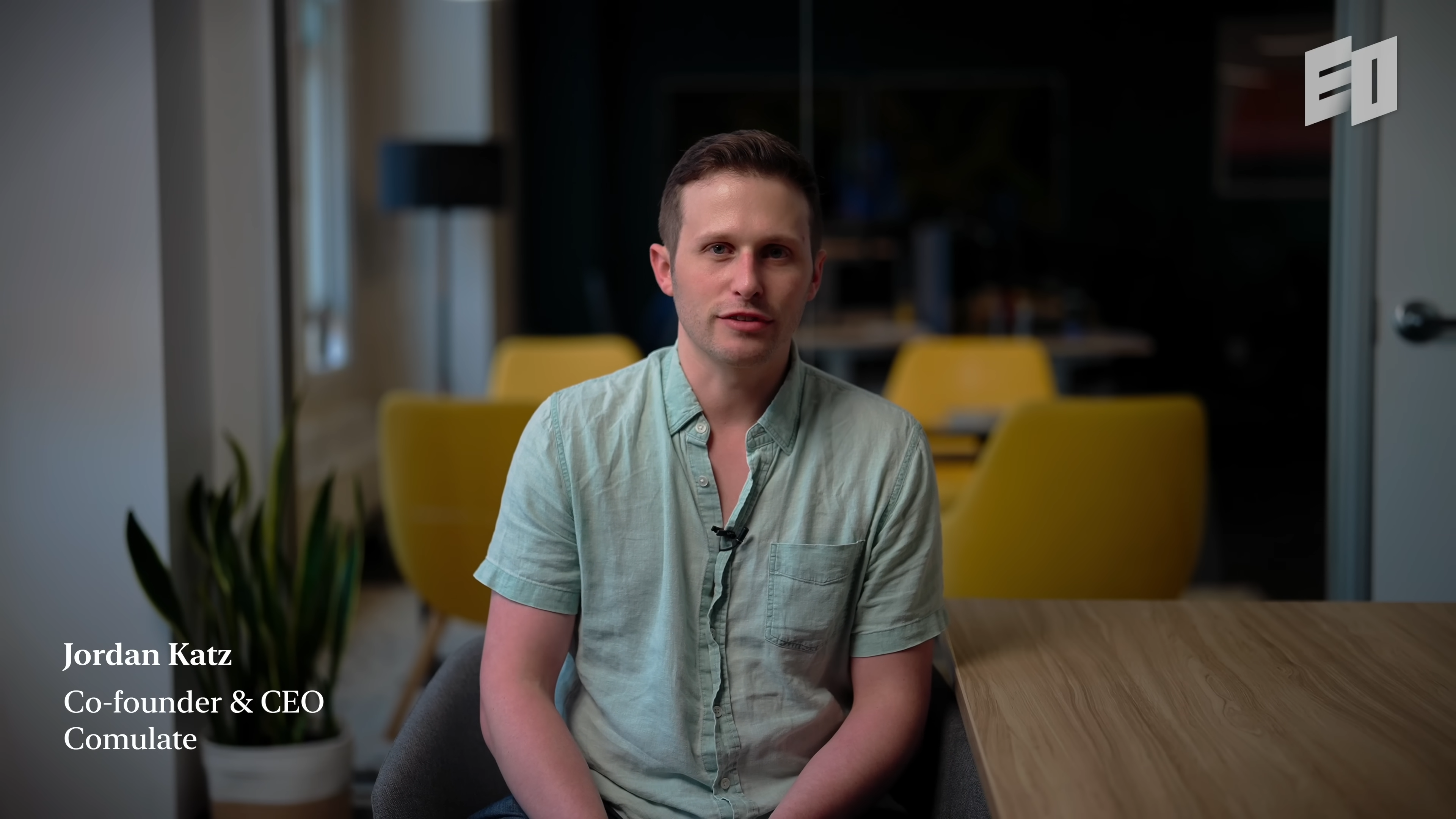
Jordan Katz: I am Jordan, the co-founder and CEO of Comulate. We are transforming the insurance industry with AI. Three years ago it seemed crazy to most people that we wanted to focus on back-office insurance workflows. When two people with no background in the thing they say they are going to automate for you show up, who is going to take them seriously? But since then we have scaled to over eight figures of ARR, and we are just getting started.
By the time I was in college I was trying to build software, and I spent thousands of hours building one product in particular. In reality, I was building a huge dumpster fire. The platform had 500 features, each about 5% built. Through that I realized how complex it is to build great software, and that I needed to learn how. I came across the role of product management and read a book several people had told me to read, Cracking the PM Interview. The author was Jackie, who ran product at Asana. About 20 pages in, I thought, I need to work for Jackie. That is how I ended up at Asana, with the mission of learning how to build great product from her, and I got to learn from a lot of other great people around her too.
I met my co-founder Michael towards the end of college. I was going to work in product at Asana, and Michael reached out because he wanted to understand what product was like. We met for lunch, and it was one of those one-in-a-million conversations where you meet someone and think, this person is different. It sounds crazy, but at that moment I was already thinking this might be someone I start a company with. Unfortunately, Michael did not feel that way. He was going to a company no one had heard of called Brex, as its tenth hire.
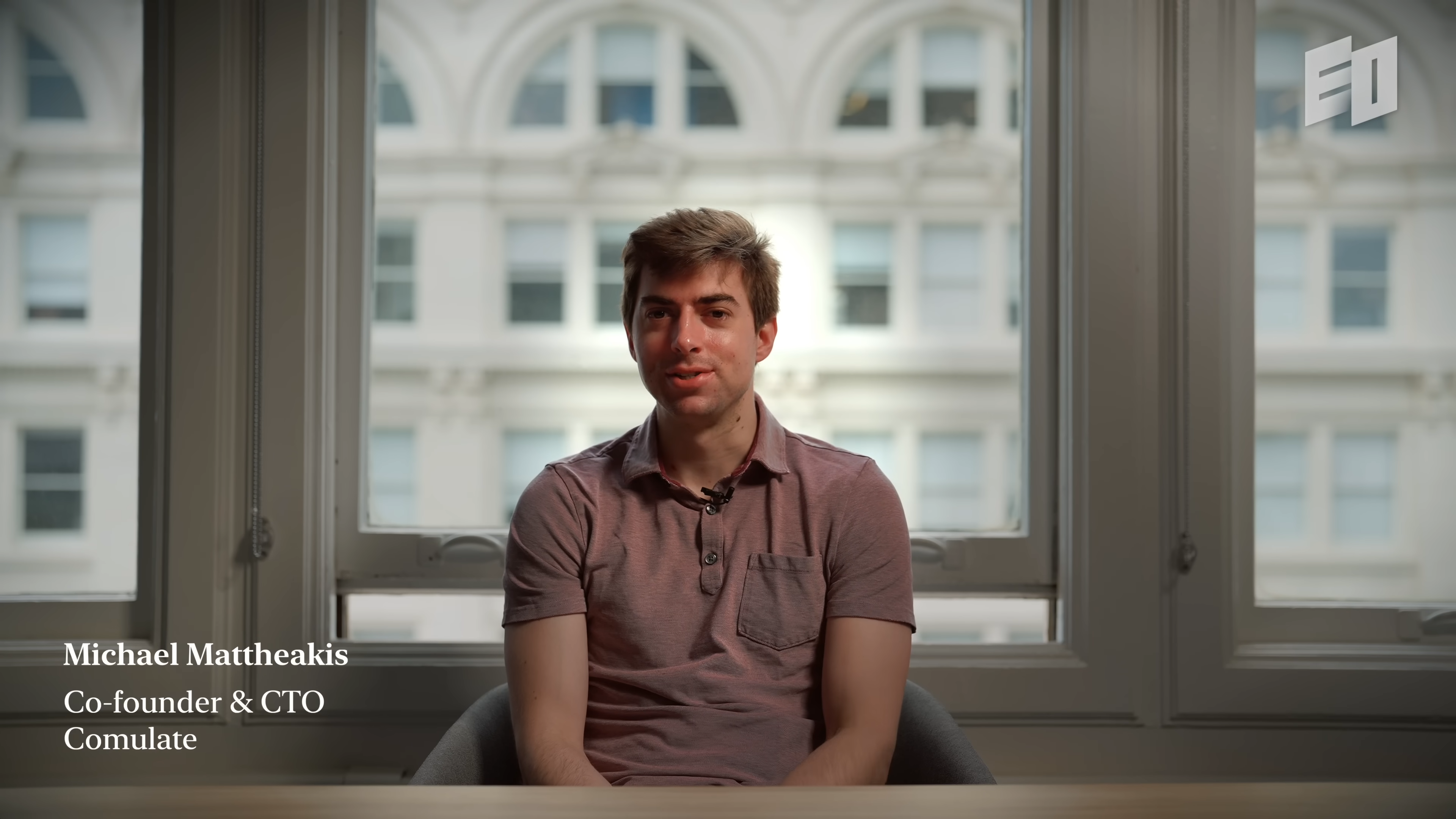
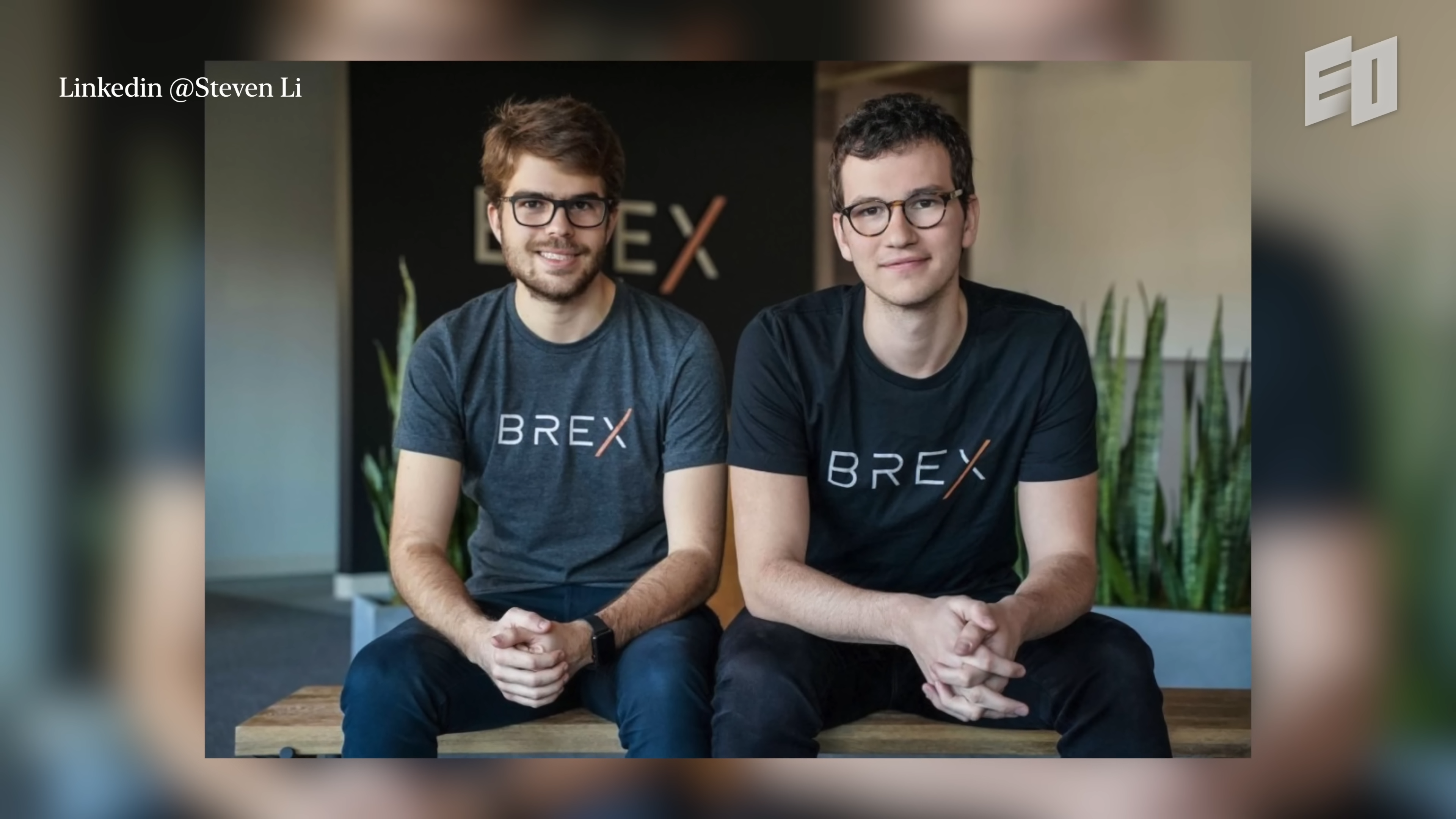
Michael Mattheakis: I am Michael, the CTO and co-founder of Comulate. Before this I was an engineer at Brex. I joined out of college when it was about 10 people and saw it grow to over 900 during my time there. Something the Brex founders are incredible at, which I picked up on, is being able to see the business at both a 10,000-foot view and a 10-foot view. From the very beginning they were thinking about how to scale to a $100 billion company and become the global substrate for money movement. At the same time, they were extremely good at saying, what growth hacks do we need this week, what feature do we build next, and what should the design and product mocks look like? Those two skill sets are rare to find in the same person, and being able to do both is a big part of what I found makes an early stage successful.
It was an incredible first job out of college, but I had always thought about starting a company. Jordan and I were good friends and had been talking about it more and more. Jordan had just left his job, and we started working on startup ideas together on nights and weekends. All the factors seemed to come together. If there was a moment to do this, it was now. So I left Brex and jumped right into starting a company with Jordan.
How to Break Into an Unfamiliar Industry
Jordan Katz: When Michael and I decided to do this together, we knew nothing about insurance or accounting. From our years at Asana and Brex we had a few ideas we were excited about, but as we validated them and talked to the people we would be serving, the problems did not feel as big as they seemed and the existing solutions did not seem as bad as we thought. Michael and I really wanted to build something that did not already exist.
We started learning about insurance and were immediately stunned by the amount of paper, spreadsheets and time spent copying information from the analog world into very legacy software and back. We were especially fascinated by the accounting workflows. There are many intermediaries in the value chain, and that bubbled up into one observation. This whole industry has an extra type of accounting that other industries do not have to deal with, and there are no good solutions that automate it. Maybe we could build that solution. That became the foundation for Comulate.
People we reached out to early on were quite skeptical. It was hard to get anyone in the industry to talk to us, and we relied on the few second or third degree connections we had. Then the first thing I hear is, I just want to tell you, I am taking this call as a favor, but we don't need your services. We have solved this already. We are all set. In retrospect, why would they talk to two random outsiders? People are busy and hear pitches like that all the time. We put that quote on the wall of our old office as a formative moment.
Michael Mattheakis: At the time it was a massive blow. This was one of the largest companies in the space, and if they did not need this, why would anyone else? But as we dove in and talked to more people, we got the sense that he might just not be exposed to this specific problem within his company, and we got more and more evidence that many others did need our services. What we spent a ton of time on in the early days was Zoom calls with customers, deeply understanding what they were doing.
Jordan Katz: Part of what helped us is that we were not salespeople. We were product people, trying to solve a problem and build a solution for these folks. Our questions were very deep, about their workflows, about edge cases, about why something was done a certain way in the first place. One of our early customers wrote me a note when they retired, because I had wished them a happy retirement. They had been instrumental in taking a bet on us, one of those special relationships. They said that in 50 years of working at the company, working with us was the first time someone who brought in a product had ever felt like they understood them. To me that shows the strength of coming in as a product person rather than with a sales-oriented mind. You build trust and the depth of domain expertise that makes a customer believe you can actually solve their problem, rather than make promises.
Luckily there were just enough special people at a few companies who saw some potential, spent the time and were willing to help us build the initial kernel. It is partly luck, finding the right person at the right time, having it resonate that day, and having the conversation go well. But you do not need that many of those relationships at that stage, if you can develop a few real core ones.
Michael Mattheakis: And that company that told us we don't need your services is now one of our largest customers. In the moment it feels like a setback, and you are not sure of the viability of what you are doing or whether it is worth pursuing. But if you keep persisting and gathering more information, building bottom-up confidence in what you are working on, you get past it. They ended up needing the services.
Applying AI to Solve the Right Problem

Jordan Katz: Many people think about AI in terms of improving existing workflows. This is especially true in traditional industries. How can you now automate something you could not automate with the prior generation of tools? How do you augment humans by writing an email or navigating a website? I do not think that is the most interesting question. The real question is what fundamental constraints created these workflows in the first place, and whether those constraints still exist.
Michael Mattheakis: Think about any prior platform shift, like web to mobile in the 2010s. The most successful products rethought what should be on a mobile app, like Instagram, while a lot of the unsuccessful ones took a normal website and put it into an app, which was not compelling. New things were possible. You could drag, you could multitask. The AI platform shift is a similar situation, and it is all built on really understanding the fundamental problems customers face. When customers first come to us, we map out their entire process, and it often looks like a crazy flowchart with 30 boxes all interconnected. A big part of what we do is look at that and say, you can actually simplify this to three or four steps, especially with what software and AI can do, and here is how our product does it. That step of simplification, rather than fitting the crazy complexity into a product, is what lets us rethink and reimagine what is possible.
Jordan Katz: That is the difference between optimizing what exists today and reimagining an entire function from scratch. The latter is a completely different opportunity, and I think it is what the winners of this transition will have in common.
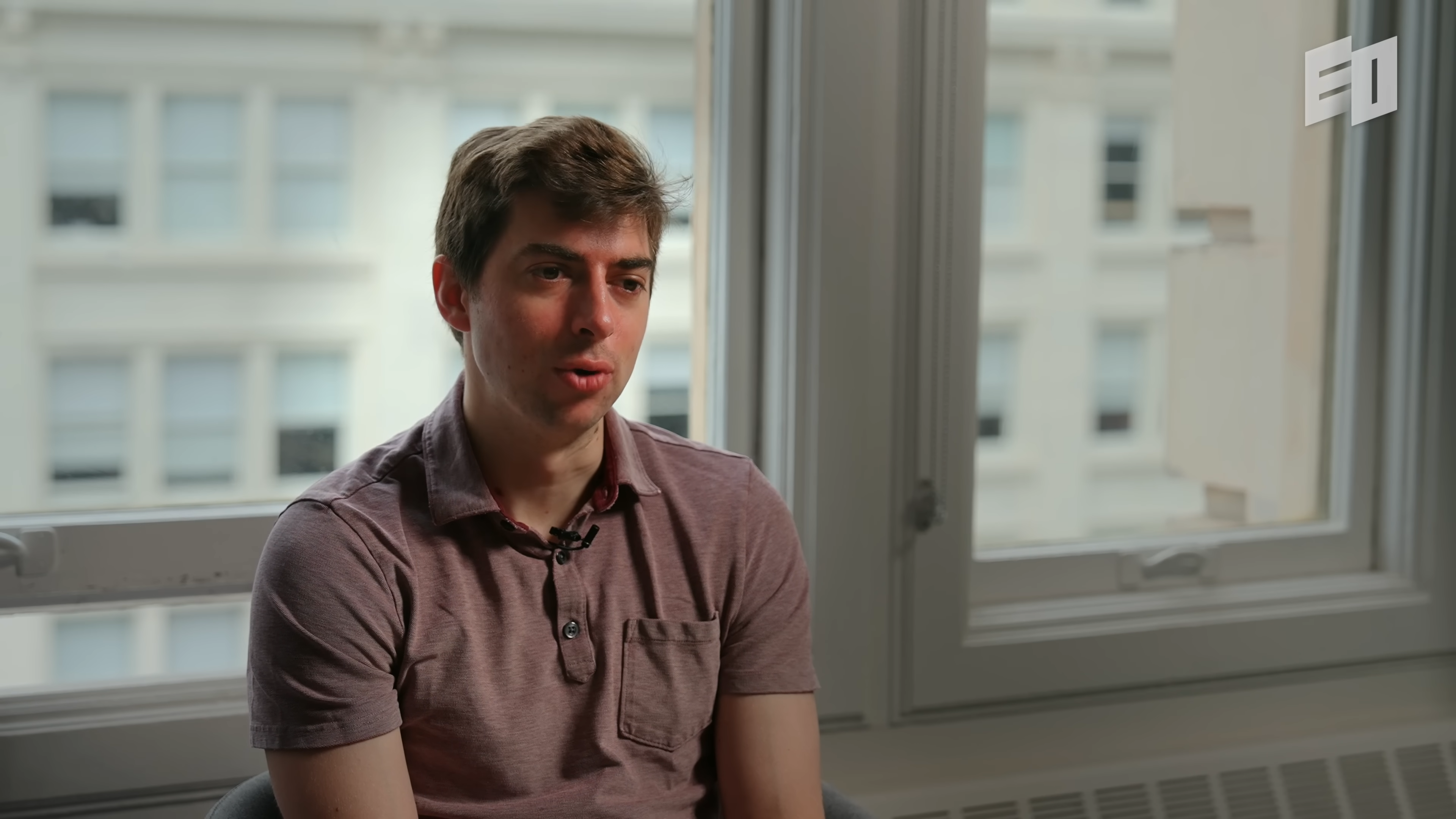
Michael Mattheakis: A few years ago, when we started the company, building software for vertical industries and automating the work in them was not popular. Going into something like insurance as outsiders to understand and automate the work was pretty unconventional. Now it is super hot. Something like 70% of the most recent YC batch is doing AI agents for some industry. A big part of that is that AI is having the most impact in places that have been untouched by software historically.
Jordan Katz: The biggest advice I have is, look where others do not want to look. There are so many reasons people will give you not to explore a space. Frankly, if we had tried to raise our seed round without doing any discovery or validation first, we never would have done this, because everyone told us it was a bad idea. But going out into the field and doing what people have told you is not a good place to play, sometimes that is where the opportunity is. It is important to go on a personal mission to find the truth, because you never really know someone's altitude and understanding of a problem until you dive in and try to figure it out yourself.
Michael Mattheakis: What has me really excited about the future is that hundreds of billions of dollars are still spent on manual work every year in this space, and AI has opened that up into a massive opportunity. We are right at the forefront of being able to take advantage of it.
Jordan Katz: To me, this is very obviously one of the largest opportunities when you think about the next 10 and 20 years in software, and that is super exciting for our team.