Jan 15, 2024
Success Starts at the End of Your Comfort ZoneㅣChartmetric, Sung M. Cho
Interview with Sung Cho, Founder of Chartmetric
Founder Focused


💡
At a Glance
- Who: Sung M. Cho is the founder and CEO of Chartmetric, a data analytics platform for the music industry.
- What: Chartmetric tracks streaming and social data across the music industry and sells the resulting insights to labels, artists, and tech platforms.
- Traction: Chartmetric has grown to $8.5 million in annual recurring revenue, with customers including Universal Music Group, Sony, Warner, Netflix, Amazon, and Apple Music.
In this interview, Sung shares how he acquired his first customer, what is important in a B2B SaaS business, and how to achieve results. Sung Cho is the CEO of Chartmetric, a remarkable B2B SaaS company that collects and analyzes music data from streaming platforms and social media to predict the future of the music industry. Through its services, Chartmetric contributes to the growth of the music industry and has achieved an impressive annual subscription revenue of $8.5MM.
Key Takeaways:
The Three Things That Have to Match Before You Start a Company
Cho's formula for choosing a startup idea is passion, skill, and the right people, and satisfying all three at once is rare enough that he dropped every idea he had before landing on Chartmetric. Most founders find an idea that hits one or two of the three, not all three.
First Customers Don't Expect Perfect. They Expect Better Every Week.
Cho compares an early customer to someone who buys imperfect bread from a new bakery: they forgive the flaws because their money helped make the improvement possible. The reciprocity only holds if the founder keeps shipping visible progress at the same price.
Undercutting on Price Is a Wedge, Not a Strategy
Chartmetric launched at half its competitors' price purely to signal it was worth a try, not because cheap was the company's identity. Seven years later, Chartmetric charges more than its competitors, because the wedge did its job and the product caught up.
Why Coke Beats Cherry Coke
Cho learned at Gamevil that chasing differentiation for its own sake backfires, because customers don't actually want a novel flavor, they want the thing that already works. His approach is to build something close to what already exists and let years of iteration make it different.
The Ten-Year Rule for Building an Indispensable Product
Cho's own theory is that nothing important gets built in under ten years, and Chartmetric, seven years in, is still not the "Bloomberg Terminal of music" he's building toward. Every product that looks like it appeared overnight was actually just discovered after a decade of invisible work.
Price Your Product at One Tenth of What It Replaces
Cho's pricing formula is simple: if a customer pays $140 a month, they should be saving at least $1,400 a month in the alternative cost of doing the work by hand. Anything less than a 10x return on the subscription price means the product is priced too high.
Watch the full interview now on EO's YouTube channel! Below is the complete transcription of the interview. Minor edits have been made for clarity and readability.
Introducing Sung Cho, Founder and CEO of Chartmetric
Hello, I'm Sung M. Cho, founder and CEO at Chartmetric. Chartmetric is a data analytics tool for music industry professionals. We have all the major labels as our customers, plus tech companies, and we've hit $7 million in annual recurring revenue.
I remember going to a cafe in San Francisco. I went there, opened my laptop at 9 a.m. I sat down, and I got lost. Nobody was looking for me. Nobody. When I was working at Oracle, I had about 50 emails waiting for me every morning. But after several months, after quitting, when I'd dropped my idea, there were only a couple of spam emails. Even those spam emails, I felt thankful for. At least someone cared about me, even if it was something stupid.
Sung's Background

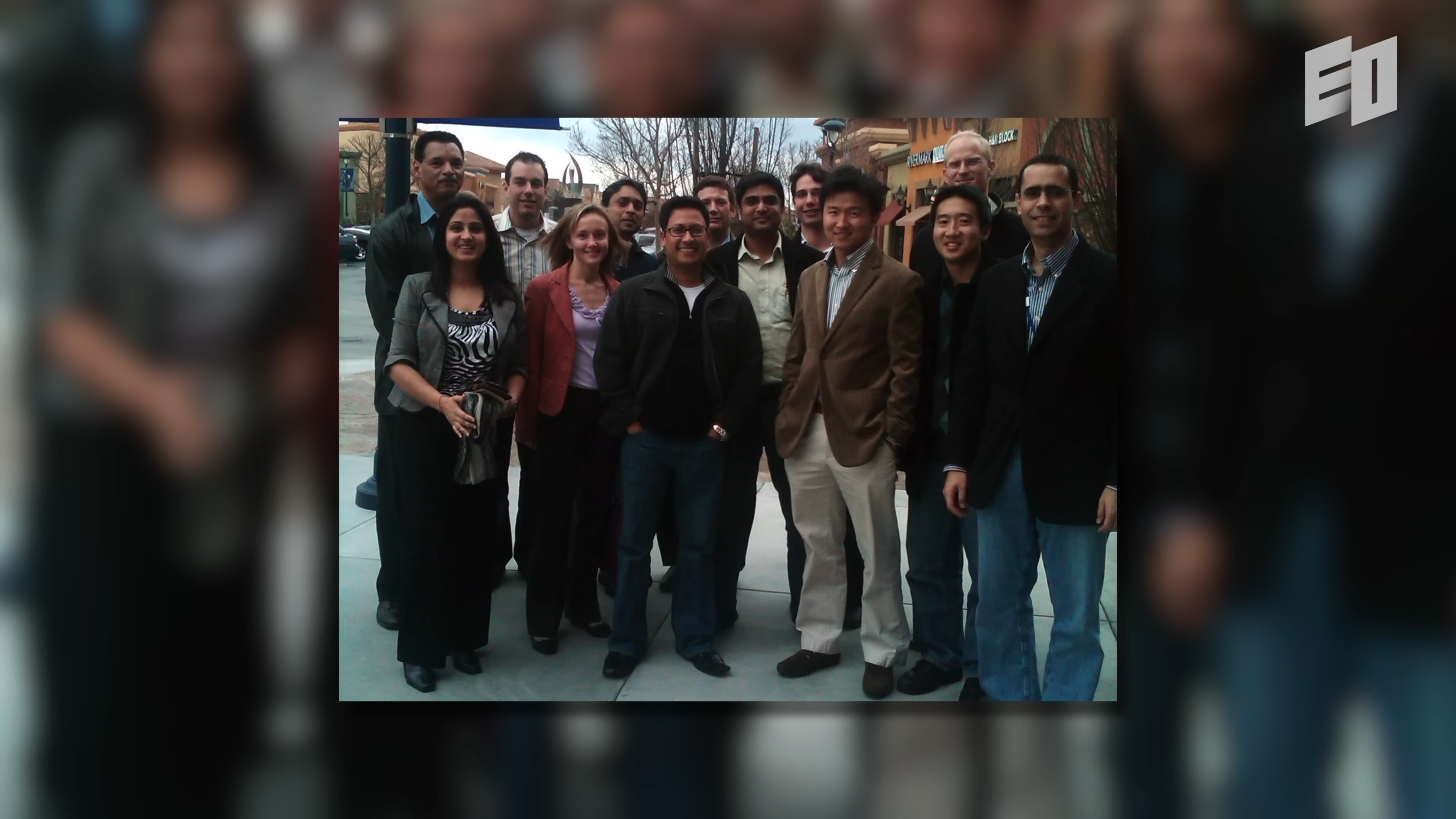
Before I founded Chartmetric, I was the first engineer at a mobile game company called Gamevil, which is now a billion-dollar company. I went to study for an MBA at UCLA, then joined Oracle as a product manager, and eventually started this company.
It was not my original intention to join a startup. I was a student, and I loved learning more about computer science. That's when I met the founders at Gamevil. It was about game programming, which sounded fun. I joined as the first employee and started building computer games. Later, the company decided to focus on mobile games, so I managed the mobile game department.
The company kept growing ever since. I managed the engineering team, which was only two or three people in the beginning. Over time it grew to 50 or more people, and the company was growing fast. I was able to take risks and try different things. It was a one-of-a-kind experience to join a startup at its early stage.
So it was definitely a tough decision. If I waited longer, I could have made more money from those stock options, but I wanted to start my own company in Silicon Valley someday. It's now or never, so I decided.
I joined a big tech company after graduating from business school. Oracle has offices in every major city you go to. There's an Oracle building everywhere. So it was a great feeling to be part of this huge, 100,000-person family.
But at the same time, what stifled me was that the company felt so mature. Once customers sign with Oracle, they have to pay monthly fees after that. To me, it seemed like a tax collection agency in a bad way. I remember the company was generating roughly $1 billion in cash profit per month.
It was incredible. That provided a lot of comfort. After working for five or six years, I could just get by working four hours a day, and I'd still make money. Oracle is famous for acquiring big companies, making big bets, and they're so good at that. They purchase these companies and bring in innovations from the outside.
As an insider, maybe I should have felt proud that our company was buying other companies. But that's not how I felt. Innovations were happening outside of this company, so if I stayed longer, I'd have less and less chance of participating in those cool innovations. If you succeed on your own, you can be proud of that for the rest of your life. That's what I wanted.
Three Things to Match
When you start a company, I think three things have to match. You have to feel passionate about solving this problem. You have to be good at it, and have the skills to help solve it. And you need to find people who are good at it too.
But in many cases, it's so difficult to find an idea that satisfies all three conditions. That's what I wanted to be careful about, finding the right one. But it was hard, so I dropped every idea. After several months, after quitting, when I'd dropped my idea, I got lost.
I had absolutely nothing to do. Some sort of depression hit me. I remember that feeling. I called a friend and asked him how he felt when he started. He said, "Hey, Sung, I've been there. I've seen many people feel this way. My advice is just move forward, only one step per day."
That advice came from someone I trusted, someone who had done this and made it, so I really took it to heart. It relieved some of the stress and burden, because I didn't have to make ten steps forward a day. I wanted to make huge steps every day, but I couldn't. So I decided to go one step at a time. That's what I've been doing for the last seven or eight years, ever since starting the company.
After seven years, we're approaching $7 million in ARR. We have customers such as Universal Music Group, Sony, and Warner, the big three labels, as well as tech companies like Netflix, Facebook, Amazon, and Apple Music. Also Pandora Radio, one of the biggest streaming services in the United States.
Charging
After a year and a half, once we'd gotten our first seed funding, the company was running out of money, and that forced me to prove that this was a product worth paying for. I don't think we were ready to charge, but I did it anyway because we'd run out of money.
I could have gone back to the investors and raised again. Instead, I wanted to prove first that there was somebody willing to pay for this product. For a couple of months, I funded the company myself, moving money from my personal bank account to the company account every month, and we survived.
I stayed focused on building the product, making it better, and putting in a credit card charge module. We announced to users that they could still use the product for free, but with limited features. If you wanted full features, you needed to pay $95 a month for premium, or $65 for the standard tier.
We put that price in and made the announcement. I sent an email to our beta testers, which was a small number, about 100 people total. I don't think we were really ready, but I went ahead. Surprisingly, I think it was the same day, in the morning, we deployed the new version and waited nervously.
Would there be anyone out there who saw the potential, who saw the value, enough to pay for the service? Monthly subscriptions, $95 or whatever. I got a notification that somebody had paid $950, a full year's worth of subscription.
His name was Rene McLean, from RPM Group, and I couldn't believe what had just happened. I'd just wished someone would pay at least $65. That would have made my day. But somebody paid $950, and that was the first payment. It was crazy. It was incredible. I remember jumping around the office, dancing and shouting. After 20 seconds of that, I calmed down and realized this could be a mistake.
Maybe he hadn't intended to pay for the full year. Who would commit a year to a startup that hadn't proven anything, that might disappear the next day? But somebody had paid for a full year's subscription.
So I emailed him right away, preparing myself for the idea that it was a mistake and he'd want a refund. That was fine. Then I called him, and he picked up.
He said he'd been using Chartmetric as a beta customer for a while, and he'd seen how fast we were iterating and improving. He got real value from the product. So when we announced we were becoming a premium service, he wanted to pay, but instead of paying for just one month, he paid for the year.
I asked him why. He said something I can never forget: "I'm running my own agency here in Manhattan, and I'm a business owner myself. I know how precious cash is in the beginning, so I thought some extra cash could help you. And I'm going to use this product for the next 12 months anyway, so paying for the annual subscription is a better deal for me."
So it wasn't a mistake. It was good news. Somebody trusted me enough to prepay for a full year, and he saw real value, enough to apply this tool and this data to his own business and make a difference. That was the day I finally knew this was going to work.
Customer Expectations
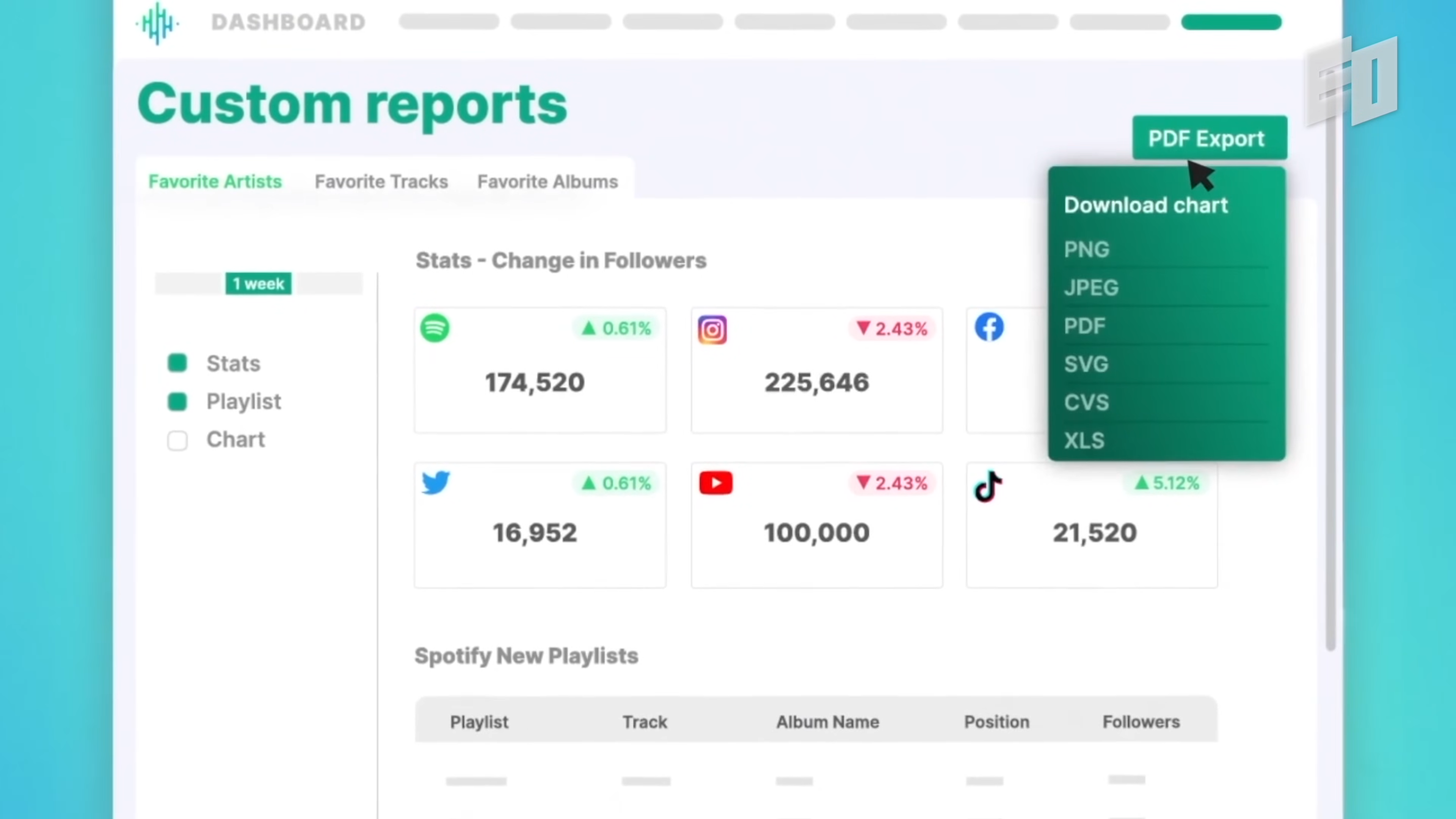
For SaaS companies, it's incredibly difficult to get those first customers, because it means gaining enough trust that they're willing to pay something upfront. And once you get that first customer, it's incredibly important that you exceed their expectations.
Your first couple of customers know the product or company is still early stage, but they decide to give you their money anyway. I was so appreciative of that trust and belief, so my focus was to deliver something not just on time, but ahead of schedule.
Here's what happened with those first customers. I knew the product was still being baked. It wasn't a delicious bread yet, but it was okay, still edible. So I bought that bread. Next week I came back, and guess what? The bread was now much more delicious, but still the same price, and you get delighted.
You have this pride: I discovered this bakery ahead of my friends. The bread was okay in the beginning, but since I paid for it, this baker used my money to develop his skill further, buy better flour and ingredients, and come back with even more delicious bread. Then I feel like I contributed to the baker's success. That's the reciprocity you see in SaaS business too.
Many investors have asked me what my competitive advantage is. Why would customers come to me instead of going somewhere else? I never had a really good answer to that. I always struggled with it.
This is something I learned at Gamevil. Everyone focuses on competitive advantage, on becoming different. We wanted to be different from other mobile game developers, so we tried a different flavor. Everyone drinks Coke, so you launch cherry Coke, or lemon Coke, or vanilla Coke. Do you think people want that? No, Coke is what people want.
That's what I believe about competition. You're not necessarily trying to build something different. You try to build something similar, sometimes even the same. But if you pursue that vision over a long period of time, someday your product becomes different.
Human psychology is complex. People don't make decisions based on only one or two things. Price is a very important factor, of course. So at least in the beginning, we offered our service at half our competitors' price. That's highly visible: we offer something similar, but our price is lower.
That signals to people, at least that's a competitive advantage, let me give it a try, at least it's cheaper. That's one thing we did in the beginning. Nowadays our price is no longer half of theirs; we're actually more expensive. But that was the difference early on.
Over time we kept building, and after seven years our product looks different, of course. We have more data than any of our competitors, and we have partnerships, so now we look quite different to our customers in many ways.
There's one interesting thing that happened last year, involving a competitor called Next Big Sound. When I started this company, it had just been announced that Next Big Sound was acquired by Pandora Radio for roughly $50 million. They kept innovating, and it was a really good product. I learned so much from them. But over time, they decided Next Big Sound was no longer their focus, and they shut it down last year.
When you go to nextbigsound.com now, they explain why they decided to shut down the service and what they're focusing on instead. The last bullet point says: if you liked us for social data tracking, go to Chartmetric.
Pricing
This is my formula. Internally, when I think about a tool, its price should be one tenth of the cost you'd have incurred if you didn't use it. So if we charge $140 a month to someone, that person should be saving at least $1,400 a month by using our product. That's the right pricing. If they'd only save half, say $280, then the product is too expensive.
That's my own yardstick. Are we saving $1,400 worth? If you didn't use Chartmetric and tried to get this much insight yourself, you'd probably need to hire an engineer first, because you don't want to write down a thousand numbers every day by hand. If you hired someone to do this manually, it would cost more than $2,000 to $3,000 easily. If you hired an engineer, you'd have to spend $10,000 a month before you built anything. That's true for big companies too, not just independent artists or two-person labels.
Even a big company can easily spend a million dollars a month trying to build this on their own. That's the justification for our price. For independent artists, it's much lower: we only charge $20 a month.
When you build a SaaS tool or a business, I think this matters: as a founder, are you willing to put many years of effort into it? If you're ready for that, it can work.
My long-term vision is for Chartmetric to become an indispensable tool. When we first made this service, it was a vitamin product. You could take it, or not, and nothing would happen either way. Maybe you'd feel a little less energy, but that's it. We've become more and more important over time, but I wouldn't say we're truly indispensable yet. There are alternatives, and you can still survive in this business without using any of them.
There are examples in other industries where a business or a piece of software became indispensable. Bloomberg is one. When you're in finance, you can't imagine doing business without the Bloomberg Terminal. That was our initial vision: Bloomberg for the music industry. It still is. That's my goal, my dream.
Building a product like that takes time. In my own theory, it takes at least ten years. Nothing important gets built within ten years. All the products you love feel like they were born overnight, but that's only because you discovered them after they'd already succeeded.
After seven years of grinding, I've realized that nothing can happen within ten years. Ten years is the minimum, in my own belief. It's been seven years, so I have at least three more to go, maybe longer.