Aug 16, 2025
The Only Trait for Success in the AI Era
Interview with Po-Shen Loh, Professor of Carnegie Mellon University
Founder Focused


0:00 / 0:00
💡
At a Glance
- Who: Po-Shen Loh is a mathematician and math professor at Carnegie Mellon University who also works as a social entrepreneur. He built an online education program that pairs mathematically gifted high schoolers with professional actors to teach critical thinking and communication skills to middle schoolers nationwide, and previously served as national coach of the U.S. Olympic math team.
- What: The interview covers why Loh believes AI has already matched or surpassed human creativity, and what he thinks will matter more going forward: the ability to empathize, delight other people, and think for yourself rather than defer to authority.
- Traction: Loh's education program took eight years to conceive and eleven years to reach its current scale, now connecting trained high schoolers with middle schoolers in critical-thinking classes across the country. It runs as a self-sustaining social enterprise, using revenue from paying customers to subsidize students in other parts of the country and the world.
Po-Shen Loh, a math professor at Carnegie Mellon University and longtime social entrepreneur, argues that AI has already caught up to human creativity and explains why he now believes empathy, thoughtfulness, and the desire to delight others matter more for the future. He describes the program he spent over a decade building, which trains high schoolers with professional actors to teach critical thinking to middle schoolers nationwide. Loh also discusses how he tries to counter bias and misinformation in an AI-driven world by deliberately seeking out opposing viewpoints.
Key Takeaways
Writing Homework Builds Thinking, Not Just Language
Po-Shen Loh compares using AI to complete school writing with driving a car for exercise: the task may be finished, but the intended development never occurs. Reading, writing, communication, and logic matter because they build the mental fitness students will need to reason independently.
Creativity Appears When Students Face Unseen Problems
When Loh interviews students, he waits until they encounter a math problem they have never seen, then offers unfamiliar hints. He watches how quickly they synthesize those ideas into a solution, treating the ability to reason through novelty as a practical form of creativity.
Simulating The World Is An Entrepreneurial Superpower
Loh uses AI to investigate unfamiliar contexts, such as how a Nashville performer might reach a prime opportunity, but he does not outsource the conclusion. By gathering links and building the logic himself, he uses simulation to imagine products and strategies, then play their consequences forward.
Delighting Others Can Replace Competitive Life Goals
After seeing talented students become depressed despite excelling competitively, Loh reconsidered what education should optimize. He now frames happiness as an expanding practice of making other people delighted, where helping five people can grow into helping hundreds or thousands and still align with conventional success.
Kind High Schoolers Can Scale Critical Thinking
Loh's education model pairs mathematically capable high school students with younger learners, while professional actors coach the older students' communication and charisma. The exchange scales critical-thinking education and develops the confidence, empathy, and leadership skills those high schoolers may later need.
Thoughtfulness Protects Human Agency In An AI World
Loh worries that efficient AI dependence could weaken people's interest in thinking, personal expression, and skepticism toward authority. His response is to build networks of kind, clever people who enjoy contributing their own ideas and can reason independently when technology creates civilization-scale challenges.
Watch the full interview now on EO's YouTube channel! Below is the complete transcription of the interview. Minor edits have been made for clarity and readability.
Introduction
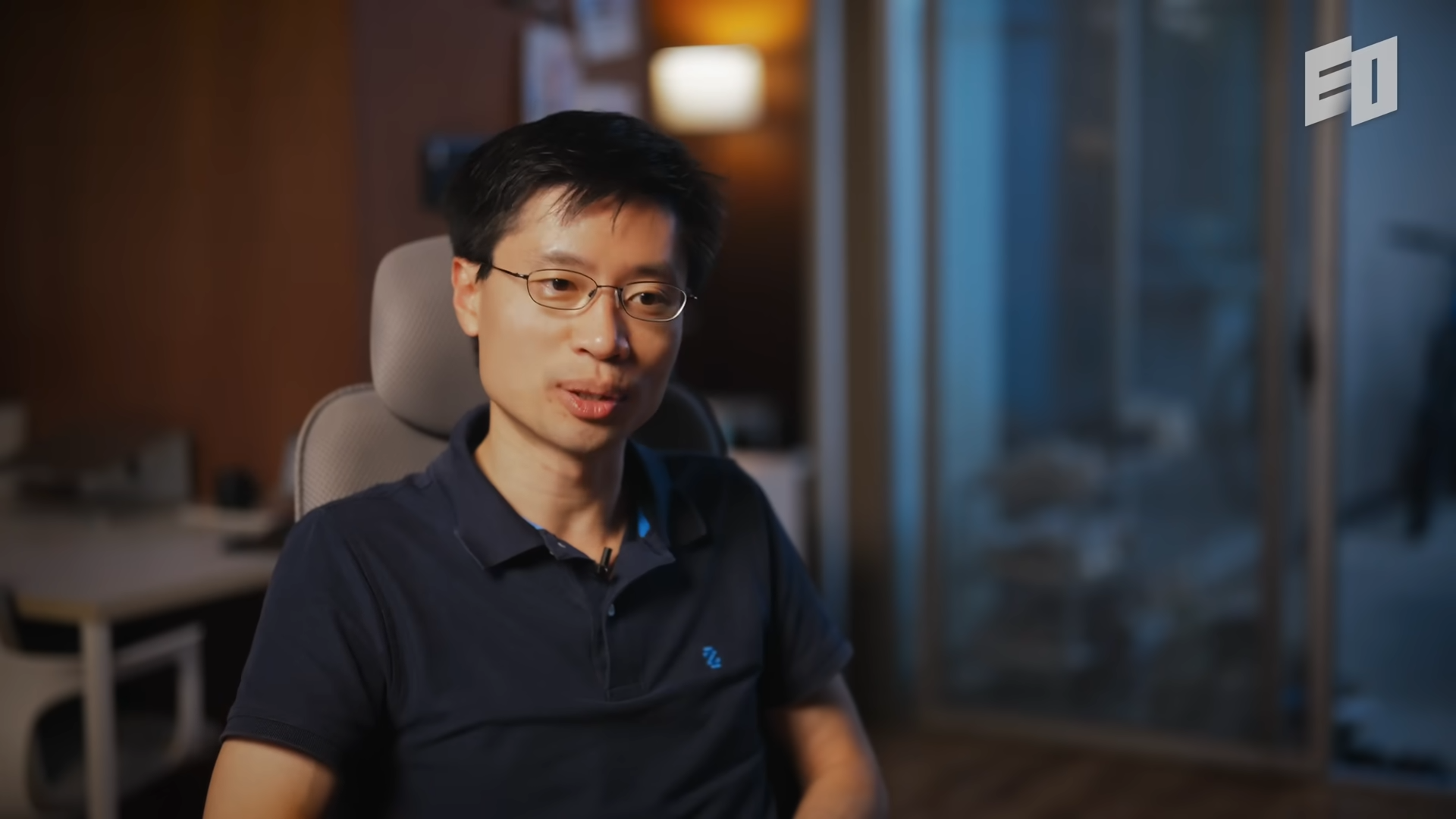
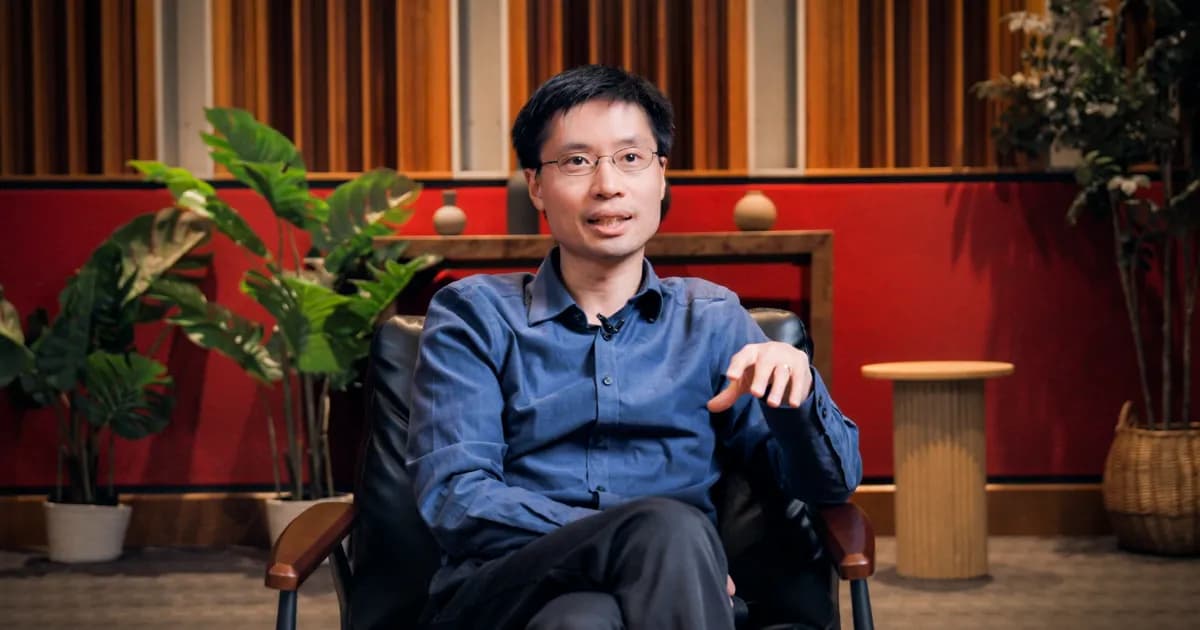
I'm Po-Shen Loh. I'm a mathematician who likes to solve real world problems. In real life, I'm a math professor at Carnegie Mellon University, but I'm also a social entrepreneur, where I've been running my own educational solution, which tries to make the world a more thoughtful place.
Chapter 1: What Matters More Than Creativity
In schools, one of the biggest places where students are using AI to cheat on their homework is for their writing. This unfortunately could make a huge problem for human civilization because you just have to think, what is that AI anyway? It's a large language model. How is that AI so good?
It's because it's good at language. It's good at looking at the patterns of words that often appear. If many kids lose this ability, we'll get many kids who grow up and aren't able to think logically. All they're able to do is just take whatever anyone else gives them. They'll just be dependent.
If you're already grown up and you already have that skill and you're using the AI to achieve that task because that's for your job, great. Okay, you're using it to do a job. But if you're in school, why are you doing that writing? It's not because the writing you make is going to make money directly.
No, no, that writing is actually part of your own learning. Using AI to do your writing homework in school is like saying, "I'm not going to run a mile for exercise, I'm going to drive my car one mile for exercise." How much exercise do you get? You get none.
You're going to grow up and you're not going to be able to be as physically fit. Similar thing here with mentally fit, and just this observation that the power of the large language model is the L, the language. That's why we need to really make sure that all of our kids, and if you're watching this and you're students, this is why you need to be really, really good with language for the next generation. All of these skills like reading and writing, communication, logic, these are all going to be very important because these are how you develop a good way to think.
I was explaining to people the reason why we do this math is not because eventually we have to do algebra, but the reason is because eventually this just makes you smarter. So you're able to go and think through situations you haven't seen before and figure them out. I interview lots and lots of high school students who want to work with me.
And during the interview, the way that I interview for intelligence is I ask them questions, usually math questions because those are analytical, and I ask them questions until it's very clear from their body language that they have never seen this question before. Because usually if you're doing math questions and you've seen it before, you have a certain look of confidence in your eyes. But I wait until it's really clear that they've never seen this before, and then I want to see how you think. Actually, because you've never seen that question before, the expectation is that you won't solve it. And so then I start to give hints.
Those hints are usually ideas that they wouldn't have encountered before in school. And then I want to see how quickly you can synthesize these new hints, these new ways of thinking, into a solution for a problem you've never seen before. Actually, that's also creativity. So that's one particular piece.
But going forward, I think that one of the skills that people will really need is that aspect of actually wanting to create value and delight in other people. Why do I say this? I say this because for many, many years, humans were the top species, the most capable things on this planet. Soon it will not be that case. Soon, you're going to have to work together to survive.
The only way to get other people to want to team up with you is for you to authentically and deeply be a person who is motivated by creating value in the other. If you are not that way, you are a bad partner and people will not want to team with you. If they don't team with you, you will die. You will lose opportunity, because eventually all of these kinds of jobs you can use AIs to do.
Then why would anyone want to employ you? Why would anyone want to have you as someone on their team? Presumably only because they somehow felt like you are going to create some value and they like that vibe, they like you. I think what we really need is to get more and more people who are figuring out what the real problem to solve is. But unfortunately, sometimes when kids just think about problems, they don't realize that the way that you solve a problem is through empathy and through relating to other people.
Why? Because you can't solve a problem unless you can visualize it through their eyes. I do spend a significant amount of my life working towards the goal of being better at simulating the world. I also use AI for that. I'll give one exact example, I was just in Nashville, Tennessee last week, and I saw a really talented singer in one of the bars there. Wow, she's good.
And I got curious, how hard is it to get a performing spot on Broadway in Nashville? So I asked AI, and I wasn't just interested in AI telling me about it. I wanted to see the links, you know, tell me more, what is the background of this particular place she's performing at? I will make my own conclusions based on knowing. Oh, I see, so there are all of these different people who would want to do this thing.
So if you're one of the people who got picked to do it at this prime time, this makes logical sense. See, I'm using the AI to build the logic inside my brain for understanding country music performance. And why was I trying to understand? Honestly, it's because these days I also work with professional entertainers, so I'm always scouting myself, too. The big heart of this is I wasn't using the AI to write the report for me. I was using AI to make myself better at that particular goal.
Being able to simulate the world is the superpower that makes someone able to be a successful entrepreneur. Simulating the world allows you to imagine a product or imagine a strategy, and then play it forward in your head. What would happen if I did this?
Chapter 2: The Next Stage of Education
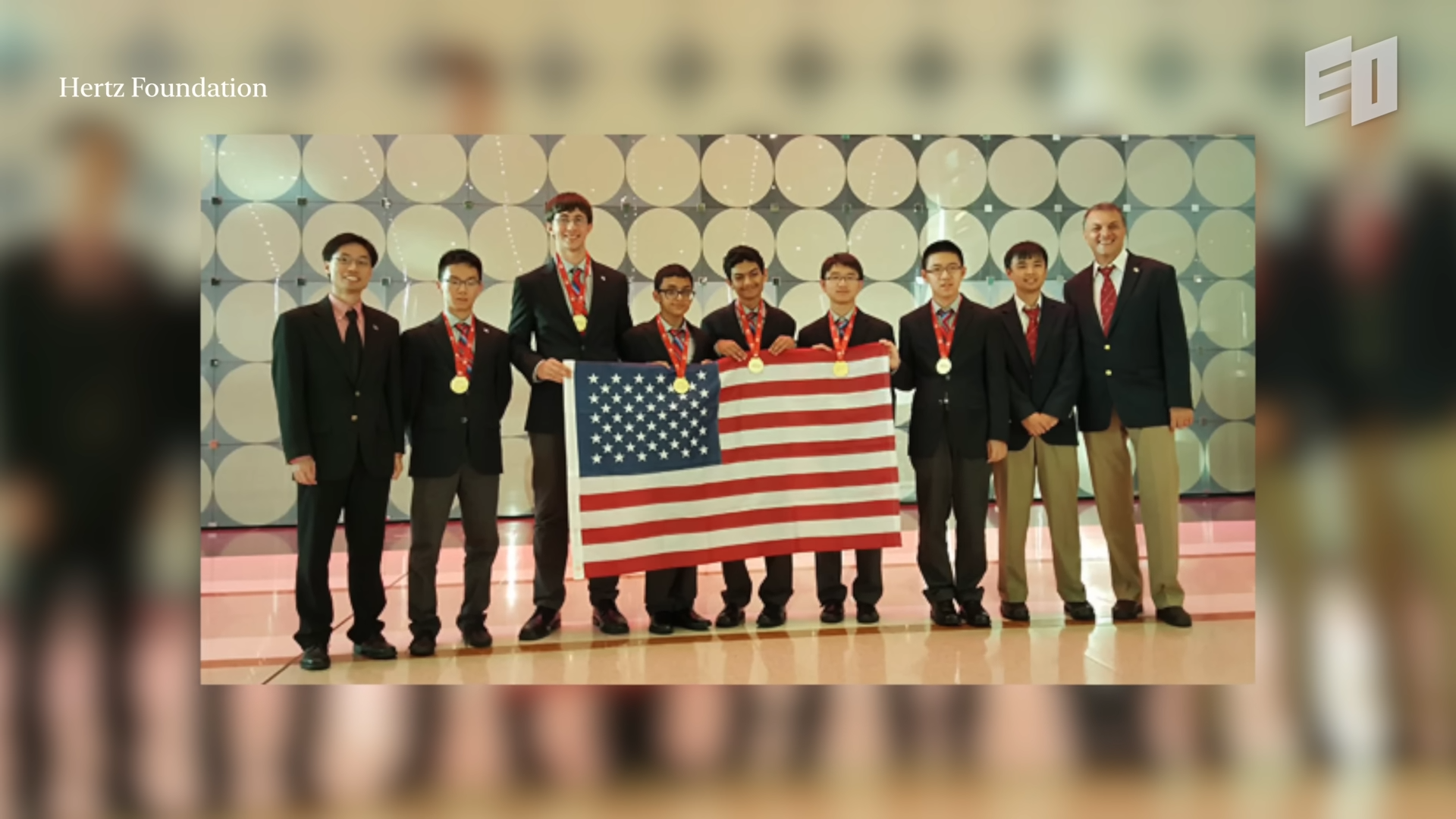
A long time ago when I started with education, I was actually just thinking about how to help people do math problems. Today when I think back to that time, I think I was probably a solution looking for a problem, in the sense that somehow I thought it would be very important for people to be good at math. But then things that happened later in my life, as I became the national coach of the US Olympic math team. I saw situations where there were so many so clever, so capable people who were still so depressed. And furthermore, after they graduated from high school, they didn't really know what to do next, because they thought that the point of life was to find ways to prove you're better than other people.
That's when I realized we actually will do much better if we think about the philosophy to start with. The philosophy in life should not be how do I outdo everyone else. If you do that, you'll probably never be satisfied.
But if your philosophy in life is, hey, it is actually addictive to make a bunch of other people happy. Oh, now I can do it for five people. Oh, now I can do it for 500 people. Oh wow, now I can get a thousand people to come to this thing. The more that you do, the more you want to do, and the fun part is that it correlates with traditional success too. Then I realized, ah, I should be trying to push this worldwide, and if I don't do it, who will?
With the things I've done in my life, I now have an opportunity to say, I've seen what happens if you go all the way in pure competition. I've seen what happens if you go all the way and just practice problems to do the best on tests. Actually, that's not the right target. And I realized that because of my background, I would be able to shift mindsets. Then I said, okay, this is what I have to do.
I am a math professor at Carnegie Mellon University. The way I teach every single one of my classes is that I just go up to the chalkboard with a piece of chalk and write, today we're going to do this, but I forgot exactly how to do this, so I need all of you to suggest ideas. And then the whole class experience becomes one where the students are suggesting ideas and I'm giving them feedback. And what I've been working on as a social entrepreneur, to make it possible for everybody to experience education in this way, is we run an online program. It's called Live.
We found a way to scale up the education of critical thinking. You see, the limiting factor is having enough coaches to lead all of this critical thinking and brainstorming, and we scale it up by making a win-win situation, by just observing that one of the greatest ages to learn critical thinking is when you're 10 to 13 years old. And it turns out that some of the best people to lead 10 to 13 year old kids into the joy of being thoughtful are high school kids who are about 15 to 18 years old. But what I observed is that there were plenty of kids who were 15 to 18 years old who were already very clever academically, especially in math.
Their limiting factor in life eventually was not going to be their science, technology, engineering, or math. It would be communication skills, confidence, and the ability to win over anybody and lead a team. So I created a program where we find kind and mathematically clever high schoolers, and then I hire professional comedians and actors to teach them how to be charismatic and how to win over anybody, because if you can convince anybody to love math, you can convince anybody to do anything.
And so this exchange, they're trained by the actors, they coach math. While they're coaching math, we pay for an actor to watch them for every hour that they're coaching math. The actor gives them real-time feedback to help them become more enthusiastic, empathetic, and a more winning personality. It's a win-win situation, the high schoolers directly benefit, their life becomes much better. In return, they're producing all of these critical thinking classes for kids all around the country. The architecture of this is that it just connects people.
We are introducing kind and thoughtful high school students to middle school students, to help them see that they could become these great people who are having fun and also having a very fulfilling life. But also, the way we execute the whole thing, the high schoolers all teach in pairs. That not only makes the experience more fun for the people who are learning math, but it makes it so that these kind and really mathematically clever people get to know each other, because I don't know what kind of challenges we're going to face in the future. I think they're going to be quite big, and technology will make it so that whatever the challenges we face are, they're big.
So we also need to have a big network of kind people who are clever, who know each other, and who have trust, so that if there are some civilization-threatening challenges that arise, maybe there will be some people who will stand up, work together, and do something about it. This is what I pay attention to as I travel around the entire country and the world. I'm actually thinking about the robustness of human society, if there was some challenge that faced the world due to technology, are we as a human civilization equipped to rise up and face it? To me, it all starts from thoughtfulness.
Chapter 3: The Two Things AI Steals
The work I do is really focused on building up autonomous human thinking. That's why the core word I use for the philosophy is thoughtful. I've watched over many years as people are becoming less and less interested in thinking. I think that actually happened because people found out that they can entertain themselves with iPads, and this unfortunately makes people also not have as much interest in concentrating and thinking about something.
AI could make that much worse. The fun part of life is having your own contribution to the life that you live. Actually, I think that's why people actually like creativity. It's fun. People like to draw, people like to put their own flavor, people like to wear their own fashion. It expresses themselves.
This expression of yourself would be lost if everything you do is efficient but just reliant on the AI which told you how to dress today. That's why I want more and more people to discover it's fun to think, it's fun to have your own twist on things, your own idea that you inject inside. The other dangerous thing that happens if people lose the ability to think and reason is that it makes it far easier to deceive people. The world is so complicated that if you look at any situation in the world, sometimes depending on how you tell the story of what happened, you can say statements that are all true which make you come up with a different feeling.
I think it's really important for people to be critical and to be able to understand what's really going on, because sometimes when someone's talking to you, they have an agenda. Like, I'll be frank, I have an agenda. I'm trying to build a more thoughtful world, and I'm going to be very, very upfront with you on that. Anyone who's watching this, I think it's really important that we have as many people as possible find out how much fun it is to delight other people and to have the ability to think and figure that out. That's my agenda. But you see, everyone has an agenda.
And if you can't think for yourself and you just listen to some authority, what if that agenda is actually to your detriment? You have no way of knowing. The technology revolution really made all of us start to realize how much of an impact bias has, in the sense that whoever makes some technology tool has some bias. What does bias really mean? Well, I guess as a mathematician, the way I would say it is, two plus two is always four.
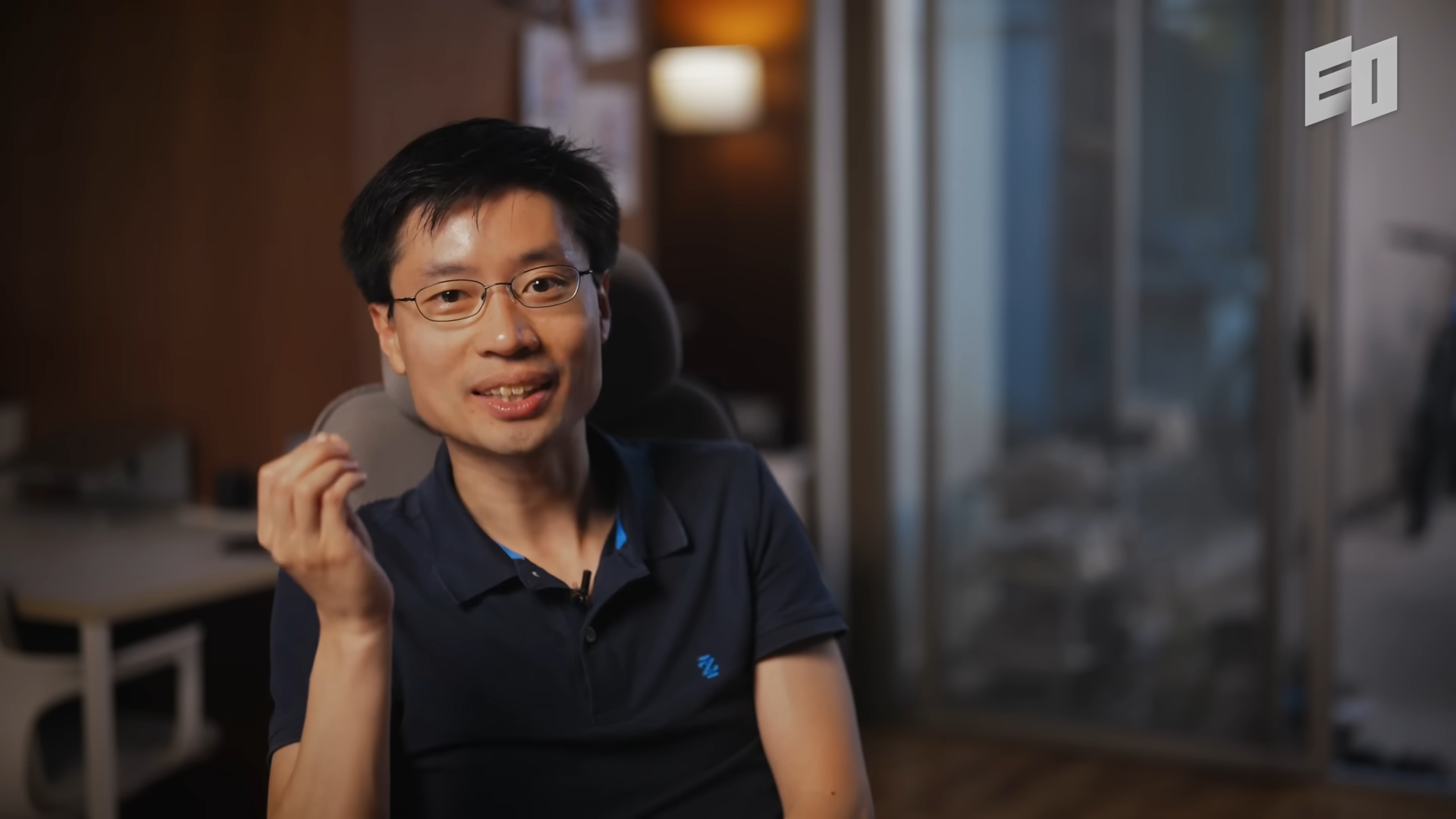
That's right. What's the point of life? Oh, I don't know, there's no clear definition. I think the point of life is to delight as many other people as you can, but I know that you might not necessarily agree, and that's not a problem. I think it's healthy that we may have different starting points. The part that becomes unhealthy is where there is only a very short menu of options, each of which is followed by a huge number of people.
That's actually where bias comes in, because we just mentioned a couple of different sources of AI providers. We have Claude, we have OpenAI, there's also Gemini. If you're in China, there's DeepSeek. There are all of these, but that's relatively few.
If you think about it, that would be sort of like saying the world has lots of different viewpoints, but it only has five of them. Really? No, no, the world has 7.5 billion different viewpoints. There are 7.5 billion people.
One of the beautiful things about humanity, I guess, is the fact that there are so many different ideas out there, and let's be frank, some of the ideas are bad. Some people are unfortunately in prison because they decided to kill someone else. Hopefully we all understand that's a bad idea, but the point is there are lots of different people trying different kinds of ideas, lots of different philosophies. And in this great big marketplace of ideas that is the world, we see some ideas come out, and the variety also allows us to have more creativity, perhaps.
And when I look at the different AI tools, well, it's actually well known that they have certain biases. This is also why, for me, when I try to get the news, I don't only go to CNN.com, I also go to Fox News. I tune my social media so that my X is tracking Republican, right-leaning viewpoints, and my Facebook is tracking left-leaning viewpoints, and I look at both of them every day because I want to see what's going on. And my expectation is, yes, you're going to be biased, you have a certain view on the world and you think you're right.
And you're biased too, you have a way of thinking about the world, and my job as I simulate the world is to try to figure out where do you disagree. Ah, you disagree perhaps on a few values of how people should live their life. And then that causes you to have different ways of reporting on the story. I think it's all the more important now that there's AI out here, which sounds like a very convincing, reasonable person. It's even more important that people look at things and say, all right, is that really the story? Because I think the AI is going to be so good at looking complete that you may think you have the entire story on a controversial situation, but you don't.
Chapter 4: How to Stay Hopeful Despite It All
I am an optimist, as you can probably tell from the way I'm talking. I'm optimistic because I can see that thoughtful people stick together. I've been working with this whole group of high school students for three years now, and I can see there are so many kids who are not kids anymore, who are growing up, who are really clever but so kind, and who also know each other. They make me optimistic about the future, not only the ones that I work with, but because if I'm working with these people, that means there are other people out there too.
I'm basically seeing with my own eyes the power of what can be done if you bring together people who have in common this idea, that they actually like people and want to make the world brighter. See, one reason I'm building this whole community of really kind and clever people is because I'm also hoping to eventually build a whole lot of social entrepreneurs. A social entrepreneur is someone who makes a conscious decision not to necessarily become rich. You're doing it for a different purpose. It's not because you want tons of money. It's because what makes you happy is seeing lots of delighted people.
Social entrepreneurship is hard. The hard part is that sometimes at the beginning you feel this is an important problem that needs to be solved, why won't people pay me to do it, I need a donation or an investment or something. That's how I started off. Today, when I do my social entrepreneurship, I think very carefully, how much does that problem actually cost?
You know that if it's a problem, there's a real cost. In fact, it should be possible to make money. That word, entrepreneur, hopefully also includes something about sustainability through a business-type form. A good social enterprise should make a net profit on every single person that it helps. The problem that happens with social entrepreneurship sometimes is that people are doing something which would be nice to solve, but they haven't found a way to tie that together with solving a problem that has real monetary value, one that you can find someone to pay for.
You should hopefully be able to figure out how it costs the world something, that the problem is there. Aha, now try to figure out who is paying that cost right now, and see if maybe they would be interested in paying you to go and solve that problem. You just have to go and hunt around, figuring out how the positive that's created, on average, is spread across everyone involved, and then you also get a little bit too.
That's actually what we do. For example, we provide all this education, since we make the best after-school math classes for middle school students who want enrichment. We have lots of customers, they pay for it, so we have the profit. But because I'm a social entrepreneur, we subsidize students from different parts of the country and different parts of the world.
How come nobody else ever thought of putting professional actors to live-coach high school math stars who are kind, while they livestream math classes to middle school kids? And that whole thing builds an ecosystem, one that builds a more thoughtful world that can hopefully help sustain our human civilization. It's actually an obvious idea. There are actors. There are math people. We can all win.
It took 11 years to really build up to the stage that I am right now. It took 8 years to come up with that idea. You can imagine how many other weird ideas came about along the way. Anytime I see anything in the world, or something I need to do, I try to keep coming up with a weird new way to do it. For fun, I like to constantly be thinking, is there another way, is there another way, is there another way?
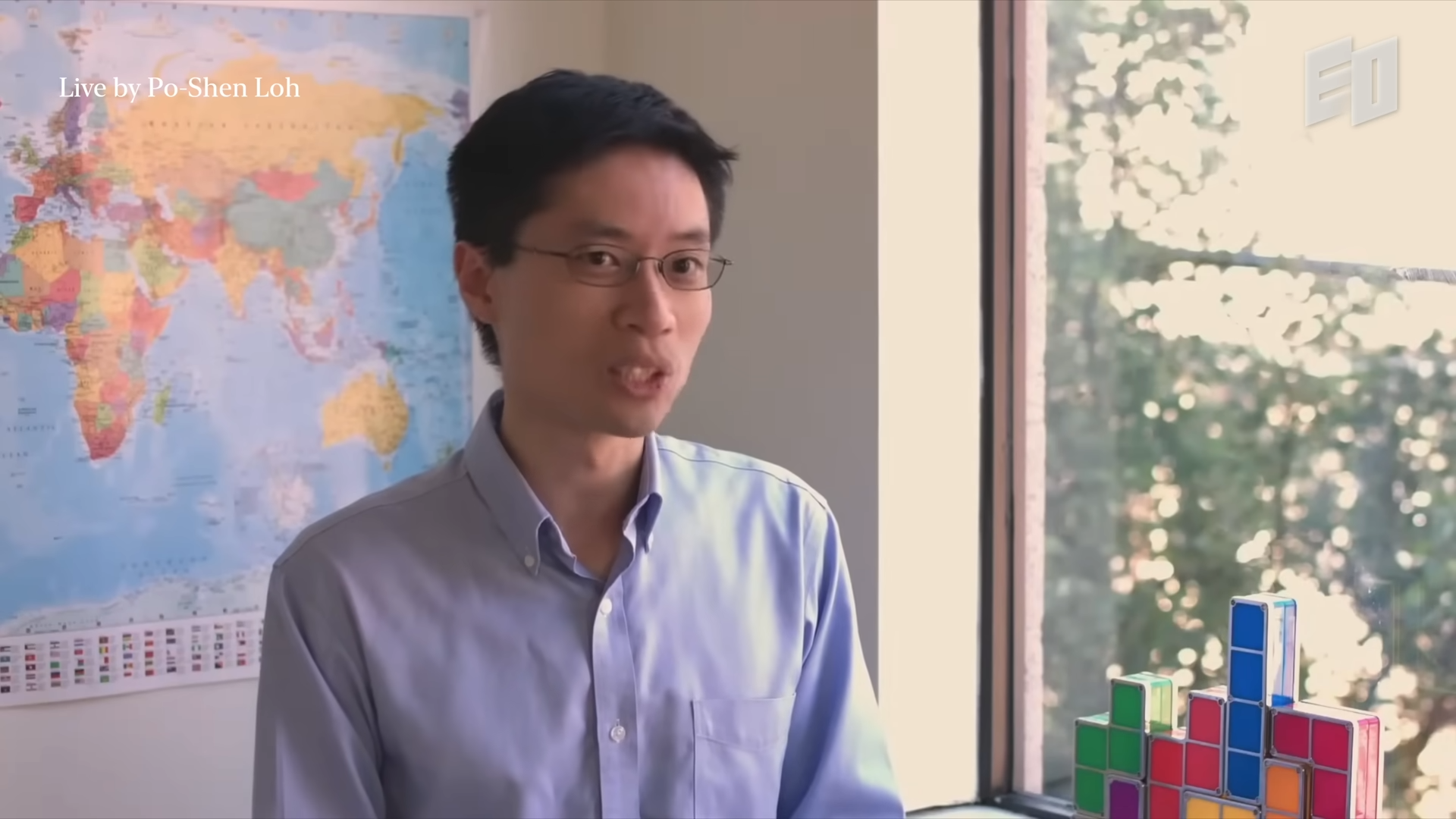
When I do this, most of the time I come up with a way, and then the next question becomes, all right, what could be wrong with it? So I first generate, I want to generate a new idea, and after the new idea is there, I say, now I want to destroy the new idea, I want to shoot it down. How could it possibly be wrong? Because 99% of the ideas that I generate that are new are fundamentally flawed, but 1% are good. You have to just be constantly, for its own sake, saying, could there be another way of doing this? So this combination of generate with excitement, destroy with lots and lots of effort, and then after a while one diamond appears, then push it.