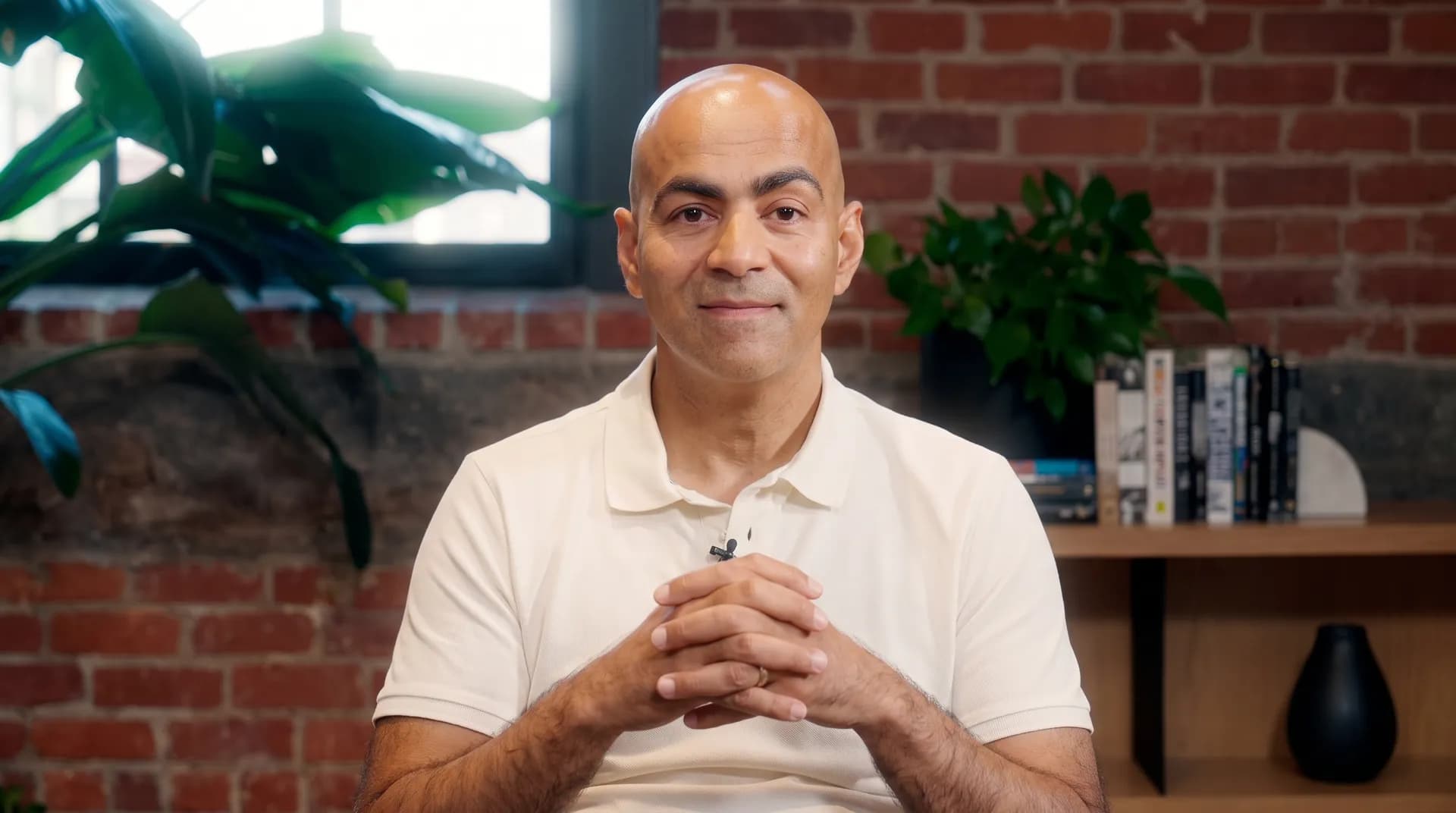
Interview with Dylan Fox, Founder of AssemblyAI
At a Glance
- Who: Dylan Fox is the founder and CEO of AssemblyAI. He taught himself to code after college, going $30,000 into credit card debt, then worked as a machine learning engineer at Cisco before starting AssemblyAI, which he got into Y Combinator with only an idea and no product.
- What: AssemblyAI builds a developer platform for speech AI, aiming to be the most accurate and easiest way for developers to add voice recognition to products like voice agents, notetakers, and sales intelligence tools.
- Traction: AssemblyAI has raised over $130 million in funding, now processes about 5 petabytes of speech data a month through its API, roughly 10 times the size of the entire Spotify catalog, with usage growing more than 250% year over year.
In this interview, Dylan Fox traces AssemblyAI's origin to an infuriatingly outdated speech recognition SDK that arrived on a mailed CD-ROM with a $10,000 evaluation agreement attached. He explains why getting into Y Combinator with no product and no traction taught him that funding doesn't build a company for you, and why he asks customers what they hate about the product instead of what they like. He also reveals that AssemblyAI now processes about 5 petabytes of speech data a month, roughly ten times the size of Spotify's entire catalog.
Key Takeaways
Founder Conviction Can Begin With A Market Instinct
Dylan Fox spent years building software and learning machine learning before a frustrating developer experience with an expensive, outdated speech SDK clarified the opportunity. He wanted accurate voice technology that developers could access easily, because better models could expand a small market.
YC Capital Cannot Replace Founder Execution
Fox entered Y Combinator with only an idea, no product, and no traction, then worked through an intensely stressful period to get AssemblyAI moving. His lesson is that acceptance and fundraising do not create customers or fix the product for you.
Ask Customers Where The Product Still Fails
Fox uses customer conversations to find weaknesses rather than collect compliments. Questions about the three things customers dislike most or the roadmap they would choose produce sharper product priorities and reinforce the subject-matter expertise that helps a startup compete.
Validate Demand With A Website Before Building Everything
Fox recommends a fast validation loop: publish the product you intend to build, add a contact button, and observe who reaches out and what they want. This can test the direction before a startup invests heavily in models, features, or infrastructure.
Focus Models On The Use Cases You Serve
AssemblyAI protects its advantage by optimizing models for specific applications such as voice agents, notetakers, and sales intelligence. Fox sees focused tradeoffs as a route to product-market fit, while accepting that a general-purpose model may serve another use case better.
Watch the full interview now on EO's YouTube channel! Below is the complete transcription of the interview. Minor edits have been made for clarity and readability.
Introducing Dylan Fox, founder of AssemblyAI
My name is Dylan Fox. I'm the founder and CEO of Assembly AI. We've built the industry's most accurate and easiest to use developer platform for speech AI. We've raised over $130 million in funding to date from Excel Insight Partners Daniel Gross and Nat Freeman and Smith Point. That's led by Keith Block from Salesforce.
One Bowl of Pasta, Seven Days of Code
My older brother, he would order all the hardware online and he would, you know, be in our basement making computers and I would watch him and being around computers as a kid playing video games.
I was addicted to these MMRPG games. I love just working on technology. So in college, I started this company that helped other college organizations fundraise online, and people who donated to this student organization would get local rewards in their community. It was a terrible idea, and it didn't go anywhere.
But we learned a lot about starting a company and being a founder through that experience. What I learned from that experience was that I loved being a founder, and I loved programming. And with programming, it wasn't so much the programming that was addictive. It was just this open-ended world where you could just build stuff. Any idea you had with programming, you could make it into something real, and then you could get feedback from users, and you could then keep building and keep building.
And so it was this process of building something that I found just so addictive. So after college, I didn't get a job. We had shut the startup down. I just opened up a bunch of credit cards, and I went like $30,000 into credit card debt. Basically, just learning how to program, reading programming books, building apps, and just like all day.
That's what I would do in my apartment. And I would make like one big bowl of pasta every Sunday and just like eat that all week with Diet Coke. I was just spending all day programming and building stuff and seeing if I could launch anything new.
After almost 2 years of doing that and going into credit card debt, I was like, "Okay, I need to go get a job." But I had found that I was really most interested in machine learning and natural language processing. And so there was a team in San Francisco, the company called Cisco, that was hiring for machine learning engineers to focus on building natural language processing products and interfaces around Cisco's collaboration products.
Got really into neural networks and more advanced machine learning and deep learning while I was out there at that job. And that was around 2015- 2016.
Why I Became Interested in Voice AI
When I got the job at Cisco, I knew I always wanted to start another company. I'd always spend nights and weekends just tinkering with random ideas I would have. And I think Alexa launched around the time I was at Cisco. So the Alexa product was like the first computer you could talk to.
And I, as a machine learning engineer, was working in natural language processing. I wanted to start experimenting with my own ideas for voice interfaces or voice products- voice-driven products. And the leading company at the time that was building that technology was this big company.
And I contacted them to try to get access to their developer SDK. And they mailed me a CD-ROM. It was like a $10,000 evaluation agreement that you had to sign. I didn't even have a CD-ROM drive to load their SDKs. It was just this completely archaic experience as a developer.
I really wanted this super-accurate, really easy-to-use developer platform because I saw back then that the technology was going to get orders of magnitude better, and that was going to make what was a small market huge. That was a really exciting thing that I just wanted to build and work on.
As a founder, you just have this instinct for some market, and that's what gets you excited about working in that market or building in that market. For me, that instinct was voice interfaces and speech AI technology. That is one of the most important modalities for AI. And so we're really excited about that potential, and especially that potential to create really accurate and amazing AI for speech and voice, and then just put it into the hands of developers to build really creative stuff with and really amazing apps with.
No Product, No Customer, Still Got into YC
I left my job and then a few months later got into Y Combinator. I had no clue I was going to get into Y Combinator. I just wanted to submit the application as really a thought exercise to like crystallize what I was working on, what I was going to do. You know, I figured like no chance I'm getting in alone. No progress, no traction, no product, just an idea.
But there was a YC partner at the time, Daniel Gross, who had worked at Apple, had worked around Siri, got an email, it's like, "Hey, what's your accuracy rate from Daniel?" And then the next day they were like, "Hey, we'd love you to come in for an interview." And so I bought a ticket home. I flew back to San Francisco where I was living at the time.
The next day, I drove down to Y Combinator for the interview, got in, and I submitted the application. It was like 30 days late, past the deadline. I went in on the first day, and it was like all these other companies had so much progress, so much traction, and I was just getting started, and it was a really hard idea to get started with, like creating AI models for speech.
That was probably one of the most stressful periods of my life. It was like those those three months in YC where I was just like really trying to get things off the ground working mostly by myself. A lot of founders think that getting into Y Combinator raising capital is like just going to make things happen. It doesn't. No investors are going to hand you customers, make your product better, fix things. You still have to make everything happen.
So we just again like showed up every day and just tried to make progress and just like kept at it. I've really just tried to focus on, like, as long as I feel really happy about the product that we're making and the customers that we have and they're happy, then that's, like, the validation I'm in search of: do I feel happy about our product? Are customers happy? Like, those are the things I try to get validation from, not what other people think about our company or what we're doing.
How a Startup Wins with Deep Subject Matter Expertise
Most of my day is spent talking to customers, working with our product teams, playing with our product, and seeing where it's working, where it's not. Founders and startups, you really need to have this deep, deep subject matter expertise in your market, in your customers, and in your product. I think in a lot of ways it's like undervalued and underappreciated versus functional expertise.
Don't always have a lot of confidence in your functional expertise. And I think that's where startups can win. There are a lot of people out there who have amazing functional expertise, but don't have the deep subject matter expertise that you have, or that your team has, over a certain market, a certain customer, or a certain product. So when I talk to customers, I don't want flattery. I want, like, where does our product suck?
Some of the questions I ask are like, hey, what are the top three things that you don't like about our product? Or if you were in charge of our roadmap, what would you prioritize? Those types of questions are really helpful because, they give you that feedback and that insight over like where do you need to continue to push. I'm never satisfied with our progress. I really excited about what our customers are building.
Like, I see some of the apps they launch and build, and it's like I want to go talk about them with my friends cuz they're so cool, inspiring, and exciting. And as all these new applications around speech are continuing to take off, the amount of speech data we're handling it just continues to grow rapidly. We'll handle about five petabytes of speech data this month alone through our API platform.
That's about 10x the size of the entire Spotify library and catalog. And usage to our developer platform is growing over 250% year-over-year. So, the scale is like pretty insane.
Just Start with a Website
Speed is probably more important now than ever. There are so many use cases that we're seeing developers want to build apps around that they need really good speech AI for. They need new capabilities. They need better tech. They need better models. They need, you know, all this stuff. They're hungry for it because the opportunities are enormous.
An example of where a lot of speech AI models will struggle today is with hallucinations. So having an in-person meeting with 10 people, or you're having a phone call, and it's windy, and the quality is bad, that's where the AI models still struggle today. That's an amazing opportunity because there are so many applications that are limited by those things. So we're really excited to keep making the models we're creating better and better. And as a startup company, you want to try to optimize everything you can for speed.
You can start by just putting up a website and advertising the product that you want to build and just putting like a, you know, contact us button on there and see what are people reaching out about, are people reaching out, what do they want from your product and that can be really helpful to get validation early on are you building the right thing uh before you go spend a ton of time building. So I think that really fast iteration loop is important for startups to have with customers and the markets that you're working in.
Focus on Ours, Not Theirs
When you're making an AI model, at so many points you have to decide between trade-offs, right? What type of data do you use? What type of thing do you optimize for? When you know who you're building this AI model for, then you can make all those trade-offs a lot more intelligently, in a way that makes your AI model have more product-market-fit for who you're building it for.
You can always change your focus as you learn, right? But I think it's important to, like, have a focus, and then you learn, and then you can focus on other areas. Like we're super laser-focused on, okay, people building voice agents, people building notetakers, people building sales intelligence apps; these are the 10 things they really, really care about.
So, let's make sure our models are hyper-optimized for those things. And let's build the right training data, and let's build the right model architectures, and let's do all of the things we can to absolutely max out in those dimensions. That's how we're constantly keeping our models the most accurate and the easiest to use for the developers that we're building for.
You might come to assembly, and maybe our models aren't as good for you as another model. Usually, if that happens, it's because that's not an application or a use case that we're really focusing on. At least not right now. So for us, the way we really maintain our competitive advantage is by just really clearly focusing on who we're building for and not building general-purpose tech, but building tech that's optimized for a specific use case and market.
One of the biggest things I've learned is that every startup, you have your own journey. It's easy to compare yourself to other startups. You have friends who are founders, and maybe they're a stage or two ahead. But startups are not franchise businesses, I think, is one of the biggest things that I've learned. what I mean by that is like you have to really figure out what your journey is. every journey is slightly different.
There's a lot of startup dogma that you don't have to subscribe to. In a lot of ways, it can actually make it harder for you as a founder because you feel like there's all this stuff you have to do, when in reality you just have to really build a great product, make your customers happy, and that's what you want to focus on.
That realization has helped me a lot as a founder realizing, okay, we're on our our own journey. Startups are all look different. All their journeys are different. And just be really focused on making a great product, on making customers super happy. And that's the north star.