
Jul 20, 2026
A 58-Year-Old Mathematician's Life Advice about AI
Interview with Ken Ono, Founding Mathematician of Axiom Math
The Thinking Mode
0:00 / 0:00
💡
At a Glance
- Who: Ken Ono is the Founding Mathematician at Axiom Math and a mathematician at the University of Virginia. The son of a famous mathematician, he has advised 35 PhD students over his career.
- What: At Axiom Math, Ono uses AI to formalize theorems across mathematics and economics, including a partnership with Harvard mathematical economist Scott Kominers on the foundations of economic theory.
- Lesson: Ken Ono explains why watching AI solve problems from his own research program felt like an identity crisis, how formalization (translating human reasoning into verifiable computer code) can make 2026 a race for truth instead of compute, and why the toxic habit of measuring ourselves against benchmarks is what we must unlearn to live the life meant for us.
In this interview, Ken Ono explains why watching AI models solve problems from his own research program felt devastating, what a 19th century sharecropper meeting his first tractor has to do with being a mathematician in 2026, and why he believes the future is not the race for more compute but the race for more truth, before revealing why a plaque from a fifth grade math contest he thought he lost changed how he thinks about a life well lived.
Key Takeaways
Don't let algorithms reduce people to checkboxes
Ono warns against a world that evaluates people through automated resume filters and admissions checklists. He points to Robert Schneider, a rock musician turned mathematician who became one of his most memorable students precisely because he was an outlier no checklist would have caught.
Benchmarks measure achievement, not intelligence
From IQ scores to college rankings to AI leaderboards, Ono rejects the idea that a higher number means more intelligence. He says real intelligence looks like a poem that knocks you off your feet, or a theorem that reveals knowledge humanity had never seen.
High stakes decisions still need a human in the room
A formally verified fact is simply true, Ono says, but deciding how to act on it is judgment. Using the example of a drone choosing whether to target a building, he argues most people would never be comfortable letting AI make the highest stakes calls alone.
AI is automating technique, not discovery
Ono says the accumulation of techniques he once took most pride in may have been an automatable process all along. Real research, he argues, begins with a question you cannot answer, and AI lowers the burden of computation so humans can focus on the discovery itself.
The future is formalization, not more compute
Ono describes formalization, translating human reasoning into verifiable computer code, as the third and most hopeful form of AI. He urges students who want to be mathematicians to start formalizing, arguing that 2026 should be a race for more truth rather than more compute.
Give yourself permission to live the life meant for you
After his father died, Ono found the plaque from a fifth grade contest he thought he had failed, and realized he had misread the moment for 50 years. He argues that constant comparison is toxic, and that the deepest regret people voice is never living the life meant for them.
Below is the complete transcription of the interview. Minor edits have been made for clarity and readability.
Have you ever felt obsolete because of AI?
Hi, my name is Ken Ono. I'm a mathematician. I work at Axiom Math and the University of Virginia.
Almost exactly one year ago, I was part of a group of mathematicians hired by a company called Epoch AI to write very difficult math problems that would serve as a benchmark for state-of-the-art large language models. I thought it would be easy money. We were paid. But last year, I found it very difficult to write some of these problems.
Strictly speaking, the models would make mistakes, but when you studied the reasoning traces, it was frightening how far these large language models have come. So I think the right way to describe it is that there is an identity crisis. Maybe it was something like being the sharecropper, the farmer in the late 19th century who comes face to face with the first combustion engine tractor, recognizing that maybe there is no future for my work as a sharecropper.
What to do next? What is next for our mathematician? It was pretty devastating, honestly, seeing these models solve problems that were on my research program. But I came to realize that technology has helped mankind over and over again. There was the invention of the wheel, and later the invention of the engine, and then calculators and computers, and somehow we adapted.
What is surprising about this particular moment is that many of the technological advances were about lightening physical work. An elevator meant that you didn't have to climb all these stairs. Tractors can do a lot of work that humans shouldn't do. The difference now is the work is mental. That is the stuff of identities.
Where are we now? We are at a point where many of those skills can be done automatically. AI companies are talking about what is called self-play. They want their AI systems to play with themselves. So where does that leave us? In mathematics, it is devastating. It would be dishonest to say that a student who is graduating from college now with a bachelor's degree in mathematics, or who is in graduate school now, isn't deeply worried about all the years of effort they put into learning a trade, learning a body of knowledge that now anybody who can type can reach, as long as they have access to a large language model.
So there is no dancing around that fact. This is very disruptive. When I was a graduate student and a young assistant professor, I would have said that I was most proud of my work that depended on the accumulation of knowledge involving years of effort. I could solve this paper because a few years ago I learned this technique, and last year I learned that technique.
And here we are. My view has changed on that, and I hope the viewers here think about this. There is actually something quite hollow about how I viewed myself as a mathematician, something I only recognized recently. If my success as a mathematician relied only on my ability to learn techniques that somehow could be put together to prove a theorem, then maybe that was actually automatable, and maybe I mistook all of that hard effort for something maybe it wasn't.
As hard as it was to master bodies of work, many papers, graduate texts, maybe at the end of the day there is some truth to that being an automated process now. But make no mistake: that is not what we do for a living in mathematics, and in most fields. In my work now, and this is how I think about what we do with AI at Axiom, is supported in a number of ways.
The copout would be to say: can I ask an interesting question that I want an answer to? But make no mistake, that is not what research is. Research begins with a question that you are probably not able to answer. You try to answer it, and by failing, you learn a little bit more about that conjecture and the work that you do.
The work sheds light on a path that might reveal a long list of questions then you one by one, try to attack, and eventually you might prove a theorem. And if you prove that theorem, you backtrack and say, maybe I could have proven this previous question that I couldn't answer. This is how you learn. It is the proverbial two steps forward, one step back, when you recognize that in research you do not just ask a question and get an answer.
You realize that the AI tools are lowering the burden for your ability to actually perform discovery. When you were doing all of these homework problems, when I was doing homework problems as a college student and as a graduate student, I was learning techniques. But was I really discovering? No. What I was doing, though, was important.
I was learning how mathematics fits together to help me become a mathematician who can ask these questions and participate in the discovery. So, that process is changing. For students and faculty who want to stick to the traditional ways, the reality is that in some areas of mathematics, they will be left behind.
We have computers that can compute 20 million cases overnight while you are sleeping, and it might take you years to do those 20 million cases by hand. You have to decide: would you like to have that power at your disposal, freeing you up to participate in the process of discovery? That is what we have to value.
That is what I think science is going to become. Let me give a concrete example. The typical person who drives a car today doesn't have the foggiest idea of the chemical reactions and engineering advances that had to come to fruition before they could get in the car and drive. The automobile is an incredible invention, and it required mastering chemical processes and engineering challenges.
All of that is available to us now for free. But maybe when Henry Ford made his first car, he had to solve all of it: How do I make the wheel? What do I make tires out of? Today, maybe you only need to know how to pump gas. Now, is that bad? No. Think about all the things that mankind can do now because they can travel great distances very quickly.
Think about what that opens us up to. That is going to be our future. Is it rosy right now? No, this year is horrible. If you ask me, I would rather wake up and have it be 2017. But given that this is our future, we should do our very best to encourage people of all professions, teachers, parents, young students, to be prepared, to be flexible, and to seek out those opportunities as they pop up.
But I don't think the loss of jobs is anywhere near as significant as we fear, and I hope that remains true. But this is really the time to think very carefully about education, about opportunities, and about being very human.
What makes a good question?
So what makes a good question? There are several things I want to say. The first thing is that, as a teacher, my immediate response is that there is no such thing as a bad question. Of course, that is not quite true. If you genuinely want to know the answer to a question, then that is a great question. You should never, ever doubt your interest in a subject.
But I don't think that is necessarily what you are asking. I could ask, what is the meaning of life? That is a great question on the one hand, but on the other, it is kind of an impossible question. Another question is, I wonder what I have to do to be rich. I want to be rich. How do I do it? That is a question, but is it a great question? No, I think it is a flawed question in many ways.
First of all, the question is: how do I achieve that? You need to break it down so that the question becomes a plan, something actionable. But it is also somewhat hollow. Questions that don't speak to your humanity somehow, whether it is why you want to be rich or what you are going to do to make the world a better place, make that line of reasoning richer.
Now, as a scientist, you might be facing an open problem that you are interested in and that your field cares about. Maybe people outside your field might not care so much. If I told you about the questions I think about on a daily basis, I would be very surprised that you would care at all.
But I wouldn't take that personally. I would start by saying, here is a math problem that I deeply care about, and I would expect that you would respect that. If you are in a situation where you have to think about whether the question you are asking has value, you should pause and think about who you are asking the question for.
If you are not asking a question for yourself, then my question to you would be: who are you living for? Are you living the life meant for you? Or are you living a life that you think someone else meant for you? And then my question for you would be, why?
What does "Superintelligence" mean?
I'm honestly not comfortable talking about superintelligence, because it puts me at unease. Something that is super means that it is better than others. What we are really talking about here is a future, and a present, honestly, where AI is a copilot, giving us tools that we cohabitate with, at our service.
To say that a computer could be superintelligent is a bizarre thought to me, because I would never call my automobile super fast compared to people. Obviously, it is super fast compared to people. I would never even think about it for a moment. Reducing the load in physical work is super.
The only reason we are really worried about superintelligence is that so much of our identity is based on thinking skills. Many of the exams I took in college, the ones I crammed for and did my best to get a good grade in, I only recognized that I had forgotten the facts by the middle of summer. Yes, I did learn something from that: the process. But is what I learned the information I forgotten? No.
So let's not talk about what superintelligence is, because I don't know what intelligence is. But I do know quite well when I see achievement. We live at a time where the world places so much emphasis on benchmarks. In sports, I get it. Runner A runs faster than runner B, so they are a better runner. That is academic.
But when it comes to assessing intelligence, do we honestly believe that someone who gets a higher IQ score is somehow smarter? Do you actually believe a school that might be ranked fifth in the college rankings is really better than a school ranked seventh, only to turn around the next year and see that the rankings have changed?
Now think about how these AI firms and the state-of-the-art large language models are competing for these crazy scores, and we are all caught up in that. Is any of that intelligence? No, of course not. But if somebody writes a poem that knocks you off your feet, or if someone solves a math theorem, even with the help of AI, that represents knowledge mankind had never seen before. That is intelligence. Is that superintelligence? Absolutely.
What's the biggest AI misconception?
The easiest way to make a mistake in the era of AI is to confuse what people are saying when they talk about AI. It is important to first understand that AI comes in many different forms. The form of AI most people encounter these days would be the ChatGPT. But make no mistake, that is only one form of AI. There is also AI's ability to use machine learning techniques to conduct a superhuman search that no person would ever want to do.
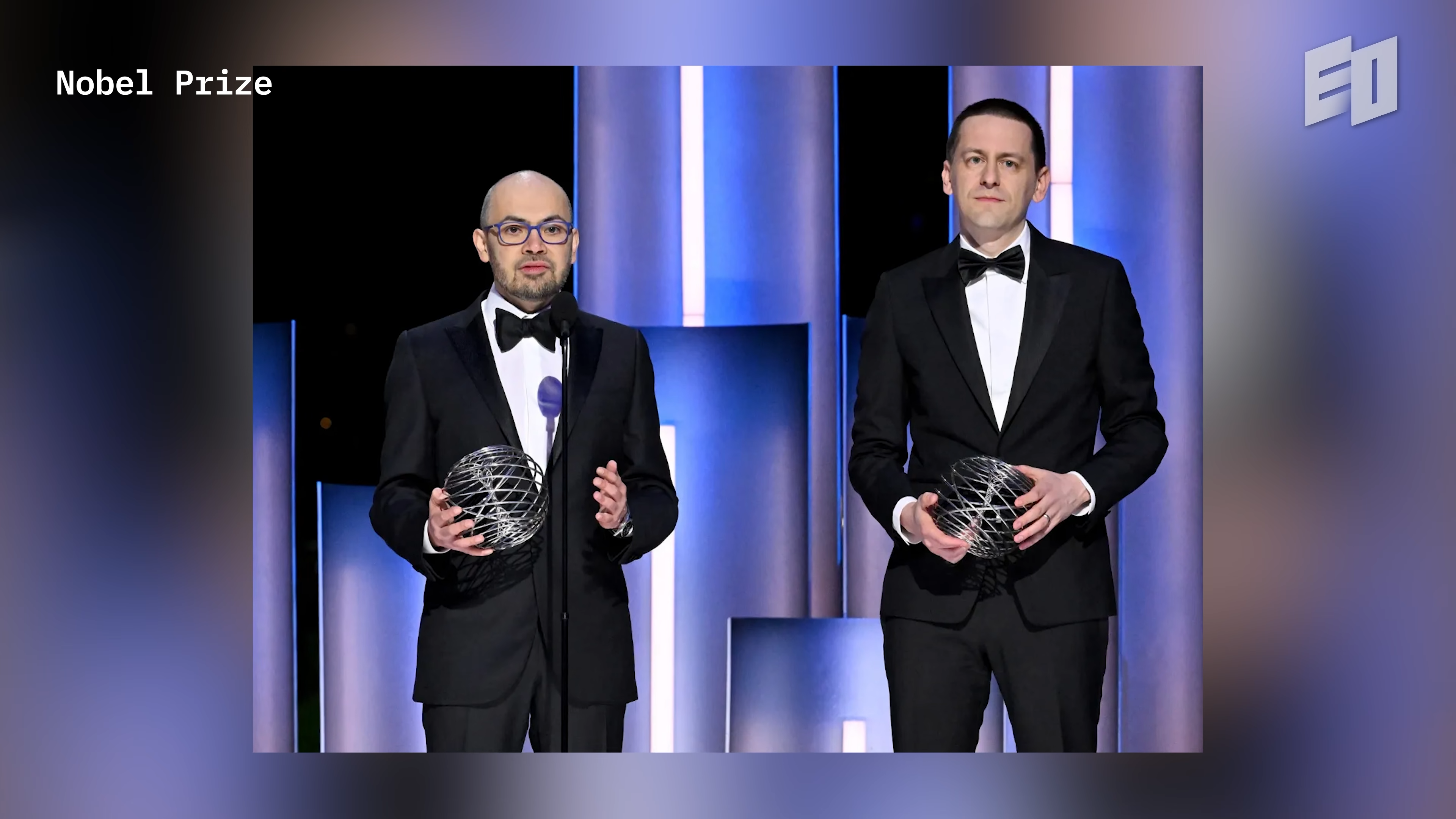
This is how John Jumper and Demis Hassabis won the Nobel Prize in Chemistry for solving protein folding. It is just smarter, and it is accelerated. And the third part of AI is where I think there is so much hope. The third part of AI is called formalization. The idea in formalization is to take human natural language, transform it into computer code, which is an enhanced or at least an exact interpretation of the human language, and then have AI study this code and look for vulnerabilities.
It is called verifiable computer code. We live at a time now where an enormous proportion of the computer code that is written and deployed in the world is not the stuff of human programmers. It is called vibe coding. But make no mistake, that code is not perfect. So the space we are in now, in terms of formalization, is to cut back on those inefficiencies.
When we start teaching mathematics, or computer science, or any field that has been formalized, we have come to learn that our original framing of these subjects was somehow incomplete. So let me give you an example. Our company is partnering with Scott Kominers. He is a very distinguished mathematical economist at Harvard.
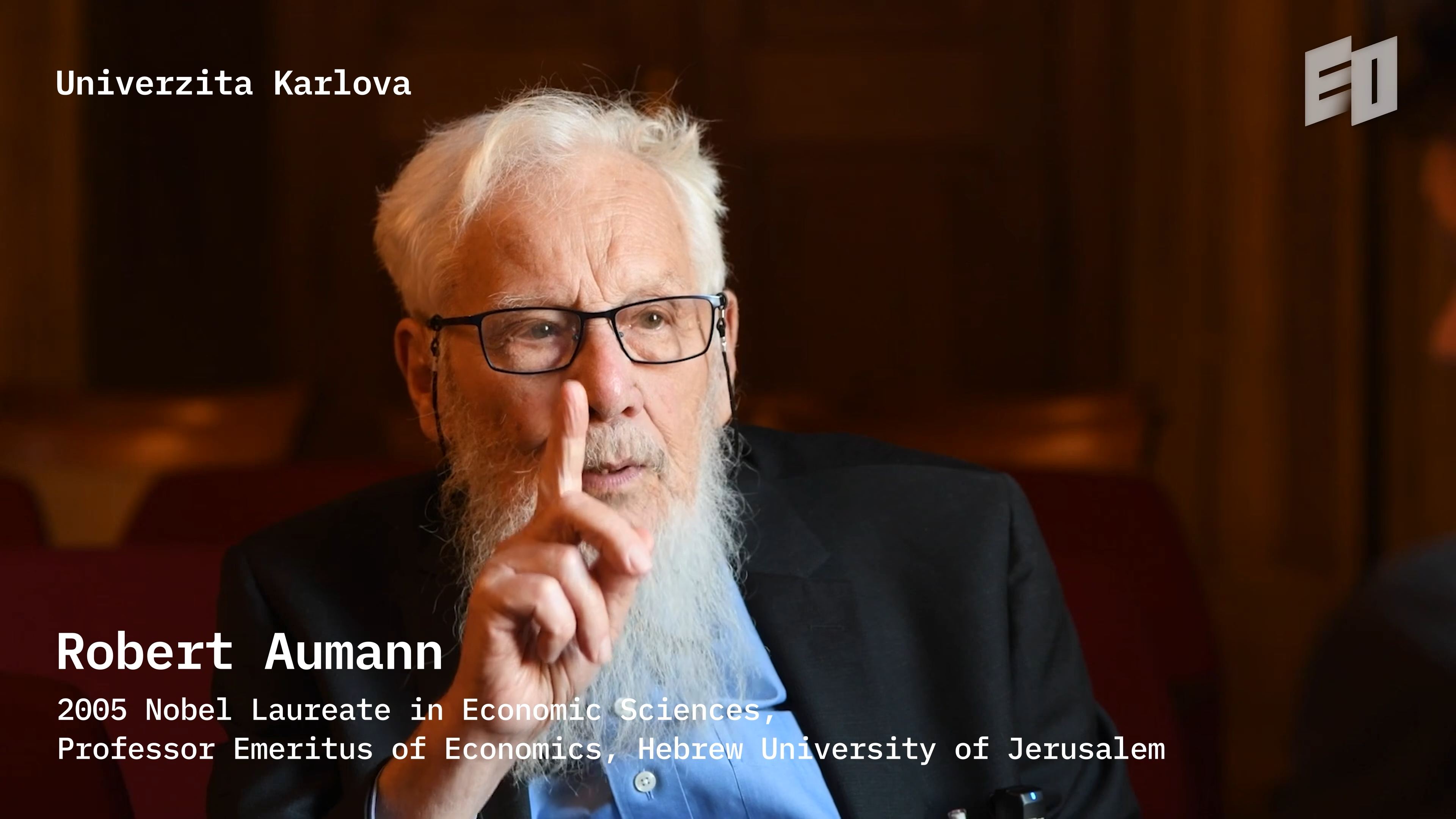
In our work, we are formalizing mathematical theories in economics, as I described before. And we have discovered that some of the foundational theorems in the subject weren't really accurately portrayed, implemented, or applied. Let me give you an example. 2026 is the 50th anniversary of a very famous theorem by the Nobel laureate Robert Aumann. One of his most famous results is the theorem called "we agree to disagree," or "can we agree to disagree?"
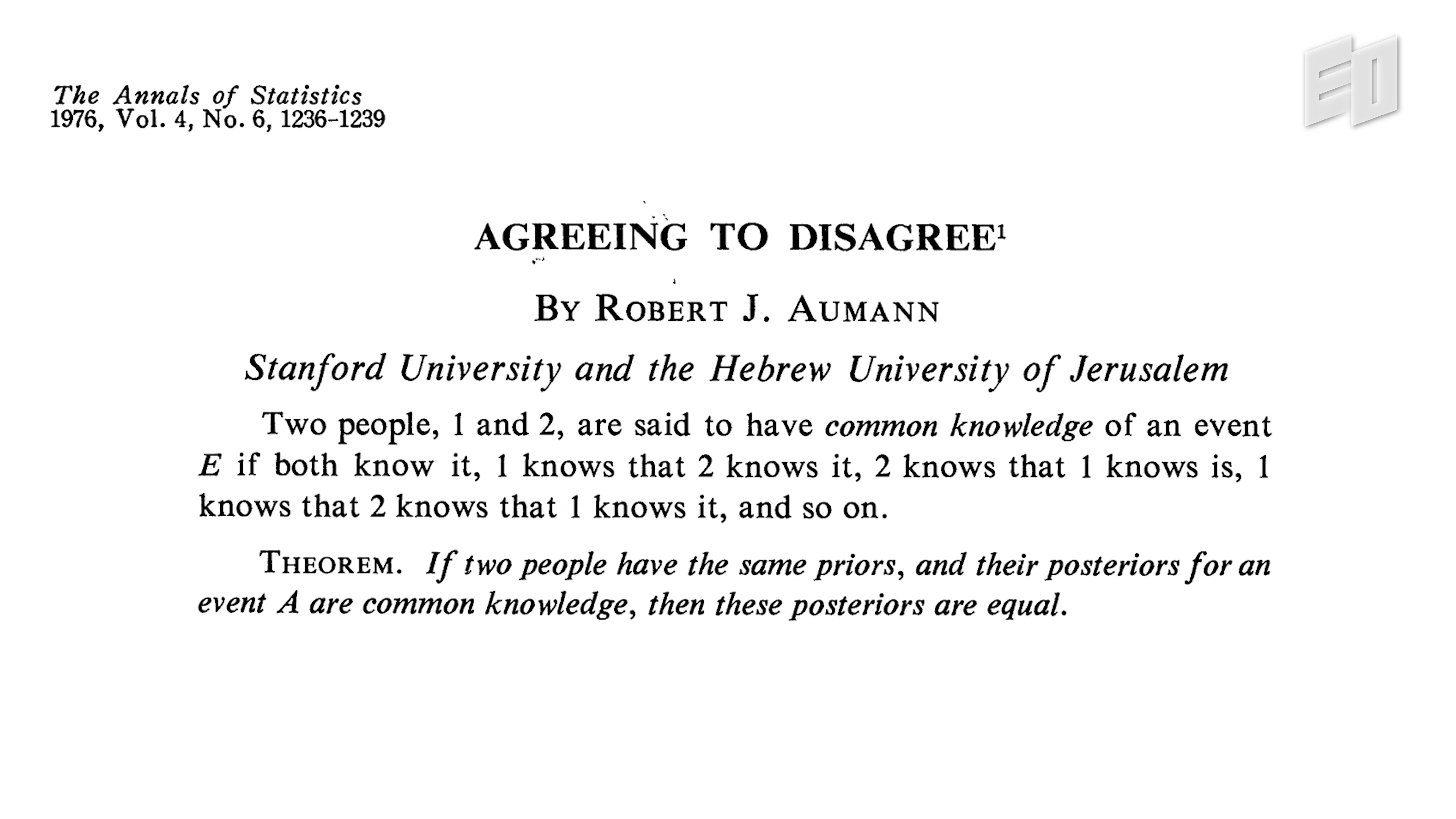
Where the phenomenon is: if you have different parties observing and making decisions, or indicating their preferences, based on the same common prior knowledge, is it possible for these parties to disagree? This is the stuff of modern vernacular. You might get into an argument with a friend. You listen to each other, you understand each other's perspective, and the end is quite satisfying. You say, well, I guess we are just going to have to agree to disagree.
Aumann's theorem doesn't allow for that. It cannot be that you can agree to disagree. What really happens is that you end up understanding each other's perspectives. That is a very big theorem. However, there are subtleties: the hypotheses. What does it mean to say you have the same priors? That is where the formalization came in. It has become kind of a viral moment in mathematical economics. Many economists from around the world are joining our effort, recognizing that for the sake of getting economics right, it should be formalized.
This is happening across fields. We are even working with computer scientists, rethinking and formalizing machine learning, which underlies all of AI to begin with. So this is our future. So I said, what are the opportunities for AI? Maybe we are worried about the loss of work, but there are new opportunities.
One is: how do we use AI to best guardrail the other forms of AI? Cybersecurity will need legions of computer scientists. Also, ethicists - make no mistake - and lawyers who have to rethink or imagine this new world, because there are going to be legal issues that come up. And certainly for the AI experts who are into and devoted to formalization, that group will be setting up the guardrails that keep us safe.
A large language model is something like the most incredible librarian, a librarian who has read everything. But that doesn't mean you want your librarian to be your neurosurgeon. In very high-stakes situations, you need taste. You need human judgment. And of course, on top of that, you need someone with the emotional intelligence to understand how decisions impact people.
All of those things can be part of formalization, and I think that is an opportunity. Whether you want to help robotic surgeons be accurate or whether you are worried about securing the internet or financial networks, any system that can be rewritten or is somehow controlled by mathematical language after translation should be formalized.
So I think that is a very big future. For students entering college and graduate school, if you want to be a mathematician, start formalizing. You may still prove unsolved conjectures along the way, but make no mistake, this is 2026, 2027. I don't believe now is the race for more compute. It really should be the race for more truth. And I think that, and I hope I am right, will be by means of formalization.
What judgment can't AI replace?
When a scientist says that a fact is formally verified, that statement is true. End of story. If there is a mistake, it is because you didn't frame the problem correctly. That is not judgment. That is a yes-or-no binary question. Judgment is: how do people, when given this information, choose to act? We have autonomous drones flying all over the world doing all sorts of things, whether it is keeping track of traffic in Los Angeles or Seoul, or whether it's looking for dangerous people on fields of battle.
All of those situations require judgment. In some low-stakes situations, maybe the drone measuring air quality above Los Angeles, the human judgment isn't so important. But if we are talking about whether or not to target a city, how do you know that a building you are targeting actually has a dangerous person in it, versus being a school or a hospital?
I don't actually think it is very difficult to distinguish the situations that really are so high stakes that most rational people would not be comfortable letting an AI decide. I think in most cases that we care about the most, the ones that are high stakes, you want a person involved. Maybe it is not always that easy. We have rideshare services that are driverless, and people like them. These opinions and viewpoints can change over time. But apart from those strange situations, I think it is very clear when you want a human in the room.
How do I get past AI filters?
We live at a time where the world makes judgments, snap decisions, snap evaluations, on very little data. It is crazy. You apply for a job, and you are probably going to submit your cover letter and your CV or resume to an automated system with an algorithm and a bunch of checkboxes that you have to predict, so that you are not sieved out in the first round for no good reason.
None of us should be happy with that. Everywhere you look, we have adopted a system where we are replaced by numbers. We are replaced by what an algorithm seeks. And this is coming from someone who works in AI. How can any of us be happy with that? My children are 27 and 30. They are beyond the most critical phases of getting their careers started. But they knew.
But I would be lying to you if I didn't admit that when they were applying to colleges, as a university professor myself, I knew a college admissions committee was going to be looking for these ten things. So I told them: make sure you check those boxes, but then still be absolutely genuine about what you are passionate about. I would be lying if I said we didn't do that.
But let's pause and think about what all of that means. Because if we buy into it 100%, then you are forgetting that the quality of someone's character matters. You are forgetting that the quality of human judgment and achievement matters. You are saying that what matters is whether you can check every box, and imagine what those boxes are.
I'm sorry, but if you want to find the cure for cancer, it is not going to be a bunch of checkboxes. If it were, we would have already found the cure for cancer. So the question becomes: why do we live in a society and a community that is so rigid, just because the computer age allows us to be? When I was starting out, you would look for a job.
You might actually go to a company, drop off your CV, shake the hand of a business owner, and try to make that human contact. Who does that now? Now you probably upload your resume and cover letter to a website.
And you might even apply to something like 500 jobs. What is human in any of that? My dream for the future has many pieces to it. One is what I would give to fight against that, so that we could start a movement where we can slow down and really evaluate people for who they are: where they have come from, what their personal experiences are, the quality of their character, and how they interact with others. That would be awesome.
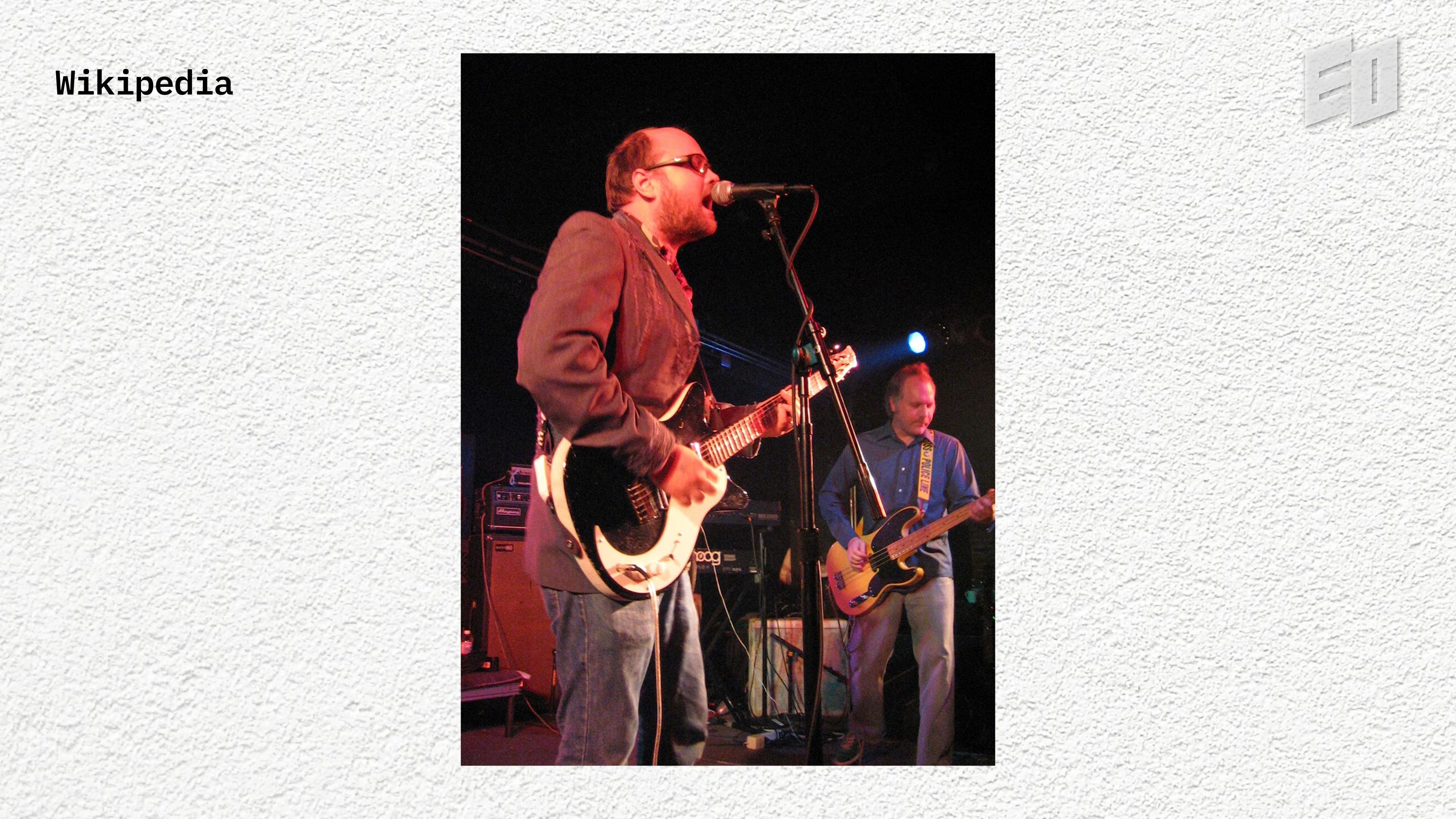
Now, how have I been lucky enough to identify some of my best students, the ones that maybe other schools would never have taken a chance on? They were the outliers. I had a graduate student named Robert Schneider. He was, and still is, a famous independent rock artist. He was a producer for the band Neutral Milk Hotel and the lead singer for a band called The Apples in Stereo, and he had the most fascinating story.
He loved equipment. He loved to perform with old solid-state microphones and speakers when they went on tour. But because they were old, they were constantly breaking and needed to be repaired, and it became so expensive that he decided to start learning electronics. So he bought a book, and the first formula he saw in it was Ohm's law.
He said to me, the first time I met him, and it was the craziest thing, that he had decided to go back to school. He was a college dropout. He stopped touring, went to college, got his math degree, and found his way into my office. And it begins with what I just described to you. And when he said it: when I saw Ohm's law, it made me stop and think, what is it that I am producing when I am writing and singing music?
Electrical circuits populate my brain. That is the creative part. I write down the music on paper, then I perform it on my guitar, to be picked up by the microphone, to go back into my brain. And all of this was modulated by an equation called Ohm's law. I wanted to figure out how the biology works. How does that equation work? How does the world work?
Three hours later, I said, you have to be my student, because you made me rethink everything I thought about mathematical equations. I thought I knew how you could find inspiration in math. I never thought I would have found that story. From Robert to some of the other students I could tell you about, I am proud of all of them. I have had 35 PhD students, and if we went through them one by one, I could tell you a story about each. This is just particularly colorful.
What I like about the process is that when they finish their graduate degrees, or they finished undergraduate thesis, there is a huge, undeniable moment. And this is particular to graduate students: when you can look at the student and say, you are like a professor now, and they look back and know exactly what you mean. It is not because they checked some box. The thesis they fulfilled has somehow become irrelevant. It is the other part.
So, to answer your question, how do I recognize that? It circles back to what I was saying earlier. We have no shortage of students who mistakenly think, and it is not their fault, that the path to success is that you go to the right schools, get the right grades, get the right degree, and all good things will happen to you.
That is a mindless way of going about one's life. It is not actually giving yourself permission to live the life that was meant for you. It is just saying, I am following a recipe that we think will be very successful, and the odds of success are very high. That is on us. That is on the universities, and that is on us, the parents.
It is because we have decided that there are benchmarks that will evaluate whether you are successful. Go to the number five school instead of the number ten, get the best test scores, do all of that. We haven't given enough credit where credit is due. We placed so much emphasis on all of this other stuff that we are now paying for it, and we have to fix that right away. I don't know if this is controversial, but I think it is all true.
Is it bad that I prefer talking to AI over humans?
I know what you are talking about. I work at an AI company. For the last year, I have worked with AI models and studied them, and my wife will say, you must have a relationship with these models. I don't think she is wrong. It is sometimes quite satisfying when the models start thinking like you do, because they learn.
But I also believe that if it is not cared for, and those in charge aren't mindful of its use, it could be a train wreck. Do you want to take a trip with your AI? "Hey, ChatGPT, here we are, I'm in Rome, what kind of wine would you like with dinner?" That is not living. I was in a taxi from Incheon Airport to my hotel in Gangnam yesterday, and the traffic was horrible.
It was Monday, 4:00. You could sit for ten minutes at a single block. So I did a little experiment. I started counting the people I walked by with their phones in their hands like this. It was something like 70% of the folks in Gangnam walking on the street, probably going home from work, looking at their phones like this.
That is messed up. Think about all the opportunities you are missing because you think your world revolves around that little screen. You might be missing the opportunity to make a new best friend. If you find yourself engaging with a chatbot as if it was really a person, stop. Put it down. Go for a long walk.
Put yourself in a position where you see something beautiful or provocative. Do something that reminds you that the world before AI has a much longer history than the world with AI.
AI is smarter than most of us. What should we do?
As a 58-year-old mathematician, I want to see some questions answered in my lifetime, and we are already beginning to see that happen. There are famous examples. OpenAI, a few weeks ago, announced a proof of a theorem called the Erdős unit distance conjecture, a problem I thought was never going to be solved in my lifetime.
Post hoc, when you go back and look at how it was achieved, the truth is that it took a little bit of human collaboration: the mathematicians at OpenAI working with their system. But I don't think it could have been solved by people alone, unless you had a remarkable collection of experts from different fields who somehow came together. I don't think this would have been the stuff of one person.
That represents some of the strength and possibility in AI. Think about all the things in science that you would like to have solved, and maybe the accumulated wisdom of mankind can solve it. But when would you ever be in a position to put the right people together in a room to discuss it? What AI offers and promises is access to the accumulation of human knowledge, tirelessly, and it lowers the bar for solving these problems.
Is it the case that some of the ideas and solutions are beyond what humans have ever come up with? This is probably the most provocative point. There are many who will argue that AI is going to come up with genuinely new ideas that people have never thought of before. I don't know that I believe that. I do believe that AI systems can compute more than people ever have, and can find patterns in different areas of science that humans are unable to do. But the ideas are somehow already there.
Do people come up with new ideas all the time? The artwork you find in Picasso? Good luck finding evidence of that before Picasso. Do I think AI has that ability to come up with those new ideas? I don't know. Do I hope it does? God, I hope never.
As a junior, how can I catch up with seniors in the AI era?
What worries me about what you just said is this need to compare your personal situation with others. That sounds horrible. If you have to live up to the standards set by someone else, then you are not living for yourself. You are not giving yourself credit. Whatever pressures someone may feel that inspire them to constantly compare themselves to others, I consider that toxic.
Because you know what the brutal truth is? The brutal truth is, if you are not LeBron James or a Nobel Prize-winning scientist, the reality is you will always be able to find someone who looks better, who achieves something you cannot do, and you are not giving yourself permission to live the life that was meant for you.
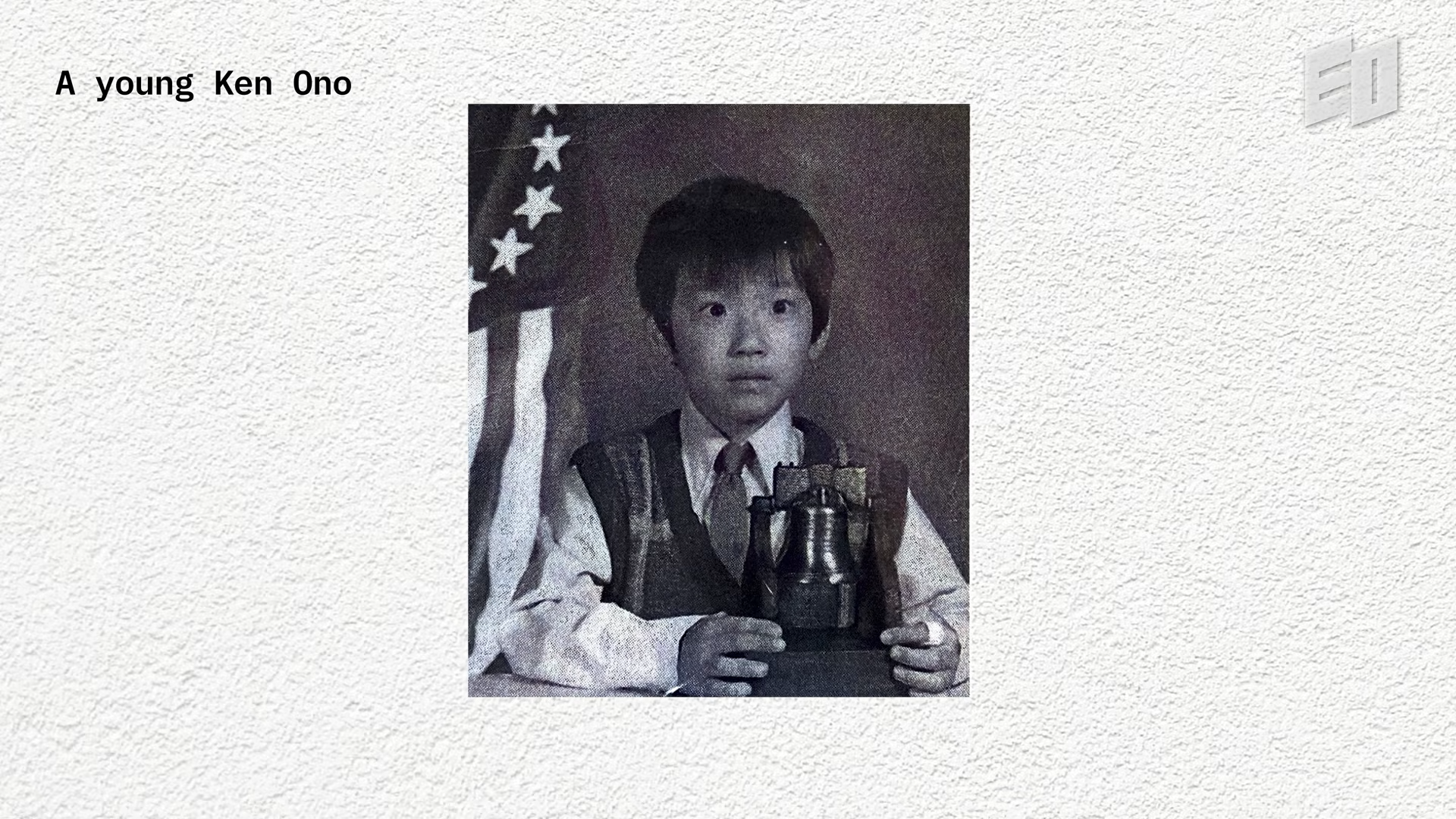
In my life, I was not a good student in college. In fifth grade, we had a math contest, and I got third. Third is pretty good for fifth grade, but you probably would have thought, Ken Ono is a famous mathematician; he probably won easily. I got third. In fact, when I was in fifth grade and I got third, I thought I let my parents down.
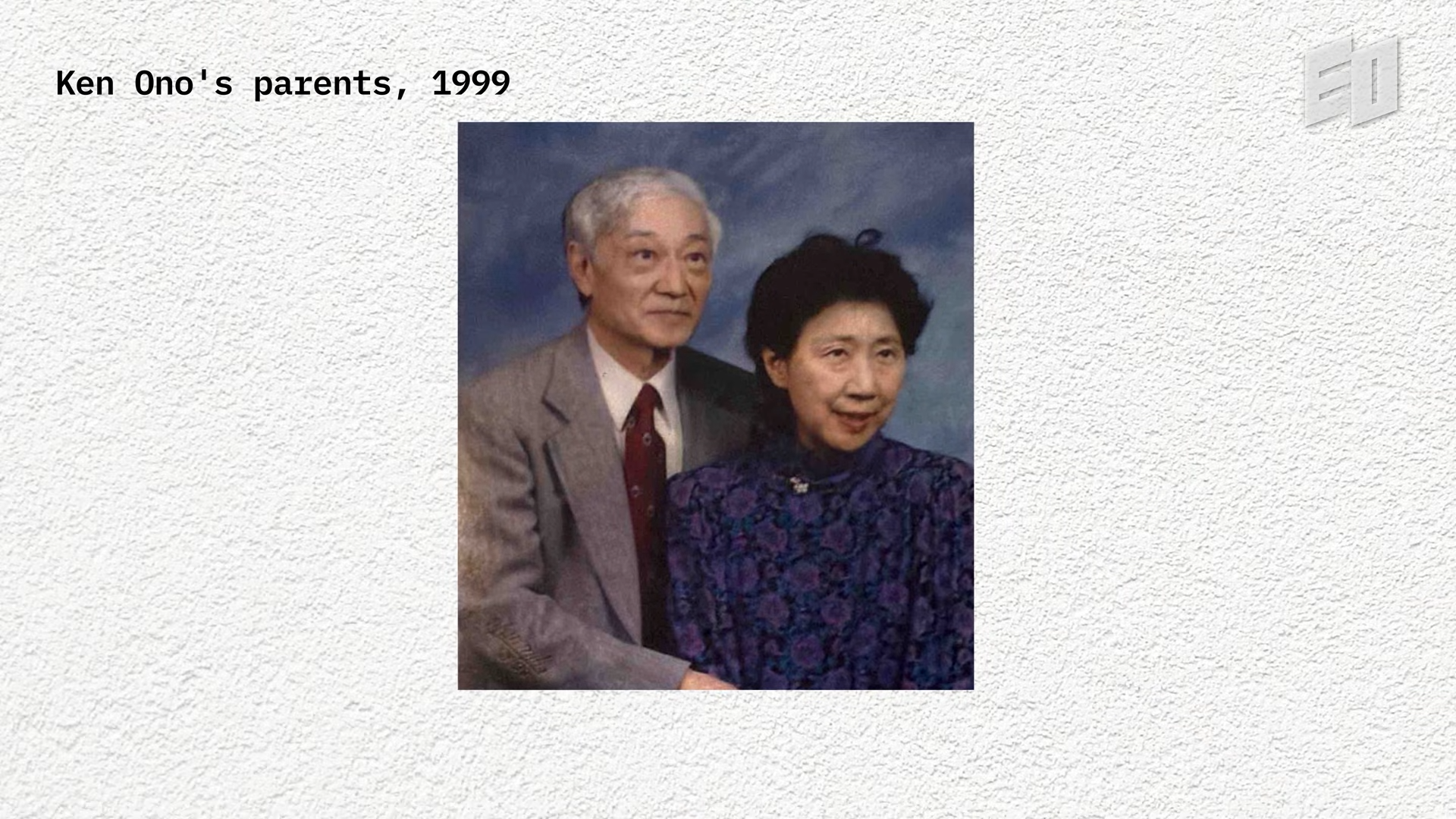
My father was a famous mathematician. They came to the competition, and the son of a famous mathematician gets third at Hampton Elementary School. This is one of those defining moments. On the drive home, it was just silence. My mom didn't talk about it. My dad didn't talk about it. I thought for 50 years of my life that I had utterly failed.
It is not true that this experience weighed on me so much that I thought about it for decades. But it was instances like that where, like you, I was worried about how I would stack up against others. The reason I bring this up is that when my dad passed away in January, we were cleaning up his belongings.
There was very little left, because they had already downsized to a very small apartment in Florida, where we had just moved my parents. And of all the things he could have kept, it was just there in a closet: that plaque from my fifth-grade contest. I thought, wow, I had misinterpreted that event my whole life.
It actually meant something to him to keep a plaque where I didn't win, but got third place. And although he had passed away, so I could never ask him about it, it is obvious he saw something else. What he saw, I'm sure, was that I wanted to do well. I hope that is a lesson for anyone who thinks this way, because I thought that way.
If you put yourself in a position where you are always comparing yourself with others, you might not actually be right. You might be completely wrong. So you have to give yourself permission to live the life that was meant for you. This might be morbid, but one day you will be on your deathbed. You may only have a few days left, and someone might ask you a question.
What are your five deepest regrets? This comes up all the time. I am not making this up. Certainly when you get to my age, you start being around these kinds of conversations. And I think the number one regret is: I wish I had the chance to live the life that was meant for me. I wish I had been able to keep in close contact with the friends I lost touch with.
So try to imagine what those four or five wishes are, and at your age, do your very best to recognize that you don't want those to be your regrets. You need some inspiration. Often you need a creative idea. Encouraging students, encouraging all people to wonder about the world they live in, is a way of giving them permission to think that way.
Wouldn't the world be a much better place if everyone thought about what their talents are, and gave themselves permission to be creative? Wouldn't the world look a lot more interesting, instead of, I'm supposed to do this, or I'm supposed to do that, so I do it? So I hope that is food for thought. I have said several times today that it is important to give yourself permission to live your life.
That doesn't mean ignore all the signals of what might help you be successful. We don't want to be ignorant. But giving yourself permission to lead a life that was meant for you is also giving yourself permission to find your passion. And that passion might be something that isn't popular. But if you find it, you can draw strength from it.
I am a Japanese kid who grew up in a very white suburb of Baltimore, Maryland, at a time when it wasn't good to be Japanese. I wore glasses. I was Mister Four Eyes. But that gave me strength. As difficult as it was, being one of the only Oriental kids in an all-white school, being different, I ultimately drew strength from it.
It wasn't easy, and it probably took ten years to overcome. But whatever demons, whether AI or culture or family and friends, impose on you, they don't all have to be there. And quite frankly, the moral of this conversation is that there is very little you can do about the world around you. So how can you choose the life that is meant for you? Be flexible, and embrace and chase the opportunities that seem destined for you.
Explore more