
Jul 13, 2026
Sam Altman-Backed Hacker House Wants to Eat Early-Stage VC
Interview with Peter D'Ambrosio, The Residency Co-Founder
Inside Hacker Houses
0:00 / 0:00
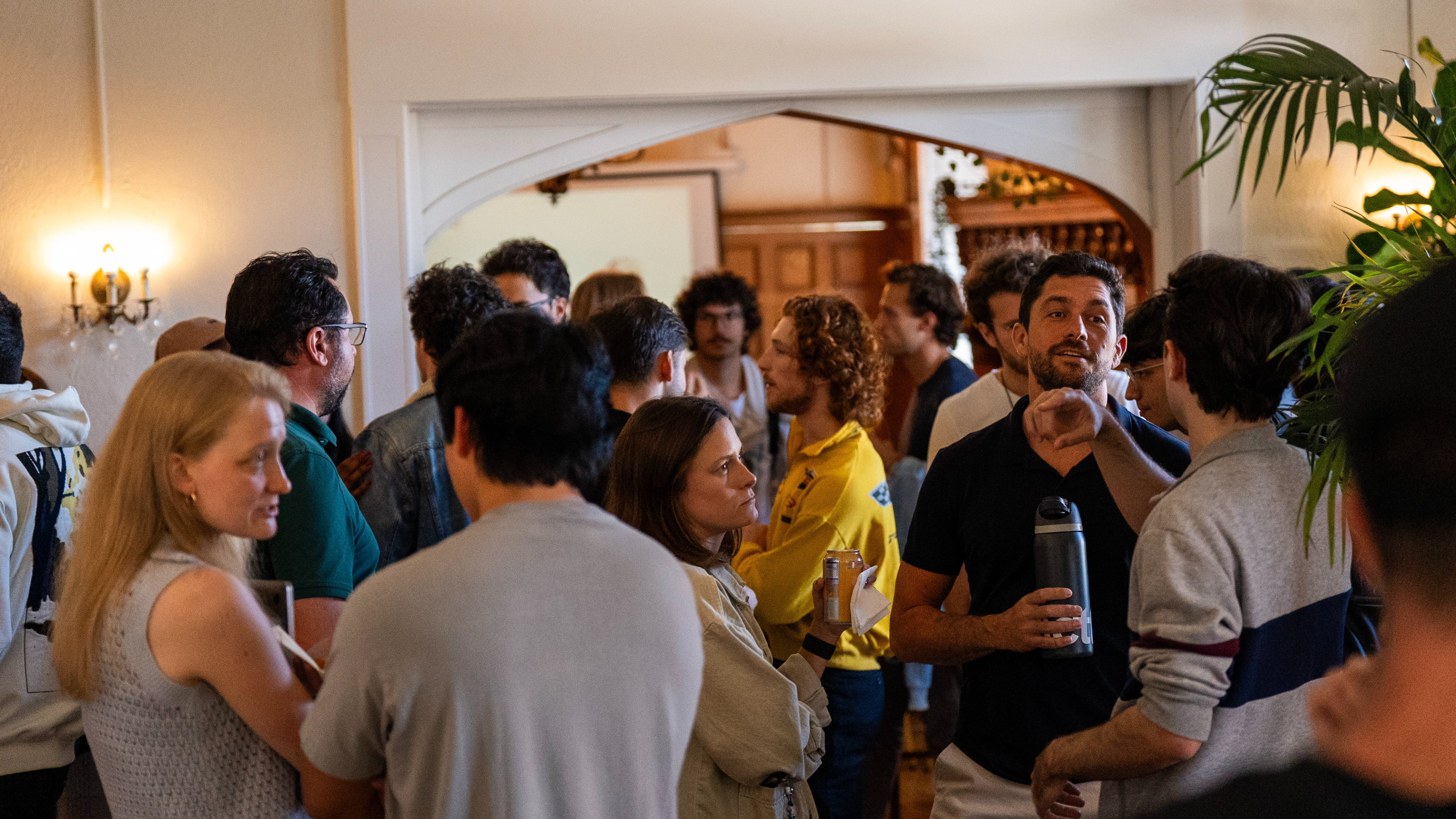
San Francisco is having a hacker house moment. Across the city, startups and self-styled communities are leasing mansions and filling them with young founders: from well-known places like HF0, Mission Control, and Accelr8, to two separate houses that both go by AGI House, to a rotating cast of smaller experiments that appear and dissolve within a year. Most of them amount to a single house.
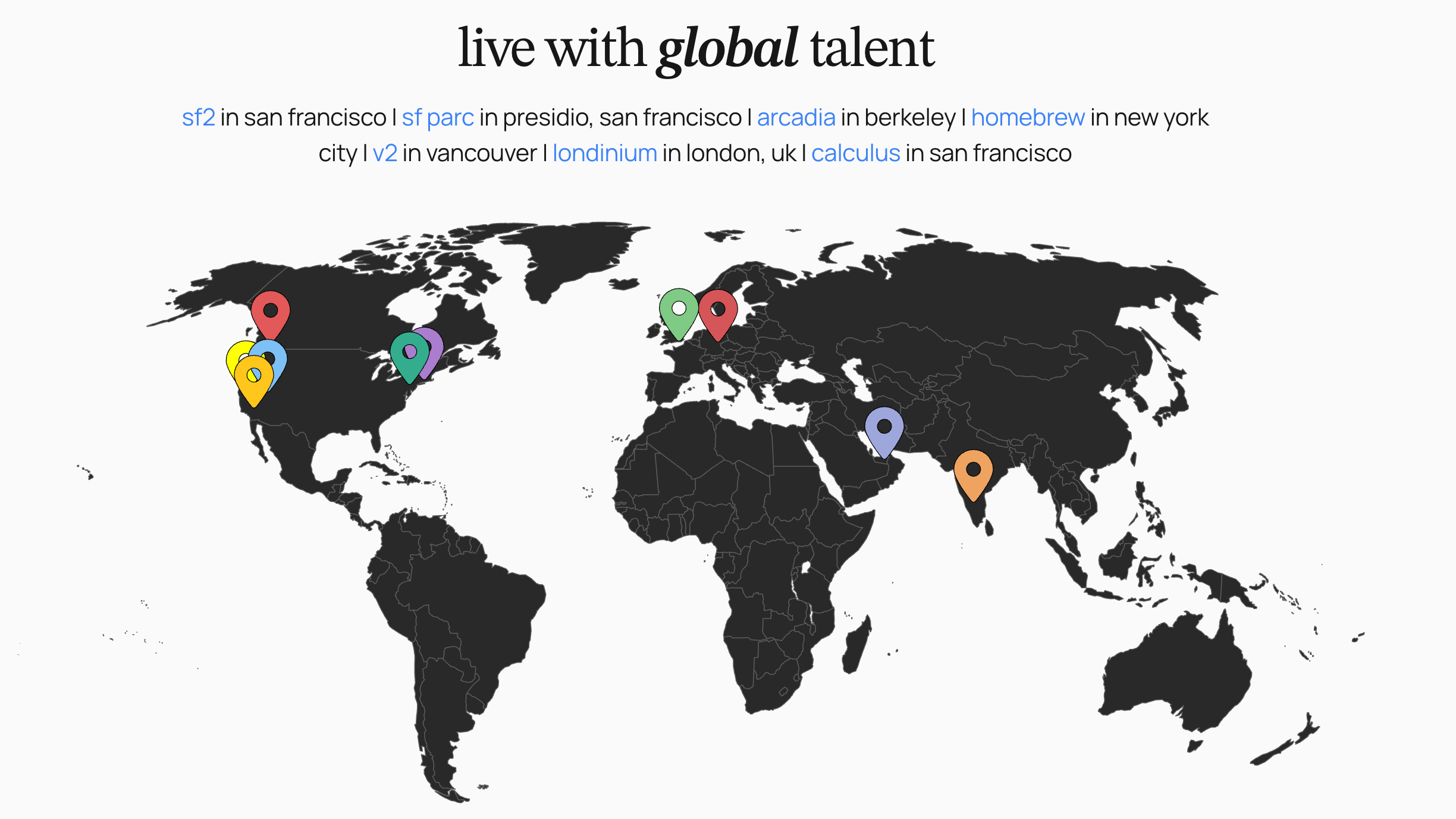
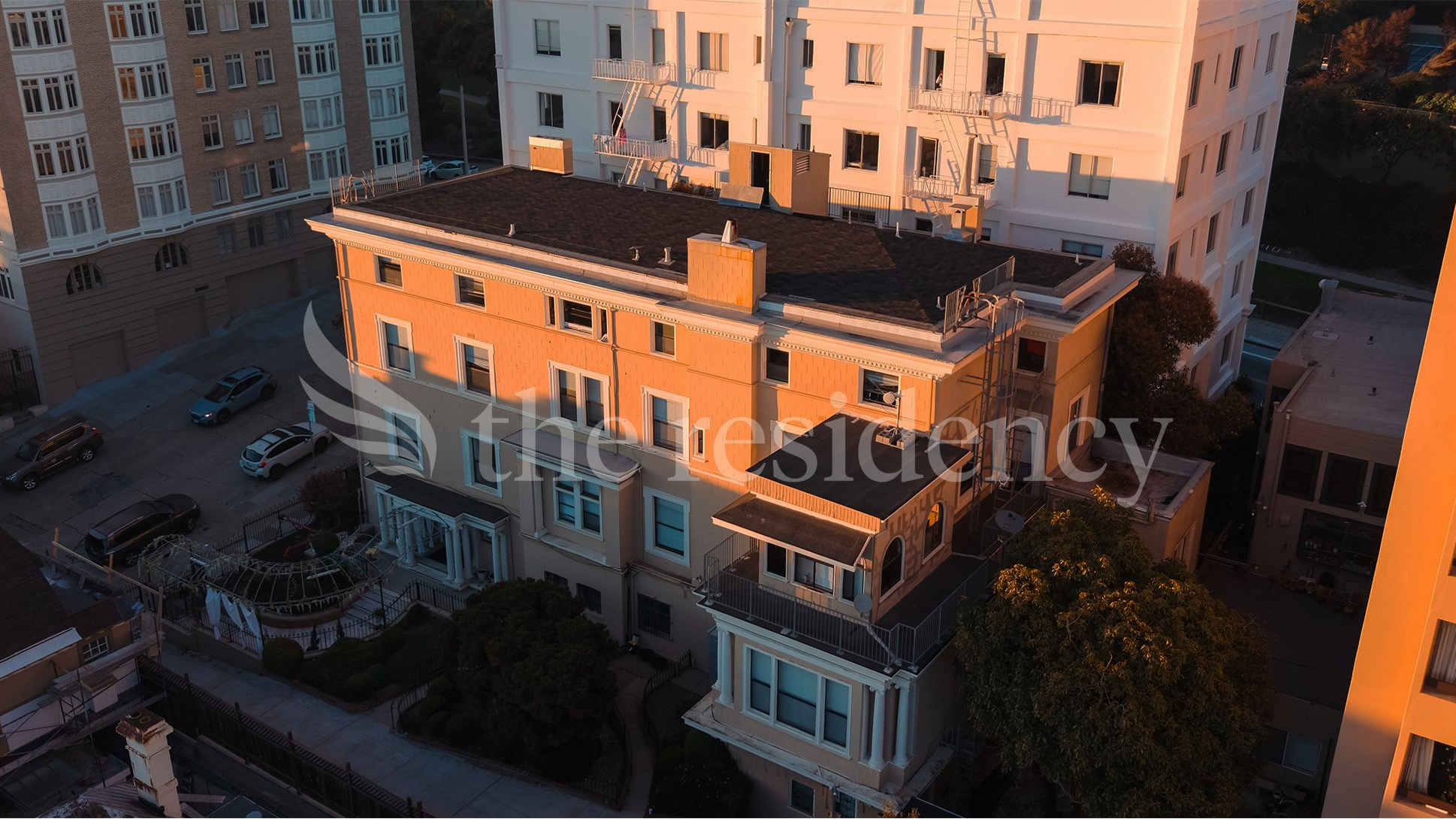
The Residency is a different kind. It runs five mansions in SF alone, four in Pacific Heights and one in the Mission, each housing between 10 and 25 founders. The largest has 22 bedrooms. One of its programs carries a waitlist of more than 100 people, according to reporting by The San Francisco Standard. Zoom out, and the footprint gets bigger: 14 houses across four continents, seven of them directly operated, the rest run by partners under the same brand. Its advisor list includes Sam Altman.
💡
The Residency's Houses
- San Francisco: SF Parc (generalist), SF2 (hardware), The Inventors Residency (inventors), Odyssey (purpose-driven founders), Biopunk (biotech)
- Berkeley: Arcadia (generalist)
- New York: Homebrew (science & tech)
- Vancouver: V2 (creative technologists)
- Berlin: Aurea (deep tech)
- Vienna: The Residency Vienna (AI & biotech)
- Bangalore: Bangalore House (generalist)
- Hyderabad: The Founding Co. (generalist)
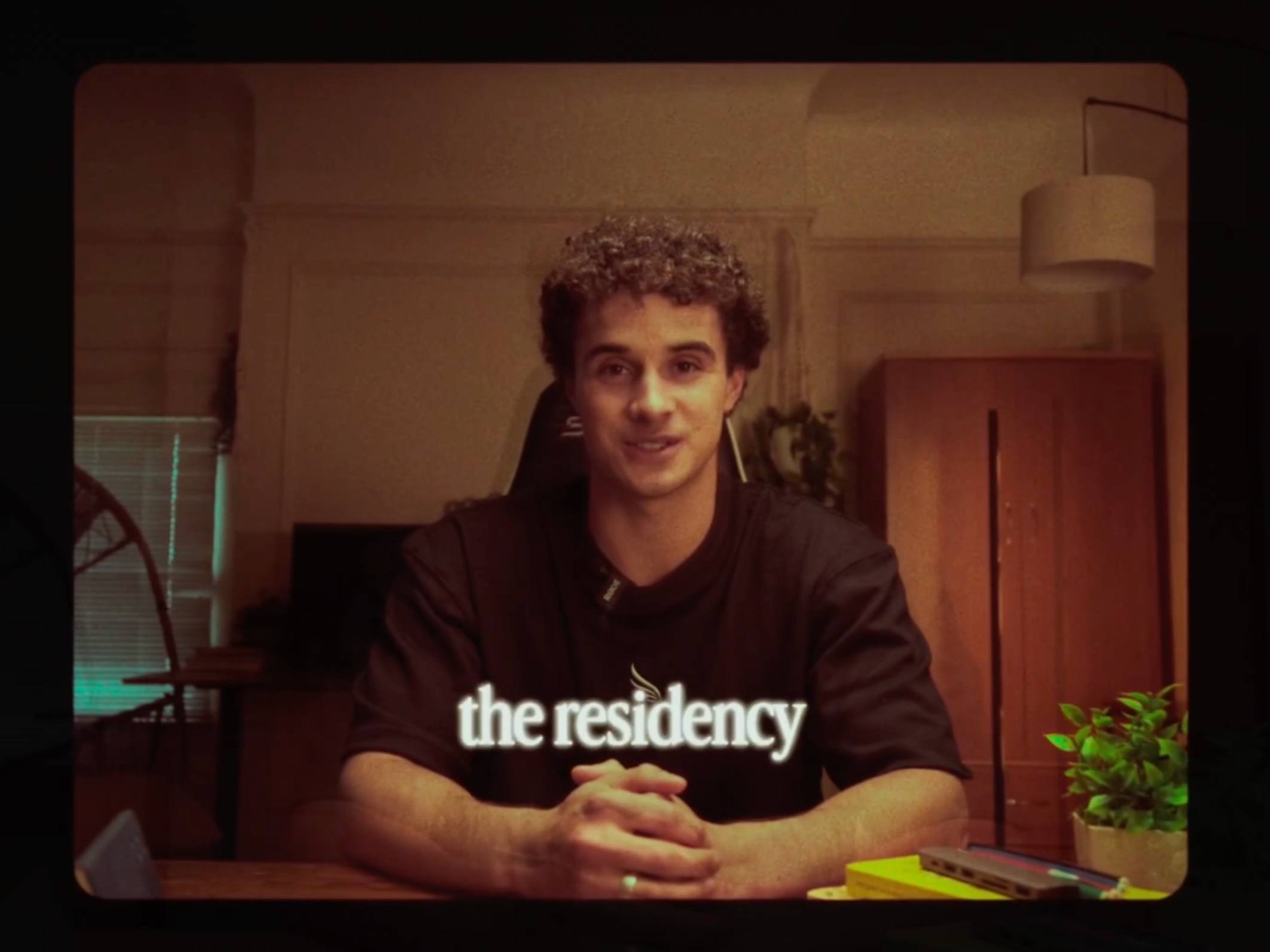
No one else has stitched this many hacker houses into one network. Which raises an obvious question: what exactly is this thing? On a recent afternoon in one of the Pacific Heights houses, I sat down with co-founder Peter D'Ambrosio to find out.
The Missing Institution
The Residency started in 2023 as a single house in Berkeley. It was one house, then a few more, then a network. The idea came from the founders' own lives. D'Ambrosio started a company while still in university, living in a founder house with 21 other student founders. Co-founder Nick Linck left an AI research job at IBM to start his own company and found out what that costs.
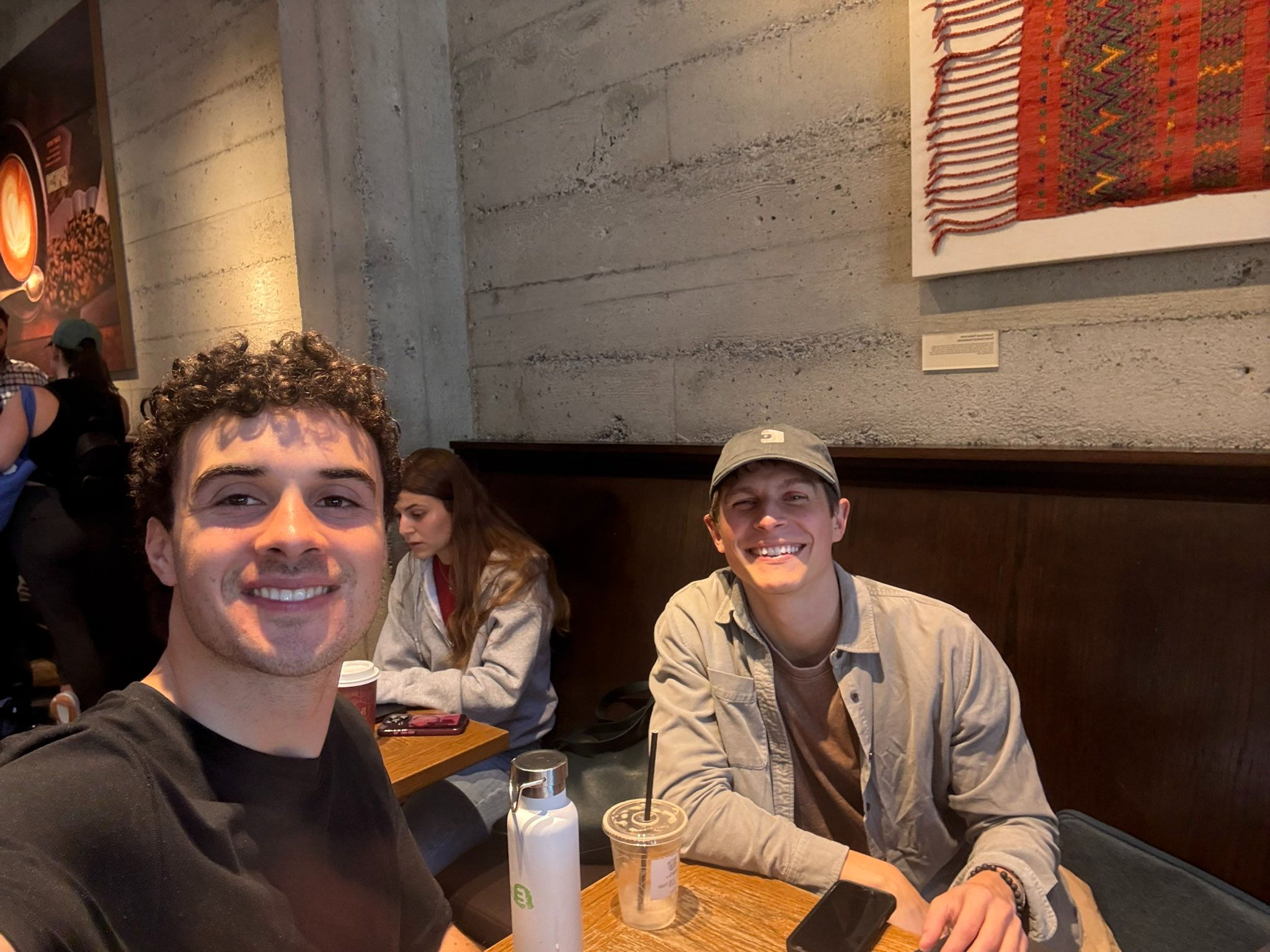
"He was in an apartment by himself. Super lonely, super hard. Your parents ask: why are you doing this? You left your seven-figure job to start a company. Your friends, you can't relate to, because they're not founders. There needed to be better infrastructure for founders."Peter D'AmbrosioCo-founder of The Residency
"What we've built at The Residency is the product we wish we had," D'Ambrosio says. What kept it growing, he argues, is that it answers a demand nothing else serves. Universities, in his telling, do train you for something. Just not this.
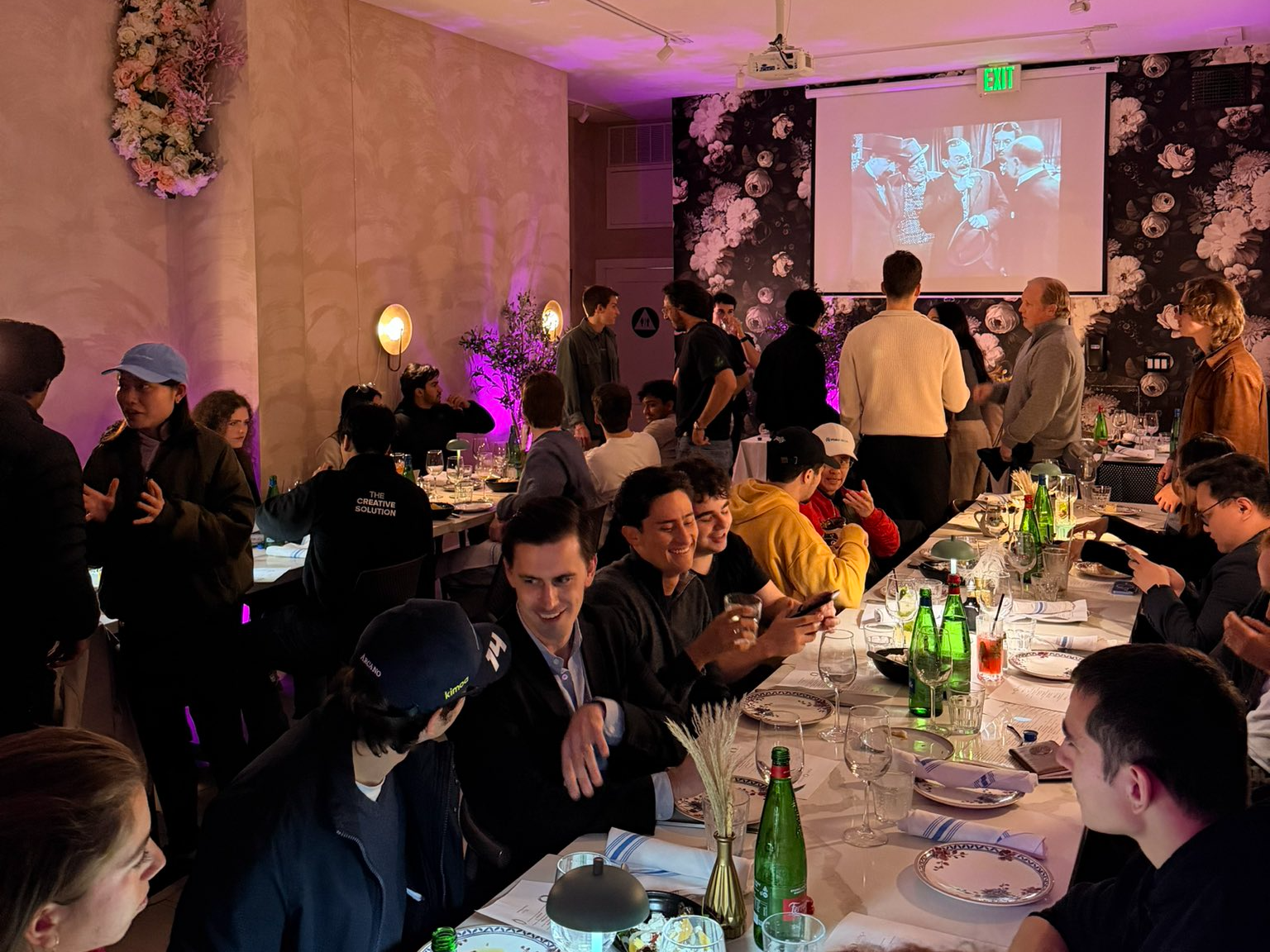
"It's a good training ground for learning how to do things you don't want to do. They're failing founders. They're failing the ambitious. If you ask more than 51 percent of Gen Z, they'll tell you their college degree was a waste of money. There is a missing institution. Ask almost any young person, and they'll agree with us."Peter D'AmbrosioCo-founder of The Residency
The 51 percent figure is real; it comes from a 2025 Indeed survey of US graduates. The Residency, as he describes it, is an attempt to build that institution: not a school, not an accelerator, but something in between that never existed.
Talent Is Everywhere, Opportunity Is Not
The whole network is built on one thesis.
"Talent is universally distributed. Opportunity is clustered in cities. There is exceptional talent in every single location. The current way that we allocate capital to talent is broken. The bridge between opportunity and talent does not work well."Peter D'AmbrosioCo-founder of The Residency
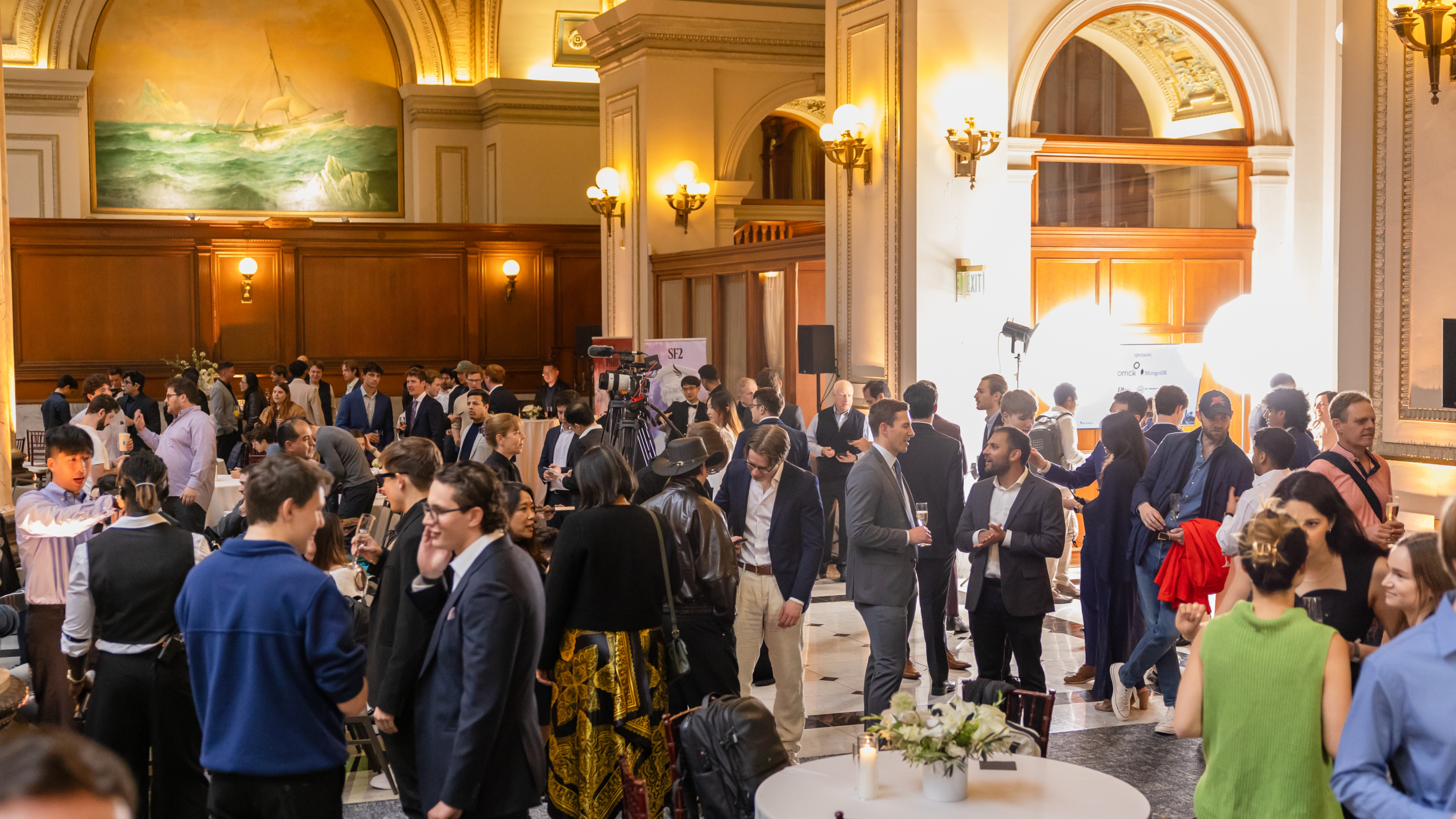
For D'Ambrosio, the thesis is personal. Before The Residency, he spent time teaching in Africa.
"Some of these kids were walking 4-5 hours a day just to come to school. They had all these hopes of being a founder, a pilot, or a doctor. And the sad reality is most of them will continue to work whatever their family is doing, because there just isn't a way for them to bridge the gap between opportunity and talent. There were 10-year-old kids there who knew more physics than my classmates in the US did at 18, taking AP Physics."Peter D'AmbrosioCo-founder of The Residency
The architecture follows directly. The Residency operates its own houses in hubs where opportunity concentrates, focusing on SF, New York, and London. Around them sit nodes: partner houses that carry the brand but are run by local operators on the company's infrastructure, from application software to programming playbooks. Beyond those, more than 100 houses worldwide have asked for access, D'Ambrosio says, and the company plans to support them without attaching its name.
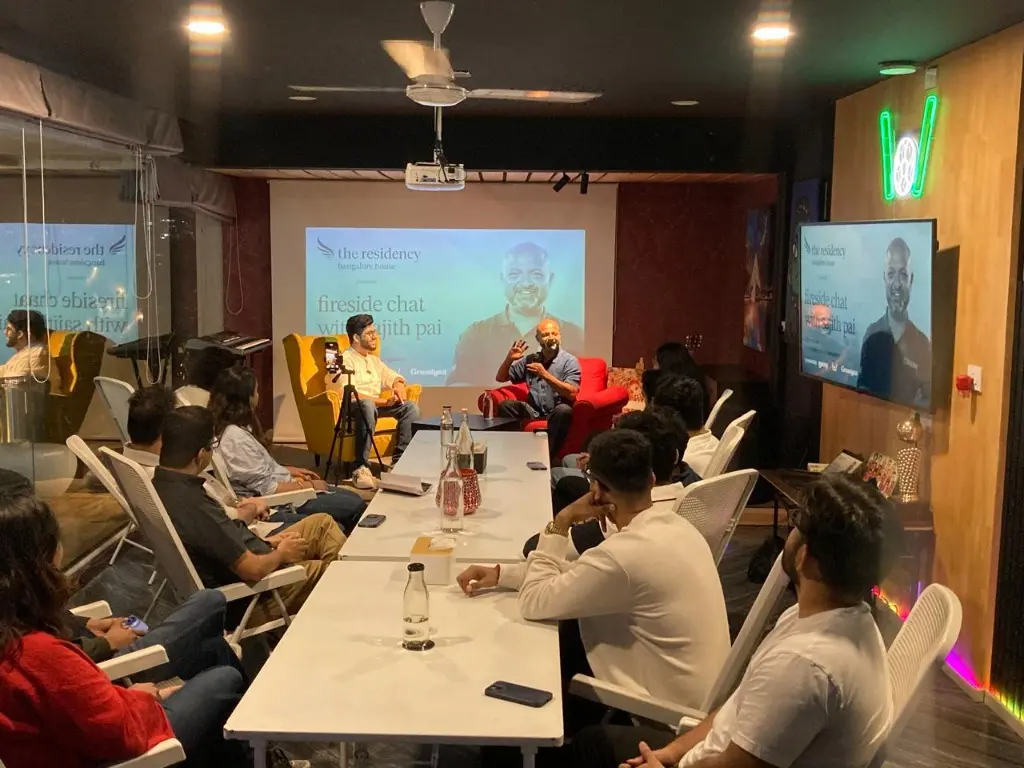
The bridge already works in one direction. Several founders in a recent SF cohort first proved themselves at the Bangalore house before the company brought them over. Delta, its online program, runs the same route at scale: winners earn a spot in an SF cohort.
Getting across is the hard part. For the current cohort, D'Ambrosio puts the acceptance rate at roughly 0.5 percent. What gets you through is not a polished pitch. "Almost anyone can tell a story," he says. "You can't tell stories while you're at a residency. We just get to see the progress a person is making."
The team measures what he calls delta, borrowing from Adam Grant's book Hidden Potential: "Where did you start, and where are you now?" And there is one filter no accelerator needs: "You're living with them. They have to be a good person."
"Do the Thing That Wouldn't Exist Without You"
I had to ask about Sam Altman. His name is the first thing that comes up when you search for The Residency.
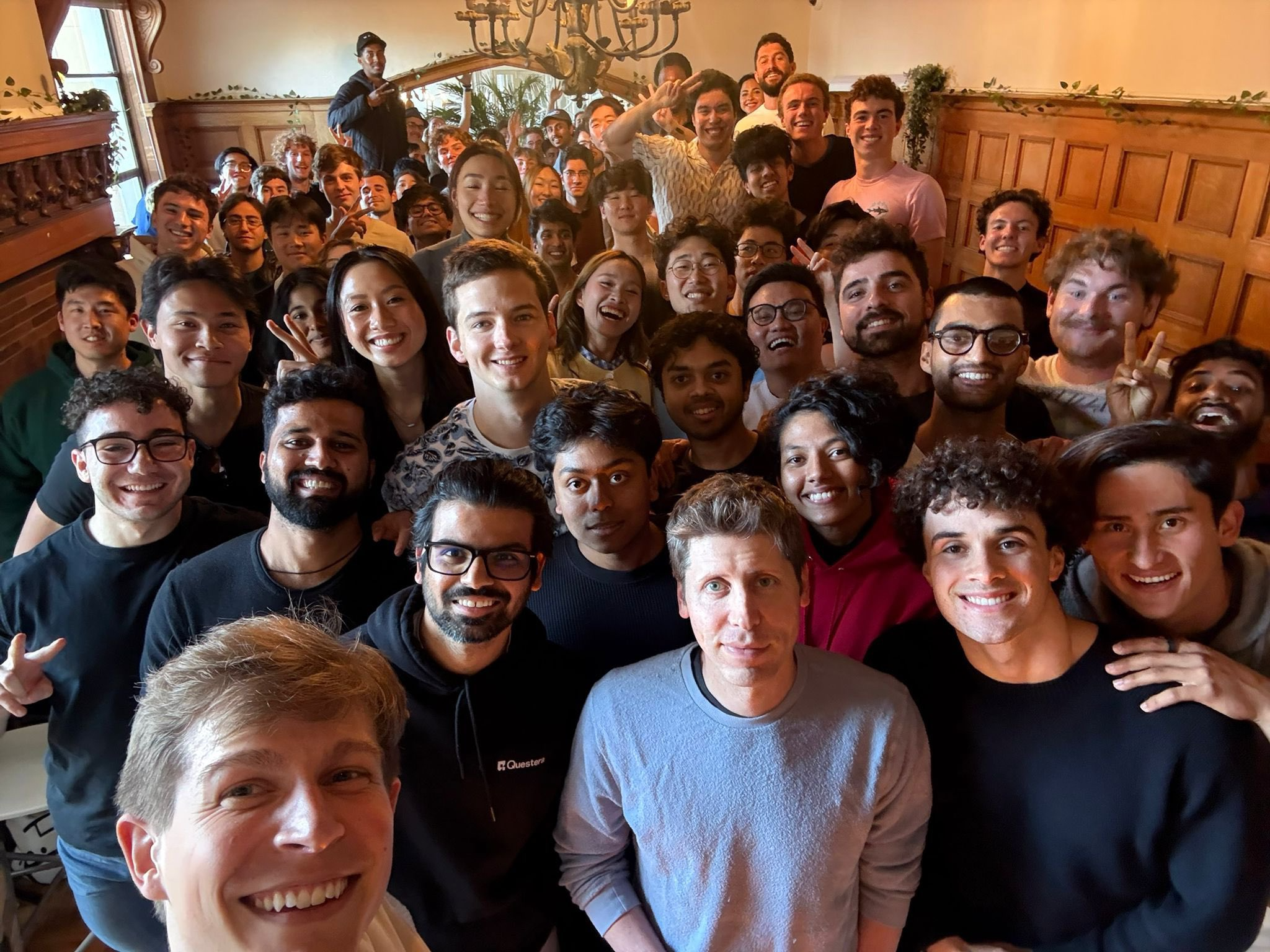
The connection predates the company. Co-founder Nick Linck worked in AI research before most of the world knew what AI was, D'Ambrosio says, and met Altman at an event. The two have known each other for years.
"He ran YC, a really amazing accelerator, so we get to learn a lot from him," he says. "And he comes to chat and meet a lot of the residents." When it makes sense, the team refers individual residents to Altman directly. In the early days, they ran a competition among residents; the prize was a one-on-one meeting with him.
One piece of advice outlasted everything else.
"One of the things Sam said that really hit hard was: do the thing that wouldn't exist without you. Almost everything that is now great started off as a bold idea. Apple, Airbnb, Facebook. Uber was: you're going to get in a stranger's car? That's crazy. It was pretty bold, and it wouldn't have existed without those founders doing it."Peter D'AmbrosioCo-founder of The Residency
The line changed how the company selects people. "That definitely influenced the persona we're looking for," he says. Bolder founders, bolder ideas.
But why does the CEO of OpenAI spend time on a network of shared houses? D'Ambrosio's answer is that they are looking at the same hole in the world. "He seems to be very aligned with the problem we're solving. At the institutional level, there's missing infrastructure for founders. There needs to be a better solution for them. This is one stab at that solution."
The Community and the Monastery
For its first three years, the model was straightforward: residents paid a program fee. According to residents, that worked out to roughly $1,500 to $2,500 a month, depending on the house, below market rate for the neighborhoods involved, for cohorts that ran three or six months, depending on the program.
In April 2026, The Residency restructured its programs into new formats: a community model and what D'Ambrosio describes as a more intense, "monastery"-like experience. Alongside the renewal, the company is doubling down on deep tech founders.
The change reopens the question the company had long answered in the negative: equity. Some hacker houses take stakes in their residents' companies. Until recently, The Residency took none. That stance appears to be shifting.
When we spoke, D'Ambrosio's rationale for considering it was access. An equity model would let the company cover costs for founders who cannot pay their way in. "Someone who's 18 years old, coming from Latin America or Europe or anywhere: I can't afford to live in San Francisco. My parents might not support me financially unless I'm going to university. We want to make it so there's no reason you can't join a residency."
In a written follow-up after the restructuring, he added a second rationale: equity would also let the company "drastically improve the offering," with much better support on traction and fundraising, not just community. Whether the new model involves equity, the company has not yet said.
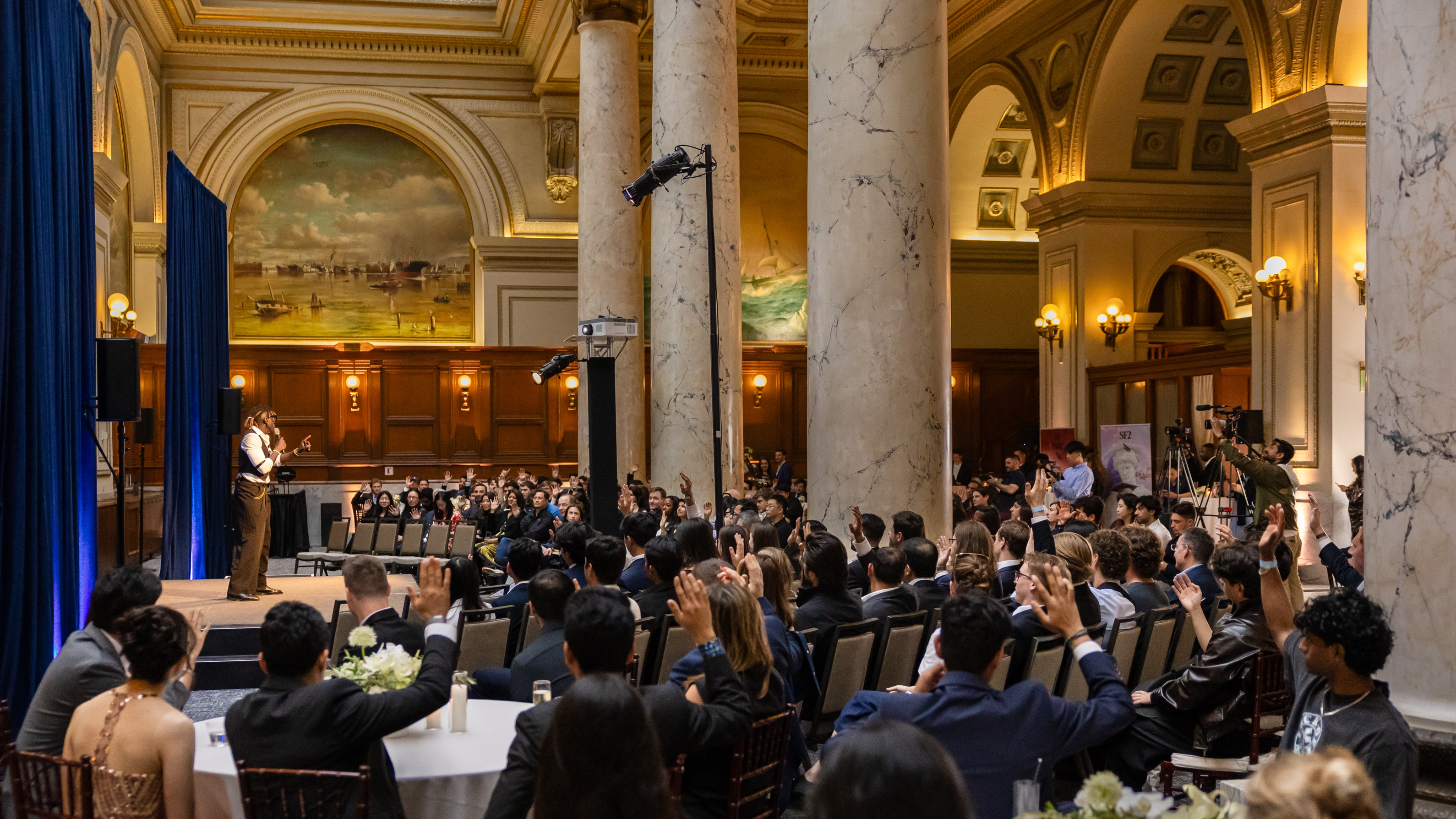
What the program does to people is more interesting than how it charges them. D'Ambrosio calls it a pressure test: three months of building next to people who are building, enough time to find out whether the founder's life is actually yours. Most residents, he says, come out more committed, not less.
Two of them went through five companies in five weeks, landing paying customers each time before pivoting again. For those who discover they don't want to be founders, some have gone straight into big tech; one of them, he says, is a high school dropout hired directly by Elon Musk.
"You can figure out in three months whether founder is what you want to be. Instead of spending $300,000 over four years figuring out what you want to do, you've very quickly identified it. The downside of doing a residency doesn't really exist. Worst case, you go back to doing what you were doing. Best case, you completely changed your life."Peter D'AmbrosioCo-founder of The Residency
The residents I spoke to mostly agree, with caveats. Several pointed out that running large, aging mansions shows their seams: spotty wifi, slow maintenance. D'Ambrosio would not disagree. On move-in day at one of the newer houses, a 22-bedroom mansion the team had spent weeks preparing, a pipe burst in the main living room. "It was literally raining from the ceiling," he says. "Something always goes wrong when you're least expecting it." At this scale, operational problems are less an indictment than an inevitability.
They are also, notably, landlord problems. Which raises the question: why are some of the best investors in the world so interested in a landlord?
The Talent Graph No VC Has
Because the rent was never the product. The information is.
"A founder living at the residency, there's somebody literally living with them for months, doing weekly check-ins, seeing them on sales calls. From an investor's perspective, that is the best possible due diligence you can have on somebody. Instead of making a FOMO-driven decision because it's a hot round, you have data. And so it will eventually eat early-stage VC. Some people are catching on, but not fast enough."Peter D'AmbrosioCo-founder of The Residency
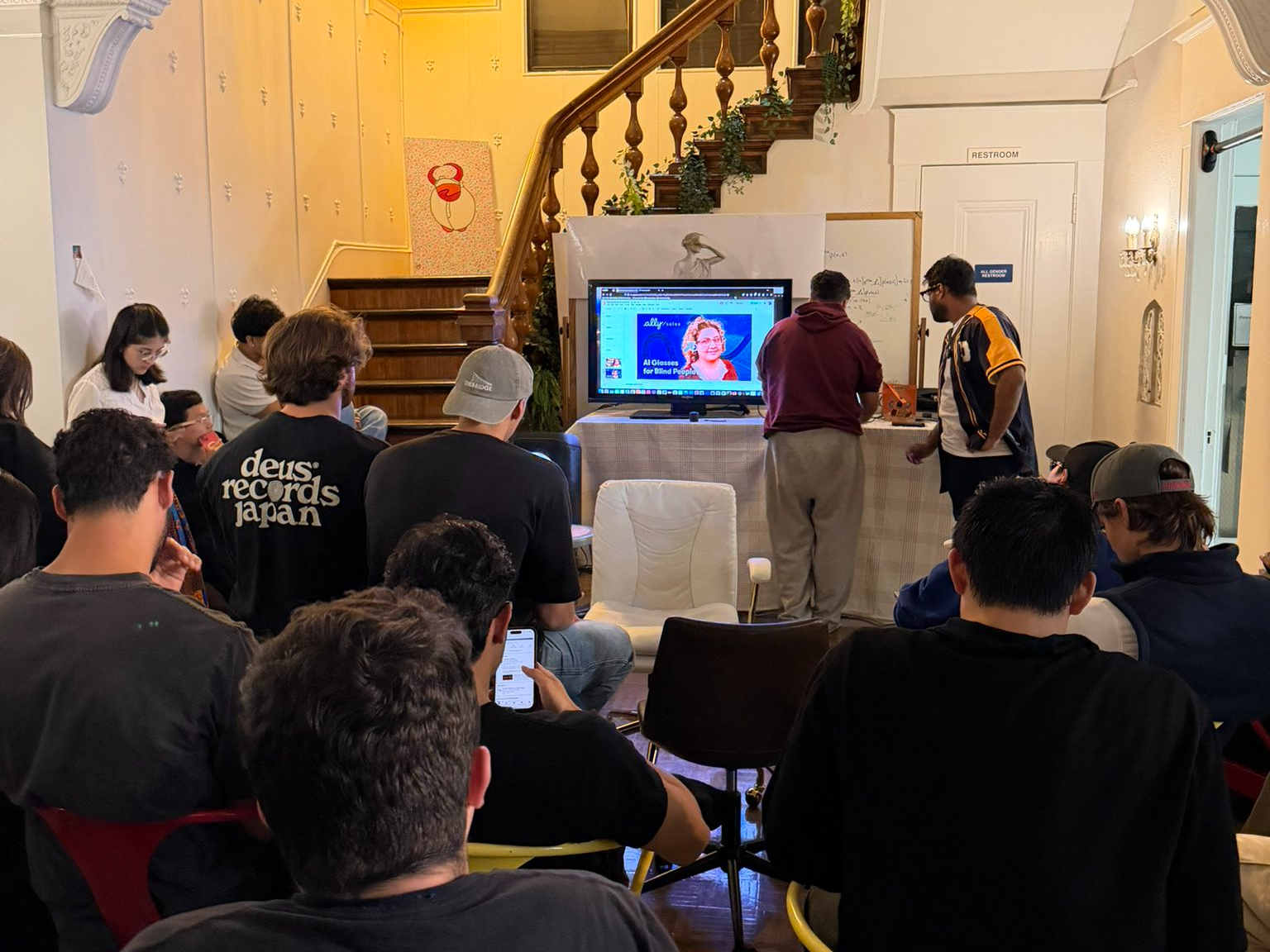
The company is now building software to match the claim. On weekly check-ins, an AI assistant listens and tracks each founder's progress, needs, and asks. It is an early prototype, D'Ambrosio is careful to say, but the use cases are already running: a founder in Bangalore and a founder in New York selling to similar customer personas get connected to share customers. Alumni companies come back to hire former founders from inside the network.
"If you think about it, we have 90 young founders living in San Francisco right now," he says. "You're one degree, maybe two, away from every single person."
Combine the two halves, and the ambition comes into focus. The nodes find exceptional people anywhere in the world. The data system watches how they actually build, for months, before any fund knows they exist.
"Talent is probably the most valuable thing that exists in the world. You can see that reflected in the AI labs right now. Meta, OpenAI, Anthropic, all of them are fighting for talent. We have a really good pulse on talent, and you can find out about the person before anyone else knows that person exists."Peter D'AmbrosioCo-founder of The Residency
His scoreboard for the model is aggressive: residents have raised close to $400 million in two years, by the company's count. In our interview, D'Ambrosio also mentioned a company incubated in the program that had quietly passed a billion-dollar valuation. It came out of the house in Germany, he said, and had not yet announced itself.
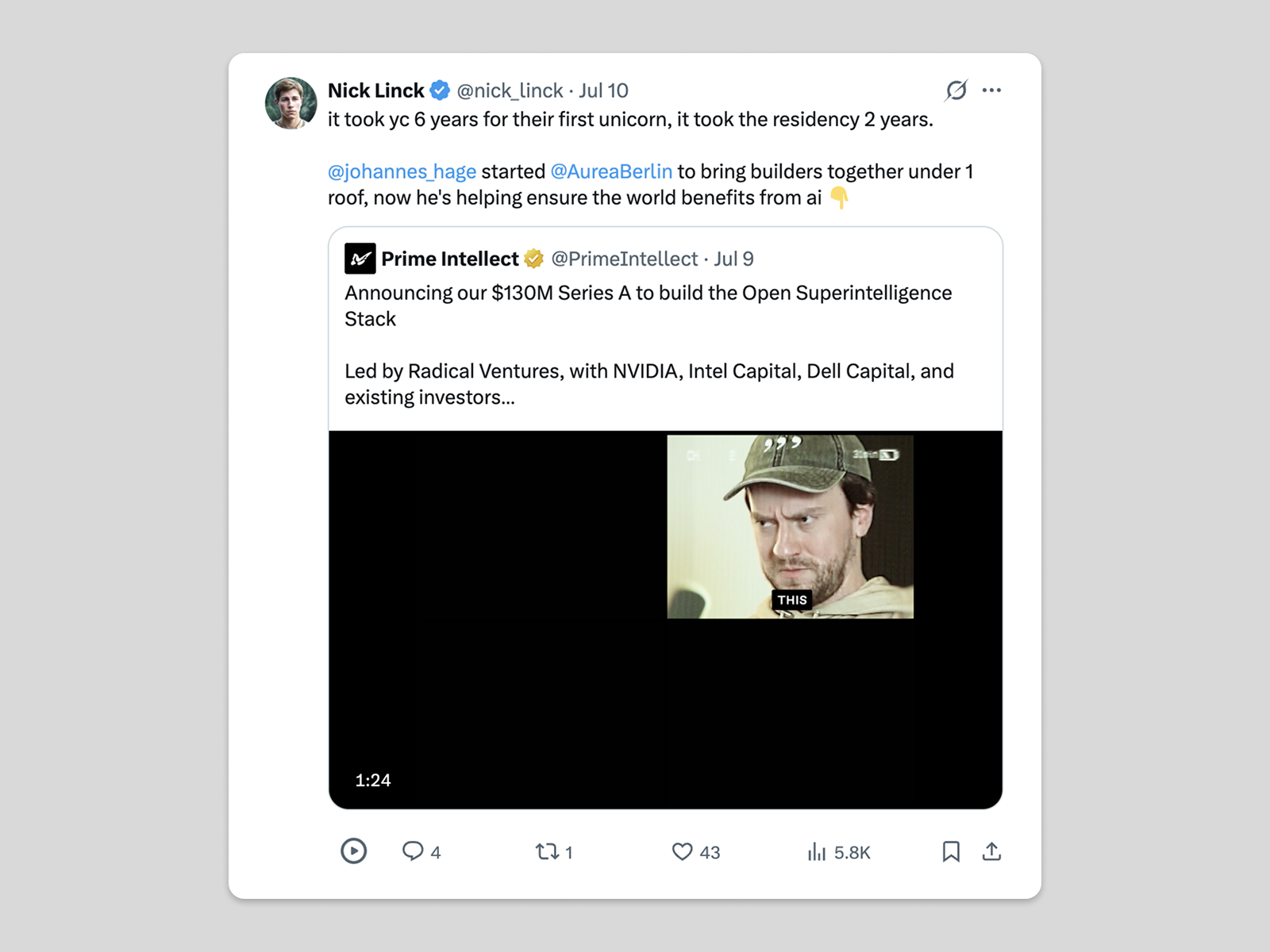
The announcement came days before this story was published. On July 8, Prime Intellect, an AI infrastructure startup, raised a $130 million Series A at a $1 billion valuation. Its co-founder Johannes Hagemann started Aurea, a builder house in Berlin. Linck claimed the company as the network's first unicorn on X, with a comparison he clearly enjoyed: it took Y Combinator six years to produce its first, he wrote, and The Residency two.
"Another proof point," D'Ambrosio says, "that there is exceptional talent everywhere in the world, begging for better infrastructure."
Tap Into That Kid Again
Seen from outside SF, one question is inevitable: what does this city have that everywhere else doesn't? People elsewhere work just as hard.
"You could be working on teleportation and probably get funding in San Francisco. In other places in the world, it's more of an uphill battle. Here, a lot of investors are looking for a way to say yes. In other places, it's: I'm looking for ways to say no."Peter D'AmbrosioCo-founder of The Residency
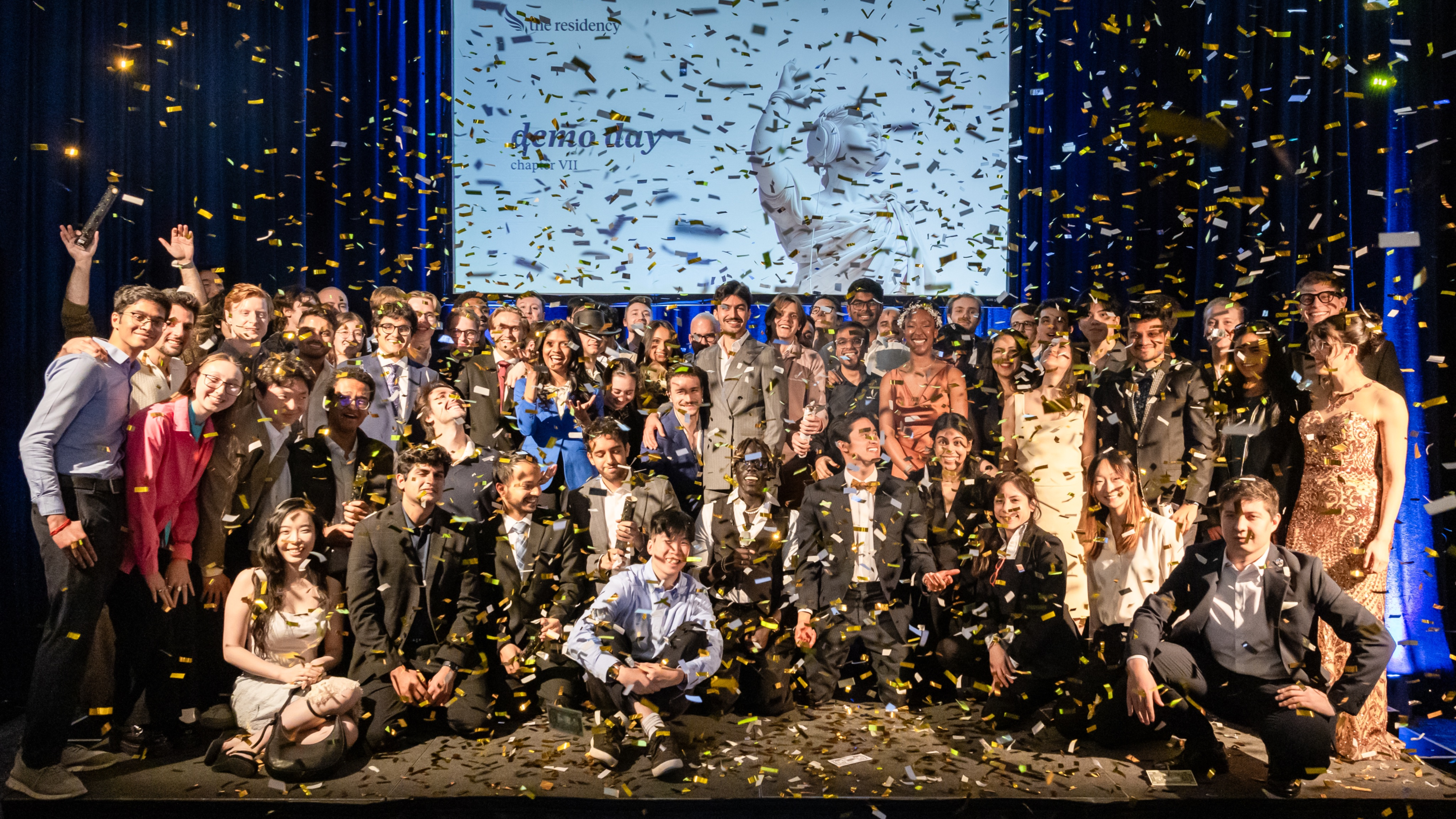
The rest of his answer is density and culture. Meet anyone in the city, and they ask what you're working on, then introduce you to someone who can help. The mindset, he argues, is exportable, and exporting it is part of the point of the nodes: "If you can bring the Silicon Valley mindset that you can literally do anything, nothing is impossible."
For now, the bridge still runs through US immigration, and residents swap O-1 visa tips over dinner, but the promise holds: prove yourself at any node in the world, and the network will bring you to where opportunity lives. Near the end, D'Ambrosio returned to the missing institution, and to whom it is actually for.
"When you're five years old, you don't wake up and say, I want to be an investment banking analyst. You're not like, I want to work on spreadsheets. It's more: I want to be an astronaut, I want to solve this problem or that problem. We need better institutions that help people who are no longer five years old tap into that kid again. If you do that, I think you unlock a lot of potential."Peter D'AmbrosioCo-founder of The Residency
💡
Read More
- why The Residency. (2024, Nick's Substack)
- Residencies will eat early-stage VC (2026, Nick's X)
- The Residency Announces Global Expansion Efforts (2025, Yahoo Finance Press Release)
- This New AI World Needs a New Funnel for Talent; Why Sam Altman Is Betting on The Residency (2026, Newswire Press Release)
- Nick Linck and The Residency: Empowering Young Entrepreneurs with Better Education (2023, SmartBranding)
- Why we invested in The Residency (2026, Redbud VC)
Explore more