At a Glance
- Who: Michael Seibel is Managing Director at Y Combinator and co-founder of Twitch and Socialcam.
- What: Seibel breaks down the near-death pivot that saved Twitch, the mistakes that sink most founders, and what YC actually looks for before investing.
- Traction: Twitch, the company Seibel co-founded, was acquired by Amazon in 2014. Since joining YC, he has personally worked with over 700 companies.
This video is about Michael Seibel, Managing director of Y Combinator, the most innovative startup accelerator in the world, lessons learned from the Twitch startup journey and Y Combinator.
Key Takeaways:
The Best Technical Decision Twitch Ever Made Came From Someone Who Underestimated the Problem
When a YC partner casually dismissed building a custom video server as trivially easy, an engineer took the offhand remark at face value and built it anyway. It streamed video at a tenth of competitors' cost and became the main reason the company survived.
Why Michael Seibel Doesn't Trust Venture Capitalists' Judgment
When Twitch was acquired, some of the largest tech companies in the world recognized how big it could become, but the best venture capitalists refused to invest at even half the eventual price. Founders tend to assume investors know something they don't, when often the opposite is true.
Founders Don't Fail From Bad Ideas. They Fail From Fear or Overconfidence.
Almost every founder mistake traces back to either avoiding the task that scares them or refusing to question an assumption once the facts contradict it. The fix for the first is simple: whatever sits on your to-do list making you uncomfortable is exactly what to do first.
Commit to a Problem for Two Years Before You Decide It's Not Working
No founder starts a company already knowing the answers, and the first two years of a startup are when that expertise actually gets built. Giving up before that point usually means quitting during the exact period you're supposed to be learning.
How Small Startups Beat Big Companies by Refusing to Play Their Game
A large competitor can't offer the kind of individual customer attention a four-person startup can, so copying the incumbent's playbook throws away the one advantage a founder actually has. Finding whatever a big company structurally cannot do, and building the entire product around it, is the move instead.
YC Bets on the Team's Relationships and Momentum, Not the Idea
Before backing a company, the questions are whether the founders can build a first version themselves, whether they already have a real relationship that can survive a startup's pressure, and how much they've accomplished in whatever time they've had. Reading a business plan and guessing how big it could become was one of the first instincts that had to be unlearned.
What if the Real Question Isn't How a Startup Could Fail, But How Big It Could Win?
Venture capital's power law means a handful of the best investments make far more money than all the rest combined. Worrying about downside risk misses the actual game, which is recognizing when a company's upside is bigger than anyone assumes.
Watch the full interview now on EO's YouTube channel! Below is the complete transcription of the interview. Minor edits have been made for clarity and readability.
Introducing Michael Seibel, Y Combinator Managing Director
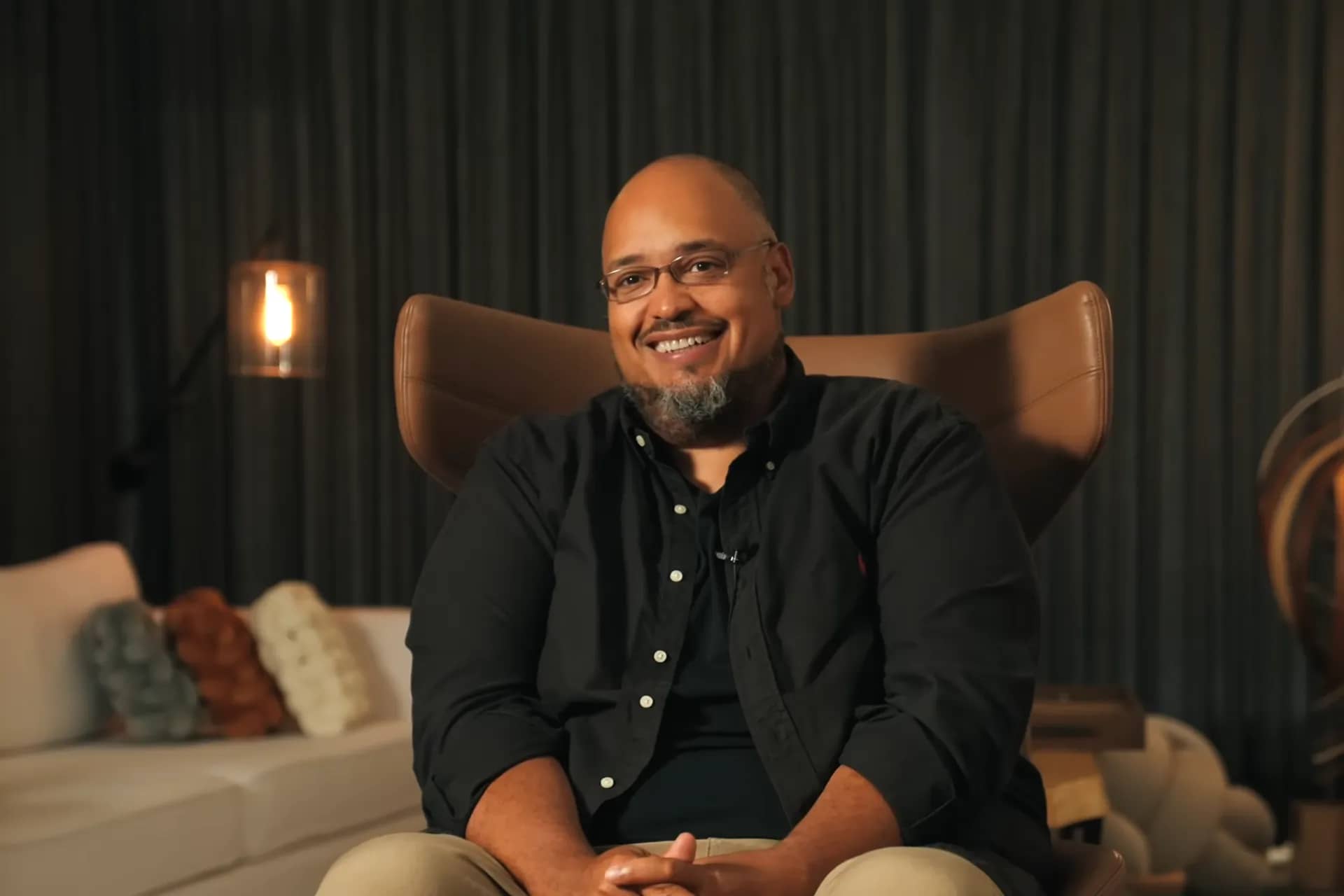
My name is Michael Seibel. I work at Y Combinator, and I was the co-founder of two companies, Twitch and Socialcam. Today, I help founders make their companies work.
Twitch Story
When I went to college, I went to Yale. I thought I wanted to be a lawyer, and unfortunately, I realized during my time at school that I did not want to be a lawyer.
One of my best friends from college, a guy named Justin Kan, was in the first class of Y Combinator in 2005. One year after college, he decided to start a new company, at the time called Justin.tv, later called Twitch, and he recruited me. I didn't know that I wanted to do startups, but I thought to myself, when is the next time your best friend is going to ask you to start a company with you? This seemed like something that might only happen once in my life, so I should do it.
The first version of our startup was actually a reality TV show. Justin would wear a camera on his head and broadcast his life 24/7, and I was the producer of the show. The problem was that when we wanted to start raising money, Justin couldn't go into pitch meetings because he was broadcasting everything, so I had to go to the meetings. The investors kept asking why they were talking to me since I wasn't the CEO, and what they didn't realize was that we didn't even really have a CEO back then. So the first thing we did was effectively make me CEO so that I could go talk to the investors and we could raise money.
Things were crazy back in the day. From a technical perspective, it was very hard to stream video, so we had to build our own custom hardware to stream it. I would say the craziest thing on the show was that people liked to prank us. People would call the fire department on us, prank us by ordering a bunch of pizzas to our apartment. One time, people pranked us by calling the cops on us. It wasn't very fun for us, but I think people enjoyed watching us go through that.
Deciding to go from a show to becoming a platform was a very big change. It was pretty simple: we realized that we weren't very good at making a show, but we were very good at creating software. We decided that instead of us being the show, we would make it easy for anyone else to broadcast their lives, or whatever they wanted, on the internet. We made that decision within two or three months of the show starting. The show came out in the spring of 2007, and by the fall of 2007, we had launched a site where anyone could come and broadcast live video.
We did YC in 2007. Probably the number one piece of advice we got from YC at the time was from one of the partners, Paul Buchheit, the original creator of Gmail. He was the one who inspired us to build our own video system, our own live video system, for Justin.tv, probably the most important technical decision we made in the entire history of the company. He actually said this to Kyle. Kyle Vogt was writing the video system at the time, and Kyle asked him whether we should build our own video system or buy some off-the-shelf software. Paul Buchheit said, how hard is it to write a video server? It's just bits in and bits out. When Kyle heard that, he thought to himself, if Paul Buchheit thinks it's easy to build a video server, I'm going to do it. And that's what he did. It allowed us to stream video on the order of ten times cheaper than all of our competitors, which was one of the main reasons why we survived.
We were still serving streamers, and we still wanted to make it easy for them to broadcast live. The important distinction we made was that at the time, a lot of the content on Justin.tv was copyrighted content that streamers didn't own, or content that wasn't very interesting. But about 20% of the content was people playing video games, and people liked that. One of the things that got us to say maybe we should work on Twitch was that Emmett really liked watching people play video games, and he wondered if we should just focus on those folks and ignore everyone else. It was his idea to say let's go down that path. That was a big decision, but it was more of a focusing decision than a changing one. The technology was the same, the site was the same. At the time we called it Justin TV Gaming, and we just built a clone of our site that only had the video game streamers, and then we rebranded that as Twitch later.
Probably the most defining moment in that company was when we were about two months away from running out of money. I believe it was around August 2010. We had about 30 million people who would watch video on our site every month, but we were making about $750,000 in revenue every month while spending about $1,000,000 a month running the company, and we were going to run out of money within two months. We sat everyone down and told them we were going to figure out how to fix the company and make it profitable, or it was going to go out of business. We ended up coming up with a plan that made the company profitable, and that year we generated about a million, maybe a million and a half dollars in profit. We saved the company.
Justin.tv was going to die. We needed to become the P-word: profitable. That's how we invented the auto-playing ad. We added auto-playing video ads before anyone else on the internet. We even added banner ads to our 404 page, the blank page that comes up when you type in the wrong URL. That was desperate.
Our biggest moneymaking innovation was the paywall. We had a ton of international traffic, with viewers visiting the site from the US, Europe, South America, the Middle East, and Asia. Unfortunately, internet advertising rates outside the US and Europe were abysmally low, and we lost money serving most of our global traffic. In one of those founder meetings, my co-founder Emmett argued we should just shut off the site for those countries. I hated that idea. I hate seeing numbers go down. And then I had an idea: what if we allowed viewers worldwide to keep using the site, but some of the time, visitors from outside the US and Europe would see a paywall, which would force them to purchase a pro account if they wanted to keep watching? In the first month we only made $10,000, but six months later it was bringing in $200,000 a month. We became profitable.
Lessons Learned from Twitch
Twitch was acquired by Amazon in 2014. The most interesting and surprising thing about the acquisition was that even while many of the largest internet companies in the world were bidding to purchase Twitch, many of the best venture capitalists in the world did not want to invest. What Emmett has said later on is that if anyone had given us money to keep running the company, even at half the valuation we got acquired at, we probably would have stayed independent. That taught me that at almost every level, even though founders think venture capitalists are very smart, they're not. They often make mistakes. They often don't know what they're doing. And if you think about it from that point to today, Twitch is generating 100x more revenue now than it was when it was acquired. If it had stayed an independent company, it would have been very interesting. A lot of the companies bidding on Twitch understood it had the potential to be a lot bigger than it was. It was surprising that the companies understood that, but the investors did not.
Regrets? It's hard to say I have any regrets. Things went really well, and I think to myself, God forbid I change anything and the outcome would change. I would say the thing that we did amazingly well always was that we always believed in software, and we always had an extremely talented software team. With any challenge, we could bring better software than anyone else.
Probably the most important lesson I learned on making a great product is that I often give two classic answers. The first is when you run out of ideas or you've run out of passion for what you're working on. That's a hard way of thinking about it because it's not very concrete. You should be willing to give a customer and a problem you care about two years. You should work two years on something before it's working. If you're not willing to work two years on something, you probably shouldn't work on it at all.
A lot of people go into a startup thinking that they know all the answers, but if you talk to any successful startup founder, that's never the case. They never know the answers when they start. That first two years in a startup is when you're becoming an expert, and it's very hard to skip. Founders need to get out of their own heads. It's very easy for you to believe that the vision in your head is the right thing, but you only find the right thing by putting something in front of users and seeing how they use it. You're always surprised when you do that. You always learn something. It's very easy to just think that what's in your head is right, and it's almost never right.
It was definitely life-changing. I was able not to have to worry about money ever again, was able to make sure that my family didn't have to worry about money forever. For a little bit of time, it was fun to be almost retired. We had worked on startups our entire twenties, from 23 to almost 30, so it was nice to not have the pressure of working on a startup again. But very quickly I realized I didn't want to be a retired 30-year-old. It made me start asking myself what I could commit myself to afterward, and that led me to Y Combinator.
Lessons Learned from Becoming a VC Investor
Y Combinator, we call it YC, is an early-stage startup accelerator. We help 500 to 600 companies every year with funding, advice, access to a community, and a lot of special deals. Since starting at YC, I've personally worked with over 700 companies.
There were a number of things I had to unlearn. I had to stop thinking I could look at a business and understand how big it could be. I had to start understanding how important a team is versus an idea. A team that has some personal relationship, technical talent, though they don't have to be very experienced, and passion about the problem it's solving, one that's more excited about arriving at the right answer than being right.
The first thing I look for is a technical team: founders who can build the product, or at least the first version of it, themselves. The second thing I look for is a team of people who know each other, who've worked together in some way or are friends, who are going to be able to survive all the challenges of doing a startup together. The third thing I look for is how much progress the founding team is making over time. If the company has been around for three months, am I impressed with what they've done in that period?
I had to learn about regions all over the world, because we invest all over the world. I had to learn how to give advice in a forceful but non-discouraging manner. And I had to learn a lot about the lies founders tell themselves and how to convince them to overcome fear. My wife says I had to learn how to become a therapist.
I had to start understanding which industries software can be a really big competitive advantage in, and which spaces it can't. I'll give a couple of examples. For a while, we invested in a lot of consumer hardware companies, and I would say that in the consumer hardware space, having excellent software is not sufficient. The knowledge to manufacture consumer hardware is very rare, and manufacturing it is very expensive. Mistakes in planning that wouldn't have any negative impact on a software company can have massively negative impacts on a hardware company. That's one area. Consumer packaged goods is another. When you're making a consumable product, like food, beauty, or fashion, software can help you market it or sell it, but it's not a software product. I think one of YC's core theses is that software is still very early in its adoption curve in the world, at its fundamental base.
Essential Advice from YC
We want to invest in companies that are using software to create their competitive advantages. We've had to learn a lot by experimenting in other areas. Most of the mistakes that founders make come from either being afraid or being what we call too smart.
When founders are afraid, they tend to run away from the tasks they should be running toward. I'm afraid my users don't like my product, so instead of talking to them, I won't talk to them. I'm afraid that customers won't want to buy the product, so instead of trying to sell it to them, I don't try. I'm afraid that this employee is going to get angry when I have to fire them because they're not doing their job well, so I won't fire them. A lot of what founders do wrong comes from acting out of fear, and founders have to feel that fear, they're going to feel it, but it's when you act primarily to run away from fear that's the problem.
The second category of mistakes founders make is thinking they're too smart. They're not willing to question the assumptions they made when starting the business, even when confronting facts that seem to disprove those assumptions. I usually tell people that their fear is a great signal, because it tells them what to run toward. Another way of saying this: look at what's on your to-do list, and whatever makes you uncomfortable, do those things first.
The other thing we do is talk honestly about how it feels to do a startup. Being very honest about how bad it can feel makes people understand that when they feel bad, it's okay. Startups don't talk enough about when things don't go well, or people feeling afraid, or feeling like they got punched in the face. So YC's three key pieces of advice are: make something people want, do things that don't scale, and talk to your users.
What's so fun about being a startup is that you're an underdog. Almost always you have a big competitor, and almost always you need to fight asymmetrically. The analogy I tell people, and it works better for people from the US, is that in the American Revolutionary War, the British had a better army. If you go into the middle of an open field and try to fight them face to face, they kill you. So you have to fight differently. You can't copy the big player to beat them. You've got to do something different, and that's part of the philosophy behind doing things that don't scale. You need to do things your competitor can't do. It's basically saying, well, my competitor can't have good customer service because 100,000 people call them every hour, but only four of our customers call every hour, so we can have amazing customer service. Will we be able to do the same customer service when we get big? Probably not. But when we're trying to figure out how to make an amazing product, we want our customers to know that we love them, and we want to learn as much as possible from them. There are so many techniques you can use that big companies can't, and one of the biggest mistakes early-stage founders make is trying to copy big companies.
The advice I got from Paul Graham was about the power of being enthusiastic. One of the things PG is amazing at is making you more excited about your company. I often try to figure out where a founder is in their path with the company, and whether they need that feeling, that enthusiasm, that belief that they can be the ones who win. I think I learned that from PG. From Sam, I learned a bit of optimism, and the idea that you shouldn't assume you know how big the winners can get. The companies that succeed can get way bigger than you might think.
There's a classic rule in venture capital called the Power Law, and it basically states that your best investments will make far more money than any of the rest. I think Sam understood that in his bones, and it's one of the biggest lessons he taught me. It translates to: don't worry so much about what would happen if the company lost. Think a lot about how big the company could get if it won.
The promise I saw from YC when I went through it as a founder is that it's a product that can help founders from before they even apply, to after the IPO and beyond, a product that can help founders through the entire lifecycle of a company. What I hope founders understand about YC is that it's not just an investment. It's a product built to make it more likely that their company succeeds. We want to give YC companies a disproportionate advantage in the startup ecosystem. If you go through YC, your chances of success are higher. We think that's the bar we have to hold ourselves to in order to invest in companies.
Some of the major innovations we've built are, one, a social network for our founders that makes it easy for them to communicate with each other and see what each other's expertise is. Another is a set of special deals for our founders, literally millions of dollars of discounts and free credits to products that are helpful to them. The third is an investor database, which allows founders to find any YC company that's raised money from basically any investor and get an introduction, browse those investors, and read reviews and comments about working with them.
The other things we've built are additional programming after batches. After you do YC, we run another program for companies after they raise a Series A called the Post-A Program, and after you reach product-market fit and are trying to scale, we run a third program called the YC Growth Program. At every stage, we put you together with other companies at your stage and give you the advice for that stage of the company. We also have another product called Work at a Startup, a hiring product that all YC founders get access to. It makes it easy for anyone who wants to work at a startup to apply to every YC company at the same time, and only allows YC companies to look at those applications, alongside a product most people now call Hacker News, probably the single greatest collection of engineers on one site that exists. YC companies get the ability to recruit people on that site and launch their products.
I love it when the markets are in crisis for startups. Over the past three to four years, founders have gotten into this game not because they're passionate, but because they think they can get rich quickly, and capital markets returning to normal is going to remove a lot of these people. Investors have also given companies far too much money. It's driven up the prices of everything, and that's going to return to normal. Founders were confused, or caught up in the spirit of the time, into thinking they needed more money to make their companies work. I think people are going to start realizing that money isn't the most important thing when trying to make a product work.
All of these, I think, are essential lessons. We went through a bubble that was primarily driven by investors, and the investors convinced themselves that putting more money into companies would make the companies better, and then convinced the founders of that too. I don't think it did anyone a great service, so I'm happy that time is passing.
I want YC to be an organization that helps founders and thrives for a hundred-plus years. I think in order to do that, we have to ask ourselves how we make the product better every single year throughout that entire time, and how we make it a better deal. One of the things I think a lot about is that I want a founder to believe that the YC they signed up for got even better every year, so that the deal they made with us turns out to be a better and better deal every year.