At a Glance
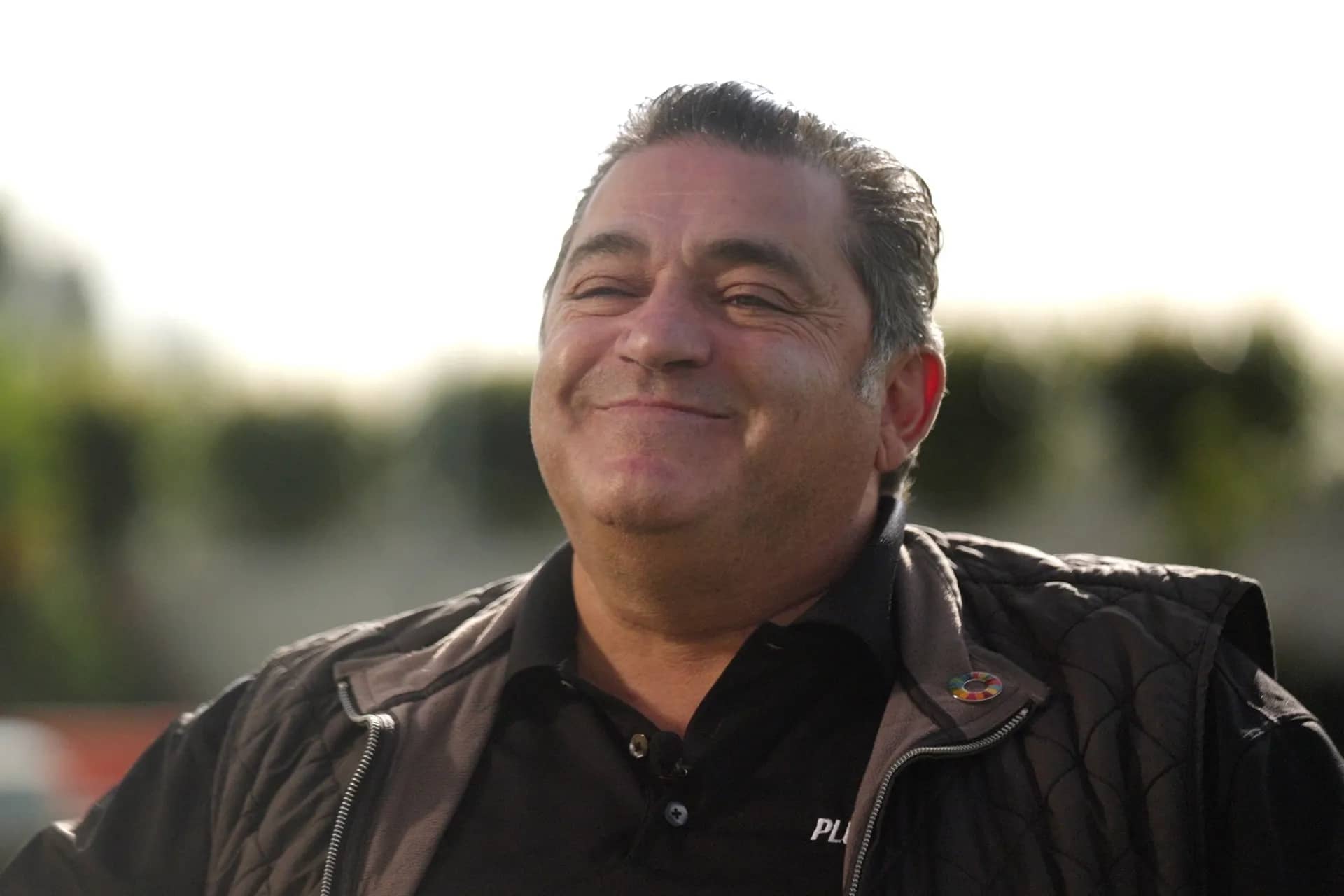
- Who: Alireza Masrour is the General Partner of Plug and Play, which he joined as a funding manager in August 2008, alongside Saeed Amidi, the company's CEO and founder.
- What: Plug and Play is a Silicon Valley innovation platform and startup accelerator that seeds entrepreneurs when they are still two to three people with an idea, and has invested in almost 1,500 startups.
- Traction: Plug and Play has invested in almost 1,500 startups and backed 34 unicorns including PayPal, Dropbox, Honey, FiscalNote, and Rappi; when Masrour was handed a $2 million budget in 2008, he concentrated it on 91 companies Plug and Play helped build from scratch, and four of them became unicorns.
In this interview, Saeed Amidi and Alireza Masrour of Plug and Play look back on more than a thousand startup bets. Amidi explains how renting cheap office space next to Stanford put him in business with the future founders of PayPal, Google, and Dropbox before anyone knew their names. Masrour breaks down the $2 million test budget that taught him what makes a company survive its first pivot. And Amidi admits the investment he regrets most: the $100,000 stake in Airbnb that he and Tim Draper walked away from over liability fears, a decision that cost him a $200 million return.
Key Takeaways
Peter Thiel rented office space from Amidi, and PayPal was born
Amidi's real estate side business became an accidental incubator. Thiel rented space from him to launch PayPal, brought in through Amidi's brother Rahim; Larry and Sergey later rented the building at 165 University Avenue, giving Amidi a front-row seat as Google grew.
Masrour's three rules for a good investment: people, people, people
Masrour says people, not ideas, decide whether a startup survives. A founding team that trusts each other can rebuild around a weak idea, he argues, but a good idea with the wrong team rarely recovers.
"I have no clue what works": Plug and Play's edge is knowing what fails
Masrour says nobody writes a blog post about the startups that failed, even though most do within their first year. Plug and Play keeps its own record of those failed approaches so new founders can pivot in weeks instead of losing a year repeating someone else's mistake.
A $2 million budget, 91 bets, four unicorns
When Amidi handed Masrour a $2 million budget in 2008, Masrour chose to concentrate it on companies Plug and Play helped build from scratch rather than spreading small checks everywhere. He backed 91 of them, and four became unicorns.
Amidi walked away from Airbnb over a liability worry, and it cost him $200 million
Amidi and Tim Draper had agreed to invest $400,000 in Airbnb at a $2 million valuation, but Draper worried the sum wouldn't cover a legal challenge if a guest got hurt in a rented room, so both backed out. Amidi says his $100,000 share alone would have returned $200 million.
"Plug and Play is my playground": for Amidi, money is only part of the score
Amidi says jobs created and entrepreneurs helped count as much as financial returns, though he doesn't shy away from admitting he enjoys making money too. He calls Plug and Play, the company that bears his own track record, his playground.
Below is the complete transcription of the interview. Minor edits have been made for clarity and readability.
Introducing Plug and Play
Saeed Amidi (CEO and Founder, Plug and Play): My name is Saeed Amidi and I'm the CEO and the founder of Plug and Play. Plug and Play is considered to be the largest innovation platform in the world, and we have 34 unicorns.
Some of the most early famous investments we have done is like PayPal and Dropbox. Some of our most recent unicorns is like FiscalNote or Honey or Rappi, which is a delivery company. But we are very, very proud of finding the great entrepreneur when they are two to three people with a great idea and seed funding, and help them through all their journey.
A rich family that fell apart
I am originally from Iran, primarily as an industrial family. We were one of the largest conglomerate in Iran. Not only me, but also my uncles and all the family used to come to us to study, and to go back home and help to advance our family business, which was manufacturing, textile, polyurethane, banking business and insurance business.
But we had a little revolution in Iran in 1979. We were growing very well. At the same time some of the people wanted more change, and the change we really wanted was real democratic life and government. But it really became too much control by the religion. The revolution happened in 1979 and all our industries were nationalized, which really was a big loss for the family. We have not advanced as much as we should have in the last 20, 30 years. All industries, in fact, at the time of the revolution, within three months.
By that time I was in Palo Alto by Stanford University as a 19, 20 year old. I didn't know what business is the best business to start, and it was primarily just to survive and to build a business. I started a company which is called Alps American Liquid Packaging, which is in plastic business and bottled water business. It's quite a large company with 2,000 employees, about $600 million sales. And at the same time we did real estate, and in fact we even started Medallion Rug, which is like a gallery for Oriental Rug.
The first startup we invested in was PayPal. Peter Thiel came to rent space from us. My brother Rahim talked to him, and we invested in his seed round. Then Larry and Sergey rented space from us at 165 University Avenue. We had a chance to invest in Google through an angel fund.
I met Drew and Arash of Dropbox at Y Combinator, but later on we invited them to our place for kebab, and we were able to co-invest in Dropbox with Sequoia. So I really had a front seat to see Google grow and become what it is today. So I changed my focus from packaging and bottled water and real estate to technology.
Plug and Play's Investment Philosophy
Alireza Masrour (General Partner, Plug and Play): So I joined Plug and Play in August 2008. My first title was Funding Manager, helping the entrepreneurs and the startups to raise money and get funding. I started with that, helping the companies and advising them who is the right person for them.
As they try to raise money, we learn more and more, and I basically got to know better entrepreneurs, the difference, how we should invest. Then a few months in, Saeed told me, okay, we are investing, and you do this one. You have a budget, here's your budget, start to invest. If you lose the money, you know what's going to happen. If not, we will continue.
So that budget was $2 million. I thought about it: okay, what am I going to do with this one to make an impact? Yes, you can give $50K, $100K to every company that you see, but what would be the impact? I decided to invest that budget only to the companies that we help them from scratch, and we even help them to incorporate the company. So invested in about 90 plus companies, 91, and off of that, luckily we got four unicorns.
Saeed: The most exciting thing is when I talk to an entrepreneur to decide to invest or not to invest, is number one, how passionate they are about the product they are planning to build. And is the product does solve a big problem in the world. Like in the case of Google, organizing the world's information and then ranking the answers by priority was innovative.
In the case of Dropbox, everybody had hard time sharing files and pictures and videos. So it really the entrepreneurs had a great idea. But after the great idea, you have to also be able to build the technology and execute it with the right business model, at the right time, at the right place. So it's a combination of these that makes incredible startups succeed and make a better world for us.
Alireza: There are three things that I have learned after 15 years or so that they are key for finding or investing in good companies. The first one is people. The second one is people. The third one is people. It's all about the people who you have around you. If they trust each other, they can build a company together. The rest will come with it. If the idea from the first year, second year stay the same and has its own potential, the company can be an easier billion dollar company.
But if the idea is not that good and they figure it out, some of this may not work, and change it. Yes, it has potential, but the potential is not be easy as the time that you have the first idea as of last idea. And what we have learned is that you learn from failure. I call it lesson learned from the company that they have failed, or we have been part of it, being invested in them. But there is no blog, there is no book, there is no way for you to know about the failure. However, you can read about all the successes and so on, you learn from it.
But there is massive amount of failures among the companies. In numbers, you have about 1% of the company has the chance to be a unicorn, and about 50%, 20% of every single startup that they started, they fail, about 20% of them first year. So you learn more about those than the others, because number wise, these are way, way more than the others. And we use that one as a way to help the startups. I thought if I take a look at the 1,000 companies, I will know everything. Today I will say I have no clue what works, but we have a very good understanding of what is not going to work, because we have seen the failures, and then we use those information and connections to help the entrepreneurs to not do the same mistake.
How? When I see an idea of yours, you talking to us about an idea, and we have seen five other companies have tried the same way or different approaches and they failed, we say, okay, you may watch for this one and this one and this one. And also those entrepreneurs don't mind share the lesson learned. So we introduced them. So we try to help the companies fail faster. That means if you know it's not going to work, why you should spend a year on it. You pivot this in two weeks, two months, by connecting the dots.
Saeed: And the reality is starting a startup is incredibly hard. It is a lot of ups and downs. And I believe when you work in a team of two to three people, one time you are down, your partner picks you up. One time he or she is unhappy because they heard no, no, no, you pick them up. I believe the chances of succeeding with the great team is so much more than if you're a single entrepreneur.
And almost 1,500 startups we have invested in, less than ten is like an entrepreneur that has the majority of shares. We really like entrepreneurs to say, I have 30%, 30%, 30%. We feel that camaraderie and teamwork really helps to succeed for the startup, at least it's been my experience.
Thoughts on money and success
There is a friend of mine at Sequoia, Doug Leone. I believe he's Italian. So we had a discussion going back 25, 30 years that we talked about why so many startups in Silicon Valley have an immigrant entrepreneur. Of course I had difficulty. I was an immigrant from Iran. But right after the Iranian revolution, there was about a year and a half of hostages, American hostages in Iran, over 300 Americans were kept as a hostage. Of course, I had people, my good, good American friends tell me, Saeed, if you feel uncomfortable, let us help you.
But I think any difficult journey you go through gives you strength. That's why immigrants are so much more successful in America, because they have to learn a language, they have to learn the new community, and they need to succeed in this new community. It's different than if you succeed in your own country, in your own neighborhood, rather than if they throw you across the world and say learn a new language, learn a new culture, and succeed.
Honestly, I was so busy working, I didn't feel any prejudice, but I am sure it was there. But I was so busy working and trying to accomplish what I am hoping to accomplish that I didn't think about it. I had a joint venture with Tim Draper, who is a really close friend of mine, that I used to do due diligence for a month, a lot of companies. And then we met usually on Wednesday, once a month, and we looked at four startups together. Our agreement was he would invest $300,000, I would invest $100,000 in one of the four startups. And one of these startups was Airbnb.
And after their pitch we agreed to invest $400,000 at a $2 million valuation, and we decided to do this, and we shook hand and everything. And then usually we would provide the term sheet the following week. During this period, rightfully so, many people turned down Airbnb. Tim also said, Saeed, if somebody gets hurt in one of these rooms, $400,000 is not enough to go through a legal challenge. And because of the liability and legal challenge, he decided to back out, and I backed out. That $100,000 would have had given me a return of $200 million. So you live and learn. So I hit some success stories, I missed some success stories.
And if I can also share with you, till about two years ago I would only invest Plug and Play money. And so many people told me, Saeed, you should have a fund, because you have shown a track record that you guys are such a good investor. I honestly wasn't comfortable investing other people's money, but that was also a mistake. I feel money is one of the metrics of success, and even though you have to see what you're going to do with the money, because you could misuse it or use it for a good cause, I am using the money to reinvest in more startups, create more growth, and I enjoy it.
I think it's very, very lucky for me that my business is my passion and my playground. In fact, funny name, Plug and Play, I call Plug and Play my playground. If I did all of I did and I didn't make money, I don't think I'm successful. How many jobs you create, how many entrepreneurs you help, and how much money you make is a big metric of success, and I cannot say. And I like making money. I enjoy making money.