
"That doesn't sound like an AI recommendation," investor John Whaley challenged, cutting through the buzzword-heavy pitch. The room fell silent as Lorina, CEO of Rexulto, faced the kind of skeptical questioning that separates real AI applications from marketing fluff.
Welcome to Pitch.Tech, where bold startups with .tech domains face Silicon Valley's toughest VCs. In this episode, we witness Rexulto's high-stakes pitch - a dynamic pricing engine for car rentals that claims to use AI to optimize fleet revenue. Lorina brings impressive credentials: a previous exit generating $75M in annual revenue and hard-won experience in the mobility space.
But credentials don't guarantee funding. Watch as a seasoned founder navigates brutal investor skepticism about AI claims, revenue-sharing models, and the fundamental challenge of proving ROI in dynamic pricing - revealing the harsh realities of raising capital in today's AI-saturated market.
Watch the full interview now on EO's YouTube channel! Below is the complete transcription of the interview. Minor edits have been made for clarity and readability.
Key Highlights:

"All the pitches talked something about AI, to be honest, like, many of these are kind of these are more of like a buzzword. They were using it more like a buzzword."
"The worst result that we had was 5% of revenue increase. Our best was it was 6 times, but that was a very particular case."
"That doesn't sound like an AI recommendation."
"We tried revenue-sharing with one customer. It didn't work. We still have one customer on that contract and I'm just waiting for the contract to renew to get away from it."
"Looking at your website, I had no clue what you guys did."
"The worst result that we had was 5% of revenue increase. Our best was it was 6 times, but that was a very particular case."
"That doesn't sound like an AI recommendation."
"We tried revenue-sharing with one customer. It didn't work. We still have one customer on that contract and I'm just waiting for the contract to renew to get away from it."
"Looking at your website, I had no clue what you guys did."
The Pitch: AI-Powered Dynamic Pricing
Lorina introduces Rexulto and explains how their AI engine addresses the car rental industry's pricing challenges.
Lorina: My name is Lorina. I'm a co-founder and CEO of Rexulto. We have developed and introduced an AI dynamic pricing engine. We previously co-founded one of the largest European car sharing companies. The company generated 75 million annual revenue, and what's more important, it was cash flow positive.
What's happening now in the car rental industry is increasing prices of vehicles, uncertain residual values, and growing percentage of electric vehicles are forcing car rental and mobility companies to put more focus on not just reselling cars as they used to do before, but actually making sure that they do money on their operations.
On top of that, for mobility companies especially, they strive to increase their utilization, to improve fleet distribution, and all of that can be done with the correct pricing. Taking all of that into account, we have engineered an AI dynamic pricing engine that basically sets the right price at any given time, first class of economics, bringing supply and demand into equilibrium.
What's happening now in the car rental industry is increasing prices of vehicles, uncertain residual values, and growing percentage of electric vehicles are forcing car rental and mobility companies to put more focus on not just reselling cars as they used to do before, but actually making sure that they do money on their operations.
On top of that, for mobility companies especially, they strive to increase their utilization, to improve fleet distribution, and all of that can be done with the correct pricing. Taking all of that into account, we have engineered an AI dynamic pricing engine that basically sets the right price at any given time, first class of economics, bringing supply and demand into equilibrium.

How does the technology actually work and what differentiates it from competitors?
Lorina: So the way it works is we look into the company's historical data, market historical data, competitors' prices, and many other factors that help us forecast demand - things like weather forecasts, flight information, booking information. We not only set the price for our customers, but we also push it back either into their fleet management system or to the aggregators where they get bookings from.
We currently focus on North America, Europe, and the Middle East. The segments that we look at and work with are either small companies or large enterprise companies. What differentiates us is that we work not only with the car rental industry but with the mobility industry, and the depth of the technology - because for mobility companies we use up to 500 data points. For car rental companies it's about 20, 30, maybe 40.
We offer pricing as a service for our traction. We currently have 20 paying customers plus piloting customers. We have integrated six reseller solutions. We generated about 200,000 annual revenue this year. We are raising a round of 1.5 million. We closed 950. We are now closing the remaining 550.
We currently focus on North America, Europe, and the Middle East. The segments that we look at and work with are either small companies or large enterprise companies. What differentiates us is that we work not only with the car rental industry but with the mobility industry, and the depth of the technology - because for mobility companies we use up to 500 data points. For car rental companies it's about 20, 30, maybe 40.
We offer pricing as a service for our traction. We currently have 20 paying customers plus piloting customers. We have integrated six reseller solutions. We generated about 200,000 annual revenue this year. We are raising a round of 1.5 million. We closed 950. We are now closing the remaining 550.
The Skeptical Investor Questions
John Whaley challenges whether tech-enabled platforms would really need an external pricing service when they could develop it in-house.
John Whaley: For any tech enabled platform, I imagine they're already doing something like this or they're doing some version of this where they have some pricing engine to determine prices. This is a common thing - you mentioned Uber and Lyft. They obviously do all of that. Everything from concert tickets to e-commerce are often doing this type of dynamic pricing. This might be core to their business, very important, so they may want to develop that themselves. They have all the data about it. What type of customer would use a service like yours versus developing this in-house?
Lorina: Very good question. First I'll answer who are the companies that develop their own. I talked to the head of revenue management of GetAround. They spent a lot of money and many years developing dynamic pricing. And it didn't work. It's not that simple, because you need to know how to do it without reducing your revenue even by 1% - because if you do that, you're fired.
Answering your question, who are our customers? We have either very small companies that have 5,000 cars - they don't have their proprietary software, basically they are fleet managers operating their fleet and they want to do it in the most effective way. They have third party software solutions and they compete with others like Budget, Enterprise, etc., so they need to make sure that they somehow stand out.
And we work with large companies. These companies are not as big as Enterprise or Hertz, but they have hundreds of thousands of cars. It's still huge. They basically manage their franchisees, so they need to make sure that their pricing is consistent throughout their network, that they offer the same quality of service, and that actually their franchisees do well because they get a percentage of what franchisees earn.
Lorina: Very good question. First I'll answer who are the companies that develop their own. I talked to the head of revenue management of GetAround. They spent a lot of money and many years developing dynamic pricing. And it didn't work. It's not that simple, because you need to know how to do it without reducing your revenue even by 1% - because if you do that, you're fired.
Answering your question, who are our customers? We have either very small companies that have 5,000 cars - they don't have their proprietary software, basically they are fleet managers operating their fleet and they want to do it in the most effective way. They have third party software solutions and they compete with others like Budget, Enterprise, etc., so they need to make sure that they somehow stand out.
And we work with large companies. These companies are not as big as Enterprise or Hertz, but they have hundreds of thousands of cars. It's still huge. They basically manage their franchisees, so they need to make sure that their pricing is consistent throughout their network, that they offer the same quality of service, and that actually their franchisees do well because they get a percentage of what franchisees earn.
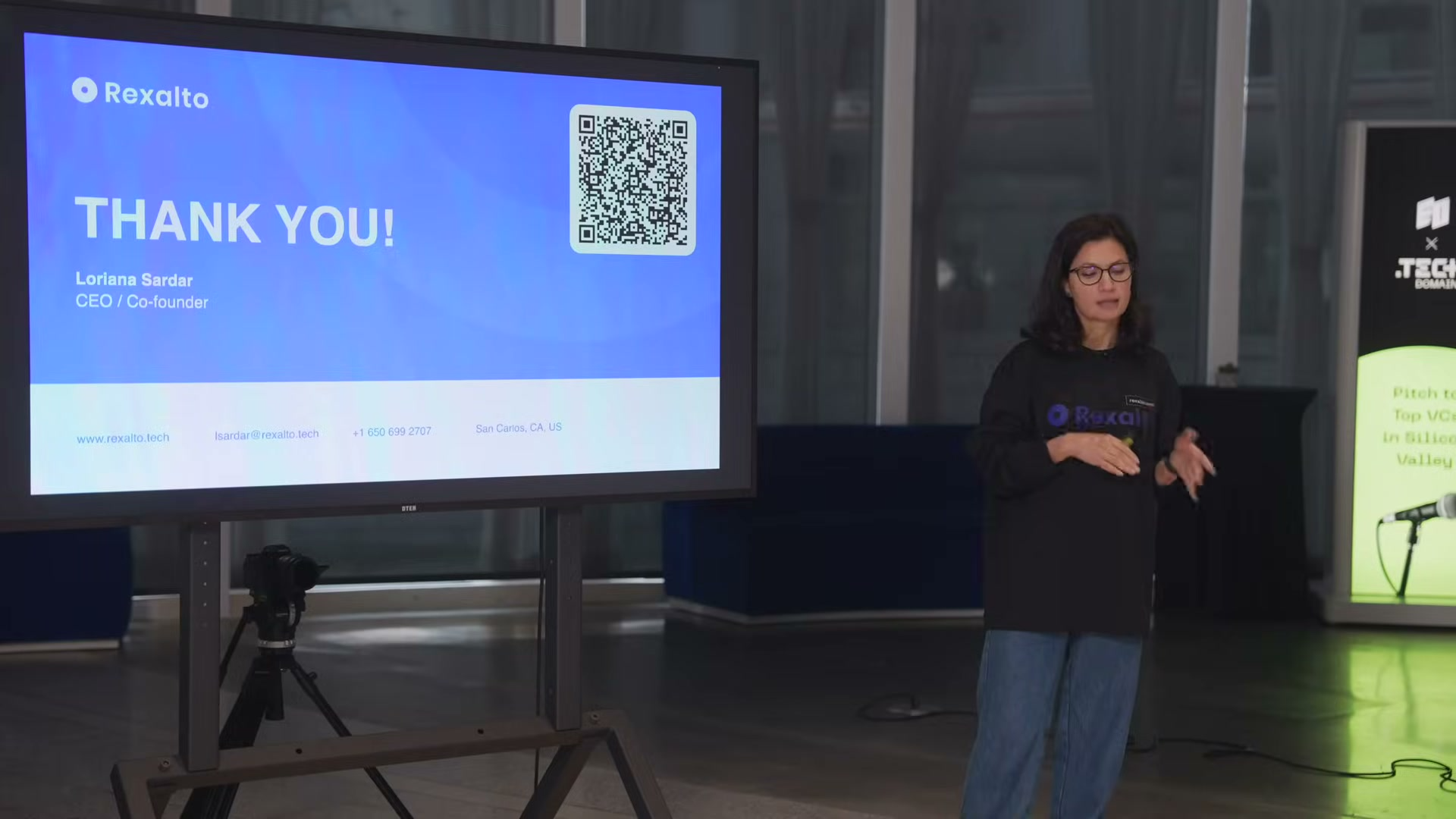
The AI Reality Check
What makes their dynamic pricing engine better than the competition, and where exactly does the AI come in?
Lorina: First, as I said, it's the number of data points that our engine can absorb and make decisions and judgment. You saw that we have AI at the beginning of this - every company does. Yes, I'll tell you where the AI comes in. So it's a bunch of models that work together. This is not AI, but where the AI comes is that every time our model works in a certain location for a certain customer, it learns from its past performance and next time makes better predictions, makes better assumptions, and improves the quality.
The worst result that we had was 5% of revenue increase. Our best was 6 times, but that was a very particular case - a luxury car rental company. We analyzed the supply and said it's Dubai, end of December. There are 2 Lamborghinis available and there is demand for 100. You can put whatever price you want, you will still sell it.
They called me - they were like 'your system is crazy. It tells me to put this price. Something is wrong.' I looked into this and said that's what you should put.
The worst result that we had was 5% of revenue increase. Our best was 6 times, but that was a very particular case - a luxury car rental company. We analyzed the supply and said it's Dubai, end of December. There are 2 Lamborghinis available and there is demand for 100. You can put whatever price you want, you will still sell it.
They called me - they were like 'your system is crazy. It tells me to put this price. Something is wrong.' I looked into this and said that's what you should put.
John Whaley's brutal assessment: "Right, that doesn't sound like an AI recommendation."
John Whaley: Right, that doesn't sound like an AI recommendation, but yeah, yeah.

The Revenue-Sharing Model Disaster
Why not charge based on performance rather than a flat per-car rate if the results are so compelling?
John Whaley: I noticed your pricing model is that you're charging per car, and if you actually are really confident about the ROI you're going to get, why are you not saying 'hey, you're going to have 90% uplift and we'll just take 10% of that'?
Lorina: One customer did that and I was telling my team let's move into that. We will make sure our customers do better and we'll do better. It didn't work. We still have one customer on that contract and I'm just waiting for the contract to renew to get away from it.
The reason why - you always have to have a baseline. So what are you comparing to? Usually you compare oranges to oranges, December to December, January to January, but then when things like Easter or Ramadan happen, they move from one month to another. Yes, but the increase was not because of your pricing model, but because Easter was in this month and last year it was in a different month. So much time is spent on this argument because they don't want to pay you more, they want to pay you less.
We said at this point we cannot do this. It's crazy. So we said we want to be clear and straightforward. We'll do standard pricing per car per month, and that's good enough.
Lorina: One customer did that and I was telling my team let's move into that. We will make sure our customers do better and we'll do better. It didn't work. We still have one customer on that contract and I'm just waiting for the contract to renew to get away from it.
The reason why - you always have to have a baseline. So what are you comparing to? Usually you compare oranges to oranges, December to December, January to January, but then when things like Easter or Ramadan happen, they move from one month to another. Yes, but the increase was not because of your pricing model, but because Easter was in this month and last year it was in a different month. So much time is spent on this argument because they don't want to pay you more, they want to pay you less.
We said at this point we cannot do this. It's crazy. So we said we want to be clear and straightforward. We'll do standard pricing per car per month, and that's good enough.
Customer Backlash and Brand Risk
How do you handle customer resistance to dynamic pricing and the brand risks associated with surge pricing?
John Whaley: Customers don't like dynamic pricing because it's like 'wait a second, you got a different price than I got when I went to book this.' There's a lot of backlash around surge pricing and these sorts of things which ultimately ends up being a brand risk. Even though they could potentially try to do this, they're careful about when to do this. What are your thoughts on that?
Lorina: First of all, revenue is not the only reason our customers use us. In many cases they want to avoid human mistakes. Most of them look at competitors' prices and they do manual adjustments. The level of complexity - you have different car codes, zip codes, cars are divided into codes. You have different lengths of rental - 1 day, 2 days, 3 days, etc. You have different locations, so actually the number of price points you have to change every day, sometimes even every hour, it's tremendous.
If you do it all manually, you make mistakes, and this is what top managers of companies tell us. We know that this is not ideal, or we often have to cut corners. We'll not put too much effort here because there's too much. So we'll make an assumption without basing their assumptions on data. So automatization of the process and pushing it back into the system is number one for many of our large companies.
Secondly, we don't change the price depending on the customer. So this is up to the company whether they want to charge different customers or have their loyalty programs.
Lorina: First of all, revenue is not the only reason our customers use us. In many cases they want to avoid human mistakes. Most of them look at competitors' prices and they do manual adjustments. The level of complexity - you have different car codes, zip codes, cars are divided into codes. You have different lengths of rental - 1 day, 2 days, 3 days, etc. You have different locations, so actually the number of price points you have to change every day, sometimes even every hour, it's tremendous.
If you do it all manually, you make mistakes, and this is what top managers of companies tell us. We know that this is not ideal, or we often have to cut corners. We'll not put too much effort here because there's too much. So we'll make an assumption without basing their assumptions on data. So automatization of the process and pushing it back into the system is number one for many of our large companies.
Secondly, we don't change the price depending on the customer. So this is up to the company whether they want to charge different customers or have their loyalty programs.

The Website Problem and Team Credentials
John Whaley delivers harsh feedback about the website and positioning, then asks about team credentials.
John Whaley: I went to your website - to be honest, looking at your website, I had no clue what you guys did. Hearing the pitch, now I have a much better idea. The copy on the website didn't come across clearly. You cover the team extremely early, which before I know what problem you're solving, it's hard to judge if this is the right team. Sometimes it's better to say that later - here's the evidence of why we're the right team to do this. What is your connection to this problem and space, and why are you uniquely suited to solve this problem?
Lorina: The reason why I showed the team in the beginning is that in our past company, when we exited and decided to do something else together, we started thinking let's share our knowledge with other companies. We definitely decided not to build another car sharing company anywhere in the world. It's a very operationally intense business. We thought maybe we'll do consultancy, but then we said let's do what we did best, and we really were best in the market in terms of pricing correctly, distributing the fleet, being considered to be the low-cost option and yet making more revenue than our competitors.
So we said let's try to replicate it for other companies. We started initially with car sharing and mobility companies, but then we said there is a much bigger market here - car rental, which is a dinosaur industry. So we started looking into that, talking to potential customers, and that's how it all started.
Lorina: The reason why I showed the team in the beginning is that in our past company, when we exited and decided to do something else together, we started thinking let's share our knowledge with other companies. We definitely decided not to build another car sharing company anywhere in the world. It's a very operationally intense business. We thought maybe we'll do consultancy, but then we said let's do what we did best, and we really were best in the market in terms of pricing correctly, distributing the fleet, being considered to be the low-cost option and yet making more revenue than our competitors.
So we said let's try to replicate it for other companies. We started initially with car sharing and mobility companies, but then we said there is a much bigger market here - car rental, which is a dinosaur industry. So we started looking into that, talking to potential customers, and that's how it all started.
The Personal Story and Final Verdict
Lorina shares her personal journey and the investors deliver their final assessments.
Lorina: I grew up in a very international environment. I'm half Russian, half Indian, so I was always exposed to different cultures. I graduated from two US universities, both in Russia, then I traveled abroad. I started my previous company together with my co-founders back in 2014. We were running the business for 8 years. I left the country in 2022 for war reasons, and it was one of the most difficult moments of my life. It was very stressful, very uncertain, and we came here to the US together with my family, with my husband.
After maybe half a year, I said I want to build something new together, something new here. We wanted to use our knowledge that we gained in our previous company and the experience that we had and the understanding of the market and share it with other companies, not only car sharing companies, but mobility companies and also car rental companies.
John Whaley: The thing I like about Rexulto is that she is a successful founder who built a very successful business before and based on that experience, has come up to solve this problem in a compelling manner. What would have been great for me is fairly early on, once she explains the product, to have a slide that says 'I have 6 customers right now.' Because in the beginning, I'm wondering - is this an idea? Does she have customers? Does it work? But if I know she's got 6 customers that like it, then I know this is great.
All the pitches talked something about AI. To be honest, many of these are more like a buzzword. They were using it more like a buzzword. They need to talk about AI, so let's try to craft an AI story onto our business. They didn't really talk about why they're using AI, why this is important.
After maybe half a year, I said I want to build something new together, something new here. We wanted to use our knowledge that we gained in our previous company and the experience that we had and the understanding of the market and share it with other companies, not only car sharing companies, but mobility companies and also car rental companies.
John Whaley: The thing I like about Rexulto is that she is a successful founder who built a very successful business before and based on that experience, has come up to solve this problem in a compelling manner. What would have been great for me is fairly early on, once she explains the product, to have a slide that says 'I have 6 customers right now.' Because in the beginning, I'm wondering - is this an idea? Does she have customers? Does it work? But if I know she's got 6 customers that like it, then I know this is great.
All the pitches talked something about AI. To be honest, many of these are more like a buzzword. They were using it more like a buzzword. They need to talk about AI, so let's try to craft an AI story onto our business. They didn't really talk about why they're using AI, why this is important.
Explore more