At a Glance
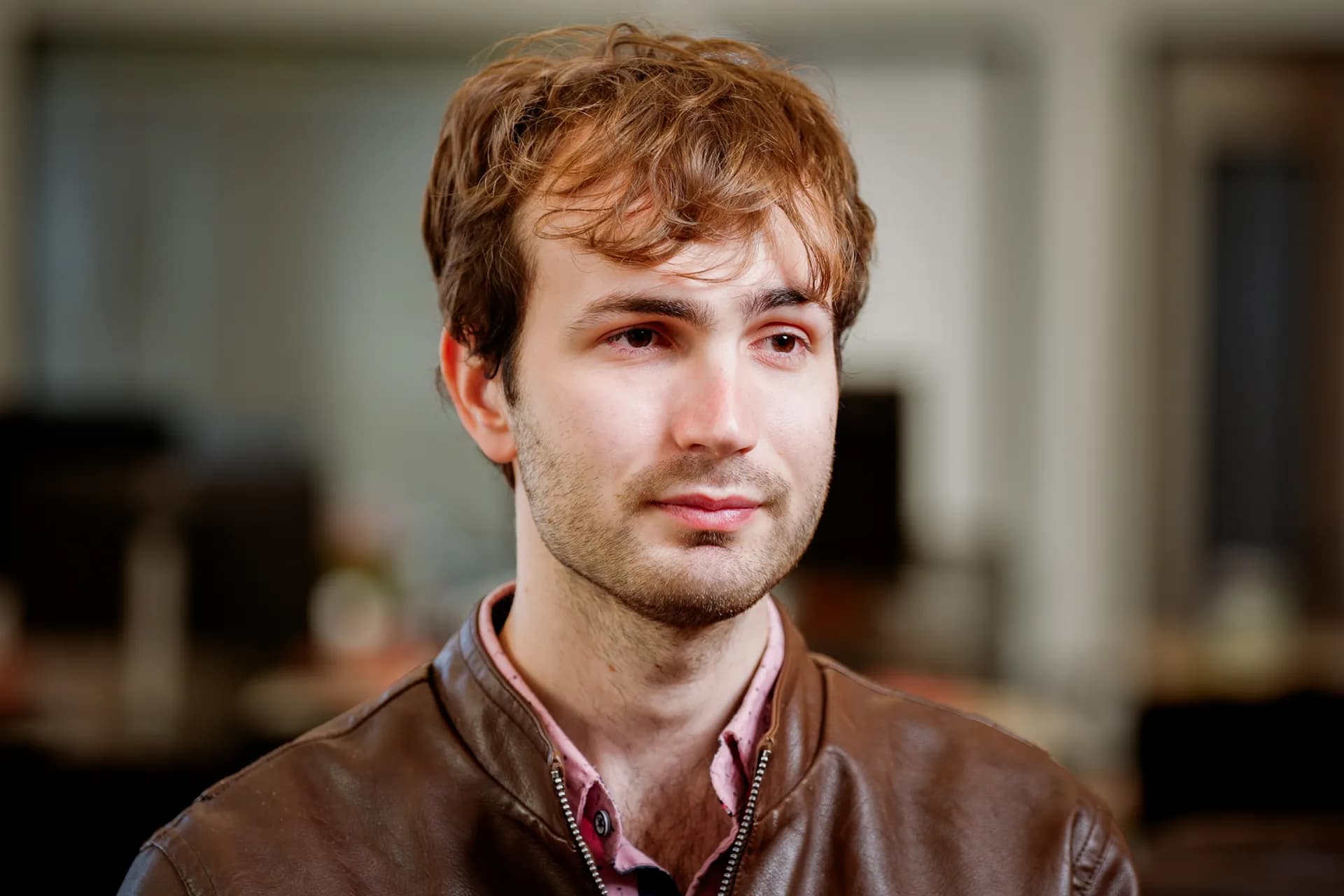
- Who: Pelu Tran is the CEO and co-founder of Ferrum Health, who left Stanford Medical School months before graduating to found his first company, Augmedix, and later founded Ferrum Health after his uncle's cancer diagnosis was missed.
- What: Ferrum Health makes clinical AI tools accessible to doctors and patients, building a platform that helps health systems consolidate and deploy AI diagnostic tools like lung nodule detection models.
- Traction: Ferrum Health has closed a $16 million Series A round and raised $31 million in total funding.
In this interview, Pelu Tran explains why he left Stanford Medical School months before graduating, how his uncle's missed cancer diagnosis pushed him to found Ferrum Health, and why he believes you've got to be really comfortable with everyone thinking you're wrong for a really, really long time.
Key Takeaways
Chasing a New Technology Only Works If It Solves a Real Problem
Tran says Augmedix survived the collapse of Google Glass because the company had found a real problem, clinician documentation burden, rather than chasing the hype around wearables. He warns that founders who go looking for a problem to fit a hot new technology usually fail once that technology's moment passes.
A Family Tragedy Turned a Skeptic Into a Believer
Tran was skeptical of AI diagnostic tools until his uncle's lung cancer went undetected for almost five years despite receiving what should have been excellent care. Running an open source lung nodule detection model against a hospital's scans for just three days surfaced nearly 50 patients with significant undetected findings, convincing him Ferrum Health's mission was urgent.
Founders Have to Survive Being Ignored, Not Just Being Doubted
Tran says Ferrum Health spent years feeling irrelevant during Covid, when healthcare companies that weren't solving a pandemic-specific problem struggled to sell, before AI hype eventually caught up to the problem the company had been solving all along. He says staying focused on an enduring problem, rather than the hype cycle of the moment, gave Ferrum Health a head start once the market turned.
Success as a Founder Means Being Comfortable Looking Wrong
Tran says he hasn't seen a single iconic company where people didn't think the founders were out of their minds for the first few years. He argues founders need to be comfortable convincing skeptics over and over, rather than seeking the social approval most people crave.
Don't Ask Customers for the Answer, Ask Them for the Problem
Tran says first-time founders often make the mistake of asking hospital partners to simply tell them what to build, but hospitals usually can't say what's technologically possible. He says Ferrum Health instead asks hospitals to define the problems they're trying to solve, security, patient safety, productivity, and turns down partnerships that don't align with what the company actually solves.
Below is the complete transcription of the interview. Minor edits have been made for clarity and readability.
Introducing Pelu, Co-Founder of Ferrum Health
My name is Pelu Tran. I'm the CEO and co-founder of Ferrum Health. Ferrum Health is a company that is trying to make clinical AI tools accessible to the doctors and patients that need it. We just closed a $16 million Series A round, we've raised a total of $31 million. Our success is going to occur by enabling big tech, big healthcare, governments, AI developers, by enabling everyone in the market to be able to collaborate and deploy AI the way it needs to be deployed.
Quitting Stanford Med Months Before Graduation
I was months away from graduating from Stanford Medical School when I actually decided to go on leave to start my first company as a medical student. Kudos to Stanford Med for allowing us to be extremely flexible with our time. I was one of those students who had my hand in all sorts of different pies. I was doing device work, working on side projects with friends from the business school and the medical school, and Augmedix was really at the beginning, just one of those side projects. As a medical student, I was working in the county hospital here in the Bay Area. That was a nightmare.
I was there while they were transitioning from paper records to electronic records, where doctors were losing track of patients. No one could figure out where medications were. People were burning out and spending three, four times as much of their day on documentation as they were before. Back in the day, this was when Google Glass was still emerging onto the scene; everyone thought it was going to be the advent of the wearable era, and that emerging technology intersected with the real pain points I was seeing in my day-to-day life as a medical student.
We founded Augmedix because we wanted doctors to spend their day taking care of patients rather than documenting patient records.
Augmedix and Google Glass allow a scribe located off-site to securely see and hear what the doctor sees and hears during an exam, in real-time video.
We showed pretty early on that writing the notes for the doctors actually allows them to deliver better care as well. Two or three years into my first company, I was still considering going back, still thinking: at what point do I maybe leave the company, go back to medical school, become a doctor? But once we saw our technology being used to deliver care to thousands of additional patients a month, I realized, wow, I have already had more of an impact on healthcare than I would have had in my entire career as a doctor.
We went to Sand Hill Road and to the venture capital firms there, and we were able to raise a round of funding off of that idea, and we spent a few years trying to build out the company and prove out the idea, and ultimately continued to stay on leave from medical school as the company grew.
A few years into the journey, I think the whole world started to realize that Google Glass probably wasn't going to be a thing. So we had to figure out, what are we going to do with this company and with this mission if Google Glass isn't going to be a thing, and if our company's brand has been built off of that so far. Because we had that really clear mission, because we knew it's not about the Google Glass, it's about what we believed the glasses could solve for healthcare, we were able to pivot and pretty rapidly launch tablet and phone-based versions of our software that, instead of sitting in the doctor's face, they would cart around as a tablet or bring around in their pocket. That still did the same thing.
I think what that taught me is that if you go into a new technology looking for a problem, you're probably going to get pretty far, but ultimately fail. I think the difference between Augmedix, which we were able to continue to grow over time, and a lot of these companies is that we started off as a technology looking for a problem. But we just happened to find a really, really big and important problem, and that allowed us to stay alive.
Moving forward from that, I have become really, really careful around new technology trends. Even AI, the new wave of Gen AI, telemedicine through COVID, all of those boom and bust cycles, they all occur around emerging technologies. They never occur around endemic pain points.
And so Gen AI today, yes it's promising, yes it's going to change the world. Is it going to change the world to the scale that everyone is saying it will, at the timeline that everyone is saying it will? Guaranteed? Not. It's because we always tend to overestimate these technologies in the near term. Over the long term, they will have an impact, but that long term is a longer time frame than any one startup is able to weather.
Staying the Course When Everyone Says You're Wrong
During that journey, I actually had an uncle pass away from late-stage lung cancer that was missed by his doctors. It was a really frustrating experience for me and my family, because I was already a successful entrepreneur in the digital health space. When we were providing care for him and talking to his doctors, he was receiving the best care in the world.
He was going regularly for his screenings; he did everything right. But because his doctors weren't using the most modern of tools, a lot of these AI diagnostic tools around lung cancer that have been launched over the past decade, he wasn't able to actually have his cancer caught in time. In fact, it was missed for almost five years.
He would have benefited so much from technology, from AI tools. His doctors wanted to use those tools, but hospitals weren't able to actually adopt AI themselves directly. At some point, someone was going to solve it; the question was how long it would take to solve. What we realized was, if we don't start this company, it is extremely unlikely that someone else will and succeed. Ferrum Health is our attempt at trying to solve this disconnect between the technology that's out there and the need for a platform that allows for the consolidation of AI vendors into a single point.
Back when we first started the company, I was really skeptical about how good these AI tools actually were. Some patients and some hospitals that we worked with in Asia, that we launched our pilot product initially, and that was an open source lung nodule tool, something that was made available online for public use.
We ran it for three days across their scans, and we basically looked to see how many patients this model found that the doctors didn't find. Three days later we're like, oh wow, there are almost 50 patients here who have very significant findings. It makes the mission of the company just so urgent.
We happen to have a tailwind of AI hype, maybe it lasts one more year, maybe it lasts three more years, but hype cycles come and go, and there's going to be a time when that hype is no longer there. But for us, we solve a real problem that endures over time. At some point, you have to be solving a really important problem, or you will never be able to claw your way out of that experimentation.
Early stage, most early stage founders, first time founders that I meet, are overly focused on building a really good technology product, and not enough focus on identifying the exact pain point and problem they're solving. Figuring out what matters, what are the risks that I need to de-risk, and proving that out even manually, just by doing it with an Excel spreadsheet or with a human being in the background, rather than having to launch the whole product and spending all that money before you've tested out those initial assumptions.
COVID was brutal, and this is not a super exciting kind of thing to bring up, but COVID was absolutely brutal. It was especially brutal because the general perspective was, wow, if you're a healthcare company, you should be doing great. But the actual reality was most healthcare companies were dying, because no one was able to sell unless you were very specifically solving a Covid problem. Honestly, we don't have that much to do with global pandemics; we're solving an AI deployment issue for health systems, and that just wasn't a priority.
So keeping the team motivated, keeping our investors and stakeholders and customers aligned and engaged and excited about this problem when nobody cared about it for years and years and years was really difficult.
More patients died due to delays in care than died from COVID. We're going to keep focusing on what we're going to focus on, and we're going to try to build the best business we can around this and survive until everyone else kind of gets there. I think that easily could have led to the company's collapse, but what that has allowed us to do, now that AI is hot, now that hospitals are looking at platforms, now that all of our original theses when we founded the company have come to bear, and we've stayed focused on that problem for the past five years, is that we are again incredibly well positioned, and we've got such a head start on the broader market.
In order to actually succeed as a founder, you've got to be really comfortable with everyone thinking you're wrong for a really, really long time. I still have not seen one example of a massive, iconic company where everyone didn't think that they were completely out of their mind for the first few years. As a human being, you usually look for societal approval; as a founder, you kind of have to be comfortable not just not having that, but being able to convince people who otherwise didn't see it the same way you did that you were right. You have to get used to everyone either not knowing what you're talking about or thinking you're wrong, and be comfortable, over and over and over, convincing them why what you're doing is the right approach and why it matters.
Overcoming the Downsides of Starting Young
A lot of my classmates are now super high-powered, specialized doctors who are making a ton of money, and it's easy to look at that and think, "Hey, if I just stayed as a doctor, I would be some badass surgeon doing XYZ thing, especially as my friends are all now saving a ton of lives day to day." It's an incredibly rewarding profession that I never had the chance to actually go into, but that's probably one of the sacrifices and trade-offs I had to make. I just have to look at the hundreds and thousands of patients that our technology is saving and say, "Listen, I'm not going to do it directly, but we're still going to be able to deliver a lot of impact in society, and that's enough for us."
You kind of have to start companies at a young age, because your risk appetite goes down as you get older. The downside of starting a company when you're young is the lack of industry knowledge, the lack of industry connections. I think it's much easier to solve those problems just by being diligent, networking and connecting with people, and being open-minded; you can solve those problems. As a young person, for first time founders, it is really, really easy to just go to hospitals, go to partners and say, hey, what is it that you need, tell me and I'll just deliver it for you. But the real challenge is that these are problems that health systems oftentimes don't know how to solve.
So if you're looking to them just to give you the answers, they don't know what's possible technologically. Oftentimes they're not sure how the market trends are moving, and so they're not going to be able to tell you what the answer is. What they're really, really good at is telling you what the problems are. So when we go in and we work with hospitals, we always make sure to align around, "Hey, what are the problems they're trying to solve?" It's different depending on the hospital; some hospitals really care about delivering the best care possible to the patients, and they want to use these AI tools for that. Many others care a lot about productivity by being really clear up front about, "Hey, we solve the security problem; we solve the patient safety problem."
And if those are problems that you have, let us help you, and if they aren't, great, you are not the right partner for us, we're going to go focus our time elsewhere. That's tough for startups to do, because if you're looking at revenue and you otherwise don't have it, that can be a really difficult decision to make. But as a result, every one of our customers really loves the fact that we solve a problem that they really care about. I think that's been pivotal to us being able to have this trusted advisor relationship with all of our hospital executives, and Ferrum is not going to be able to be the one platform that everyone, everywhere in the world uses for everything.
Our success is going to occur by enabling big tech, big healthcare, governments, AI developers, by enabling everyone in the market to be able to collaborate and deploy AI the way it needs to be deployed. I don't think of Ferrum as this kind of search bar for the internet, or as Uber for taxis, I don't think we're going to be this dominant front force. I think we are building the pipelines, we're building the tooling, the picks and shovels that ideally everyone everywhere is using. If you can make AI truly fungible, truly liquid, truly zero cost to adopt, then you end up with that future state that I talked about, which is a fundamentally transformed healthcare system.