
Jun 17, 2023
The most valuable lesson from our defeat to Tiktok
Interview with Jungsuk Jay Lee, Founder of NAVER Z
Founder Focused

💡
At a Glance
- Who: Jungsuk Jay Lee is the Head of the ZEPETO US team and CEO of NAVER Z USA. A former indie rock musician, he entered tech as a sound designer at Devsisters, worked at Intel-acquired Ola Works, and co-founded Buzz Music.
- What: NAVER Z operates ZEPETO, a 3D avatar social metaverse platform that enables users to express identity, build virtual environments, and connect globally.
- Lesson: How to navigate competitive defeat against capital-heavy platforms like TikTok, execute clean team acqui-hires, and prioritize human empathy over rigid metrics.
Jungsuk Jay Lee transitioned from a career as a recording artist into startup product management, helping build early mobile games before co-founding music app Buzz Music. When TikTok acquired Musical.ly and heavily outspent competitors, Lee negotiated a full team acquisition with NAVER Z to protect his employees and investors. Today, Lee leads US operations for ZEPETO, expanding its 3D avatar metaverse platform across global youth markets. His narrative illustrates how leaders handle strategic failure, why personal humility matters when navigating stock outcomes, and how authentic relationships form the foundation of long-term career growth.
Key Takeaways
Unexpected Connections Can Redirect A Career
Jungsuk Jay Lee moved from pursuing music into technology after meeting people connected to Devsisters through a casual social connection. A low salary paired with meaningful stock and room to learn product work gave him an unexpected entry point into a new career.
Small Early Roles Can Reveal Hidden Upside
At Devsisters, Jungsuk joined as a sound designer but was allowed to explore product management and UX design. The role expanded because the company let him work across emerging ideas, showing how early-stage teams can uncover talent by giving people room beyond their initial title.
Product Market Fit Is Only The Beginning
Buzzmusiq found traction by pivoting toward music-centered social sharing, but TikTok's spending pulled creators away. Jungsuk learned that product-market fit is an opening milestone, not a guarantee, because a startup still needs the financing and scale required to compete.
Leaders Must Invite Teams Into Hard Decisions
When Buzzmusiq's direction became uncertain, Jungsuk openly shared his doubts with the team instead of pretending to have every answer. Their encouragement showed him that leadership includes setting direction and inviting team members into the creation process when the path must change.
Empathy Connects Products Investors And People
Reflecting on products, fundraising, and relationships, Jungsuk says people respond to stories and emotional connection more than metrics alone. Understanding needs and connecting with others is therefore central to product-market fit, investor conversations, and the decisions that shape a team.
Shared Spirit Matters More Than Individual Achievement
Jungsuk is prouder of maintaining strong relationships with former teammates than of the acquisition or returned investment money. His forward-looking leadership goal is to balance results with deeper connection, because a team treated only as a workforce eventually loses its shared direction.
Watch the full interview now on EO's YouTube channel! Below is the complete transcription of the interview. Minor edits have been made for clarity and readability.
Introducing Jungsuk Jay Lee, founder of NAVER Z
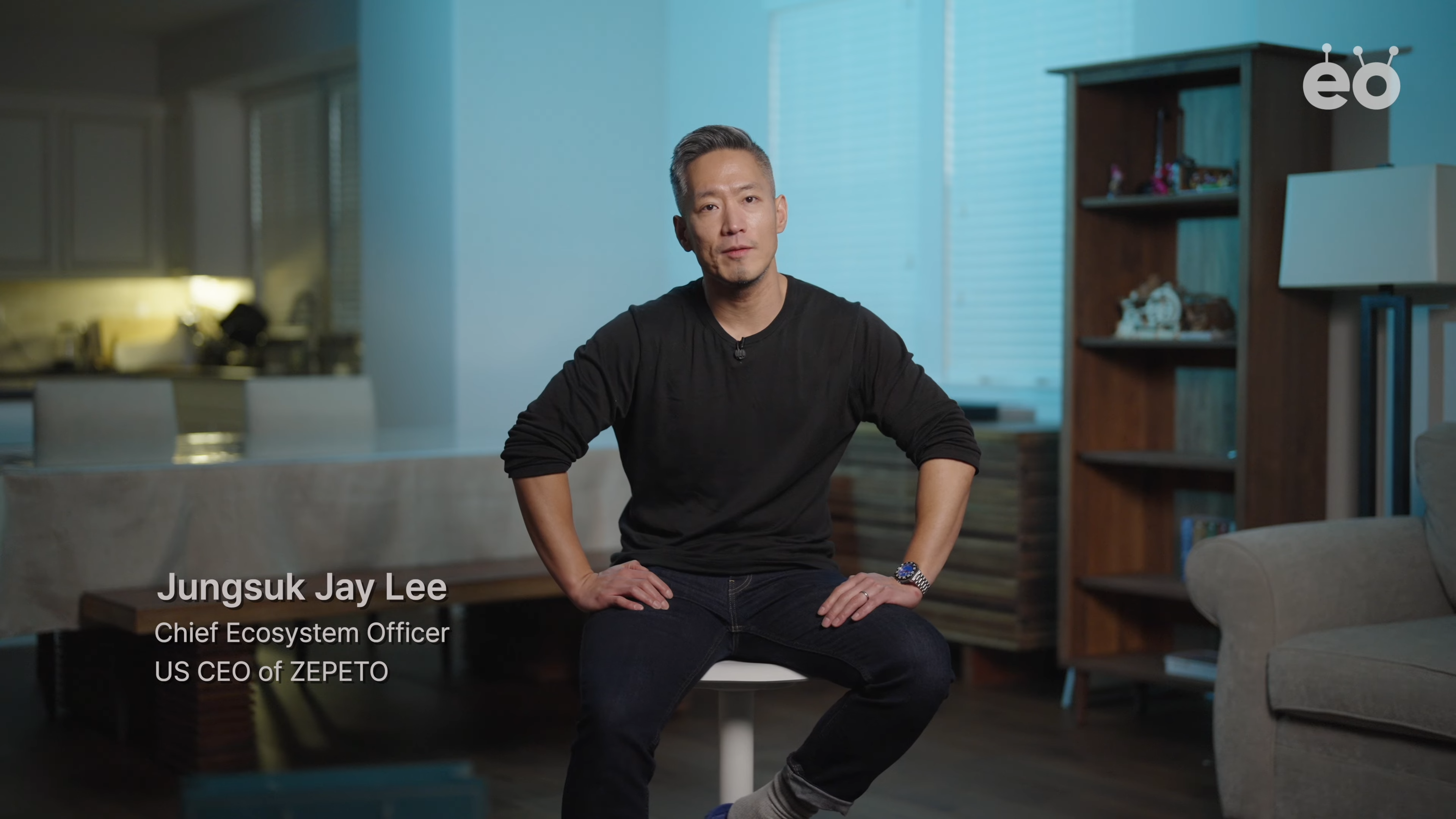
My name is Jungsuk Jay Lee. I'm currently heading the ZEPETO US team and the CEO of NAVER Z USA. NAVER is a tech giant in Korea, and you can think of it as South Korea's Google. We are operating a proto metaverse where people can express themselves, connect, create, and play.
What I learned through my career journey is that there were many things I did not feel like I had much control over. There are a lot of relationships, a lot of random things, a lot of external factors that we have to learn how to read. We have to read the waves and ride them, so I just wanted to share that perspective.
Unexpected Tides, From Musician to Technician
I grew up in Seoul. I was a cool kid, an extrovert who liked to hang out with people.
I was walking down the street after school and there was a guitar sound coming out of a building. I walked over with my friends, knocked, and opened the door, and there was this guy with a ponytail, smoking cigarettes and playing the guitar. I said, oh, you're so cool, can you teach me how to play guitar? My friends and I just called him the master. We made a band and started playing.
I told my mom, I want to quit high school. I'm going to be a rock star. I can make you happy. She said, oh son, okay, let's talk about it. Going to college is like an insurance, and it doesn't hurt to have an insurance. You have all the freedom you want as soon as you get into college, and your life is yours. Deal. Let's do it.
As soon as I got into college, I signed with a music label. I spent most of my twenties in the music industry, pursuing my passion for music as a recording artist and music producer.
Long story short, that company went bankrupt. I had to sign with another label, and another bad thing happened. Then another label, and another bad thing happened. I think I'm beating myself up, thinking, what's wrong with me? What are the things that I can do for now?
I had a friend from the same school. She invited me to her place and I met two surfer dudes there. That was the day that I had done a recording of my songs. I said, hey, check this out, what do you think? And they were like, oh, cool stuff. So they remembered that I was a music guy.
A few weeks later, or a couple of months later, one of the surfer dudes reached out to me and asked why I didn't come over to his office. There was a group of people there. It was Devsisters, later known as the developer of Cookie Run. They introduced themselves as people from the internet industry and the game industry.
Suddenly the CEO was asking whether I was interested in working with them. I said, you're a bunch of techies and I'm a music guy, what do you expect from me? I don't remember the exact wording, but it was something like, this is new, we all have to learn, and we don't know what would bring success. I said, okay, sounds good. And how much are you paying me?
He was basically saying that I would only get $1000 a month, but there was a 1% stock. It could be a piece of paper, or I might be able to buy a house with it. Here is an unrealized value, and the worth of the company is up to us. He asked whether I wanted to be on this boat, and I said yes.
I remember my college friends asking me, hey, you wasted seven years, what are you doing? You're doing this venture thing at a company I have never heard of, instead of getting yourself prepared. I said, you do your thing, this is what I'm passionate about.
I joined the company as a sound designer and I was making all the sound effects for games and the background music, but they allowed me to work on any new project ideas as a product manager or a UX designer. They would say, why don't you flesh out the detail, the workflow, the wireframing, and they trained me. That's how I started my career, when I was 26.
Basically all healthy Korean guys have to go to the military. It's your duty as a citizen, and there's a substitute program. You can either serve at a military base as a GI, or you can work as a researcher at a lab at a university or at a private corporation, and that research position was not ready, so I had to find another company.
I joined Ola Works, a computer vision technology startup, 12 years ago. They already had an augmented reality browser, and that company ended up being acquired by Intel. I did a lot of work to bridge the gap between Korea and the US headquarters on many different projects, and I was so ready to move to Silicon Valley. So as soon as I finished my military duty, the next day I flew to San Francisco and started my new chapter.
Triumphs and Tribulations
I moved to San Francisco in 2014. In 2016, I've co-founded Buzz Music with my best friend. We wanted to build something that required very minimal input but could sense this person's context and provide the most contextually aware recommendation of music, based on the timing, in the early morning versus at night before going to bed.
Then we looked at a more younger audience, so maybe they were open to new ideas and new apps, because they were more digital native and grew up with iPhones. What they were basically saying is that music to them is more of a social medium. It matters more what kind of music I listen to, and they share this with their friends.
When the company was founded, it was 2016. There was no TikTok in the US. There was only Musical.ly, and when we decided to make a pivot, we found an opportunity. Musical.ly was full of 12 year old kids doing lip sync and dance. But what if all the high school kids and college kids shared their music? This is my workout jam. So we saw an opportunity as a sort of music centered social media, when there was no TikTok.
We were able to recruit a lot of content creators who wanted to build a playlist and express their lives through videos, add music to it, and share that playlist or share a single song. Then they were asking for more fun ways to express themselves, like visual effects. It became less of a playlist and more of a single song and a music video of the moment, and they started sharing that piece. So the growth metrics took off after we made a pivot.
The problem is that these content creators stopped posting a lot, and we had to question what was happening now. Life is funny. TikTok acquired Musical.ly and started pouring out money, and these content creators were telling us they were getting paid by TikTok. Sorry, your product is pretty cool, but my time is limited.
We realized that finding a good product market fit is only the beginning. We needed to find ways to either scale the company really, really big. It's more of a financing game than a building a good product game, because TikTok was pouring out money and it was just investment, and we didn't have the luxury to pay creators.
No, we couldn't really imagine it. I told my team, I'm not sure what my vision is now. We made a pivot and did another try, but we also started having conversations with potential buyers.
It's about this process of ego shattering. It's an identity shaking process. I thought I was good at building things. I thought I was good at reading what people want. Who am I if they don't like my work? I had to find peace.
Through these ups and downs, as much as your achievement could feel important, maybe it's more important to be a more real human, learning to share your vulnerability and asking for help. It's definitely not an easy process.
It's hard to say sorry. It's hard to tell anyone around me that that was my mistake, because I had this huge burden that I was the leader, I was the founder, and I had to set the direction. Yeah, of course leaders should set the direction, but leaders also should be able to invite the team members into the creation process and walk them through where we are. We have to decide. Do I want to build a tool? That's not what I co-founded this company for. Was your dream small enough to go into this tool route?
There were a lot of questions, and when I shared them with the team openly, they were more encouraging than disappointed. They were more like, I've been waiting for this moment that you opened up.
The angel investors who invested in Buzz Music were basically my previous managers from Devsisters and from Ola Works. Not returning the money to them was, for me, a kind of personal failure, an even bigger failure. I wanted to be faithful and I wanted to really appreciate their support and their trust in me. I didn't want to let them down.
There were a few companies that offered alternatives. Forget about the company, just dissolve it. For the investors it's part of the game. They don't get the return for every single investment, so it's totally okay. Why don't we use that money instead to give you a big sign on bonus check? I told the team that that's not what I wanted to do.
We decided to find a buyer who would acquire us as a whole team, not excluding anyone. That was the last thing that I could do for the investors, appreciating that they put their trust in me. So in 2020, as of February, the company got acquired, and my new responsibility is building a US team for ZEPETO.
A New Chapter Begins
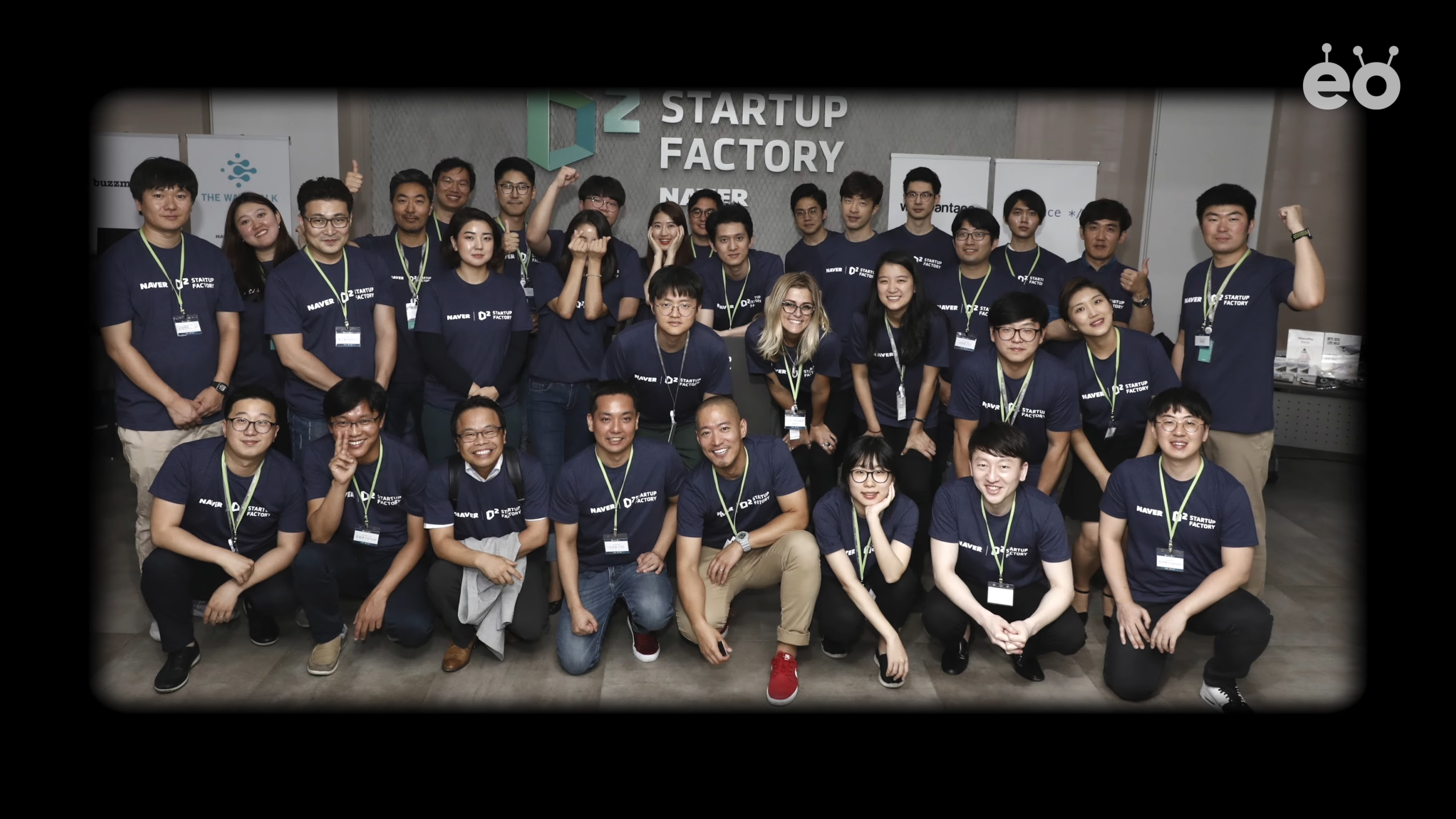
Life is full of unknown. You don't know what's going to happen. How did I know this random surfer dude would introduce me to a new opportunity? We started as a mobile app developer. Let's build something, whether it's web or mobile based, and we were kind of open to new opportunities.
A lot of founding members left Devsisters. Evangel Capital reached out to us who had the shares, and they were basically offering to buy our shares. I said, okay, how much is the valuation, and it was pretty sizable. I could buy a nice condo in Gangnam with that money. It's not bad, I'm not even 30, it's a pretty good deal, so I decided to sell my stocks.
A couple of months later, the company went public at a 12x valuation, so it went public at a $500 million valuation.
Humility. A lot of the founding members who produced Oven Break, which later became Cookie Run, the creative people, left. My reasoning was, how much can you milk out of this one title if you don't have people who can create a new game? This company is destined to fail. That was my arrogant kind of judgment, that Devsisters lost its creative engine, that was my judgment, but I was wrong.
Yeah, humility. What I learned through my career journey is that there were actually many things that I didn't feel like I had much control over.
If I just keep getting stuck at how do I be better, how do I be more productive, then I would lose sight of the bigger picture of life, whether you build a product or content or a team, or you do the pitch.
I think people react to stories. If you can't move people's heart, all these great metrics may not even matter.
That's what I learned it's all about. Finding connections, being able to understand their needs, that's a product market fit. Or you are finding an investor, and you want to know whether they usually invest at seed stage or Series A stage. It's about empathy. You want to study in advance what their focus area is, what their focus domain is, what their focus stage is. So I think empathy, being able to connect with people and understand them, is really the key.
I don't want to miss out on opportunities to be better with people at the cost of better productivity or efficiency. We share lives together. It's not you individually making an achievement and proving your worth. It's a thing that we do as people together. I learned to value the relationships.
The one thing I'm super proud of is not that we ended up getting acquired by another company, or that I was able to return this investment money to the investors and all. I'm more proud that I still love my team members. We still stay in touch, and we really appreciate each other. That's what I'm proud of.
I will probably continue to find the balance between achieving the goal but also having a deeper connection with team members too. If we view each other as a workforce, as a contributor, just a domain expert, and if there's no shared spirit that we're looking at the same direction and we're on the same boat, it will break down. That was a big learning.
Explore more