
May 23, 2024
How a $1,000 Robot Destroyed a $2,000 Rug—and Built a $30M Company
An interview with Jack, Founder of Matic
Founder Focused
Two former Google engineers just spent $1.5 million of their own money over 6 years building what they believe will revolutionize home cleaning forever.
Navneet Dalal and Mehul Nariyawala, co-founders of Matic, aren't your typical Silicon Valley entrepreneurs chasing the latest software trend. They're hardware warriors who've raised $30 million from tech royalty like the Collison brothers, Jack Dorsey, and Naval Ravikant to build a floor-cleaning robot that thinks like a human.
In this candid interview, they reveal why hardware startups dominate the most valuable tech companies, how a $1,000 robot destroyed their $2,000 rug, and what it really takes to build "level 5" autonomous robots for your home.
Watch the full interview now on EO's YouTube channel! Below is the complete transcription of the interview. Minor edits have been made for clarity and readability.
Key Highlights:
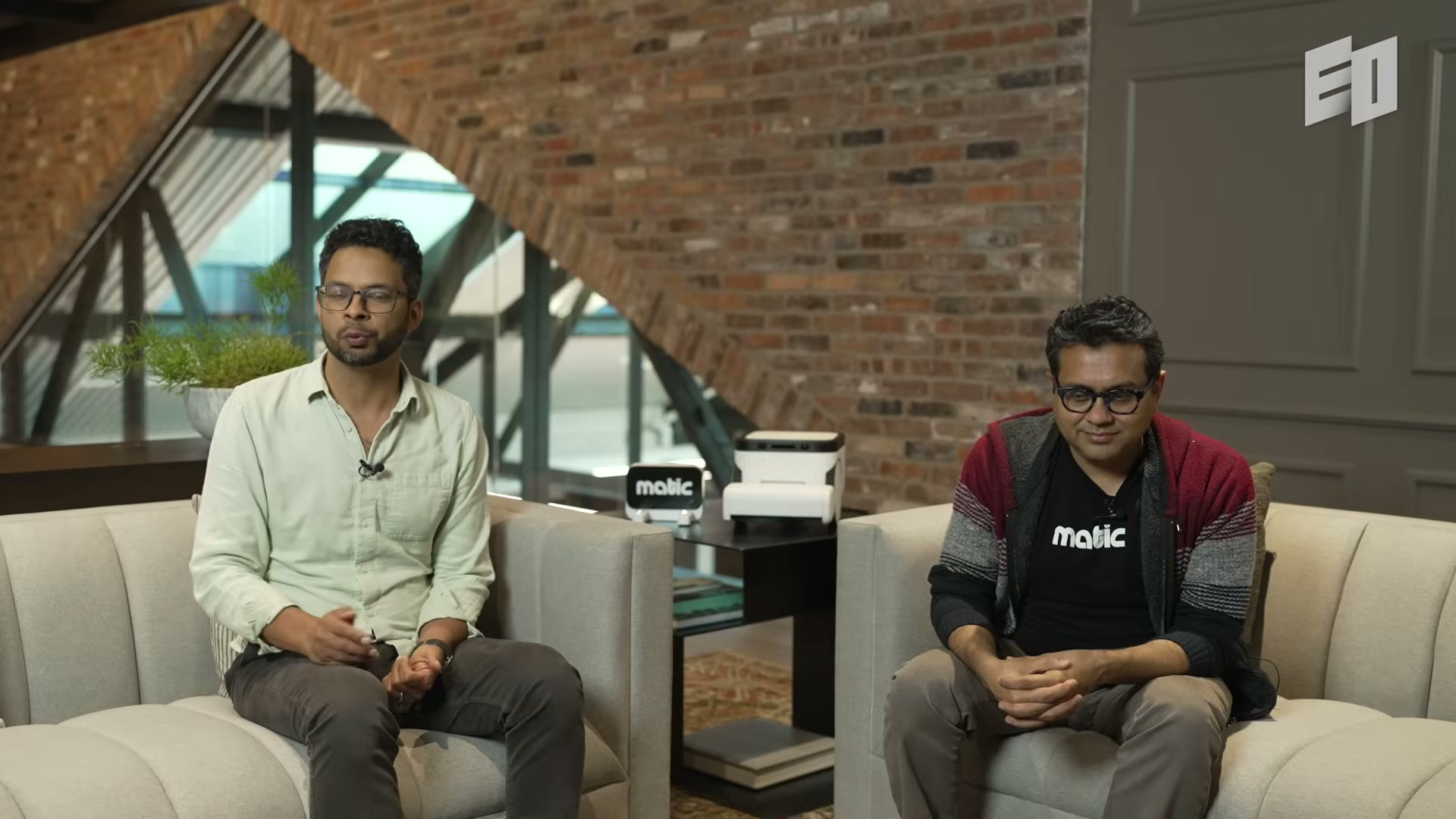
"The hardware startup is definitely not for the weak-hearted. It takes time. If you look at the NASDAQ or stock market and look at the top technology valued company, I think out of like top 54 are hardware startups. So yes, hardware startups are hard, but if you can build something amazing, then you can really build an extremely valuable [company]."
"We put in about $1.5 million during that stage of our own money... we've built about 200+ prototypes and all those are not going to be part of the production unit."
"So here's a $1000 device that ruined our $2000 rug, and I couldn't return it. So we knew there was a problem here."
"If you really want to go solve a problem, we have to do hardware as well as software because product can't be limited arbitrarily by, oh it's software or it's only hardware."
"We put in about $1.5 million during that stage of our own money... we've built about 200+ prototypes and all those are not going to be part of the production unit."
"So here's a $1000 device that ruined our $2000 rug, and I couldn't return it. So we knew there was a problem here."
"If you really want to go solve a problem, we have to do hardware as well as software because product can't be limited arbitrarily by, oh it's software or it's only hardware."
The $2000 Rug That Sparked a Revolution
What drove you to tackle the notoriously difficult world of hardware startups, specifically robotics?
Navneet: One of the things we realized back in 2017 when we had left Google and we were thinking of what do we want to work on? Honest way of saying it that we wanted to do life's work and we wanted to work on the one key aspect which is missing in the society for the next 20-30 years.
I think it just boils down to solve your own problem. That's one of the things that I had gotten golden retriever. We have a joke that my golden retriever sheds twice a year, 6 months each. I got a robot vacuum and I actually ended up buying Dyson's version of the robot and it turns out Dyson's version was really bad as well. The suction part of it is amazing, but vision part of it was really bad where it couldn't find its dock, but it got onto one of the nice rugs and it rug shed, but because it has a high suction, it got stuck on it. And when we came home and picked it up, the entire patch of the rug was gone.
So here's a $1000 device that ruined our $2000 rug, and I couldn't return it. So we knew there was a problem here. No one was solving it back then.
I think it just boils down to solve your own problem. That's one of the things that I had gotten golden retriever. We have a joke that my golden retriever sheds twice a year, 6 months each. I got a robot vacuum and I actually ended up buying Dyson's version of the robot and it turns out Dyson's version was really bad as well. The suction part of it is amazing, but vision part of it was really bad where it couldn't find its dock, but it got onto one of the nice rugs and it rug shed, but because it has a high suction, it got stuck on it. And when we came home and picked it up, the entire patch of the rug was gone.
So here's a $1000 device that ruined our $2000 rug, and I couldn't return it. So we knew there was a problem here. No one was solving it back then.
Building Indoor GPS: The Missing Infrastructure
How did you identify the core technical problem that existing robot vacuums couldn't solve?
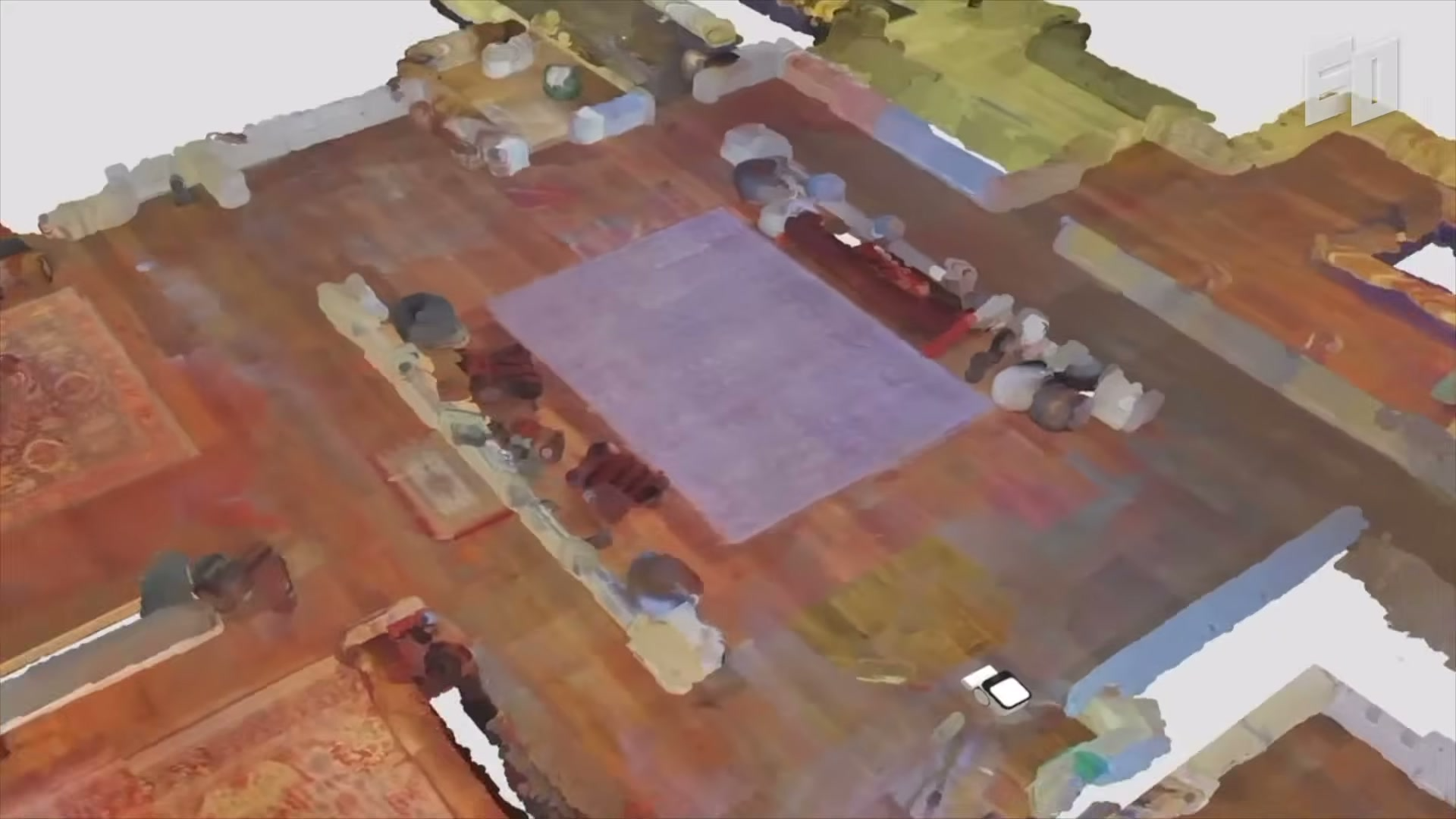
Navneet: 2016, 2017, self-driving was the space to be. Imagine trying to build self-driving cars without Google Maps or GPS, and the answer is, no matter how smart the car is, if it doesn't know where the road is going or where it's located, it's kind of useless. In the same exact way, if a robot is supposed to clean it, it has to know whether it's on the right side of the table or left side of the table, and that didn't exist.
So we thought there was a huge opportunity, and floor cleaning was funny because this is the only robots accepted in our home, even today. Yet the category is growing 25% year over year, so the problem is so intense that we're willing to tolerate inferior product.
So we asked ourselves this question that if we can build level 5 fully autonomous robot for indoor spaces, what does that mean? Well, if level 5 self-driving car drives like a human, then level 5 indoor robots must behave like a human and clean like a human. So why don't these robots constantly patrol our home, look for dirty spots, and if they find it, they should just clean it.
So we thought there was a huge opportunity, and floor cleaning was funny because this is the only robots accepted in our home, even today. Yet the category is growing 25% year over year, so the problem is so intense that we're willing to tolerate inferior product.
So we asked ourselves this question that if we can build level 5 fully autonomous robot for indoor spaces, what does that mean? Well, if level 5 self-driving car drives like a human, then level 5 indoor robots must behave like a human and clean like a human. So why don't these robots constantly patrol our home, look for dirty spots, and if they find it, they should just clean it.
The Vision-Only Gamble: Learning from Tesla
Why did you decide to rely primarily on cameras instead of the typical array of sensors?
Navneet: It was just a proof of concept. It was just like, hey, can we just do this with a camera, just like Tesla. The reason cameras alone were a really important piece of the puzzle that a single sensor you add in a hardware, you have to assume there are 3 software engineers on a flip side making sense of that sensor. So the more sensors you have, the bigger the software team. More sensors you have, the more liability. More sensors, the more failure points. Each sensor complexity rises exponentially.
Our point of view was that, hey, nature has given us 2 RGB cameras and algorithms for a reason. We don't have tons of sensors. We only have 5, and we just primarily rely on vision. So there has to be a way to get it done. And this is where we thought that let's absorb everything into the software instead of hardware, and that's a much scalable platform over the long term.
Our point of view was that, hey, nature has given us 2 RGB cameras and algorithms for a reason. We don't have tons of sensors. We only have 5, and we just primarily rely on vision. So there has to be a way to get it done. And this is where we thought that let's absorb everything into the software instead of hardware, and that's a much scalable platform over the long term.
Batman, Robin, and 200 Failed Dreams
Can you walk us through those early prototypes and the $1.5 million investment of your own money?
Mehul: We didn't have 3D printers back then, and we built a hardwood shell in some sense. We took an existing Makita vacuum cleaner and put its motor in and then put the cleaning head and attached the stereo camera with the send the Wi-Fi across the Wi-Fi, send the images to a laptop and does all the algorithms on the laptop and then send the results back on it. That was the first prototype.
Within 3 months after that, we migrated it to this tall black robot, and we built two of these, so we call them Batman and Robin, but we thought that, hey, there would be a holes on the top that you can just also clean around. You can ask for the robot to come to you and you can clean around it and put it back. And we later realized that if we are doing a very good job of the floor cleaning, maybe people can just push the dirt on the ground and let it do it, and it will allow us to build a much simpler product.
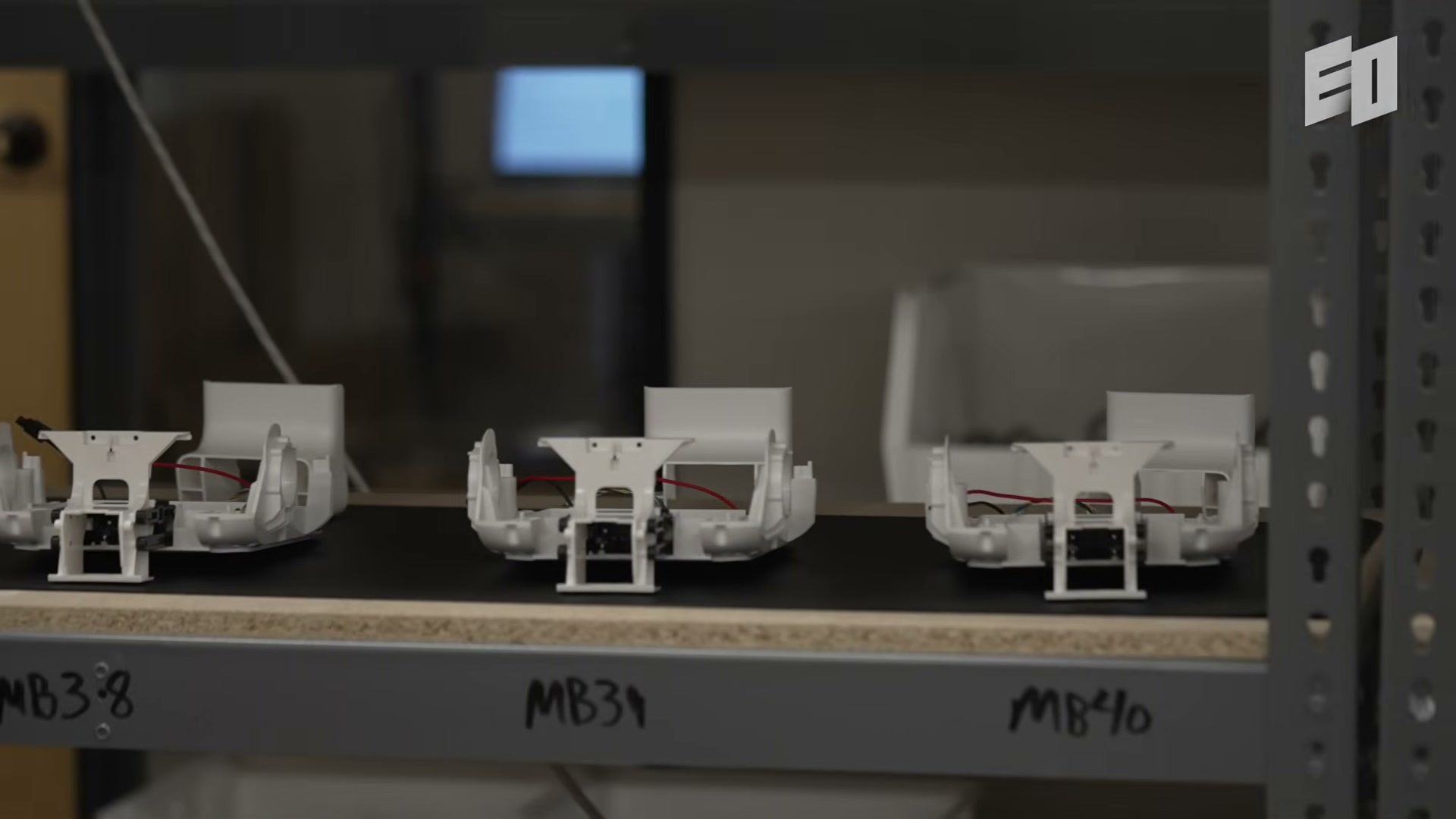
Navneet: We put in about $1.5 million during that stage of our own money. But luckily, when you start a company, sometimes the luck helps you. For us, one of that trend was that 3D printers were getting really ubiquitous. So if we had to go and use someone else's machine to build parts, that would have been hard, but because of 3D printers, we were able to shrink them down. But yeah, but overall, we've built about 200+ prototypes and all those are not going to be part of the production unit. So you can say all along the way, destroyed in some sense.
Within 3 months after that, we migrated it to this tall black robot, and we built two of these, so we call them Batman and Robin, but we thought that, hey, there would be a holes on the top that you can just also clean around. You can ask for the robot to come to you and you can clean around it and put it back. And we later realized that if we are doing a very good job of the floor cleaning, maybe people can just push the dirt on the ground and let it do it, and it will allow us to build a much simpler product.
Navneet: We put in about $1.5 million during that stage of our own money. But luckily, when you start a company, sometimes the luck helps you. For us, one of that trend was that 3D printers were getting really ubiquitous. So if we had to go and use someone else's machine to build parts, that would have been hard, but because of 3D printers, we were able to shrink them down. But yeah, but overall, we've built about 200+ prototypes and all those are not going to be part of the production unit. So you can say all along the way, destroyed in some sense.
From Flutter to Failure: The Google Acquisition That Taught Everything
Tell us about your previous company Flutter and how that experience shaped your approach to Matic.
Mehul: We have been working together since 2006. The funny story is that I would go as we were recruiting, I would go and tell other computer vision experts that, hey, my co-founder and CEO is Navneet Dalal, and he has this PhD thesis in histogram of oriented gradients, and they're like, 'Whoa, your co-founder is Dr. Dalal,' and I would always say, 'Wait, who's Dr. Dalal?' For him, for us it was just Navneet. So Navneet never shared that his PhD thesis was really popular and he was very well known in the computer vision community.
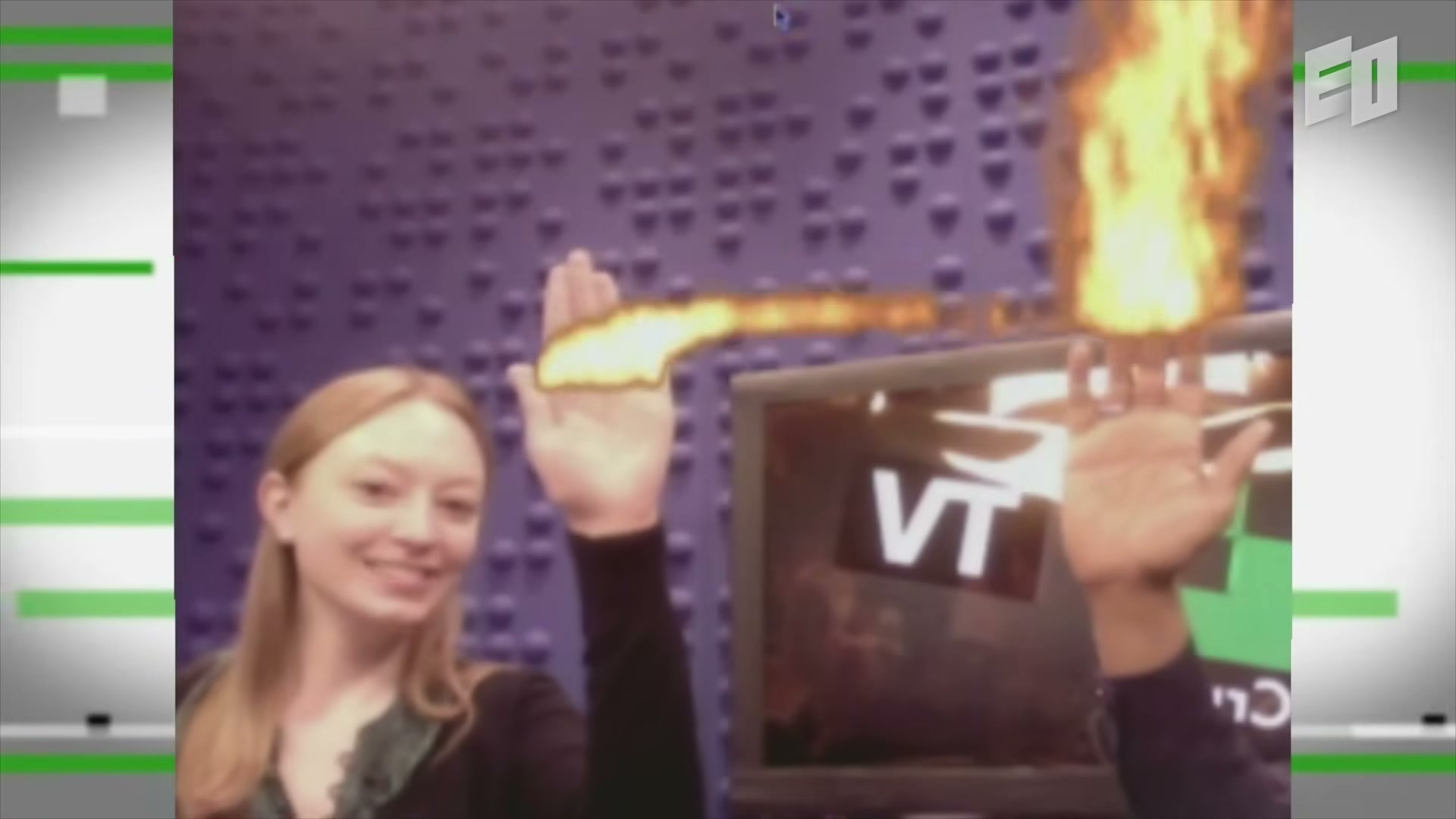
Flutter, to be honest, was very geeky thing. The idea was you use the cameras in the laptop, the front facing cameras, and you can control this laptop when watching a YouTube, Netflix, or listening to a song on Spotify by just saying play and pause... when we launched this app to allow users to control iTunes, Spotify, YouTube, Netflix using gestures, it was number 1 app in 73 different countries worldwide on Mac App Store for about 3 months. We had all together 77 million gestures performed.
Navneet: We were also part of Y Combinator back then with Flutter, and the entire time we were there, Paul Graham was still working at Y Combinator actively, and he would just come to us and look at us and say, 'Hmm, I know you guys. You guys are a technology looking for a problem to solve. Have you found one yet?' And he would repeat that over and over again.
Initially it was very hard feedback to take, but over time we realized that, hey, no one wakes up in the morning and says, 'Today I'm gonna use gestures.' That as a product isn't there. It's a really nice feature. It's a really nice technology, but it's not necessarily a product.
Flutter, to be honest, was very geeky thing. The idea was you use the cameras in the laptop, the front facing cameras, and you can control this laptop when watching a YouTube, Netflix, or listening to a song on Spotify by just saying play and pause... when we launched this app to allow users to control iTunes, Spotify, YouTube, Netflix using gestures, it was number 1 app in 73 different countries worldwide on Mac App Store for about 3 months. We had all together 77 million gestures performed.
Navneet: We were also part of Y Combinator back then with Flutter, and the entire time we were there, Paul Graham was still working at Y Combinator actively, and he would just come to us and look at us and say, 'Hmm, I know you guys. You guys are a technology looking for a problem to solve. Have you found one yet?' And he would repeat that over and over again.
Initially it was very hard feedback to take, but over time we realized that, hey, no one wakes up in the morning and says, 'Today I'm gonna use gestures.' That as a product isn't there. It's a really nice feature. It's a really nice technology, but it's not necessarily a product.
Hardware Heretics: Why the Valley's Advice is Wrong
What's your advice for entrepreneurs considering hardware startups, especially given the conventional wisdom to avoid them?
Navneet: Hardware startup is definitely not for the weak-hearted. It takes time, but if you are passionate about the problem and if you want to solve it, absolutely. The best way to say this is if you look at the top technology companies today from SpaceX to Tesla to Nvidia, these are all truly hardware companies and these are all hardware, and they're actually very, very hard to beat.
If you look at the NASDAQ or stock market and look at the top technology valued company, I think out of like top 54 are hardware startups, so yes, hardware startups are hard, but if you can build something amazing, then you can really build an extremely valuable [company].
Mehul: You've got to be a lot more patient and ask the three whys in a row, like, you know, why X Y Z thing is done in that specific manner. This is really the fundamental reason why it needs to happen that way. Another key piece is in hardware, at least to our perspective is because startups are inherently risky. You want to reduce your risk as quickly as you can.
Most of us think that, oh, building technology is too risky. That is indeed risky, but at least as a team of founders you control it. We tend to think the most risky part is the market. Is there a market? Is there customers who are really interested in buying the product or not? At the scale, you need to sell it to be a profitable business because without profitability, your business will die, and along with it all the dreams and aspirations of the future.
If you have a problem and if you can solve it just using software, then absolutely just solve it using software. There is no reason to do hardware. The only reason to do hardware, it's really a problem you can't solve without hardware. So if you're trying to build self-driving cars, then you're going to have to deal with some sort of hardware.
If you look at the NASDAQ or stock market and look at the top technology valued company, I think out of like top 54 are hardware startups, so yes, hardware startups are hard, but if you can build something amazing, then you can really build an extremely valuable [company].
Mehul: You've got to be a lot more patient and ask the three whys in a row, like, you know, why X Y Z thing is done in that specific manner. This is really the fundamental reason why it needs to happen that way. Another key piece is in hardware, at least to our perspective is because startups are inherently risky. You want to reduce your risk as quickly as you can.
Most of us think that, oh, building technology is too risky. That is indeed risky, but at least as a team of founders you control it. We tend to think the most risky part is the market. Is there a market? Is there customers who are really interested in buying the product or not? At the scale, you need to sell it to be a profitable business because without profitability, your business will die, and along with it all the dreams and aspirations of the future.
If you have a problem and if you can solve it just using software, then absolutely just solve it using software. There is no reason to do hardware. The only reason to do hardware, it's really a problem you can't solve without hardware. So if you're trying to build self-driving cars, then you're going to have to deal with some sort of hardware.
Explore more