At a Glance
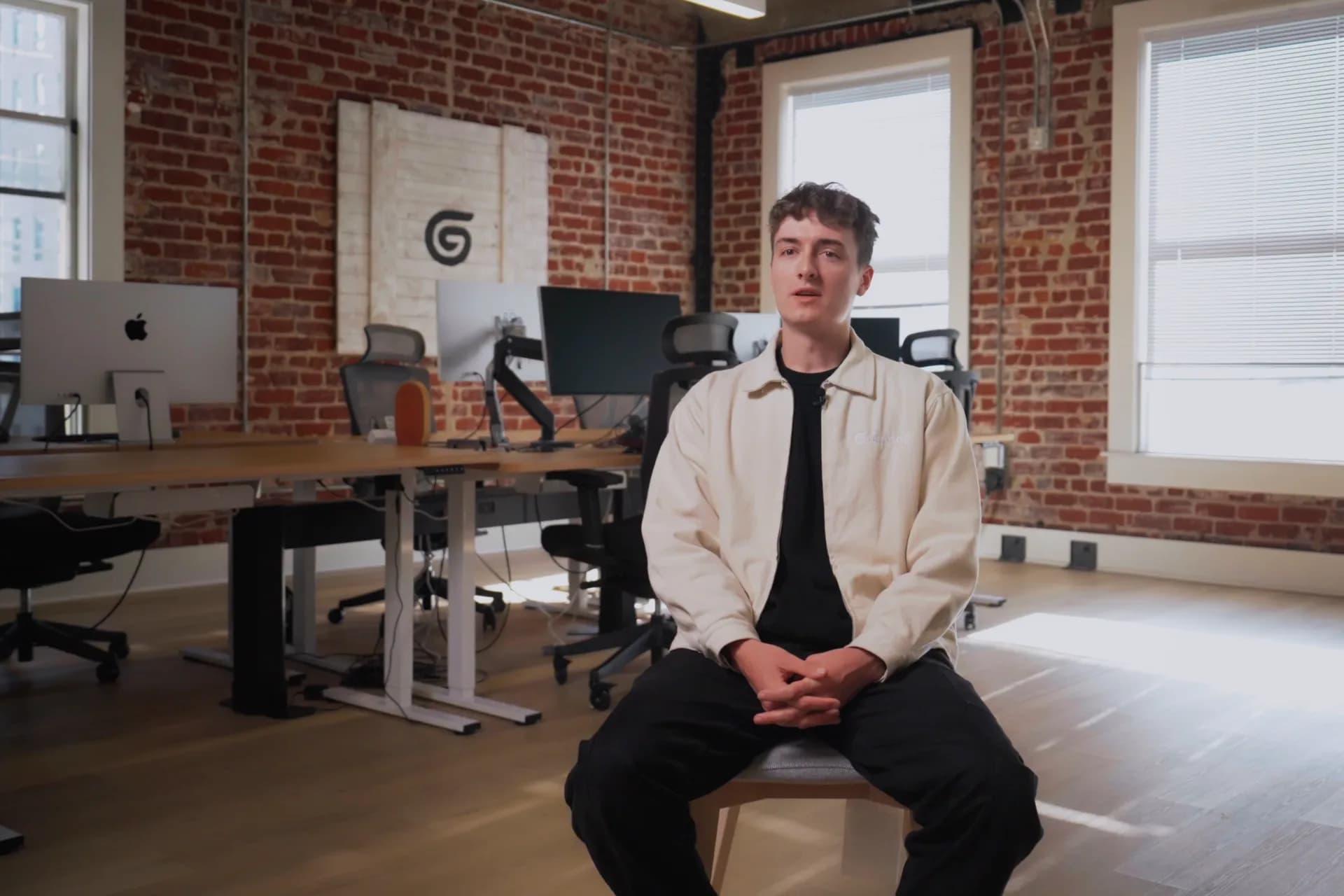
- Who: Dawson Chen is the founder of Martin; he grew up in Mountain View, studied computer science at Yale, and dropped out after being accepted into Y Combinator.
- What: Martin is a personal AI assistant, described as an AI butler like Jarvis from Iron Man, reachable by email, text, or voice.
- Traction: Martin launched its first version in September to 2,000 users and plans to add email, calendar, and phone integrations in March.
In this interview, Dawson Chen explains why he sees no disadvantage to dropping out of Yale to build a startup at 19, how a customer support chatbot for grocery stores turned into an AI assistant modeled on Jarvis from Iron Man, and what he learned from his very first user, his own dad. He also explains why he believes young founders have nothing to lose by starting now instead of waiting to get more experienced.
Key Takeaways
Being Young and Inexperienced Is Not a Disadvantage for a Founder
Chen argues that a few years spent building a startup teaches more than a few years at a big company, so by 25 a young founder who started early will out-experience someone who waited. He says he never saw dropping out of Yale as a risk for this reason.
A Tiny, Unscalable First Business Still Teaches the Right Lesson
Chen's first real business was a campus tours side hustle at Yale, where he personally recruited customers outside the admissions office. He says the size of the market didn't matter: what mattered was proving he could launch something and make users happy.
Getting Into YC Made Dropping Out an Easy Call
Chen says he almost didn't apply to Y Combinator because the deadline had passed, but once he got in, quitting Yale felt like skipping a long line he was already standing in. YC's focus on shipping to real users, rather than juggling side projects, reshaped how he worked.
The Best AI Assistant Should Feel Like a Decade-Long Working Relationship
Chen says most AI assistants fail because privacy concerns keep them from really getting to know a user, while a good assistant, like a secretary you've worked with for years, only needs to hear a fraction of a command to infer the rest. Building that personal rapport with Martin, tested first on his own father, became the product's central bet.
Vision Only Matters Once You Shift Toward the Customer's Experience
Chen says having conviction in an idea from the start is valuable, but founders have to move past their own imagination and into what users actually experience. He credits Martin's early growth by word of mouth to prioritizing retention over marketing.
Below is the complete transcription of the interview. Minor edits have been made for clarity and readability.
Introducing Dawson Chen, Founder of Martin AI
My name is Dawson Chen, I'm the founder of Martin. Martin is your personal AI butler, he's like Jarvis from Iron Man. You can email, text, or speak with Martin in our voice app. We launched the first version of Martin in September to 2,000 users, and we've been iterating with them furiously, trying to make the product better for our earliest users.
In March, we're going to be launching it with an email integration, with calendar, with phone, and you'll be able to interact with Martin in a variety of new ways. That's what we're really excited about, we've been building this for the past few months.
Boy who looks up to startups
I grew up in Mountain View, my parents were both software engineers. I think when I was in fourth or fifth grade, I just started to worship people who could code and program. I thought it was so cool to be able to build an app from scratch. We did have a lot of computer science, and I took every single one. There was also a lot of support for doing technology projects, so I was just trying to learn as many different technology disciplines as I could. By the time I graduated, I was pretty confident in tackling really difficult technical problems, and I realized that my capacity for work and for creating things was pretty high.
Right after high school graduation, I was always the guy who wanted to do a startup, not because I had a good idea, but I just wanted to do a startup because my parents were software engineers, and I did watch them growing up working at big companies. I considered it, but doing a startup was something that was really challenging, and something that I could dedicate myself to for years.
If it works, it can be huge; there's a really small chance of it working, but when you're on a journey like that, you're really living your life. If I was taking the alternative path, it feels like I would have to wait a lot longer to really start living my life, and that's sort of against most of the advice, and I knew that, but I just desperately wanted to do a startup.
My first idea was to build a social app where you could create your own song parodies. In high school for student council, I made a lot of song parodies talking about the dress code, or the snack bar, or something new happening at school. The main problem with that idea was, well, I never launched it. It took like three months to build, and I had a few friends use it, but by the time we were three months in, I was already so tired of the idea. When I finally released it to some friends, no one liked it. So that was the first startup.
I liked to code, but I also thought school was a place where I was supposed to meet a bunch of random people from different disciplines and different interests. When I visited Berkeley, for example, it looked like a lot of people who were similar to me, and we would all just be building things and hacking things during school, but I actually wanted something different. I really wanted to be immersed in the humanities and with people who are totally different from my background, so I studied computer science at Yale.
While I was at Yale, I wasn't a great student, I was mostly working on side projects. I would sort of squeeze my schoolwork into a three-day sprint every two weeks, and then the rest of the time I would just be playing cards or working on side projects. I worked on a couple of startup side projects while I was at Yale.
The first one was a one-on-one campus tours marketplace, where high schoolers and their parents basically paid me and my friends at Yale, Harvard, Princeton, and MIT, and we would give them personalized tours of the campus. When I was giving campus tours, I would basically camp outside the admissions office, and anyone who forgot to book a tour with the official Yale admissions office, I would just recruit them and then personally go and give them a tour.
I would then give them the phone number of my MIT friend, who was the next stop on their college tour trip, and then we would get our first customers like that. We had probably like 4-digit MRR, which was pretty good, but it was definitely a function of how many hours I spent standing next to the admissions office and recruiting people. Definitely not scalable at all, but it was a good business to start with.
The idea I knew was tiny; our market cap was probably like 10 million or 1 million, maybe, but I could launch something, and I could see users being happy with the product, and that's all that really mattered. I think a lot of founders who are college students might have this image of startups where you launch things, you do marketing, you do ads, and you grow things scalably, because you're building this big software business, but I naturally knew how to recruit customers, and that was my default; I was used to doing that.
Yale dropout learns at YC
We applied to YC pretty late, like a couple of months after the deadline. We were like, YC is probably impossible because it's like two months passed already, but I was a huge fan of PG's essays, and it takes like an hour to apply, so I'll just apply. We actually applied with a different idea. We were doing customer support for grocery stores, so you can imagine going to a Safeway: you could scan a QR code on the wall, and you would ask our chatbot, "Where are the tomatoes?" We worked on that idea for most of the batch, and we got two interviews with Jared, and we heard back quickly. We had the retreat about a week after we applied.
The moment I met everyone at the retreat, my first day in the YC batch, I knew that was the community that I really belonged to. I had only spent a few days, and I already felt like I just had really incredible member community fit. I decided to leave school pretty much the day after I got into Y Combinator.
For all of the second semester of my freshman year at Yale, I was looking for an excuse to drop out to start a company, because I knew that's what I eventually wanted to do. It wasn't clear to me how three more years of school would help me do better at that. There's this long line that I'm waiting in to get to the eventual point of, I can start my own company, and I had just gotten a ticket to skip the entire line, so it was like a no-brainer to me.
A big thing we learned to do in YC was to really focus. Before, in college or in high school, it was always like juggling ten different side projects. During YC we would wake up at like 9 in the morning, work the entire day on one thing, which was making the product better for our first 100 users, and we'd go to sleep and repeat, and that was seven days a week. It's like laser-focused on one mission.
Another thing I took away from YC was that at the early stage of startups, everyone is just struggling terribly, and there's no such thing as this Facebook idea or this instant hit that goes viral and starts to scale uncontrollably in the first six months or first year. It takes a lot of grinding, and it's totally normal to be lost during YC. We learned that it's totally normal to not have a really solid plan, and to just start launching things and see what users think. YC taught us to not be afraid to not have all the answers, and to launch things and listen to users.
AI assistant dreaming of Jarvis
During YC, we pivoted, and we looked for ideas for probably a couple of weeks. I think, like a lot of boys my age, I saw Iron Man when it came out; it was amazing. I got the DVD one for Christmas one year, and as soon as I finished the first Iron Man movie, I went online looking for Jarvis. Even if it didn't work at all, I would love to use this product. I was also always a big Siri power user, even though I hated the product. The reason why all the current AI assistants are not easy enough to use; they have big privacy concerns, so they won't really get to know you, and they won't be like a real assistant.
But a really good assistant is like a secretary that you've worked with for like ten years, and you really understand each other well. A really easy interaction: you only have to say 5 percent of the command, and they already know 95 percent of what you want based on context. You also have a personal relationship with that assistant, and that's why a big part of what we're trying to do with Martin is make it personable and make it get to know you, and once it does, it's like an iPhone-sized market.
The first version of Martin was a web page, you had one button, you turn on Martin and you could talk to him, he would have a very simple memory and a personality, and you could export notes. That was the first version. Our first user was my dad. After dinner every night, he would go on a 15-minute walk, and he would bring Martin with him, and he was like, I'm getting to know Martin, and we're just going to chat. He built some personal rapport with Martin and built a personal relationship. He didn't really try to overthink or plan solutions for us, and in that sense, he was really good to do these interviews with.
He would just tell us, I had a conversation with Martin today, and today he got kind of bored easily, or today he said something great, I really appreciate him for this, you should thank him. And slowly we started to realize that the personality and the character of this agent was really important.
The other thing that we needed to make a priority was memory. Getting to know the user well. It's like, how can you be proactive, how can you ask the right questions as a friend about their worries this week, and use those to have productive conversations and be nicer to hang out with. So that was what we learned from our first user, which was my dad.
But slowly we had to move on and really try to solve the problems of the stranger, most of our users so far have come from word of mouth. We really didn't try to put too much effort into marketing, because we knew the hardest piece to get right was retention and making it a sticky product. It is really valuable to have conviction and a vision from the start, like when I first thought of Martin, I also was just dreaming of a vision, but it's really important, I think, to make the shift out of your imagination and your vision and into the customer's experience, and we're trying really hard to embrace that other side: understanding your users and building something that solves their problem.
In March we're going to be launching it with an email integration, with calendar, you can attach them to an email thread and you can deal with that line of communication, or you can add them into a text group chat, and you'll be able to interact with Martin in a variety of new ways. That's what we're really excited about, we've been building this for the past few months.
Great entrepreneurs were once immature
I live in a hacker house in San Francisco. I wake up at like 9 in the morning; I go to my office; I work until 11 or midnight; and I come home. It's a pretty set routine, but because we're an early-stage startup, there are so many different things I have to do. I just make sure to get in the office as early as possible so that I can tackle all the things for the day. We're looking for really early people who are brave enough to launch and experiment with things, but at the same time we are trying to keep the team extremely lean, because we think there's going to be a lot of wiggling around we have to do, and the product has to be flexible.
Most young founders don't believe that they're competent enough or experienced enough to get started building something so ambitious, like a billion-dollar company, but I think it's normal to be like that when you start. No one who started a billion-dollar company a lot of people who are first-time founders who did it were completely inexperienced at the beginning, but they had the courage to just look at a really challenging feat and tackle it head-on, and I think you have to build that confidence and build faith in yourself.
In reality, you're not much worse off than someone who's more experienced. With a few years of industry experience, your entire life will be like startup experience, all of the training or education you have will be in startups, so by the time you're like 25 you'll be more experienced at doing a startup by far than the person who spent three years at a big company. So I wouldn't see it as a disadvantage to be a young founder. I would encourage young founders not to be afraid to disappoint people or to not listen to the advice of people who haven't done startups, because I think it is a very different, counterintuitive industry.