Mar 13, 2026
$550 Million Says Legora Isn't Chasing Harvey. It's Betting on a Different Question.
Breaking Down Legora's Series D
Raise Report


💡
At a Glance
- Company: Legora, an AI operating system for legal workflows
- Co-founders: Max Junestrand, August Landmér, and Sigge Labor
- Funding: $550M Series D at a $5.55B valuation(March 2026); $815M+ in total
- Investors: Accel, Benchmark, Bessemer, General Catalyst, ICONIQ, YC, etc
- Growth: $23M ARR (Sept 2025); 800+ customers across 50 markets
- Key Product: Tabular Review reduces M&A due diligence from 20 hours to under 2; Portal enables firms to package legal expertise as subscription services

On March 10, 2026, Legora announced a $550 million Series D at a $5.55 billion valuation, led by Accel. Five months earlier, the company had been worth $1.8 billion. The round brings its total raised to over $815 million since its founding in spring 2023.
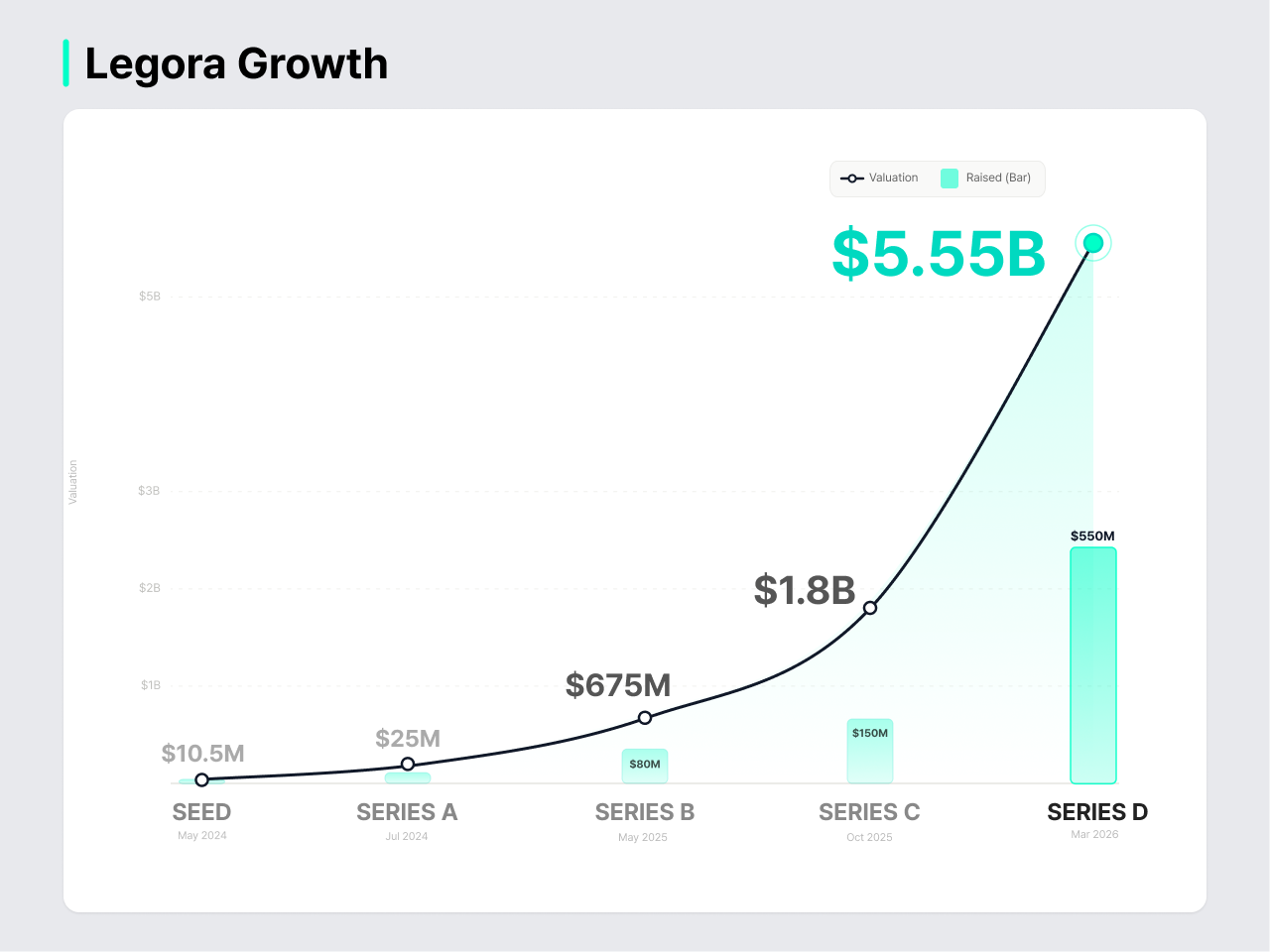
The numbers don't add up. Not on their face, anyway. According to Forbes, Legora's ARR stood at roughly $23 million as of September 2025. At a $5.55 billion valuation, that's a revenue multiple of approximately 241x. Harvey, the market leader by nearly every conventional metric, trades at roughly 42x. Legora is valued nearly six times as richly as a company that is eight times larger by revenue.
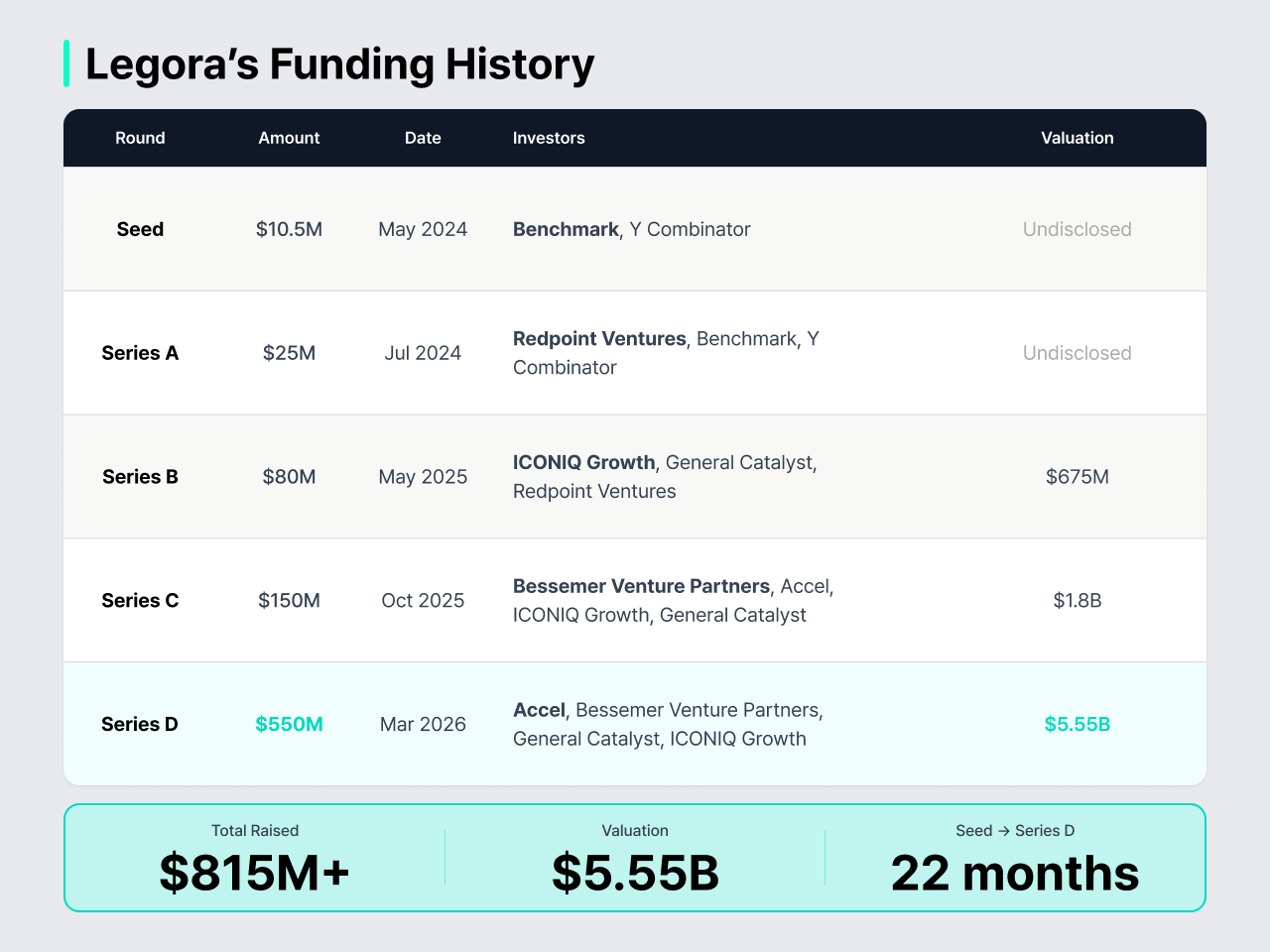
Accel, Benchmark, Bessemer Venture Partners, General Catalyst, ICONIQ, Redpoint Ventures, and Y Combinator invested anyway. So did Salesforce Ventures, Bain Capital, Alkeon Capital, Firstmark Capital, Menlo Ventures, Sands Capital, and Starwood Capital.
The gap between what the numbers say and what the investors believe is the most interesting thing about Legora. Understanding it requires starting not with Legora, but with the market it is entering.
The Legal AI Landscape: Who's Fighting for a $1 Trillion Industry
Legal AI in the United States is, at this point, a market with an established order.
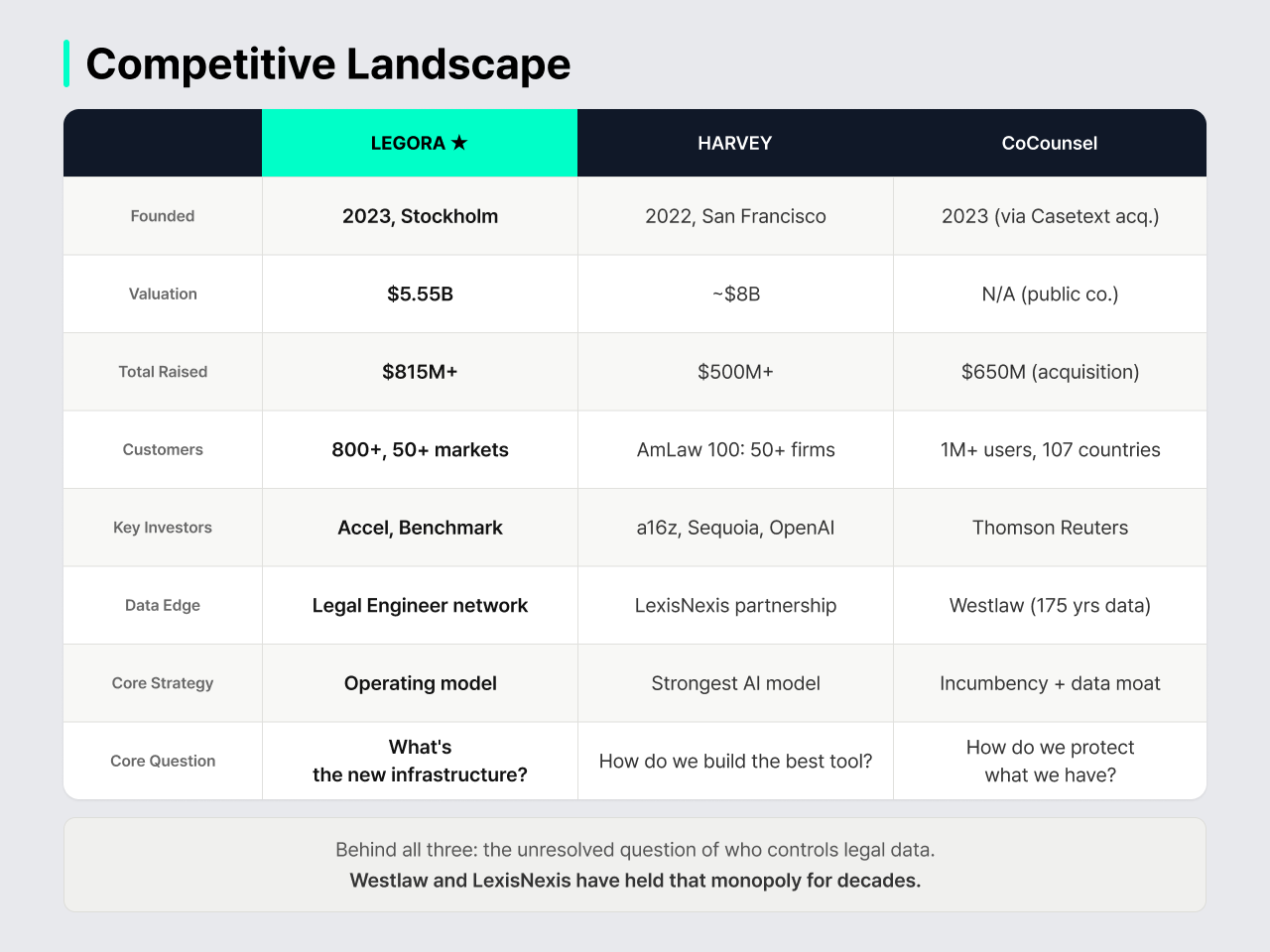
Thomson Reuters is playing defense. CoCounsel is the product Thomson Reuters built through its $650 million acquisition of Casetext in 2023. With Westlaw's 175 years of accumulated legal data and relationships with over 600,000 legal professionals globally, CoCounsel is the incumbent play: AI integrated into a platform that clients already depend on, protected by data assets no startup can replicate quickly. By February 2026, one million professionals in 107 countries were using it. The announcement sent Thomson Reuters stock up 11 percent in a single day.
Harvey is the market's model-first play. Founded in San Francisco in 2022 and currently valued at approximately $8 billion, Harvey has an estimated $190 million in ARR and over 1,000 customers. More than 50 percent of the Am Law 100 use its platform. Its 2025 strategic partnership with LexisNexis gave it access to authoritative U.S. primary law within its product.
Its multi-model architecture routes tasks between GPT-5.x, Claude Opus 4.6, and Gemini 3 Pro, depending on the job, providing coverage and resilience that single-model competitors struggle to match. In the VLAIR benchmark, the most widely cited independent evaluation of legal AI platforms, Harvey placed first overall. Harvey's sales team is staffed with former lawyers from White & Case, Latham, Skadden, and Paul Weiss, giving it a two-year head start in U.S. enterprise relationships that Legora is still working to close.
Into that settled order, Legora arrived late. Founded a year after Harvey, Legora is closing the gap fast. Institutional investors with full access to both companies' financials and customer data appear to have priced Legora's equity at a premium because they see something the current standings do not capture.
Bessemer Venture Partners, which led Legora's Series C, called it a company that "fundamentally reimagines how work gets done" and described its conviction that "vertical AI platforms developed with deep domain expertise will reshape trillion-dollar industries." Accel's Arun Mathew, who led the Series D, described Legora as building "an AI operating system for the legal industry."
An operating system. The question is what they mean by that, and whether they are right.
Harvey vs. Legora: Two Companies, Two Theories of What Legal AI Is For
To understand what Legora's investors are seeing, you have to start with the problem that sits at the center of the legal industry right now. It is not a problem most law firm partners want to discuss in public.
The better a law firm gets at using AI, the less money it makes.
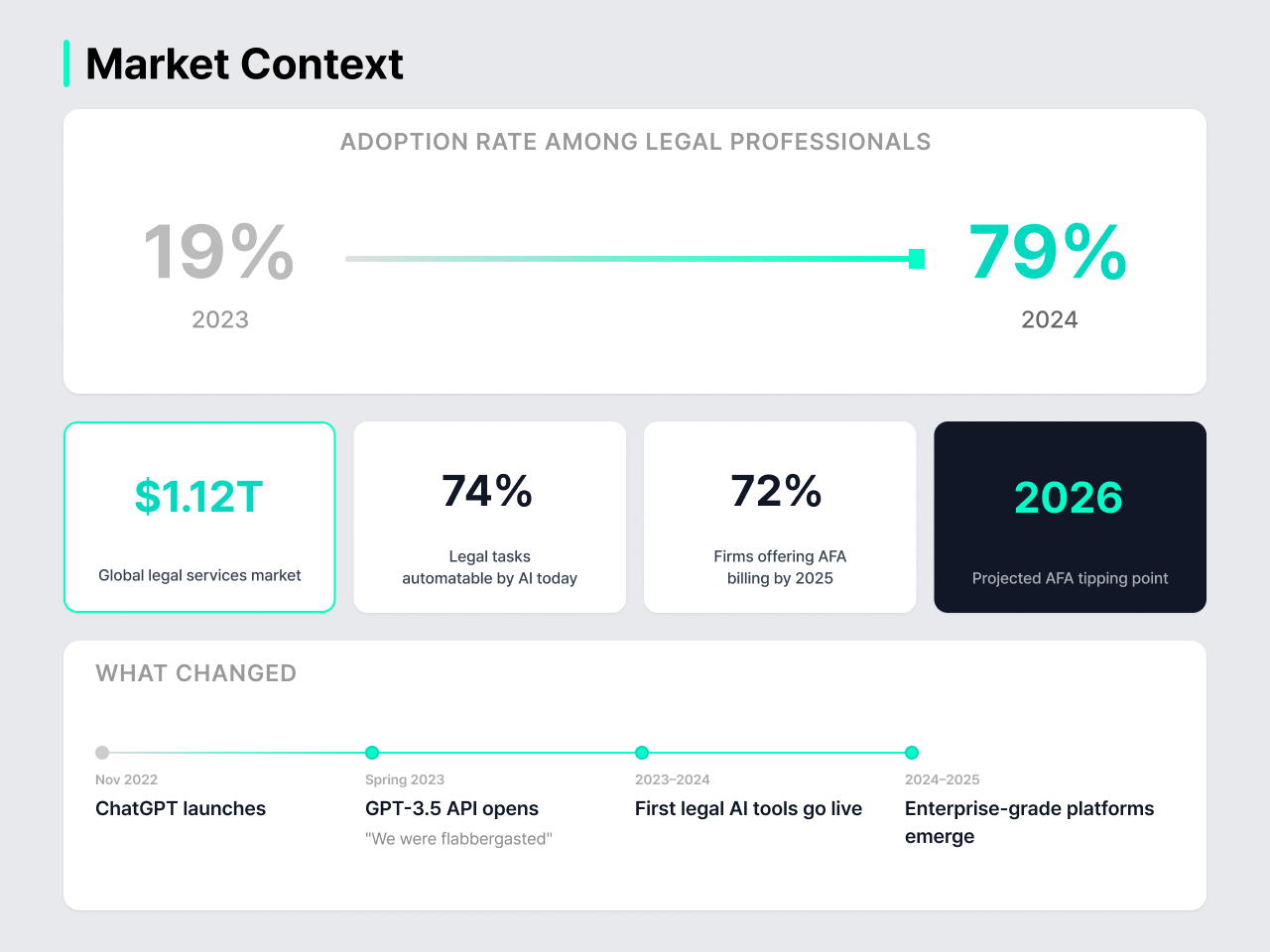
Adoption rates among legal professionals rose from 19 percent in 2023 to 79 percent in 2024. Contracts that once required a team of associates working through the weekend can now be reviewed in hours. M&A due diligence that billed at six figures can be compressed into an afternoon. By every measure of productivity, AI has been a success in legal. By the logic of the billable hour, it is a slow-motion disaster.
The billable hour model, which hardened into industry standard in the 1960s, was a risk-transfer mechanism: because legal work was difficult to scope, firms shifted uncertainty onto clients. AI breaks that logic. Estimates suggest up to 74 percent of legal tasks could be automated at current capability levels. The firm that moves fastest on AI adoption is the firm most directly undermining its own revenue base. That paradox sits at the center of a $1.12 trillion industry right now.
The industry is beginning to acknowledge this. Law.com reported in December 2025 that 2026 is shaping up as the tipping point for Alternative Fee Arrangements, with 72 percent of U.S. law firms now offering AFA options, rising to 90 percent among firms with more than 50 lawyers. The billable hour is not dead. But the consensus that it is permanent has cracked.

Harvey and Legora are looking at this same crack and asking different questions.
Harvey's question is: how do we make lawyers better at the work they already do? Its answer is a better model, more legal data, more validated performance. Harvey co-founder Winston Weinberg has said publicly that AI will accelerate how quickly firms develop associates into partners, creating a more active, engaged profession. In Harvey's framing, the billable hour survives, just with better inputs. More efficiency means more capacity, which means more work, which means more revenue. The model is intact.
Legora's question is: what happens when the model doesn't survive? When the unit of value stops being time, what infrastructure does the legal industry need? Legora CEO Max Junestrand, in an interview with EO, is careful about how he frames the competition, but the direction of the bet is clear:
"We're playing what I like to call the infinite game. The focus on delivering the most value for our users: other problems around that seem to solve themselves."Max JunestrandCEO of Legora
He is not trying to build a faster version of what Harvey built. He is trying to build the layer beneath it.
How Legora's Tabular Review Cuts M&A Due Diligence from 20 Hours to Two
None of Legora's strategic positioning means anything without a product that gets it into the room.
Both Legora and Harvey cover the same surface area: review, drafting, and research. Where they diverge is in what each system is optimized for. Legora excels at processing volume: feeding in hundreds of contracts and pulling out structured, comparable data across all of them at once. Harvey is stronger at depth, complex legal reasoning, nuanced judgment on individual matters, the kind of analysis that requires more than pattern recognition.
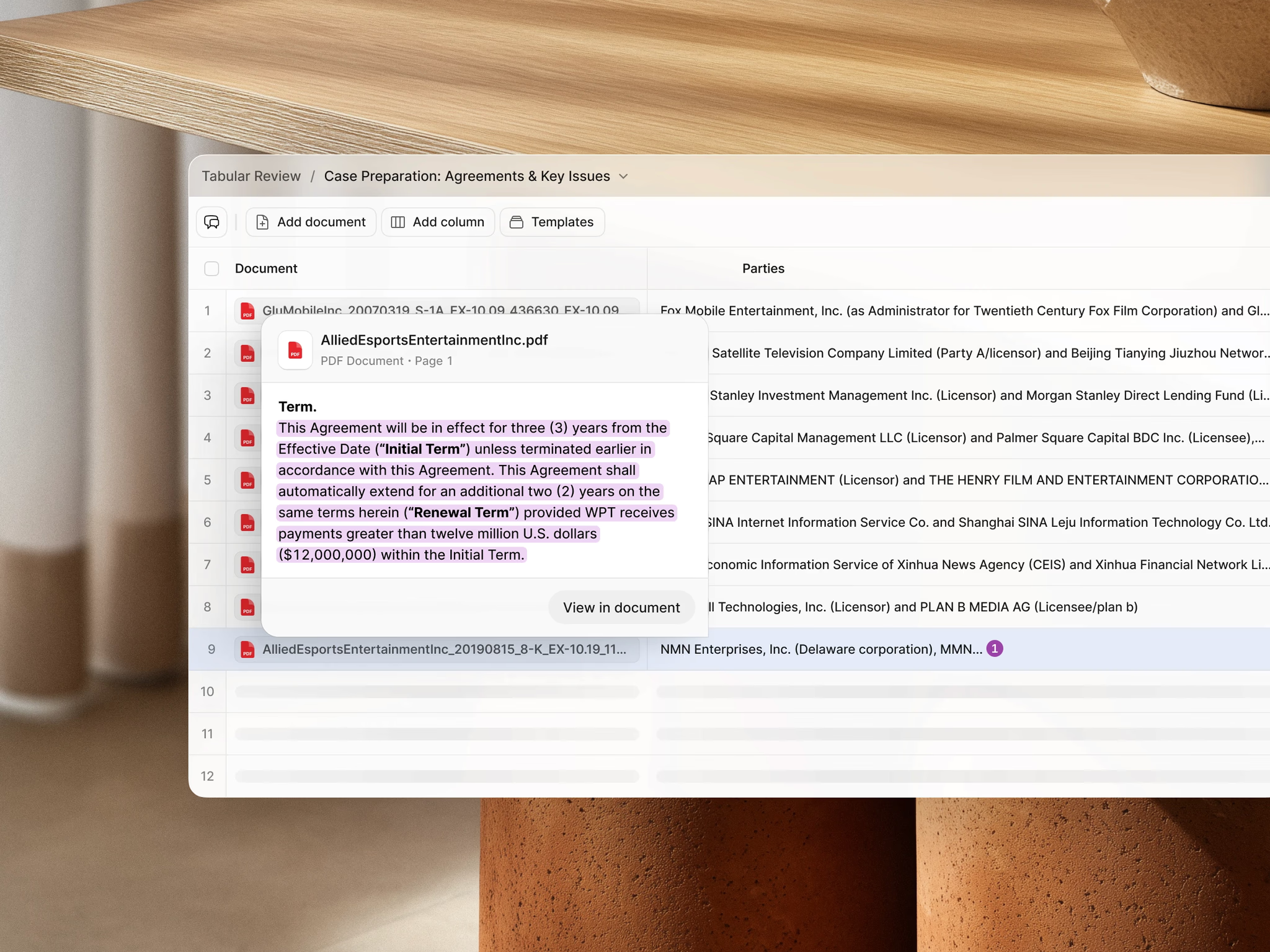
A due diligence analysis by Menlo Ventures found firms using Legora cutting deposition review from 20 hours to under two. In-house legal teams reported replacing reviews that previously required outside counsel billing at $1,200 per hour with work done internally in minutes.
This is the beachhead. It is what gets Legora into deals at Cleary Gottlieb, Linklaters, and Dentons. Legora's system is built around extraction from the ground up. For transactional practices and M&A diligence, that difference is measurable in time and money.
The practical result is that the two companies are winning different deals.
Harvey dominates in complex U.S. litigation support, legal reasoning tasks, and large enterprise accounts that prioritize validated AI performance. For now, Harvey has over 1,000 customers.
Legora wins in transactional practices, structured data extraction, and firms that want a platform they can customize and white-label. Legora announced that they have 800 customers across 50 markets.
For a company that only opened its U.S. office a year ago, the gap in the most important market is closing faster than the ARR difference suggests.
Legora Portal and the Debevoise Case: Turning Legal Expertise Into a Subscription Product
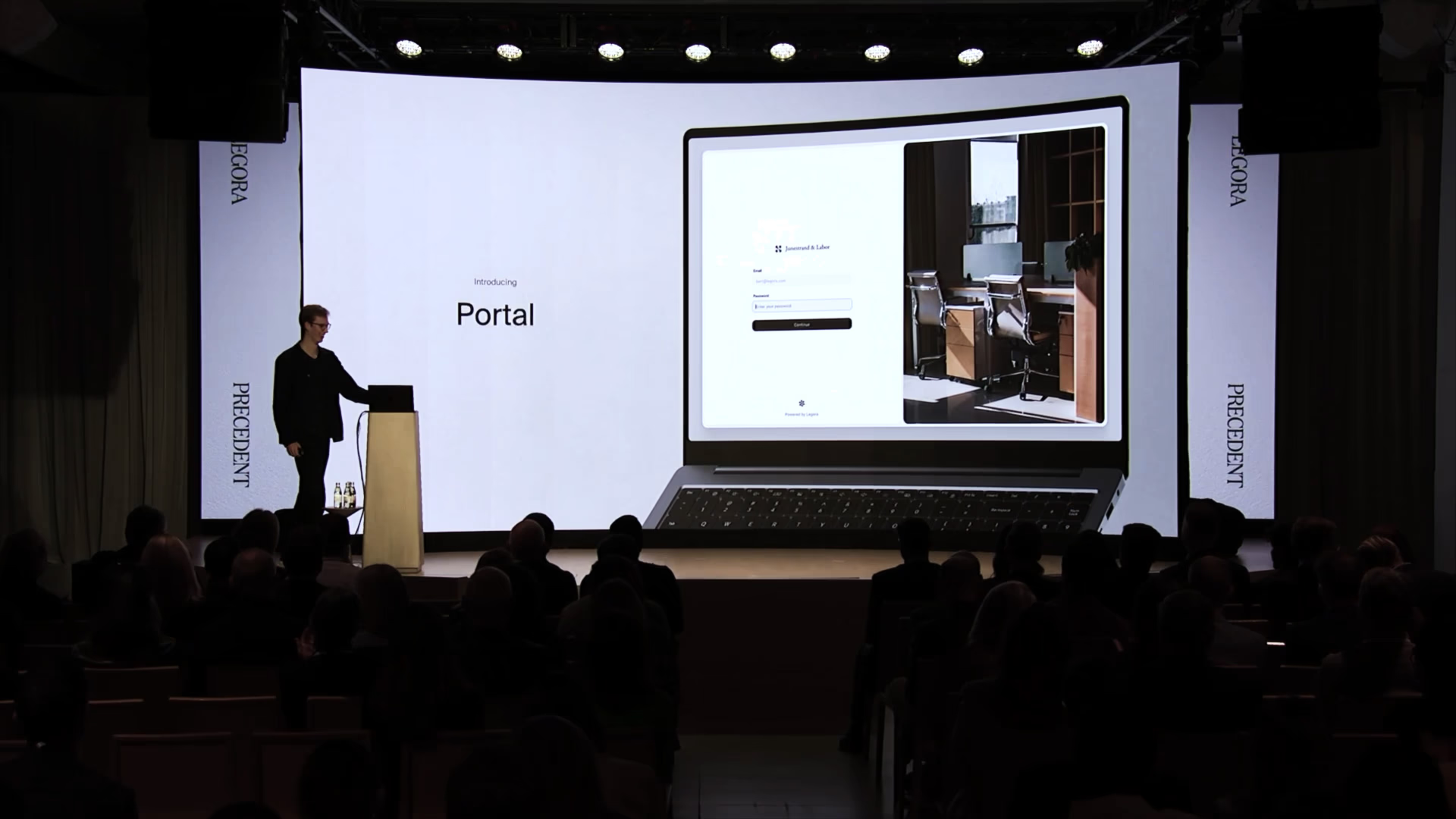
In November 2025, Legora launched a product that made its long-term thesis legible. Legora Portal is a white-labeled, AI-powered collaboration workspace that law firms deploy as a client-facing product under their own brand.
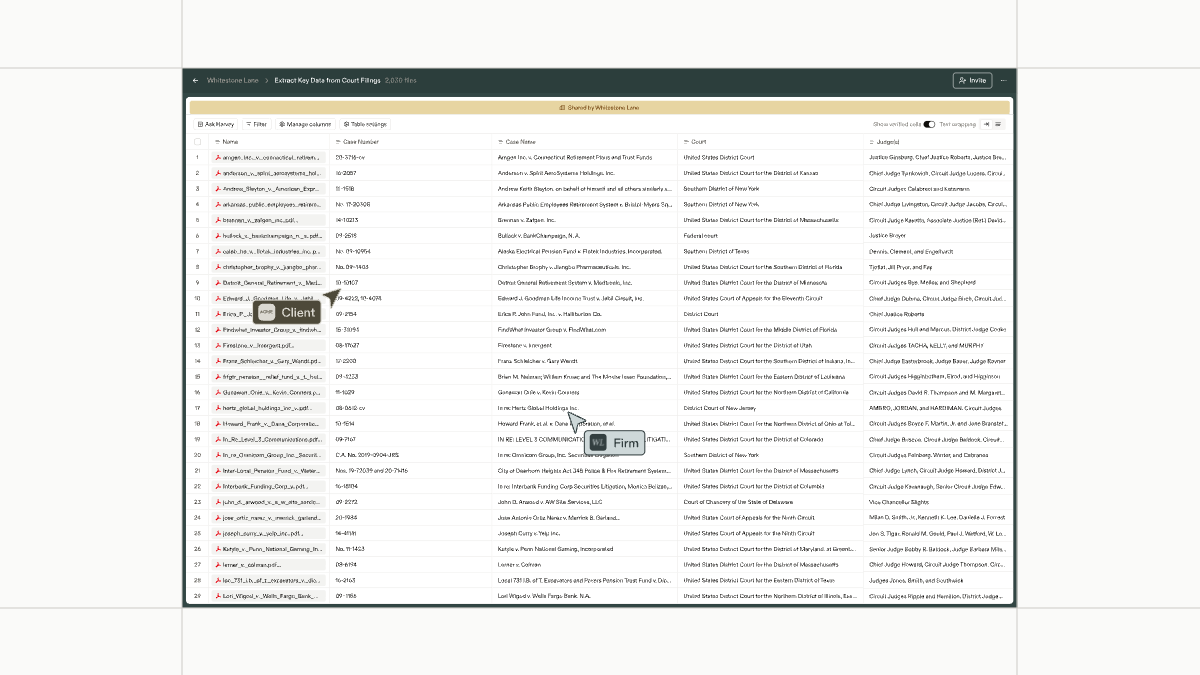
The distinction from Harvey matters here. Harvey launched Shared Spaces in December 2025, around the same time. Both products place law firms and their clients in a shared AI environment. But the architectures reflect different assumptions about where legal value lives.
Harvey's Shared Spaces is built around co-creation: firm and client work together in the same space, running documents through shared workflows, querying the same knowledge base, collaborating on active matters. It treats the lawyer-client relationship as a joint workflow and AI as a shared instrument.
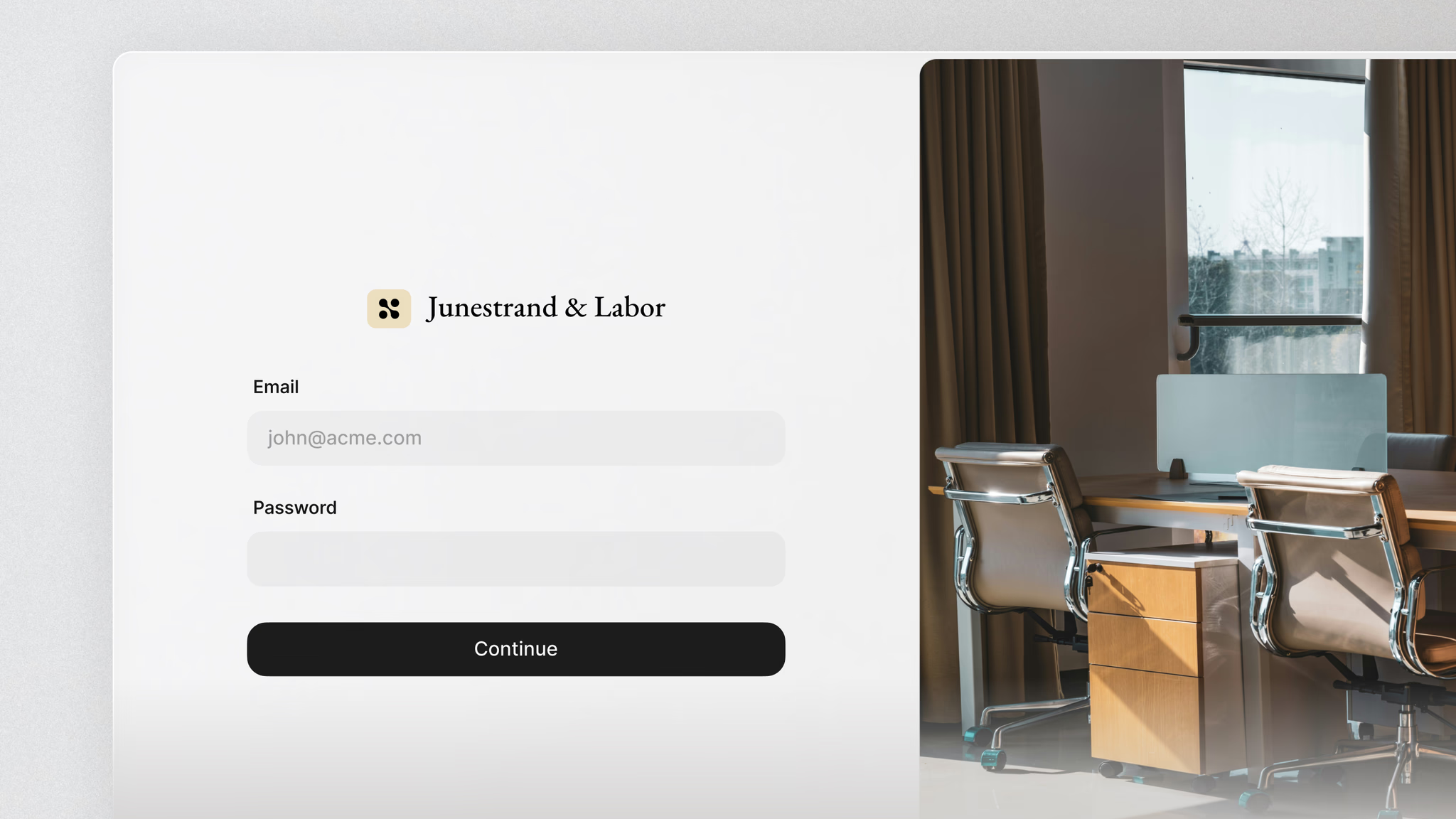
Legora's Portal is built around productization. The firm packages its expertise into AI-powered workflows and delivers them to clients through a branded interface. The client does not see Legora. They see the firm's knowledge, organized and queryable. The firm is not selling access to AI. It is selling access to what it knows, at a scale and speed that hourly billing could never support.
This is not a subtle difference. It is two different theories of what legal AI is for.
If Harvey is right, the unit of value in legal AI is AI performance. Better models, more data, faster output. The product to sell is capability.
If Legora is right, the unit of value is expertise delivery. The model is infrastructure. The product to sell is the firm's institutional knowledge, packaged in a form that the market has never been able to access before.

The Debevoise STAAR 2.0 case is the first evidence that Legora's version of this thesis can work in practice. Debevoise & Plimpton built a subscription-based AI advisory product on top of Legora's Portal infrastructure.
The product, launched in March 2026, packages five years of Debevoise's accumulated AI regulatory and compliance expertise into a searchable workspace that client companies can query directly. Beta subscribers include Blackstone, Capital One, Evercore, GSK, and New York Life.
Avi Gesser, co-chair of Debevoise's Data Strategy and Security group, described the product:
"STAAR reflects our view that the efficiencies created by AI should be shared directly with our clients. STAAR 2.0 is the result of thousands of hours of legal work on AI issues and allows clients to query that body of experience using AI, to see whether Debevoise has addressed a given issue before, and if so, how."Avi GesserCo-chair of Debevoise's Data Strategy and Security group
A client company that previously paid Debevoise's hourly rates for each AI governance question now pays a recurring subscription for continuous access to Debevoise's institutional knowledge. The firm earns recurring revenue from expertise it has already built. The client gets answers faster and cheaper. The billable hour does not appear anywhere in the transaction.
Junestrand, on what he sees happening at the firm Legora is closest to:
"I'm also really excited to see some of the partners and firms that we're starting to work with augment their business models, where they're moving away from the billable hour to actually charging on their work in an alternative fee arrangement."Max JunestrandCEO of Legora
STAAR 2.0 is one product at one firm. But it is a proof of concept for something much larger: that the expertise law firms have spent decades accumulating can be productized and sold at scale, and that Legora is building the layer that makes this possible.
Why Legora's Founder Had No Legal Background, and Why That Was the Point
The background that produced Legora's approach is not the background you would expect.

None of Legora's three founders had practiced law. Max Junestrand studied computer science at KTH Royal Institute of Technology, competed in Dota 2 at a near-professional level, interned at McKinsey, and worked at two Y Combinator companies. Former co-founder August Landmér, whom Junestrand met on a volleyball court in Stockholm during COVID, was studying psychology and machine learning. The last co-founder, Sigge Labor, had spent time at the intersection of law and technology before the three came together in spring 2023.
Being outsiders was likely an advantage. The billable hour looked permanent from inside the industry. From outside, it looked like a structural problem waiting for the right technology. Junestrand's willingness to frame Legora's mission as "creating 10x lawyers" rather than "the most accurate AI for legal" reflects an orientation toward operating model change rather than marginal performance gains.

That orientation has translated into an unusually close relationship with customers from the beginning. Junestrand handled the first 30 client onboardings personally. The lesson he took from those early days was simple and unforgiving:
"Lawyers are so busy that you don't get a second chance onboarding them on the product. So it has to work. It has to be a game-changer, and the use cases need to work."Max JunestrandCEO of Legora
One episode from the Y Combinator period captures the operating philosophy in practice. Legora entered YC in early 2024 having already reached close to $1 million in ARR in Europe. Junestrand joined anyway. The reason was access: YC's network led to Benchmark, which led the seed round, which opened the U.S. market in a way European term sheets could not.
During YC, he set up a ring light and took calls with European clients from 1 AM to 10 AM San Francisco time, then spent the rest of the day in the American market. The policy was simple: be where the customers are, even when it is inconvenient.
"For us, it's incredibly important to be where our customers are."Max JunestrandCEO of Legora
Legora's Two Unsolved Problems: Data Access and the Anthropic Threat
However, two doubts follow every legal AI startup, and Legora is not exempt from either: whether AI applications can beat the incumbents who control the data, and whether any vertical legal AI company has a durable moat once foundation model providers begin offering legal capabilities natively.
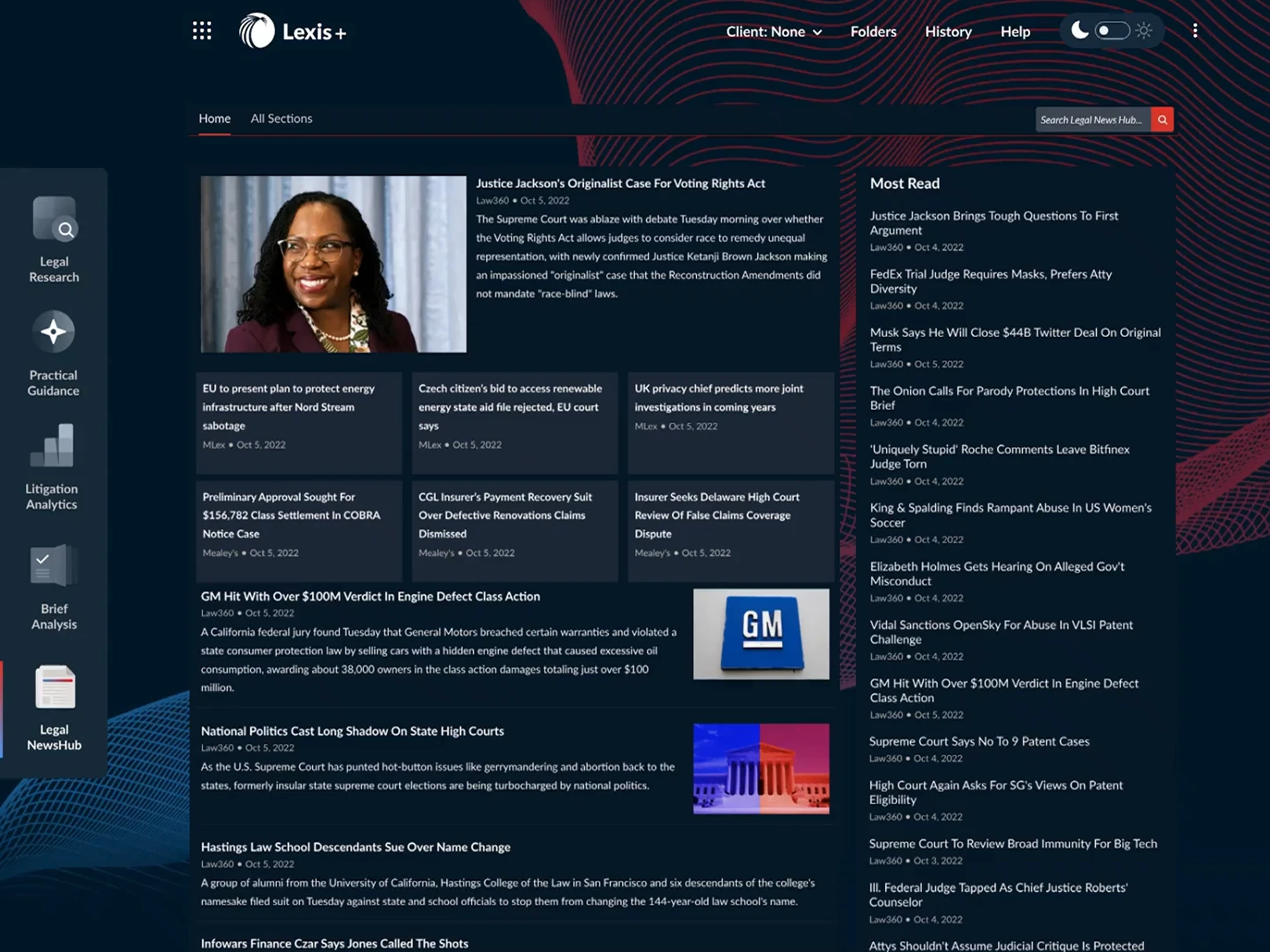
On data. Legora has made a deliberate choice to stay out of the legal data arms race. Harvey forged a strategic alliance with LexisNexis in 2025. Clio spent $1 billion to acquire vLex outright. Legora has none of it, relying on jurisdiction-specific deals across a dozen markets. The message from across the market: data access is a prerequisite for anyone serious about legal AI.
Legora's investors argue that this framing mistakes where value creation actually happens. As Accel's Arun Mathew wrote, most of legal AI's explosive growth runs on firm-internal documents, not on Westlaw, and the workflow scaffolding built around those documents only becomes more valuable as agentic execution becomes the norm.
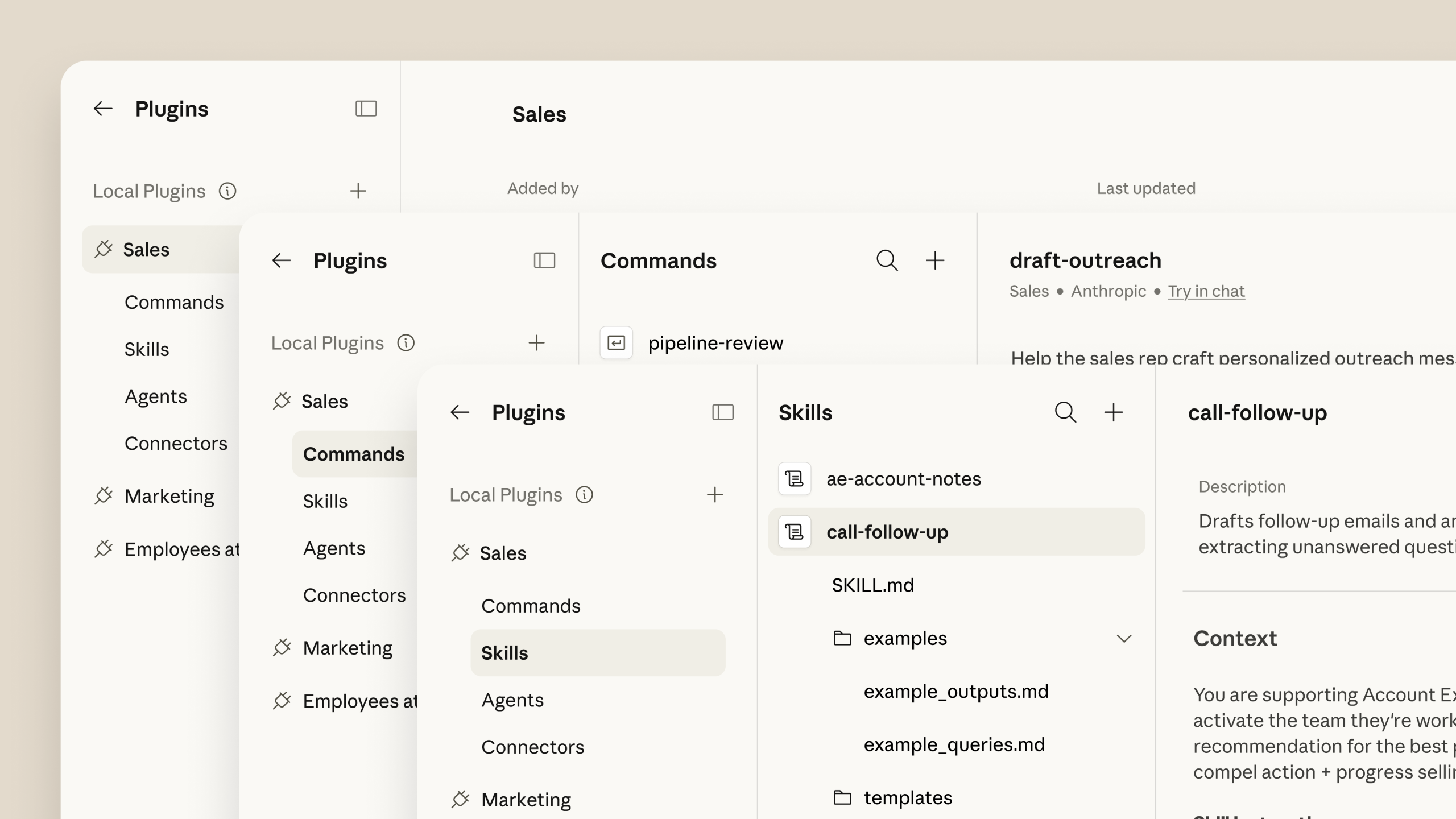
On foundation models. In February 2026, Anthropic launched a legal plugin for Claude, making the second doubt suddenly concrete. Legora maintains that its users and Claude's users are solving fundamentally different problems. Junestrand put the underlying logic plainly:
“It’s amazing that everybody can have their own pocket lawyer in Claude, but we’re not solving for the same use case."Max JunestrandCEO of Legora
In his conversation with EO, he went further, saying he welcomes Claude getting better.
"We have people working 14-hour days solving those problems. Our software is built around the model, so the fact that the model is getting better is only a benefit to us."Max JunestrandCEO of Legora
The logic holds if workflow depth and institutional knowledge encoding create switching costs that raw model capabilities cannot replicate. The Debevoise Portal deployment is the clearest evidence: ripping out Legora would mean ripping out the infrastructure of a client-facing revenue stream. That is a different kind of lock-in than a software subscription.

The $550 million Series D is ultimately a bet that the legal industry is entering a genuine transformation: not an efficiency upgrade, but a structural change in how legal services are priced, delivered, and consumed. The company that builds the infrastructure for the new model will be positioned differently from the one that simply accelerated the old one. Whether that company is Legora is still an open question. The valuation says the answer is not as obvious as Harvey's ARR makes it look.
"We've done zero to one. And now there's the journey of one to ten, and then ten to hundred left to do."Max JunestrandCEO of Legora
Watch the in-depth interview with Legora Max Junestrand on the EO YouTube channel!
💡
Further Reading
- Legora raises $550M Series D to fuel US growth, Legora (March 2026)
- Building Legora's collaborative AI platform for legal workflow automation, Bessemer Venture Partners (October 2025)
- Debevoise launches STAAR 2.0 to help clients scale their AI adoption, PR Newswire (March 2026)
- LexisNexis + Harvey announce alliance — will share legal data, Artificial Lawyer (June 2025)
- One million professionals turn to CoCounsel as Thomson Reuters scales AI for regulated industries, PR Newswire (February 2026)
- AI is killing the billable hour. The real question is what comes next., Above the Law (January 2026)
- Will AI really move the needle on the billable hour?, Above the Law (August 2025)
- 2026 Legal Trends Report, Clio (October 2025)