
At a Glance
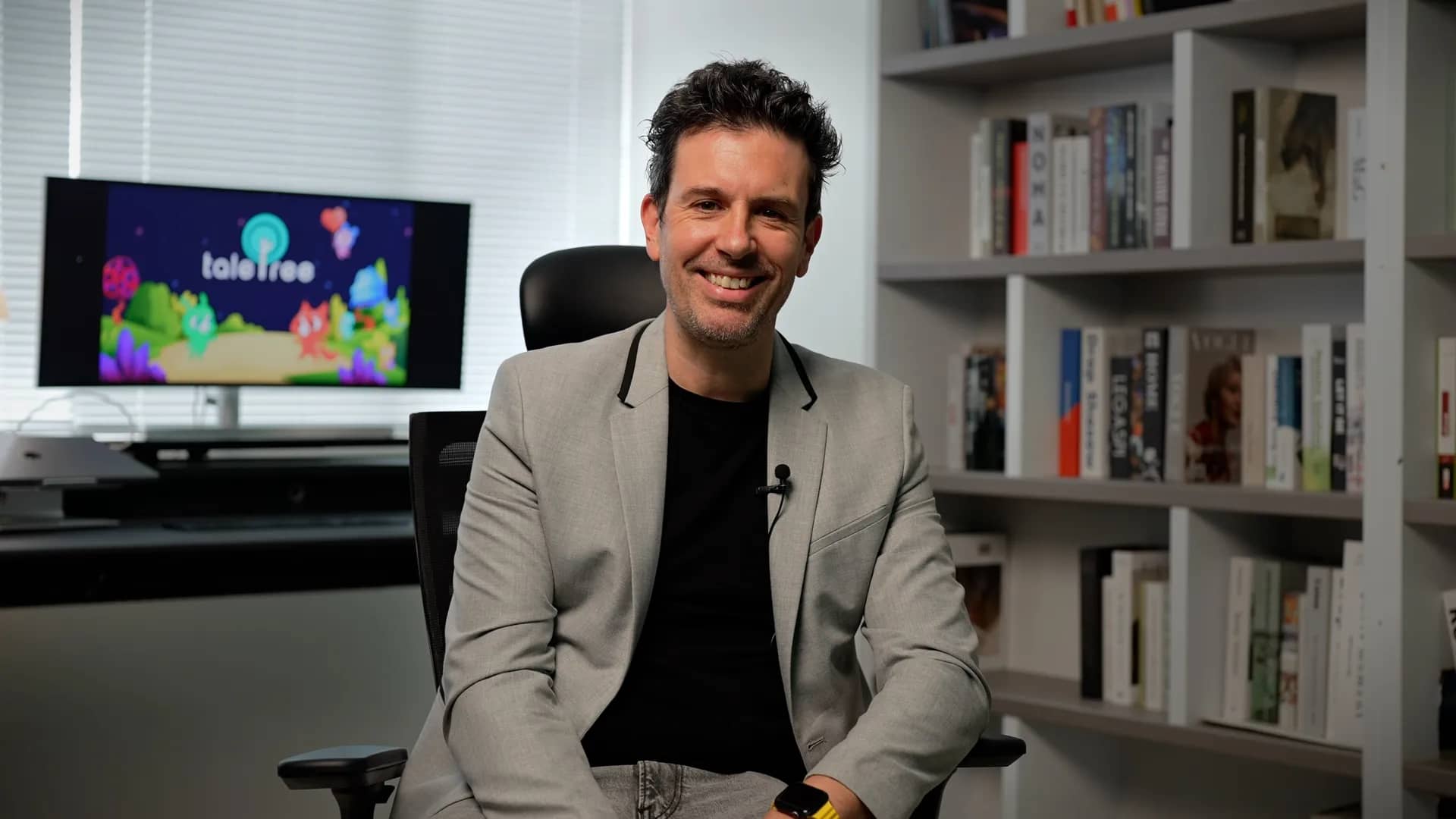
- Who: Tom Eisenmann has taught entrepreneurship at Harvard Business School for 26 years and is known as "the Professor of Failure."
- What: His research examines the recurring patterns behind startup failure, gathered in his book Why Startups Fail.
- Lesson: Startups fail in predictable, avoidable patterns, and the founders who own their mistakes instead of blaming the market are the ones who get to try again.
Today, our topic is the often-overlooked aspect of startups: failures. While we frequently hear about the success stories of startups, the world of business is also filled with untold stories of failure. In fact, statistics suggest that more than two-thirds of startup ventures ultimately meet with failure. This means that, statistically speaking, your own startup is at risk of encountering setbacks as well. Tom Eisenmann is a professor of Entrepreneurship at Harvard Business School, who is often referred to as "the Professor of Failure". Tom has dedicated the past decade to researching the common patterns that lead to startup failures, as well as how these pitfalls can be avoided. His findings are encapsulated in his book, "Why Startups Fail," which offers a comprehensive insight into the world of startup failures. Let's explore how Tom emphasizes the importance of learning from these failures.
Key Takeaways:
Founders Fail by Building Before They've Tested the Problem
Skipping customer discovery to start building is the single biggest cause of early failure. 4 weeks spent talking to customers saves 4 months spent on a product nobody wanted.
Why "I Love It" From a Friend Means Nothing
People tell entrepreneurs what they want to hear, so pitching for a reaction produces polite lies, not real signal. Guard against this by testing whether someone will actually change behavior or pay, rather than whether they compliment the idea.
How Early Adopters Can Point You in the Wrong Direction
Early adopters often need something different from the mainstream market a product eventually depends on, the way Dropbox's technical power users differed from the ordinary users it later built for. Choosing to serve the broader audience instead is what turned it into a mass product.
Blaming the Market Is the Fastest Way to Repeat a Failure
Fundamental attribution error leads founders to explain away their own failures as bad luck or bad partners, while judging others harshly for the same mistakes. Founders who never own their part in a failure are the ones most likely to repeat it.
Second-Time Founders Fail Less, Not Never
Only 21% of first-time founders succeed by investor standards, but that jumps to 30% on a second try after a win. Even founders who fail the first time see their odds rise to 22% the next time around, proof that failure is common but not permanent.
The Right Response to a Mistake: Fix It, Don't Just Feel It
Test your core assumptions constantly instead of picking a default speed to move at. When one breaks, that is the signal to pivot, not proof the whole venture has failed.
Watch the full interview now on EO's YouTube channel! Below is the complete transcription of the interview. Minor edits have been made for clarity and readability.
Introducing Tom Eisenmann, Professor at Harvard Business School
I'm Tom Eisenmann. I'm a professor at Harvard Business School. I've been there for 26 years, teaching and studying entrepreneurship. I'm the author of the book Why Startups Fail.
Q: You're so called The Professor of Failure. What made you focus on failure instead of success and write a book about it?
My work on failure goes back about 10 years. At Harvard Business School, we teach by the case method: 30 cases on entrepreneurs, every one of them successful. At the end of the course, the feedback I got was, "You tell us in this course that two thirds of startups fail. So is there nothing to learn from failure?" It seemed like a reasonable question, so I set out to write case studies of failure.
I worried when I launched this course. As a student, sitting through failure after failure after failure could be depressing. I worried about another thing too, which is maybe I would scare all these students, they would see how badly it hurt. None of this happened. First off, the students loved the course. They started to view failure as a puzzle.
At the end of the course each year we actually ask a question: 5 years from now, are you more likely or less likely to be an entrepreneur? 20% do say less likely, 40% say I'm more likely now, and the remaining 40% said, "I was going to be an entrepreneur anyway. I'm still going to be an entrepreneur. But you made me a little smarter about how to not fail."
Good Failure vs Bad Failure
A truly good failure is when the entrepreneur has a hypothesis. Think like a scientist: here's an unmet customer need, here's a problem, and here's a solution for that problem. I'm going to put it into the world rigorously and quickly, without wasting resources. Testing an idea, that's the soul of entrepreneurship.
Some failures the entrepreneur has no control over. If you think about Covid, certainly hundreds of thousands of businesses were crushed by Covid. There's no fault here for the entrepreneur, you can't tell that there's going to be a pandemic. Bad is when you make mistakes that are in your control and could have been avoided if you just think it through.
Early Startups Failure Pattern
Biggest cause of failure for early stage startups is a false start. If the athlete starts too fast before the gun goes, that's a false start. So sometimes entrepreneurs start too fast. They're so eager to build and sell the thing that they've envisioned, they skip studying the opportunity, talking to potential customers, to really understand: do you have this problem? A lot of people put much more focus on speed, that really comes from the Lean Startup concept. It turns out to be a false start.
Q: Do you have any other opinion about the Lean Startup concept?
I agree 100% that the false start is related to not following all of the practices of Lean Startup. Build a minimum viable product and put it in the hands of customers quickly to get feedback, then iterate and change. That's half of Lean Startup. The other half is much more about customer discovery. The customer discovery work may take 4 weeks. If you skip it and just start building and selling, it'll take you a total of 4 months to find out it's not working and figure out what to do next and how to pivot. So you've wasted 4 months on a bad first version of the product in order to save 4 weeks.
The other reason for the false start is a lot of tech businesses, or businesses that use mobile or the internet, have non-technical founders. Here to launch a startup, you need an engineering team, and once that team is on board, you have to keep them busy, they're expensive. How do you keep them busy? You give them something to build. What do you give them to build? The thing that you didn't spend enough time thinking through at the beginning. Even the technical founders fall into the false start trap too, and they do it because what do engineers love most in the world? They love to build things. So non-technical problem, technical problem: everybody starts building too fast, and it's a bad, bad trade.
Q: Could you suggest some frameworks or ways that people can do the customer discovery work better?
There's a wonderful book called The Mom Test by Rob Fitzpatrick. You're an entrepreneur, you've been working so hard, you show your mother what you've been doing, and she says, "Son, I love you. Of course this is wonderful, you're going to do great." The question that every entrepreneur wants to ask when they meet somebody is: I'm building this, pitching the idea, do you want it? And you know they're going to say, "Of course I want it, you crazy person," just to make you go away. "I'm going to tell you I love your idea," just like Mom. The entrepreneur has to guard against people saying what they think the entrepreneur wants to hear, and they need to get real feedback.
The other two patterns we call bad fellows and false positive. By bad fellows, I mean everybody connected with the venture: the founders, the rest of the team, the outside investors. It's often the case that the relationships are bad in one or more of those areas.
Third early stage failure pattern is false positive. Sometimes you get a signal from the universe saying your idea is great, continue, invest more time, invest more money, but your idea really has serious problems. If you spend too much time before you recognize the false positive, that can have terrible consequences.
Here's the thing about startups: they depend on early adopters, the very first customers who will find your product and really want your thing. Sometimes the needs of the early adopters are different than the needs of the mainstream customers, the customers who will come later when the business is bigger. When you do the customer discovery, you need to talk to both early adopters and mainstream customers, see if their needs are the same. If so, that's easy. If they're different, what are we going to do? We can build for the early adopters and change the product over time to meet the needs of the mainstream, or we can build for the mainstream and hope that it's good enough for the early adopters.
Dropbox was an interesting example. The entrepreneur wanted to create something so easy to use his mother could use it to store her recipes. The first early adopters for Dropbox were software engineers with gigantic files, many devices, computers, sophisticated needs for file management. The entrepreneur had to decide: am I going to build Dropbox for the early adopters, or will I build for the mainstream? He chose the mainstream, and it worked. That's not always the right choice. As an entrepreneur, you need to know about any difference between early adopters and mainstream.
Q: It is quite hard to realize that founders are making mistakes when they're too focused on their work. So is there a way to realize that you're making mistakes or you're heading towards failure?
A good way to do it is to have a list of the main assumptions you've made. You've made some assumptions about what customers need, what aspect of your solution is going to appeal to customers, how you will educate them about your product. Your job as an entrepreneur is to test, test, test the assumptions. Sometimes they're right, keep going. Sometimes they're wrong, you pivot, you have to change.
Q: The important part is not avoiding the problem but finding a way to fix it?
Exactly. Recognizing the problem, not moving too fast. Some entrepreneurs are too quick to respond to feedback, they zig and zag and zig, keep changing the idea. Some entrepreneurs are too slow, they're stubborn. You need to be in the middle, not too fast, not too slow.
Q: But how do you know the right speed for it?
You never can be sure. Once a business gets big enough, you can run tests. Again, the entrepreneur needs to think like a scientist.
Learning from Failures
Q: What's the best way to learn from failures? Is it effective to learn from other people's failures or mistakes?
Learning from personal experience is much more powerful, because of all the emotion connected with the failure. There's a thing called the fundamental attribution error. If you made a mistake, I think you weren't trying hard enough or you just weren't very skilled, it's your fault. If I made a mistake, I think I dropped the ball because the sun was in my eyes, or there was a loud noise and I was distracted. Not my fault, I'm a good ball player. We do that in daily life, that's the default for humans.
So as an entrepreneur, you have to guard against the fundamental attribution error. My venture failed, I was the venture, so I was a failure. That hurts like crazy. So I am going to blame other people: my co-founder lost interest, she wasn't working very hard, my investor pushed me in the wrong direction. Look, you picked the co-founder, you picked the investor. So maybe they did do those things, but you have some responsibility. The important thing for an entrepreneur to learn from failure is to let the strong emotions settle down, give some distance, alternate between distraction and rumination. Yeah, other people did some bad things, but I made some mistakes too, and here is what I would do differently.
Q: In your opinion, or in your research, what do you think is more toxic? Too much ego and being defensive, or taking too much responsibility?
The stubborn individual who takes no responsibility, the real problem here is they're probably going to repeat those mistakes. They don't own the mistakes, they don't recognize the mistakes, it was all somebody else's fault. In fact, one of the patterns we see with this type of entrepreneur is they often blame the marketplace: these competitors did crazy things, the regulators, the government did crazy things. The problem is probably management and leadership, it's probably not the industry or the marketplace. By the way, when you change industries, you're taking a bad approach to leadership into a new place where you don't know anybody or anything, so you're doubling the problem.
The other type, when you take too much responsibility, the problem is you're probably not going to launch another venture. You basically say, "I made so many mistakes, I must be a bad entrepreneur, I will never do this again." Maybe that's true, there are some people that just should not be entrepreneurs, but probably not true most of the time.
Q: Is it really inevitable to fail on your first try, or do you have any advice for people who want success on their first shot?
We know something about success and failure rates for first time entrepreneurs, and the definition of success is financial success, the investors made money. For first time founders, that success rate is 21%, pretty low. For second time founders who were successful the first time, their success rate with the second venture is 30%. First time entrepreneurs who failed, 79% of them do it again. Half of failed first time founders launch another business within 5 years, and their success rate is 22% on the second venture.
The point is, to your question, it's by no means inevitable that every first time founder fails. But almost everybody who does entrepreneurship as a career, if you run the probability, the chance of having no failures, if the average failure rate is 70 or 80%, you have to be amazing. And there are some amazing individuals out there. Elon Musk is probably 4 for 4, or 5 out of 5. But we can't all be Elon Musk.
Q: Do you think startups really changed the world in a positive way?
Of course, startups change the world in a positive way. What we're using to talk to each other was built by startups. We couldn't have had this conversation 20 years ago. If you're an entrepreneur, you can bring something new to the world, makes the world a better place. Maybe in a small way.
Q: It's worth taking the risk of 80% failure?
I think so, because almost every failed founder I speak to is proud of the work they did, proud of the team they built, proud of the product that they built. Again, entrepreneurship for most founders is a life approach, and you apply it next time.