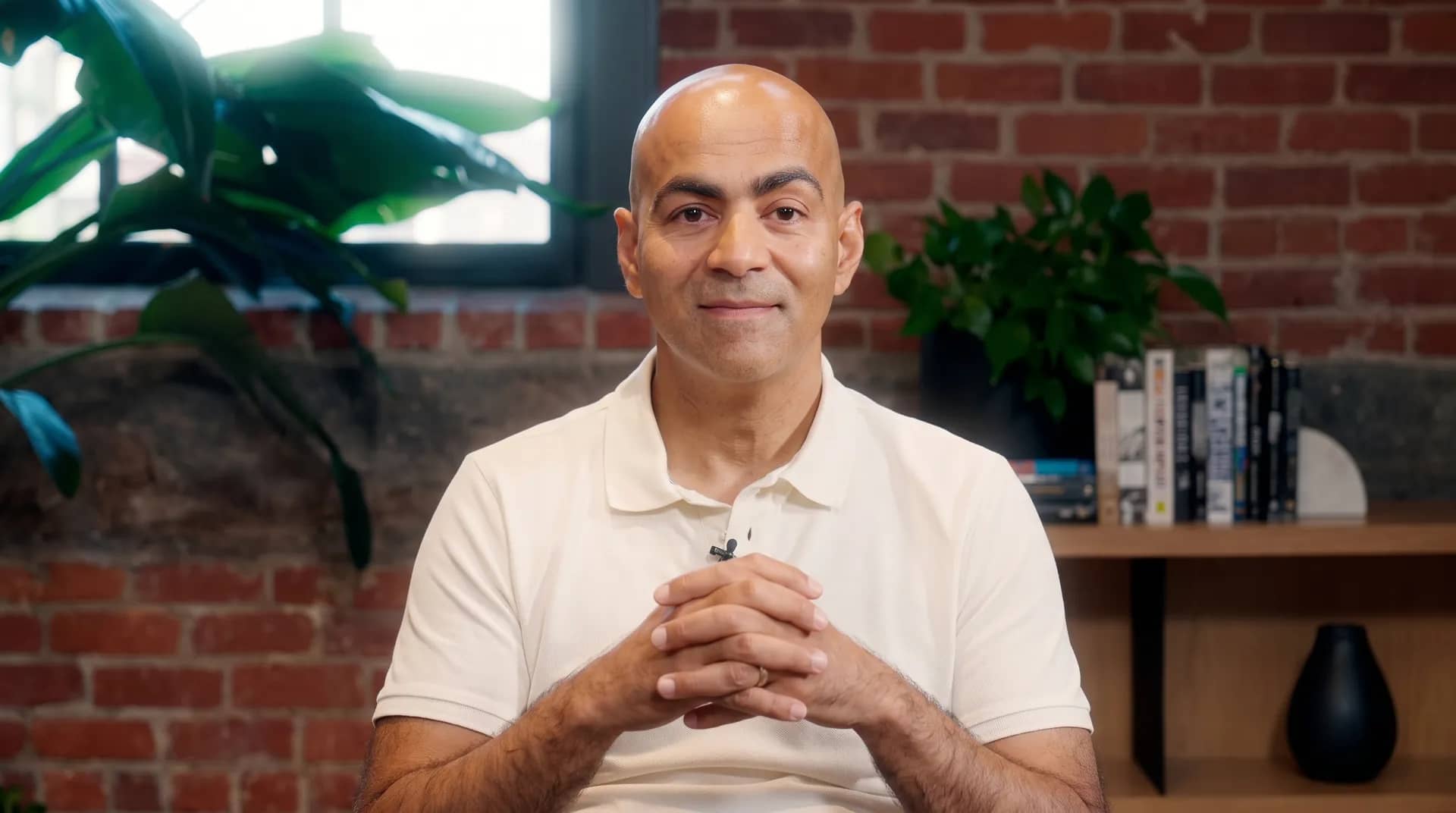
Interview with Sean Ellis, Author of Hacking Growth

At a Glance
- Who: Sean Ellis coined the term "growth hacking" and wrote Hacking Growth. He built the early growth systems at Dropbox, Eventbrite, and Lookout.
- What: He now runs workshops teaching founders his testing-driven approach to growth, built around validating product-market fit before scaling acquisition.
- Lesson: Sean Ellis breaks down why most startups fail at growth hacking despite having good ideas, how one simple survey question can validate product-market fit, and why running more tests beats chasing the perfect one.
In this conversation, we sit down with Sean Ellis, the visionary author of "Hacking Growth" and a pioneer in the growth hacking movement, who has significantly impacted the way startups approach scalability and market penetration. With a groundbreaking philosophy that emphasizes rapid experimentation and innovative marketing techniques, Sean's strategic insights have transformed the landscape of digital marketing and startup growth. His dedication to understanding and leveraging user behavior and data analytics has led to the development of methodologies that accelerate user acquisition and product development.
Unlike traditional marketers, Sean, through his work and writing, has advocated for a more agile and responsive approach to growth, encouraging companies to adopt strategies that are both data-driven and creatively bold. His experience, including pivotal roles at Dropbox, Eventbrite, and LogMeIn, has not only solidified his reputation as a leading growth strategist but also inspired a generation of marketers and entrepreneurs to think differently about how they grow their businesses. Sean's contributions have established him as a central figure in the evolution of marketing strategies in the tech industry, making "Hacking Growth" an essential read for anyone looking to scale their venture effectively.
Key Takeaways:
Growth Hacking: A Science of Testing Across the Full Funnel
Sean Ellis coined the term to separate it from traditional marketing, defining it as a scientific approach to testing every lever of growth, from acquisition to activation, retention, and monetization. Marketing gets people in the door. Growth hacking optimizes the entire journey after that.
How Rising Ad Costs Forced Growth Hacking to Evolve
As more marketers optimize for return on investment, platforms like Facebook and Google keep bidding prices up, making pure acquisition less profitable over time. That squeeze is what pushes companies to focus on the full customer journey instead of just the top of the funnel.
The Best Growth Hacks Remove Confusion. They Don't Trick People.
Growth hacking has a reputation for manipulative tactics, but Sean Ellis says the best tests simply find where users get confused and make the product easier to use. Usability testing and surveys diagnose the real problem before a team ever writes a new test.
Is It Better to Run One Perfect Test or Ten Good Ones?
Sean Ellis compares testing to taking shots on goal: a team running three to five tests a week will find a breakout result faster than one chasing a single flawless idea. Nobody can consistently predict which test will win, so volume is the only reliable strategy.
How Sean Ellis Measures Product-Market Fit With One Question
He asks recent, repeat users how they would feel if they could no longer use the product. Across hundreds of companies, roughly 40 percent answering "very disappointed" was the threshold that reliably predicted which ones could actually grow.
Retention Cohort: The Real Signal of Product-Market Fit
If a group of new users drops to zero over time, there's no product-market fit no matter what a survey says. But if usage plateaus, even at a level as low as 5 percent for a habit-forming app like Calm, that plateau is the real proof people find enough value to stick around.
The Best Time to Join a Startup Is After Product-Market Fit, Before Growth
Sean Ellis prefers to work with companies once they show every sign of product-market fit but haven't started growing yet, because that's when equity is still cheap. Once a company is visibly growing, investors and employees alike pay a much higher price to get in.
Watch the full interview now on EO's YouTube channel! Below is the complete transcription of the interview. Minor edits have been made for clarity and readability.
Introducing Sean Ellis, Author of Hacking Growth
Hi, I'm Sean Ellis. I am the author of Hacking Growth. I'm also the person who coined the term growth hacking, which has become pretty well known around the world over the last 12, or 13, years since I came up with the term. What I'm really good at is getting people to use a good product when I'm responsible for growing them. I did that for a number of years, and that's when I went to Dropbox. I joined Dropbox when Dropbox was less than 10 employees. Dropbox became the fastest SaaS company to reach a billion dollars in revenue, faster than any company before it.
Soon after I left Dropbox was when I coined the term growth hacking, but really the techniques I had used to grow these companies were the techniques that we talk about when we say growth hacking today. I also did an interim VP of growth role with Eventbrite, which also reached the billion-dollar valuation. Right after Eventbrite, I went to Lookout, which also reached the billion-dollar valuation. I really think my strength is growing great companies. You can read a book, but when you actually try to do it, it's really hard. So I do a lot of workshops. That's a lot of what my focus is these days.
Why Do 95% of Startups Fail at Growth Hacking?
In the first company, I started in sales. When they said, "you know, we want you to do this, and we'll make you the marketing guy," I never took marketing in school. I didn't know what I was doing. So then I decided I would go back to school and take some classes in marketing, and I went to New York University. I did really well, got an A in the class. Then I went back and tried to do it, and I was really bad at it. After the class, the class kind of broke me. It made me think about it the old way of doing marketing. I became too academic about it, and it was very like, I had to get that out of my head and go back to it.
So that was the first time I realized my approach was a little bit different from how they teach marketing. But then I just kind of forgot about it and was focused on how do we grow these businesses, how do we do our very best to grow these businesses. I moved to Silicon Valley in 2007. I also had a lot of venture capitalists who were introducing me to founders. They said, "can you help this founder, they're really having trouble growing." And so I said sure, and then I would sit down with the founder, and the first thing they would say is we really need your help to build awareness. I've never focused on building awareness. I want them to actually use the product. So for me it was like, how do I get them to sign up for the product, to use the product, get value from the product, pay me money for the product, and then I take that money to get more customers and create something that's much more sustainable.
So there was this misconception from founders that they needed to build awareness. That's when I started to recognize that my approach was different. So, coming up with the idea of calling it growth hacking, we need to stop calling this marketing, because I define growth hacking as a scientific approach to figuring out how to grow the business: testing and analyzing across all of the levers of growth, from acquisition to activation, retention, and monetization.
The most powerful lever of any of them is activation. It's the most important one that I would generally focus on, it's the first one I focus on when I work with a company. Engagement and retention, essentially what you're doing is what brings someone back again and again to come in and use the product. Of course the most powerful thing to bring people back is a great first experience, which is actually the activation. So the biggest driver of retention and engagement is a great activation step in the customer acquisition process. Then you can still be tactical about what are the prompts, what do I do to bring someone back, and then how do I make sure that every time they come back and use the product, they're even more likely to come back and use it again the next time. How do I get them to actually invest something into the product, maybe do a little bit of customization that makes it more valuable each time and makes them feel like they have some ownership around that experience.
What I would say is that most companies fail with growth hacking. It's unfortunate, but it's the reality. But I don't think it's because they have a hard time coming up with a hypothesis, or a hard time coming up with the right test idea. Growth is cross-functional. Growth is something that requires a product team to work with a marketing team, to work with engineers, to work with designers, to work with data people. Most companies aren't organized that way. As they get bigger, companies essentially have more and more specialist teams that become separated. That's what causes growth hacking not to work in most businesses.
Most digital marketers today are clever enough to know they need to do a lot of testing. The problem with it, though, is everyone else has gotten very smart at that too. If everyone's testing everything and optimizing on return on investment, Facebook and Google and all of these other platforms are bidding it up. Any time someone gets good at these things, the prices keep going up, and now it's harder and harder to find a profitable way to get people to the website. So the only way to really be competitive on acquisition is to actually focus on the entire customer journey. This is where growth hacking becomes different: marketing is more how do I just get them to come in, growth hacking looks at how do I get them to come in, how do I convert them, how do I give them a great experience once they come in, how do I get them to come back a lot more often, how do I get them to tell their friends, what's the right way to get money from them. These are all areas that you can test, so growth hacking covers a lot more.
It turns out that probably the product team does more with growth hacking than even the marketing team, because there's a lot of opportunities within the product to improve the value of the customer and retain the customer. But half of their energy is spent trying to convince the product team to run an experiment that's inside the product. They get frustrated, so then they stop trying to run experiments in the product, and they want to run all their experiments on Facebook or on Google or something external, and then it's not growth hacking anymore, they're just doing marketing. So the main point of why I believe companies fail with this is because they can't get these different teams agreeing on how to work together effectively. Once you get the teams working together, then some of the other challenges become important: how do you identify what the best opportunities are, how do you come up with good ideas, how do you prioritize between those ideas.
The Growth Hacking Process: Analyze, Ideate, Prioritize, Test
The biggest thing is that commitment to testing, and the ability to test anywhere in the business that can accelerate growth, is the part where most people get stuck. It may be the brand design side of things that feels like all this testing is going to make our website ugly, or our product ugly. It could be the product side thinking these growth hackers are going to come in and start making our product awful because they're trying to trick people. But that's a perception thing. The best growth hacks are not things that trick people, they're finding where people get confused in the product today and finding a way to make it easier and simpler for them. It's about improving the customer experience around the things that matter.
When you build something initially, you're building it maybe based on some best practices, but a lot of times it's a guess, a guess that this is going to be what works best. Sometimes it's a pretty good guess, but a lot of times it takes a lot of people going through there to realize this is actually very confusing, and we need to understand why it's confusing. So with a lot of usability testing and surveying, the more you can diagnose the problem, the more you can come up with ideas: maybe if we tried it this way, maybe if we tried it that way, and those new additions can make a huge difference. There's a great quote from Amazon's founder, former CEO, where he said our success at Amazon is a function of how many experiments we run per day, per month, per year.
Volume of experiments really starts to matter. When we talk about the growth hacking process, it starts with analysis. The first analysis I'm doing is more of a qualitative analysis of who loves the product and why they love it. The first thing that I do when I'm validating product-market fit is figure out why I have product-market fit, because if I don't understand why I have product-market fit, then I'm not going to be able to grow very well. Let's say I think people love the product for one reason, but they really love it for another, and all of my advertisements, all of my messaging, is pushing them to do something with the product that it's bad at doing, then I'm probably not going to keep those people. It's really important, if you have product-market fit, to understand what the main benefit is that those must-have users are getting. It's really hard to improve something you don't understand, so that's where the analysis starts.
Then you start to say, okay, I have ideas to improve the situation, and that's the next step: generate some ideas. The next step is to actually prioritize which of those ideas you want to test first. Then you start to run the test and analyze the results. It's that repeating process, you need to try a lot of ideas to figure out what's going to work and what's not going to work.
One of the most important things in growth hacking is just running a lot of tests, a high velocity of tests. I'm going to emphasize that over and over because it's really important. I think what we realized was that nobody knew consistently what was going to be the best, so the only way to figure out what was best was to test a lot of things. A great analogy comes from the sports world: there's a quote from the hockey player Wayne Gretzky that essentially says you miss every shot that you don't take. That also applies to soccer, or football as they call it in most of the world. Essentially, if you only take one shot, maybe you make it, but if you take 10 shots in a game, or 50 shots in a game, you're much more likely to win, because every shot is an opportunity to score. It's the same thing with testing: every test you run is an opportunity to find that one big test that ultimately is a lot more successful than everything else you do.
It's a mistake when teams are obsessed with trying to run one perfect test. They get so excited about an idea that they only want to focus on one. It's much better to make sure that every week we're running three different tests, or five different tests, depending on the size of the company. You just don't know which one's going to end up being super high-impact and making a big difference in the growth of the business.
How to Validate Product-Market Fit
I think the most important part: you can't grow something that people don't really like when they try it. In the startup world, we call that product-market fit. A lot of times I'll tell people I got lucky, and they'll say, "oh, you're just being humble." No, it really is like that. If you give me something to grow and nobody likes that product, I will fail every time. What I focused on was we need to get people to experience the product in the right way. If people don't like the product, all you can do is get really good at getting people to try the product, and then they disappear. What we call product-market fit is when someone tries the product, they enjoy the product, they keep using the product. If you can't retain customers, you can't grow. So validating that you have product-market fit is really critical before you get obsessive on growth hacking and trying to grow the business.
For me, picking product-market fit became really important, so I came up with a question that really helped me: I asked users of the product how they would feel if they couldn't use this product anymore. I only asked people who had really used the product, people who'd come in, used it hopefully the right way, and even more than once, a random sample of people who'd used the product more than once, hopefully recently.
When I asked that question, if say 5% of people said they'd be very disappointed without it, that's not enough, I'm not going to be able to grow that business, was really what I told myself. I eventually ran that question across hundreds of companies, ones I worked with and ones I didn't, and what I found is that about 40% of users saying they would be very disappointed without the product was a good leading indicator of product-market fit. Those companies were generally successful to some level, whether I worked with them or not.
The obviously more important thing is if people keep using the product, and that's what we call a retention cohort. If you get 100 people who start using the product, and after 30 days zero of them are still using it, you do not have product-market fit. But you're not going to have all 100 of them using the product, that would be nearly impossible. Usually what happens is 100 people start using the product, one week later it's down to 70, then down to 60, then down to 50. If it keeps going to zero, you don't have product-market fit. But if it goes down to 50, and then those 50 keep using it over the long term, now you have a signal that for half those people it was something so valuable they keep using it. That's product-market fit, and you can grow that. We call that a retention cohort that plateaus, it essentially runs parallel to the x-axis at some number.
That number depends on the business: some businesses, like Calm, the meditation app, plateau at only about 5% of users, because they have to develop a habit of doing meditation, which is hard for people. Instagram plateaus more like 50 or 60%. Part of it too is Instagram is free and Calm costs money, so that's another reason people might stop using it. It's less important where it plateaus, but if it always goes to zero, eventually you're not growing, you're just replacing the original people who signed up. For a while you can grow, but eventually you're going to flatten out. Product-market fit is something you can quantify.
The Best Time to Join a Company, and How Growth Hacking Changes Culture
For me, the best company to work on is one that has all the signs of product-market fit but no growth yet. That's because the minute it has growth is when investors say wow, this will be valuable, and they start pouring money into it. What I want is, if I see signs of product-market fit and it doesn't have the growth yet, that stock is still very cheap, so I get my stock options and then I can make good money off of that. If I come in later, once the company's already growing really fast, they of course won't give me very much stock. So for me, one of the important things is trying to pick a company after product-market fit but before growth.
One of the biggest impacts of growth hacking on the culture of a business is that everyone becomes less arrogant. If they used to think they had the answers, and tests keep revealing that they're wrong, a big part of the time they stop being so insistent that they have the right answer and start being curious about what the right answer is. That, to me, creates a much better culture, where people start working together to find the right answers in the business, and they work together more humbly. There's less arguing about my opinion versus your opinion, and more cooperation on how do we actually uncover the truth.