
In just three years, two Turkish immigrants transformed a niche fascination with AI image generation into a $1.5 billion company. While everyone was obsessing over ChatGPT and language models, Berkai Gur and his co-founder saw something different—a future where visual creativity would be democratized at massive scale.
Their company, fal, now processes millions of AI-generated images, videos, and audio files for clients like Adobe, Canva, and Shopify. At 90 million in annualized revenue and fresh off a $125 million Series C round, they've become the invisible infrastructure powering the generative media revolution happening across your Instagram and TikTok feeds.
In this interview, Berkai reveals the counterintuitive strategy that built their AI empire: why staying laser-focused on a 'niche' market while everyone else went broad, how they achieved day-zero releases by moving '100x faster' than typical startups, and why the real ChatGPT moment for video hasn't happened yet—but when it does, they'll be ready.
Watch the full interview now on EO's YouTube channel! Below is the complete transcription of the interview. Minor edits have been made for clarity and readability.
Key Highlights:
"Language models at the time was like all the hype, crazy optimism about language models. We felt similarly about image models. Yes, this is a niche place. Where could this be going?"
"Finding a niche market that is fast growing is the key to startup success."
"After these big models were released, is that the number of users, 10x, 100x, maybe over a million x. We saw this change early on. We have to build systems that are ready for this change."
"We're fast at everything we do. We put the models, usually we have day 0 releases. Space is moving so fast we have to be very ahead of getting these models in front of people, making it easy to use."
"There's a lot of startups out there. They will be stuck on an idea for months and years with no traction. Have to really take that to the extreme. I don't think people stress that enough. Think of moving fast. Take that and multiply it with 100 and move that fast."
"We just raised our Series C round 125 million, which values us at a 1.5 billion valuation. We're very prepared. We're prepared to scale."
"Chat moment for video is that I don't think we've hit it yet. Right now we have deployed language models at massive scale. We're going to have to do that for AI video, AI image, AI audio, even AI games, and we want to be the place where like all the builders that are building with this technology, we want them to do that through fal."
"Finding a niche market that is fast growing is the key to startup success."
"After these big models were released, is that the number of users, 10x, 100x, maybe over a million x. We saw this change early on. We have to build systems that are ready for this change."
"We're fast at everything we do. We put the models, usually we have day 0 releases. Space is moving so fast we have to be very ahead of getting these models in front of people, making it easy to use."
"There's a lot of startups out there. They will be stuck on an idea for months and years with no traction. Have to really take that to the extreme. I don't think people stress that enough. Think of moving fast. Take that and multiply it with 100 and move that fast."
"We just raised our Series C round 125 million, which values us at a 1.5 billion valuation. We're very prepared. We're prepared to scale."
"Chat moment for video is that I don't think we've hit it yet. Right now we have deployed language models at massive scale. We're going to have to do that for AI video, AI image, AI audio, even AI games, and we want to be the place where like all the builders that are building with this technology, we want them to do that through fal."
Building the Infrastructure for Creative AI
Tell us about fal and what problem you're solving in the AI space.
Berkai: So my name is Berkai Gur and I'm co-founder and CEO at Fal. Fal is a generative media platform for developers. We host models that can generate images, videos, 3D audio. Typically these models are very hard to host, so the problem we solve is like hosting these models as APIs, which makes it very easy to consume for developers.
We also have an inference engine that we built in-house that is specifically optimized to run diffusion models to run 2 to 3 times better. I think latency kills creativity. Latency kills productivity. We work with customers like Adobe, Canva, Shopify, Perplexity. We are at 90 million annualized run rate revenue.
We also have an inference engine that we built in-house that is specifically optimized to run diffusion models to run 2 to 3 times better. I think latency kills creativity. Latency kills productivity. We work with customers like Adobe, Canva, Shopify, Perplexity. We are at 90 million annualized run rate revenue.
From Turkish Immigrant to Silicon Valley Founder
What was your journey from Turkey to building a billion-dollar AI company?
Berkai: My co-founder and I have been long term friends. We've actually, we're both from Turkey. I grew up in Turkey. I moved to the states for college. There was definitely like culture shock. I think like even a decade makes a big difference here, right? Like I moved to the States in 2007. I think Facebook had just come out. It definitely felt like I wasn't as tapped in to the culture, right? So there's like a big gap between how I, how I grew up in Turkey and like what people like to do there versus like how they're in the US.
I would say like schoolwork felt a little bit easier than I thought because we have a pretty good education system in high school in Turkey, especially with maths and sciences. The biggest challenge actually was understanding the job market, how people do internships, because immediately people start school and prepare for their summer internship, and then the next summer and they have a whole plan on how their career is going to happen. I didn't. I should be doing that. So a couple of years I wasn't really planning my internships towards my career, so that was a big, big shock.
I would say like schoolwork felt a little bit easier than I thought because we have a pretty good education system in high school in Turkey, especially with maths and sciences. The biggest challenge actually was understanding the job market, how people do internships, because immediately people start school and prepare for their summer internship, and then the next summer and they have a whole plan on how their career is going to happen. I didn't. I should be doing that. So a couple of years I wasn't really planning my internships towards my career, so that was a big, big shock.
How did your experience at Oracle and Coinbase shape your entrepreneurial journey?
Berkai: I actually did an internship at Oracle like during college. I was working on some like fairly boring things in the beginning, to be honest, and I had started my green card process. This is like a very typical thing for immigrants in the US. You can kind of like be stuck in jobs if you start your green card process.
Around 2015 was a very interesting time, deep learning was just like kind of starting to become popular. I started getting really into it around that time. I had a few other friends at Coinbase, and Coinbase was a very small company back then. It's like maybe 40, 50 people. One of my friends told me like, hey, we're building a machine learning team, and I was like, OK, this sounds very interesting. Like I can go like do some deep learning in this new company and there's a lot of things, things I can learn there, but I was mainly excited about like starting my own thing.
Around 2015 was a very interesting time, deep learning was just like kind of starting to become popular. I started getting really into it around that time. I had a few other friends at Coinbase, and Coinbase was a very small company back then. It's like maybe 40, 50 people. One of my friends told me like, hey, we're building a machine learning team, and I was like, OK, this sounds very interesting. Like I can go like do some deep learning in this new company and there's a lot of things, things I can learn there, but I was mainly excited about like starting my own thing.
The Palm Springs Revelation
How did you and your co-founder decide to finally take the entrepreneurial leap?
Berkai: I had actually talked to a lot of my founder friends, seeing their experience, I had a lot of encouragement from friends to actually go and start my own thing. In the beginning of COVID, Burke and I rent a house in Palm Springs for a while. We were talking about potentially starting a company, but we didn't have a particular angle or idea to go after. So we knew that if we want to do this, we will have to go through a period of exploration where we find something that we are both passionate about.
Purai quit maybe 4 months before me, and then I joined them. It is liberating because all my life I also had to deal with immigration, work visa, and then green card. That's one of the reasons actually I stayed at working at a big company. I wouldn't say that's the only reason, but that's definitely a factor. And at that time all my immigration process had ended as well. That was also liberating in the sense that I didn't have to work for a big tech company to stay in the country. I could do whatever I want, and I took the opportunity then.
Purai quit maybe 4 months before me, and then I joined them. It is liberating because all my life I also had to deal with immigration, work visa, and then green card. That's one of the reasons actually I stayed at working at a big company. I wouldn't say that's the only reason, but that's definitely a factor. And at that time all my immigration process had ended as well. That was also liberating in the sense that I didn't have to work for a big tech company to stay in the country. I could do whatever I want, and I took the opportunity then.
Betting on Visual AI While Everyone Chased ChatGPT
Why did you focus on generative media when language models were getting all the attention?
Berkai: Starting with the post-ChatGPT era, it was brand new to everybody. It was such a new environment that like nobody knew where things are going. We started running image workloads and we saw tremendous growth in the companies that are working with us that made us really excited about the space. We also sat down and thought like where could this be going?
2.5 years ago, people saw LLMs and ChatGPT and they sort of like drew out where this technology go and you know. They immediately said, OK, we're going to. We felt similarly about image models. We thought like as the models get better, there's going to be more capabilities. Quality is going to increase, and the resolutions are going to increase and the controllability is going to increase.
I think finding a niche market that is fast growing is the key to startup success. There are a lot of niche markets that stay niche and never grow, but we were lucky that the market we operated in was very niche. Small, but also was growing incredibly fast.
2.5 years ago, people saw LLMs and ChatGPT and they sort of like drew out where this technology go and you know. They immediately said, OK, we're going to. We felt similarly about image models. We thought like as the models get better, there's going to be more capabilities. Quality is going to increase, and the resolutions are going to increase and the controllability is going to increase.
I think finding a niche market that is fast growing is the key to startup success. There are a lot of niche markets that stay niche and never grow, but we were lucky that the market we operated in was very niche. Small, but also was growing incredibly fast.
What changed when these big AI models became accessible to everyone?
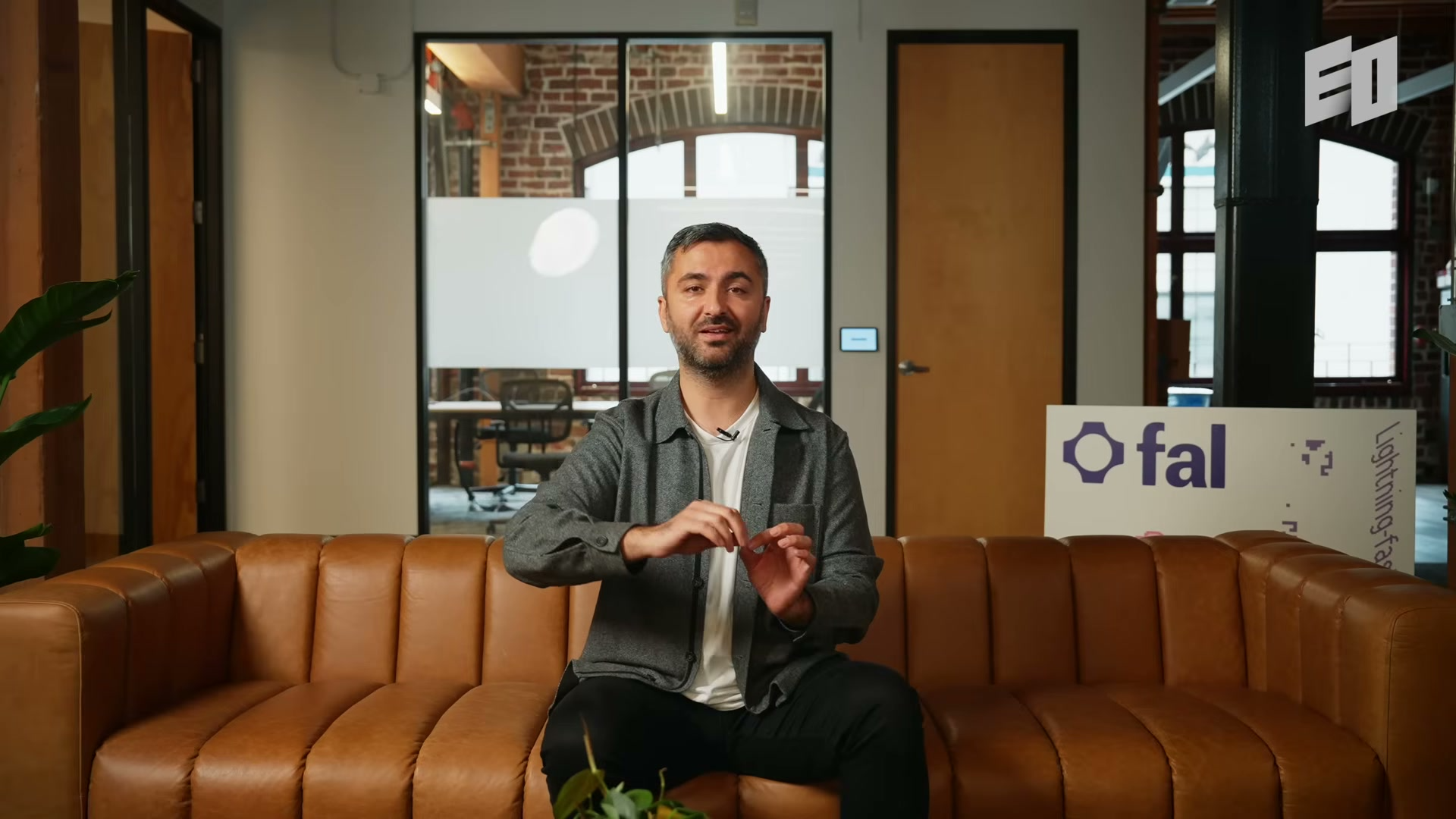
Berkai: What changed after these big models were released is that you didn't have to train it anymore. You can just pick it off the shelf and start building something useful, and that meant the number of users, maybe 10x, 100x, maybe over a million x. We saw this change early on, and we decided, OK, this changes everything. Now that these models are going to be used by millions of people, we have to build systems that we are ready for this change and that's why we decided to build an inference platform.
The Power of Staying Focused
You chose to focus specifically on generative media rather than expanding to language models. Why?
Berkai: Early on, another decision we had to make when the revenue was constant for a couple of months, one tempting thing we could have done, run inference for LLM models as well. Focusing on generative media is going to be an important differentiator. We already have a technical advantage because we've been working on this type of models for a while. If we are wrong, we can always revisit our decision, but it's going to be harder for us to go from general to specific, so we try to stay specific.
I think if you focus on a specific market, you get to work with your users in a closer manner. You understand their problems better. For us, this was image models and fine tuning image models in the beginning. All of our customers were doing very, very similar things, so we were able to focus on it, get really good at it, and differentiate ourselves from others.
I think if you focus on a specific market, you get to work with your users in a closer manner. You understand their problems better. For us, this was image models and fine tuning image models in the beginning. All of our customers were doing very, very similar things, so we were able to focus on it, get really good at it, and differentiate ourselves from others.
Building for the Video Revolution
What's your vision for the future of generative media and fal's role in it?
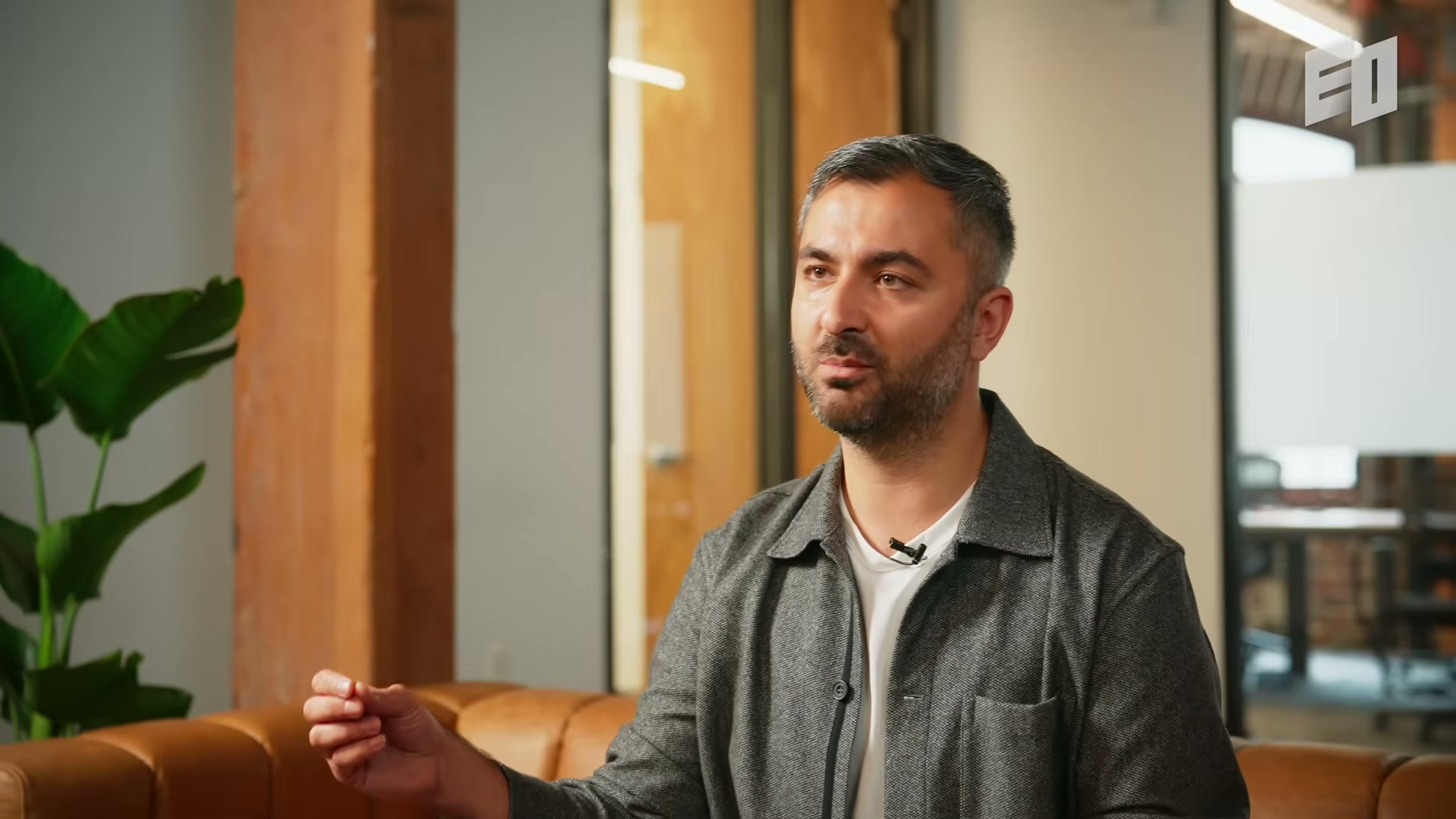
Berkai: So our ultimate vision is basically you want to be the infrastructure layer for this new technology. ChatGPT moment for video is that I don't think we've hit it yet. I think there's a lot of signs like we're getting very close to it. Like if you've seen VO3, it's close to the ChatGPT moment. It's a very capable model, but I think, I think we're still not there yet.
But interestingly, like now if you go to your Instagram, TikTok feed, like a third half the videos are AI generate. It is already happening in a way. It's just happening in like a little bit of a slow motion. There may be a point this year that we see even better models that can actually be edited in real time and you can interact with the characters that are in the video and generate very, very interesting content, and we want to be the place where all of this infrastructure is being hosted and all the builders that are building with this technology, we want them to do that through fal.
But interestingly, like now if you go to your Instagram, TikTok feed, like a third half the videos are AI generate. It is already happening in a way. It's just happening in like a little bit of a slow motion. There may be a point this year that we see even better models that can actually be edited in real time and you can interact with the characters that are in the video and generate very, very interesting content, and we want to be the place where all of this infrastructure is being hosted and all the builders that are building with this technology, we want them to do that through fal.
The AI Business Model Advantage
How is building an AI business different from traditional internet businesses?
Berkai: I think there are two things happening with AI. People are willing to pay, but there are questions about the quality of that revenue or how durable that revenue is going to be. I think AI markets are incredible markets. Generative media is one of those things where it can be monetized right away.
In the previous versions of internet businesses, people waited years and years to monetize their business. First build a user base and then maybe try to monetize. With subscription or ads, but with AI, people are willing to pay for it right away. The MVP you are building should be good enough for people to start paying, and it is really easy to get signs the revenue numbers are increasing or not. Now, monetization should be something, a priority from day zero, and it's actually easier for the founder to see if this is a good idea or if this is a good product by the revenue they are making from from the first day.
In the previous versions of internet businesses, people waited years and years to monetize their business. First build a user base and then maybe try to monetize. With subscription or ads, but with AI, people are willing to pay for it right away. The MVP you are building should be good enough for people to start paying, and it is really easy to get signs the revenue numbers are increasing or not. Now, monetization should be something, a priority from day zero, and it's actually easier for the founder to see if this is a good idea or if this is a good product by the revenue they are making from from the first day.
How do you ensure quality and avoid the 'cherry picking' problem in AI models?
Berkai: We are very particular about what models we want to put because there's a lot of models out there. There's a lot of projects out there, research projects, even things that like big funded companies that put out there that are cherry picked, basically like you take the results and you look at the good ones and you just use those for your demo or like for your launch, so that's called cherry picking. So there's a lot of cherry picking happening in models.
When we look at the model, first thing we do is we take the model, we run the model, and we run a bunch of queries to understand is it actually doing the thing that is advertised, and then we will go and optimize it and make sure it can run faster and faster, especially if there's a lot of demand. Developers, they spent much time optimizing their iterative loop, like making sure that once they do something they can see the results, they can see the tests and go iterate, so no one wants to sit and wait around 5 minutes for a video to generate. In the future this is going to be seconds, it's going to be real time and we're preparing ourselves from an infrastructure standpoint for that future.
When we look at the model, first thing we do is we take the model, we run the model, and we run a bunch of queries to understand is it actually doing the thing that is advertised, and then we will go and optimize it and make sure it can run faster and faster, especially if there's a lot of demand. Developers, they spent much time optimizing their iterative loop, like making sure that once they do something they can see the results, they can see the tests and go iterate, so no one wants to sit and wait around 5 minutes for a video to generate. In the future this is going to be seconds, it's going to be real time and we're preparing ourselves from an infrastructure standpoint for that future.
Scaling with Purpose and Passion
How has scaling the company been different from what you expected?
Berkai: Scaling the company has been one of the most exciting things about this job, to be honest. We were like a very small team, like 6 people for the 1st 2 years, almost. I think small teams is very important before product market fit. You actually do want to have like the smallest team that you can, right, and and and experiment and have a small group making decisions. And move really really fast.
I think this like alignment with the company's mission is very important. This is something people talk about this is another thing like I really learned from Coinbase like Coinbase early days like everyone was a crypto head you would not find anybody that is not, you know, just insanely excited about crypto and and that created the foundation for the company that that is just so it's just so specific and so like. You know, just by default, people are just excited about what they're working on, you know, but one of my criteria was that like I had to love, I had to love it, you know, that was like super important to me, like the intersection of creativity and AI.
I mean, there's like unlimited fun there, at least for me. I wake up every day. I'm very excited about like the next models that are released, what this tech where this technology is going, like what amazing things are people building, it, it is, it is literally like the most fun thing I could be, I could be doing if I wasn't doing this, I would probably go play with these models myself. I, I love this technology and, and that's the thing that's like that, that, you know, gives me a lot of drive.
I think this like alignment with the company's mission is very important. This is something people talk about this is another thing like I really learned from Coinbase like Coinbase early days like everyone was a crypto head you would not find anybody that is not, you know, just insanely excited about crypto and and that created the foundation for the company that that is just so it's just so specific and so like. You know, just by default, people are just excited about what they're working on, you know, but one of my criteria was that like I had to love, I had to love it, you know, that was like super important to me, like the intersection of creativity and AI.
I mean, there's like unlimited fun there, at least for me. I wake up every day. I'm very excited about like the next models that are released, what this tech where this technology is going, like what amazing things are people building, it, it is, it is literally like the most fun thing I could be, I could be doing if I wasn't doing this, I would probably go play with these models myself. I, I love this technology and, and that's the thing that's like that, that, you know, gives me a lot of drive.
Explore more