
"Don't believe in people. Believe in the system." It's harsh advice that cuts against everything we're taught about entrepreneurship and trust. But for CUPBOP's founders, this brutal lesson came at the cost of nearly losing their $100 million Korean food empire.
CUPBOP has grown from a single food truck to over 100 locations across the United States, becoming one of the fastest-growing Korean fast-casual chains in America. But behind the Shark Tank success and explosive growth lies a story of betrayal, partnership drama, and the hard-won wisdom that systems matter more than sentiment.
In this raw interview, CUPBOP's founders reveal how a partner coup nearly destroyed their company, **why they now hire based on happiness over experience**, and the immigrant family story that drives their mission to take Korean food "to the moon."
Watch the full interview now on EO's YouTube channel! Below is the complete transcription of the interview. Minor edits have been made for clarity and readability.
Key Highlights:
"This was another big red flag that I saw when I joined. It's a very common issue that happens among startups. If you think your partner's not your fit, then every single day, every hour's movement is hell."
"In front of me, my husband got fired from those people. They asserted that they owned the majority of the company, which is not true though that party was preparing the coup behind the scenes for maybe about 2 months."
"After a lot of drama, this and that, you know, we ended up with 3 of the partners selling their shares and leaving the company."
"Don't believe in people. Believe in the system. If you want to trust people, you have to have a great system."
"5 famous entrepreneurs, and they won our CUPBOP. When we felt we got betrayed, we felt as if we lost everything, but the greatest lesson we learned from that experience, we needed a system."
"In front of me, my husband got fired from those people. They asserted that they owned the majority of the company, which is not true though that party was preparing the coup behind the scenes for maybe about 2 months."
"After a lot of drama, this and that, you know, we ended up with 3 of the partners selling their shares and leaving the company."
"Don't believe in people. Believe in the system. If you want to trust people, you have to have a great system."
"5 famous entrepreneurs, and they won our CUPBOP. When we felt we got betrayed, we felt as if we lost everything, but the greatest lesson we learned from that experience, we needed a system."
When Partners Become Predators
You mentioned red flags with your original partners. What exactly happened that led to this dramatic split?
Jung: This was another big red flag that I saw when I joined. It's a very common issue that happens among startups. If you think your partner's not your fit, then every single day, every hour's movement is hell.
In front of me, my husband got fired from those people. They asserted that they owned the majority of the company, which is not true though that party was preparing the coup behind the scenes for maybe about 2 months. After a lot of drama, this and that, you know, we ended up with 3 of the partners selling their shares and leaving the company.
In front of me, my husband got fired from those people. They asserted that they owned the majority of the company, which is not true though that party was preparing the coup behind the scenes for maybe about 2 months. After a lot of drama, this and that, you know, we ended up with 3 of the partners selling their shares and leaving the company.
Building Systems Over Sentiment
You learned a harsh lesson about trusting systems over people. How did that philosophy change how you run CUPBOP?
Jung: One of our closest friends, one of the successful businessmen here in Utah, once said, 'Don't believe in people, believe in the system.' Don't believe in people. That is not nice to say, but if I interpret that exact sentence in our own way, I would say if you want to trust people, you have to have a great system, good enough system to trust people.
I think I started off by, one of the first things we did was we created an operations manual that set clear procedures inside our stores that helped kind of stabilize a lot of the inconsistencies between the procedures that we had at different stores.
Another thing that really helped was creating a very aggressive incentive plan for our leaders at the stores because at the end of the day, you succeed when the leaders at the stores succeed. And to do that you have to motivate them, and there are a lot of different ways to motivate people, but money's a common denominator for a lot of people. Generally speaking, we saw a benefit from that pretty immediately.
I think I started off by, one of the first things we did was we created an operations manual that set clear procedures inside our stores that helped kind of stabilize a lot of the inconsistencies between the procedures that we had at different stores.
Another thing that really helped was creating a very aggressive incentive plan for our leaders at the stores because at the end of the day, you succeed when the leaders at the stores succeed. And to do that you have to motivate them, and there are a lot of different ways to motivate people, but money's a common denominator for a lot of people. Generally speaking, we saw a benefit from that pretty immediately.
Can you give us specifics on these incentive plans?
Manager: As a manager, you can get up to $5000 as incentive, and obviously this is depending on how well I run the store, how well my crew are, if they're OK, if they're comfortable, and I think it inspires us to do better as well, because we look forward to those incentives, and we look forward to getting excited about it, so it motivates us to do better. Personally, I've gotten about up to $4000.
Jung: So when we had 5 partners, I cared about some people, so I couldn't do my job because I focused on my partners. But after those 3 people are gone, me and Doug, we just think about how to make CUPBOP great again. We want to beat Panda Express. Me and Doug, I cover front, Doug covers the back, so we cover 360 with our own crews. That's our partnership structure right now.
Jung: So when we had 5 partners, I cared about some people, so I couldn't do my job because I focused on my partners. But after those 3 people are gone, me and Doug, we just think about how to make CUPBOP great again. We want to beat Panda Express. Me and Doug, I cover front, Doug covers the back, so we cover 360 with our own crews. That's our partnership structure right now.
Swimming With Sharks
You appeared on Shark Tank and landed a deal with Mark Cuban. How did that come about?
Doug: I used to always tell Jung, if there's one thing that keeps me up at night, somebody will copy our concept, come in and raise a lot of money and start just going at full speed and all of a sudden they become the first mover and they're recognized as the Korean brand, right? And that was always my biggest worry. I used to always tell Jung that and said, we need to really somehow get our name out there to establish ourselves as that first mover. How do we do that? And Jung just said, 'Let's get on Shark Tank.'
Jung: That day I submitted my paper, about 10 different auditions. I think we passed phone call, video, and FaceTime. It was super hard to get in the Shark Tank. I think the biggest strategy was let's make sure that we get interest from everybody, right, because at the end of the day that's a confirmation of how attractive our business is to investors. So for us it was let's go out there. Let's show our energy. Let's show them what CUPBOP is all about, and let's see what they come back with.
Doug told me, 'Hey, my goal is to not have subtitles.' I lived in the US far too long. It would be embarrassing to have them put subtitles for me, which they didn't. So I think we succeeded in both.
Jung: That day I submitted my paper, about 10 different auditions. I think we passed phone call, video, and FaceTime. It was super hard to get in the Shark Tank. I think the biggest strategy was let's make sure that we get interest from everybody, right, because at the end of the day that's a confirmation of how attractive our business is to investors. So for us it was let's go out there. Let's show our energy. Let's show them what CUPBOP is all about, and let's see what they come back with.
Doug told me, 'Hey, my goal is to not have subtitles.' I lived in the US far too long. It would be embarrassing to have them put subtitles for me, which they didn't. So I think we succeeded in both.
What was it like being in the tank with those legendary entrepreneurs?
Jung: Super fun. After we're shooting, I don't know how to explain this kind of feeling. It was great. They are one of the top 5 famous entrepreneurs. In front of me, they want our company so badly. They're fighting each other more than us. They ate a whole bowl, one shark asking $5 million. But we made a deal with Mark Cuban. He's the big dog. He's the legend guy.
It was a super fun experience. And after that, a lot of people recognized our face. 'Oh, the Shark Tank guys, the Shark Tank boys, the CUPBOP boys,' they recognize us a lot.
It was a super fun experience. And after that, a lot of people recognized our face. 'Oh, the Shark Tank guys, the Shark Tank boys, the CUPBOP boys,' they recognize us a lot.
From Homeless to District Leader
You have an incredible story about one of your employees. Can you tell us about Mike?
Jung: I want to share another story. His name is Mike, Mike Dimmick. He was homeless. He had no house, he had no car. He started working with our company like food truck crew, part-time, dishwasher. That was his job.
Guess what? He became a commissary guy, he became a general leader, he became a district leader. Now he covers the whole Colorado market. This guy put all his power and all his passion into his job doing CUPBOP together.
Whenever I see him, that's my happiness right there. Whenever I saw that happening in our company, he actually came to me, he hugged me and he cried like a baby. I cried. The big man, he told me, 'Whenever somebody can touch you or anything, just let me know. I'm your bodyguard forever.' That's my motivation right there.
Guess what? He became a commissary guy, he became a general leader, he became a district leader. Now he covers the whole Colorado market. This guy put all his power and all his passion into his job doing CUPBOP together.
Whenever I see him, that's my happiness right there. Whenever I saw that happening in our company, he actually came to me, he hugged me and he cried like a baby. I cried. The big man, he told me, 'Whenever somebody can touch you or anything, just let me know. I'm your bodyguard forever.' That's my motivation right there.
This seems to reflect your hiring philosophy. What do you look for in employees?
Jung: When you look at our interview papers, first question is, 'Are you happy?' We're not asking your name, we're not asking your education, we're not asking your experience.
I want to make another Mike. I don't want to give a ceiling to everyone. I want to give everyone a fair opportunity so they can go higher and higher and higher. Nobody can stop them because remember, our company goal is to take CUPBOP to the moon. That motivation cannot stop because I want to give more opportunity to my people, so we can grow our business together, not only by myself. We have to work together so we grow together.
I want to make another Mike. I don't want to give a ceiling to everyone. I want to give everyone a fair opportunity so they can go higher and higher and higher. Nobody can stop them because remember, our company goal is to take CUPBOP to the moon. That motivation cannot stop because I want to give more opportunity to my people, so we can grow our business together, not only by myself. We have to work together so we grow together.
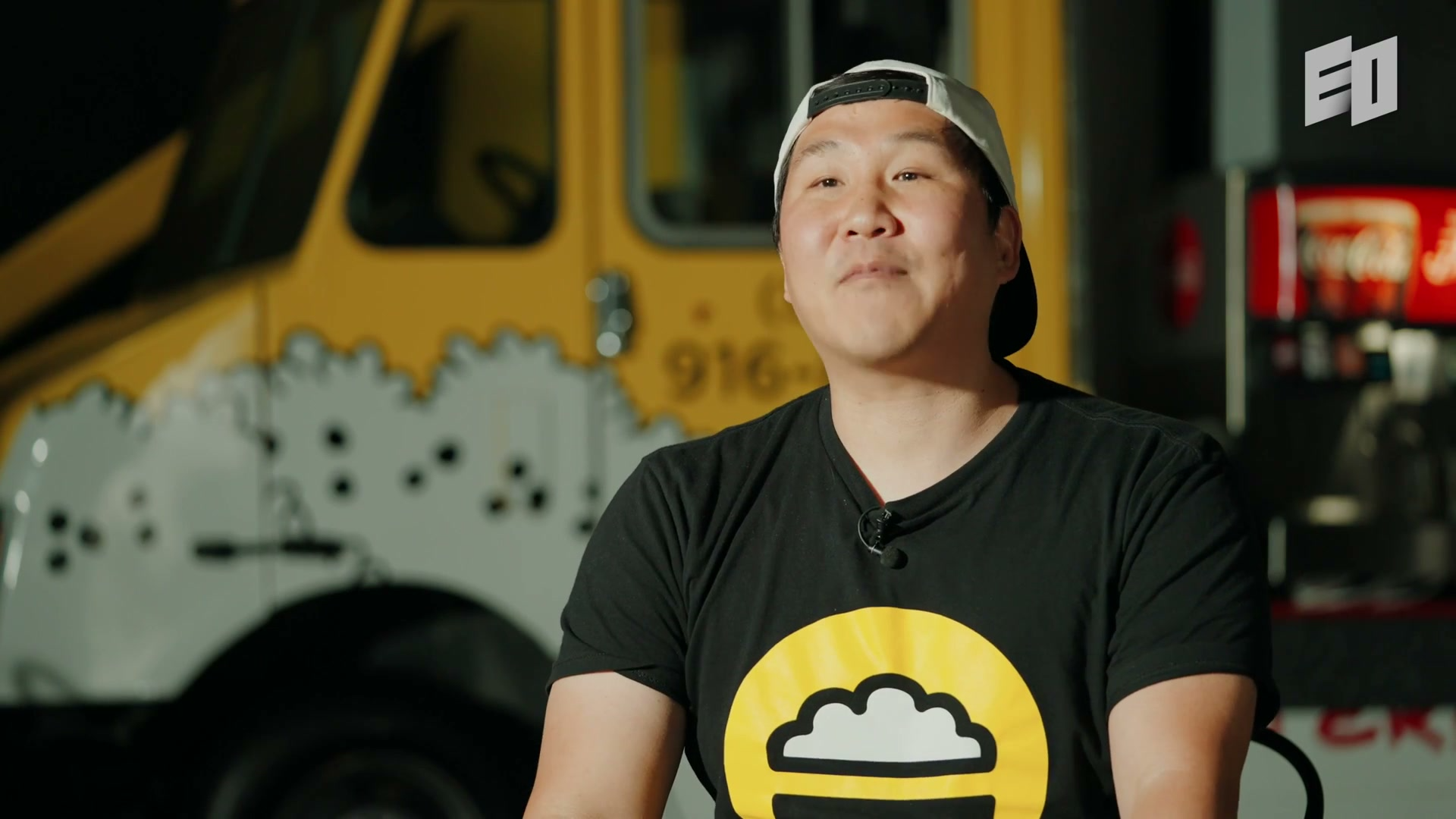
The Family Behind the Empire
Behind all this success is your family story. What has this journey been like for your family?
Jung: If people look at this video, they would think, 'Oh, they're very successful,' or 'They're becoming successful,' but we're just really, really, really normal people who are trying to succeed.
My husband used to drive a food truck to all different kinds of festivals because my husband was always busy day and night. The only way my kids were able to see their dad was I had to take my kids to the festivals with my husband together, so we always had a tent in our trunk. My kids were playing in the tent and then I was selling food with my husband. That is one of the greatest memories we still have.
My husband and I, we talked to each other like, 'We came this far only because of you,' or 'because of me,' but we grew together. If we hadn't gone through what we've been through together, I would have never ever got to love this man this much.
I used to call my husband a spring. Spring feels comfortable. Now my family, including our five children, is a spring to me, and they make me confident because of them, because of my family. I can do everything. There's nothing impossible.
My husband used to drive a food truck to all different kinds of festivals because my husband was always busy day and night. The only way my kids were able to see their dad was I had to take my kids to the festivals with my husband together, so we always had a tent in our trunk. My kids were playing in the tent and then I was selling food with my husband. That is one of the greatest memories we still have.
My husband and I, we talked to each other like, 'We came this far only because of you,' or 'because of me,' but we grew together. If we hadn't gone through what we've been through together, I would have never ever got to love this man this much.
I used to call my husband a spring. Spring feels comfortable. Now my family, including our five children, is a spring to me, and they make me confident because of them, because of my family. I can do everything. There's nothing impossible.
Explore more