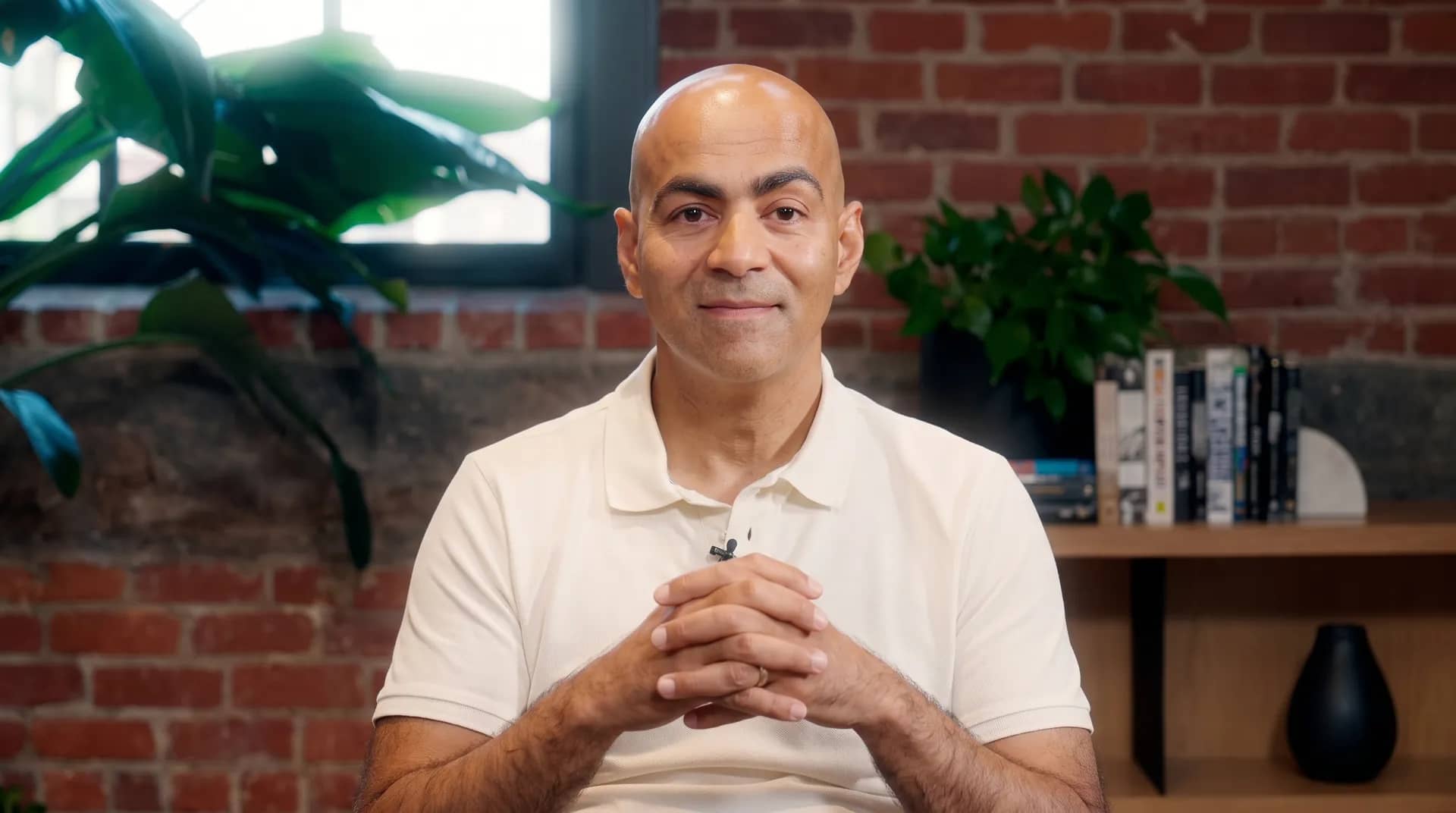
Interview with Jim Rose & Rob Zuber of CircleCI
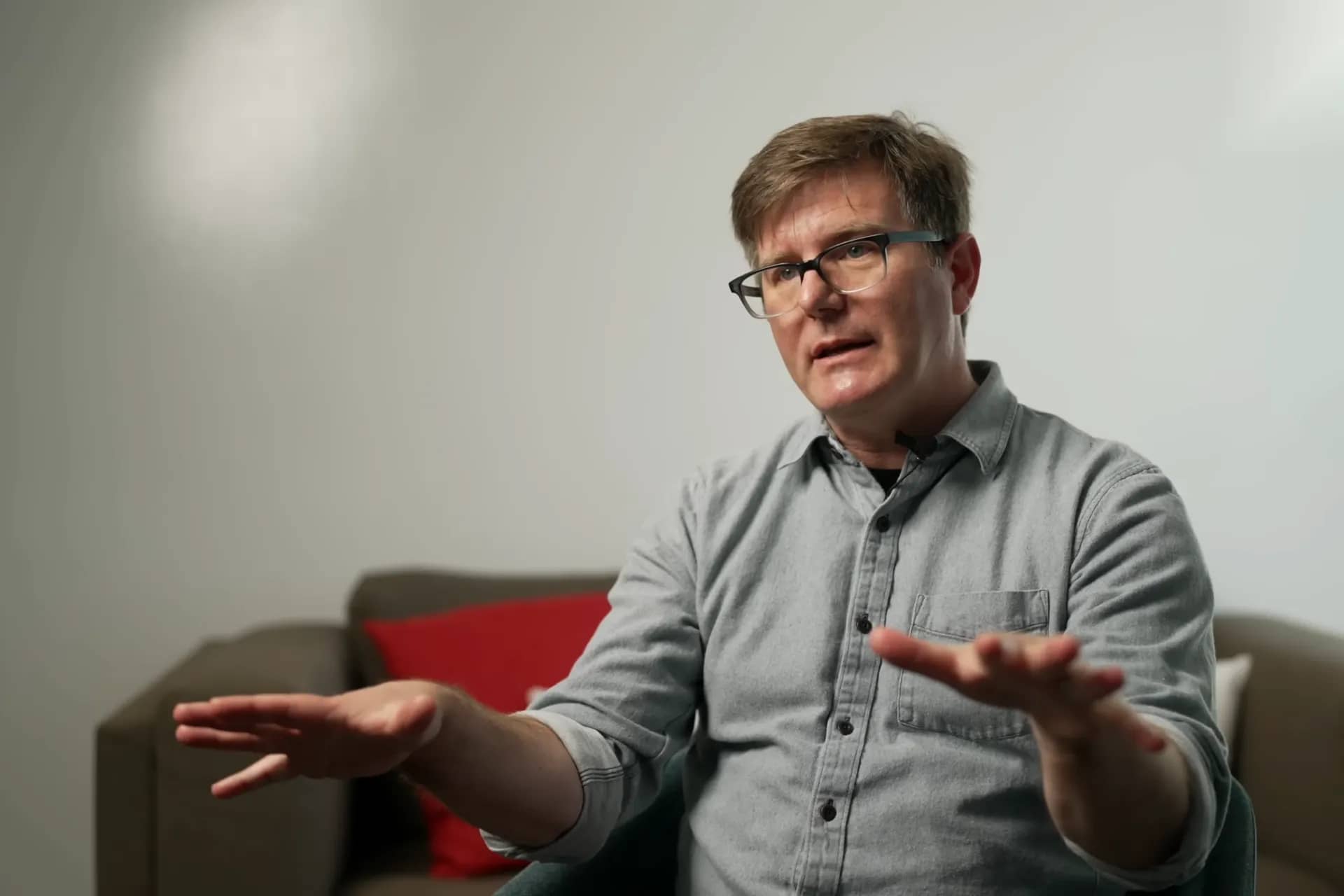
At a Glance
- Who: Jim Rose is the CEO of CircleCI. Rob Zuber is its CTO.
- What: CircleCI is a continuous integration and continuous delivery platform. It builds, tests, and validates every code change before it reaches customers.
- Traction: CircleCI has surpassed $100 million in revenue with more than 300 employees worldwide. Its customers include Hugging Face, Weights & Biases, and the U.S. government.
CircleCI's CEO, Jim Rose, and CTO, Rob Zuber, sit down to discuss a few of the lessons learned as they grew CircleCI to $100M+ in revenue. In this video, they share insights about how to build a winning team, the key to finding and keeping product-market fit, and what it takes to future-proof your business against new technology like Generative AI. While the risk for startups is high, there are many ways SaaS platforms can stay ahead of the competition to come out on top.
Key Takeaways:
Why You Should Target Big Markets Even If Your First Product Looks Like a Toy
Going after a market with only $10 million in potential means capturing all of it or failing. Going after a $100 billion market gives you dozens of paths to the same $10 million in revenue, so pick markets big enough that you can be wrong and still survive.
Why Chasing the Trend of the Moment Is a Losing Strategy
Trend half-lives are shrinking faster than ever, and generative AI is accelerating that further. Staying anchored to the actual value you deliver a customer, not this month's flavor, is what keeps a company from getting whipsawed.
Co-Founder Fit Is About Compatibility, Not Just Complementary Skills
A great co-founding team isn't just a collection of skilled individuals, the way a basketball team full of stars can still lose if the pieces don't fit. Social compatibility, and being brutally honest about what motivates and frustrates you upfront, matters more than matching skill sets.
Your First Hires Become Your Culture, Whether You Plan It or Not
Early-stage founders take whoever is willing to take the pay cut and the risk, but those early hires end up defining the company's culture by default. Getting them bought in early is what lets that culture actually take hold.
Customers Are Great at Describing Solutions and Bad at Describing Problems
When a customer tells you what they want built, that request is shaped by their specific instance of the problem, not the underlying problem itself. Founders have to listen past the proposed solution to find what's actually broken.
Usage-Based Pricing Won CircleCI Better Customer Relationships
Shifting from flat capacity pricing to usage-based pricing meant customers only paid CircleCI when they were actually building software. Aligning cost with the moment value gets created made customers far more willing to pay.
Finding Product-Market Fit and Keeping It Are Two Different Jobs
Landing on the thing customers want doesn't mean it stays that way. The same paranoia and drive to understand the customer that got you to product-market fit has to continue, or you'll drift out of it without noticing.
Below is the complete transcription of the interview. Minor edits have been made for clarity and readability.
Introducing Jim and Rob, CEO and CTO of CircleCI
Jim: My name is Jim Rose, and I'm the CEO of CircleCI. and this is Rob Zuber, CTO of CircleCI. CircleCI is a continuous integration and continuous delivery platform. Think of it as the manufacturing system for software: when developers make a change to an application, you want to be able to build, test, and validate that the change is good before you put it into the hands of your downstream consumers. We're at a pretty decent scale. We're more than $100 million in revenue, and we're about 300-plus folks distributed globally. We work with organizations of all sizes, including companies like Hugging Face and Weights & Biases, as well as the U.S. government.
What Founders Should and Should Not Do
Jim: It's been an interesting market over the last ten years. I think the first thing is you always want to recognize that the market is cyclical. There are going to be ups, there are going to be downs. As an entrepreneur and as a startup, your job is to not get too high, and by the same token, not get too low. You want to make sure you're charting a path and staying stable, and making sure you're doing the best thing you can. But if you're building a good business, building something that's valuable, something your customers enjoy, you're going to be fine. There are very, very few overnight successes. But usually, if you look at most great companies, they've been at it, working hard and growing, over the course of five, seven, ten, fifteen years.
What I have found is that you need two things to be successful as an entrepreneur. One is you need to be inherently very curious. You have to always be trying to figure out what makes things tick, what's interesting right now, what kind of problems you're running into. The other part is you have to be able to step back and see problems not just at a small, microscopic level. You have to be able to zoom out a little bit and look for patterns, because great opportunities and great businesses, oftentimes, while they start with a very unique point solution or point insight, it's usually the companies that succeed over a long period of time that have the ability to zoom out and say, oh, that one point is actually related to these fifteen other things. What if we could solve seven of them?
What do you have to avoid as an entrepreneur? You have to avoid getting too swayed by the flavor of the day, or the trend of the moment. Trends are trends. One of the things I see happening so much right now is the half-life of trends is getting shorter and shorter, and our attention span is getting shorter and shorter. You have to figure out how to be aware of it, but then ultimately be in a place where you can ride it out and understand the value you're adding for a customer, and not get distracted.
If you're focused on an area where there's a lot of users or a lot of money spent, it gives you a lot of ability and affordance to be wrong. If you're going after a market where there's only $10 million spent, and only $10 million of potential, you're going to have to figure out a way to get all ten of it. Whereas if you're going after a market that's $100 billion, there are lots of different ways to get to $10 million in revenue. Focusing on very large opportunities and large pools gives you a lot of flexibility to try new things, and a lot of different ways to choose your own adventure to get to size and to get to something meaningful.
Oftentimes, the thing you build that's going to be meaningful is going to be seen as a toy by everyone else. That's how you establish a way to generate something meaningful to ten users, or a hundred users. Once you find that thing that attaches, that becomes meaningful to your customer, that's the spark. So you want to target markets that are big, but target opportunities you can get to quickly, so you can better understand: am I on the right track, am I solving a real problem, do the customers enjoy the thing we're building and delivering to them, so we can continue to invest, reinvest, and grow.
How to Build a Compelling Team
Rob: A co-founder relationship is a very long relationship, and it's very difficult to exit. I met Jim through our third co-founder at Copious, and Jim and I went for coffee. He gave me a bunch of insights into the business, as someone who had never even worked on it, that were really interesting and compelling to me. Very insightful. I thought, this is someone who really understands product, who really understands the kinds of things you face in a startup, and I thought it would be really interesting to work together.
I will say many early-stage investors spend all their time trying to understand the dynamics of the team and the relationships between the people, because that is the biggest challenge. If I were considering starting a company with someone, I would be extremely honest about who I am, what motivates me, how I work, what frustrates me, and I would want to hear the same from that potential co-founder. That's how you know you're going to work together, because otherwise you're going to invest years of your lives in something that's going to collapse.
Jim: Your best partnerships are going to be people you enjoy as people. You want to not just find people who have the skills you believe you need, that might be complementary to what you do, but people who are socially compatible with you, so the team can work well together even when things aren't working well. They may all be incredibly skilled. It might be like a basketball team: you have somebody who's great at shooting three-pointers, great at driving to the hoop, and somebody who's really good at getting rebounds. But if the pieces don't fit well together, you're not necessarily going to have a great team. What you're really trying to do is build a great team, and not get too fixated on the independent skills of all the individual players. That I think gets lost far too often is that most founder blowups.
Rob: I think that is a real struggle super early-stage startups, because you can barely find anyone who's willing to take a pay cut, take on all the risk, and join you. You're super excited to have anybody who says they're willing. But the reality is those early hires are the most important ones you will have. They will work with you to define and structure that culture. It's really important those early folks are bought in, because that's what helps you amplify and build the culture you've defined.
Important Factors for B2B Companies
Jim: You should focus on getting out and talking to as many customers as you can. Inevitably, the thing you have to fix, or really fixate on, is: what is the problem we're actually solving for the customer? The only way you can figure that out is by going and talking to them. Customers are great at telling you what their solution would be. They're not always so good at articulating what their problem is. Be less concerned about the solution they're telling you, because their solution is inherently going to be directed at their specific instance of the problem.
Oftentimes, when you're getting negative feedback, those are actually the most valuable conversations. Too often, as an entrepreneur, it can be very raw when you're talking to a customer. Sometimes customers will definitely not like what you've built and delivered. When you're an entrepreneur, the thing you're building and putting into the hands of the customer is a representation of your time and effort. Oftentimes, when you get negative feedback, your natural reaction can be to lean back and recoil, to protect yourself. You need to be leaning in, digging into the why: why are we a little bit off the mark, why are we not actually able to solve it?
When you start, you're solving the problem for the customer, whatever that problem is. As you get bigger as an organization, as you accrue expertise, there's some point where you become the expert in the problem. You have to go from consuming information from the customer to being in a dialogue with the customer, where the customer keeps telling you what their problem is, but what you need to invest in, in that relationship, is your expertise in that particular problem. In the world of CircleCI, we've seen the customer problem from probably eighteen different angles more than the customer has. The customer tells us their problem, we share with them what we've learned over time, and then we come up with some kind of joint solution. It's a tight balance: you have to figure out how much you listen versus how much you contribute. That balance changes over time.
When I joined in 2014, the pricing model was established around that time. As people were getting more comfortable with things like elastic compute and cloud offerings, they were getting more oriented toward capacity or usage models, meaning: use this VM in EC2 for X number of hours, and pay exactly for those hours. Those models were even shifting to by-the-minute pricing, so pricing was becoming much more dynamic based on usage. Our customers were asking us, why am I paying for this fixed bandwidth on the weekend? We shifted our entire pricing model to be usage-based, and that took a long time to transition. Introducing new pricing is hard, getting people to shift is hard, and then getting the last people off the old model is hard too. From a tech platform perspective, you don't get to turn off all those parts of your platform until you've gotten the last customer off of them. The first customers are exciting, but then you're doing two different things. So we went through a big transition, but that has ultimately paid off.
My takeaway and advice from our changes in pricing strategy is that ultimately, when customers feel like what they're paying you is directly aligned with the value they're getting, they're much more likely to pay. In the usage-based model, for us, it's: when I'm building software, I'm paying you to help me build software, and when I'm not, I'm not paying you. That much better aligns with their perception of the value they get, versus a capacity model, where even when I'm not using it, I'm paying for it. That transition really allowed us to have a better relationship with our customers around value, and them paying for the value they get from us.
Find PMF as Early as Possible
Jim: Startups don't die, startups run out of money. What you want to do, depending on how much money you have, is give yourself as many chances to find product-market fit as possible. That means you have to keep your development cycle as short as humanly possible, and keep the feedback cycles as immediate as possible. Even big, well-funded startups that don't succeed, oftentimes the length of the development cycle is way too long. They're spending months, if not quarters, and in some cases years, perfecting a technology they have no idea if anybody's actually going to use.
What you want to do is build something meaningful enough that when you put it into the customer's hands, the customer can react in a way that tells you whether you're on the right track. Especially with your early users: your earliest users are going to expect that first version of the thing you put into their hands to be rough, to be jagged, there are going to be things that don't work. But if you find something that directly addresses the customer's need, they'll grab it, even with the rough edges. When you find product-market fit, you will feel it. You won't know why it happened, but you'll feel the market pull. The only way you can find that out is to ship fast and ship early.
Having product-market fit and keeping product-market fit are not the same thing. Don't assume that once you've nailed it, it's always going to be the same. [editor's note: passage unclear in source recording. Reconstructed as closely as possible: "usually, the thing that got you there won't get you there again."] The paranoia and drive to absolutely understand your customer and their need should stay. The desire to iterate quickly, to always be improving and experimenting, don't lose that just because you suddenly feel like you found it and can do something different now. It's a question of building on top of your drive for a brilliant product, not parking that and doing something else. What else do you add on top of that?
You're going to get much higher leverage on your go-to-market and marketing strategy when you have a product that people love. Later, depending on the scale and type of your customers, you might also do direct sales. Direct sales can be an expensive proposition, so you want to know you're in a place where that's the kind of customer you have to go after. The more you can do on self-serve, product-led growth, the better you're going to be in the early days. Then a lot of it is tweaking: okay, people love the product, but there's a lot of energy required to get into the product. Maybe the onboarding flow is complex or hard to understand. How can we tighten that? Where are we losing people?
Really pay attention to how people are flowing through, because pre-product-market fit, you probably don't have enough users going through your product to really understand. But now you're seeing: lots of people are going through, they all get to this spot, and something goes wrong. We lose a bunch of people here. What is that? Can we go talk to customers, can we look at the data, how do we improve that? Really open up the funnel to make sure people are converting. Then marketing pours fuel on the fire, drives people in. But pay attention, because you'll drift from product-market fit, and if you lose it, you're pouring money into something that's not working.
Find the Inherently Unique Value for Your Customers
Jim: Developers, and the technologies that people ultimately select, are often chosen because somebody else said it was cool. A technology used to come and go every three to six months. Now it's more like five to ten days, and in the world of generative AI, it's going even faster. Most development teams working in generative AI plan their world in six-week cycles, because the technology you started with six weeks ago may not even be relevant six weeks later. You want to stay as close as possible, at least in our case, to the developer, the user, the practitioner, because they're the ones who ultimately best understand the technology they're using and can give you the greatest feedback. They will continue to use a technology that actually solves their problem, and they are very quick to throw away stuff that doesn't work.
If I were looking at the AI space as a company or an entrepreneur, I would wipe the slate clean and try to find things I thought were inherently unique, and get very creative. It feels very similar right now. I think the people who are really going to succeed will come up with ideas that today feel very radical, but in two or three years will feel incredibly normal. What's normal in three years is going to feel very different today. I would encourage people to be as creative as possible. The second part of that is thinking very deeply about what you can do that's uniquely valuable to the customer, that is defensible over time.
What you're seeing right now is that as people try to take similar activities to what we did before generative AI existed and just automate them, a lot of it just gets easily displaced. The big foundational models, the big vendors of today, look at a unique niche application somebody might have, and they just do it better and more cheaply than some of the other providers can. Then you watch entire parts of the market disappear. I think that's pretty natural. But if you're an entrepreneur, you want to find something that's inherently defensible, some reason that you, as a company doing it over time, accrue more and more value and more and more differentiation, that somebody can't come in and take away from you. And that someone who comes in and takes it away from you is probably going to be a Fortune 500 company that has infinitely more money and can do things at a lower cost. So you have to find something that's very unique and valuable.
One of the huge benefits of being a startup, of being an entrepreneur, is that you're unencumbered. You don't have to worry about the way it was done before, you don't have any customers, and you can come up with something entirely new. I think that's how you find success: finding something truly unique, something truly inspirational, and spending your time there. Because most startups are going to fail. Very few of them succeed. The chances that you're going to succeed aren't very high. But the way you succeed is by trying to do something meaningful. If you're doing something truly inspirational and meaningful, maybe as a startup, with the first thousands or millions of dollars you invest, you're able to get twenty percent of the way there, and you're able to hand the baton off and go join a larger organization that helps you get it to the finish line. But if you're just doing an interesting facet or feature of somebody else's platform that's easily copyable, there are better ways to spend your time.