At a Glance
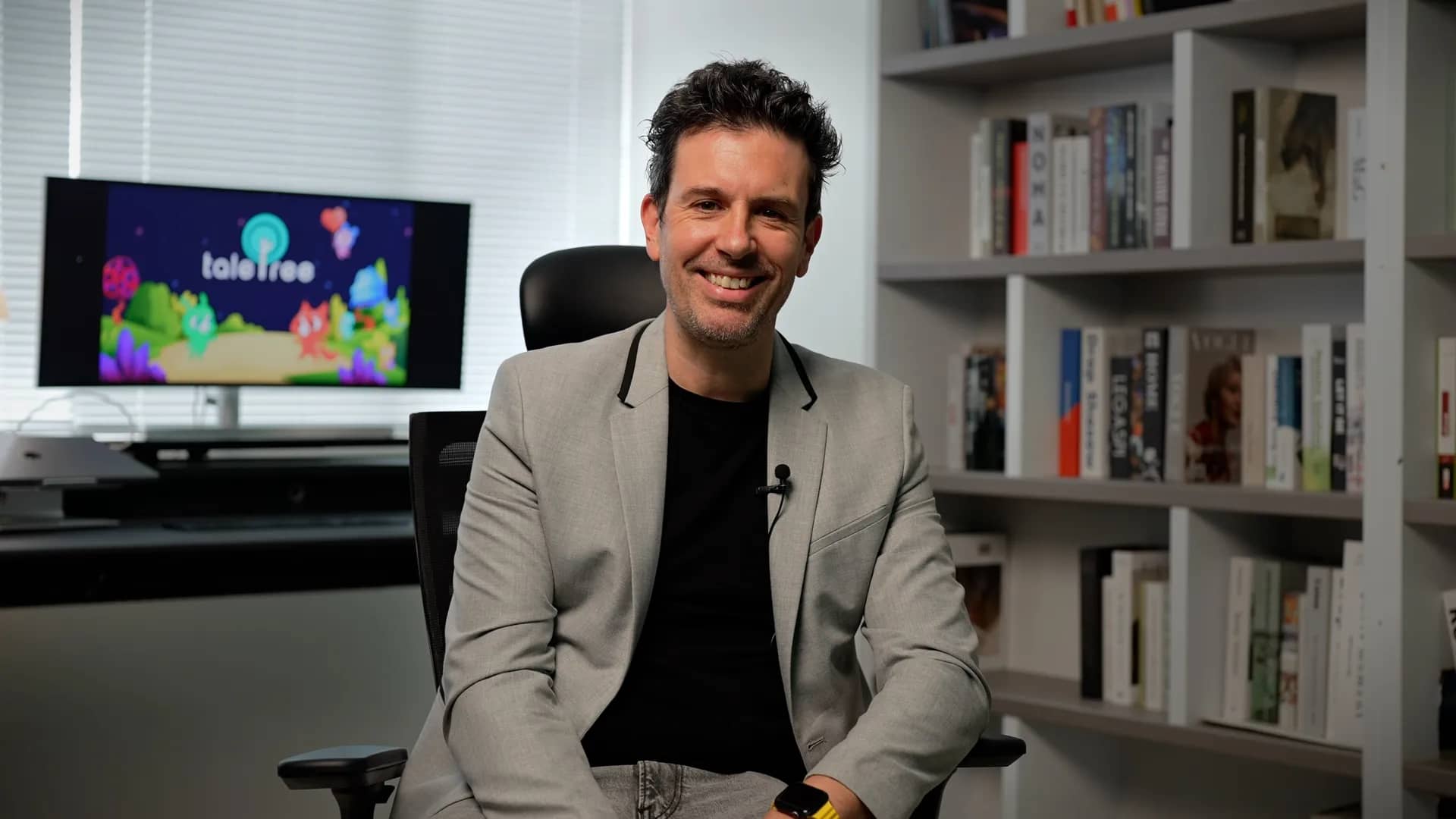
- Who: Sid Yadav is the co-founder and CEO of Circle, the all-in-one community platform for creators and brands.
- What: Circle lets creators build a home for their online community, run events, sell courses, and share content, all under their own brand.
- Traction: Circle went from roughly $0 to $1 million in annual recurring revenue within three months of launch, then grew to $4 million, $8 million, and is on track to reach $16 million this year.
In this interview, discover the inspiring journey of Sid Yadav, the visionary co-founder and CEO of Circle. From his early days as a reserved tech blogger in New Zealand to becoming a formidable entrepreneur in the United States, Sid's story is a testament to the power of innovation and perseverance. Circle, recognized as a premier all-in-one community-building platform, empowers creators and brands to connect and thrive.
Key Takeaways:
Curiosity Comes Before Passion, Not After
Yadav didn't wait to discover a passion before committing to something. Writing led to coding, coding led to blogging, and the passion only showed up once he'd stuck with it long enough to get good.
Why Meeting His Idols Made the Dream Feel Achievable
As a teenager, Yadav talked his way into an interview with YouTube's founders and came away struck by how ordinary they seemed. Realizing his heroes weren't fundamentally different from him turned a vague ambition into a concrete plan to get to Silicon Valley.
How Circle Found Its Idea by Listening, Not Brainstorming
Yadav and his co-founders didn't start with community software. They interviewed potential customers about their day-to-day problems first, testing ideas like a creator bank and an education product before the real insight, that community tools were disconnected from where creators actually ran their business, emerged from those conversations.
Personal Demos Do Not Scale. Circle Built Its First Thousand Customers on Them Anyway.
Yadav personally ran a thousand product demos in Circle's first year and gave his first 200 customers his own phone number. That hands-on, unscalable approach is what let the product improve fast enough to eventually sell itself.
The Real Filter for a Startup Idea: What You're Actually Good At
Circle's founders considered a bank for creators and an education business before settling on community software, not because it was the biggest opportunity but because it matched what they already knew how to build.
Watch the full interview now on EO's YouTube channel! Below is the complete transcription of the interview. Minor edits have been made for clarity and readability.
Introducing Sid Yadav, Co-founder and CEO of Circle
Hi, I'm Sid Yadav. I'm the co-founder and CEO of Circle.
Circle is the world's leading all-in-one community platform for creators and brands. With Circle, you can build a home for your online community, run events, sell courses, and share your content all in one place, all under your own brand. We started the company in 2019. The first year was private beta, so when we launched, we went from almost 0 to 1 million ARR in about three months. Then in 2020 and 2021, we went from 1 to 4 million ARR a year, so 4x that year. It went from 4 to 8, and this year we're on track to grow 2x again, so 8 to 16.
Childhood
So my parents immigrated when I was ten to New Zealand from India. They were needing to immigrate because they wanted a better life for me and my brother, a better education. They came over without a job. My dad was over 40, enrolled in a university program, and we lived off student loans for four years.
As a child, I was very introverted. In India, I had a lot of friends, I would play outside, I wouldn't use a computer. In New Zealand when we immigrated, I didn't have that many friends, so I would just stay at home. We got a $5 computer from a thrift store and I couldn't get my hands off it. I would come home from school and build websites. I learned how to code at age 11 or 12.
Once I started coding a little bit, I realized that there's a whole world of technology companies in the US. So I read a lot about Apple, Steve Jobs, Microsoft, Bill Gates, and all of them had a very similar story, which is they also started in technology at a very young age and were obsessed with computers, so they became my idols.
It was a very exciting time when I started blogging. This was in 2004. Facebook was just launching. I remember having a Myspace account before Facebook. Every two or three weeks there would be a product launch that would inspire me. I remember using YouTube before Google bought them, back when they were actually a dating site. I reached out to the founders of YouTube. I was probably 14 or 15 back then, and they gave me an interview. They were just two very normal guys, and I remember thinking, they're not that different from me. They also started coding at a very young age. They live in America, they live in Silicon Valley, and it really felt like it was a land of opportunity.
Every two weeks I would write about something new that YouTube had shipped, how the product was evolving, and I did that for tens of other companies. As a teenager, I always remember thinking, most of the world that we live in doesn't change that much. But in technology, every six months, every 12 months, there's something new, there's something exciting, there's something going very big. In my head, as a teenager, I was already an entrepreneur. I just had to get to the US and make it real. But in my head, I already saw myself as one of these guys.
I saved up my blogging money. I had a second cousin, a distant relative who lived in Silicon Valley who had just graduated from Stanford. I emailed him. I didn't know him very closely back then, and he very kindly offered to host me. He picked me up from the airport, took me to see Stanford, took me to the Google headquarters. His sister worked at Google. That was my first experience in the US, as a 16 year old. My mind was blown.
About five years after that, when I was towards the end of my CS degree, I visited Silicon Valley. I thought maybe I should check out New York. I had another cousin who lived in New York, so I was staying with him for about a month. He's the one who introduced me to a startup that he was interning at. They were looking for their first engineer, first designer, and if he hadn't offered me that, I don't think I would have come to New York.
One Failure & One Success
At my first startup, it was a massive learning experience. I was the first engineer, first designer. That was a seed stage startup. What I got to learn there is, just because you've raised $1 million doesn't mean that the company will succeed. You have to grow, you have to show metrics, you have to build a real business to get beyond that point. I worked 80 hours a week. I had nothing else to do, and I put my heart and soul into making that company a success.
The startup could never raise a Series A round. About two years in, I realized that startup was not going to work out, and I left.
What led me to Teachable is I also realized that I needed more work experience before I could be an entrepreneur myself. I wanted to join another early stage startup, another founding team that I could learn from. I went in for an interview. It was a team of five people back then. It was such a great interview, such a great chat, where I felt like we already became friends, and I wanted to learn from these people. I loved the market.
Teachable is all about empowering online educators to build a course business. I didn't know that it would get so big back then. This time the company grew and found product market fit.
My role changed at Teachable every six months. I started as the first designer and the second or third engineer. About six months into that, there were more engineers, so I became the lead designer and focused on design. About six months after that, the company needed a PM, and eventually I was promoted to VP of product. I didn't know much about product management back then, but the team really trusted me.
Every week I would try to meet with two or three senior product leaders in New York City for coffee. I would email them saying, hey, I just became head of product, I don't know what I'm doing, but I would like to learn from you, can I get you coffee, I'll meet you anywhere you like. That was a massive learning experience.
I also made a lot of mistakes at Teachable, as a first time manager, first time VP. But it was such a learning experience, where at a very fast growing startup environment, you get to flex all your muscles and you become better, because the stakes are high and you are trusted to get the work done. That's what the Teachable experience meant to me: one, falling in love with the creator space, and two, getting to level up as a human being, as a manager, as a leader.
At Teachable, when we first started in 2014, no one was using the word creator. We called them online educators.
After I left Teachable, this was in early 2019, I knew that I wanted to build something in this space, and I knew that I was going to partner up with two of my co-founders. I'd known these guys from the Teachable days. We've now worked together for about ten years. I knew who I was building a company with, I knew what space I was going to be in, but I didn't know what the idea was.
During that day, what we would do is we would try to talk to as many people as we could about what their day to day looked like in building a business, what opportunities they were seeing, and what problems we could help with by building a product. Circle was not actually the first idea we had. One idea was to make a bank for creators, to be able to give them loans. Another idea was around education.
What really ended up with us deciding on Circle as the community product, eventually, was what we found when we were talking to the initial customers: community, for a lot of them, was very disjointed from what their intention was. To give you an example, we spoke to a YouTuber who was a teacher of the German language, who had an online course teaching primarily students how to learn German, and he had a community on Slack that was entirely disjointed from where his members were, which was on their online course. That disjointed experience made us realize that there really needs to be one product that caters to all of these needs: building a community online, being able to sell an online course, being able to run virtual or even in-person events. That was the initial goal of Circle, which is really to build that unifying experience, build a home for all aspects of community, not just the chat experience.
When we showed the mockups to the people who were talking to us, and we asked them, hey, is this the product you would want, a lot of them said yes. A lot of them wanted to commit before we even built the product to becoming a paying customer. That was very exciting. We could build an education business, but that's not our expertise. We could build a bank for creators, but we're not finance people. But we know how to build a SaaS product, which is an all-in-one platform for creators.
We actually built the first version of Circle within three months after having the idea. After we pitched to some of the people in our network, we found that a lot of them loved the idea. I'm a designer, my co-founder's a designer, so we designed the ideal product before we wrote a single line of code. We aligned on the values of Circle as a company, and we booked ourselves an Airbnb in Santa Monica to build the MVP.
Within three months, we had a very early version of Circle. It wasn't the best product, but it was enough for us to get our first customer, and our first ten customers that way. All of those customers, in fact I'd say up to the first thousand plus customers, had to be sold and onboarded by me or my two co-founders.
In the first year of Circle, I did a thousand demos myself. I would compile the feedback, I would learn about what people were observing about the product, what their needs were. That would inspire me to build. Part two of my day would be to code and to build a lot of the feedback that I'd gathered. We would evolve the product, we would make it better, we would then reach back out to some of those early demos and say, hey, it's a lot better now, try it out, what do you think.
For the existing customers, we would solicit a lot of feedback. All of the first 200 customers had my phone number, so they could text me at any time. A lot of them were in our Slack, giving us very concrete feedback. The iteration cycle was extremely fast. Ultimately it got to the point where, for a customer to sign up and set up Circle, it didn't need a demo from us. Someone could go to the website, create a community, set it up themselves, and if they needed help, they could reach out to support.
Only then did we launch the product publicly. That took about nine months from the moment we started building it. What happened during those nine months is we actually built up a waitlist of thousands of people who were waiting for access to Circle. There was word of mouth going around. A lot of our early community builders were talking about Circle publicly to their audience, which got a lot of other creators interested in Circle and led us to finally launching the product.
Post launching, we went from almost 0 to $1 million in annual recurring revenue in three months.
Advice to young entrepreneurs
I've always seen myself as a generalist. I started off as a writer, then became an engineer, then became a designer, then became a PM, then a CEO.
My advice to all young founders is, number one, be curious and stay curious. It really starts with curiosity, with what you're interested in, what you want to learn more about, before you even end up with a passion or a dream. As you find yourself exploring that curiosity, you will find certain things that you're passionate about more than others.
The thing that most people get tripped up on is that when you start something, you're not very good at it. When you start writing or when you start coding, you're not very good at it. But you know that you can be so much better. The key to solving for that is to do it for the long term, see it as an infinite game. Don't see it as something you're just going to learn overnight and master. Everything is very iterative, everything takes time to build. You have to put in your 10,000 hours or 20,000 hours to really get good at something. If you're curious, your curiosity will keep you motivated every step of the way.
There will be bumps on the road. There will be moments where you feel like you're not succeeding at something, or maybe you're not even getting better at something. You do have to sometimes just suck it up and try to move on from that, because that's what all the great people do. If you think about the best sportsmen, the best athletes, the best actors, the best entrepreneurs, it's really in conquering the hurdles that they continue to get better and evolve as human beings.
It's the journey that's most important. The destination is not incredibly important. In fact, there is no destination. We're all on a long term journey, so to see it as a long term play, instead of something that you're just going to master and then make a bunch of money and retire, I think we'll go a long way.