At a Glance
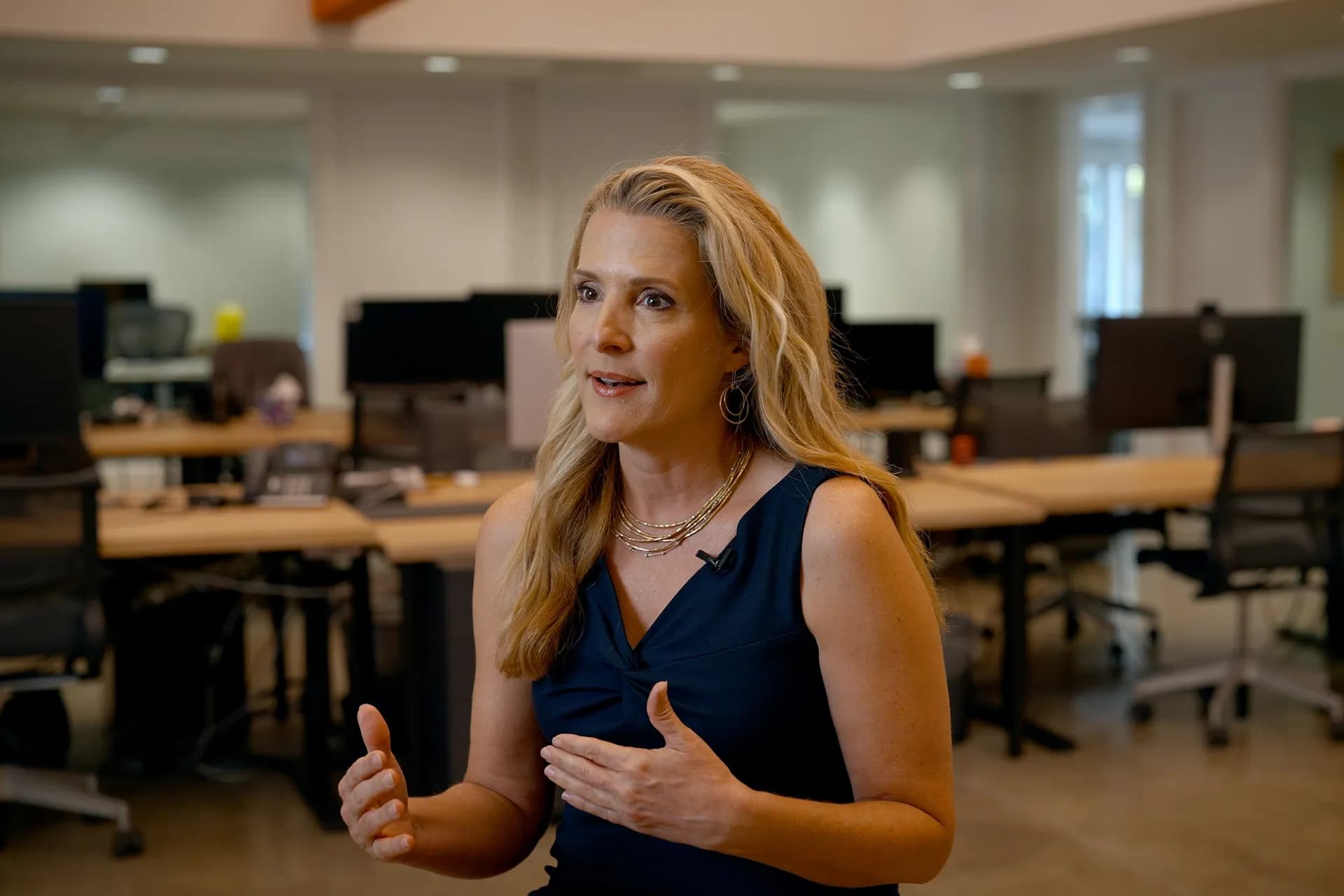
- Who: Rebecca Lynn is the founder and managing partner of Canvas Ventures, an early stage venture capital firm investing in financial services and digital health.
- What: Canvas Ventures backs early stage startups, and has counted CaseText, Gabi, and Future Advisor among its exits, along with an early investment in Lending Club.
- Traction: CaseText exited to Thomson Reuters for about $650 million, Gabi was acquired by Experian, Future Advisor was acquired by BlackRock, and Lending Club became the largest US tech IPO in 2014.
In this interview, Rebecca Lynn explains why she believes first-mover advantage is a fallacy, what made CaseText's founder walk away from an expensive sales hire before the product was ready, and how she evaluates whether a CEO is really listening to their customers. She also explains why she believes no one is going to believe in you more than you believe in yourself.
Key Takeaways
First-Mover Advantage Is a Fallacy
Lynn says proving out a brand new market costs too much money, time, and technical debt, and she'd rather back the company that lets a competitor seed the market first. She points to Lending Club, which trailed Prosper into the market but became the largest US tech IPO of 2014.
A CEO's Real Job Is Selling, All the Time
Lynn says the clearest signal of a strong CEO is salesmanship, whether that's selling customers, employees, or investors. She cites Doximity's Jeff Tangney, who built a customer advisory committee from day one to keep the product roadmap grounded in what end users actually wanted.
Hiring an Expensive Salesperson Too Early Can Sink a Startup
Lynn says startups that believe they have product-market fit before they actually do often hire costly sales talent, burn cash, and then have to let that person go. She points to CaseText, which had to walk back an early sales hire before its product was ready, as a case where the founder made the hard call quickly.
A Beautiful AI Demo Means Nothing Until It Survives Contact With Real Users
Lynn says the gap between a slick AI demo and a product that works in production has already sunk companies backed by strong investors. She tells founders to come back once they have a live customer, not just an impressive demo.
What Keeps a Founder Going Matters as Much as the Idea
Lynn says she always asks what gets a CEO out of bed in the morning, since every startup hits genuinely hard stretches. She looks for founders who could easily take a well-paid job elsewhere but are pulled forward by something more specific than money.
Believing You're the Best Candidate Isn't Arrogance, It's a Prerequisite
Lynn credits a business school classmate who ranked herself a one out of five for teaching her that no one will invest in, hire, or promote someone who doesn't believe they deserve it. She says that lesson shaped how she now tells founders to carry themselves.
Below is the complete transcription of the interview. Minor edits have been made for clarity and readability.
Don't be the First Mover
My name is Rebecca Lynn, I'm the founder and managing partner of Canvas Ventures. Canvas Ventures is an early stage venture capital firm that focuses on investing in financial services and digital health. Some of the most recent outcomes of Canvas Ventures are CaseText, Gabi, and Future Advisor, and importantly, CaseText was a very early exit with AI and GPT-4, and they exited to Thomson Reuters for about 650 million. Gabi was acquired by Experian, and Future Advisor by BlackRock.
I have always been a believer in second mover, I think first mover advantage is a fallacy, and the reason is that it takes a lot of money and time and patience to really prove out a brand new market, and once you prove it out, you have a ton of technical debt. I invested in Lending Club, and from then on Lending Club ended up being the largest US tech IPO in 2014, and Lending Club wasn't the first mover, there was a company out there called Prosper who had really hit the market first.
The best position for a company to be in, in my opinion, is the startup that lets another company kind of seed the market, prove that there's a market there, and then they can take that learning and come up very quickly with a better product and better marketing and no technical debt. I would challenge anyone to come up with more than just a handful of companies that are public today that truly were the first mover, there are very few.
I think the most important characteristic of a CEO is salesmanship. Really, a CEO's job all the time is sales, you're selling to your customer, you're selling to your employees, you're hiring people, you are constantly selling. The company that, in my opinion, really most clearly defines a CEO, is one who listens to their customer and then is a great sales leader.
The One Thing VCs Really Trust
It was Jeff Tangney at Doximity, he, from the very beginning, brought on a customer advisory committee to help inform him of what was important to his end users in the product and what wasn't, and where to take it. Very early on he would bring in this advisory panel to an on-site strategy session, and they would wireframe five, six, seven different ideas and show them to this panel of end users that would really feed into their entire product roadmap, and he did that from the beginning.
So when I'm evaluating whether a CEO really possesses that salesmanship, it becomes blazingly obvious as they're pitching us. You want a CEO who can sell you on their vision because of their excitement and how they thought about it, and that they've talked to the consumer, and you also want them to be incredibly honest and forthright with you at the same time, because that's what earns trust when you're in the sales process.
So when we ask a CEO about their ARR and is it booked or is it forecasted, having that CEO be very open and transparent and upfront, I think, shows us that they are going to not only earn our trust but the trust of their customers, and that's really important, especially early on.
Why Startups Burn Cash Too Early
The mistake most startups make when they're scaling is that they believe too early they have product market fit, and they believe they've got it, and then they go out and hire a very expensive salesperson who then wants to hire a bunch of people, and they just burn a ton of cash too early, and then they have to let that salesperson go and go back to the drawing board and sort out a little bit more what those elements of product market fit are, and then rehire. It's hard to watch; I think almost every startup does this, especially in the enterprise space.
Our advice is, way to be hired maybe that director level salesperson who can help you, maybe a chief of staff that can help you in your sales efforts, and then really make sure you scale gradually. When you think you have product-market-fit, have some more checkpoints before you go out and pay a lot of money for a head salesperson, before you have product-market-fit.
There's an example: CaseText pretty early thought they had product market fit, and they hired a very good, seasoned sales executive to come in. They spent quite a bit of money on the sales executive and the team, and it wasn't working, they weren't getting the traction that they had hoped for. This is before they launched CoCounsel, the GPT-4 product. The founder, to his credit, made a pretty quick early decision to let that team go, and it was really hard. The salesperson was great, it wasn't an issue with them, it was an issue with where we were at that time with the product.
It was really about supporting the founder; he kind of saw that was also the right answer, but it was a hard answer. It was a hard thing for him to execute. So helping him think through how to message it, how to make that happen, and introducing him to other founders who've had to make similar tough choices so that he can get their firsthand experience and advice was really helpful.
Oftentimes the founder does have instinct and data that I don't, so I first seek to understand why they're heading in the direction they're heading, and then if we become pretty convinced that it is the wrong direction, we try to show, not tell. So we try to find the right people to introduce them to that will offer them a more complete picture of the way we're thinking about the world, and oftentimes we get there. It's not that they were completely in the wrong direction and we were right, oftentimes there's some kind of meeting in the middle.
I think the first thing that we need to do is check our assumptions, understand where the founder is coming from, and then get them the resources if they do need to make a shift. If they decide they need to make a shift, help them on that journey, and it does happen. I think every company, often at many stages, has to pivot, either in strategy or product or channel or whatever it might be, and when they get there, our job is to help them figure out how to make that shift.
Don't be Fooled by AI Demos
There's a ton of opportunity in gen AI. The clear thing that has come to us is it's really easy to create a company in gen AI, in demo mode, to create this beautiful demo that blows everyone away. It is a very different thing to take that beautiful demo and put it in the wild and scale it, and we've already seen a handful of companies that were backed by amazing investors kind of blow up because they weren't able to transition from that really cool, slick demo into the wild, essentially into full production. The biggest question we have for companies is, they come to us with a beautiful demo, come to us when you have a customer that's live.
For the CEOs who come to us to pitch their series A and B companies, and even we look at a lot of seed deals, the questions I ask are really about how the consumer is using the product, what have they learned from the consumer since they started the company, what was surprising to them, what thesis proved, what was different. What I'm looking for is that they're listening, they're actually looking for that feedback from their users and that they're adjusting accordingly, that they're not dogmatically adherent to maybe solving their own problem that the company stemmed from, that they're listening to what their end users really want and need.
The second thing I really look for from the CEOs is what gets them out of bed in the morning, what really motivates them to do a startup, because there's going to be really, really hard times in the startup, there always are. What is it about them that is driving them forward, what's going to help them pick themselves up when things get really hard and shake themselves off and keep going. So I always like to hear the CEO's stories, all of them could easily go get a job and get paid quite a bit of money at a big company, and what is it about this particular opportunity that is really energizing them.
No One's Gonna Believe in You More than You
I was motivated to found Canvas Ventures because I wanted to create the venture firm that I would want to fund my startup. I didn't start in venture capital thinking I would be here a decade plus later, when I started in venture capital, it was really a, I was going to start venture capital, learn how they made decisions, and I was going to get them to invest in the company that I was working on. Unfortunately, I enjoyed the job so much that I remained a venture capitalist, and Canvas is my startup.
One of the things I try to stress is just be more confident in yourself. One of the most formative things was, my best friend from business school, we're taking a leadership class, and we had to rank ourselves, we had all of these things and we had to rank, one through five, one being the best, how good you were at everything, and then we had to get up and say what we ranked ourselves. Everyone was pretty modest or whatever, and she's like, I'm a one. I was like, who is this person?
She just explained that in the world of banking, that's the first thing they teach you, fight for yourself because you're working for somebody else, and why would anyone want to hire you unless at least you believe that you were the best possible person for that job. And that really stuck with me: why would I expect somebody to invest in me, give me money, give me that promotion, if I didn't believe I was the best person for that job. Be more confident in yourself, no one's going to believe in you more than you.