
When COVID-19 hit and occupancy rates plummeted from 85% to 40%, everyone told Indragunawan to downsize his hospitality startup. But he refused to fire a single employee—even those who had taken 50% pay cuts to join his vision.
Indragunawan is the CEO and co-founder of Bobobox, Indonesia's next-generation sleeping lifestyle company that's revolutionizing budget travel with tech-enabled modular pods and cabins. With over 1 million registered users and $30+ million raised, Bobobox has become a standout in Southeast Asia's hospitality sector.
In this candid interview, Indragunawan shares how a family bankruptcy derailed his law career dreams, why he bet everything on modular capsule hotels, and how a forest camping trip during lockdown saved his company and revealed an entirely new market worth millions.
Watch the full interview now on EO's YouTube channel! Below is the complete transcription of the interview. Minor edits have been made for clarity and readability.
Key Highlights:
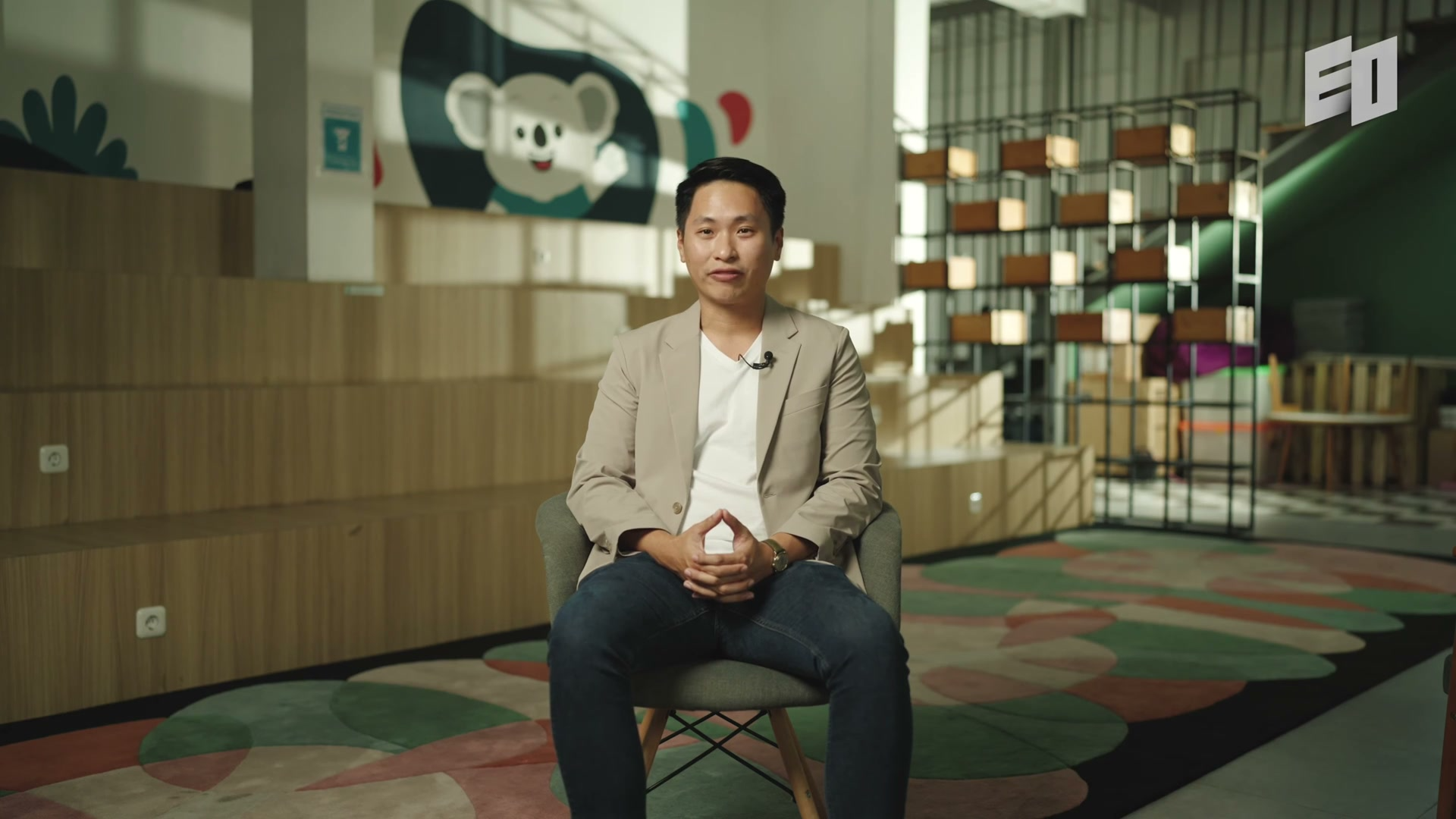
"Everyone was telling me to downsize the company. We only had less than 2 years of success, and everyone was so excited, everyone was so pumped. We have people who have already worked in much bigger hospitality brands, 50% pay cut and stay with us."
"I was telling our shareholders, hey, downsizing was not the right strategy. It will kill the spirit. It will kill the whole idea of building this company."
"I posted on Instagram on a Tuesday afternoon, 3 p.m. and by 6 p.m. one of my friends called, 'Hey Indra, I couldn't book your cabin in Chikole, I think your app has some bugs.' We're sold out for the whole month, so in 3 hours since we launched it, it was sold for the whole month."
"The cabins saved the company. Just within months, the growth of cabins actually matched the growth of the pots in 2 years."
"I was telling our shareholders, hey, downsizing was not the right strategy. It will kill the spirit. It will kill the whole idea of building this company."
"I posted on Instagram on a Tuesday afternoon, 3 p.m. and by 6 p.m. one of my friends called, 'Hey Indra, I couldn't book your cabin in Chikole, I think your app has some bugs.' We're sold out for the whole month, so in 3 hours since we launched it, it was sold for the whole month."
"The cabins saved the company. Just within months, the growth of cabins actually matched the growth of the pots in 2 years."
From Law Dreams to Family Crisis
Can you tell us about your background and how you ended up becoming an entrepreneur?
Indragunawan: As a kid, I was quite a nerd, I would say. I really liked studying. I had that ambition to go to the best university in Australia, which is the University of Melbourne. The ambition at the time was to be a lawyer, actually, but then in 2005, I received a call that my dad had stroke, and that he was also facing bankruptcy.
Our family was buried in debt, and at the time I kind of realized that if I were to return back to Indonesia, there was no way I could pursue my law career, so I had to drop the law. Being a 19-20 years old boy at the time, I had to jump into the business.
I asked myself, why is this happening? I'm supposed to do law. When you hit that rock bottom, you just have to figure out and you just have to bounce back stronger.
Our family was buried in debt, and at the time I kind of realized that if I were to return back to Indonesia, there was no way I could pursue my law career, so I had to drop the law. Being a 19-20 years old boy at the time, I had to jump into the business.
I asked myself, why is this happening? I'm supposed to do law. When you hit that rock bottom, you just have to figure out and you just have to bounce back stronger.
The Printing Shop Turnaround
How did you turn around the family business?
Indragunawan: The first thing that I did at the time was to continue a printing shop that my dad had. I did a lot of things to immerse myself into the offset printing world. I asked a lot of people, I asked a lot of printing players, and at the time I was fortunate enough to spot an opportunity.
Back in 2005, there was no printing company that has ISO certifications. So that's what we did. We became the first one to get that ISO certification and started getting all these big companies, and that's how we turned around the business.
Back in 2005, there was no printing company that has ISO certifications. So that's what we did. We became the first one to get that ISO certification and started getting all these big companies, and that's how we turned around the business.
The Gaming Studio Lesson
What happened after the printing business success?
Indragunawan: One thing led to another, so one of our clients in the printing company was Telkom Indonesia. I was introduced to the tech landscape. It was during that moment when mobile gaming was growing really, really fast. I thought, hey, this is something that Indonesian people can actually build. I had myself an opportunity to set up a game studio.
By the time I would say I was still really young and there are so many fundamentals that I overlook. We kind of go ahead and launch a product even not knowing that it has a really good chance to achieve product market fit. So I'll say that's the first lesson that I learned, making sure that whenever you want to build something, it has to be something that is well thought of, something that you need to give a lot of research, you need to deep dive into it, not only about the product, but what will be the go to market strategies as well.
The company got acquired by BlackBerry Messenger.
By the time I would say I was still really young and there are so many fundamentals that I overlook. We kind of go ahead and launch a product even not knowing that it has a really good chance to achieve product market fit. So I'll say that's the first lesson that I learned, making sure that whenever you want to build something, it has to be something that is well thought of, something that you need to give a lot of research, you need to deep dive into it, not only about the product, but what will be the go to market strategies as well.
The company got acquired by BlackBerry Messenger.
The Birth of Bobobox
How did you come up with the idea for Bobobox?
Indragunawan: After that, reality kicks in. I just had my first daughter and my partner Antonius, he just got married. I did a consultation job. I got really bored, you can't really do much when it's not being executed, right? So I told my partner Antony, let's do another startup.
I came across an article that says if you wanna create a legendary product, it has to be able to tap into everyone's lifestyle. So we discovered that sleep is a very big part of everyone's lifestyle, and it has been jeopardized because the world is moving faster and faster.
To my surprise, I found that the number of travelers in Indonesia has multiplied 9X in the last 5 years. The rise of these travelers are dominated by the budget travelers. I realized that pricing points should be something that we need to break down. That's when I get to know about bunk beds and capsule hotels.
I came across an article that says if you wanna create a legendary product, it has to be able to tap into everyone's lifestyle. So we discovered that sleep is a very big part of everyone's lifestyle, and it has been jeopardized because the world is moving faster and faster.
To my surprise, I found that the number of travelers in Indonesia has multiplied 9X in the last 5 years. The rise of these travelers are dominated by the budget travelers. I realized that pricing points should be something that we need to break down. That's when I get to know about bunk beds and capsule hotels.
What research did you do before starting?
Indragunawan: I decided to take some time off and travel for six months, trying all capsule hotels. I went to Japan, to Singapore, Malaysia, Amsterdam, and New York, and to my surprise, they all had one thing in common. All of them had more than 90% occupancy rate, so the business was doing really, really well.
I tried to find some time to speak with the owners. Why don't you scale the business faster? They said that it's allocations that they have from their parents or from grandparents, the CAPEX intensive becomes a blocker for this business to grow, but what I realized that the product market fit is there.
That's when I started to think, how can we increase the space so that it is comfortable for most people they can tap into the mass market as well. Soon after that, I also figured out how can I grow the business without owning the property, and that's when modularity comes into mind.
I tried to find some time to speak with the owners. Why don't you scale the business faster? They said that it's allocations that they have from their parents or from grandparents, the CAPEX intensive becomes a blocker for this business to grow, but what I realized that the product market fit is there.
That's when I started to think, how can we increase the space so that it is comfortable for most people they can tap into the mass market as well. Soon after that, I also figured out how can I grow the business without owning the property, and that's when modularity comes into mind.
The First Prototype
How did you test your first concept?
Indragunawan: Coming from a manufacturing background who used to create designs, I thought, what if we were to make a modular capsule? What if they can be flat packed assembled in any type of building, and I started doing the unit economics to make sure that with this size, it can generate more revenue per square meter compared to the conventional hotels. It was something that I got obsessed with.
In the meantime, my sister is running a small hotel in Bandung. I told my sister, Hey, can I tear down one of your hotel rooms and convert it into a capsule? That was in December 2017. I bootstrapped and I managed to get the founding team, people who believe in the ideas. We basically tore down one room in my sister's hotel, converted it into a capsule, and for that particular month, our occupancy rate was 99%.
In the meantime, my sister is running a small hotel in Bandung. I told my sister, Hey, can I tear down one of your hotel rooms and convert it into a capsule? That was in December 2017. I bootstrapped and I managed to get the founding team, people who believe in the ideas. We basically tore down one room in my sister's hotel, converted it into a capsule, and for that particular month, our occupancy rate was 99%.
Early Success and Growing Pains
What happened after you got funding and launched?
Indragunawan: Long story short, we got that funding and we built the first capsule hotel, and to our surprise, it went really viral. We got our first customers, so things are getting super exciting, but we also made a lot of mistakes. We didn't know what the expectations were, who are these users, and then we built the whole technology within less than 6 months. We still had a lot of bugs as well. Some guests couldn't enter their own pod.
It was really hard, but it was really rewarding at the same time when we got great reviews from some of the guests who actually tried, and this kind of feedback really give you that extra boost to better iterate your product. Since we launched it until COVID, our occupancy rate was more than 85% across every location and our repeat rate is at 48%. So that was really, really promising and we were growing really fast at the time.
It was really hard, but it was really rewarding at the same time when we got great reviews from some of the guests who actually tried, and this kind of feedback really give you that extra boost to better iterate your product. Since we launched it until COVID, our occupancy rate was more than 85% across every location and our repeat rate is at 48%. So that was really, really promising and we were growing really fast at the time.
When COVID Hit
How did COVID-19 impact your business?
Indragunawan: As I still remember, that was early 2020. We are still very excited in expanding our location and we're getting so many enquiries from property owners who want their assets to be converted into our hotels, and then in January we started hearing news about COVID happening in China.
Occupancy rate declined rapidly from 85% average to 40%. Most other conventional operators are reaching even single digit occupancy rate. Everyone was just telling me that hey, you just have to slow down and save as much money as possible and try to basically downsize the company.
We only had less than 2 years of success with the pod, and everyone was so excited. Everyone was so pumped. We have people who have already worked in much bigger hospitality brands, 50% pay cut and stay with us. We have so many of those teams in the company. It was overwhelming. I was telling our shareholders, Hey, downsizing was not the right strategy. It will kill the spirit. It will kill the whole idea of building this company.
Occupancy rate declined rapidly from 85% average to 40%. Most other conventional operators are reaching even single digit occupancy rate. Everyone was just telling me that hey, you just have to slow down and save as much money as possible and try to basically downsize the company.
We only had less than 2 years of success with the pod, and everyone was so excited. Everyone was so pumped. We have people who have already worked in much bigger hospitality brands, 50% pay cut and stay with us. We have so many of those teams in the company. It was overwhelming. I was telling our shareholders, Hey, downsizing was not the right strategy. It will kill the spirit. It will kill the whole idea of building this company.
The Forest Discovery
How did you discover the cabin opportunity?
Indragunawan: We tried to brainstorm to find the right solutions. That's when we discovered a new opportunity. We realized that after staying home for 6 months, a lot of people couldn't take it anymore. People just started going out, hiking, going to the forest. That was very interesting because it was all happening across the globe.
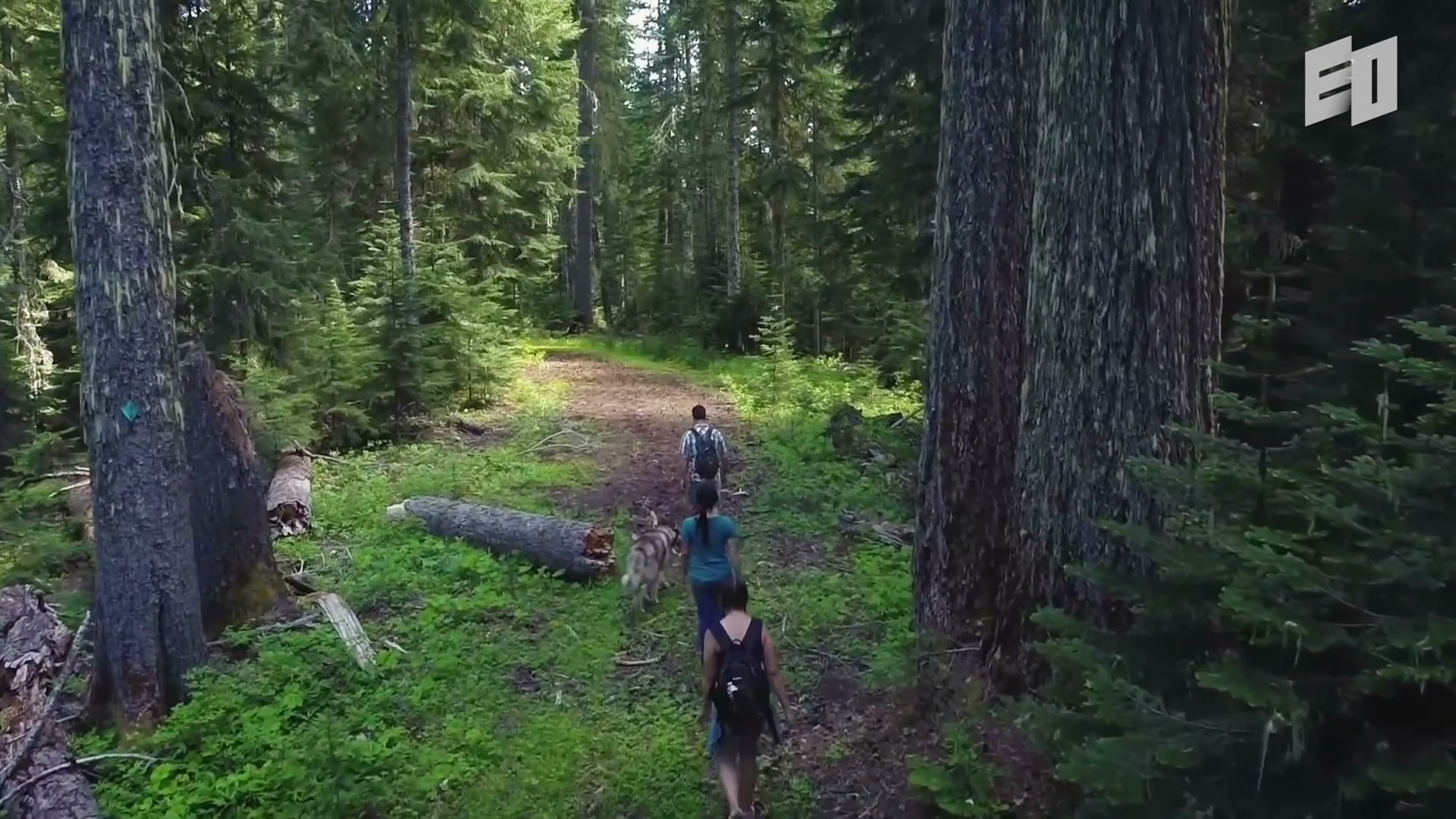
There was one day my wife asked me to go to this forest that I've never been in. We just decided to grab some snacks and just to chill with our friends and our kids. So it was 8 a.m. in the morning, amazing weather, amazing, breathtaking views, something that I haven't seen in a while. We thought we're going to be there till lunchtime. What happened was we ended up having a great time until 6 p.m. and that's when I realized some of the people there started to build their tents.
So I started asking questions to these people, how many people come to this site? He said before COVID, it was 500 per week, but now it's 700, so it multiplied. So I thought, hey, if we were to create a lodging solution here, we may be able to tap into this market.
There was one day my wife asked me to go to this forest that I've never been in. We just decided to grab some snacks and just to chill with our friends and our kids. So it was 8 a.m. in the morning, amazing weather, amazing, breathtaking views, something that I haven't seen in a while. We thought we're going to be there till lunchtime. What happened was we ended up having a great time until 6 p.m. and that's when I realized some of the people there started to build their tents.
So I started asking questions to these people, how many people come to this site? He said before COVID, it was 500 per week, but now it's 700, so it multiplied. So I thought, hey, if we were to create a lodging solution here, we may be able to tap into this market.
The Cabin Success Story
How successful were the cabins?
Indragunawan: After that, I invited our team to discuss about this idea, and we all just got super excited. We decided to go even further into Ranau U Pas Forest, which was 1.5 hours away from Bandung. Our expectation is only to get 50% occupancy rate, which was the weekend, and to our surprise, the occupancy rate was 100%. So I would like to try another two cabins installed in Cikole.
When we launched the cabins in Cikole, I still remember we posted on Instagram on a Tuesday afternoon, 3 p.m. and by 6 p.m. one of my friends called, Hey Indra, I couldn't book your cabin in Chikole, I think your app has some bugs. So I called my CTO, hey, what happened with the app? My friend couldn't book the cabin. Indra, we're sold out for the whole month, so in 3 hours since we launched it, it was sold for the whole month.
The cabins saved the company. Just within months, the growth of cabins actually matched the growth of the pods in 2 years. Not only we sustain and keep every employees that we had, we were expanding.
When we launched the cabins in Cikole, I still remember we posted on Instagram on a Tuesday afternoon, 3 p.m. and by 6 p.m. one of my friends called, Hey Indra, I couldn't book your cabin in Chikole, I think your app has some bugs. So I called my CTO, hey, what happened with the app? My friend couldn't book the cabin. Indra, we're sold out for the whole month, so in 3 hours since we launched it, it was sold for the whole month.
The cabins saved the company. Just within months, the growth of cabins actually matched the growth of the pods in 2 years. Not only we sustain and keep every employees that we had, we were expanding.
Leadership Through Crisis
What did this experience teach you about leadership and team building?
Indragunawan: The moment we knew that it worked, the first thing that crossed my mind is that being able to support all these people again, people who believe in us from day one. I love what Eric, the Sun founder said, like your product will evolve, but you've got to figure out your culture from day one. And that was so true.
For me, that was one of the greatest blessings. I've never seen the team being so much fun and so connected to each other as well, because during these difficult times, that's when you're being tested and that's when trust was built. And that was just purely beautiful.
When you're faced with bankruptcy and when you were buried in debt, you try to do whatever it takes, you've got to be ruthless, you need to be able to fall hard and pick yourself up again and basically keep on pushing. At the time, the younger version of me is all about results, and then you will realize that if you were to make it even bigger, you get to meet a lot of people. That's when you start to know more about empathy. Those are the things that will make you wiser. That's when you start having wisdom in your leadership.
For me, that was one of the greatest blessings. I've never seen the team being so much fun and so connected to each other as well, because during these difficult times, that's when you're being tested and that's when trust was built. And that was just purely beautiful.
When you're faced with bankruptcy and when you were buried in debt, you try to do whatever it takes, you've got to be ruthless, you need to be able to fall hard and pick yourself up again and basically keep on pushing. At the time, the younger version of me is all about results, and then you will realize that if you were to make it even bigger, you get to meet a lot of people. That's when you start to know more about empathy. Those are the things that will make you wiser. That's when you start having wisdom in your leadership.
The Path Forward
What's next for you and Bobobox?
Indragunawan: There will be times when people are actually giving you second chances, when people are helping you out, even though you already failed. After empathy, what now is self-control, because when things are moving really fast, you have so many opportunities, you have so many distractions. How can you make sure that you are that authentic leader that still carry on that integrity values to your team members, that you remain as a good role model?
Being an entrepreneur is a lonely journey and it's a very long journey. So the most important thing is to figure out what really matters most to you. For me now is to keep on iterating the product that we have and at the same time also now we are looking at an international market. We strongly believe that it can work in many parts of the world and it can create values the same way like what we did in Indonesia.
Being an entrepreneur is a lonely journey and it's a very long journey. So the most important thing is to figure out what really matters most to you. For me now is to keep on iterating the product that we have and at the same time also now we are looking at an international market. We strongly believe that it can work in many parts of the world and it can create values the same way like what we did in Indonesia.
Explore more