Jul 02, 2026
How Do You Manufacture a Startup Mafia? Ask Singapore.
Inside Block71: How Singapore engineered a startup ecosystem most countries failed to copy
Behind The Scenes

0:00 / 0:00

"Decades ago, being an entrepreneur in Singapore was often viewed as a failure, a sign you didn't do well in school. We wanted to change that. So we started an overseas program, sending students to different tech cities around the world. It took a very long time to change that mindset. Now, entrepreneurship is cool here."Gang Chern SunA founding member of Block71
That is how Gang Chern Sun, a member of Block71's founding team, described the shift when I met him at Marina One West Tower in December 2025. He had watched the whole arc: a Singapore where entrepreneurship was a consolation prize for the unambitious, becoming one where people actively wanted it.
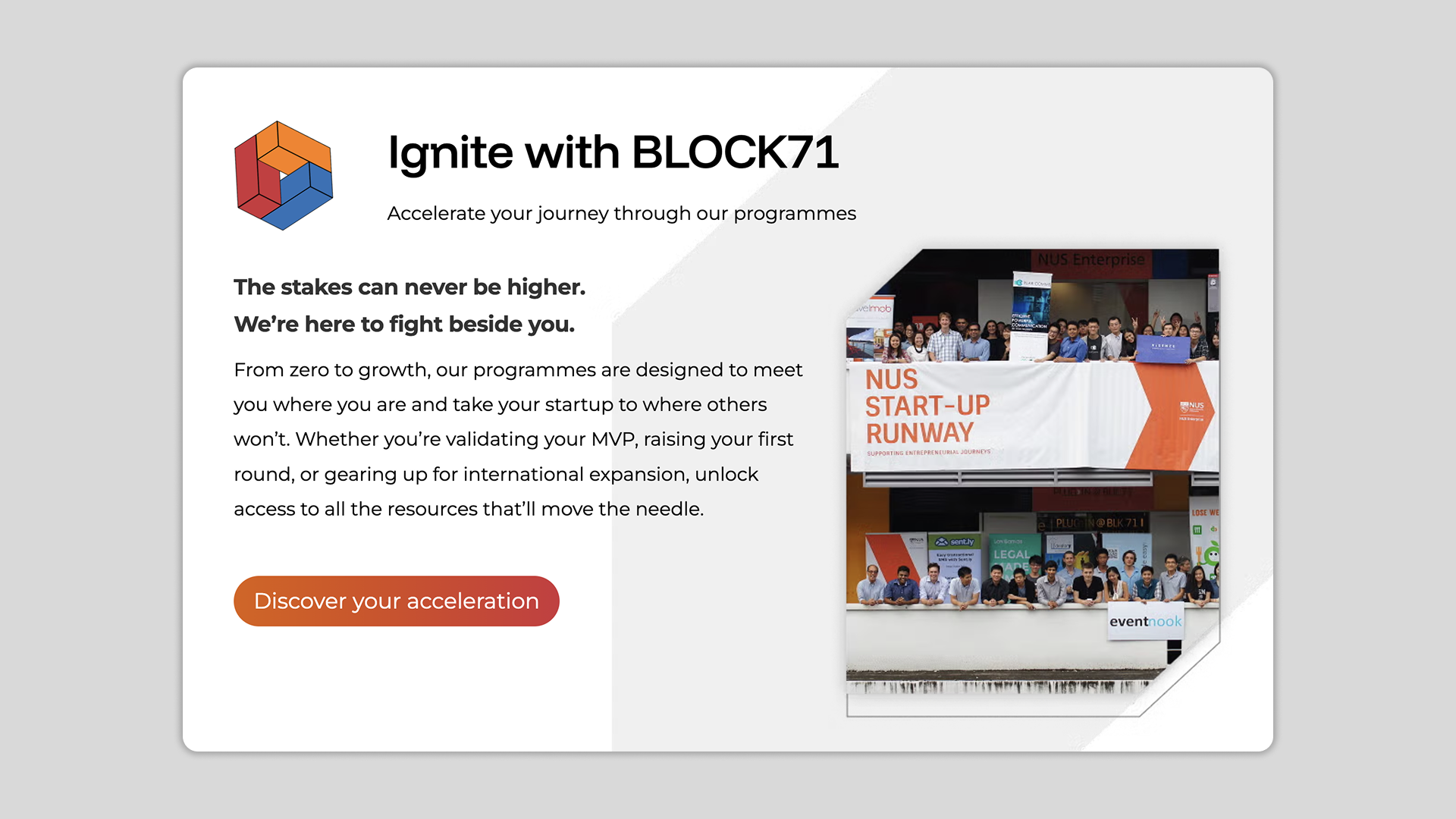
I'd first heard of Block71 while asking around about hacker houses. When I found out I was going to Singapore to report on its startup ecosystem, I assumed there must be one there. But the more I asked, the clearer it became: there weren't any active ones. What sat at the center of Singapore's early-stage startup scene instead was a set of nonprofits and public institutions, Block71, Enterprise Singapore, and their kind.
Which makes sense, in retrospect. Every country's startup ecosystem takes a different shape. In San Francisco, the hacker house was the unit of culture. In Singapore, it turned out to be the government agency.
What made this interesting, not just different, was that it had actually worked. I'd spent years covering the Korean startup scene, watching various institutions try to manufacture entrepreneurship: grants, education programs, pitch competitions. Most of them didn't go very far. Startups, it turned out, cannot be manufactured.
And yet here was Singapore. Which meant Block71 only made sense in a particular context: the long, mostly unsuccessful history of countries trying to build a Silicon Valley somewhere else.
The story started earlier than I expected, and further back than Block71.
Singapore, One of the Few Countries That Actually Built a Startup Ecosystem
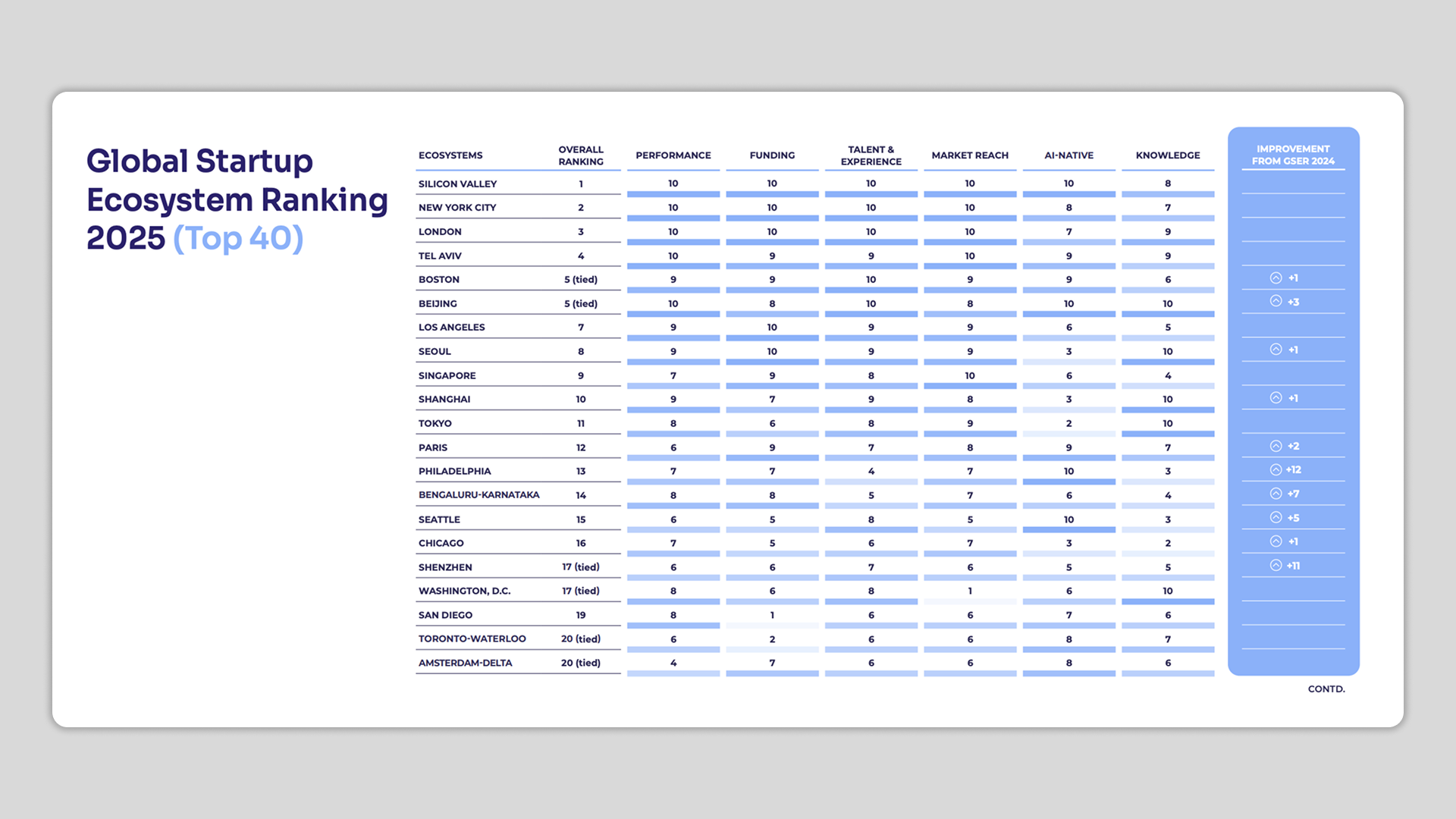
Today, Singapore's startup ecosystem ranks ninth globally, with a total ecosystem value of $185 billion, according to the 2025 Startup Genome report. Singapore startups raised $6.1 billion in venture capital in 2023 alone, with international investors accounting for 64 percent of all investors. The country accounts for 60 to 70 percent of all venture capital deployed across Southeast Asia.
At the center of this is Block71. Since its founding in 2011, it has incubated over 1,600 startups, helped produce 10 unicorns, and accumulated over S$13.4 billion in cumulative portfolio funding. It now operates across 11 locations in six countries.
Benjamin Tee, the Vice President (Ecosystem Building) of NUS Enterprise, who leads Block71's global operations, breaks down what makes a startup ecosystem work into three elements: talent, facilities, and risk capital in conversation with EO.
"Every country has different friction points across these three categories. That's where you start, finding where the friction is."Benjamin TeeVice President (Ecosystem Building) of NUS Enterprise
Follow the history of Block71 from its origins, and you can trace exactly how Singapore secured each of these elements, in sequence, over more than two decades.
Part 1. Starting With Talent: Why Singapore's Most Influential Incubator Was Born Inside a University
Before Block71 existed, before there was any physical space, there was a structural problem to solve.
Singapore's economy had been built around attracting multinational corporations. The country had no natural resources and a domestic market of just a few million people. It had a strategic location, political stability, and an educated workforce. For decades, this was enough. But when the economy turned, those companies left. During the global financial crisis, the Asian financial crisis, and even COVID, foreigners were the first to move out.
Singapore needed to produce its own entrepreneurs, but the cultural conditions to support them simply did not yet exist. Benjamin Tee puts the obstacle plainly:
"The typical Asian upbringing tends to create an atmosphere that minimizes risk-taking. We were very much going against that upbringing, allowing our students to take risk, but in a highly managed way, with the right kind of support."Benjamin TeeVice President of NUS Enterprise
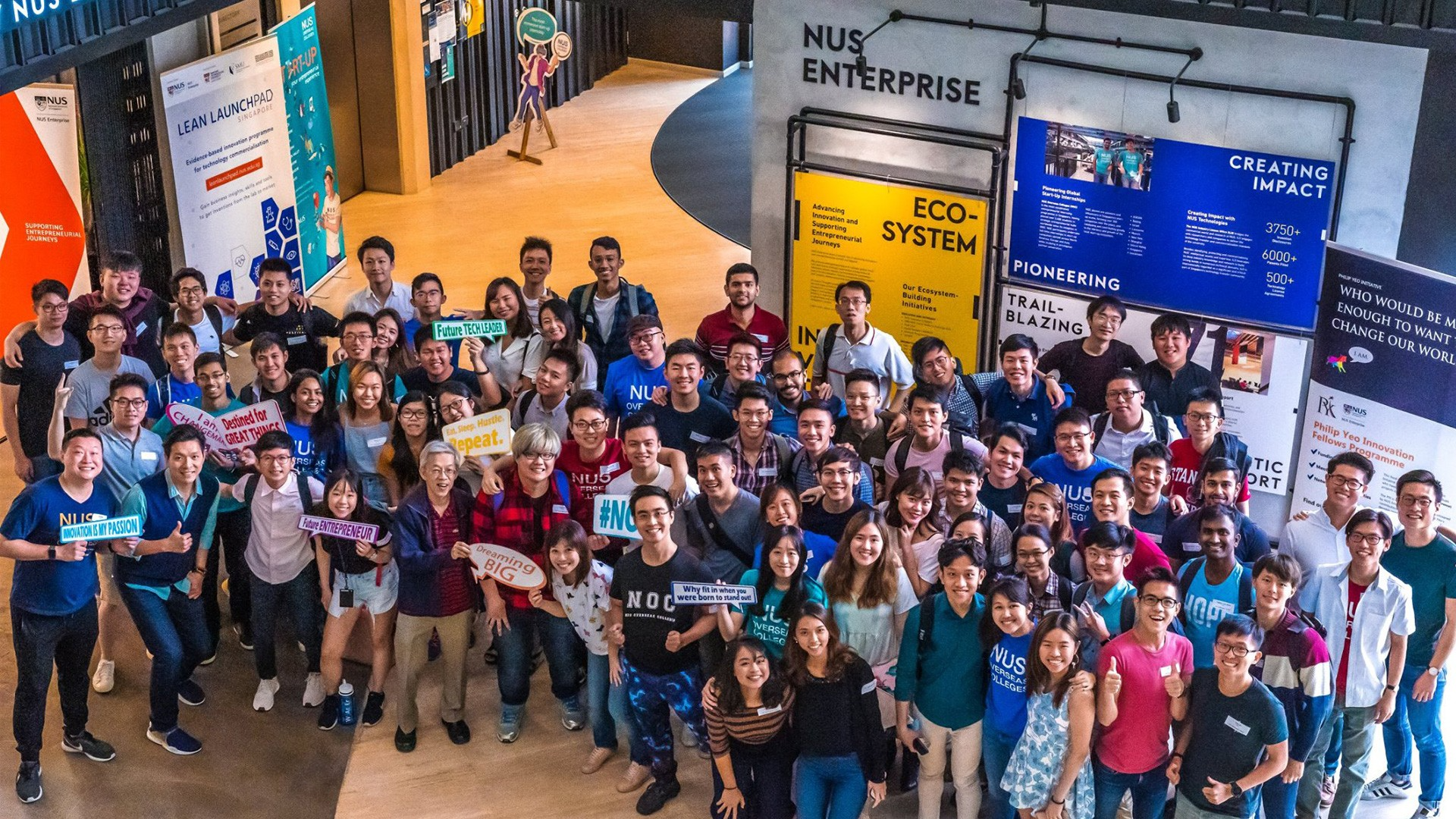
In 2001, NUS Enterprise's response was a program called NUS Overseas Colleges, or NOC. The idea was to take the most promising students, those with both academic strength and genuine interest in building something, and send them to live and work inside early-stage startups in places like Silicon Valley, Stockholm, and Beijing.
It was, as one of the founding team put it, without irony, "the brainwashing machine": students had to attach to a small startup abroad and live and breathe it, even though being on the program meant graduating a year later than their friends.
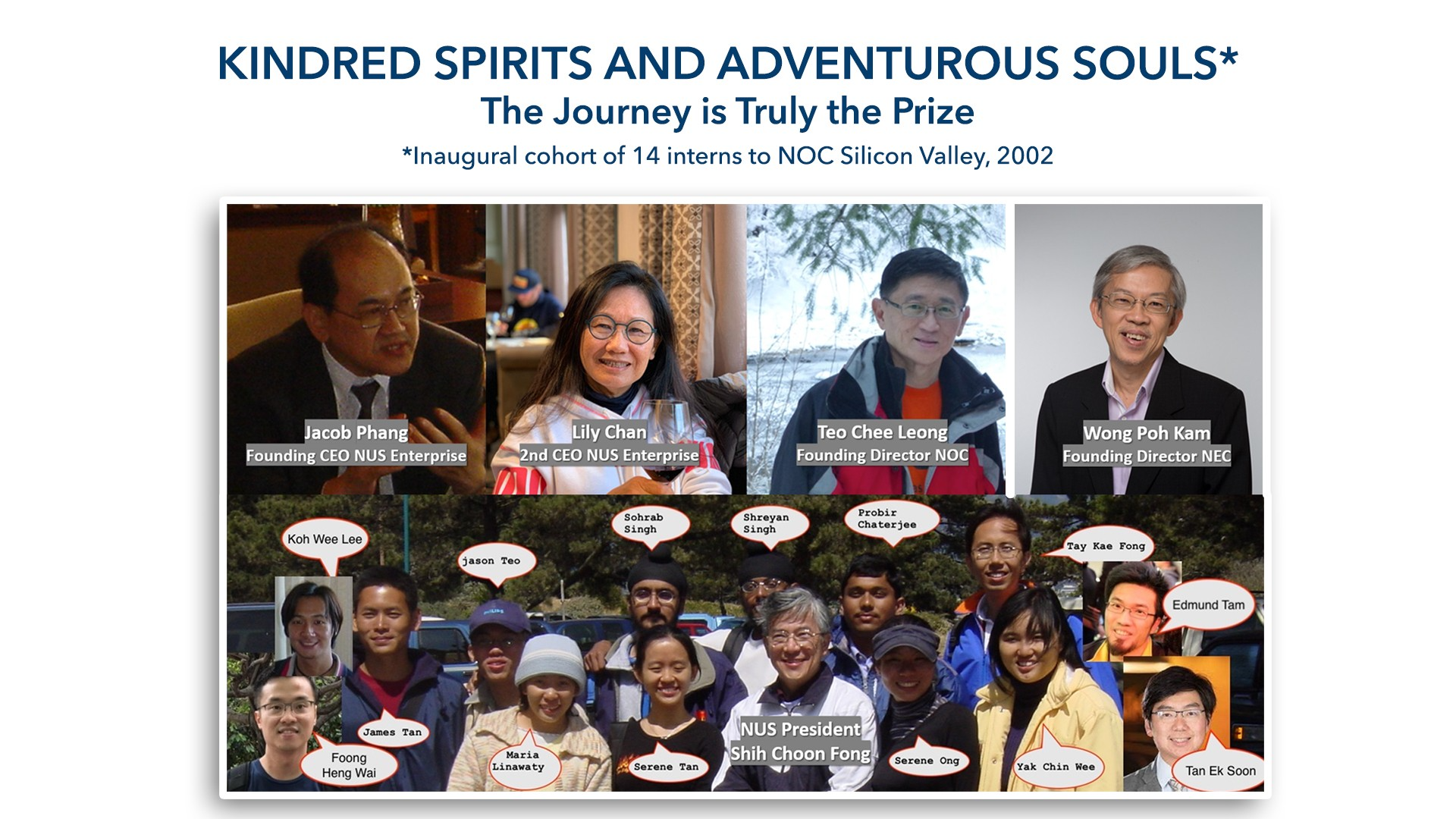
The first cohort was just 14 students, sent to Silicon Valley in 2002 under a partnership with Stanford University. It was the humble beginning of the program.
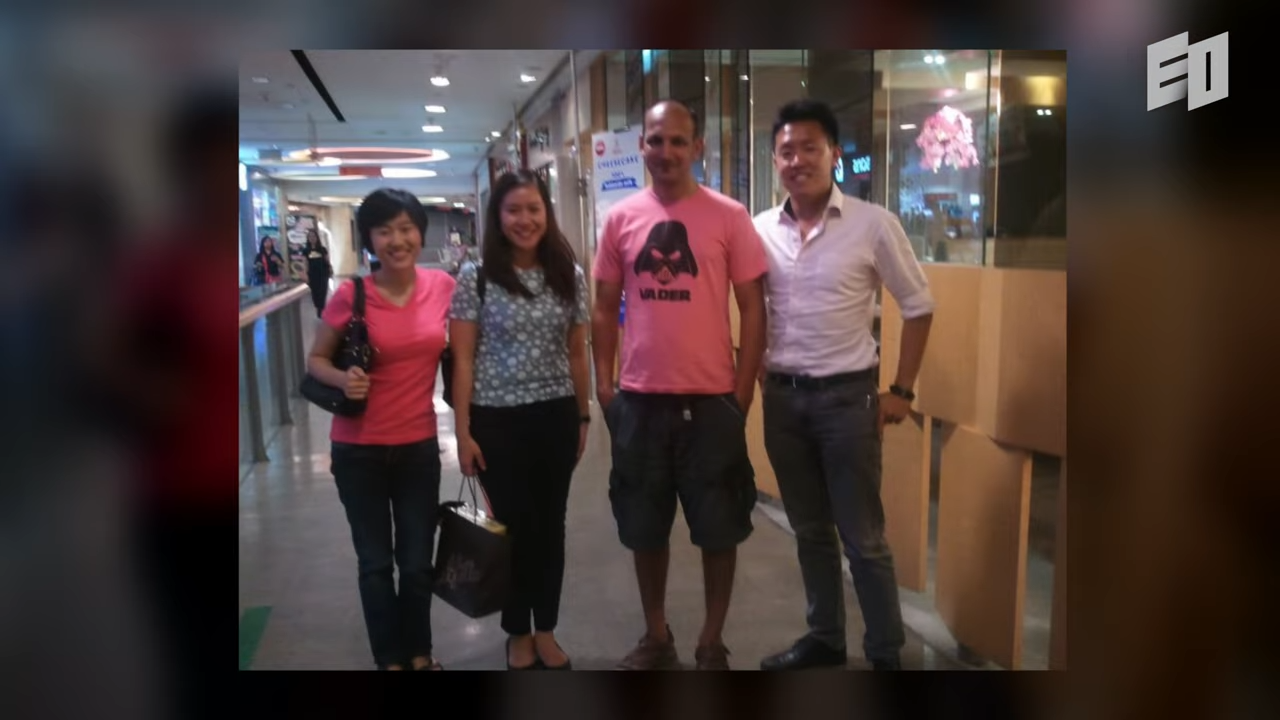
Shopback was one of the program's early beneficiaries. Henry Chan went through the program years later and was placed with a small peer-to-peer tracking startup in the United States. He joined as their fourth employee and stayed long enough to watch them grow from seed through Series B. His future co-founder, Joel Leong, took a different path through the same program, spending his time in China.
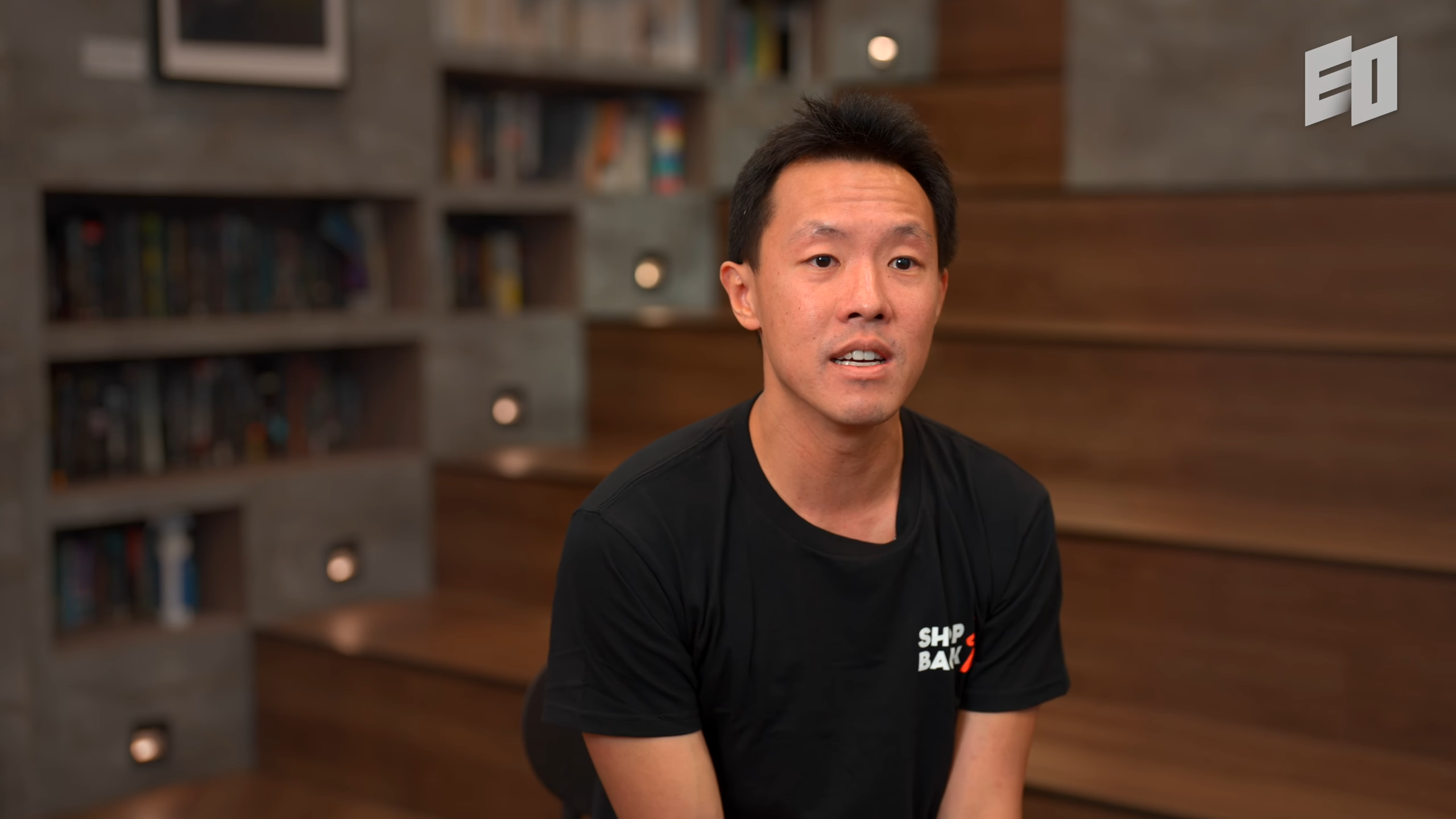
"I always remember my very first day at work. My boss told me to come in for a half-day orientation. So we came after lunch, and we left only at 1 am because the whole office was just hustling, working hard. And as interns, we were very afraid to leave early."Henry ChanCo-founder of Shopback
They had each spent formative time inside one of the world's two largest e-commerce markets, one in the United States, one in China, at the exact moment those markets were taking shape. They had watched up close what it looked like when the internet began to transform retail. Southeast Asia had almost none of it yet. This led to the founding of Shopback.
ShopBack's story shows how the NOC program's payoff gradually arrived over years rather than months; it took roughly a decade for the program to take effect. But slow as the early signals were, they were unmistakable.
Darius Cheung, one of the earliest NOC participants, went to Silicon Valley and later founded TenCube, a mobile security company acquired by McAfee in 2010, one of Singapore's first notable startup exits. Royston Tay, another NOC alumnus, co-founded Zopim, a live chat platform acquired by Zendesk in 2014.
These were not coincidences. They were the first returns on a ten-year investment in talent.
💡
Read More
- What 10 Years of Building Taught Us About Winning Users | ShopBack (EO Asia)
- Reflections on 20 years of NOC: Part 1 – Answering the call (NUS news)
- Reflections on 20 years of NOC: Part 2 – The journey is truly the prize (NUS news)
- Reflections on 20 years of NOC: Part 3 – Re-envisioning entrepreneurship (NUS news)
- BLOCK71 & NUS Overseas Colleges Timeline Video (NUS Enterprise)
Part 2. An Environment Built From a Condemned Building: The Birth of Block71
By 2011, NOC had proven its premise. NUS Enterprise had a pipeline of people with the instinct and exposure to build. What it did not yet have was a physical place for them to collide.

That year, NUS Enterprise entered into a partnership to take over a portion of the Ayer Rajah industrial estate, a cluster of aging factory buildings in western Singapore built in the 1970s. The government was planning to eventually demolish them, but there was a three-year window to try something. The partnership brought together three parties: NUS, the venture investment arm of Singapore's largest telecom company, Singtel iNNOV8, and the government's Media Development Authority.
Nobody expected it to work, which gave the team room to move. "Nobody cared or provided that much control," as one founding member put it, "so we could, just like a startup, just do it. Seek forgiveness, not permission."
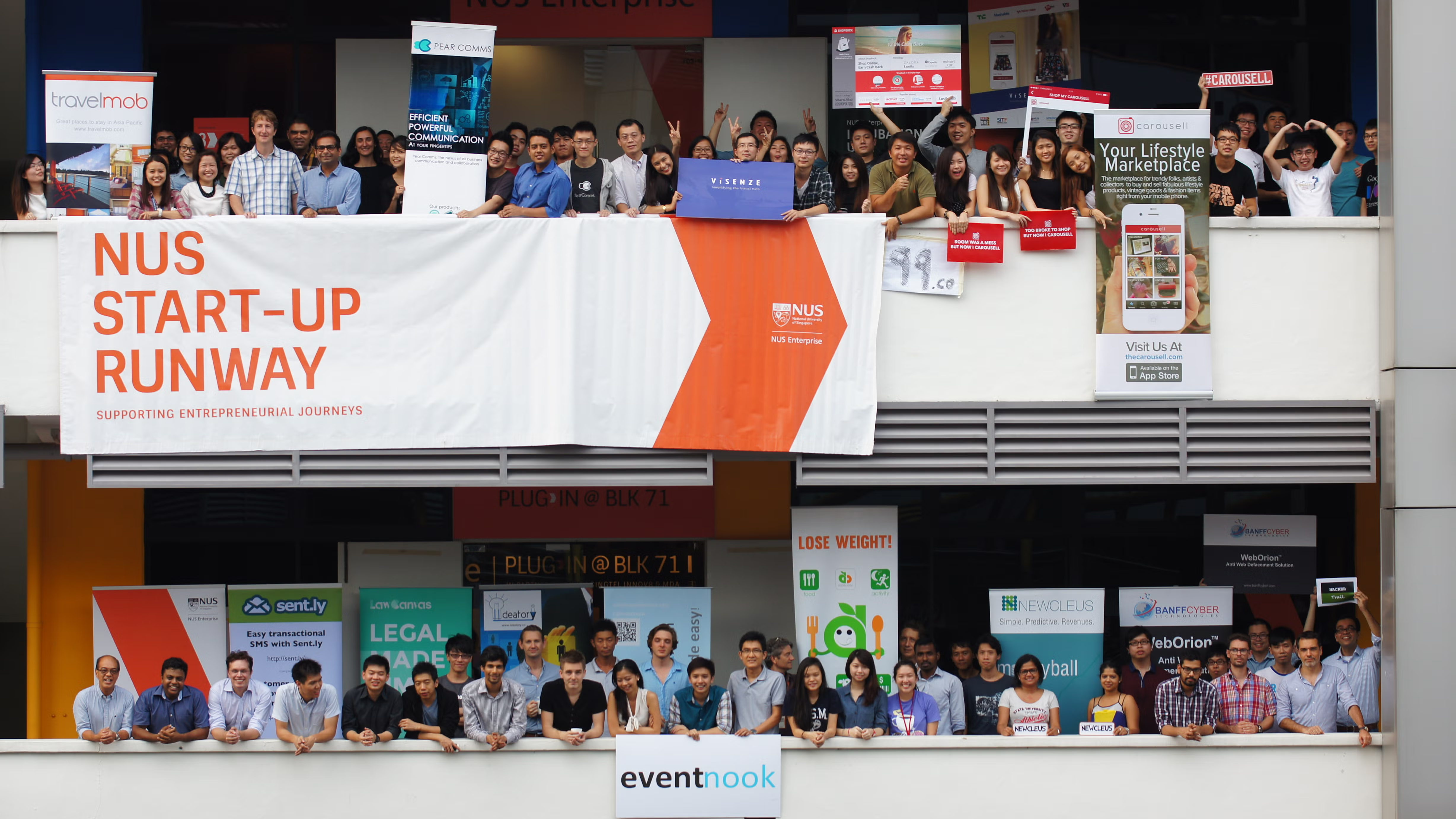
They did no marketing. They relied entirely on word of mouth. Early founders told their friends, who told more friends. Within 6 to 9 months, the building was full. Within a few years, the parking lot outside had begun filling up with supercars, a visible sign that successful founders had returned to the community as investors.
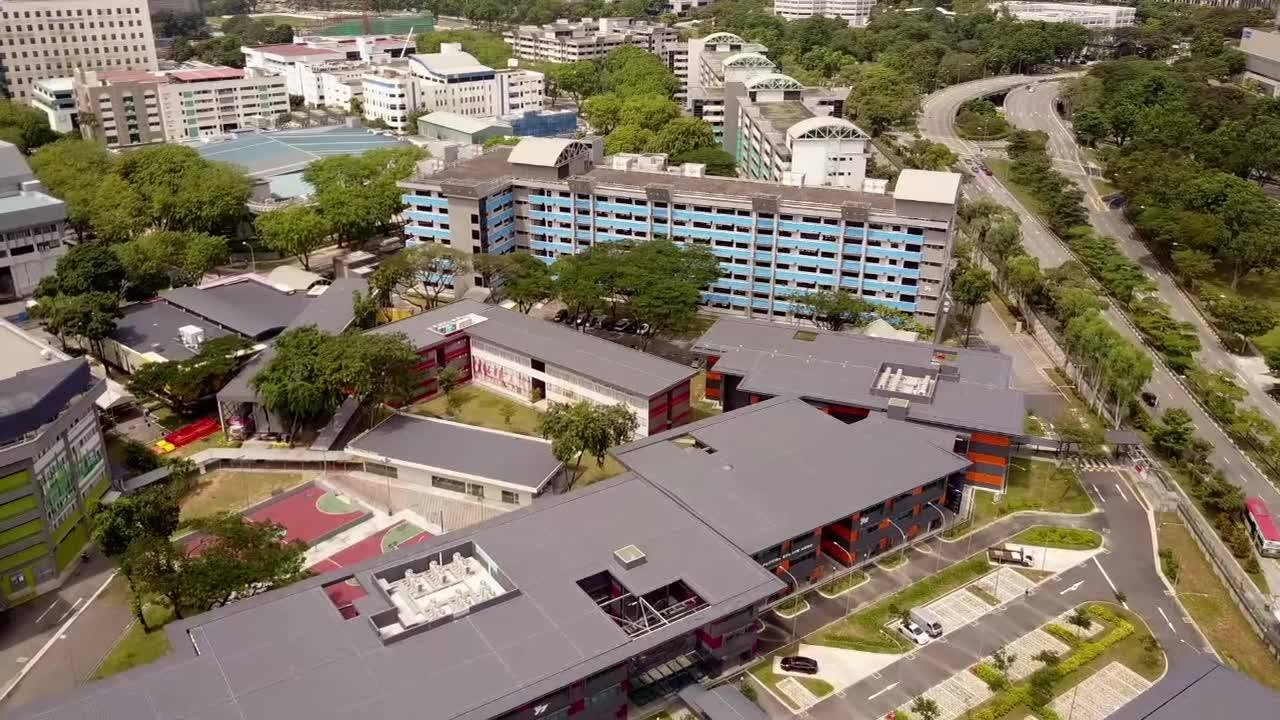
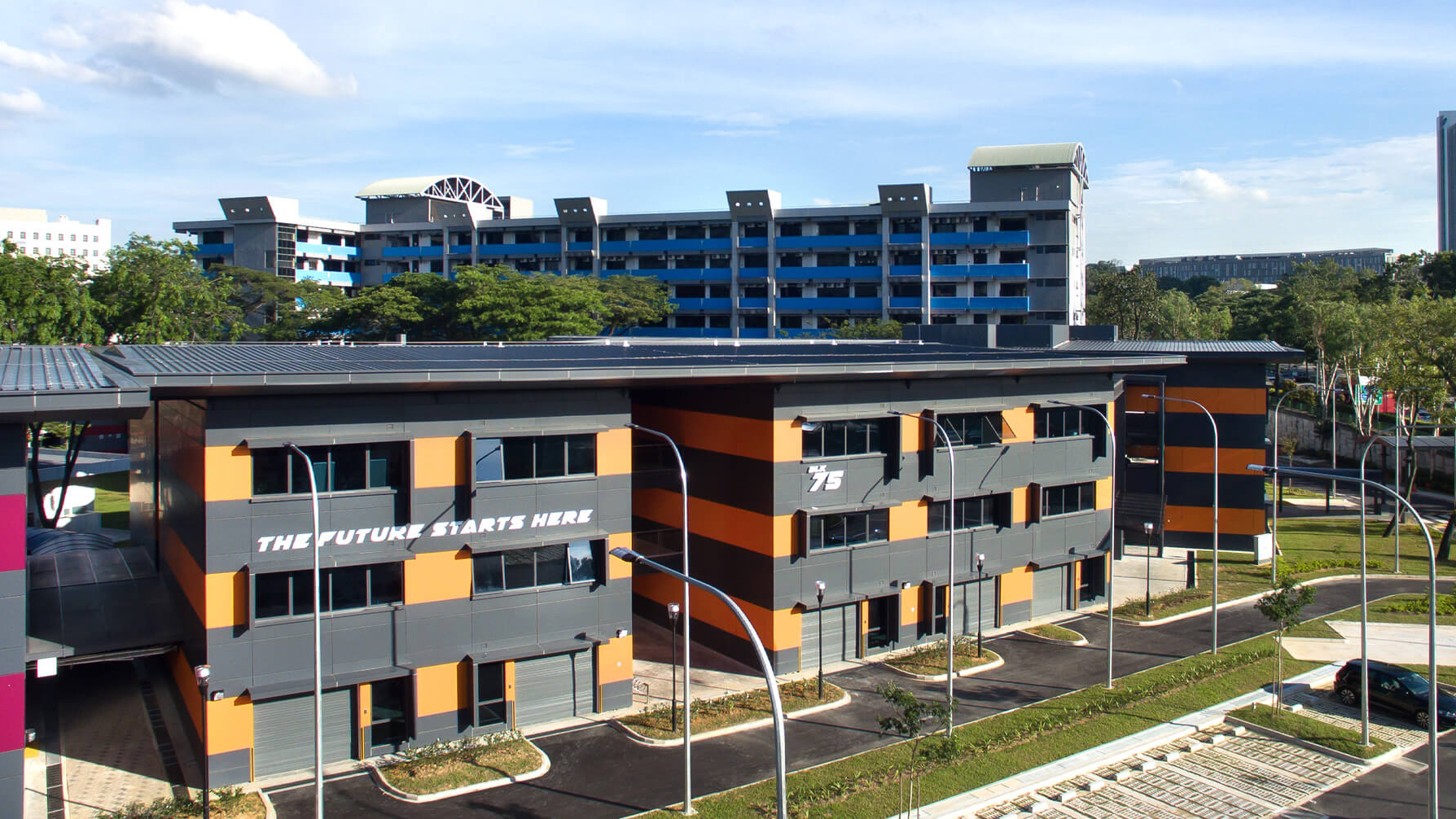
Then the three-year contract expired. But by then, the experiment had outgrown its trial run. Instead of clearing the site, the government kept Block71 standing, rebuilt the neighboring Block73 that had already been torn down, and refurbished Block79. This first phase could house around 500 startups.
But demand kept coming. A second phase followed, adding more blocks to the estate. Today, the wider development, formerly known as JTC LaunchPad @one-north, of which BLOCK71 is the anchor, accommodates between 800 and 1,000 startups at any given time. In 2014, The Economist described it as "the world's most tightly packed start-up ecosystem."
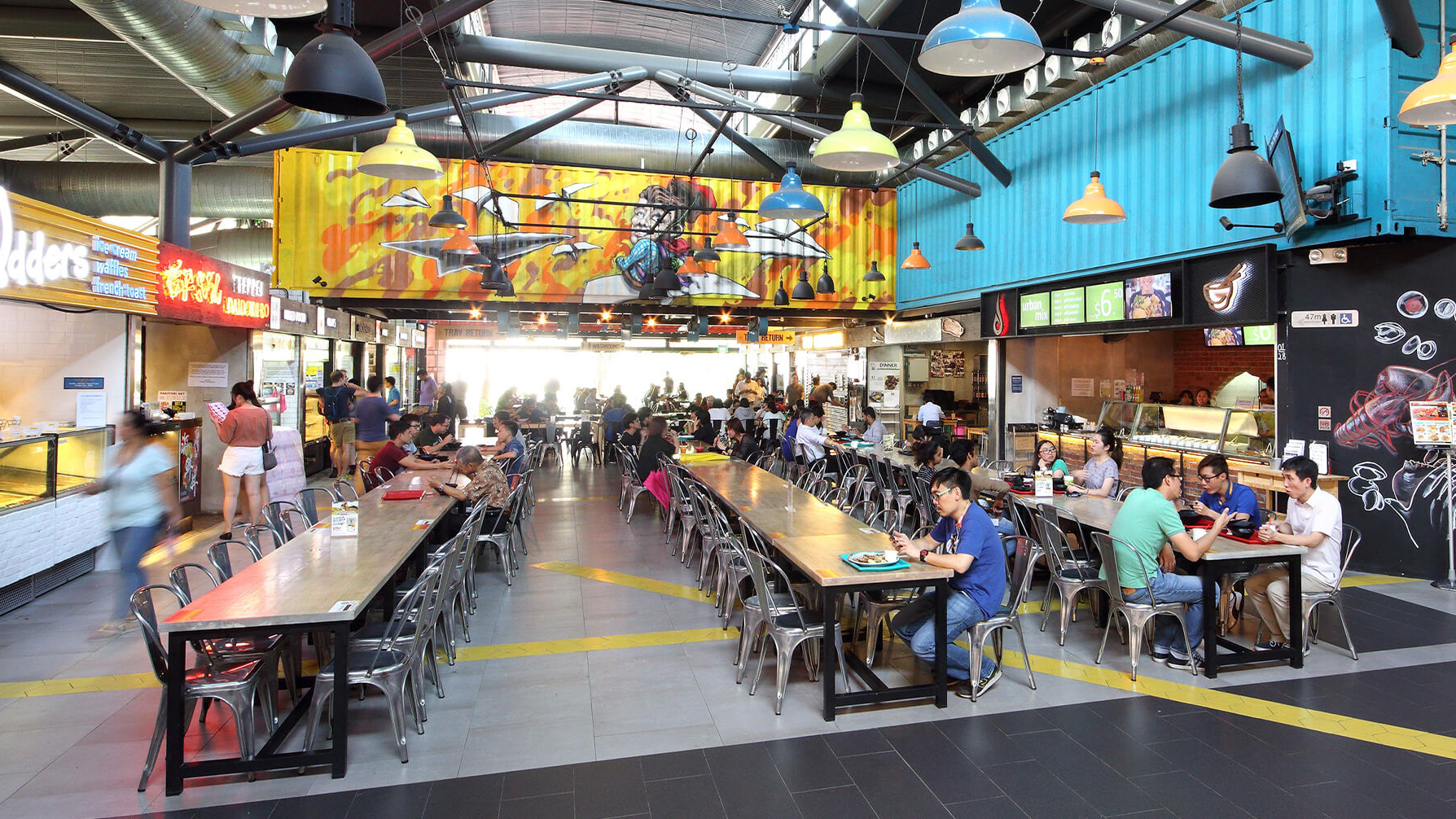
The density was not an accident. "You walk two steps, you bump into a VC," one founding member said. "You walk two steps, and you bump into a co-founder. There is literally shoulder to shoulder."
But Block71 is not just a building. NUS Enterprise runs incubation and acceleration programs, organizes events and networking, and connects startups to investors and corporate partners.
Benjamin Tee adds another dimension: the NUS campus, a short walk from Block71, has drone testing zones, materials science labs, and research equipment worth millions of dollars. No private accelerator can offer this. He calls it the "minus one to zero" advantage. Most programs start when you already have an idea and are trying to turn it into a product. Block71 starts earlier, when campus research and curiosity-driven work are still taking shape, and helps that raw material become a startup idea.
💡
Read More
- A tale of two buildings: The rise of Block 71 and the decline of block 67, (Tech in Asia, Nov 2012)
- All together now (The Economist, 2014)
- A close look at Singapore’s thriving startup ecosystem (TechCrunch, 2021)
- 7 Things you didn’t know about the Blk 71 building! (NUS Enterprise blog, 2017)
- BLOCK71 Corporate Video (English) (NUS Enterprise Youtube, 2020)
Part 3. Capital Follows Proof: How the Third Element Arrived
Once talent had been developed and a physical community established, capital followed, sometimes in ways the ecosystem's designers had not fully planned.
When Henry Chan and his co-founders were ready to pitch their first idea, the check came from an NUS-affiliated fund. The investors had watched Henry develop through the NOC program. "They were very amazed that we had that experience in NOC," Chan said. "We were lucky, and we are thankful." Half a million dollars, on the basis of a PowerPoint and a track record built, in part, through the university's own programs.
Block71 operates through a university-government-private partnership model. NUS leads operations, while government agencies and corporate partners bring resources for specific programs and verticals. As Benjamin Tee put it: "They need talent, and the university has that talent." And once you have one side of the equation, you can build the other.
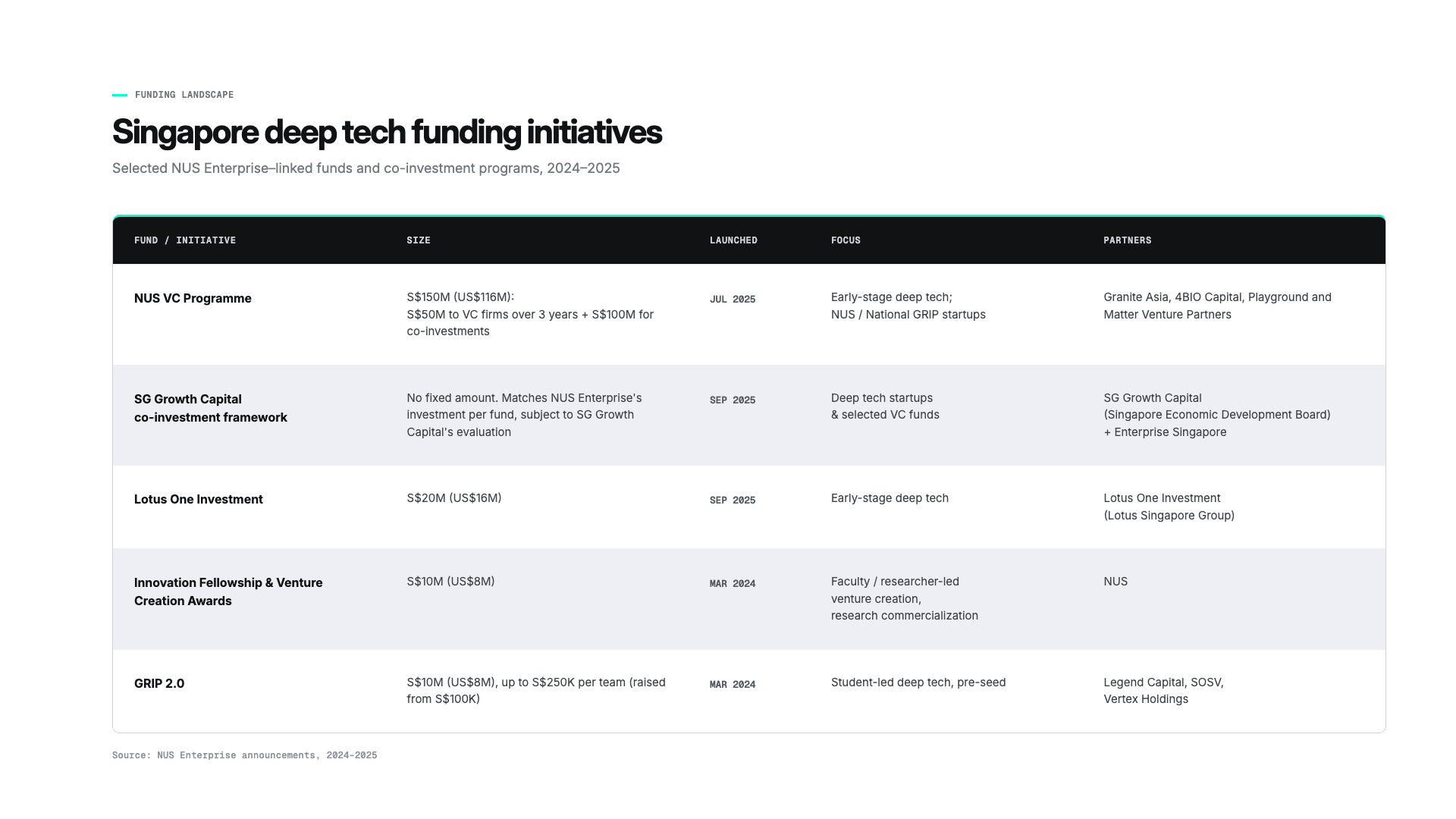
The government played a critical early role by providing liquidity that the private sector was not yet willing to supply. Co-investment programs encouraged angels and early VCs to enter a market they did not yet understand. Singapore's stable legal system, low levels of corruption, and English-language environment made it attractive to foreign capital as its ecosystem grew. By 2023, Singapore startups were raising $6.1 billion annually, with 64 percent of investors coming from outside the country.
But the most durable source of capital turned out to be the NOC alumni network itself.

Darius Cheung exited TenCube and became an angel investor in Carousell, participating in both the seed and Series A rounds. The co-founders of Zopim later invested in StaffAny. ShopBack alumni mentored the Seedly team as they built their company.
This network of founders investing in and supporting younger founders became known informally as the NOC Mafia, a reference to the PayPal Mafia in Silicon Valley, where a single formative experience produced a generation of people who funded and advised each other for decades.
The difference is that the NOC Mafia was engineered. The community did not emerge by chance from a company that happened to produce talented alumni. It was designed over two decades through a program that deliberately exposed students to risk and reward in environments where the culture of entrepreneurship was already embedded.
Today, the NOC alumni network numbers over 5,000 people. Nearly a third have gone on to found their own companies, and 79 percent work in the startup ecosystem in some capacity. Alumni-founded companies number over 1,000.
💡
Read More
- Uncovering the NOC mafia, which is way bigger than you think (Tech in Asia, Jun 2021)
- How an overseas university program grew a Singaporean startup mafia (Tech in Asia, Feb 2020)
- How Block 71 helps Southeast Asian startups launch in the USA (Tech in Asia, Sep 2015)
Block71 Now: Results and Direction
The three-element system, assembled over more than two decades, has produced results that are hard to dispute.
Block71 has incubated over 1,600 startups and helped produce 10 unicorns, including Ajaib, Biofourmis, Carousell, and Hasura. Portfolio valuation has grown roughly 1,000 times since it started, by the team's own estimate. The hub now accounts for approximately 25 percent of Singapore's total startup ecosystem by some measures.
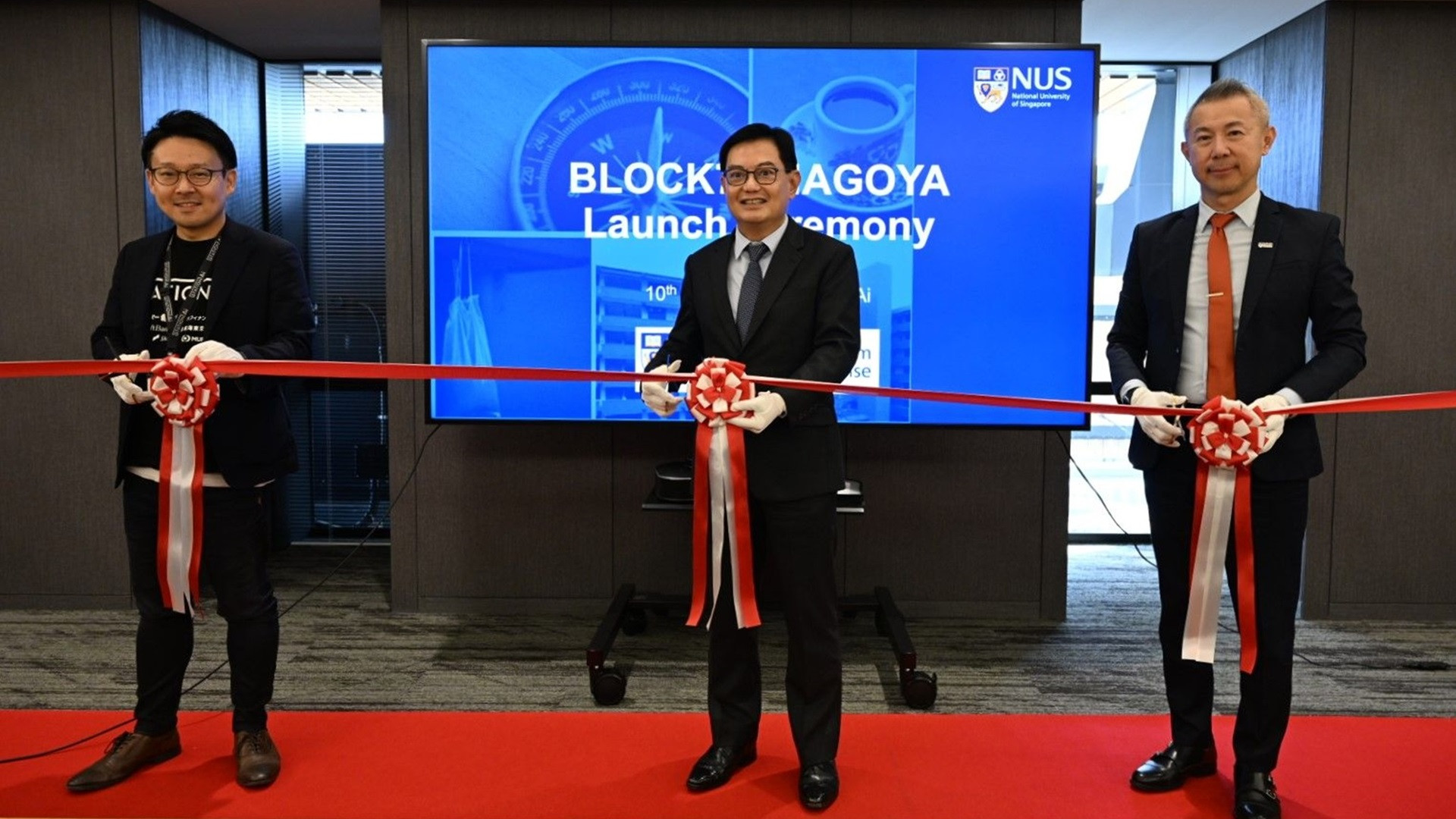
Block71 continues its global expansion: Nagoya in November 2024, Tokyo in March 2025, now operating across 11 locations in 6 countries. The goal is not replication but connection: building a network where Singapore startups can enter new markets and startups from those markets can access Singapore's ecosystem in return.
A newer question sits underneath all of this. When AI can compress a startup's growth to a fraction of what it once took, what is a physical hub like Block71 even for? Tee doesn't dodge it:
"A solo entrepreneur could reach a billion-dollar valuation with much less support than before. The concept itself needs to evolve. I'm thinking about how to make it energetic in an AI-agent world."Benjamin TeeVice President of NUS Enterprise
The same logic drives Block71's turn toward deep tech. It aligns with what a university is built to do. But more than that, Tee sees it as the most durable moat left in an AI era.
"The focus isn't deep tech. It's making sure ideas that go to market have enough of a protective moat to get to scale."Benjamin TeeVice President of NUS Enterprise
Conclusion: When Constraints Become Design
Many countries have tried to transplant Silicon Valley. They have imported the vocabulary, the office aesthetics, and the pitch competition formats. Most have found that the outputs do not follow. Perhaps what they were copying was the result, not the underlying conditions that produced it.
Block71's early team started with talent because that was what they had. Whether that was a choice born of necessity or deliberate calculation, the approach worked. The talent equation, once established, attracted the environment. The environment, once proven, attracted the capital. In retrospect, each element seems to have unlocked the next, though how much of that was design and how much was simply recognized after the fact is harder to say.
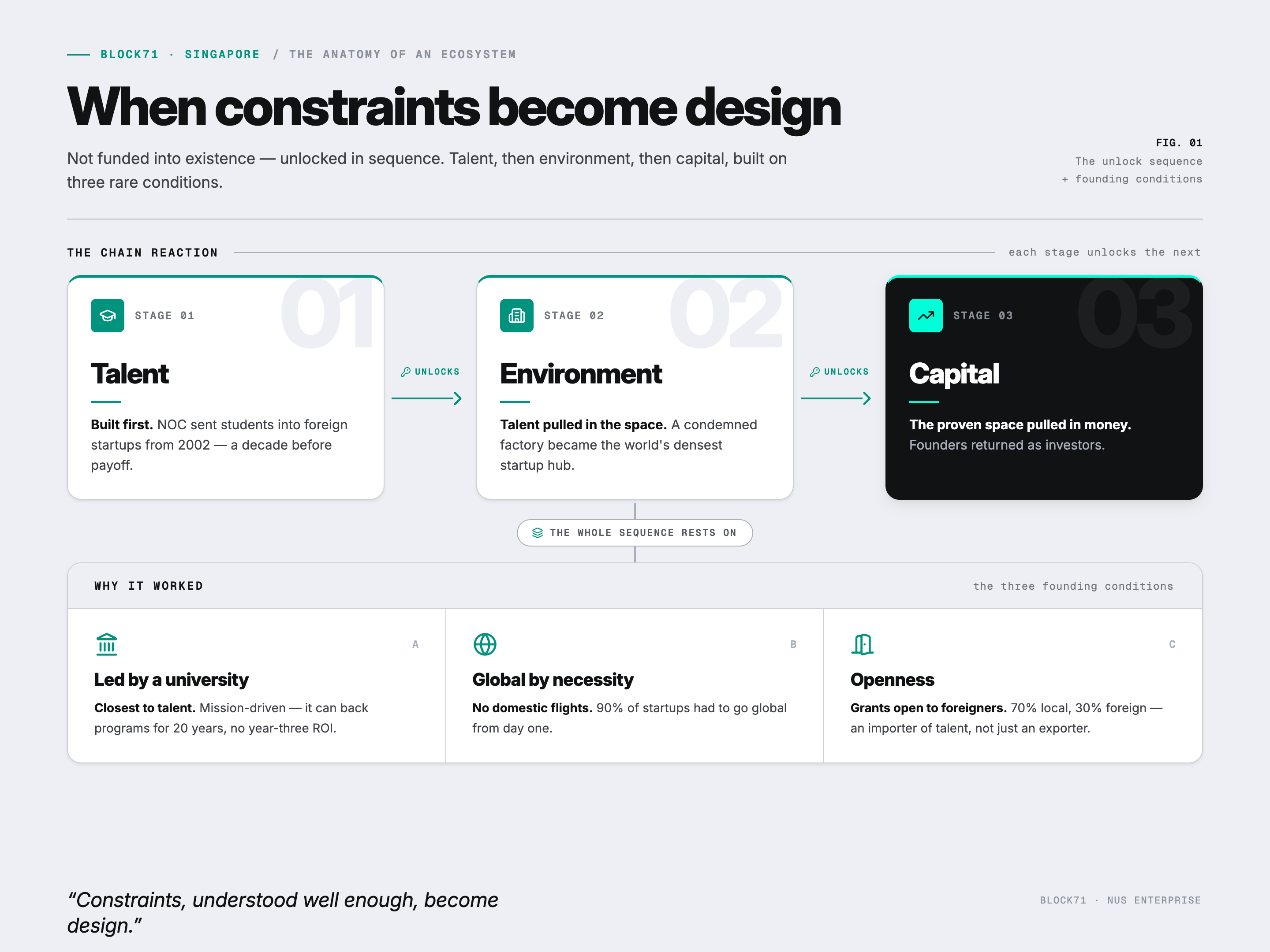
Several conditions made this possible.
The first was that it was led by a university. Universities may be uniquely positioned to anchor this kind of ecosystem: they are closest to talent, they operate on a mission rather than a profit motive, and they can sustain programs for twenty years without demanding a return on investment in year three. No private incubator commits to that timeline.
The second was that it was global by necessity. Singapore's smallness, which looked like a liability, became an imperative. From the start, some ninety percent of Block71's startups had to think overseas; not many industries are big enough to stay home for. Benjamin Tee frames the same constraint more literally:
"The truth is, Singapore has no domestic flights. We're an island, highly connected globally, so our founders have to think global from day one."Benjamin TeeVice President of NUS Enterprise
The domestic market was too small to hide in, so founders had to develop instincts that extended beyond it.
The final factor was openness, which amplified that constraint into an advantage. Grants were available to foreign founders. Block71's resident population settled naturally at roughly 70 percent local and 30 percent foreign without any design. Overseas funds established Singapore as their regional headquarters while investing across Southeast Asia. Singapore has become not just an exporter of founders, but a hub that draws in talent and capital from outside.
Though it is worth being precise about what "global" has meant in practice. Most of Singapore's biggest consumer successes, Grab, Carousell, and Ninja Van, operate almost entirely within Asia. Grab is listed on Nasdaq via one of the largest SPACs in history, but its business has never extended beyond eight Southeast Asian countries. The companies that have genuinely penetrated Western markets, payment infrastructure like Nium, IP software like PatSnap, are the exceptions rather than the rule.
Compare this to Israel, a country of similar size, where founders and investors openly say there is no path to building a large company without relying on the US market, and where over 80 unicorn companies have since moved their headquarters to the US. Singapore's version of global is different. Whether the next generation closes that gap is one of the ecosystem's genuine open questions.
Still, the case is hard to dismiss. Block71 may not be a story about building Silicon Valley somewhere else so much as a story about understanding your own constraints well enough to design something that works within them. The first element they chose to build, the one that everything else followed from, was people.
Knowing that talent matters is not the hard part. Deciding what talent most needs, and starting to build it a decade before the results appear, and trusting that they eventually will, may be where most ecosystems quietly lose the thread.