
Mar 07, 2026
Where AI's New Wealth Is Actually Going And It's Not Silicon Valley
An interview with Po-Shen Loh, a mathematician at Carnegie Mellon University, on rural classrooms, hidden potential, and trust in the age of AI.
Founder Focused
The best classroom Po-Shen Loh ever taught wasn't at Carnegie Mellon University. It was a fourth-grade class in one of America's poorest counties, where none of the kids owned a phone.
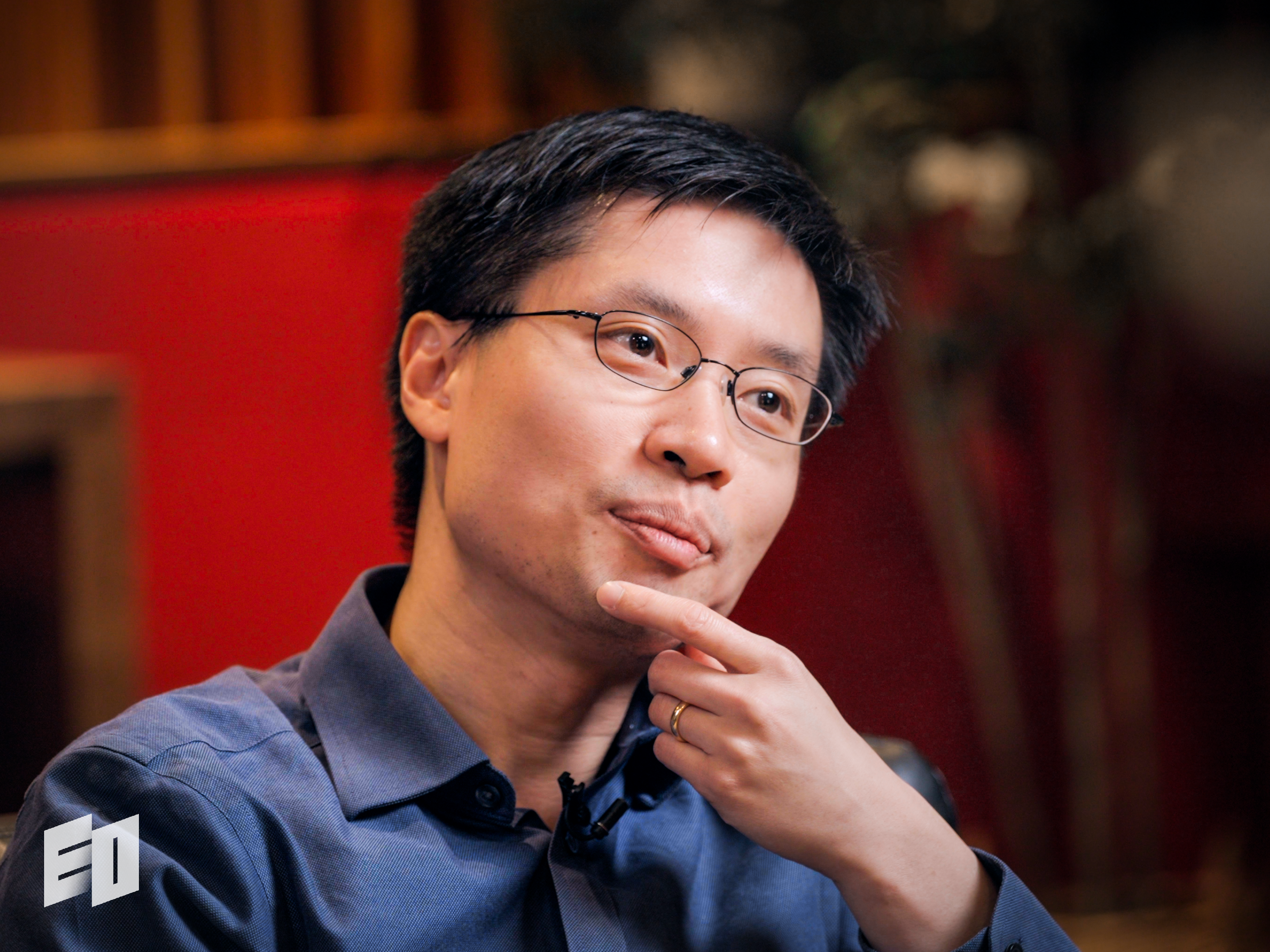
Po-Shen Loh is a mathematician and professor at Carnegie Mellon. He has spent time visiting classrooms across rural America and Africa, not to teach but to observe. What he discovered challenged everything he thought he knew about talent, opportunity, and what it means to be human in the age of AI.
Po-Shen Loh is a mathematician and professor at Carnegie Mellon. He has spent time visiting classrooms across rural America and Africa, not to teach but to observe. What he discovered challenged everything he thought he knew about talent, opportunity, and what it means to be human in the age of AI.
In this interview, Po-Shen Loh shares:
1. Why the kids with no phones outperformed every expectation and what that reveals about curiosity vs. curriculum.
2. Why AI replacing blue-collar and white-collar jobs alike makes human trust the most valuable economic asset of the 21st century.
3. Why the traditional education-to-job pipeline is heading toward a mental health crisis and the one mindset shift that changes everything.
Watch the full interview now on EO's YouTube channel! Below is the complete transcription of the interview. Minor edits have been made for clarity and readability.
Key Highlights:
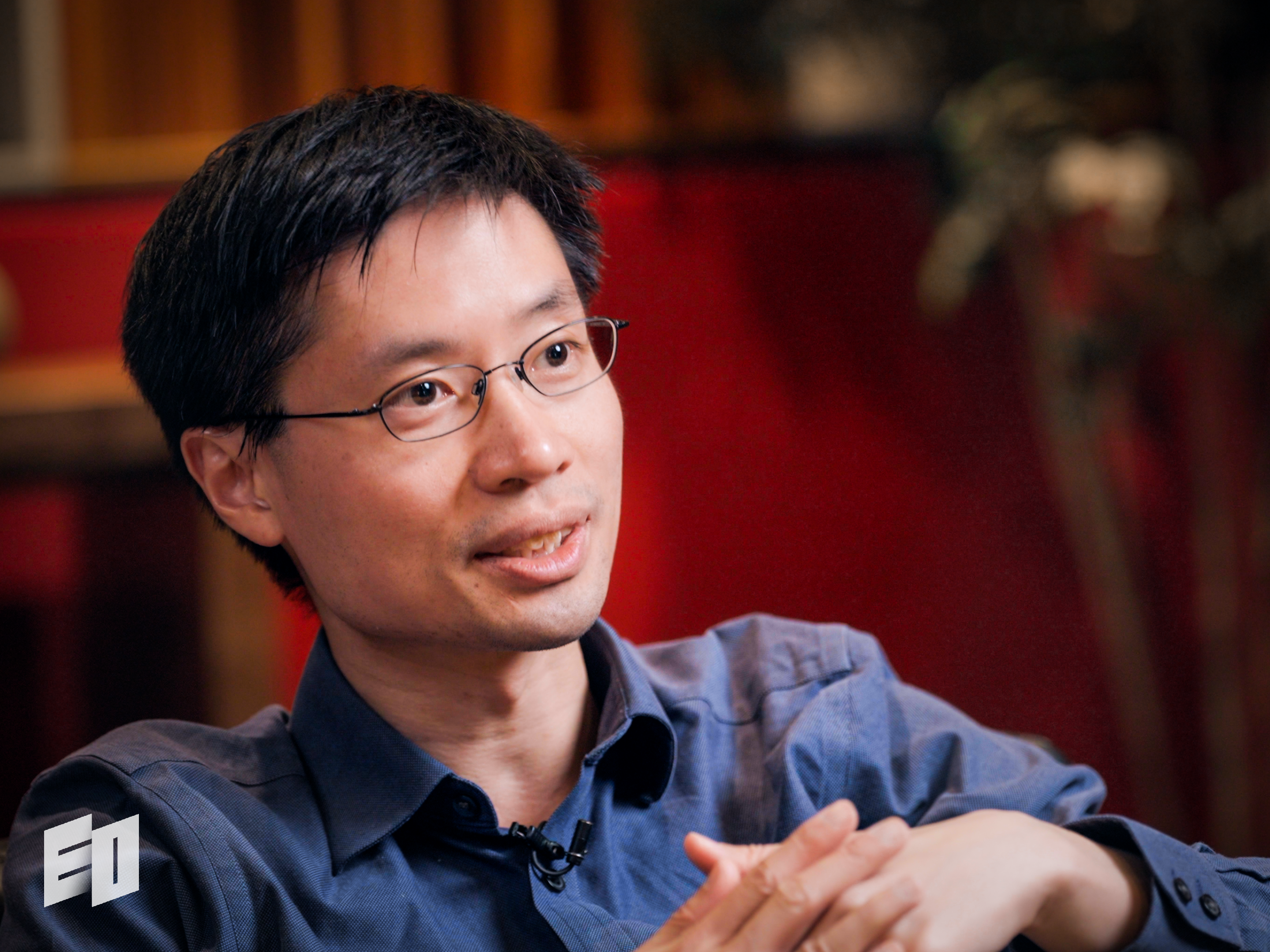
"The AI today can do those problems like this. At this point, even a very sophisticated math coach can be replaced by the AI tool if you decide you want to do it."
"As I started running around rural areas, I walked into the elementary school. I walked into the fourth grade classroom and I was just going to do my usual thing. Mr. Poe, the substitute teacher."
"I wrote on the blackboard: What is 1 + 3 + 5 + 7 + 9 equals? As soon as I wrote equals, behind me, I heard a bunch of kids yelling 25."
"I asked the person who took me around afterwards, 'These kids are amazing. Do they play games on their phones?' And the lady told me, 'They don't have phones. It's because of the money. In fact, they might not even have internet access.' Then I said, 'What do they do for fun?' And she said, 'Well, they just figure out how to make their own games.'"
"That huge pool of authentically interested and curious kids throughout rural America. This could be an enormous untapped potential across not only the US but the entire world."
"This could potentially create a totally new economic flow system. This might just be what we need for the 21st century after AI."
"I will also say for everyone who wanted a stable life, good luck because AI is going to take that."
"As I started running around rural areas, I walked into the elementary school. I walked into the fourth grade classroom and I was just going to do my usual thing. Mr. Poe, the substitute teacher."
"I wrote on the blackboard: What is 1 + 3 + 5 + 7 + 9 equals? As soon as I wrote equals, behind me, I heard a bunch of kids yelling 25."
"I asked the person who took me around afterwards, 'These kids are amazing. Do they play games on their phones?' And the lady told me, 'They don't have phones. It's because of the money. In fact, they might not even have internet access.' Then I said, 'What do they do for fun?' And she said, 'Well, they just figure out how to make their own games.'"
"That huge pool of authentically interested and curious kids throughout rural America. This could be an enormous untapped potential across not only the US but the entire world."
"This could potentially create a totally new economic flow system. This might just be what we need for the 21st century after AI."
"I will also say for everyone who wanted a stable life, good luck because AI is going to take that."
Lesson 1: Connecting Talent Worldwide — Lessons from Rural Classrooms
Can you introduce yourself?
Hi, I'm Po-Shen Loh. I'm a mathematician who has gotten very distracted by the real world and now my main focus is on trying to build a more thoughtful world to help humanity survive after AI.
Po-Shen Loh: These days, my biggest focus is on how to bring opportunities to places where there might not have been as many before. The latest direction I've been pushing in has actually been rural communities throughout the United States.
I went to South Carolina last year in December. As we were driving down the road, it was very clear from the stores and the buildings that this was an area that was quite impoverished. I walked into the fourth grade classroom and I was just going to do my usual thing — Mr. Poe, the substitute teacher. So I wrote on the blackboard: "What is 1 + 3 + 5 + 7 + 9 =?" As soon as I wrote equals, behind me, I heard a bunch of kids yelling 25.
I went to South Carolina last year in December. As we were driving down the road, it was very clear from the stores and the buildings that this was an area that was quite impoverished. I walked into the fourth grade classroom and I was just going to do my usual thing — Mr. Poe, the substitute teacher. So I wrote on the blackboard: "What is 1 + 3 + 5 + 7 + 9 =?" As soon as I wrote equals, behind me, I heard a bunch of kids yelling 25.
Can you tell us about a memorable classroom experience you've had?
Po-Shen Loh: We talked for about 20 minutes, and through the whole thing the kids were all suggesting ideas. They were also very respectful of each other's ideas. If someone was giving an answer, I said, "Let's all listen to that person" and everyone did. It was a marvelous class. One of the best fourth grade classes I've ever taught. And I just told you the profile of the area was high poverty. The ethnic makeup of the classroom was 95% African-American.
I asked the person who took me around afterwards, "These kids are amazing. Do they play games on their phones?" And the lady told me they don't have phones. It's because of the money. In fact, they might not even have internet access. Then I said, "What do they do for fun?" And she said, "Well, they just figure out how to make their own games."
I asked the person who took me around afterwards, "These kids are amazing. Do they play games on their phones?" And the lady told me they don't have phones. It's because of the money. In fact, they might not even have internet access. Then I said, "What do they do for fun?" And she said, "Well, they just figure out how to make their own games."
What have you observed from your travels across America in terms of student potential?
Po-Shen Loh: Throughout all of rural America, where I've been traveling, there are so many kids who are actually really, really interested in challenging themselves. It's just that because of the way the curriculum is designed, they haven't been given the chance. The standard curriculum is designed to make sure that you know how to do a standard problem. In this future world, we need people who can do non-standard problems.
Well, it turns out there are plenty of kids who are really poised to do that and it even felt more authentic than what I found in cities.
Well, it turns out there are plenty of kids who are really poised to do that and it even felt more authentic than what I found in cities.
What drew you to visiting Africa, and what did you find when you got there?
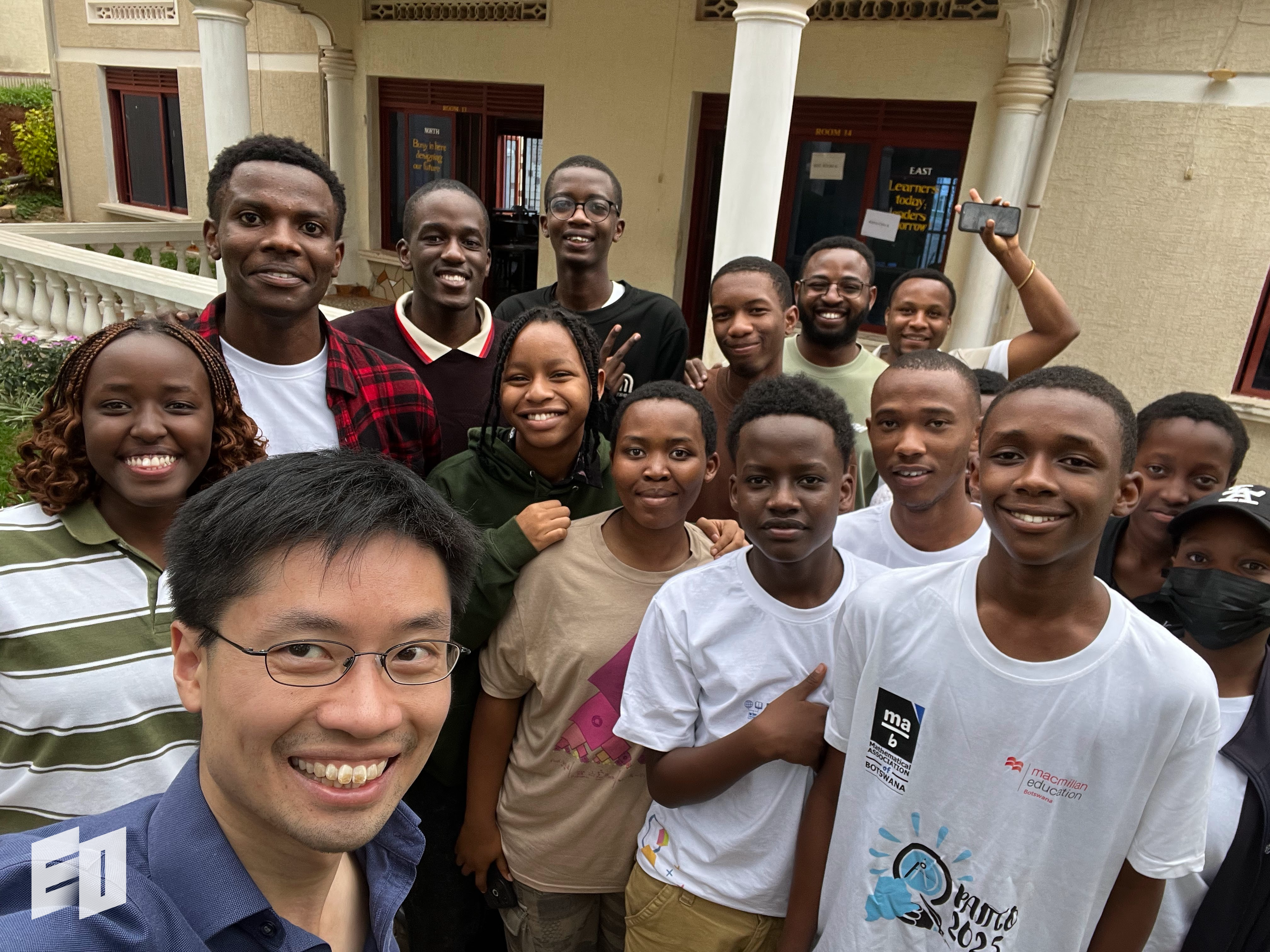
Po-Shen Loh: I was particularly interested in Africa because the population is getting bigger and bigger, and as a fraction of the world's population it's going to become more and more significant. When I went there, I wasn't going to propose particular solutions. I was going there to learn and try to see what was going on. And immediately I saw lots of very capable people. Then I started to think: "why is the economic development not as strong given that there are all these great people?"
The problem was that the people I met, people outside in the rest of the world, didn't know about these particular great people. It was just, "I guess there is a place called Africa, how do you send resources?" If you send it through a general channel, somebody is professional at receiving resources. That's not as good as knowing this specific person can really use the resources.
The problem was that the people I met, people outside in the rest of the world, didn't know about these particular great people. It was just, "I guess there is a place called Africa, how do you send resources?" If you send it through a general channel, somebody is professional at receiving resources. That's not as good as knowing this specific person can really use the resources.
How do you go from identifying hidden talent to actually connecting it with opportunity?
Po-Shen Loh: With the whole system we do, we have high schoolers who coach middle schoolers. The high schoolers can be from anywhere in the world and are selected through our method, where we try to find who really cares about people and who's also very good at thinking about ideas on the spot to solve questions. They always teach in pairs. By having the two of them teach together, they get to know each other.
If anyone in the United States, Korea, China, Canada, or Europe partners with one of these people from Rwanda or Ethiopia, they would very quickly realize: each of us is good. My prediction is that 5 to 10 years down the line, they'll be looking for jobs. Remote work does work well. The only issue is who would you hire? I anticipate that they might call up the person that they already know.
There's even an economic arbitrage. The amount of money people are used to earning in different countries is very different. If you split the difference, both sides win massively. One side will save a lot, the other side will get to live really, really well. This could potentially create a totally new economic flow system. I'm a network theorist, and ultimately, building a high-trust network among lots of people who love helping others and love thinking hard. This might just be what we need for the 21st century after AI.
If anyone in the United States, Korea, China, Canada, or Europe partners with one of these people from Rwanda or Ethiopia, they would very quickly realize: each of us is good. My prediction is that 5 to 10 years down the line, they'll be looking for jobs. Remote work does work well. The only issue is who would you hire? I anticipate that they might call up the person that they already know.
There's even an economic arbitrage. The amount of money people are used to earning in different countries is very different. If you split the difference, both sides win massively. One side will save a lot, the other side will get to live really, really well. This could potentially create a totally new economic flow system. I'm a network theorist, and ultimately, building a high-trust network among lots of people who love helping others and love thinking hard. This might just be what we need for the 21st century after AI.
Lesson 2: The Paradox of AI — Why Human Matter More As AI Replace Skills?
We've heard that blue-collar jobs like plumbing are AI-proof. Do you agree?
Po-Shen Loh: Whatever people are good at — all these skills — are getting better at them and eventually getting better than humans at them as well. For a while, people were saying the safe job would be something like a plumber, a blue-collar job. But if you look at how many humanoid robots there are, there are a lot of them.
One of the very famous US companies was Boston Dynamics. As soon as I saw that Hyundai had bought them, I knew what Hyundai wants to use those robots for. Not for dancing. Hyundai manufactures large amounts of stuff and would be very happy to have tons of robot workers. So it's not going to be very long before humanoid robots are working in all the Hyundai plants. That's going to wreak havoc across the blue-collar world as well.
One of the very famous US companies was Boston Dynamics. As soon as I saw that Hyundai had bought them, I knew what Hyundai wants to use those robots for. Not for dancing. Hyundai manufactures large amounts of stuff and would be very happy to have tons of robot workers. So it's not going to be very long before humanoid robots are working in all the Hyundai plants. That's going to wreak havoc across the blue-collar world as well.
What do you think makes humans fundamentally irreplaceable in an AI-driven world?
Po-Shen Loh: One of the things I think is quite special about people is that hopefully they care that humanity still exists. And the best part is — the ones who do, if you talk to them, you can read it from their eyes. The beautiful thing about humans is that you can tell when you talk to someone: this person cares about the big picture more than just about themselves. You will never be able to get that confidence looking at a robot's eyes.
I see a lot of electric vehicles on the road today. An EV is basically a computer with four wheels. Many of them get constant software updates. What would happen if somebody hacked into the software update system? Next week, one particular brand of EVs at 5:30 p.m. they all accelerate to full 100%. The more interconnected our world is, the easier it is for one move to cause very bad things to happen. The car that was supposed to help you can change into a car that was supposed to hurt you and you have absolutely no way of knowing, because it has no eyes.
That will also create a job opportunity because there will need to be people you can trust to take care of things and make sure things are safe. My prediction is that the kinds of people who are going to have a lot of job opportunities are the ones where you can tell you can really, really count on this person and that person is very flexible. Great intention and great learning capacity. I don't want to hire someone who has been trained to do one particular task because one or two years from now I can use the AI to do that task and it'll be way cheaper. People whom you can see that they just want to do good stuff, we don't have enough of them. The more automation there is, the more things that can go wrong. We don't even have enough good people to watch out for all this stuff. I think that's one of the major future needs for humans.
I see a lot of electric vehicles on the road today. An EV is basically a computer with four wheels. Many of them get constant software updates. What would happen if somebody hacked into the software update system? Next week, one particular brand of EVs at 5:30 p.m. they all accelerate to full 100%. The more interconnected our world is, the easier it is for one move to cause very bad things to happen. The car that was supposed to help you can change into a car that was supposed to hurt you and you have absolutely no way of knowing, because it has no eyes.
That will also create a job opportunity because there will need to be people you can trust to take care of things and make sure things are safe. My prediction is that the kinds of people who are going to have a lot of job opportunities are the ones where you can tell you can really, really count on this person and that person is very flexible. Great intention and great learning capacity. I don't want to hire someone who has been trained to do one particular task because one or two years from now I can use the AI to do that task and it'll be way cheaper. People whom you can see that they just want to do good stuff, we don't have enough of them. The more automation there is, the more things that can go wrong. We don't even have enough good people to watch out for all this stuff. I think that's one of the major future needs for humans.
Lesson 3: The New Rules for Running a Society.
Is AI a threat to traditional education or an opportunity?
Po-Shen Loh: AI definitely creates a way for more people to access education. Today, if you want to learn something, you really can learn it. I was using Claude's Opus 4.5, the very advanced version, and I was having it solve all these advanced math problems and give hints. So even a very sophisticated math coach can be replaced by the AI tool if you decide you want to do it. So the big question for the student is "do I want to do this?".
I was in China last week and I was at one school that was showing me an AI-powered app designed to let you do the kinds of problems that will appear on exams so that you could rank higher. It was an AI-powered performance improver for standard exams. One of the curriculum people asked me, "What do you think?" And I said, "Actually, if I was using AI to do education, I don't think I would do it that way because I think that's just creating people who are human versions of AI. You're just making human robots." The most important thing today is that you want to learn something and then you are curious enough to go and engage with it. But you also need to be able to think, so that's the other piece. It's very dangerous today for people to just ask AI stuff because the AI can tell you something and it sounds authoritative, but it could be bogus. So the bottom line is that the playing field for learning stuff at this point if you just want to go and interact with AI, you can. Everyone can have it. Then the deep question becomes "why would anyone do it?". So that's why the way I work now is on the philosophy.
I was in China last week and I was at one school that was showing me an AI-powered app designed to let you do the kinds of problems that will appear on exams so that you could rank higher. It was an AI-powered performance improver for standard exams. One of the curriculum people asked me, "What do you think?" And I said, "Actually, if I was using AI to do education, I don't think I would do it that way because I think that's just creating people who are human versions of AI. You're just making human robots." The most important thing today is that you want to learn something and then you are curious enough to go and engage with it. But you also need to be able to think, so that's the other piece. It's very dangerous today for people to just ask AI stuff because the AI can tell you something and it sounds authoritative, but it could be bogus. So the bottom line is that the playing field for learning stuff at this point if you just want to go and interact with AI, you can. Everyone can have it. Then the deep question becomes "why would anyone do it?". So that's why the way I work now is on the philosophy.
What do you think is driving the mental health crisis among young people today?
Po-Shen Loh: In the old days, people would study hard because then you could get a higher rank and get into a better university. But today, even if you do that, you still can't get a job. It's actually quite sad. A lot of people who are running along this pathway are going to work very hard for about 20 years of their life, being told by their parents, "Do this so you have a better job at the end." Finally they graduate and they still have no job. That's going to be a major mental health crisis.
The way I think is more healthy is if people have a real intention to do something that is bigger than themselves that involves other people. That's why what I love is when I see a kid whose eyes are saying, "I want to help you." It's so interesting that you can see this from human eyes. They're going to be very curious, they're going to keep learning, and then they can become arbitrarily good. So I was thinking about "how do you motivate people to be thoughtful?".
The way I think is more healthy is if people have a real intention to do something that is bigger than themselves that involves other people. That's why what I love is when I see a kid whose eyes are saying, "I want to help you." It's so interesting that you can see this from human eyes. They're going to be very curious, they're going to keep learning, and then they can become arbitrarily good. So I was thinking about "how do you motivate people to be thoughtful?".
So how do you actually create the motivation you're looking for in young people?
Po-Shen Loh: Thoughtful people like being around other thoughtful people. It's fun. The moment you meet anyone who likes to help others and think about things, you very quickly become trusted friends. You become trusted friends. Then, these thoughtful networks become very strong. So I realized there's another way to motivate people: find thoughtful people and connect them to each other. Then they naturally will start to find ways to create value. Some of these people will also be entrepreneurs. The heart of entrepreneurship is finding pain points in other people and solving them and by the way, you'll get money out of that because you've solved a problem.
That's how I realized networking together thoughtful people provides a 21st century way to provide ongoing opportunity, which is actually even better than the central-authority way of "everyone take a test, rank the highest, and give those people something they all can do independently."
That's how I realized networking together thoughtful people provides a 21st century way to provide ongoing opportunity, which is actually even better than the central-authority way of "everyone take a test, rank the highest, and give those people something they all can do independently."
What practical steps would you give to a young person in a country where exams determine everything about their future?
Po-Shen Loh: Different countries do have different systems, so I actually see this in some of the other countries that I go to, where due to the way system is everyone is struggling along, competing to get these high scores on exams because that's what's going to determine their future. The question is "how can we help them?". Very strong practical advice: learn English to a very high level of fluency because that gives you access to a huge world of opportunities. If the only language you know is your native language, you only get opportunities in systems that use your native language. And if that system is designed in a way where most people will not have opportunity, it could be very beneficial to be able to play in all the other systems.
Next thing is to pick up this thoughtful quality, where when anyone meets you, they see that you really do care about other people. That is actually what's going to make people want to pull you out of those systems. For example, if anyone speaks fluent English, and if you live in another country, they would say they would love to have you in their program.
It's very useful to take a step back and think: "why is the system built this way anyway? What was the intention?". And then you might need to break out of the system. You might need to find your own other way to do things. That's entrepreneurship.
I will also say for everyone who wanted a stable life, good luck, because AI is going to take that. So unfortunately, people need to move in this direction.
Next thing is to pick up this thoughtful quality, where when anyone meets you, they see that you really do care about other people. That is actually what's going to make people want to pull you out of those systems. For example, if anyone speaks fluent English, and if you live in another country, they would say they would love to have you in their program.
It's very useful to take a step back and think: "why is the system built this way anyway? What was the intention?". And then you might need to break out of the system. You might need to find your own other way to do things. That's entrepreneurship.
I will also say for everyone who wanted a stable life, good luck, because AI is going to take that. So unfortunately, people need to move in this direction.
Explore more