
Sep 29, 2022
How I built 400 million users app EvernoteㅣPhil Libin
Interview with Phil Libin, Co-founder of Evernote
Founder Focused

💡
At a Glance
- Who: Phil Libin is the Co-founder and CEO of Mmhmm and All Turtles, best known as the former CEO of Evernote. A refugee who immigrated to New York from the Soviet Union in 1979, he taught himself programming on an Atari computer before launching five startups over 25 years.
- What: All Turtles and Mmhmm represent Phil Libin's fifth startup venture, applying lessons from a 25-year career building e-commerce software (Engine Five), smart card security systems (Core Street), and cloud note-taking platforms (Evernote). His product philosophy centers on building opinionated software directly for communities he understands, avoiding consulting work, and creating tools with a strong point-of-view design.
- Traction: Scaled to 400 million global users after launching on Day 1 of the Apple App Store in 2008. Libin established Evernote as a category-defining productivity app by building specifically for power users and maintaining an opinionated product philosophy.
Phil Libin immigrated to New York as a refugee from the Soviet Union in 1979, teaching himself programming on an Atari computer before spending 25 years launching five technology companies. After building e-commerce tools at Engine Five and security systems at Core Street, Libin co-founded Evernote, creating an opinionated digital brain that scaled to 400 million users on the Apple App Store. Today, as Co-founder and CEO of All Turtles and Mmhmm, Libin applies his multi-decade founder experience to building products for high-demand user communities. His career demonstrates why first-time founders should build for problems they personally understand, why great products must take an explicit point of view, and why spending energy on enthusiastic early adopters wins over trying to convert skeptics.
Key Takeaways
Programming Gave Phil Agency to Make Ideas Real
As a child with an Atari computer, Phil Libin discovered that programming could turn thoughts into things with real impact. That early sense of agency eventually made building products feel more natural than fitting into a conventional job, even before he viewed entrepreneurship positively.
Consulting Taught Phil to Build Lasting Products
Libin's first company taught him that consulting could pay well without creating enduring value, because the money stopped when the work stopped. At Core Street, the team tried to build a product, but learned that a product also needs a customer space people genuinely care about.
Evernote Won by Excelling at Specific Details
Evernote entered a crowded note-taking market by being exceptionally good at background synchronization and searching inside images. Libin says a product does not need to excel at everything, but it must be sharply great at something users can immediately feel.
Products Need a Strong Point of View
Libin says excellent products are not neutral, because they express an opinion about how they should be used and whose side they are on. At Evernote, that meant choosing users over paying companies when interests diverged and making the philosophy visible in the product.
Build First for Communities You Truly Understand
Libin recommends that first-time founders build for themselves or a community they understand deeply. That familiarity removes uncertainty about whether the problem exists and lets the founder begin with real expertise instead of guessing what an unfamiliar customer might want.
Find Believers Instead of Changing Every Mind
Libin says successful products require behavior change, but founders do not need to persuade everyone. Energy is better spent finding people who already like the approach and making them enthusiastic, because enough committed users can matter more than converting every skeptic.
Watch the full interview now on EO's YouTube channel! Below is the complete transcription of the interview. Minor edits have been made for clarity and readability.
Introducing Phil Libin, co-founder of Evernote
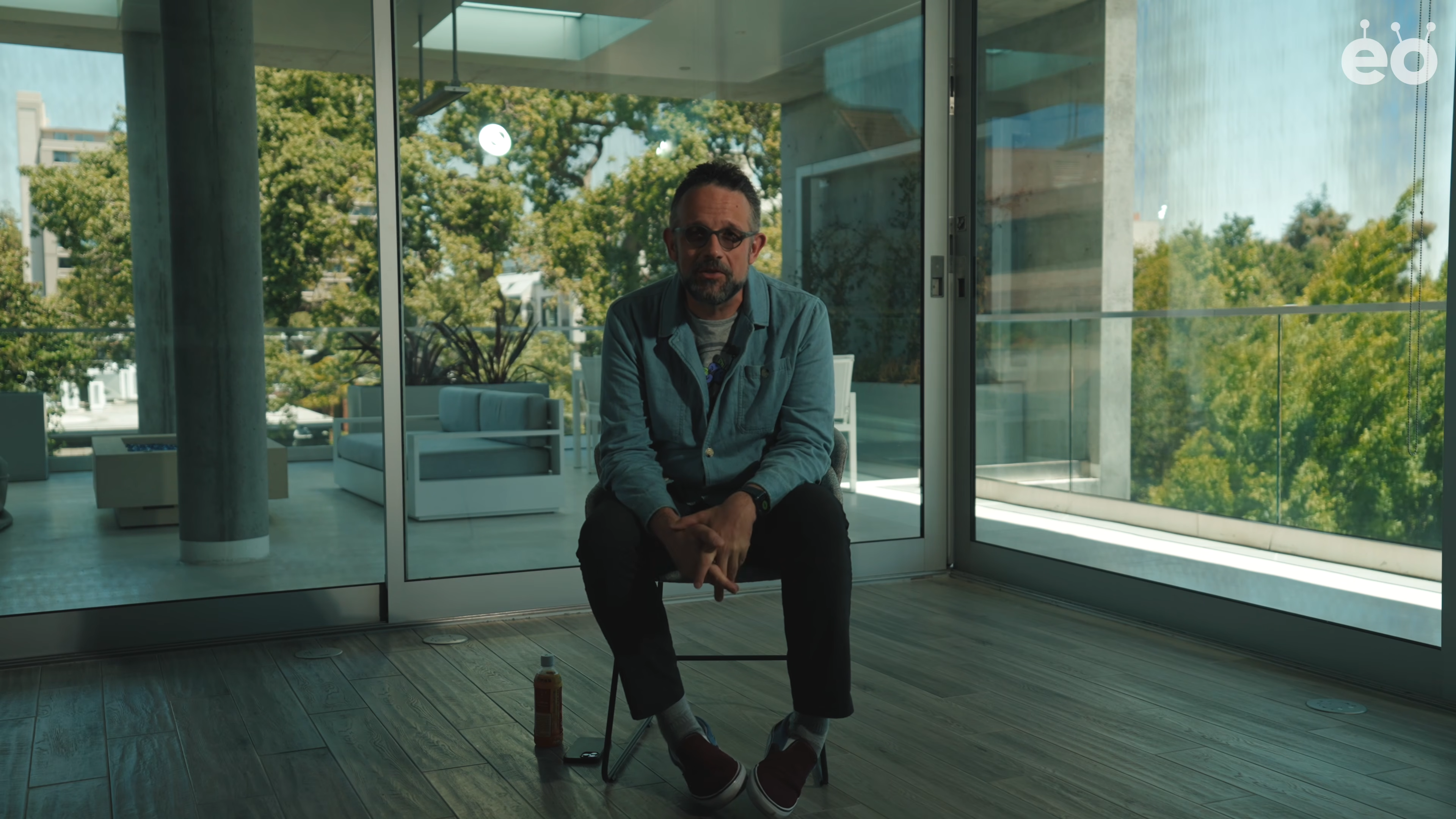
My name is Phil Libin, and I'm the co-founder and CEO of All Turtles and Mmhmm. I'm a fifth time startup founder, so I'm currently on my fifth company, and the company I'm probably best known for is called Evernote. In the middle there, I was a venture capitalist for a couple of years. I'm not very motivated by starting companies. I'm a refugee, and my family came here to the US from what used to be the Soviet Union as refugees in 1979.
Making Ideas Real

I was growing up in New York City, in the Bronx in the 80’s. It was a pretty dangerous neighborhood back then, so I mostly stayed inside, and I begged my parents to give me a computer. They got me my first computer, an Atari 800XL computer, and that computer was pretty much all I did for many years. I stayed inside, I learned how to program the computer, and I got onto bulletin boards and started talking to a lot of people on other computers.
This was before I had access to the Internet, but it was still very much eye opening. I think that's where I had my first sense of agency as a programmer. I realized that when I write a computer program, I'm taking thoughts and making them real, and they can actually have an impact.
That's what gave me the first idea that I could help build the things I want to see exist in the world. I never really considered starting a company or being an entrepreneur. I always thought that I would just get a job, that I would be a lawyer or a doctor or an engineer or something.
I think that's what my parents expected. But I couldn't hold down a real job. It was easier for me to start something than to be an engineer in a big company, and it always felt like I was failing. It took maybe ten years for me to start thinking of that as a positive thing. Starting companies wasn't something I wanted to do, and it wasn't something I identified as a drive in myself.
The first company we started was called Engine Five, and we started it in 1997, right in the middle of the first dotcom bubble. Everyone was running around saying dotcom, dotcom. You could go to any tree in Boston, say dotcom and shake the tree, and an investor would fall out of it and give you money. You could do anything if you just figured out how to put things on the internet.
We built some of the very first shopping carts, some of the very first things that let you buy things on the Internet. We were working 16 hours a day, seven days a week, never a weekend and no time off. Then we got an opportunity to sell the company to a much bigger company called Vignette, so we just got really lucky. We stayed at Vignette for two years, and then we started our second company, which was called Core Street, and it was a security company.
We sold to governments and banks. We built big security systems, which was really boring. The lesson we learned from Engine Five was that Engine Five was basically a consulting business, and that sucks. You get paid pretty well, but you're not building anything of value, because the money stops when you stop working. So we said, okay, the lesson is that we have to build a product.
At the second company, which was Core Street, we said, all right, we're going to make a product and we're going to learn that lesson. So we made this product. But the thing we got wrong is that it was a product in a space that nobody gets, that nobody is in love with. No one gets excited about it, and no one wakes up in the morning and says, oh yeah, a new standard for contact smart cards for government employees just came out. About one guy does, and that guy was me. It's sad.
The lesson we learned from that was that building a product is better than being a consultant, but building a product isn't enough on its own, because the product wasn't for us. We're not a government and we're not a bank. I got so sick of hearing, remember Phil, you're not the target customer.
In my first two companies, we made products for other customers. We made products for retailers and for banks and for governments, so we always had to think about what the customer wants. When you sell a big thing to a government agency, it takes about a year just to get the contracts ready. We ran that company for about six or seven years, and then we sold it and started Evernote.
Evernote definitely wasn't my idea. Evernote was started out of two other companies that came together in 2007. There was a team of people led by Stepan Pachikov, who was a brilliant scientist and entrepreneur, and he was in Silicon Valley while I had a team in Boston. We had just sold our second company and we were thinking about what to do next. This time we never thought about what the customer wants, because we were making the product for ourselves.
So we thought, well, what do we want? We both had this idea to build an external brain, a cognitive prosthesis, as we called it, and we decided to merge the two companies in 2007 and create the new Evernote out of that. It was maybe the oldest idea in technology. We were just going to use technology to help people remember things and to help them be more productive. The idea was definitely not very original, but most ideas aren't very original.
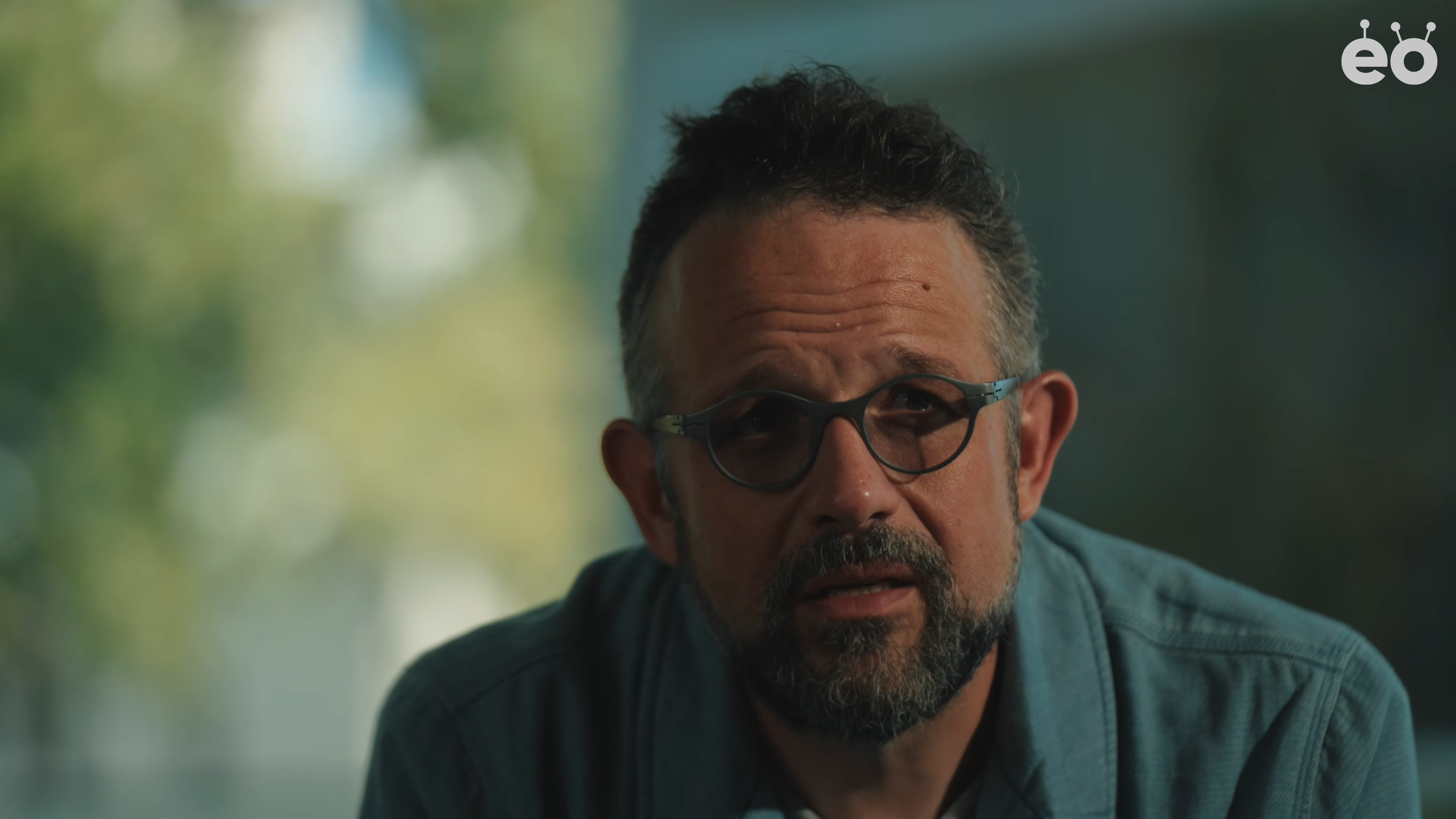
What really matters is the execution, and I think we had very good execution at Evernote. Your dream is to get it in front of every iPhone user and hopefully they love it and buy it. That's not possible today, because most developers don't have those kinds of resources. Even the big developers would have a hard time getting their app in front of every iPhone user. Well, we're going to solve that problem for every developer, big to small.
And the way we're going to do it is what we call the App Store. We were on the App Store on the very first day, and we were one of the first apps that came out. Back in 2007, 2008 and 2009, lots of the big companies were launching app stores. We were always one of the first apps, and we became kind of the default productivity app. There were already many note taking apps, and in fact every device, every computer, every phone and every personal assistant all came with free note taking apps.
So it was already infinite competition. What we tried to do was just to be better than all of them in some very specific ways. For a product to succeed, it needs to be great at something. It's fine if it's not very good in a lot of other things, but it needs to be really sharply great at something. At Evernote, we were really great at a couple of things.
One was that we were the first to do fully background synchronization, and now you take it for granted. Back then it was a big deal that I could write something on my computer, and then if I took out my phone, what I put on my computer was already on my phone, and vice versa. Before Evernote, you had to really think about where your information was, about setting up synchronization and setting up FTP servers and doing all this work. With Evernote it was just magic. It just worked.
Another thing we did is that we let you search inside of your images. You could take pictures of business cards or signs and you could search by images. Those two things were really original and they really helped us stand out. Then we just worked really hard to be the best productivity tool in the market. By the time I left Evernote, we had 400 million users.
Everything is difficult in a startup, especially a startup that's growing very quickly. You wake up and there are difficulties non-stop, and it's harder to think of anything that was easy. In the beginning, our big advantage was that we were making the product for ourselves. Every time we made a change, we could look and see whether it made things better or worse for us, and we knew how to advance the product. That was a huge advantage in the beginning, because it was much faster.
But that also became a very big difficulty for us later, because it became harder to add new users and different types of users. We had really made the product so much for power users like us, people with very specific narrow use cases, that we had a pretty difficult time scaling past that. A couple of years into it, we had to try really hard to make sure that we really understood what other people wanted and how to be useful to them.
When it came time to grow beyond just ourselves, there were many lessons from Evernote. One of the biggest ones is that your product needs to be very clear about its point of view. Really excellent products are not neutral, they have a strong opinion and a strong point of view about how you're supposed to use them, what kind of people should use them and how you should structure things.
I think if you try to make a product neutral, something that everyone can use and that doesn't really specify how it should be used, it's hard to make something really good. At Evernote, we tried to be very clear about what our philosophy of being organized was, and also very clear about whose side we were on. Part of having that point of view matters especially for a business product, and most Evernote users use it at work.
We had to be very clear about whose side we were on. Were we on the side of the employee or the company? The company usually paid us, but the actual human beings, the employees, were the ones who used us. When those interests diverged, we had to decide whose side we were on, and we were always very clear that we were always on the side of the people.
We were always on the side of the users, of the humans, even if they're not the ones that are paying us, even if the company is the one paying us. And whenever there was a conflict between those two things, we always sided with the people. The very important lesson is to always have a strong point of view and to have the product really embody that philosophy and that strong point of view. Don't try to be for everyone, and don't try to be neutral.
I think we did our part in making the productivity category cool again. Before us, productivity hadn't really changed much. It was like Microsoft Office. I feel like we were at least partially responsible for this current generation of very cool productivity apps.
Building for Yourself
My recommendation for people starting for the first time is to build for yourself, or to build for a community that you already understand really well. You shouldn't have a question about whether people want it, because you should be the world's biggest expert on what the people you're building for want. And if you don't understand your own problems, or the problems of whatever people you're trying to help, I wouldn't start a company in that space, at least not a first one.
I would make the first thing something you are already the world's biggest expert on, and then just skip that step completely. If you have to wonder whether or not people will actually want your product, it means that you don't understand enough about the people you're trying to serve. Much later, when you're starting your fifth company or your third product or something, then it can be different. But in the beginning I would say, look, there's so many things to work on. Just make it easy on yourself and pick something that you already know is going to be in high demand.
The Limits of Persuasion
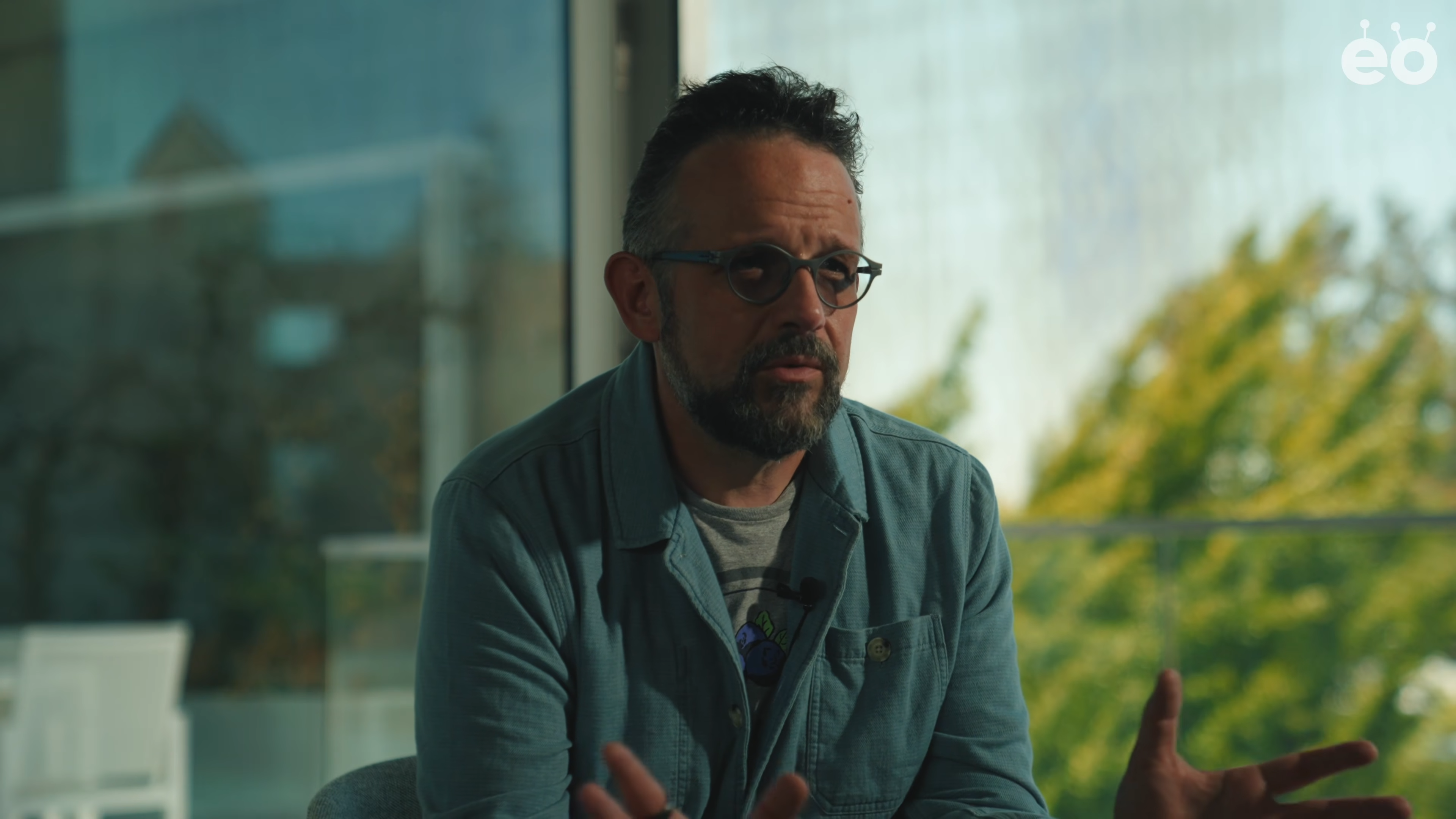
Any time you do anything important, you have to change people's views and you have to change behavior. That's not a problem, that's an opportunity. All successful products or companies got to be successful because they ask people to change their behavior in some way.
And you don't have to get everyone to change their behavior. You don't even have to get most people to change their behavior. You only have to get enough of the people that you need. So we never tried to convince anyone. If anyone disagrees with how we do things, that's fine, because there's enough people who like this approach and who already want to do it.
In any company, I'd much rather spend my energy on finding people who already like it and getting them really excited. That's a better use of energy than finding people who don't like it and trying to change their mind. I’ve been running startups for 25 years now and I don't think I've ever changed anyone's mind. I don't think I've ever taken someone from no to yes. I always take people from yes to yeah, definitely.
Explore more