
Jul 29, 2026
What's Actually Holding Humanoid Robots Back Isn't the AI
Interview with Andrew Kang, Founder of RoboStrategy
Founder Focused
0:00 / 0:00
💡
At a Glance
- Who: Andrew Kang is the founder and CEO of RoboStrategy, which he describes as one of the first publicly listed venture funds on NASDAQ and the only one investing exclusively in robotics and physical AI.
- What: RoboStrategy concentrates on vertically integrated robotics companies that build their own robot intelligence, hardware, deployments, and manufacturing, on the thesis that co-optimizing hardware and models produces better robots and better training data.
- Traction: Kang says the fund's largest investments include Figure AI, a non-consensus bet made before he had ever visited the facility, alongside Apptronik, Dyna Robotics, Standard Bots, Path Robotics, and Dexmate. He puts Figure and Tesla Optimus at the top of the humanoid field.
In this interview, Andrew Kang reveals why he pivoted an entire fund into robotics on a bet no other investor wanted, how a single $50,000 humanoid multiplies into a tens-of-trillions market, why he thinks the model layer is about to commoditize, and the bottleneck that will still hold humanoids back even after the intelligence problem is solved.
Key Takeaways
The bottleneck for humanoids is manufacturing, not intelligence
Kang expects robot intelligence to get good enough for most everyday tasks within two to three years, faster than most people assume, because gains in AI research feed back into physical AI research. But he is explicit that solving intelligence does not put robots to work. As he puts it, he can spin up a million instances of a chatbot instantly and cannot produce robots out of thin air, so factories and component supply chains have to scale first.
A non-consensus bet is what turned the firm into a robotics fund
Kang says the other venture investors he consulted did not believe humanoid robotics would work anytime soon, pointing out that the space had never produced venture-scale outcomes. He invested in Figure AI anyway, without having visited the facility, after watching every video he could find of Brett and studying the team's background in hardware engineering, robot learning, hand engineering, and fleet management. That single bet is why he pivoted the entire company into robotics.
Owning the factory is a data strategy, not just a hardware strategy
Kang argues that embodiment-specific data is what makes robot models effective: drop a person into a 7-foot-tall body and they become awkward, and models have the same problem. Collecting that data requires hundreds or thousands of robots, which cannot be ordered on short notice. Companies with their own manufacturing, like Figure, Tesla Optimus, and Apptronik, can earmark robots purely for data collection instead of queuing behind a supplier.
When intelligence commoditizes, value moves to hardware and deployment
Kang says the gap between open-source and frontier models has narrowed from roughly two years to something more like six months, and that most physical tasks do not need frontier intelligence: restocking shelves or assembling a computer mouse does not require an Einstein. Within maybe three to five years he expects the model layer to commoditize for physical AI, leaving deployment, manufacturing, and component innovation as the places where value accrues.
Nvidia's open-source push is a defensive move that reshapes the field
Kang points to Nvidia releasing open models across LLMs, autonomous vehicles, and physical AI as a response to an existential risk: if closed-source labs optimize for other hardware, as Anthropic did by training on Google TPUs, Nvidia loses business. He says anyone building only physical AI models should understand they are competing with one of the best-resourced AI companies in the world.
US versus China is the wrong frame for robotics
Kang expects both industries to be massive and largely independent, with American robots sold in America and Chinese robots sold in China, because countries increasingly want to produce critical technology domestically. He notes China has already committed many billions through government funds and municipalities while the US has so far funded rare earths processing and semiconductor firms like Intel. Because so much research is published openly, he says both countries get there within five to ten years regardless.
Below is the complete transcription of the interview. Minor edits have been made for clarity and readability.
Intro
Hey guys, I'm Andrew. I'm the CEO of RoboStrategy. RoboStrategy is one of the first publicly listed venture funds on NASDAQ, and we're the only publicly listed venture fund that is exclusively focused on investing in robotics and physical AI. We're invested in quite a few robotics companies: Figure AI, Apptronik, Dyna Robotics. We also have Standard Bots in the portfolio. They build industrial arms, cobots, and also companies like Path Robotics that focus on specific tasks like welding.
The amazing thing about the Figure AI live stream was it showed that this is real. It's not a video where they took 100 attempts at doing a task and they showed the best one. This was a live stream that went on for 8 or 10 hours and ended up going on for 8 days. What was funny was that the human actually won. It won by a little bit, but at the end of the day the intern that was doing the challenge, his hands were blistered. He was not having a lot of fun. It was exhausting. It's not something that he'd probably want to do again.
The Bet: All in on Figure AI and the full-stack future
One of the largest investments that we ever made was into the company Figure AI. It wasn't a consensus investment, because everyone that we had asked, the other venture investors who were more familiar with investing in frontier technology, they didn't really believe that humanoid robotics was going to work anytime soon, or they perceived that there was going to be a lot of risk.
They saw that humanoids, or companies building in the robotic space, had never produced big venture-scale outcomes, as opposed to understanding the context that things were changing and that technology for robotics was going to be accelerating and moving at a different pace than it was before. And so that's why we really decided that point to pivot our entire company into focusing on investing in robotics.
It's funny, because when I went and invested in Figure AI for the first time, I had never actually been to their facility. I watched every single video I could of Brett, of Figure, and all the work that they had done for previous companies as well. This kind of doing our research on the team and the founder, it was quite clear that this is one of the few teams that were able to do it.
They had the background in hardware engineering, they had the background in robot learning, they had the background in all these really niche fields like hand engineering or robot controls and fleet management. Looking at all the competitors and all the other players in the space, it was pretty clear that they were one of the top teams to be able to accomplish the task.
We're not the type of investors to be very dogmatic, where when we believe one thing we never change our minds. High conviction, strong beliefs loosely held. But we're always trying to re-evaluate our beliefs about the world, and if there's important information that comes up to lead us to believe we're wrong, then we're happy to change our minds. It's important for us to always track the pace of development across all robotics companies, not just the ones that we're invested in, so that we can understand how the different companies are stacking up against each other, and how the field is developing across all the different characteristics that we look for in robotics companies.
How are different players scaling up their robot fleet, how are they conducting robot learning research, what are they doing on the hardware development side? From all those points of view, we still believe Figure is one of the top companies. Really, it's them and Tesla Optimus at the top.
We're really excited about the vertically integrated robotics companies. These are the companies that we're investing in the most, and these are companies that are not just building their own robot intelligence, but they're building the hardware, they're doing the deployments, and they're also scaling up their own manufacturing capabilities. When we think about why these companies exist in the first place, it's because when you're training the robots, it also makes sense to have built the robot hardware yourself so that they're co-optimized for each other.
Maybe a robot that has better torque sensing within its joints is able to be better modeled in simulation, or you can build a model that incorporates that type of data that you're capturing. So there's a lot of advantages in building these systems in parallel with each other, because it makes the training more efficient and the research more efficient. At the end of the day, the robots are going to be more performant as well.
One of the key data pieces that are required for robot learning development is the actual robot data itself: robots that are either doing a specific task, running a model, or robots that are controlled using teleoperation to collect the data. One of the ways that you can think of this is, if you were transformed into the body of somebody that was 7 feet tall, you probably would be a little bit awkward in interacting with the world around you, as opposed to you continuing to interact with the world around you in your current body, in your current physical form, because that's the body that you're used to. And so having that embodiment-specific data is going to create more effective models.
To be able to collect a lot of embodiment-specific data, you're also going to need a lot of robots. That is one of the bottlenecks that the industry is currently working through right now. If you're trying to buy 100 robots or 1,000 robots, it's going to be pretty tough. You can't get that in a day. You need to make those orders ahead of time, and it's going to take time to produce those robots.
And so if I have my own manufacturing facility, I can earmark all of those robots just for the sole purpose of collecting data myself. That's what companies like Figure are doing, what companies like Tesla Optimus are doing, and Apptronik as well. So I'm not going to have a bottleneck, because I don't have to worry about, say, a robot company supplier in China where I'm getting my robots from just not having enough available because demand has skyrocketed. That's what you've seen with GPUs or other commodities in the supply chain is that, things demand for a lot of these items is scaling up really, really quickly, and it's hard for these supply chain vendors to produce them enough to fill that demand.
The Future: How far humanoids actually go
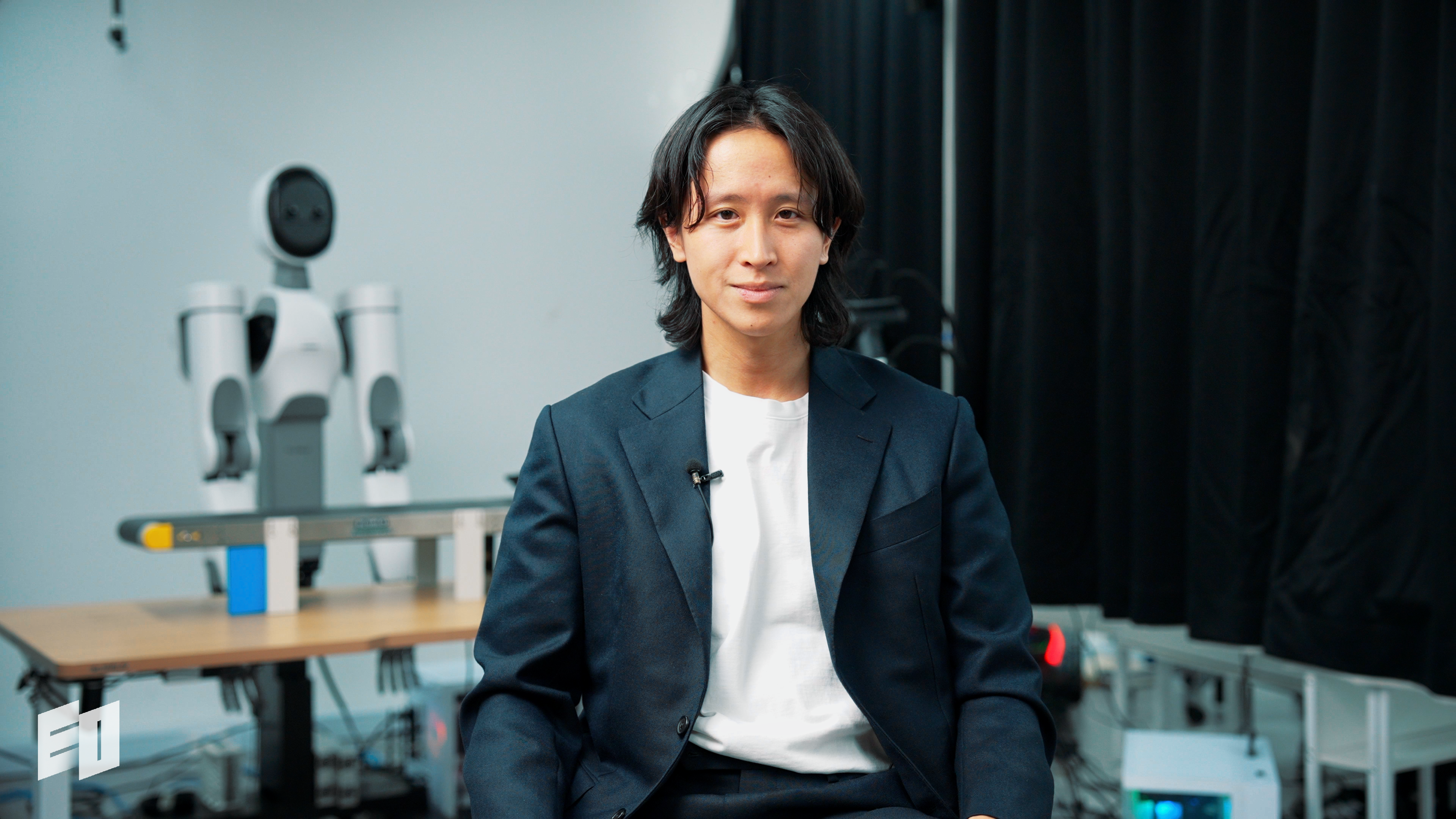
I think the market for humanoid robotics is going to be in the tens of trillions. It's a crazy number. The way that you can get there is you can take two views. You can take the top-down view, which is you just look at all of the market for physical labor in the world, and that's a $50 trillion market. But it's a little bit hard to conceptualize. And so the way that we thought about it was, imagine one humanoid. It might be sold, or it might be leased, for $50,000. That's a pretty good price, because for a laborer in the US, or physical work in the US, you have to pay maybe $50,000 a year when you're considering all of the benefits and all-in costs, or sometimes more than that. And then you take that $50,000 and you multiply it by 100,000, just as a starting point. That number is already $5 billion.
A company that's making $5 billion a year is a pretty sizable company. But then you just scale it up by 10, and you say, "What if I have a company that sells a million humanoids per year?" It's $50 billion. We make billions of cellphones per year. We make hundreds of millions of cars and PCs. And so I think we're probably going to make a lot more humanoids. You can really clearly see that there's a trajectory for this industry, for humanoid robots, to get to trillions of dollars of revenue. And that would imply tens of trillions of market cap.
And that's almost an underestimate, because when we start making labor more abundant and more affordable, then it expands the market as well. We can start sending robots to space. We can start sending robots to build more data centers. That is a key constraint for the data center buildout right now. It's not the things that go into making them. It's the labor. It's the people that are actually putting things together, doing the plumbing, the electricity. I actually think it's closer to something like two to three years where humanoid intelligence, robot intelligence, gets good enough to do most of the tasks that we need on a daily basis.
So I think you could almost characterize this new wave of robotics and AI as almost the fourth industrial revolution. This wave of robotics and AI. We've created machines that allow us to produce many different things and to make their everyday life easier. But this one is really different, because this is the first time that we've been able to create machines and intelligence that can really do anything a human can do. That opens the door for a lot of different things that weren't possible before. If labor gets as cheap as, say, $2 an hour, or it just becomes a product that we can buy, then every single person in the world can have a personal assistant, like everyone has their own iPhone. People can also buy robots or rent robots to maybe even produce things, or to build companies that previously maybe they couldn't afford, or maybe they couldn't find the right people to do. This is a technological revolution that is different because it turns physical labor into a product that almost anybody can access.
AI research has really been accelerating. When you think about research, AI development, it's not something that is on a slope that is completely flat. It's something that changes and it feeds back on itself, because the better AI models get, the more of AI research can be automated, and the faster it can be done. Loops that were previously required a lot of humans can now be running 24/7, 365. They're also able to process a lot of information a lot faster. And so a lot of what you consider efficiency gains is also going to be applied to robot AI research.
That can exist across multiple dimensions. It helps with the actual speeding up of the research, but there's also a lot of innovation and learnings from AI research that can be applied to physical AI research. Learnings in how to best do data annotation, infrastructure around collecting data and annotating data. Learnings and innovations on how to structure mid-training, on how to do reinforcement learning. A lot of the same concepts from LLMs can also be applied to physical AI models. That's why I think the amount of time for these models to get really good is probably a lot faster than people think. But at the same time, the models are going to get really good, and that doesn't mean we're going to have robots doing all of that work in the next two to three years, because even though the intelligence can get there, we're still going to have a bottleneck with manufacturing. I can spin up a million instances of a chatbot instantly, but I can't do that for robots. I can't produce them out of thin air. And so we're going to need to scale up all the factories. We're going to have to scale up the supply chain for all the components that go into a robot. And that's going to take some additional time.
The Shift: Why Open Source wins
One of my views is that open-source models are going to get really good. Two to three years ago, open-source models were probably less than a few percent of all tokens that were produced. Nowadays, open-source models produce something like 25-30%, maybe even more, of all tokens that are produced. They're getting really good, and they're also saturating benchmarks. And so the gap between open-source and frontier models, it used to be around two years. That was a few years ago. Now it looks something more like six months.
We're going to get to a point where the open-source models start to saturate the benchmarks. Even though there might be a gap between open-source and frontier, that gap may not matter for a lot of tasks in the world. Because if I'm doing a simple task like, for example, restocking shelves or assembling a computer mouse, I don't need a really high-level intelligence to do that. I don't need an Einstein to be able to do these tasks. And so as long as these open-source models get to that level, which I believe they will, the model layer will almost commoditize for physical AI.
We're not there yet, but I think that's something that we're going to get to somewhere in maybe the next three to five years. And so I think at that point, intelligence becomes really cheap. What I consider the most valuable companies, or the most important companies, are probably going to be the ones that are doing deployments, they're producing the hardware, or they're innovating on new designs or components to make these robots even better. Nvidia is also a very big player in open-source model development. If you look at Nvidia, they're producing open-source models for general LLM software engineering, Nemotron.
They're really climbing the benchmarks. They're producing open-source models for autonomous vehicles. And they're also producing open-source models for physical AI and robot intelligence. Some of the best researchers in the field are, yes, they're across some of these closed-source labs, but they also are at companies like Nvidia. What I think everyone needs to keep in mind is that for Nvidia, they're one of the most powerful companies in the AI space. They have a lot of resources, they have a lot of really smart people. It is almost an existential threat for closed-source models to win, because as you saw with Anthropic starting to train on Google TPUs, if companies decide to optimize for and train on other hardware, Nvidia starts to lose their business.
It becomes a bit of a threat to them. And so that's why they're putting so much effort into developing their own open-source models like Nemotron, like the autonomous vehicle models, like all the different physical AI models they're developing: GR00T, Cosmos, DreamZero, etc. That is something that I feel can't be understated, because if you're building just physical AI models, you have to think about the fact that I'm competing with one of the best AI companies in the world.
US vs China: Why it's not a race
I think some people like to frame this as US versus China. I think both industries are going to be massive in the future, and I think they're both independently going to build really great hardware and robot intelligence. The industries are going to develop a little bit independently, in the sense that the robots that are sold and used in America are probably going to come from American companies, and the robots that are bought and used in China are going to come from Chinese companies. The world is kind of coming to a place where a lot of countries are interested in independence. They want to produce things in their own country. They don't want to be dependent on another country.
They want to make sure that on their own, they can survive and they can thrive. And so there's a lot of interest right now in the governments of both China and America to really accelerate the development of robotics in those individual countries. Some of them, like China, have invested many billions of dollars, either directly or indirectly through government funds and municipalities. In the US, that hasn't exactly happened yet, but I believe we're going to get there in the future. The US has already shown that they're interested in funding domestic companies. They've funded and provided financing to rare earths processing companies, and directly invested in semiconductor companies like Intel.
I think it's pretty clear that there's a similar amount of support that's going to come to the domestic robotics industry in America as well. It is true that the US is somewhat ahead on the physical intelligence models. At the same time, there are some really great research groups in China, some that are associated with Alibaba, for example, that are building robot models that are pretty close to the frontier. They have really smart researchers there, and there's also really smart researchers in America as well.
Eventually, both countries are going to get there, probably independently, but they're also going to collaborate in doing so, because there's a lot of open-source research that's published. Research that helps both countries. And so I wouldn't really think about it as a race, or one's a little bit ahead and one's a little bit behind. I think that's really short-term, because I think at the end of the day, in five years from now, ten years from now, both countries are going to be able to get there themselves.
Where to build now: The white space of robotics
In terms of where people might want to build, I think there's so much white space. Because there are hardware platforms that exist, it makes the development a lot easier for someone that wants to build for a specific application. And so I think you can really think about robots as kind of like the smartphone. Apple, they make the iPhone, but there's this whole developer community that exists outside of it, people that are just building applications. People that were building applications for time management, for taking notes, and so on.
That can also happen for robotics, where maybe I want to build robot applications to teach robots the skills on how to cook really well, or maybe how to do elder care, or maybe I want to build a robot application to help increase the efficiency of certain farming standards or agriculture techniques. You can really think of anything where physical labor is involved as a potential robot application that can be built. That is such a large white space.
A company that we haven't invested in, but we're watching quite closely, is Unitree. And also other Chinese companies. A lot of these companies, what they do is, they don't take the same approach as the US companies. A lot of the US companies, they wait until they have the product that's perfect, that they're ready to basically sell into the home or factory environment, and it works absolutely perfectly. The approach that the Chinese companies are taking is they're releasing their hardware, the robots, as more of a platform for research or entertainment, for people to build on. It's not necessarily the case where I can buy a Unitree robot and then it'll immediately be able to do everything I wanted it to do, but it's also a pretty interesting business or commercial strategy, because now that the robots are out in the world, you get a little bit of a developer mode.
You get a little bit of a deployment note, because people then become comfortable with using those Unitree robots. There could be developer tools, there could be data collection platforms that are specific to the Unitree robots. If people are doing a lot of robot-based data collection, that might be now Unitree specific. And so if you're building models that use a lot of this Unitree-specific data, those models might run better on Unitree robots as opposed to other robots. And so I think that's a pretty interesting strategy that we're not seeing too many companies in the US take.
There's one company in our portfolio called Dexmate that is selling robots, and you can consider them to be using a similar strategy. But that I think is a pretty interesting approach that can result in a lot of other maybe downstream effects, because now that everyone has access to these robots, other people can build applications on them. These applications don't necessarily need to come from the company that's building the robots. They can come from outside researchers or other startups that just want to focus on the AI side of things, as opposed to building the hardware and figuring out the manufacturing component themselves.
I actually think the industry's really early, so I don't think anybody's missed anything yet. Because you look at the robots today and they're getting a lot better, but they're nowhere near, if you take for example Opus 4.8 or ChatGPT or any of the LLM models, where they're actually doing a lot of the work that humans would do and they're being used across almost every company in the world today. We're not there for robotics, and that's what makes it a really exciting time as well, because there is still a lot of opportunity for people to join really exciting companies that have a growth trajectory, or to start making investments in the space themselves. I think the first thing to do is really just start doing more research, talking to friends that might be working in the industry, if you really want to be involved in some way, either by joining a company, starting your own company, or investing.
It's pretty underappreciated how hard building a robotics company actually is. I'm seeing online these days a lot of people from different industries saying, "Hey, look, I'm going to go out and start a robotics company." We're really excited about the industry and we think there's going to be a lot of great companies that come out of this, a lot of great technology that comes out of it. But it is also really hard. The amount of knowledge that you need to accumulate over many, many years, and the experience you need to have: this is not building a software company. To be able to understand all the components needed to build a successful humanoid company or robotics company, from mechanical design to electrical engineering, high-rate manufacturing, how to actually deploy the robots in the real world, it's a little bit maybe underappreciated.
There's going to be a lot of investment that goes into the space, there's going to be a lot of startups that go out, but I would maybe caution people to just appreciate a little bit more how difficult it is. You're going to need a lot of real experts, people that have years, decades of experience in the space, people that have had a significant amount of experience working at other real manufacturing or robotics environments before, to be able to really build a successful company.
Explore more